PNEUMOTHORA 
X
PNEUMOTHORAX is the presence of air in the 
pleural space.
can be 
a) Spontaneous 
b) Result of iatrogenic injury 
c) Trauma to the lung or chest wall
Classification 
1. Spontaneous 
# Primary 
- No evidence of overt lung disease 
- occurs in males aged 15-30 
- air escapes from the lung into the pleural 
space through rupture of a small emphysematous 
bulla or pleural bleb 
- smoking, tall stature & the presence of apical subpleural 
blebs are additional risk factors
#Secondary 
- underlying lung disease 
- occurs mainly in males above 55 yrs 
- most commonly COPD & TB 
- also seen in asthma, lung abscess, pul infarcts, 
bronchogenic carcinoma, all forms of fibrotic & 
cystic lung disease
2. Traumatic 
- iatrogenic ( foll thoracic surgeryor biopsy) 
- chest wall injury
TYPES 
1. Closed spontaneous pneumothorax 
2. Open spontaneous pneumothorax 
3. Tension pneumothorax
Closed type 
 Communication b/n airway and the pleural space 
seals off as the lung deflates 
 Mean pleural pressure remains negative 
 Spontaneous reabsorption of air & re-expansion of 
lung occur over a few days or weeks 
 Infection uncommon
Open type 
 Communication b/n pleura & bronchus doesn’t 
seals off (Bronchopleural fistula) 
 Intra pleural pressure = atm. Pressure 
 Collapsed lung, no re expansion 
 Transmission of infection from the airways into 
the pleural space through fistula common 
(empyema)
Tension type 
 Communication b/n the airway & the pleural 
space acts as a one-way valve 
 Allowing air to enter the pleural space during 
inspiration but not to escape on expiration 
 Large amt of air accumulates progressively in the 
pleural space 
 Intrapleural pressure increases above atm 
pressure
 Pressure causes mediastinal shift towards the 
opposite side 
 with compression of the opposite lung 
 & impairment of systemic venous return 
 Causing cardiovascular compromise
 Occasionally tension pneumothorax may 
occur without mediastinal shift, if malignant 
ds or scarring has splinted the mediastinum
Clinical features 
 Sudden onset of unliateral pleuritic chest pain 
 Breathlessness 
[In pts with a small pneumothorax, physical 
examination may be normal ]
General examination 
Cyanosis 
Rapid thready pulse 
Signs of peripheral circulatory failure in 
severe cases
Inspection & palpation 
 Dyspnoea 
 Accessory muscles of respiration 
 Shift of trachea 
 Shift of mediastinum to opposite side 
 Fullness of chest on the affected side 
 Diminished chest movements
 Marked diminished vocal fremitus on 
affected side 
 Reduction in total chest expansion 
 Increase in size of affected hemithorax 
 Diminished expansion of the affected 
hemithorax
Percussion 
 Hyper-resonant on affected 
pneumothorax. 
 Right sided pneumothorax-liver dullness is 
obliterated and cardiac dullness is shifted 
to the opposite side
Auscultation 
 Diminished to absent breath sounds 
 Absence of adventitious sounds 
 Diminished vocal resonance 
 Bronchopleural fistula-amphoric broncial 
breathing.
Investigations 
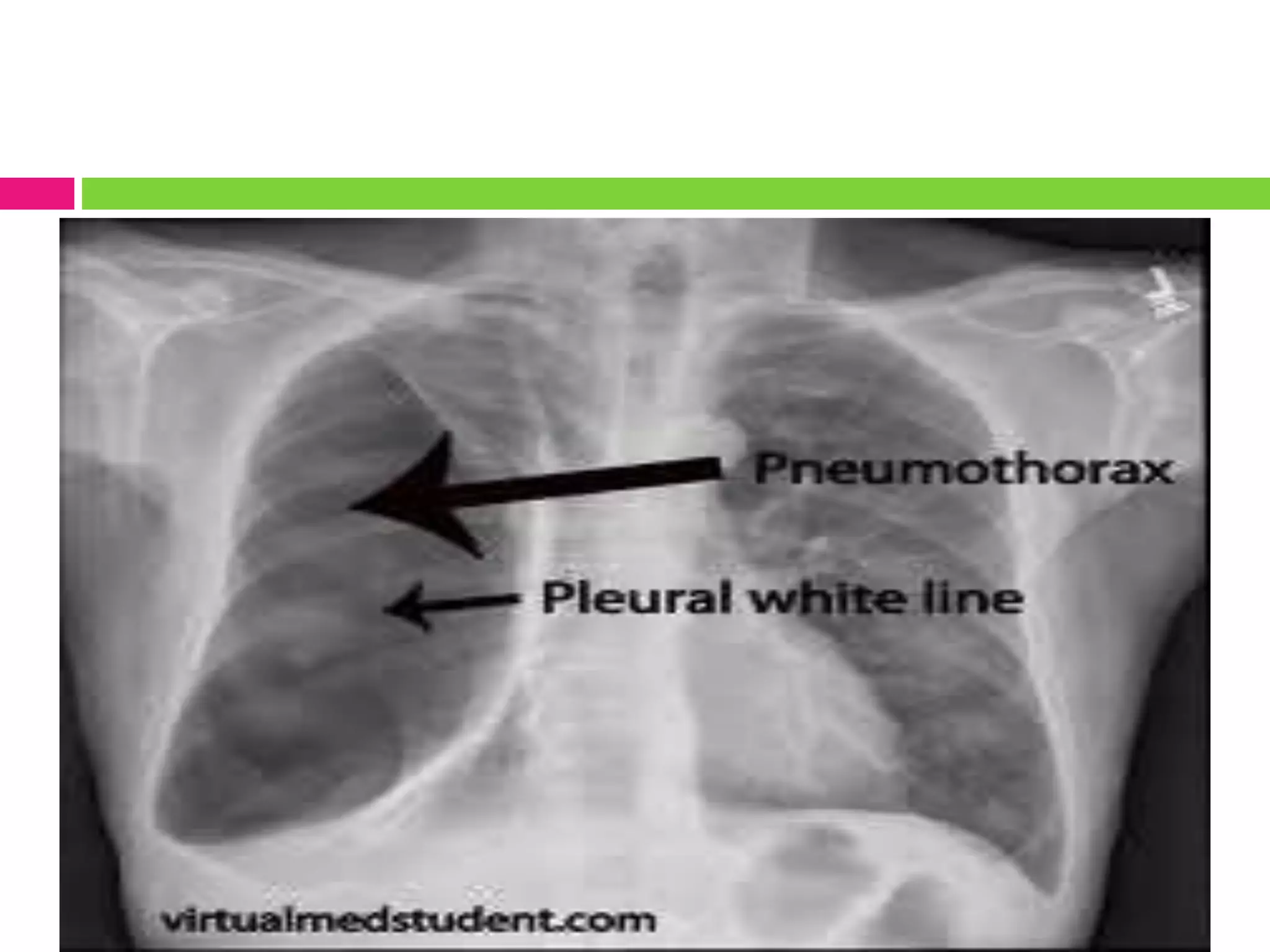
Chest x ray 
Shows : increased radiolucency, with absence of 
bronchovascular markings 
 extend of mediastinal shift. 
 pleural fluid ,if present . 
 underlying pulmonary disease . 
 (costophrenic angles are clear) 
[care must be taken to differentiate b/n a large pre-existing bulla & 
a pneumothorax to avoid misdirected attempts at aspiration]
CT 
Helps to differentiate between large pre 
existing emphysematous bullae and 
pneumothorax .
TREATMENT
Primary pneumothorax 
 If the lung edge is < 2cm from the chest wall 
and patient is not breathless 
↓ 
Resolves normally with out intervention
 If the patient is having severe symptoms 
↓ 
Percutaneous needle aspiration 
↓ 
If it fails , intercostal tube drainage is done
PERCUTANEOUS NEEDLE ASPIRATION OF AIR
Intercostal 
drainage
Secondary pneumothorax 
Even a small secondary pneumothorax may 
cause respiratory failure, so all such patients require 
↓ 
Intercostal tube drainage 
[Intercostal drains are inserted in the 4th ,5th or 6th 
intercostal space in the midaxillary line ,connected 
to an under waterseal]
 Clamping of the drain is potentially dangerous 
 Should be removed 24hrs after the lung has fully 
reinflated and bubbling stopped . 
 Continued bubbling after 5 -7 days is an indication 
for surgery . 
 All patients should receive supplemental oxygen
 If intercostal tube drainage fails 
↓ 
Thoracoscopy (VATS ) or thoracotomy with 
stapling of blebs and pleural abrasion is indicated
 If surgery is contraindicated, pleurodesis 
should be done . 
↓ 
Intrapleural injection of sclerosing agent
Tension pneumothorax 
 It is a medical emergency. 
 A large bore needle is inserted into pleural 
space through 2nd intercostal space. 
 Needle should be left in place until a 
thoracostomy tube can be inserted.
Traumatic pneumothorax 
 Supplemental oxygen or aspiration done. 
 Tube thoracostomy , if not improves. 
 If hemo pneumothorax is present, 1 chest 
tube should be placed in the superior part to 
evacuate air, other should be placed in the 
inferior part to remove blood.
Recurrent spontaneous 
pneumothorax 
 Surgical pleurodesis is recommended in all 
patients following a 2nd pneumothorax(even 
if ipsilateral)
thank you

Pneumothorax

  • 1.
  • 2.
    PNEUMOTHORAX is thepresence of air in the pleural space.
  • 3.
    can be a)Spontaneous b) Result of iatrogenic injury c) Trauma to the lung or chest wall
  • 4.
    Classification 1. Spontaneous # Primary - No evidence of overt lung disease - occurs in males aged 15-30 - air escapes from the lung into the pleural space through rupture of a small emphysematous bulla or pleural bleb - smoking, tall stature & the presence of apical subpleural blebs are additional risk factors
  • 5.
    #Secondary - underlyinglung disease - occurs mainly in males above 55 yrs - most commonly COPD & TB - also seen in asthma, lung abscess, pul infarcts, bronchogenic carcinoma, all forms of fibrotic & cystic lung disease
  • 6.
    2. Traumatic -iatrogenic ( foll thoracic surgeryor biopsy) - chest wall injury
  • 8.
    TYPES 1. Closedspontaneous pneumothorax 2. Open spontaneous pneumothorax 3. Tension pneumothorax
  • 9.
    Closed type Communication b/n airway and the pleural space seals off as the lung deflates  Mean pleural pressure remains negative  Spontaneous reabsorption of air & re-expansion of lung occur over a few days or weeks  Infection uncommon
  • 10.
    Open type Communication b/n pleura & bronchus doesn’t seals off (Bronchopleural fistula)  Intra pleural pressure = atm. Pressure  Collapsed lung, no re expansion  Transmission of infection from the airways into the pleural space through fistula common (empyema)
  • 11.
    Tension type Communication b/n the airway & the pleural space acts as a one-way valve  Allowing air to enter the pleural space during inspiration but not to escape on expiration  Large amt of air accumulates progressively in the pleural space  Intrapleural pressure increases above atm pressure
  • 12.
     Pressure causesmediastinal shift towards the opposite side  with compression of the opposite lung  & impairment of systemic venous return  Causing cardiovascular compromise
  • 14.
     Occasionally tensionpneumothorax may occur without mediastinal shift, if malignant ds or scarring has splinted the mediastinum
  • 15.
    Clinical features Sudden onset of unliateral pleuritic chest pain  Breathlessness [In pts with a small pneumothorax, physical examination may be normal ]
  • 16.
    General examination Cyanosis Rapid thready pulse Signs of peripheral circulatory failure in severe cases
  • 17.
    Inspection & palpation  Dyspnoea  Accessory muscles of respiration  Shift of trachea  Shift of mediastinum to opposite side  Fullness of chest on the affected side  Diminished chest movements
  • 18.
     Marked diminishedvocal fremitus on affected side  Reduction in total chest expansion  Increase in size of affected hemithorax  Diminished expansion of the affected hemithorax
  • 19.
    Percussion  Hyper-resonanton affected pneumothorax.  Right sided pneumothorax-liver dullness is obliterated and cardiac dullness is shifted to the opposite side
  • 20.
    Auscultation  Diminishedto absent breath sounds  Absence of adventitious sounds  Diminished vocal resonance  Bronchopleural fistula-amphoric broncial breathing.
  • 22.
    Investigations Chest xray Shows : increased radiolucency, with absence of bronchovascular markings  extend of mediastinal shift.  pleural fluid ,if present .  underlying pulmonary disease .  (costophrenic angles are clear) [care must be taken to differentiate b/n a large pre-existing bulla & a pneumothorax to avoid misdirected attempts at aspiration]
  • 24.
    CT Helps todifferentiate between large pre existing emphysematous bullae and pneumothorax .
  • 25.
  • 26.
    Primary pneumothorax If the lung edge is < 2cm from the chest wall and patient is not breathless ↓ Resolves normally with out intervention
  • 27.
     If thepatient is having severe symptoms ↓ Percutaneous needle aspiration ↓ If it fails , intercostal tube drainage is done
  • 28.
  • 29.
  • 30.
    Secondary pneumothorax Evena small secondary pneumothorax may cause respiratory failure, so all such patients require ↓ Intercostal tube drainage [Intercostal drains are inserted in the 4th ,5th or 6th intercostal space in the midaxillary line ,connected to an under waterseal]
  • 31.
     Clamping ofthe drain is potentially dangerous  Should be removed 24hrs after the lung has fully reinflated and bubbling stopped .  Continued bubbling after 5 -7 days is an indication for surgery .  All patients should receive supplemental oxygen
  • 32.
     If intercostaltube drainage fails ↓ Thoracoscopy (VATS ) or thoracotomy with stapling of blebs and pleural abrasion is indicated
  • 33.
     If surgeryis contraindicated, pleurodesis should be done . ↓ Intrapleural injection of sclerosing agent
  • 34.
    Tension pneumothorax It is a medical emergency.  A large bore needle is inserted into pleural space through 2nd intercostal space.  Needle should be left in place until a thoracostomy tube can be inserted.
  • 35.
    Traumatic pneumothorax Supplemental oxygen or aspiration done.  Tube thoracostomy , if not improves.  If hemo pneumothorax is present, 1 chest tube should be placed in the superior part to evacuate air, other should be placed in the inferior part to remove blood.
  • 36.
    Recurrent spontaneous pneumothorax  Surgical pleurodesis is recommended in all patients following a 2nd pneumothorax(even if ipsilateral)
  • 37.