SHAHD ALALI
CHRONIC BRONCHITIS
• It is characterized by a chronic productive cough
lasting at least 3 months over a minimum of 2 years.
• Common among smokers
• Most have both emphysema & chronic bronchitis
• Early stages of the disease:
• Productive cough
• Mucoid sputum
ETIOLOGY
• Smoking
• Air pollutants
• Sulfur dioxide
• Nitrogen dioxide
• Cystic fibrosis
• Coexistent emphysema
• Experimental evidence: Increase transcription of
mucin gene
PATHOGENESIS
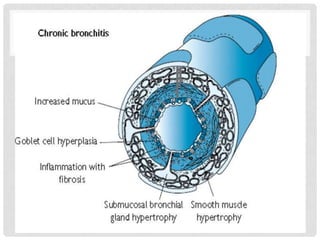
• Charactirized by hypertrophy of bronchial mucinous
glands thus hypersecretion of mucus
• Increased thickness of mucus glands (Reid index
increases to >50%)
• Casing inflammation (CD8+, lymphocytes….
• In contrast with asthma there are no eosinophils
• Microbial infection often is present
MORPHOLOGY
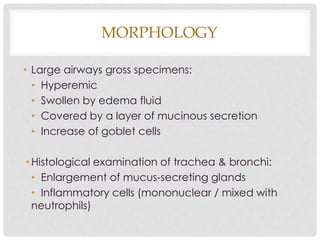
• Large airways gross specimens:
• Hyperemic
• Swollen by edema fluid
• Covered by a layer of mucinous secretion
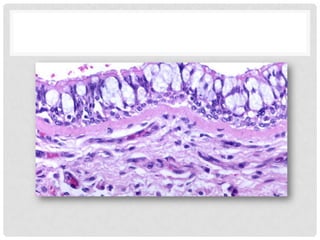
• Increase of goblet cells
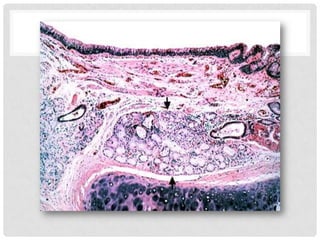
• Histological examination of trachea & bronchi:
• Enlargement of mucus-secreting glands
• Inflammatory cells (mononuclear / mixed with
neutrophils)
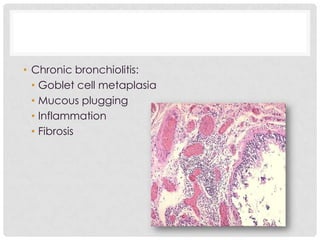
• Chronic bronchiolitis:
• Goblet cell metaplasia
• Mucous plugging
• Inflammation
• Fibrosis
CLINICAL FEATURES
• Prominent cough & production of sputum
• Cyanosis “Blue bloaters”
• Increase risk of infection
• Tend to be stocky or obese
• Wheezing
• Hypoxemia
• Dyspnea
PULMONARY FUNCTION TEST
• Less increased TLC & RV than emphysema
• Chronic respiratory acidosis
COMPLICATIONS
• Respiratory failure
• Cor pulmonale

Chronic Bronchitis

  • 1.
  • 2.
    • It ischaracterized by a chronic productive cough lasting at least 3 months over a minimum of 2 years. • Common among smokers • Most have both emphysema & chronic bronchitis • Early stages of the disease: • Productive cough • Mucoid sputum
  • 3.
    ETIOLOGY • Smoking • Airpollutants • Sulfur dioxide • Nitrogen dioxide • Cystic fibrosis • Coexistent emphysema • Experimental evidence: Increase transcription of mucin gene
  • 4.
    PATHOGENESIS • Charactirized byhypertrophy of bronchial mucinous glands thus hypersecretion of mucus • Increased thickness of mucus glands (Reid index increases to >50%) • Casing inflammation (CD8+, lymphocytes…. • In contrast with asthma there are no eosinophils • Microbial infection often is present
  • 6.
    MORPHOLOGY • Large airwaysgross specimens: • Hyperemic • Swollen by edema fluid • Covered by a layer of mucinous secretion • Increase of goblet cells • Histological examination of trachea & bronchi: • Enlargement of mucus-secreting glands • Inflammatory cells (mononuclear / mixed with neutrophils)
  • 7.
    • Chronic bronchiolitis: •Goblet cell metaplasia • Mucous plugging • Inflammation • Fibrosis
  • 10.
    CLINICAL FEATURES • Prominentcough & production of sputum • Cyanosis “Blue bloaters” • Increase risk of infection • Tend to be stocky or obese • Wheezing • Hypoxemia • Dyspnea
  • 11.
    PULMONARY FUNCTION TEST •Less increased TLC & RV than emphysema • Chronic respiratory acidosis
  • 12.