Hair Disorders
Primary Health Care
Dr. Wajahat Mohammad
Consultant Family Medicine
Disclosure Of Conflict of Interest
I Dr. Wajahat Mohammad
 DO NOT have a financial interest/arrangement or affiliation with anyone in relation
to this program/presentation/organization that could be perceived as a real or
apparent conflict of interest in the context of the subject of this presentation.
 Purely educational intent
 Recommendations are based on current evidence
 References provided where possible
Summary
 Common Hair Loss disorders
 Primary care management of hair loss disorders
 Referral Criteria for hair loss disorders
 Beyond Hair Loss ‘the symptom’
4
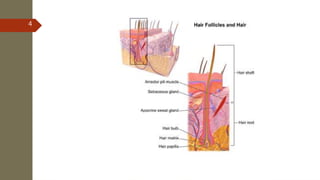
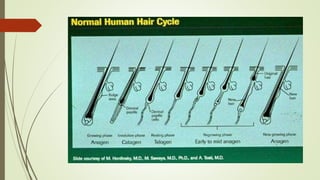
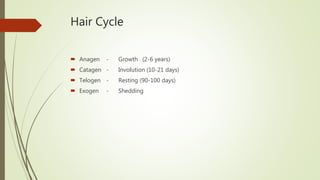
Hair Cycle
 Anagen - Growth (2-6 years)
 Catagen - Involution (10-21 days)
 Telogen - Resting (90-100 days)
 Exogen - Shedding
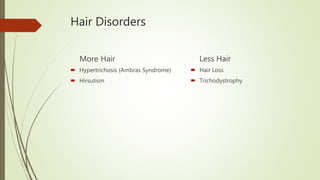
Hair Disorders
More Hair
 Hypertrichosis (Ambras Syndrome)
 Hirsutism
Less Hair
 Hair Loss
 Trichodystrophy
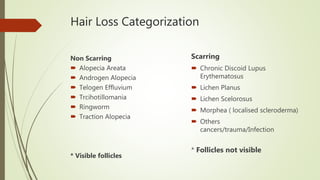
Hair Loss Categorization
Non Scarring
 Alopecia Areata
 Androgen Alopecia
 Telogen Effluvium
 Trcihotillomania
 Ringworm
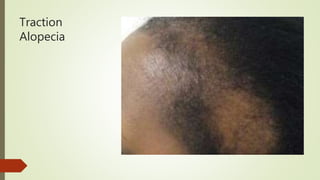
 Traction Alopecia
* Visible follicles
Scarring
 Chronic Discoid Lupus
Erythematosus
 Lichen Planus
 Lichen Scelorosus
 Morphea ( localised scleroderma)
 Others
cancers/trauma/Infection
* Follicles not visible
Assessment - History
 Onset, Duration and Precipitants
 Pattern ( Diffuse vs Patchy)
 Scarring
 Shedding vs Breaking vs Thinning
 Medical History
 Drug History
 Family History
 Hair Care
 Diet
Assessment - Examination
 Inspection
Scalp: Scarring?
Scaly?
Erythema?
Pattern: Diffuse
Patchy
Density
Hair Quality
 Pull Test
Assessment Investigation
 Ferritin
 Hormones
 Sex Hormones
 ANA
 Syphilis
 Scalp Scraping
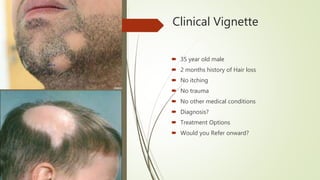
Clinical Vignette
 35 year old male
 2 months history of Hair loss
 No itching
 No trauma
 No other medical conditions
 Diagnosis?
 Treatment Options
 Would you Refer onward?
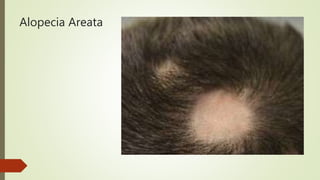
Alopecia Areata
 Chronic Inflammatory Dermatological Disorder
 Unknown etiology
Factors: Autoimmune, Environment and Genetics
 Non scarring
 Patchy or Complete
 80% regrowth in Mild Alopecia
 34-40% Recover in 1 year
 Progressive 14-25%
Prognostication
 Multiple lesions on scalp margins
 Involvement of Eyebrows and eye lashes
 Nail Changes
 Associated Atopy
 Childhood Onset
 Chronic Extensive disease
 Downs Syndrome
 Associated Autoimmune diseases
Management
 No Treatment – an option
 Topical steroids
 Intralesional Triamcinolone
 Topical Immunotherapy ( Diphenylcyclopropenone, squaric acid dibutyl ester or
dinitrochlorobenzene))
 Topical Minoxidil 2% and 5%
 PUVA
 Anthralin
 Methotrexate, azathioprine, oral steroids
 Less effective- TNF Alpha Inhibitors, Statins, chloroquine
 Ineffective- Tacrolimus, Cyclosporin –topical
Referral Criteria
 Extensive disease
 Diagnostic Uncertainty
 Psychological Distress
 Pregnant and breast feeding
 Topical Treatment not helpful
 Wig is required
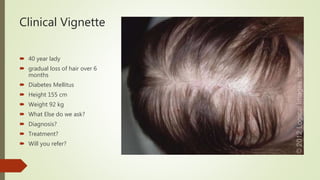
Clinical Vignette
 40 year lady
 gradual loss of hair over 6
months
 Diabetes Mellitus
 Height 155 cm
 Weight 92 kg
 What Else do we ask?
 Diagnosis?
 Treatment?
 Will you refer?
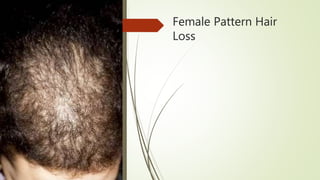
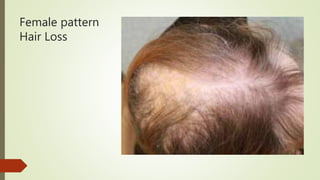
Female Pattern Hair Loss
 Andro-Genic Alopecia in women
 Unclear etiology
 Suspected disorder of sensitivity to Dihydrotestosterone
 3-6% in <30 yrs age, 29-42% in >70 yrs age
 Frontal Hair line Spared in women
 Usually progressive once develops
 Very Rare progression to complete Baldness
Management
 Baseline Testosterone and Dehydroepiandrosterone sulfate
 Topical Monoxidil is first line,
2% to 5% BD, can take 4 months to show improvement.
 Antiandrogen medication
Spironolactone
Cyproterone acetate
Finasteride
 Psychological support
 Surgical Options
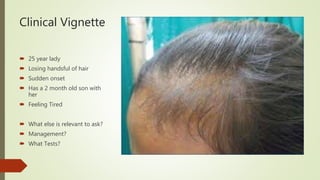
Clinical Vignette
 25 year lady
 Losing handsful of hair
 Sudden onset
 Has a 2 month old son with
her
 Feeling Tired
 What else is relevant to ask?
 Management?
 What Tests?
Telogen Effluvium
 Acceleration of Hair Loss cycle
 More hair in telogen phase than anagen phase (upto 50%)
 Usually triggers found from history
 Pull Test Positive
Triggers
 Acute or chronic major illness
 Febrile illness
 Major surgery
 Childbirth (telogen gravidarum)
 Rapid weight loss
 Protein or caloric dietary restriction
 Congenital or acquired zinc
deficiency
 Significant emotional stress
 Collagen vascular disease
 Endocrine disorders (eg,
hypothyroidism or hyperthyroidism)
 Drugs, supplements, or toxins
 Inflammatory conditions of the scalp
(eg, seborrheic dermatitis)
 Infectious conditions that affect the
scalp (eg, fungal, bacterial, or
spirochetal)
 Iron deficiency anemia
 Nutritional deficiencies
Drugs associated with Telogen Effluvium
 Allopurinol
 Androgens
 Anticholesterol agents (statins)
 Anticoagulants
 Anticonvulsants
 Antifungals
 Antihistamines (H2)
 Antiinflammatory agents
 Antimitotic agents
 Antithyroid agents
 Beta blockers
 Dopa
 Ergots
 Heavy metals
 Hormones (oral contraceptives,
hormone replacement therapy)
 Immunomodulators
 Retinoids
 Psychotropics
 Minoxidil
 Selective estrogen receptor modulators
and phytoestrogen
Management of Telogen effluvium
 Investigate with CBC, CMP, TFT and Ferritin
 Treat Underlying Cause
 Psychological Support
 Cosmetic advice
 Topical Minoxidil
Beyond Hair Loss
 Effects of hair loss
 Interpretation of hair loss
 Socio-economic consequences
Quiz
Alopecia Areata
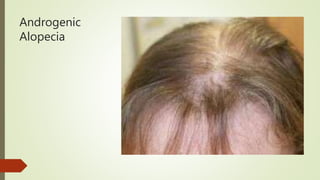
Androgenic
Alopecia
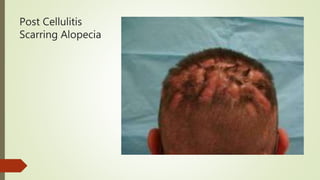
Post Cellulitis
Scarring Alopecia
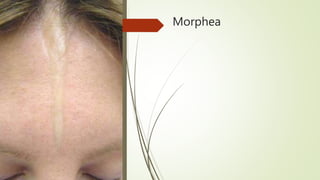
Morphea
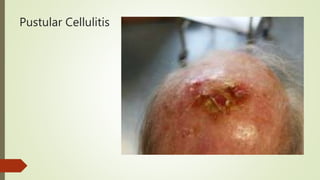
Pustular Cellulitis
Female Pattern Hair
Loss
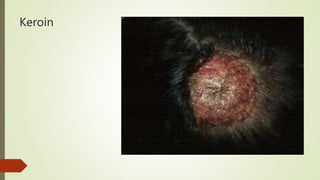
Keroin
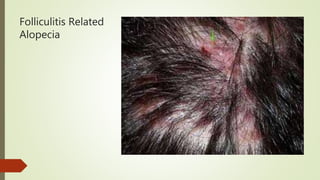
Folliculitis Related
Alopecia
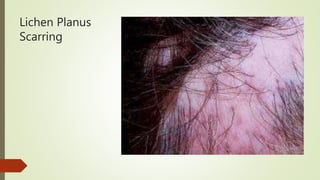
Lichen Planus
Scarring
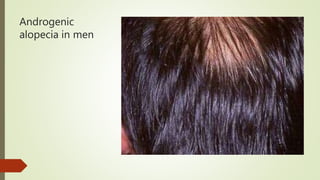
Androgenic
alopecia in men
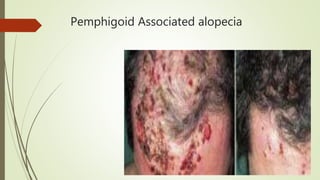
Pemphigoid Associated alopecia
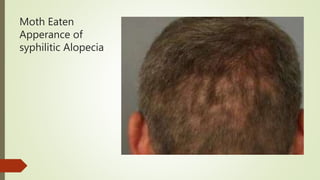
Moth Eaten
Apperance of
syphilitic Alopecia
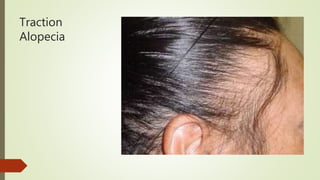
Traction
Alopecia
Traction
Alopecia
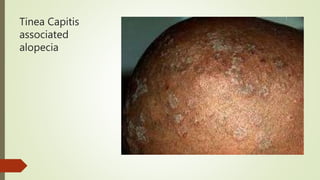
Tinea Capitis
associated
alopecia
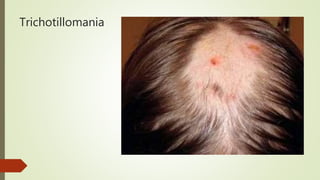
Trichotillomania
Female pattern
Hair Loss
Useful resource
References:
 KARYN SPRINGER,M.D.,MATTHEW BROWN,M.D.,and DANIEL L.STULBERG,M.D.
Utah Valley Family Practice Residency,Provo,Utah, Am Fam Physician 2003;68:93-
102,107-8
 HUNT N, McHale S, Psychological Impact of Alopecia, BMJ 2005, 331(7522):951-
953
 BLUME-PEYTAARI U et al: Guideline for diagnostic evaluation in androgenetic
alopecia in men, women and adolescents, British Journal of Drematology 2011, 164
(1):5-15
 UKPDCS
 GP Notebook
 Uptodate

Hair Disorders

  • 1.
    Hair Disorders Primary HealthCare Dr. Wajahat Mohammad Consultant Family Medicine
  • 2.
    Disclosure Of Conflictof Interest I Dr. Wajahat Mohammad  DO NOT have a financial interest/arrangement or affiliation with anyone in relation to this program/presentation/organization that could be perceived as a real or apparent conflict of interest in the context of the subject of this presentation.  Purely educational intent  Recommendations are based on current evidence  References provided where possible
  • 3.
    Summary  Common HairLoss disorders  Primary care management of hair loss disorders  Referral Criteria for hair loss disorders  Beyond Hair Loss ‘the symptom’
  • 4.
  • 6.
    Hair Cycle  Anagen- Growth (2-6 years)  Catagen - Involution (10-21 days)  Telogen - Resting (90-100 days)  Exogen - Shedding
  • 7.
    Hair Disorders More Hair Hypertrichosis (Ambras Syndrome)  Hirsutism Less Hair  Hair Loss  Trichodystrophy
  • 8.
    Hair Loss Categorization NonScarring  Alopecia Areata  Androgen Alopecia  Telogen Effluvium  Trcihotillomania  Ringworm  Traction Alopecia * Visible follicles Scarring  Chronic Discoid Lupus Erythematosus  Lichen Planus  Lichen Scelorosus  Morphea ( localised scleroderma)  Others cancers/trauma/Infection * Follicles not visible
  • 9.
    Assessment - History Onset, Duration and Precipitants  Pattern ( Diffuse vs Patchy)  Scarring  Shedding vs Breaking vs Thinning  Medical History  Drug History  Family History  Hair Care  Diet
  • 10.
    Assessment - Examination Inspection Scalp: Scarring? Scaly? Erythema? Pattern: Diffuse Patchy Density Hair Quality  Pull Test
  • 11.
    Assessment Investigation  Ferritin Hormones  Sex Hormones  ANA  Syphilis  Scalp Scraping
  • 12.
    Clinical Vignette  35year old male  2 months history of Hair loss  No itching  No trauma  No other medical conditions  Diagnosis?  Treatment Options  Would you Refer onward?
  • 13.
    Alopecia Areata  ChronicInflammatory Dermatological Disorder  Unknown etiology Factors: Autoimmune, Environment and Genetics  Non scarring  Patchy or Complete  80% regrowth in Mild Alopecia  34-40% Recover in 1 year  Progressive 14-25%
  • 14.
    Prognostication  Multiple lesionson scalp margins  Involvement of Eyebrows and eye lashes  Nail Changes  Associated Atopy  Childhood Onset  Chronic Extensive disease  Downs Syndrome  Associated Autoimmune diseases
  • 15.
    Management  No Treatment– an option  Topical steroids  Intralesional Triamcinolone  Topical Immunotherapy ( Diphenylcyclopropenone, squaric acid dibutyl ester or dinitrochlorobenzene))  Topical Minoxidil 2% and 5%  PUVA  Anthralin  Methotrexate, azathioprine, oral steroids  Less effective- TNF Alpha Inhibitors, Statins, chloroquine  Ineffective- Tacrolimus, Cyclosporin –topical
  • 16.
    Referral Criteria  Extensivedisease  Diagnostic Uncertainty  Psychological Distress  Pregnant and breast feeding  Topical Treatment not helpful  Wig is required
  • 17.
    Clinical Vignette  40year lady  gradual loss of hair over 6 months  Diabetes Mellitus  Height 155 cm  Weight 92 kg  What Else do we ask?  Diagnosis?  Treatment?  Will you refer?
  • 18.
    Female Pattern HairLoss  Andro-Genic Alopecia in women  Unclear etiology  Suspected disorder of sensitivity to Dihydrotestosterone  3-6% in <30 yrs age, 29-42% in >70 yrs age  Frontal Hair line Spared in women  Usually progressive once develops  Very Rare progression to complete Baldness
  • 19.
    Management  Baseline Testosteroneand Dehydroepiandrosterone sulfate  Topical Monoxidil is first line, 2% to 5% BD, can take 4 months to show improvement.  Antiandrogen medication Spironolactone Cyproterone acetate Finasteride  Psychological support  Surgical Options
  • 20.
    Clinical Vignette  25year lady  Losing handsful of hair  Sudden onset  Has a 2 month old son with her  Feeling Tired  What else is relevant to ask?  Management?  What Tests?
  • 21.
    Telogen Effluvium  Accelerationof Hair Loss cycle  More hair in telogen phase than anagen phase (upto 50%)  Usually triggers found from history  Pull Test Positive
  • 22.
    Triggers  Acute orchronic major illness  Febrile illness  Major surgery  Childbirth (telogen gravidarum)  Rapid weight loss  Protein or caloric dietary restriction  Congenital or acquired zinc deficiency  Significant emotional stress  Collagen vascular disease  Endocrine disorders (eg, hypothyroidism or hyperthyroidism)  Drugs, supplements, or toxins  Inflammatory conditions of the scalp (eg, seborrheic dermatitis)  Infectious conditions that affect the scalp (eg, fungal, bacterial, or spirochetal)  Iron deficiency anemia  Nutritional deficiencies
  • 23.
    Drugs associated withTelogen Effluvium  Allopurinol  Androgens  Anticholesterol agents (statins)  Anticoagulants  Anticonvulsants  Antifungals  Antihistamines (H2)  Antiinflammatory agents  Antimitotic agents  Antithyroid agents  Beta blockers  Dopa  Ergots  Heavy metals  Hormones (oral contraceptives, hormone replacement therapy)  Immunomodulators  Retinoids  Psychotropics  Minoxidil  Selective estrogen receptor modulators and phytoestrogen
  • 24.
    Management of Telogeneffluvium  Investigate with CBC, CMP, TFT and Ferritin  Treat Underlying Cause  Psychological Support  Cosmetic advice  Topical Minoxidil
  • 25.
    Beyond Hair Loss Effects of hair loss  Interpretation of hair loss  Socio-economic consequences
  • 26.
  • 27.
  • 28.
  • 29.
  • 30.
  • 31.
  • 32.
  • 33.
  • 34.
  • 35.
  • 36.
  • 37.
  • 38.
  • 39.
  • 40.
  • 41.
  • 42.
  • 43.
  • 44.
  • 45.
    References:  KARYN SPRINGER,M.D.,MATTHEWBROWN,M.D.,and DANIEL L.STULBERG,M.D. Utah Valley Family Practice Residency,Provo,Utah, Am Fam Physician 2003;68:93- 102,107-8  HUNT N, McHale S, Psychological Impact of Alopecia, BMJ 2005, 331(7522):951- 953  BLUME-PEYTAARI U et al: Guideline for diagnostic evaluation in androgenetic alopecia in men, women and adolescents, British Journal of Drematology 2011, 164 (1):5-15  UKPDCS  GP Notebook  Uptodate