Downloaded 291 times

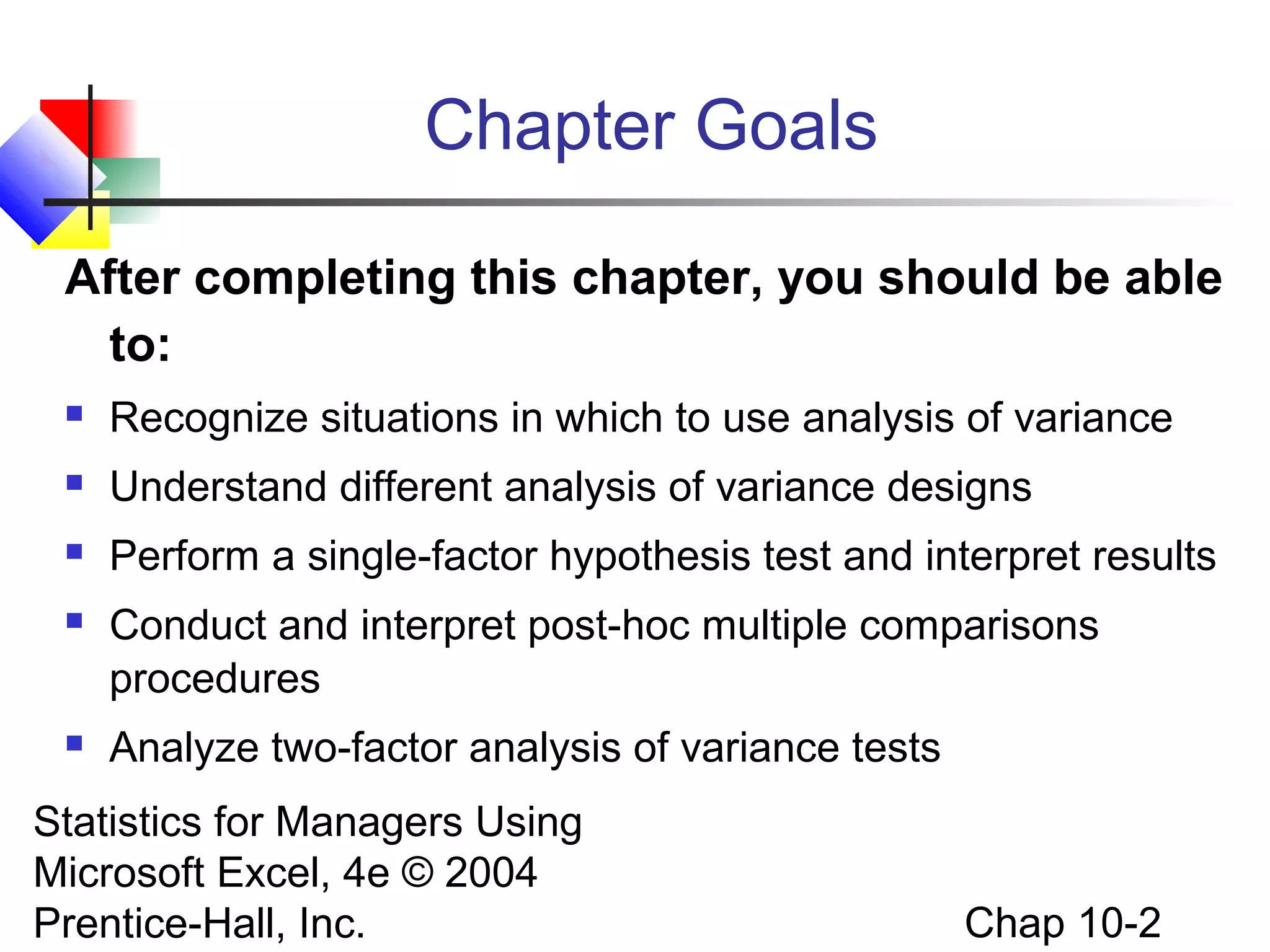
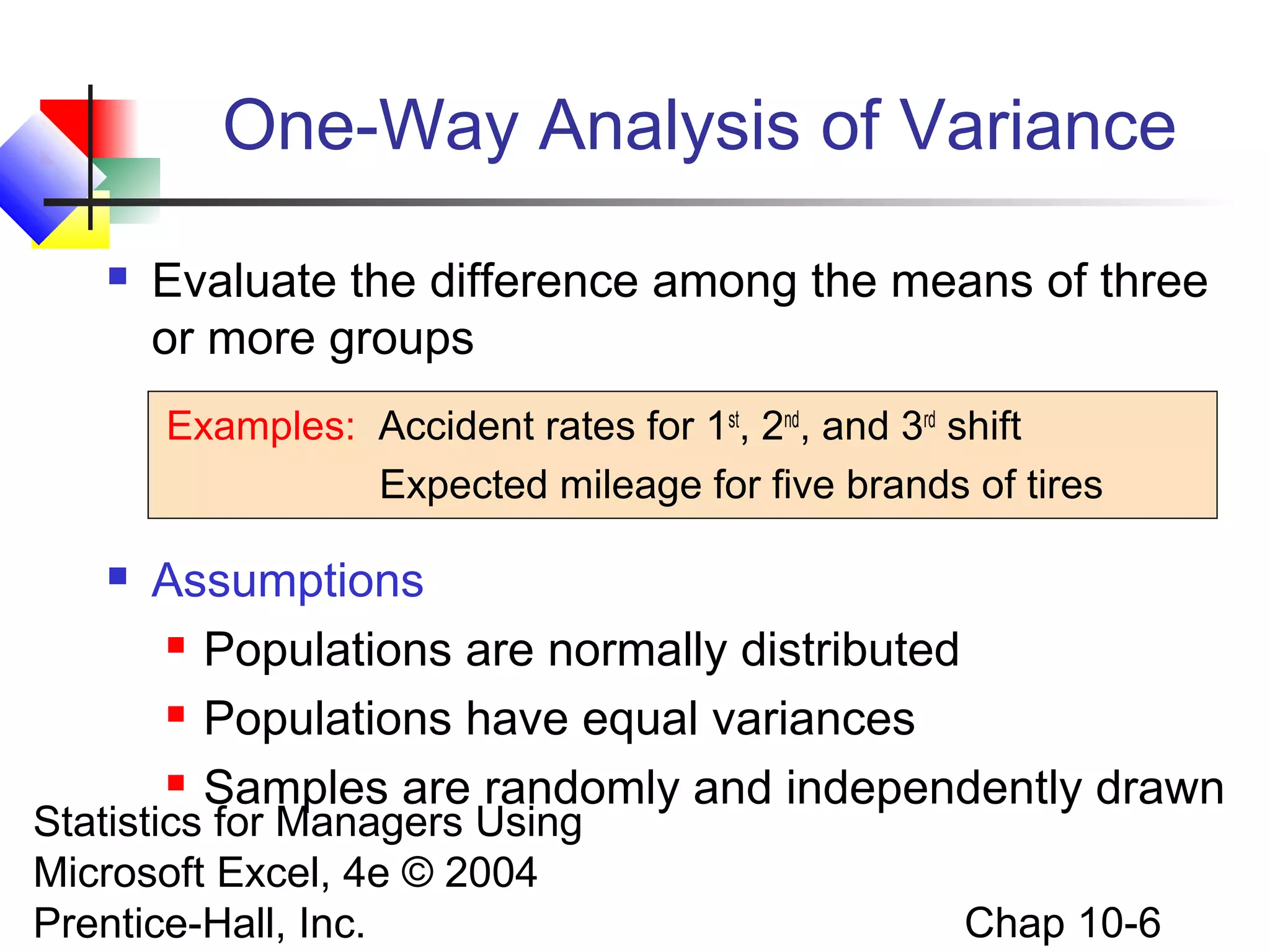
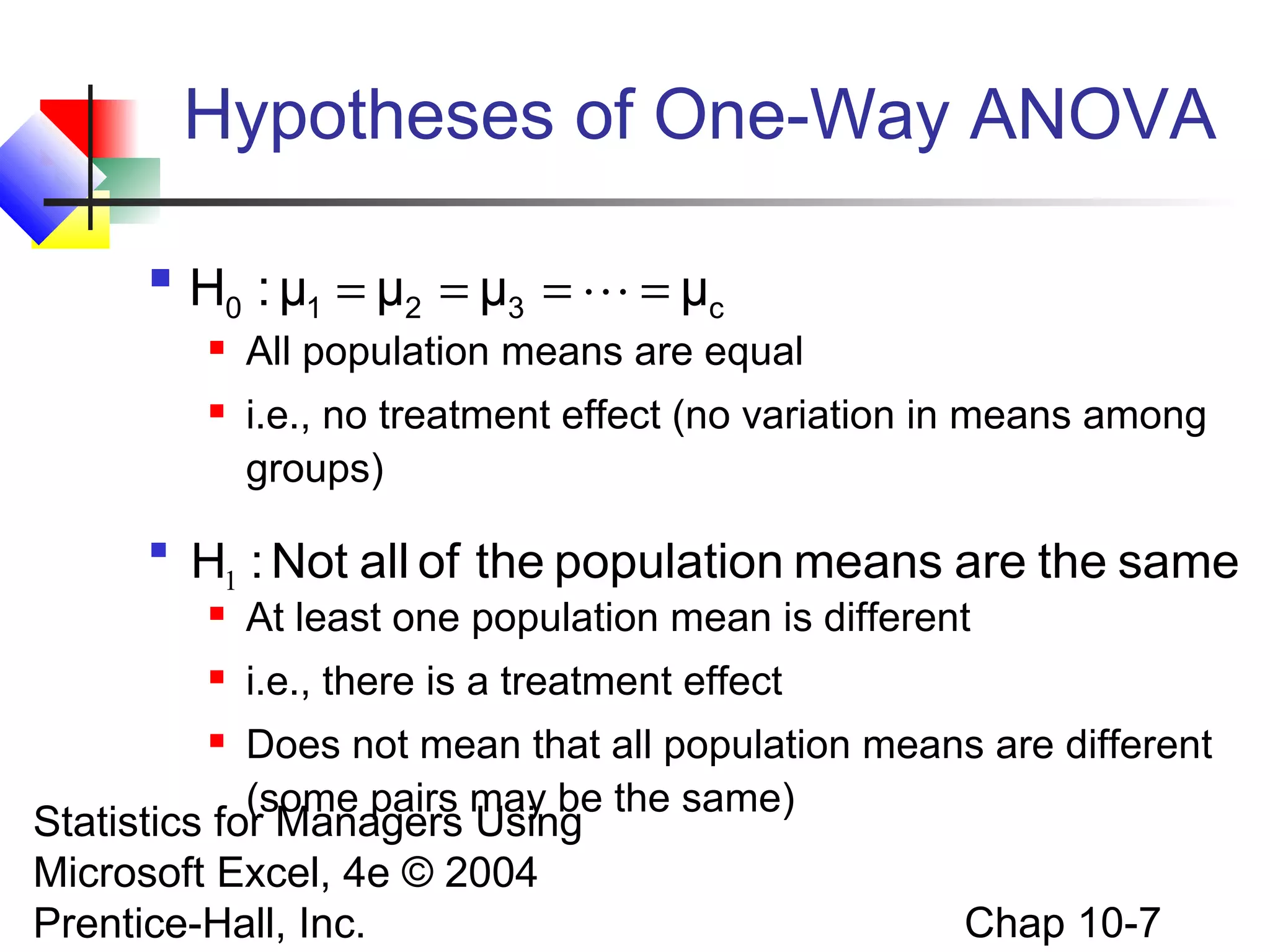
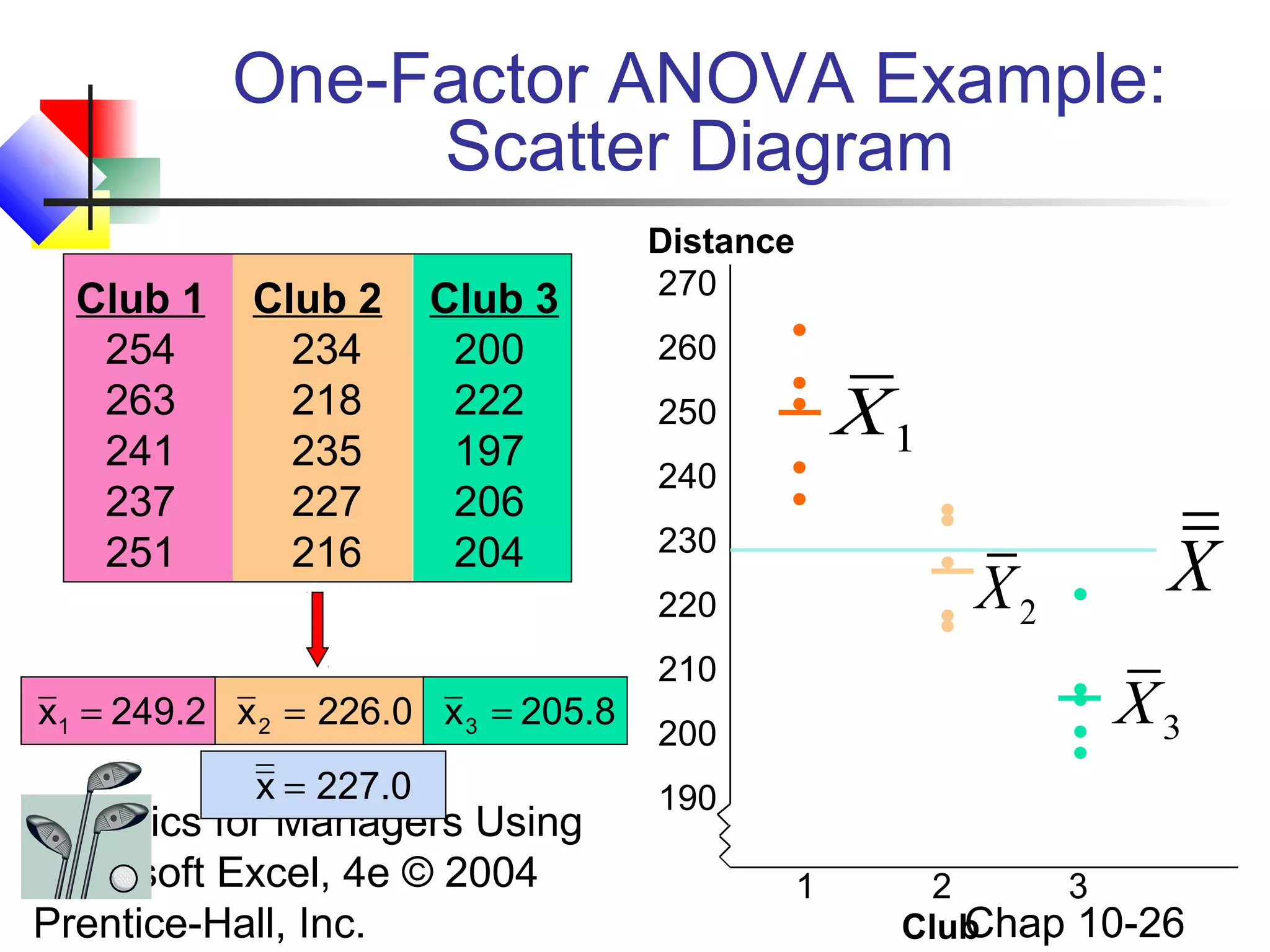
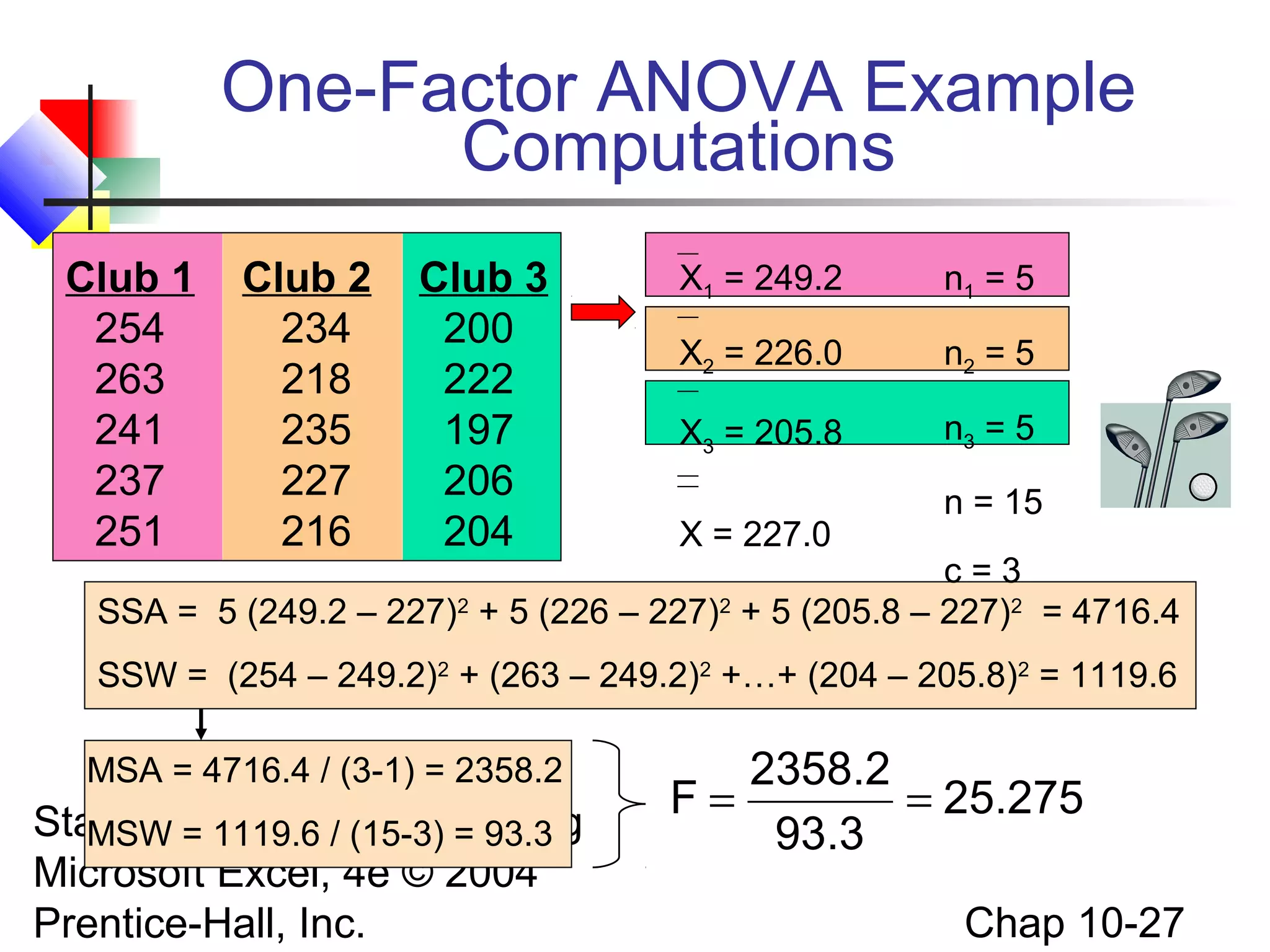
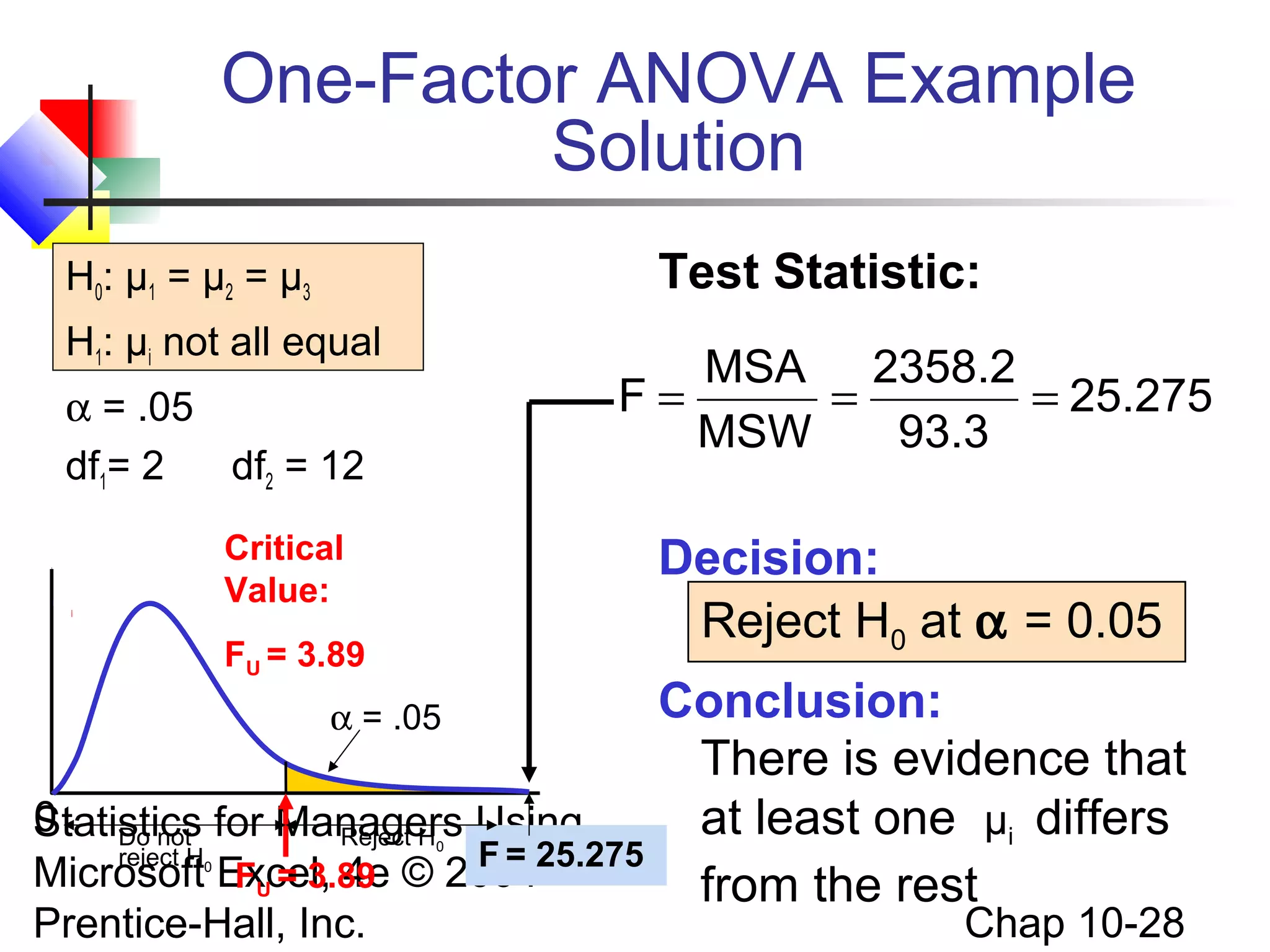
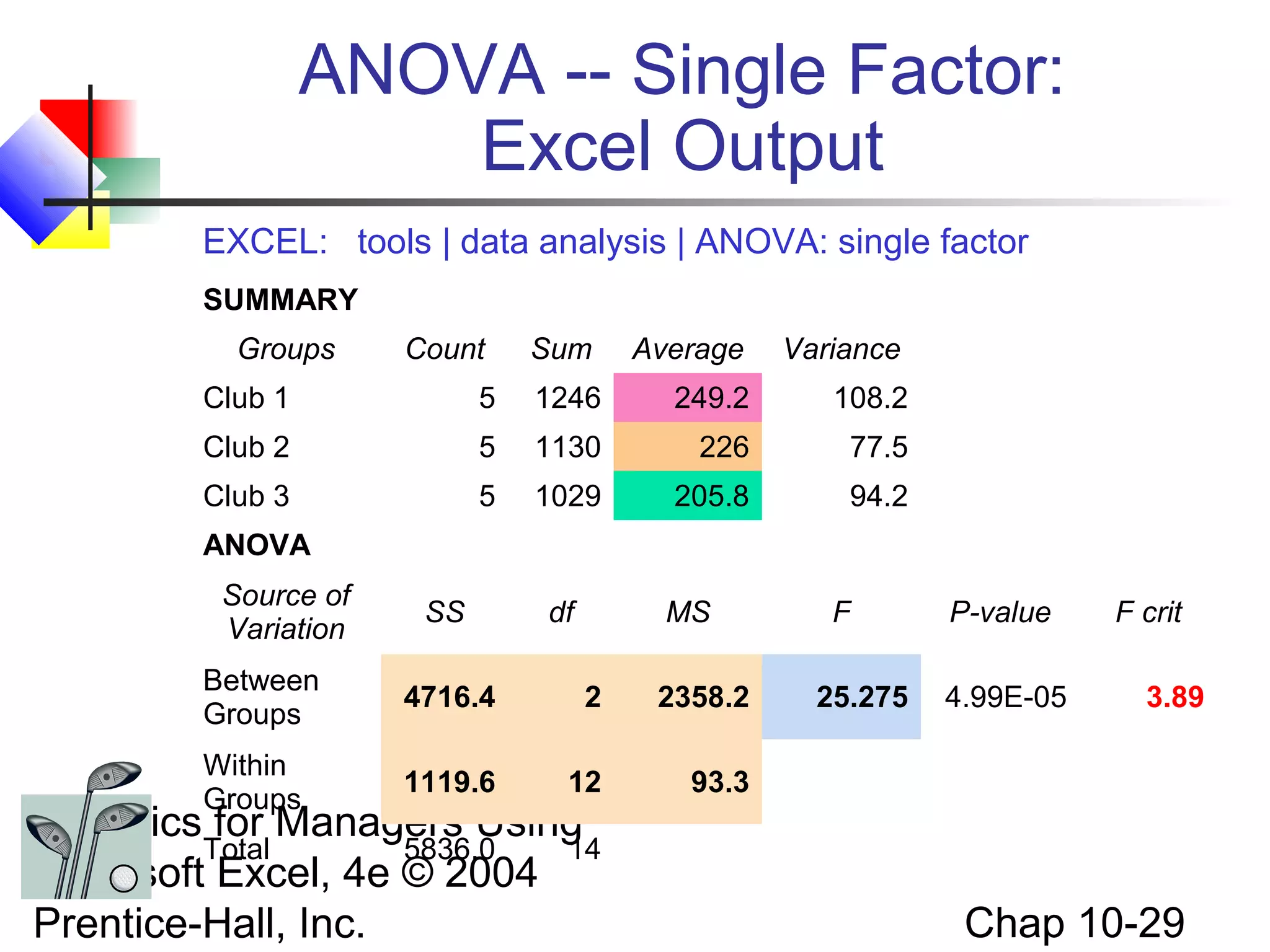

The document provides an overview of analysis of variance (ANOVA) techniques, including: - One-way ANOVA to evaluate differences between three or more group means and the assumptions of one-way ANOVA. - Partitioning total variation into between-group and within-group components. - Computing test statistics like the F-ratio to test for differences between group means. - Interpreting one-way ANOVA results including rejecting the null hypothesis of no difference between means. - An example one-way ANOVA calculation and interpretation using golf club distance data.
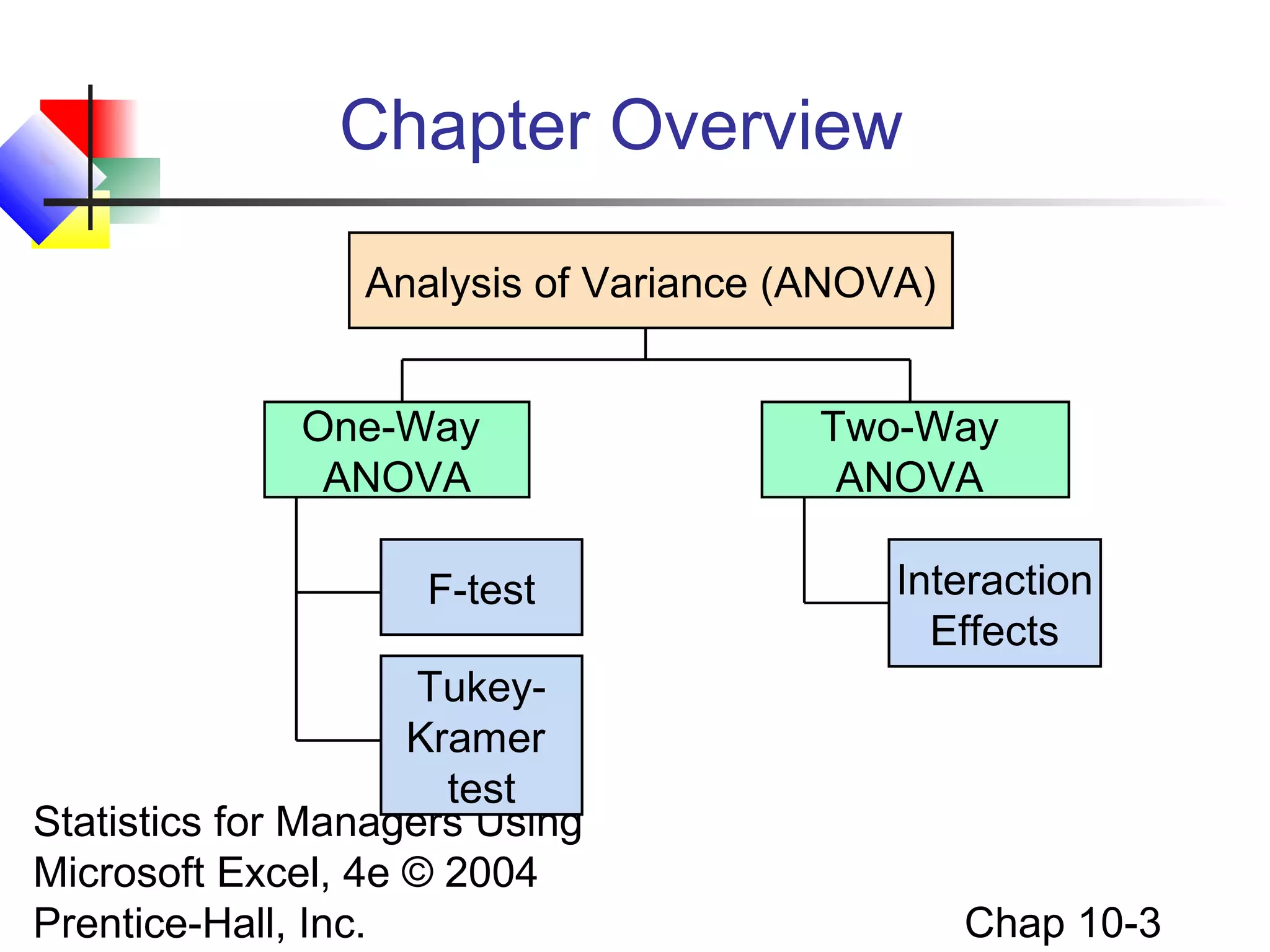
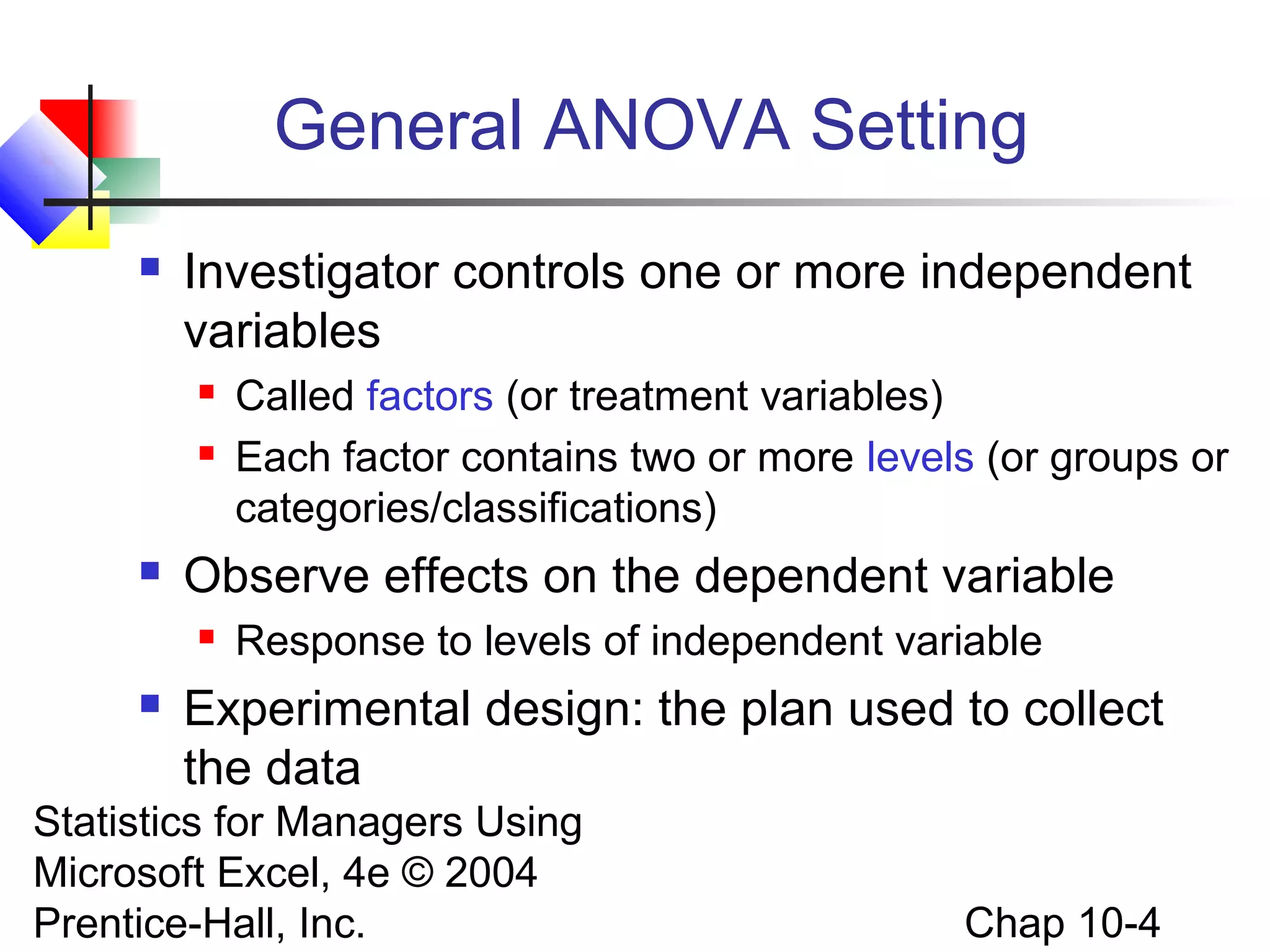
Introduces concepts of Analysis of Variance (ANOVA), including one-way and two-way designs, hypotheses, and the critical tests used.
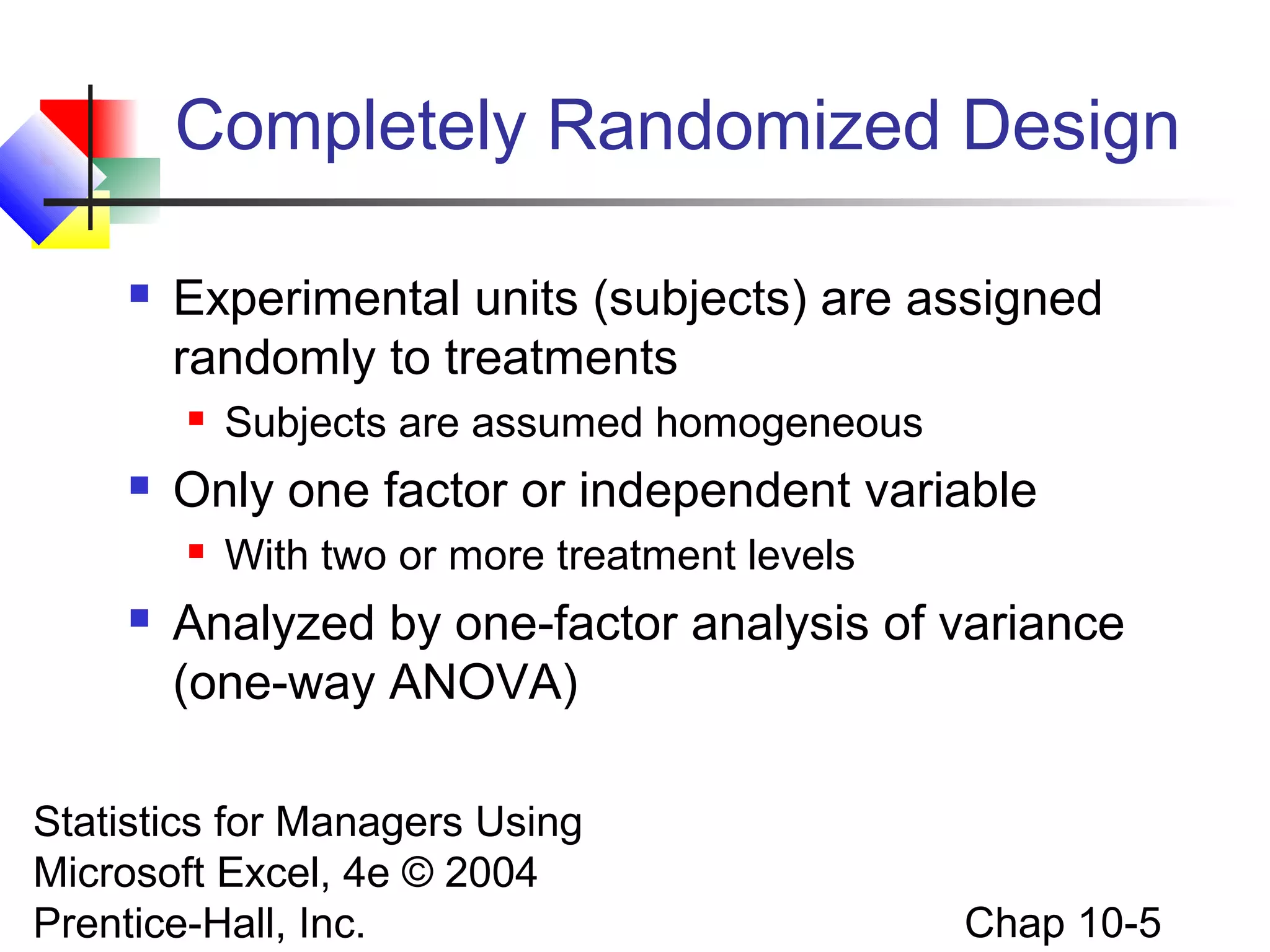
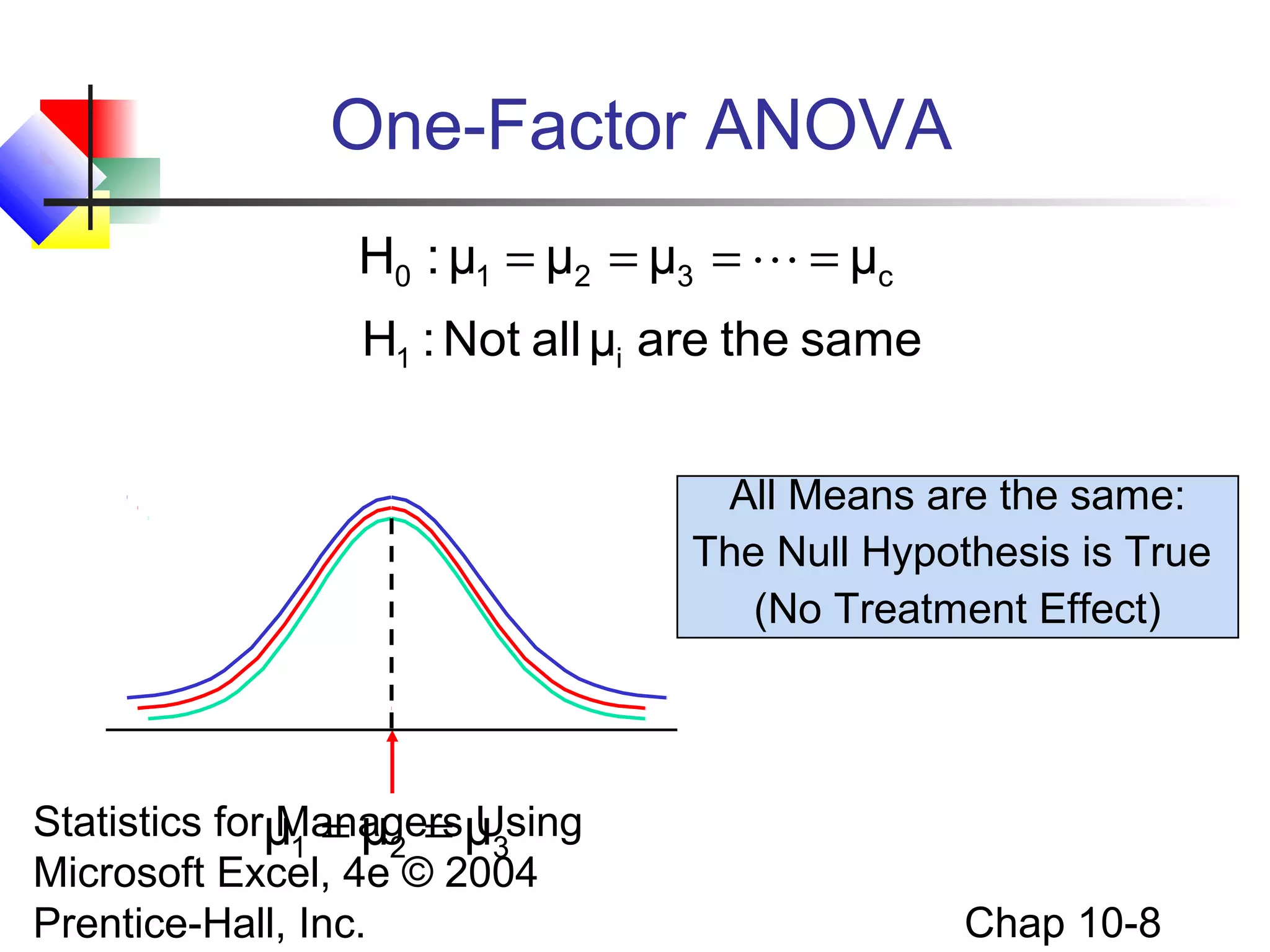
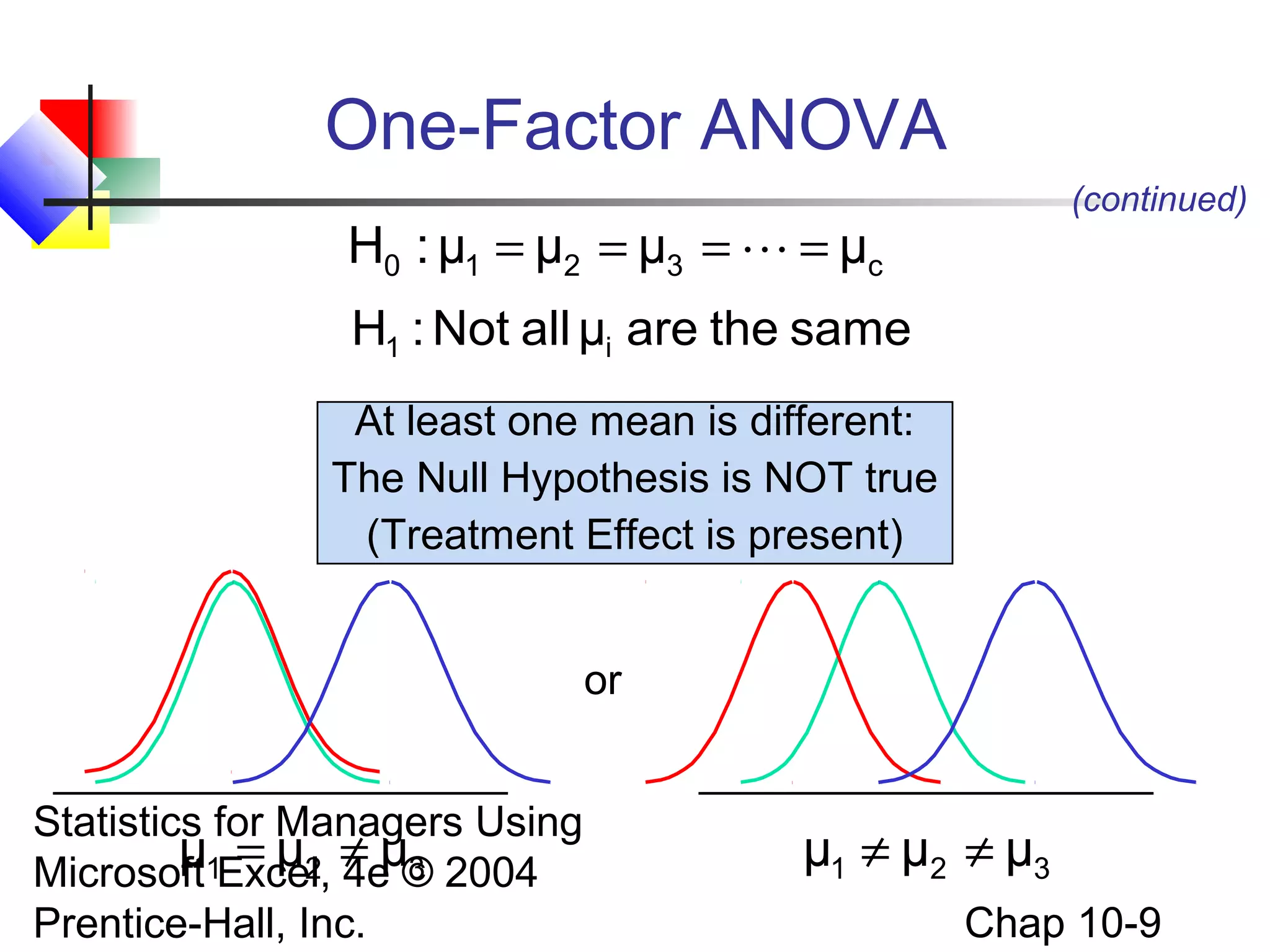
Describes experimental design, completely randomized design, and the framework for conducting one-way ANOVA, including population assumptions and hypothesis formulation.
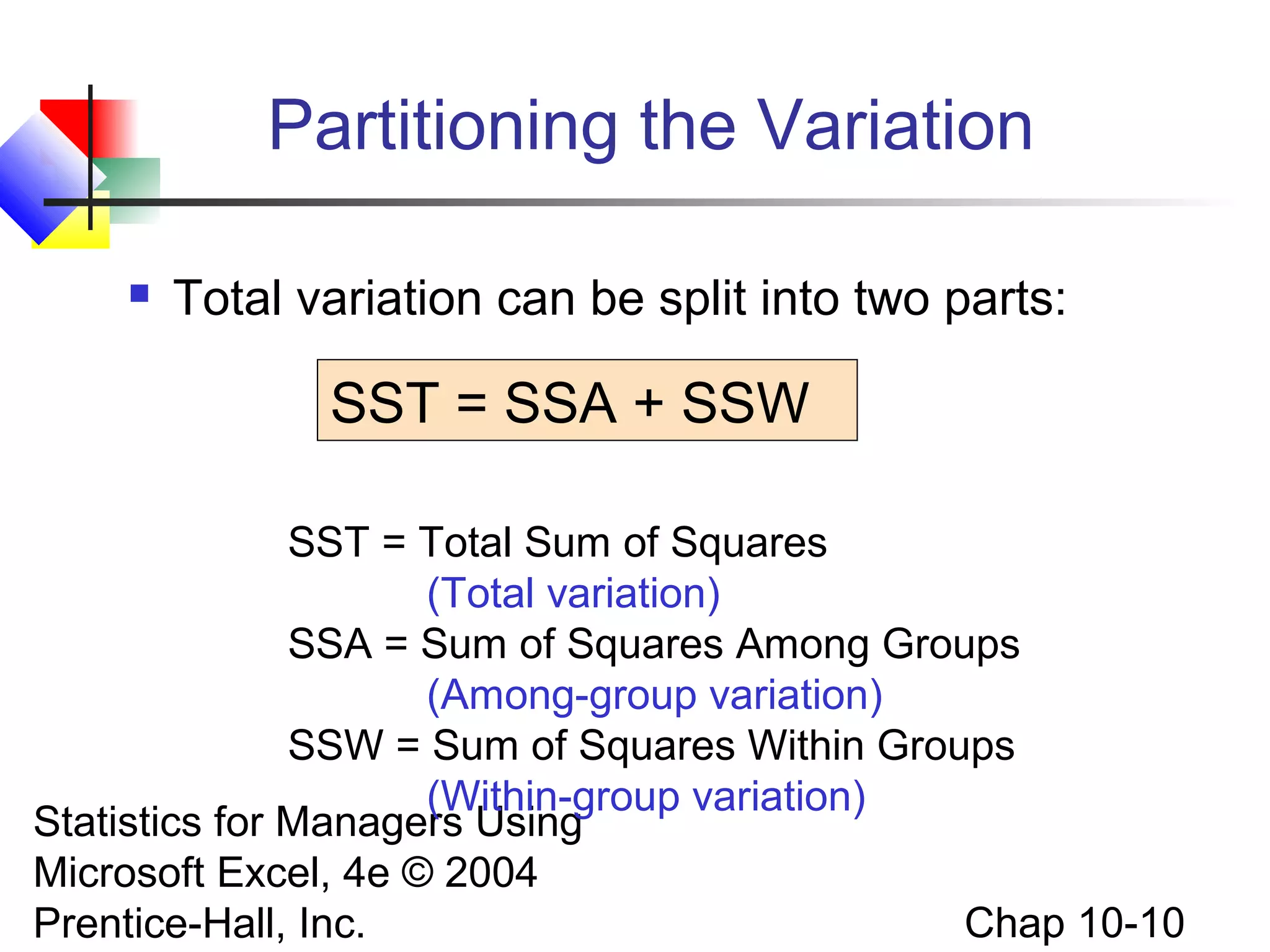
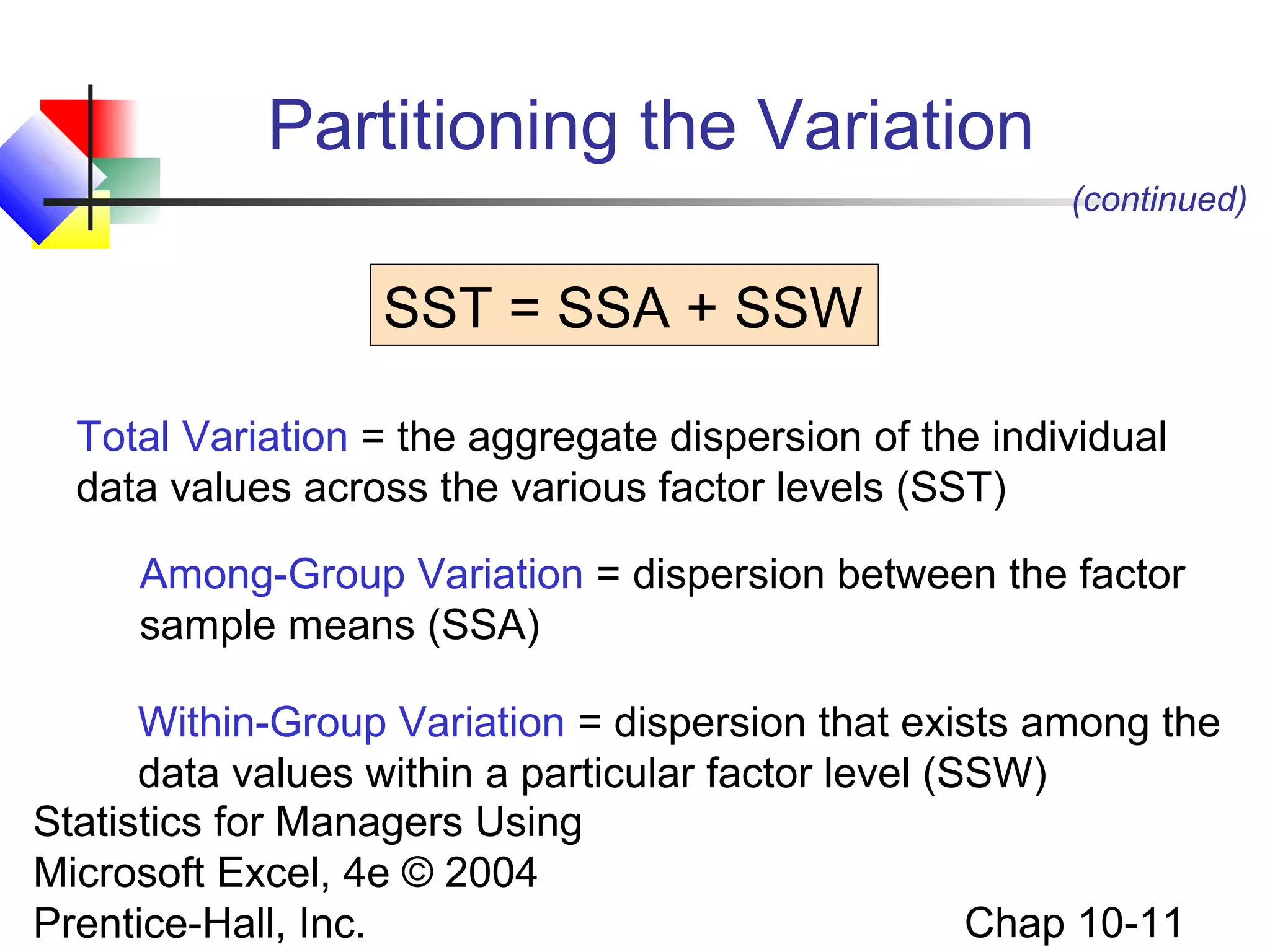
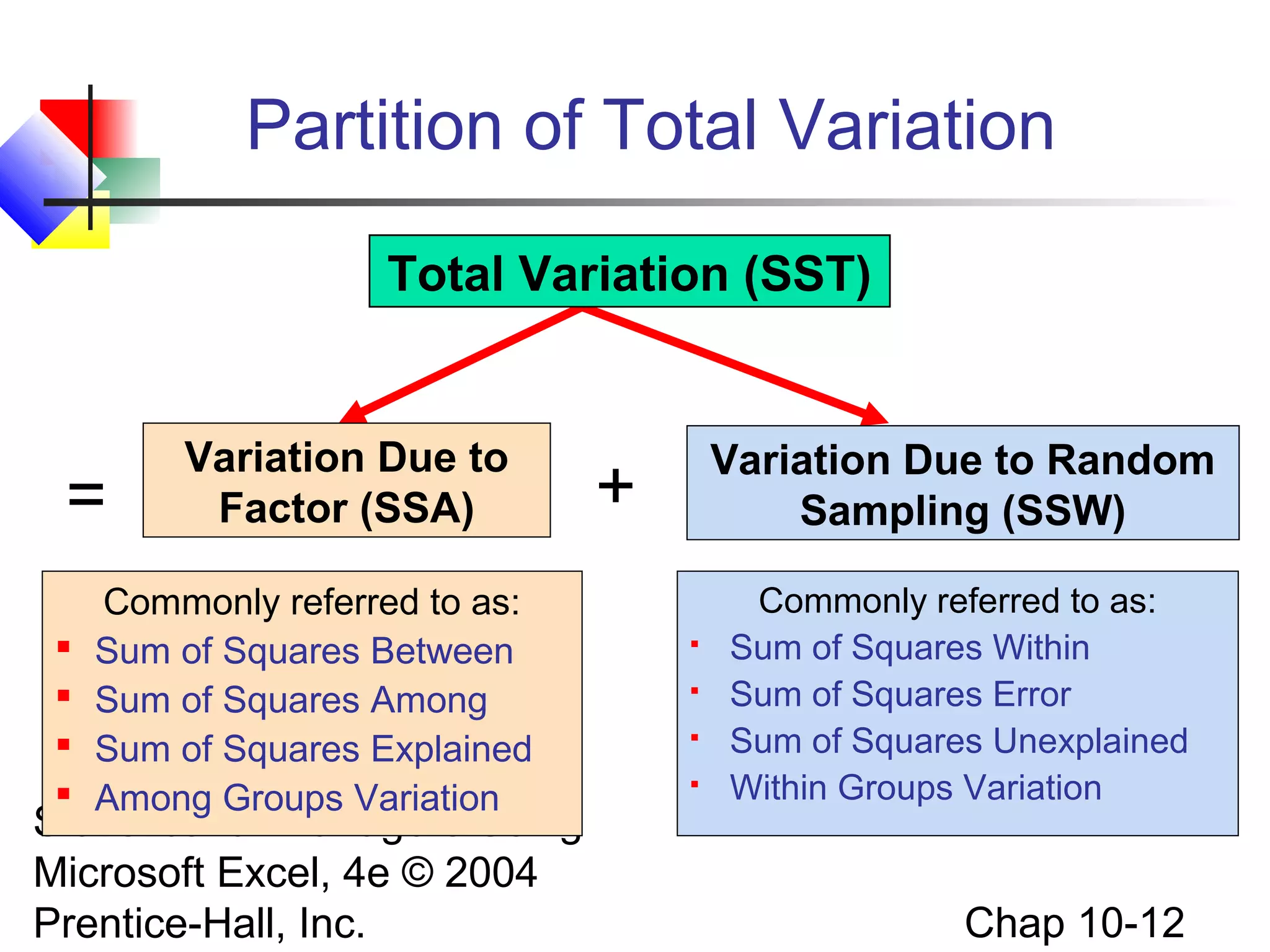
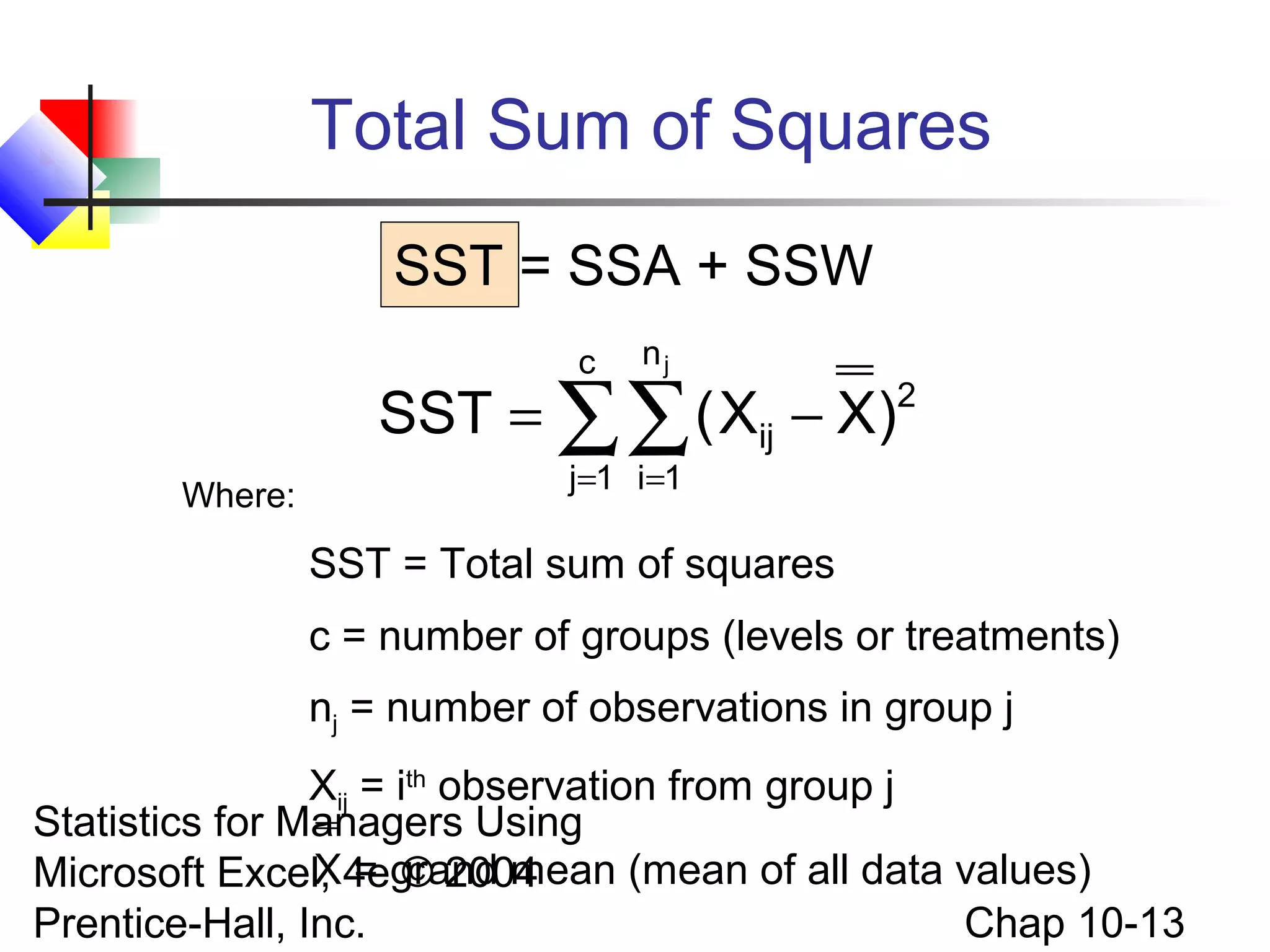
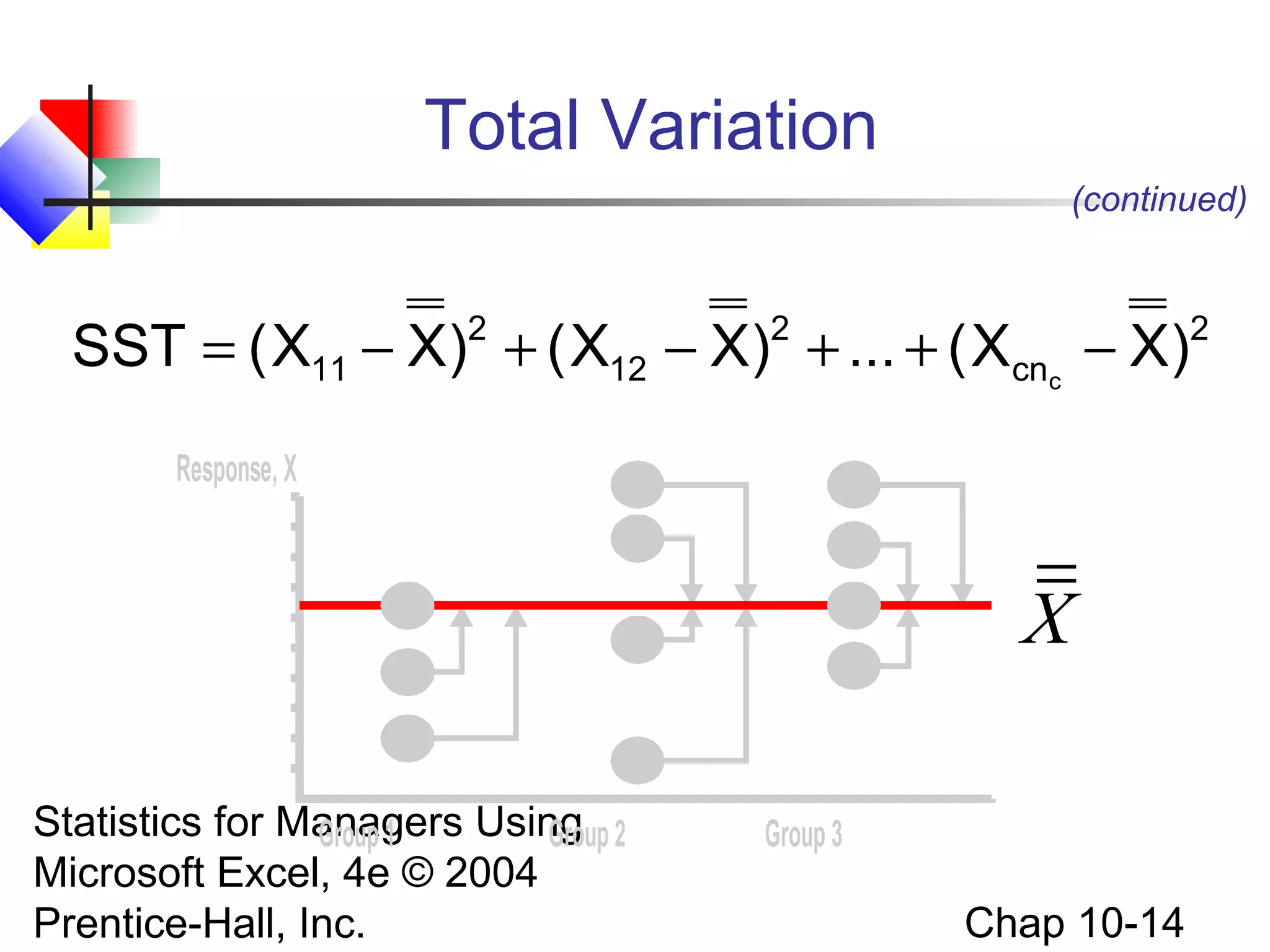
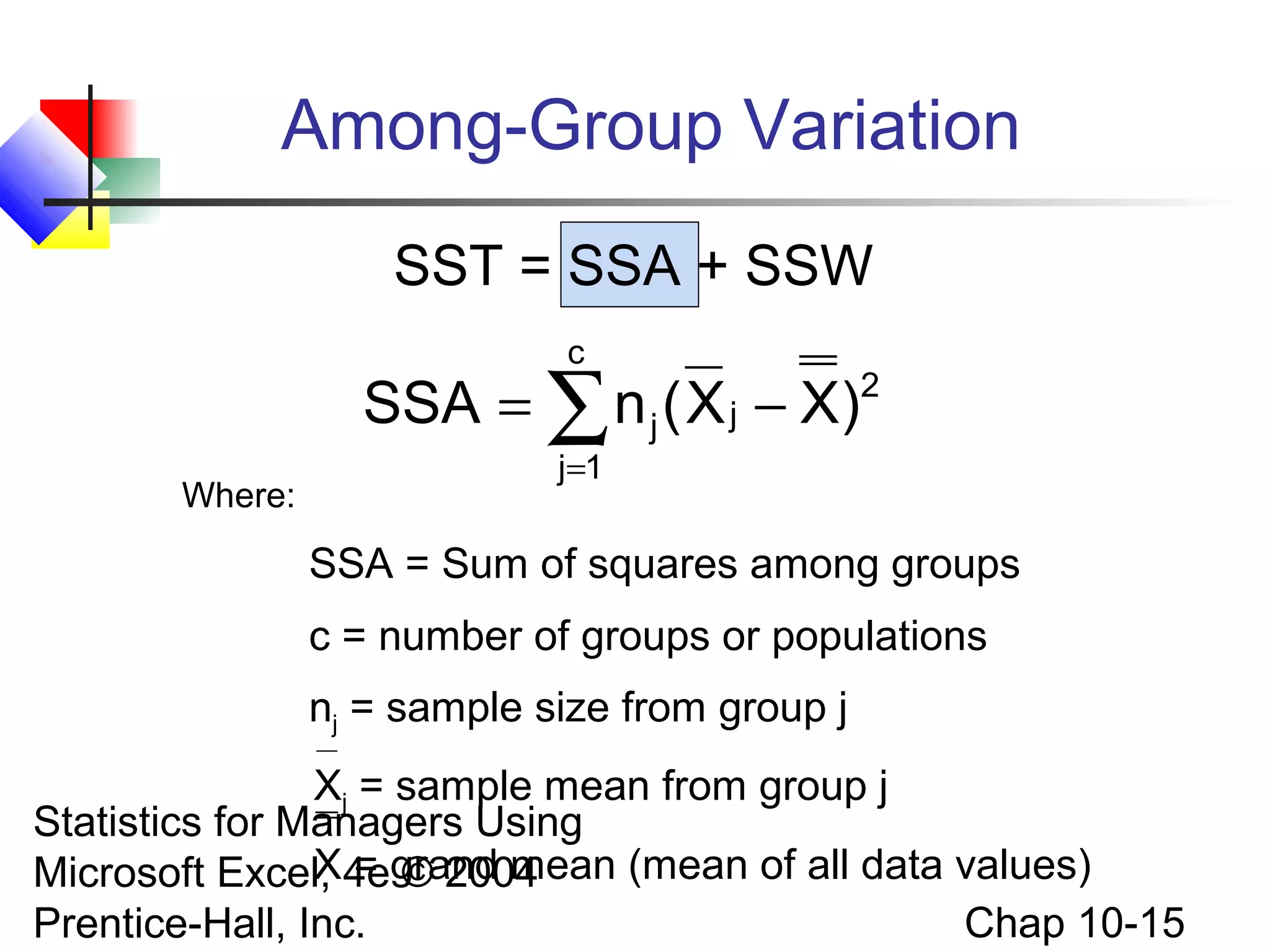
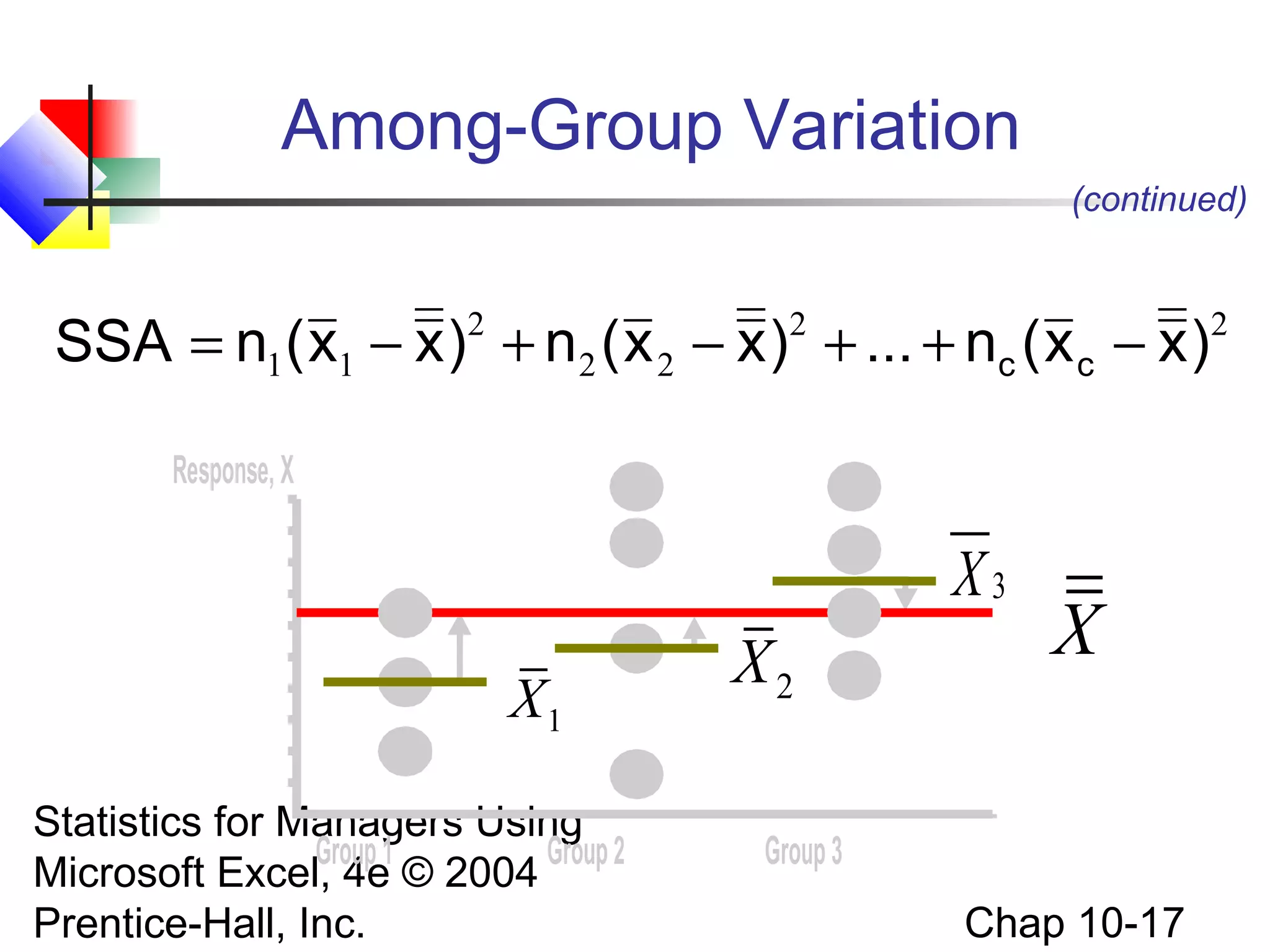
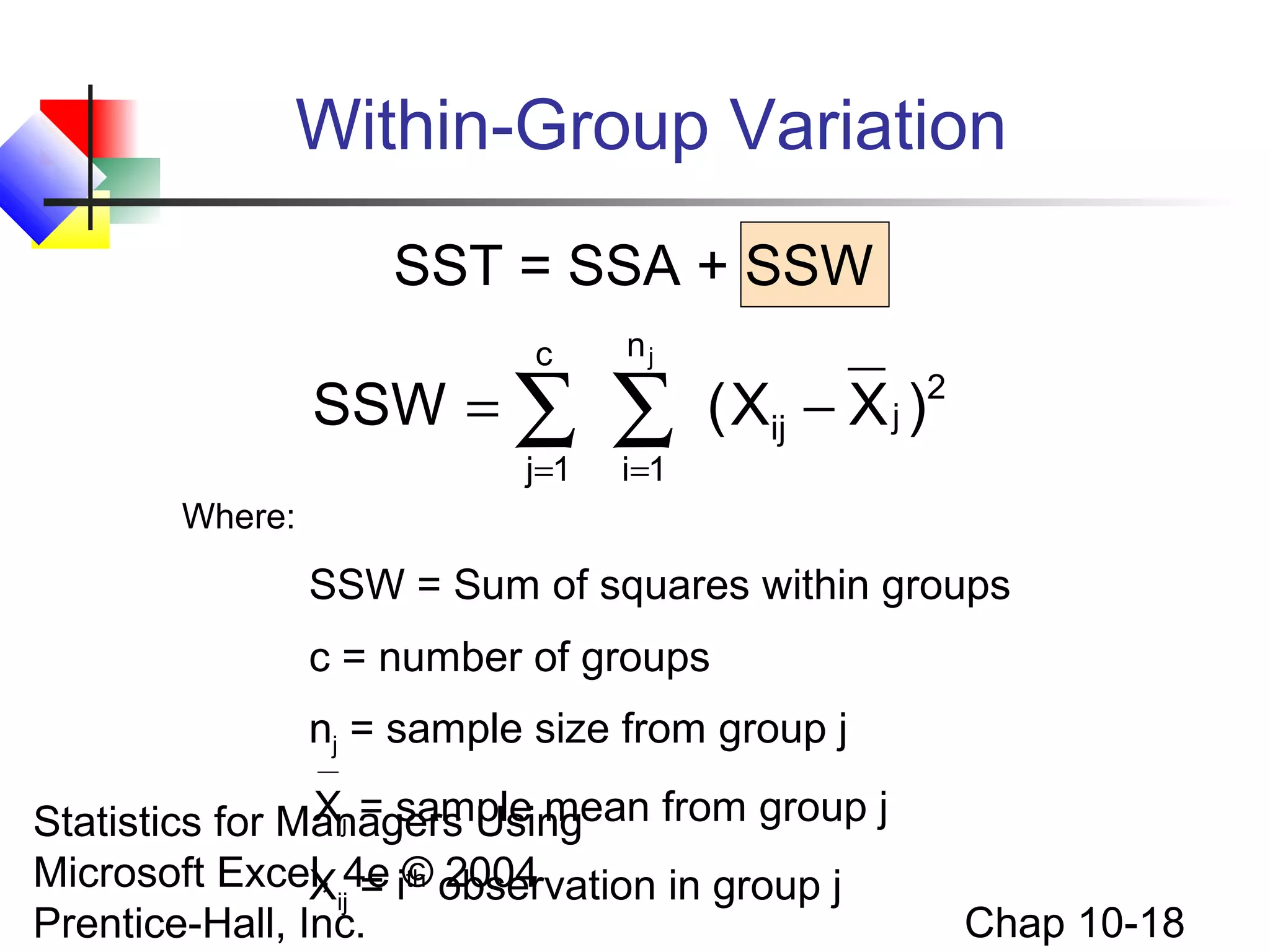
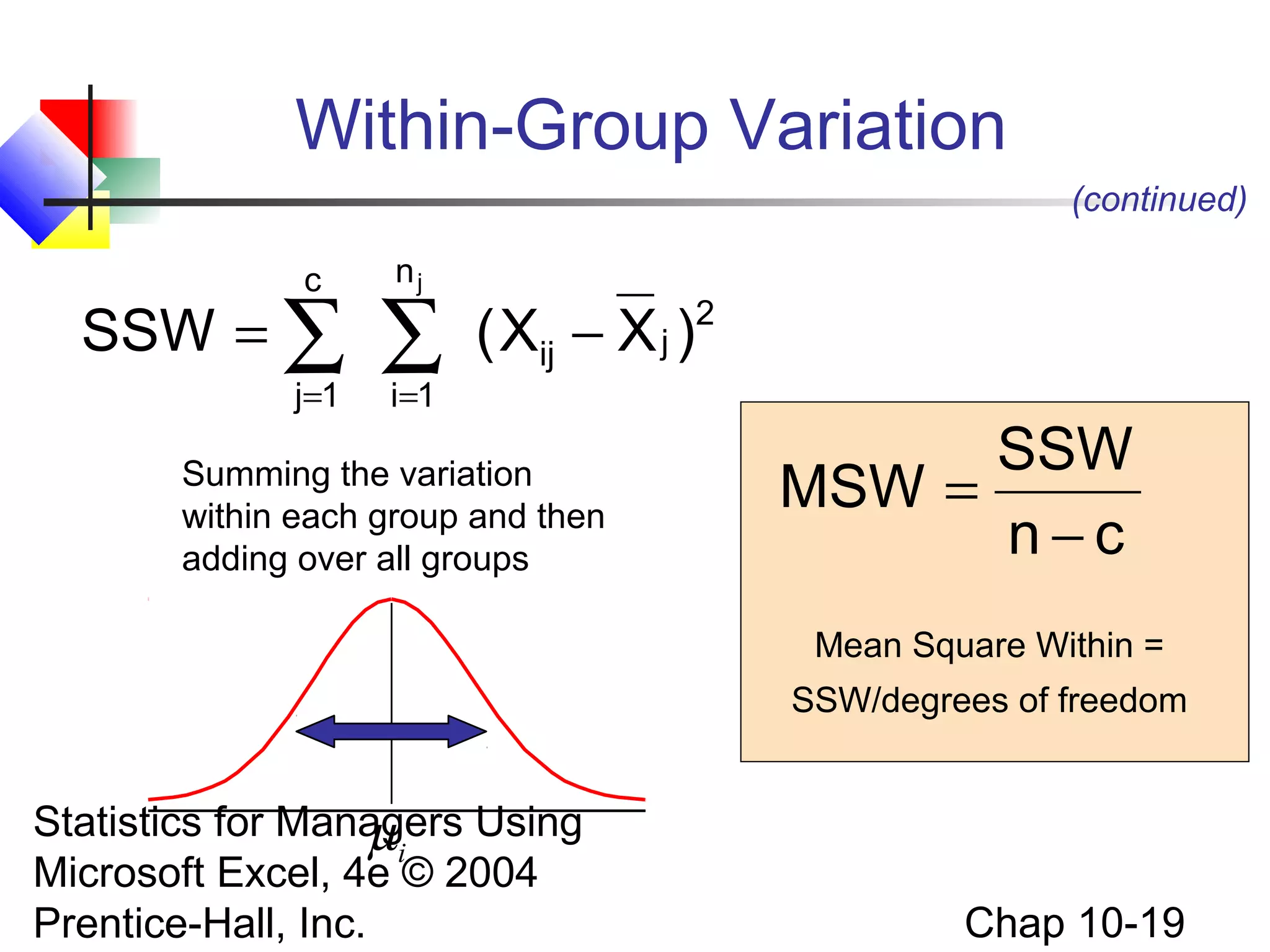
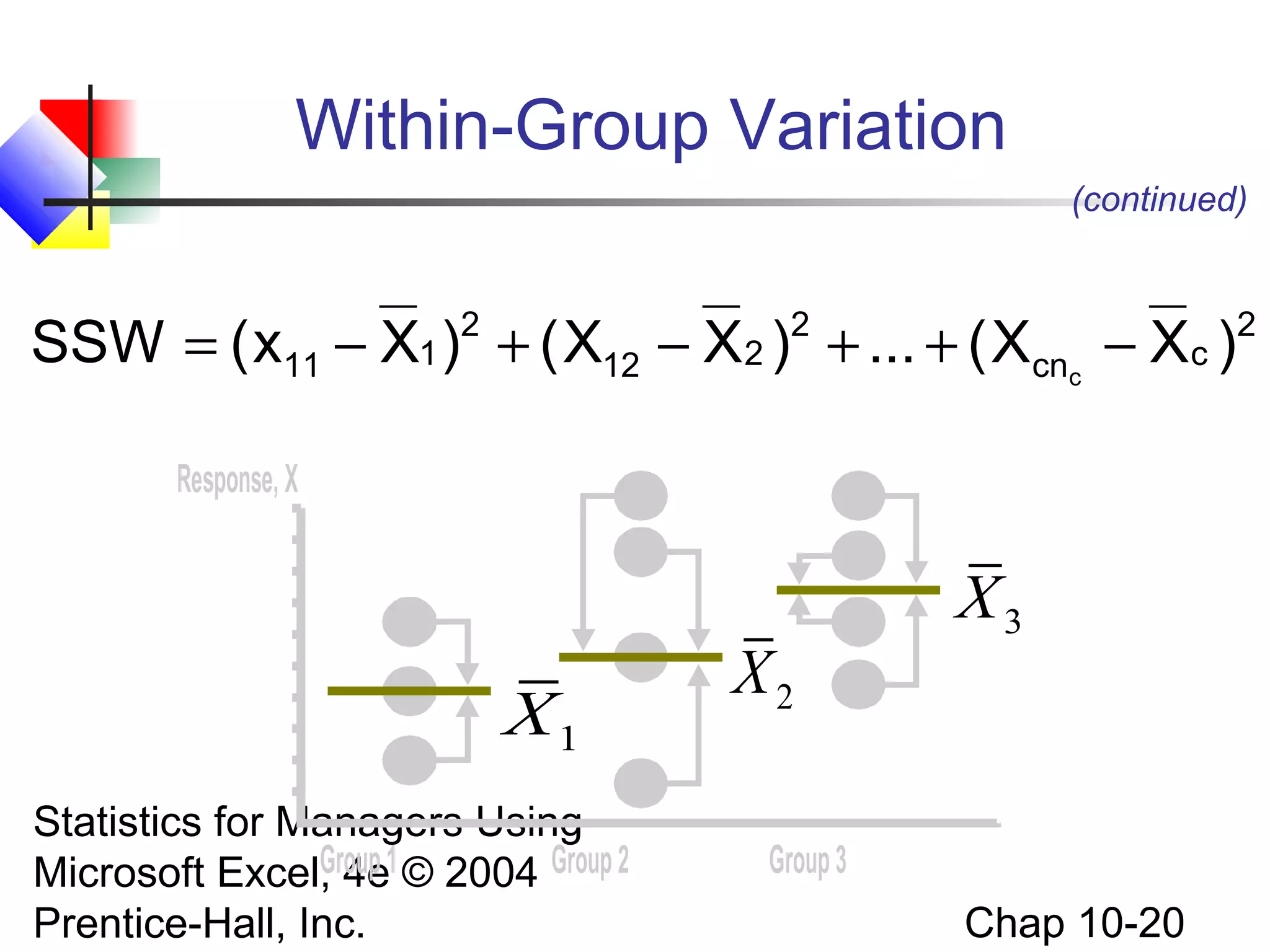
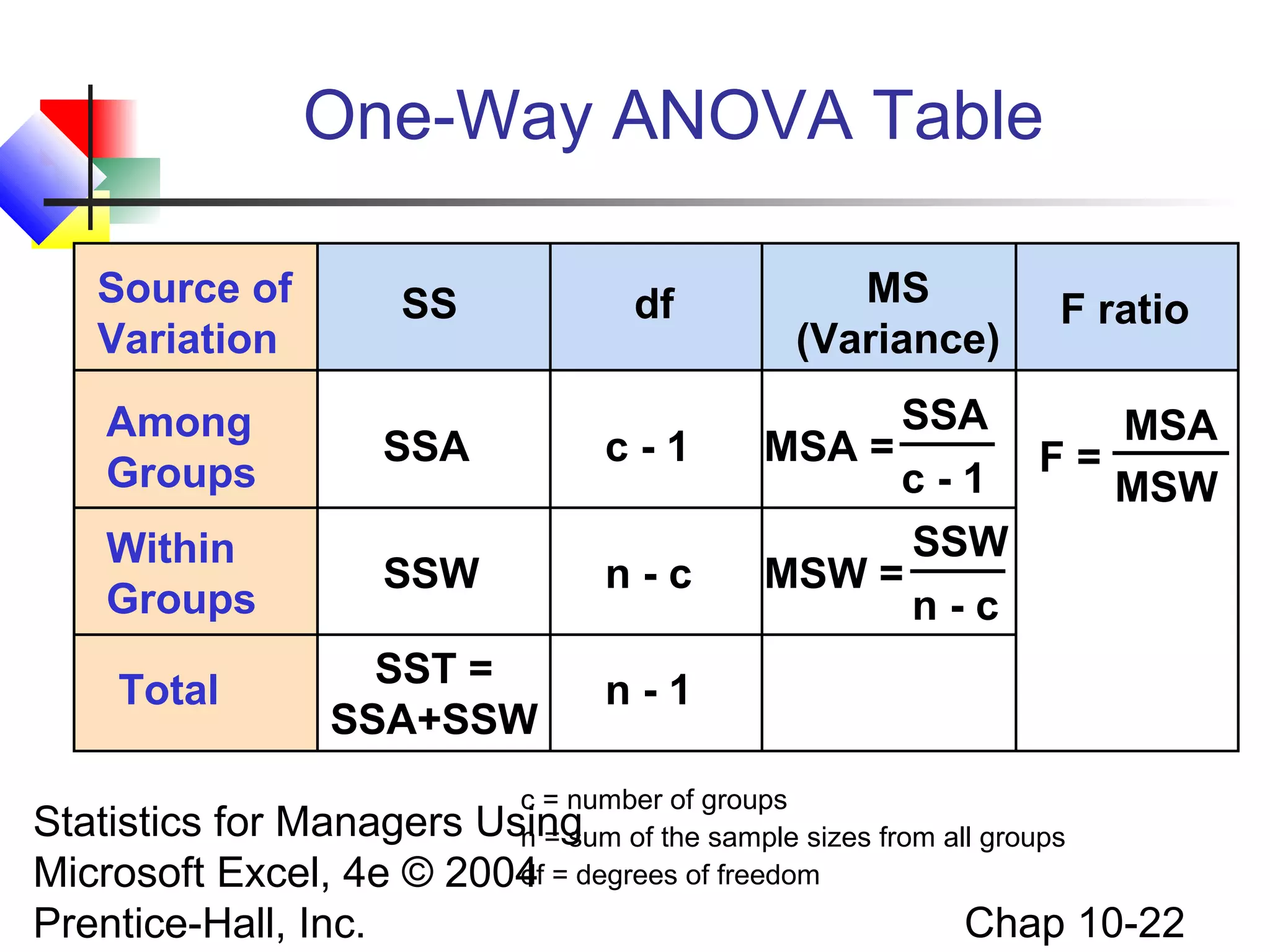
Details on partitioning total variation (SST) into among-group (SSA) and within-group (SSW) variations, and how these contribute to understanding ANOVA results.
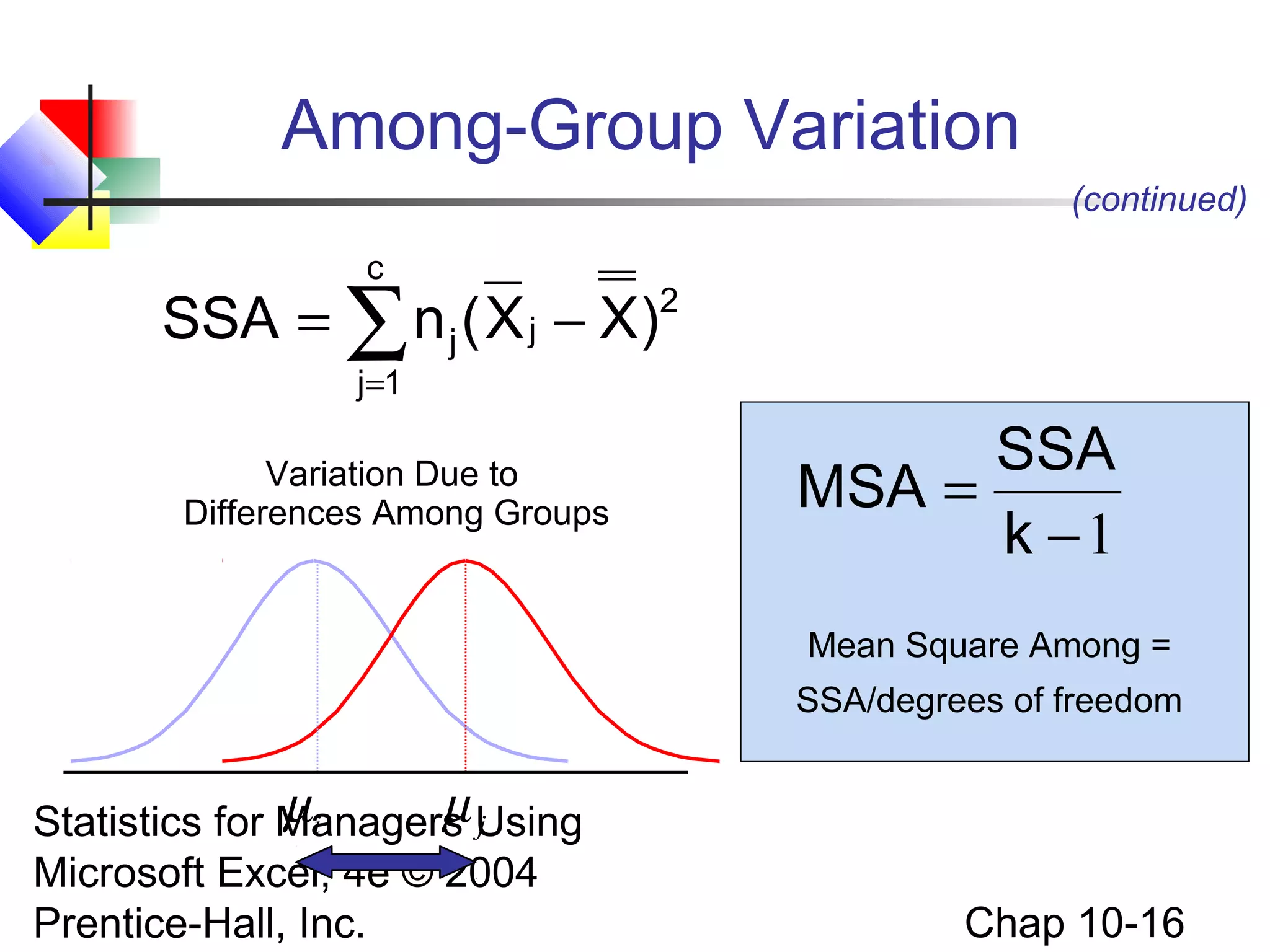
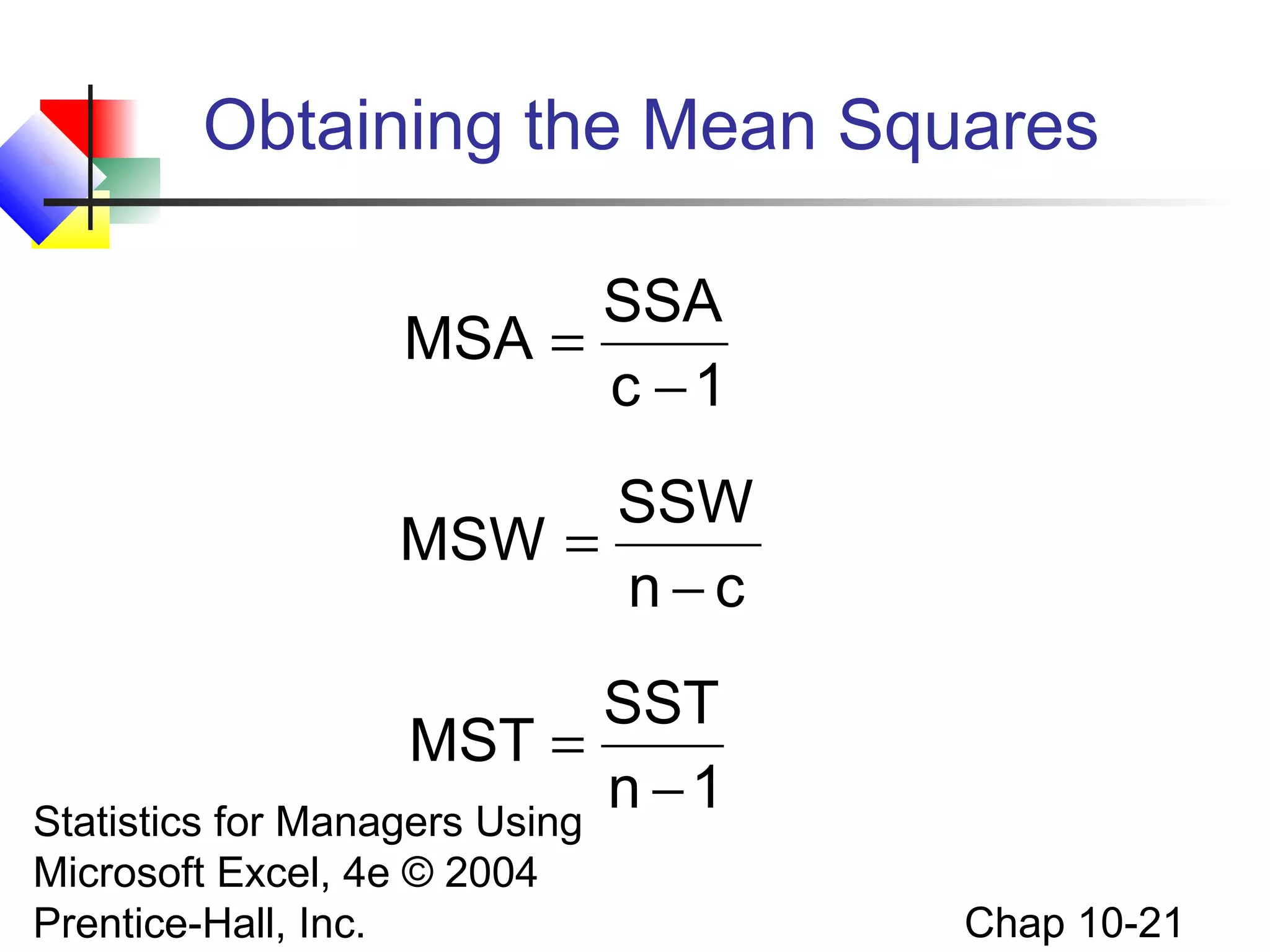
Explains how to calculate mean squares for among-group and within-group variations using their defined formulas.
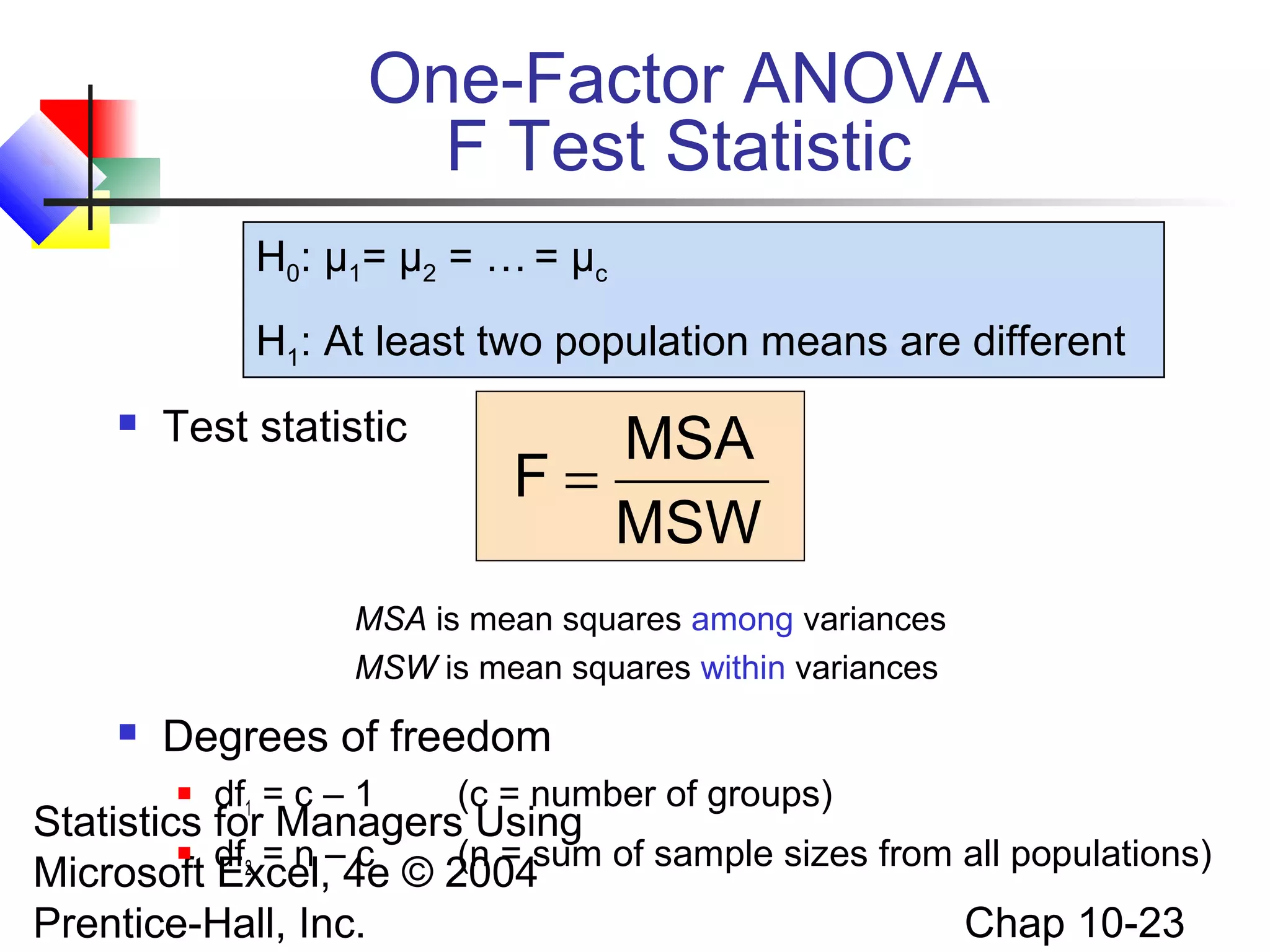
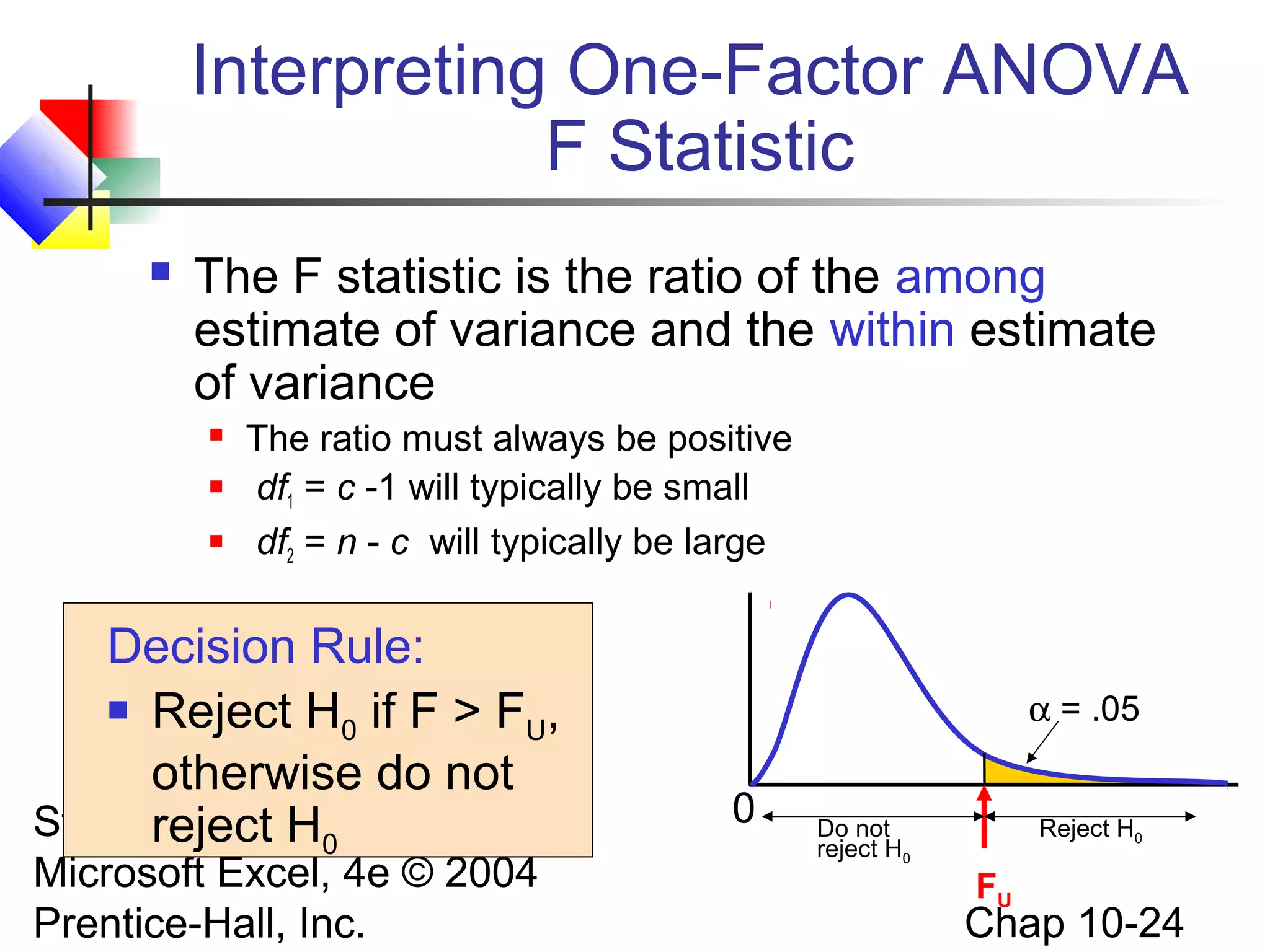
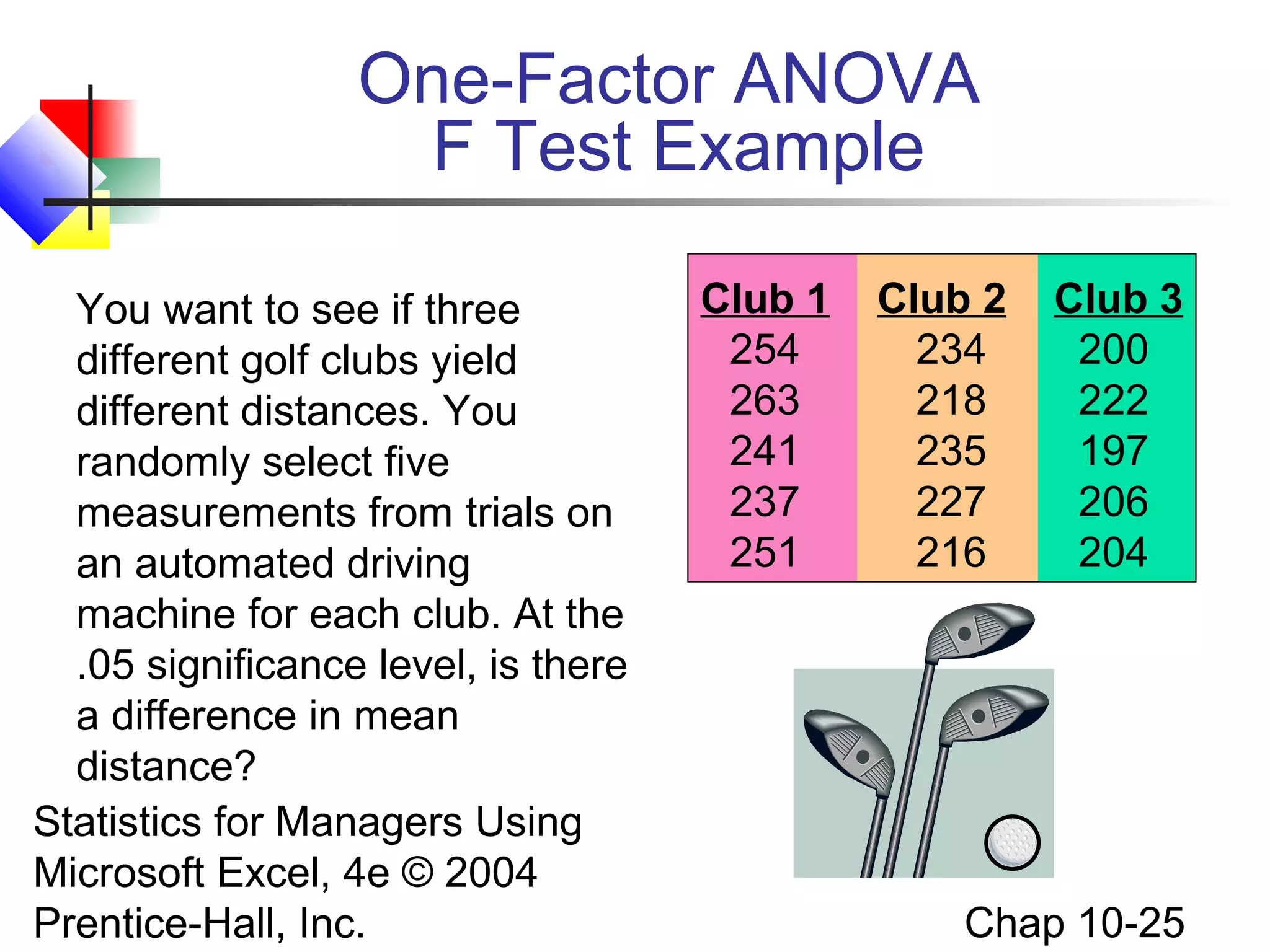
Describes the F-test statistic calculation in one-way ANOVA and provides a practical example with hypothesis testing and findings.
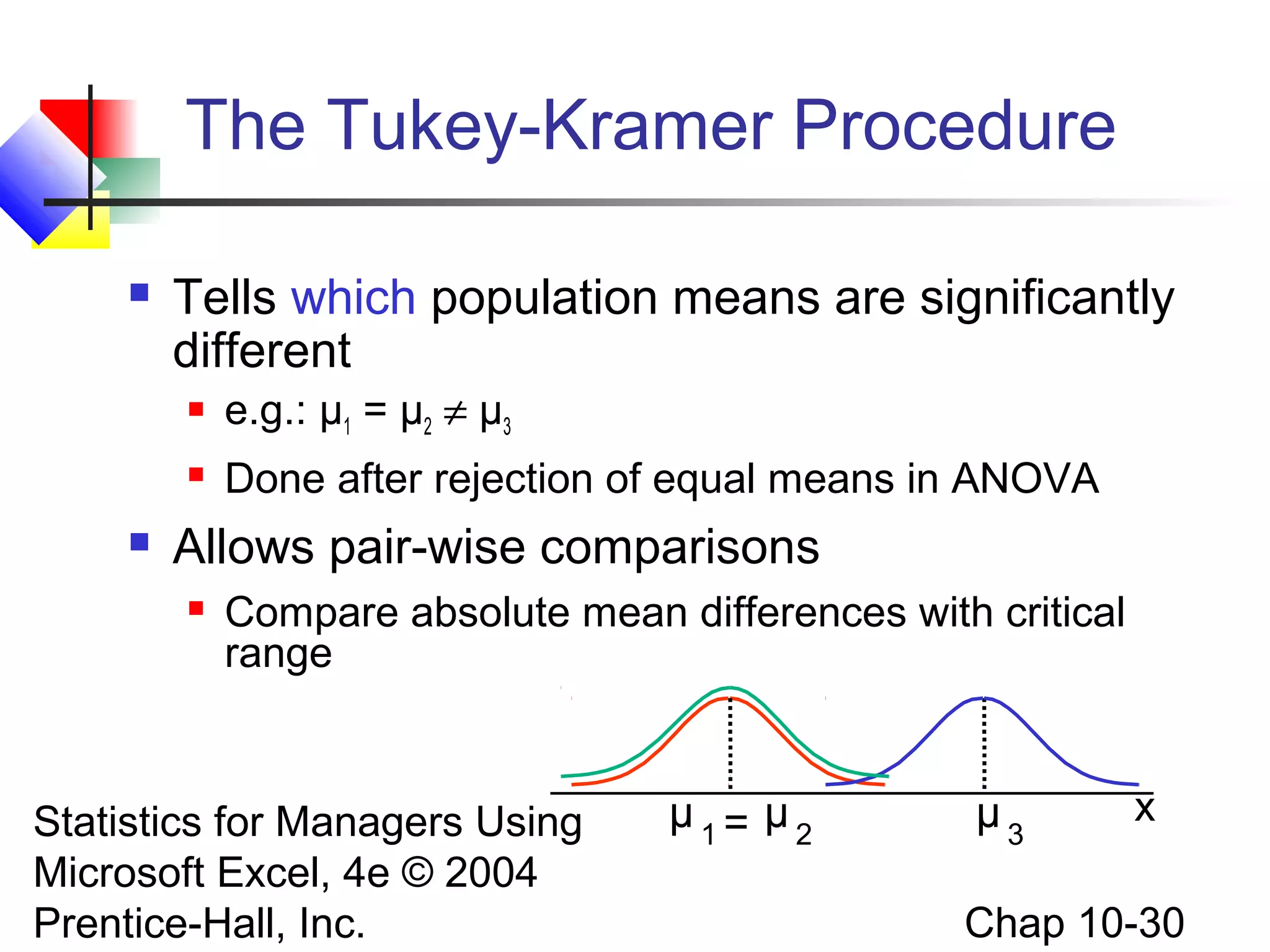
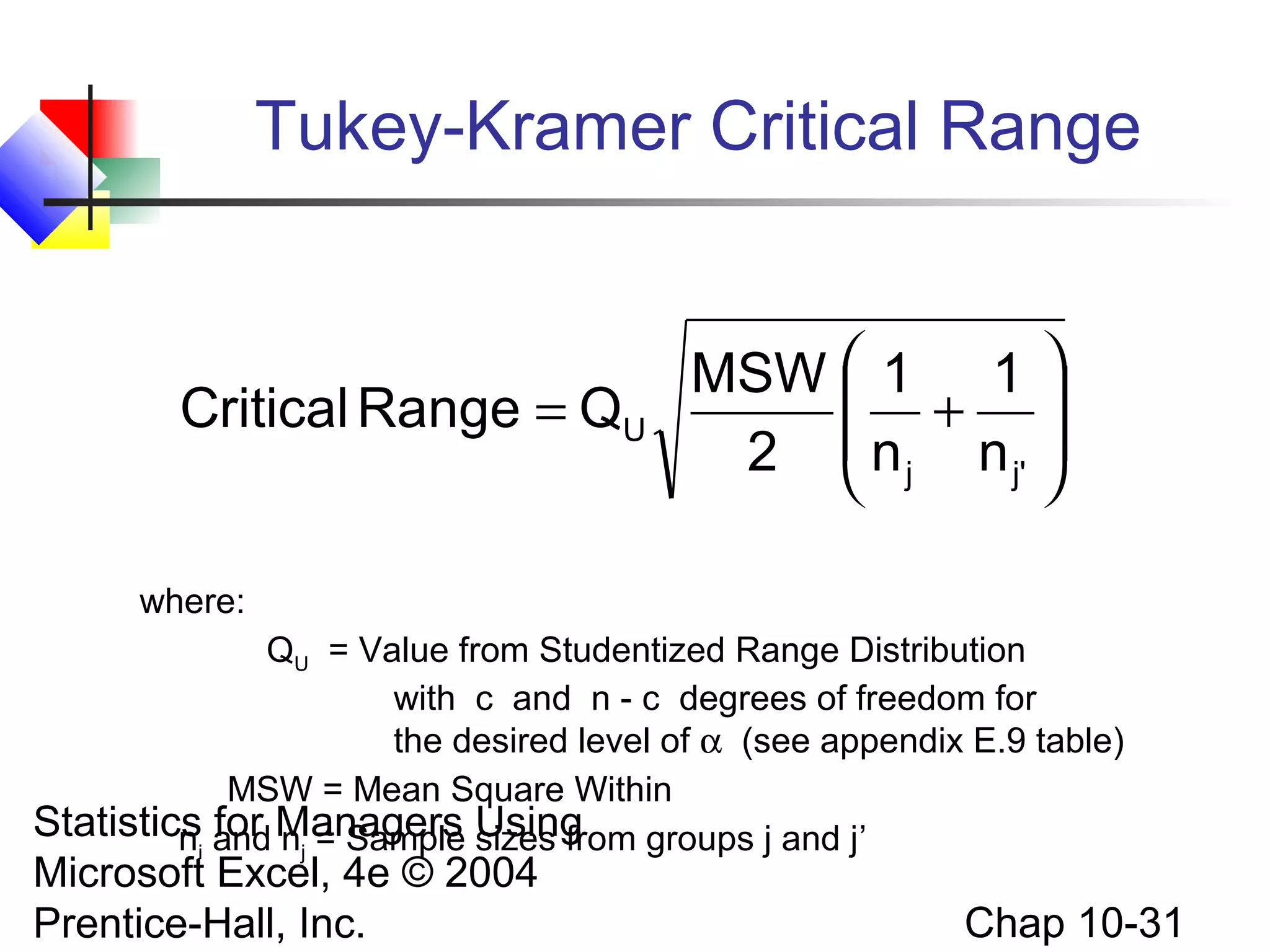
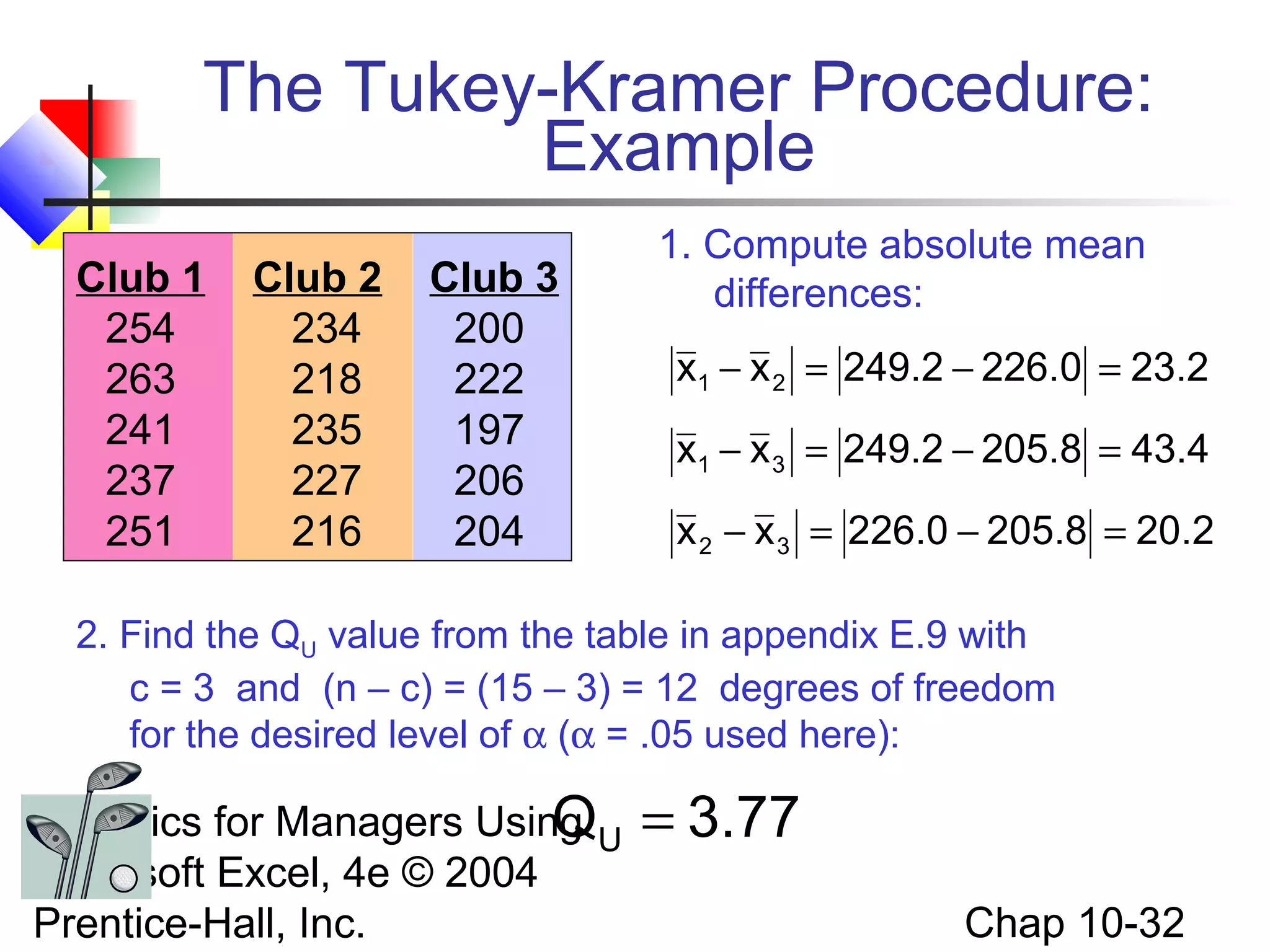
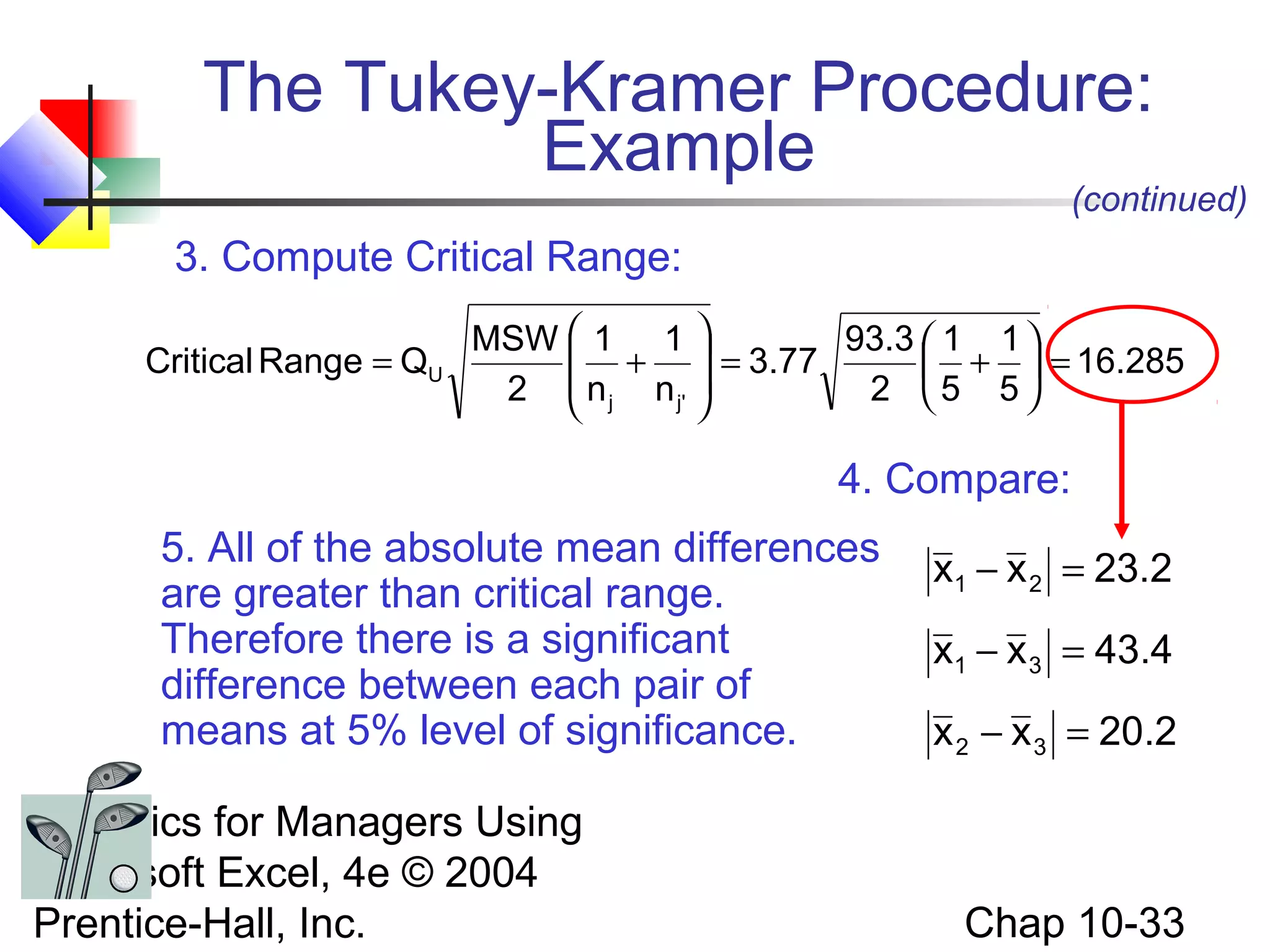
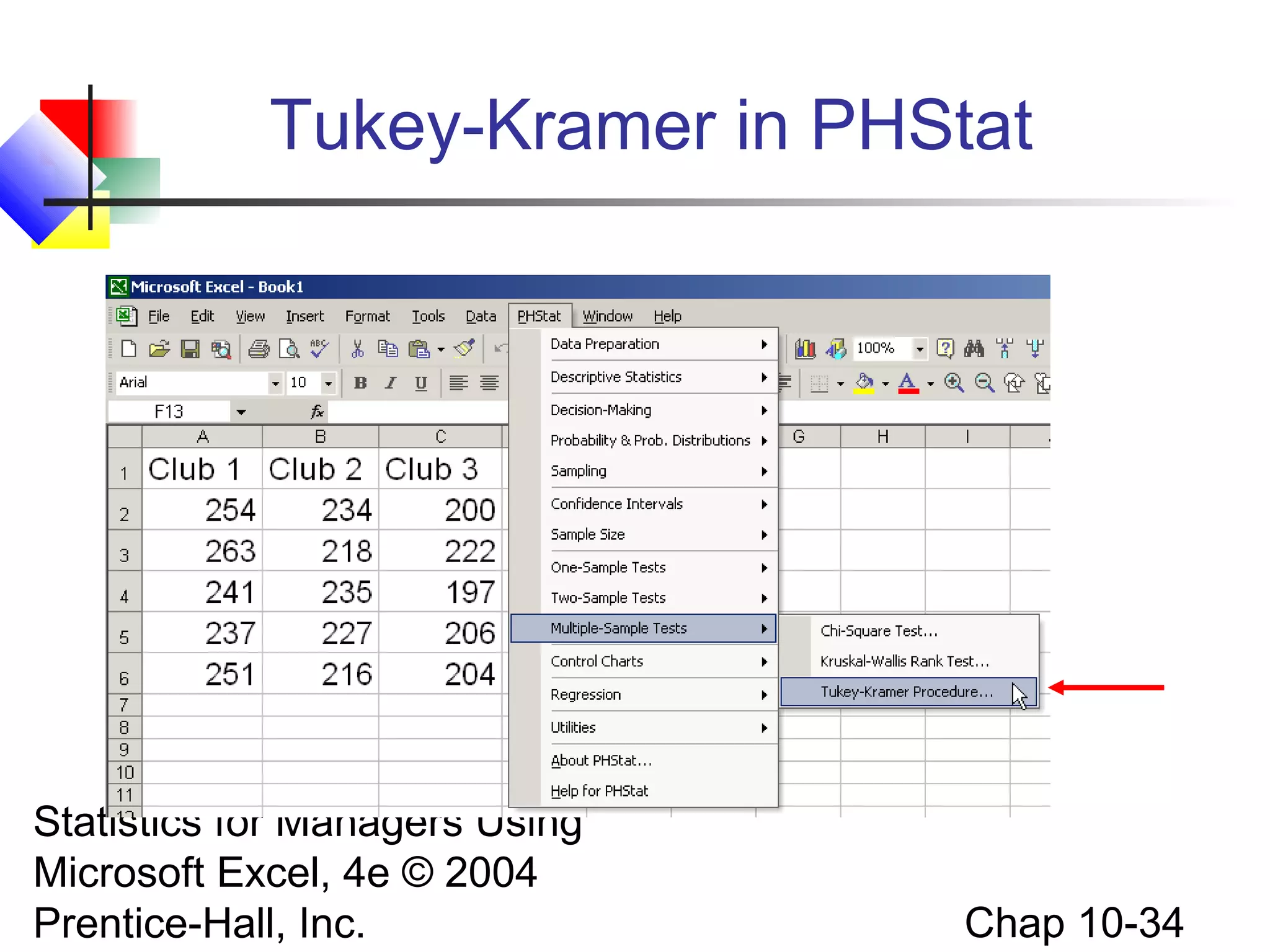
Presents results of one-way ANOVA from Excel outputs and introduces the Tukey-Kramer procedure for post-hoc analysis and comparisons.
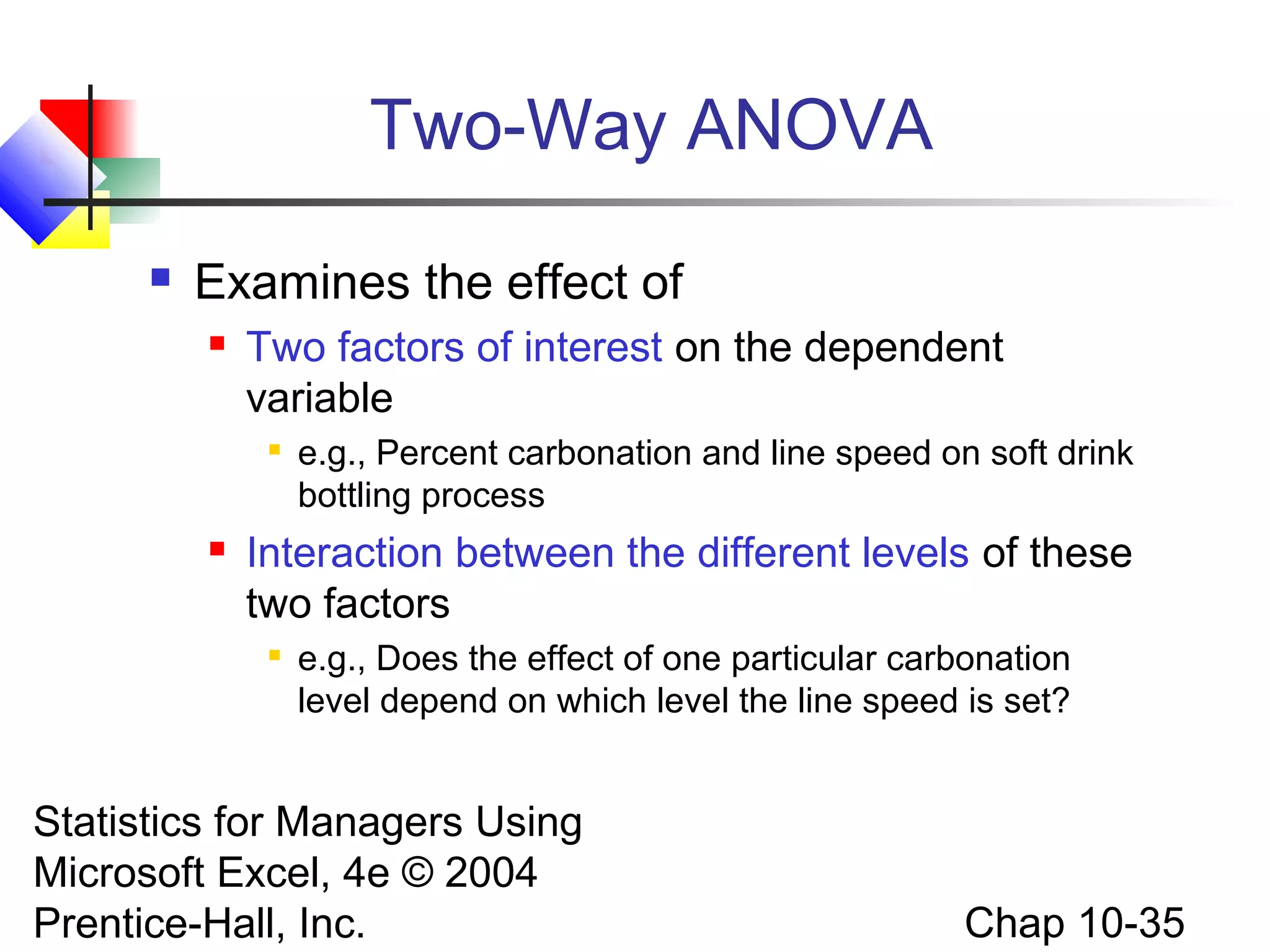
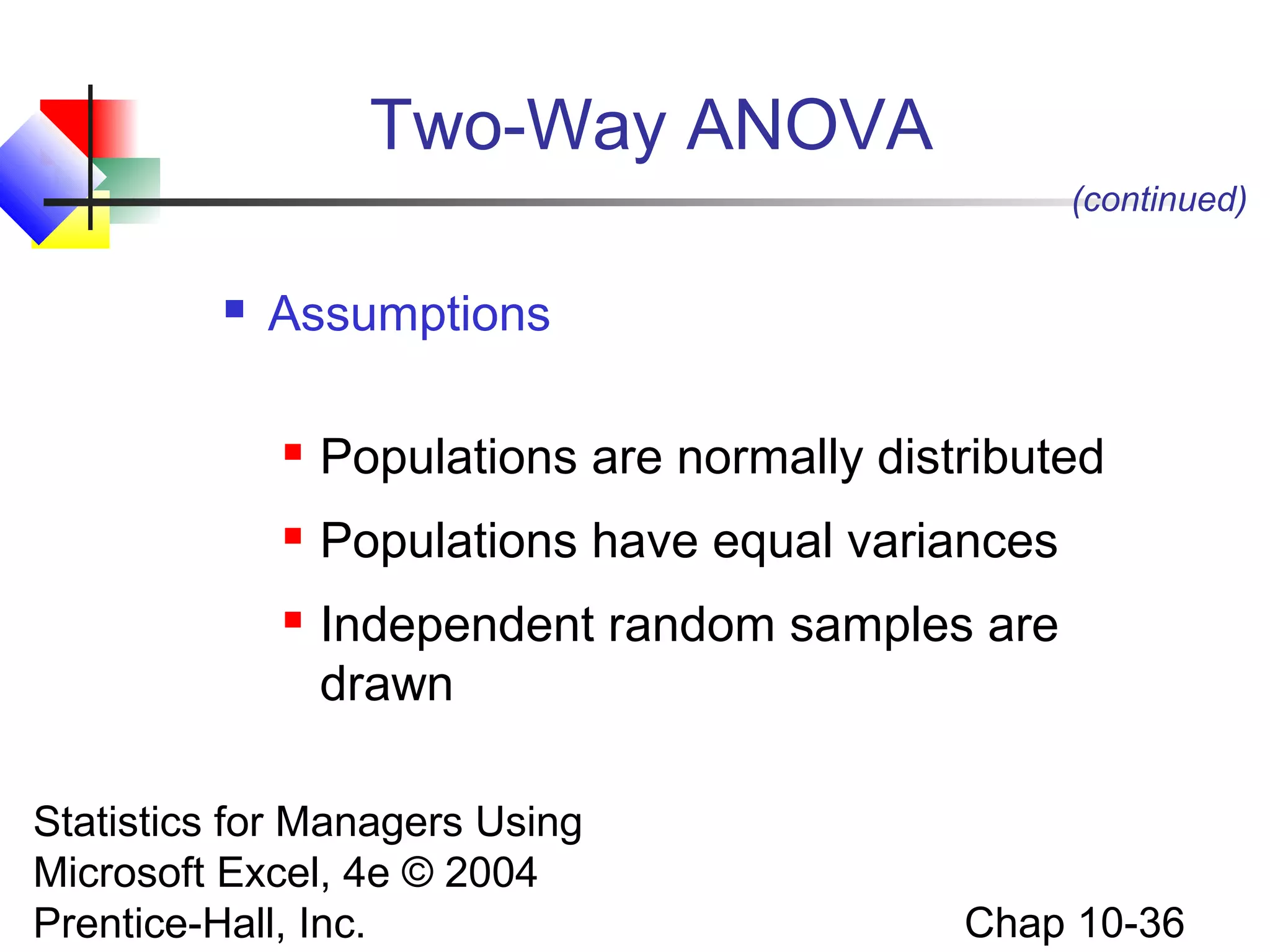
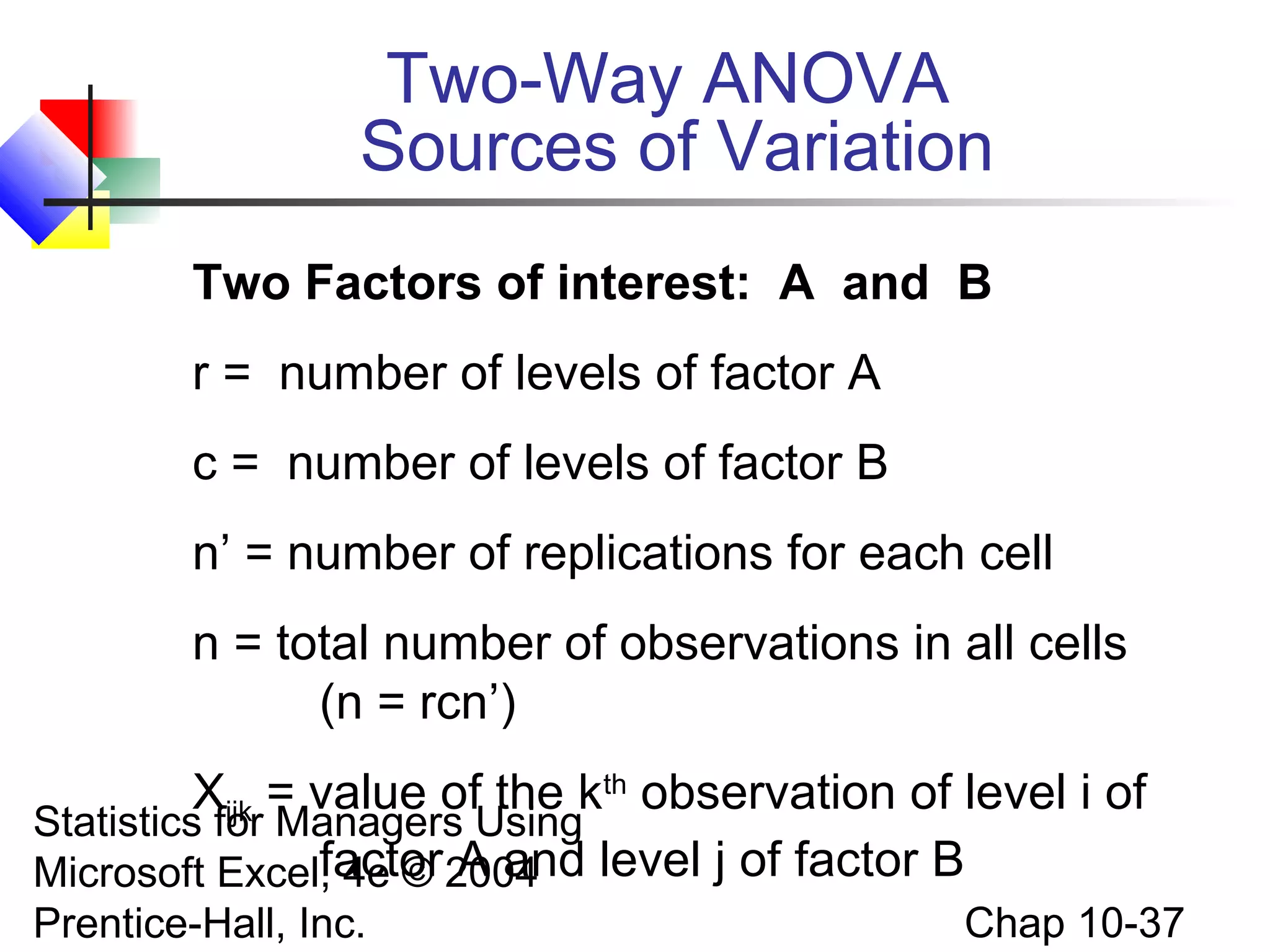
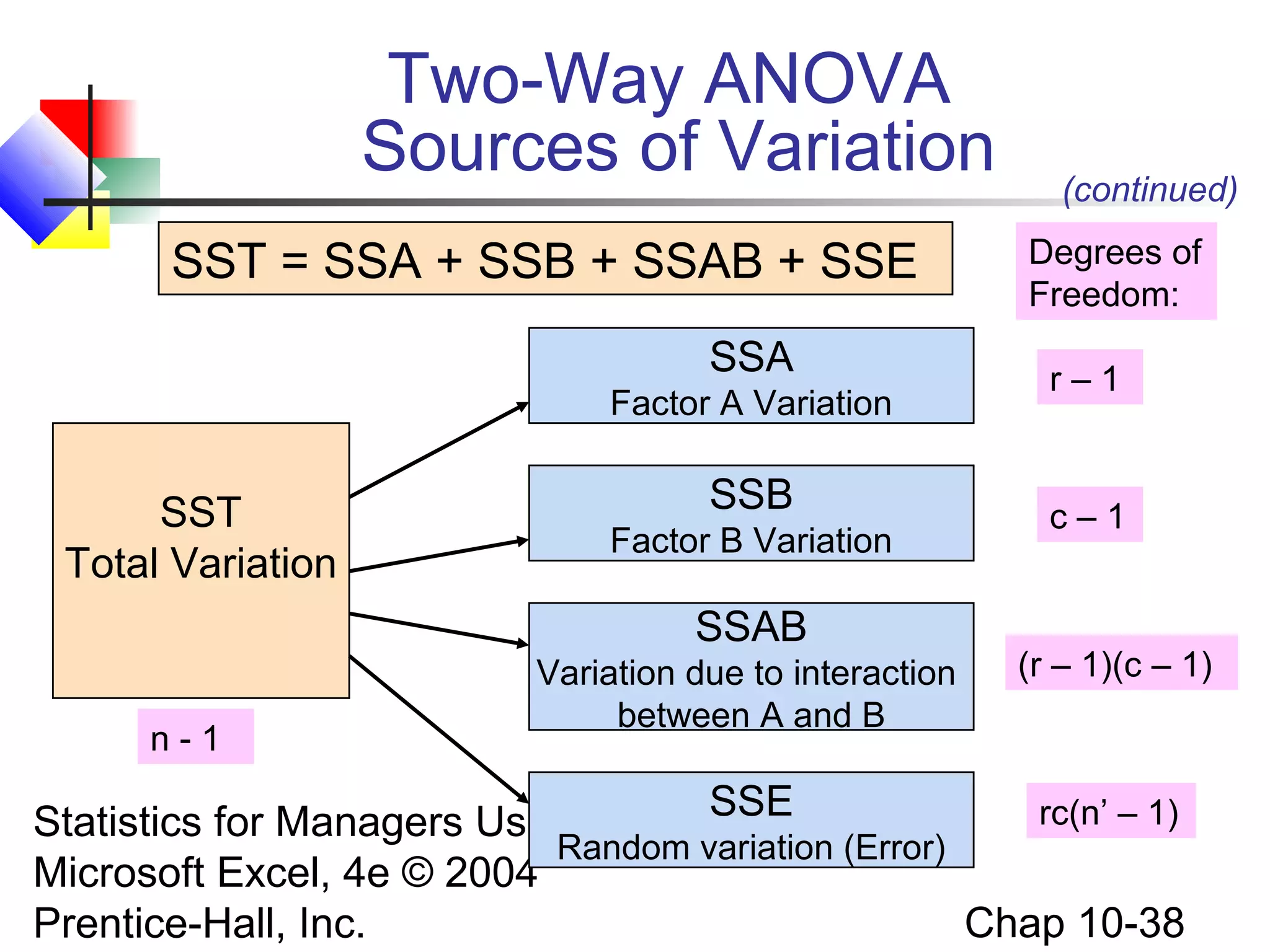
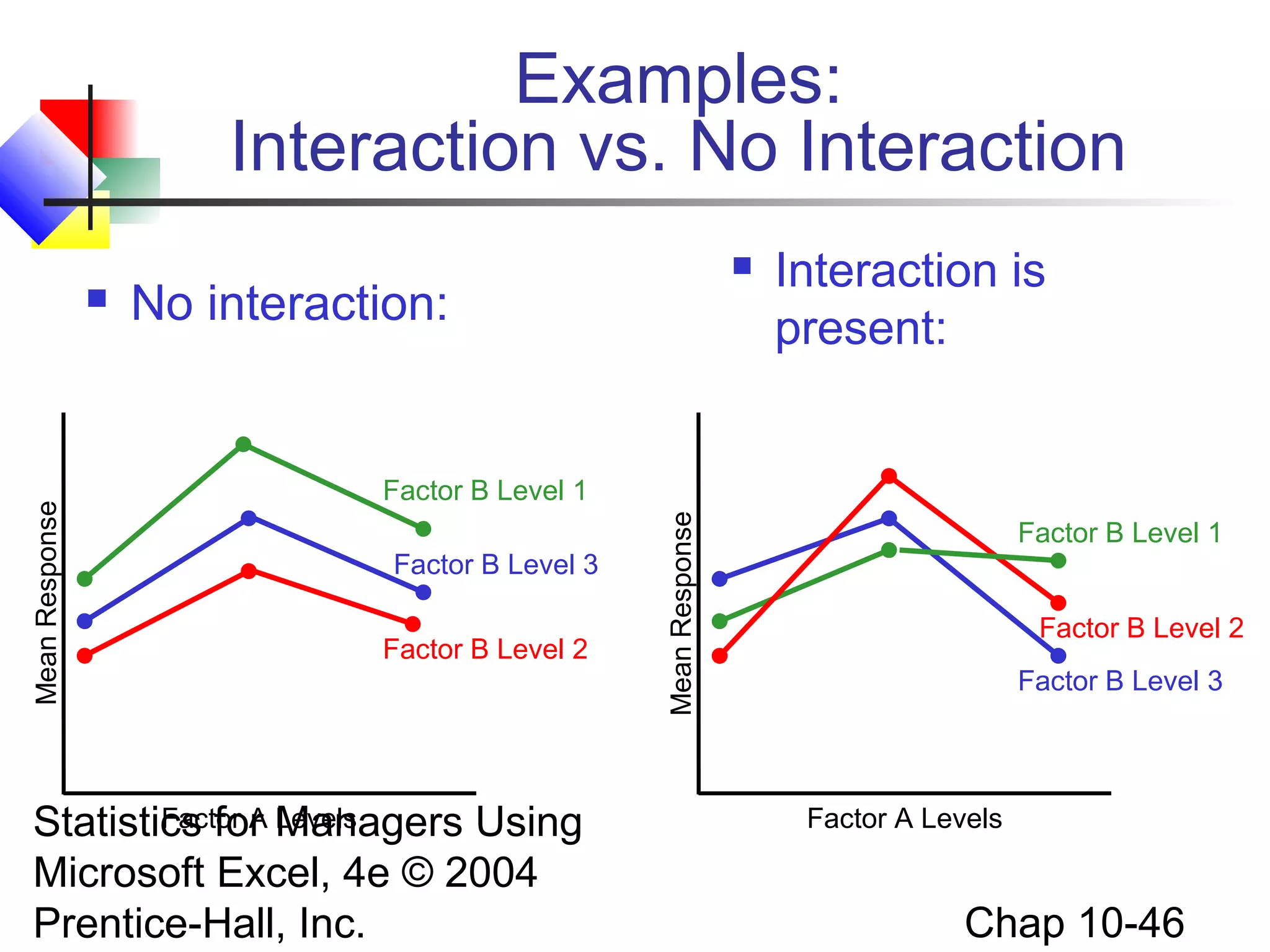
Explains the purpose and setup for two-way ANOVA, including sources of variation and assumptions regarding data distribution and sample independence.
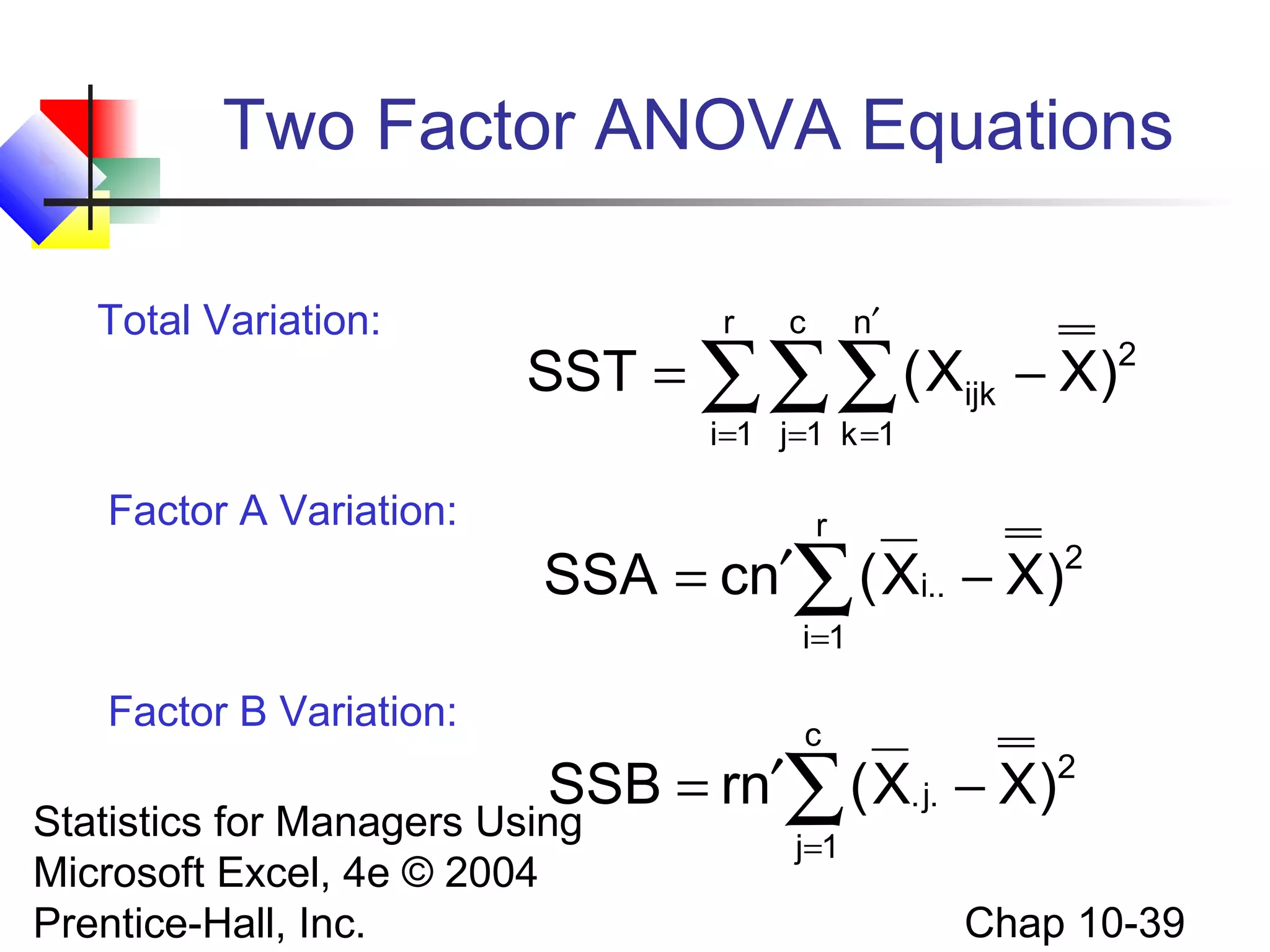
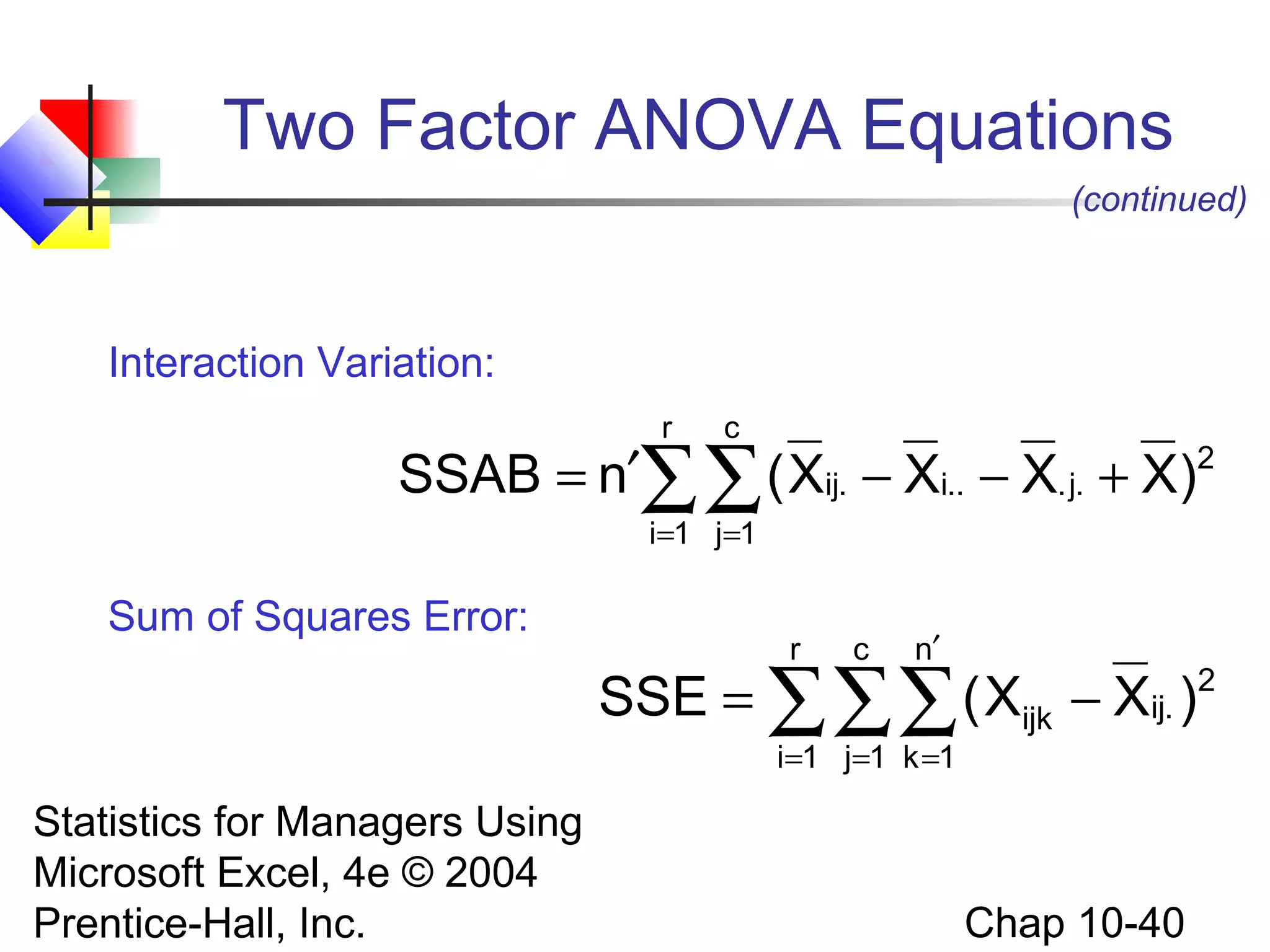
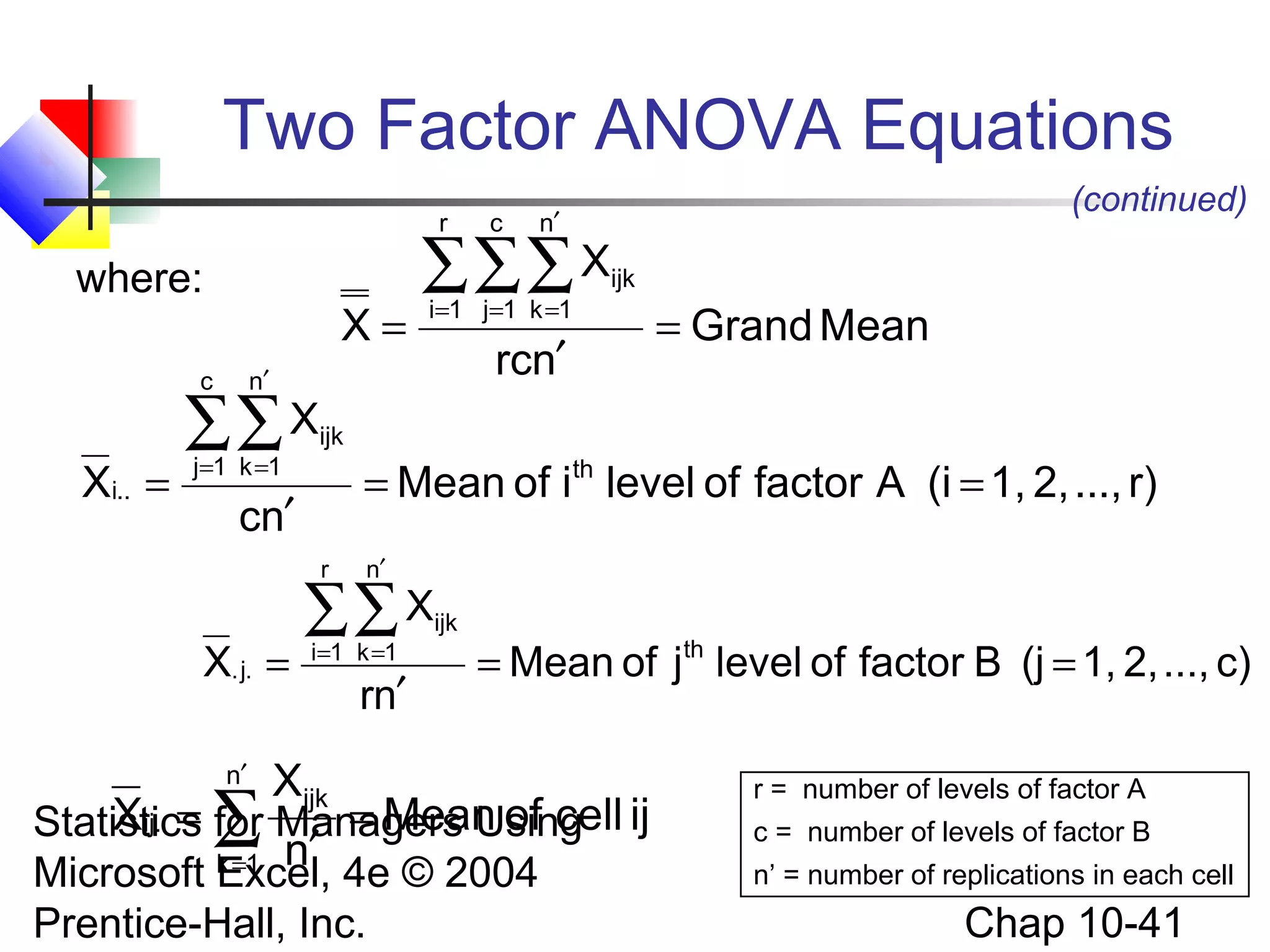
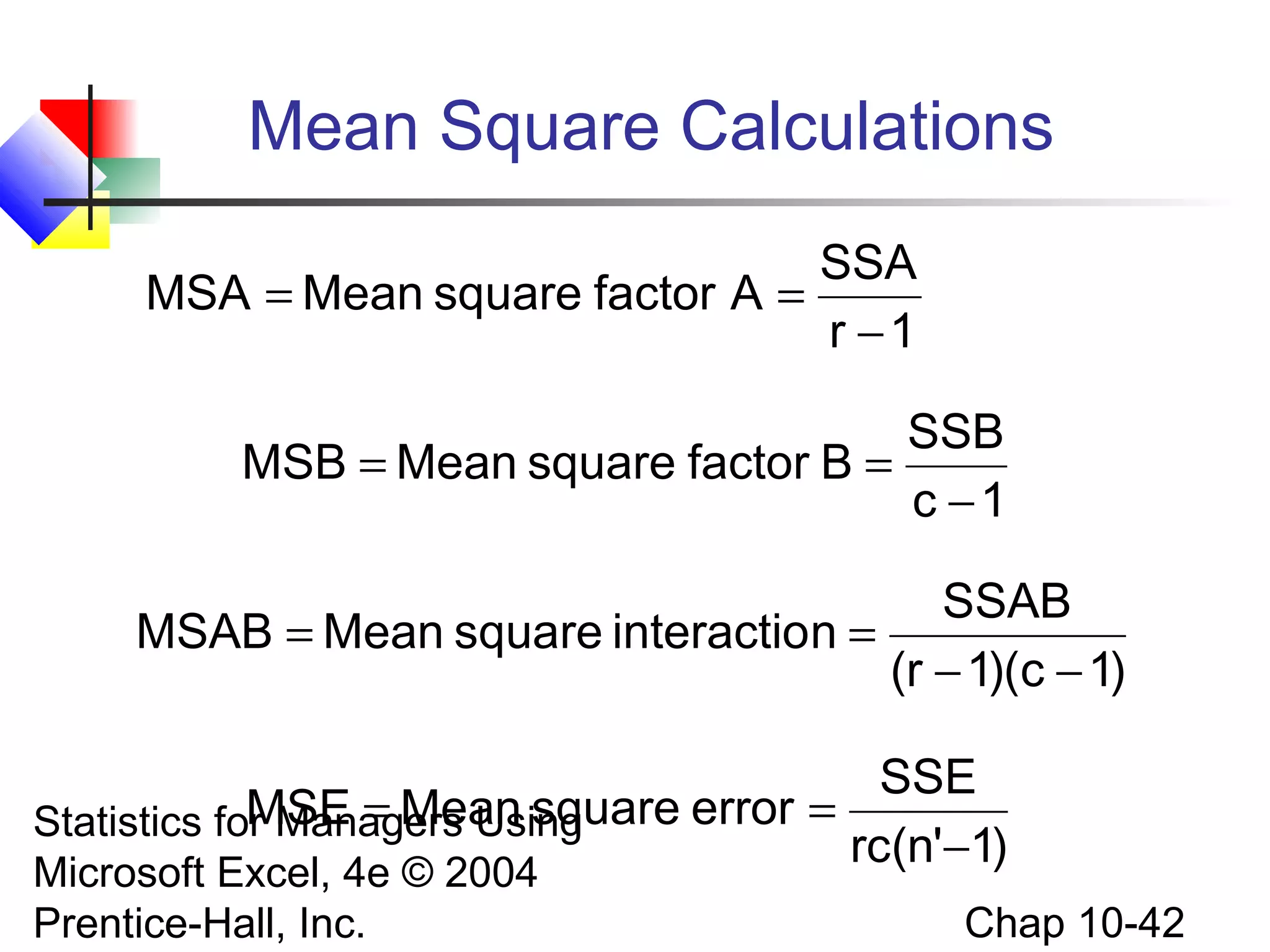
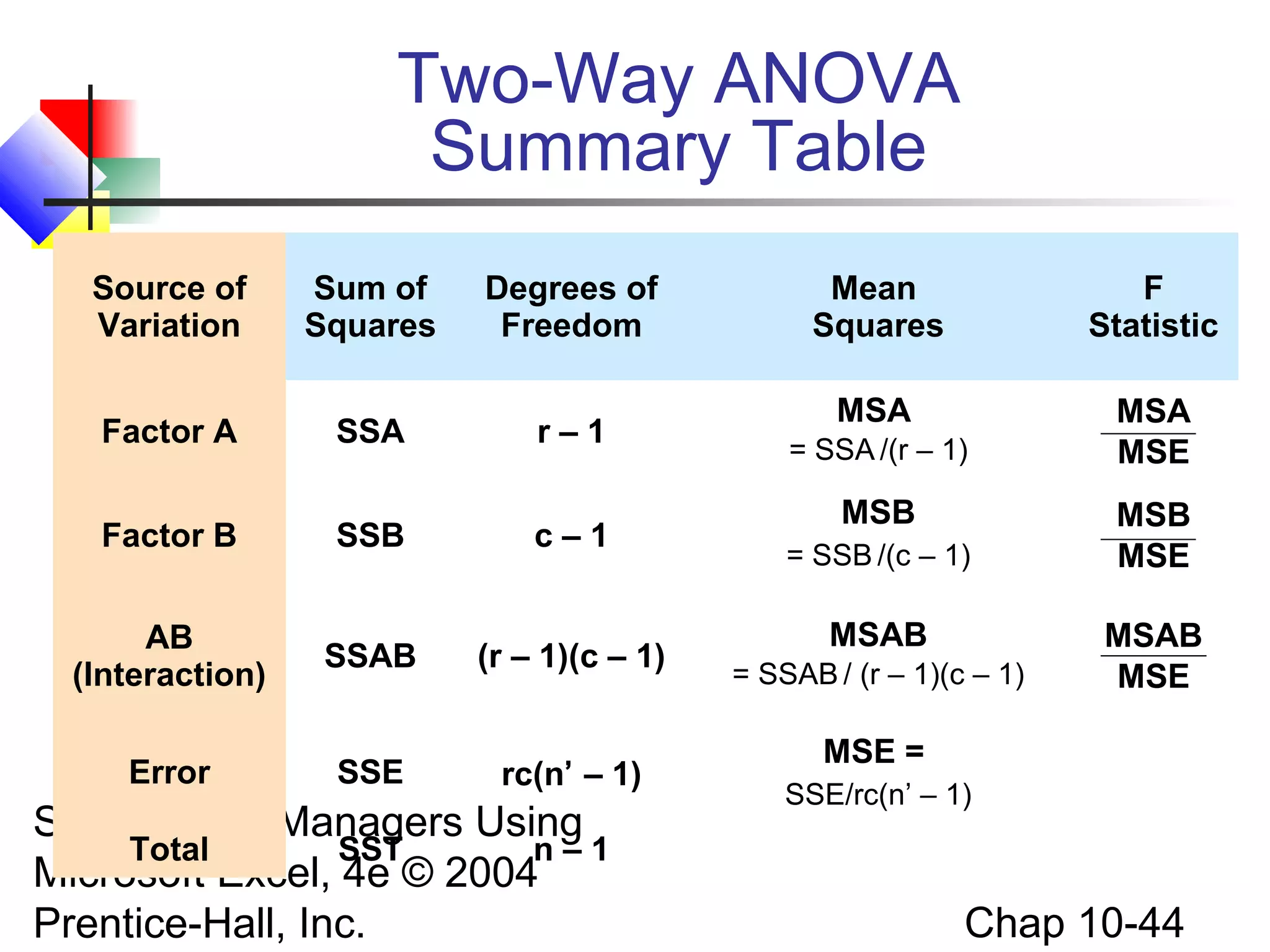
Lays out the calculations for total variation and the various mean squares associated with two factors in a two-way ANOVA.
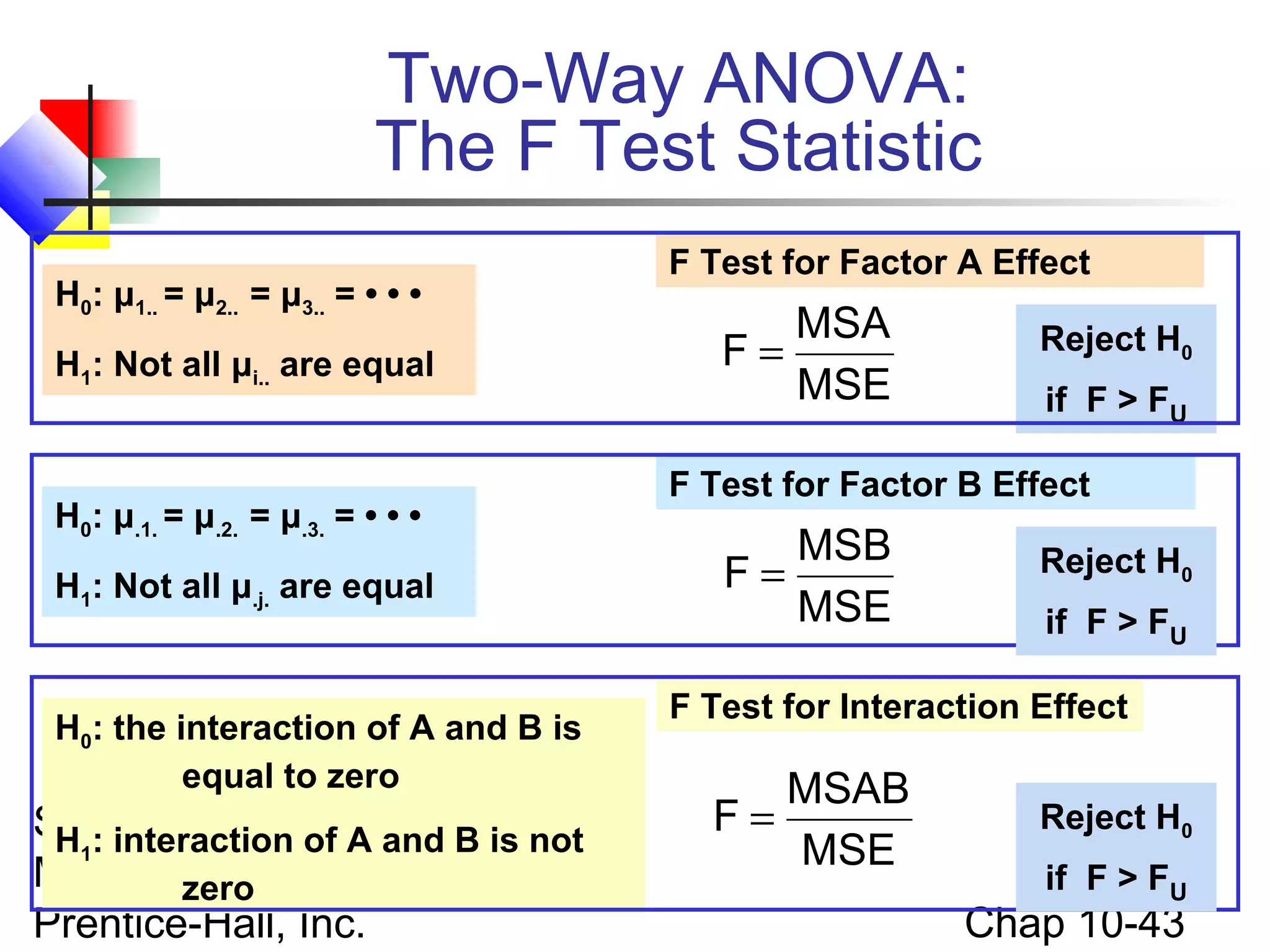
Outlines how to perform F-test statistics in two-way ANOVA to assess significant effects for each factor and interaction.
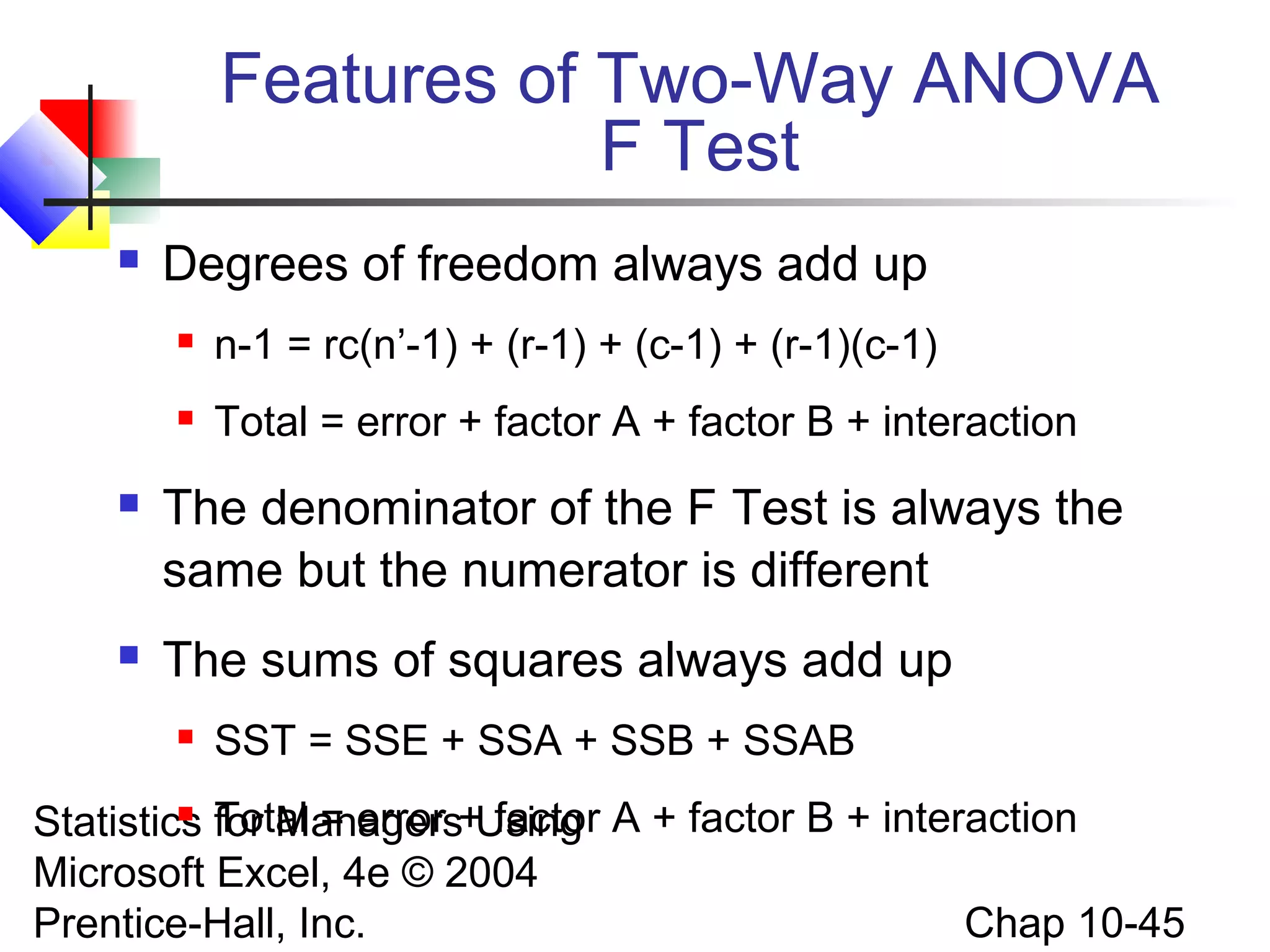
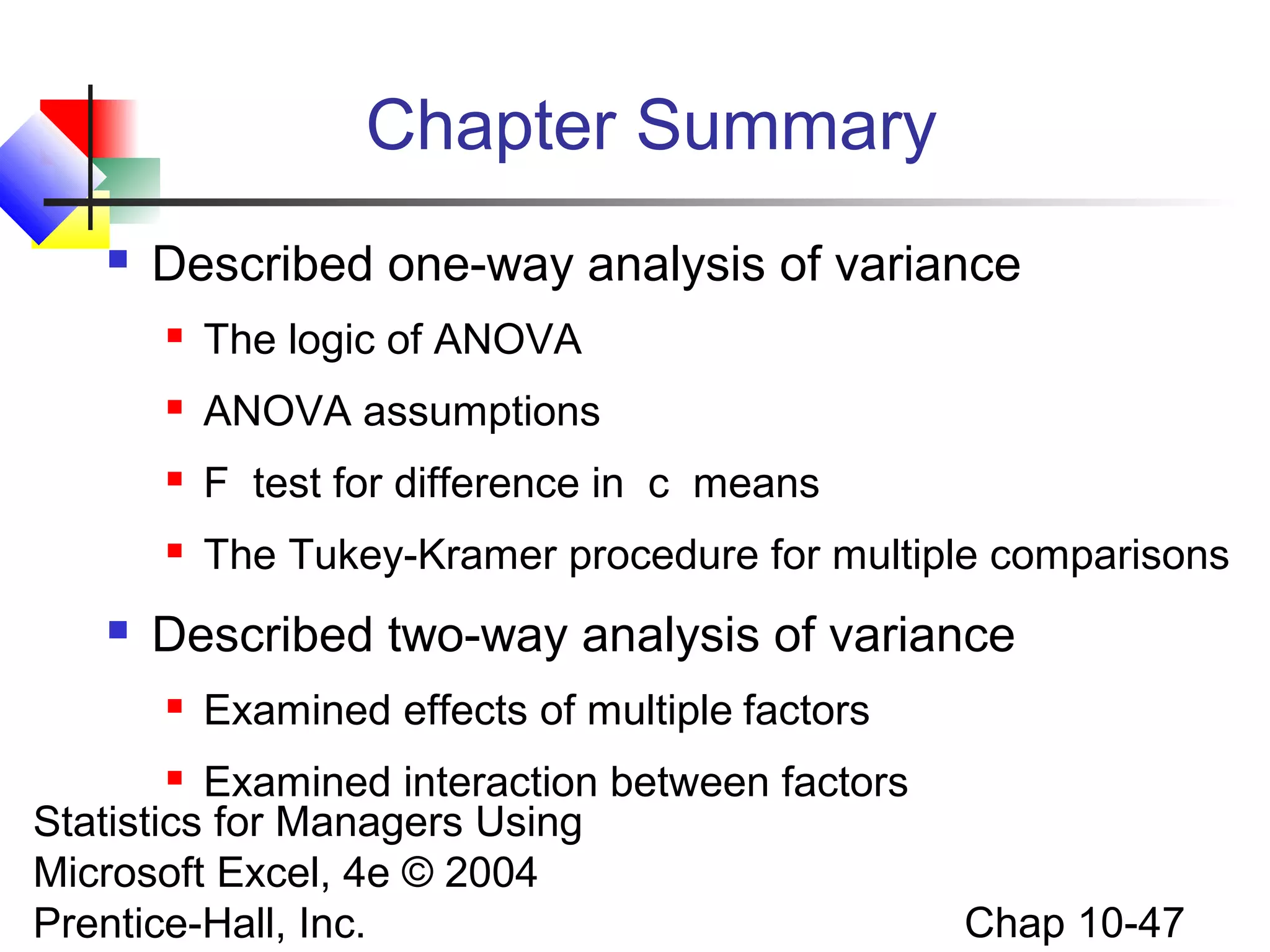
Summarizes key elements of one-way and two-way ANOVA, including assumptions, testing methods, and Tukey-Kramer comparisons.


