Sample size, importance of sample size, factors influencing sample size and
dropouts
Naveen K L
2nd Year M Pharmacy (3rd Sem)
Dept. of Pharmacology
Srinivas College Of Pharmacy
Valachil, Mangaluru.
Contents:
• Introduction
• Sample size
• Importance of sample size
• Selection of sample size
• Factors influencing sample size
• Dropouts
Introduction
• Statistics is the science of collection, presentation, analysis and
interpretation of numerical data from logical analysis.
• Biostatistics is a tool of statistics applied to the numerical data that is
derived from biological sciences.
• Everything in medical field, biostatistics explains research, diagnosis
or treatment which depends on measurement .
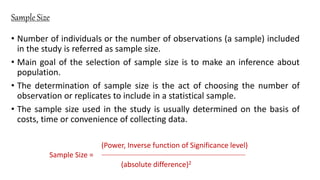
Sample Size
• Number of individuals or the number of observations (a sample) included
in the study is referred as sample size.
• Main goal of the selection of sample size is to make an inference about
population.
• The determination of sample size is the act of choosing the number of
observation or replicates to include in a statistical sample.
• The sample size used in the study is usually determined on the basis of
costs, time or convenience of collecting data.
(Power, Inverse function of Significance level)
Sample Size =
(absolute difference)2
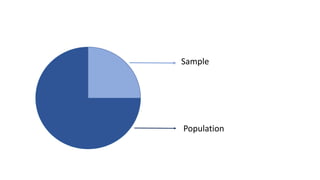
Sample
Population
IMPORTANCE OF SAMPLE SIZE CALCULATION
• If the study which is too small is more likely to generate inconclusive,
incorrect or spurious results. This is because a smaller sample size will
generate or estimates higher variation and these estimates having less
useful in modelling and understanding real underlying question of interest
in a study.
• If the studies are more likely to fail due to inadequate sample size are
considered as unethical. This is because exposing human subjects or lab
animal to the possible risks associated with research. Additionally, a study
having too large faces the ethical problems and will also waste scarce
resources such as money, subjects and time.
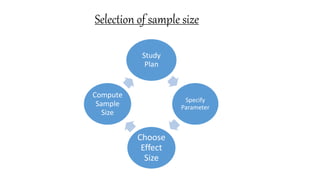
Selection of sample size
Study
Plan
Specify
Parameter
Choose
Effect
Size
Compute
Sample
Size
Study plan
Planning the study involves
establishing the purpose of the
study
What is going to measured to
fulfil those purposes
What statistical methods and
assumption that go into
extracting those from your
study
Cont..
1)What question/s do you want to answer ?
2)What is the primary outcome of the study ?
3)What kind of the grouping structure will the study have ?
4)What type of hypothesis test will be used ?
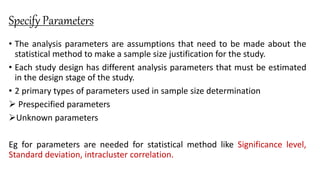
Specify Parameters
• The analysis parameters are assumptions that need to be made about the
statistical method to make a sample size justification for the study.
• Each study design has different analysis parameters that must be estimated
in the design stage of the study.
• 2 primary types of parameters used in sample size determination
 Prespecified parameters
Unknown parameters
Eg for parameters are needed for statistical method like Significance level,
Standard deviation, intracluster correlation.
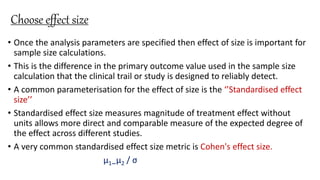
Choose effect size
• Once the analysis parameters are specified then effect of size is important for
sample size calculations.
• This is the difference in the primary outcome value used in the sample size
calculation that the clinical trail or study is designed to reliably detect.
• A common parameterisation for the effect of size is the ‘’Standardised effect
size’’
• Standardised effect size measures magnitude of treatment effect without
units allows more direct and comparable measure of the expected degree of
the effect across different studies.
• A very common standardised effect size metric is Cohen's effect size.
μ1−μ2 / σ
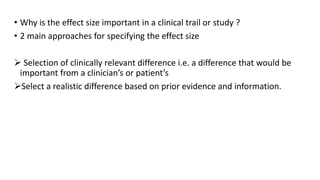
• Why is the effect size important in a clinical trail or study ?
• 2 main approaches for specifying the effect size
 Selection of clinically relevant difference i.e. a difference that would be
important from a clinician’s or patient’s
Select a realistic difference based on prior evidence and information.
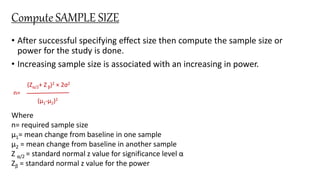
Compute SAMPLE SIZE
• After successful specifying effect size then compute the sample size or
power for the study is done.
• Increasing sample size is associated with an increasing in power.
(Zα/2+ Zβ)2 × 2σ2
n=
(μ1-μ2)2
Where
n= required sample size
μ1= mean change from baseline in one sample
μ2 = mean change from baseline in another sample
Z α/2 = standard normal z value for significance level α
Zβ = standard normal z value for the power
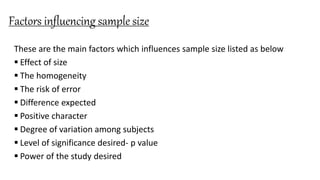
Factors influencing sample size
These are the main factors which influences sample size listed as below
 Effect of size
 The homogeneity
 The risk of error
 Difference expected
 Positive character
 Degree of variation among subjects
 Level of significance desired- p value
 Power of the study desired
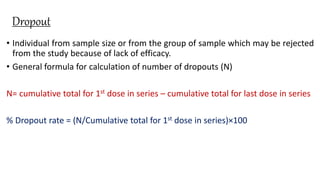
Dropout
• Individual from sample size or from the group of sample which may be rejected
from the study because of lack of efficacy.
• General formula for calculation of number of dropouts (N)
N= cumulative total for 1st dose in series – cumulative total for last dose in series
% Dropout rate = (N/Cumulative total for 1st dose in series)×100
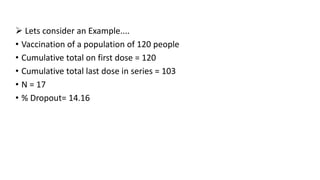
 Lets consider an Example....
• Vaccination of a population of 120 people
• Cumulative total on first dose = 120
• Cumulative total last dose in series = 103
• N = 17
• % Dropout= 14.16
References
1. Habib A, Johargy A, Mahmood K, Humma, Design and determination of
the sample size in medical research. IOSR-JDMS.2014;13(5):21-31
2. https://www.statsols.com/how-to-use-a-sample-size-calculator retrieved
on 21/07/2020 at 03.00 p.m.
3. https://www.scribd.com/doc/98854480/factors-Affecting-Sample-Size
retrieved on 22/07/2020 at 10.30 a.m.
4. https://blog.statsols.com/why-is-sample-size-important/?hs_amp=true
retrieved on 22/07/2020 at 11.30 a.m.
5. https://youtu.be/Lq5TBf30uFM retrieved on 22/07/2020 at 12.30 a.m.
6. https://www.slideshare.net/mobile/indiandentalacademy/bio-statistics-
61741733 retrieved on 22/07/2020 at 12.14 a.m.
Thank You

PPT on Sample Size, Importance of Sample Size,

  • 1.
    Sample size, importanceof sample size, factors influencing sample size and dropouts Naveen K L 2nd Year M Pharmacy (3rd Sem) Dept. of Pharmacology Srinivas College Of Pharmacy Valachil, Mangaluru.
  • 2.
    Contents: • Introduction • Samplesize • Importance of sample size • Selection of sample size • Factors influencing sample size • Dropouts
  • 3.
    Introduction • Statistics isthe science of collection, presentation, analysis and interpretation of numerical data from logical analysis. • Biostatistics is a tool of statistics applied to the numerical data that is derived from biological sciences. • Everything in medical field, biostatistics explains research, diagnosis or treatment which depends on measurement .
  • 4.
    Sample Size • Numberof individuals or the number of observations (a sample) included in the study is referred as sample size. • Main goal of the selection of sample size is to make an inference about population. • The determination of sample size is the act of choosing the number of observation or replicates to include in a statistical sample. • The sample size used in the study is usually determined on the basis of costs, time or convenience of collecting data. (Power, Inverse function of Significance level) Sample Size = (absolute difference)2
  • 5.
  • 6.
    IMPORTANCE OF SAMPLESIZE CALCULATION • If the study which is too small is more likely to generate inconclusive, incorrect or spurious results. This is because a smaller sample size will generate or estimates higher variation and these estimates having less useful in modelling and understanding real underlying question of interest in a study. • If the studies are more likely to fail due to inadequate sample size are considered as unethical. This is because exposing human subjects or lab animal to the possible risks associated with research. Additionally, a study having too large faces the ethical problems and will also waste scarce resources such as money, subjects and time.
  • 7.
    Selection of samplesize Study Plan Specify Parameter Choose Effect Size Compute Sample Size
  • 8.
    Study plan Planning thestudy involves establishing the purpose of the study What is going to measured to fulfil those purposes What statistical methods and assumption that go into extracting those from your study
  • 9.
    Cont.. 1)What question/s doyou want to answer ? 2)What is the primary outcome of the study ? 3)What kind of the grouping structure will the study have ? 4)What type of hypothesis test will be used ?
  • 10.
    Specify Parameters • Theanalysis parameters are assumptions that need to be made about the statistical method to make a sample size justification for the study. • Each study design has different analysis parameters that must be estimated in the design stage of the study. • 2 primary types of parameters used in sample size determination  Prespecified parameters Unknown parameters Eg for parameters are needed for statistical method like Significance level, Standard deviation, intracluster correlation.
  • 11.
    Choose effect size •Once the analysis parameters are specified then effect of size is important for sample size calculations. • This is the difference in the primary outcome value used in the sample size calculation that the clinical trail or study is designed to reliably detect. • A common parameterisation for the effect of size is the ‘’Standardised effect size’’ • Standardised effect size measures magnitude of treatment effect without units allows more direct and comparable measure of the expected degree of the effect across different studies. • A very common standardised effect size metric is Cohen's effect size. μ1−μ2 / σ
  • 12.
    • Why isthe effect size important in a clinical trail or study ? • 2 main approaches for specifying the effect size  Selection of clinically relevant difference i.e. a difference that would be important from a clinician’s or patient’s Select a realistic difference based on prior evidence and information.
  • 13.
    Compute SAMPLE SIZE •After successful specifying effect size then compute the sample size or power for the study is done. • Increasing sample size is associated with an increasing in power. (Zα/2+ Zβ)2 × 2σ2 n= (μ1-μ2)2 Where n= required sample size μ1= mean change from baseline in one sample μ2 = mean change from baseline in another sample Z α/2 = standard normal z value for significance level α Zβ = standard normal z value for the power
  • 14.
    Factors influencing samplesize These are the main factors which influences sample size listed as below  Effect of size  The homogeneity  The risk of error  Difference expected  Positive character  Degree of variation among subjects  Level of significance desired- p value  Power of the study desired
  • 15.
    Dropout • Individual fromsample size or from the group of sample which may be rejected from the study because of lack of efficacy. • General formula for calculation of number of dropouts (N) N= cumulative total for 1st dose in series – cumulative total for last dose in series % Dropout rate = (N/Cumulative total for 1st dose in series)×100
  • 16.
     Lets consideran Example.... • Vaccination of a population of 120 people • Cumulative total on first dose = 120 • Cumulative total last dose in series = 103 • N = 17 • % Dropout= 14.16
  • 17.
    References 1. Habib A,Johargy A, Mahmood K, Humma, Design and determination of the sample size in medical research. IOSR-JDMS.2014;13(5):21-31 2. https://www.statsols.com/how-to-use-a-sample-size-calculator retrieved on 21/07/2020 at 03.00 p.m. 3. https://www.scribd.com/doc/98854480/factors-Affecting-Sample-Size retrieved on 22/07/2020 at 10.30 a.m. 4. https://blog.statsols.com/why-is-sample-size-important/?hs_amp=true retrieved on 22/07/2020 at 11.30 a.m. 5. https://youtu.be/Lq5TBf30uFM retrieved on 22/07/2020 at 12.30 a.m. 6. https://www.slideshare.net/mobile/indiandentalacademy/bio-statistics- 61741733 retrieved on 22/07/2020 at 12.14 a.m.
  • 18.