Wilcoxon signedrank test
Advance Statistics
Joshua Batalla
MP-Industrial
Introduction of the statistical
concept
• The test is named for Frank Wilcoxon (1892–1965)
• The Wilcoxon Signed Ranks test is designed to test a
hypothesis about the location (median) of a population
distribution. It often involves the use of matched pairs, for
example, before and after data, in which case it tests for a
median difference of zero.
• The Wilcoxon Signed Ranks test does not require the
assumption that the population is normally distributed
Uses of Wilcoxon signed rank test
• You use the Wilcoxon signed-rank test when there are
two nominal variables and onemeasurement variable. One of
the nominal variables has only two values, such as "before"
and "after," and the other nominal variable often represents
individuals. This is the non-parametric analogue to the paired
t-test, and should be used if the distribution of differences
between pairs may be non-normally distributed.
Requirements
• Data are paired and come from the same population.
• Each pair is chosen randomly and independent.
• The data are measured at least on an ordinal scale, but need
not be normal.
• The distribution of the differences is symmetric around the
median
Formula
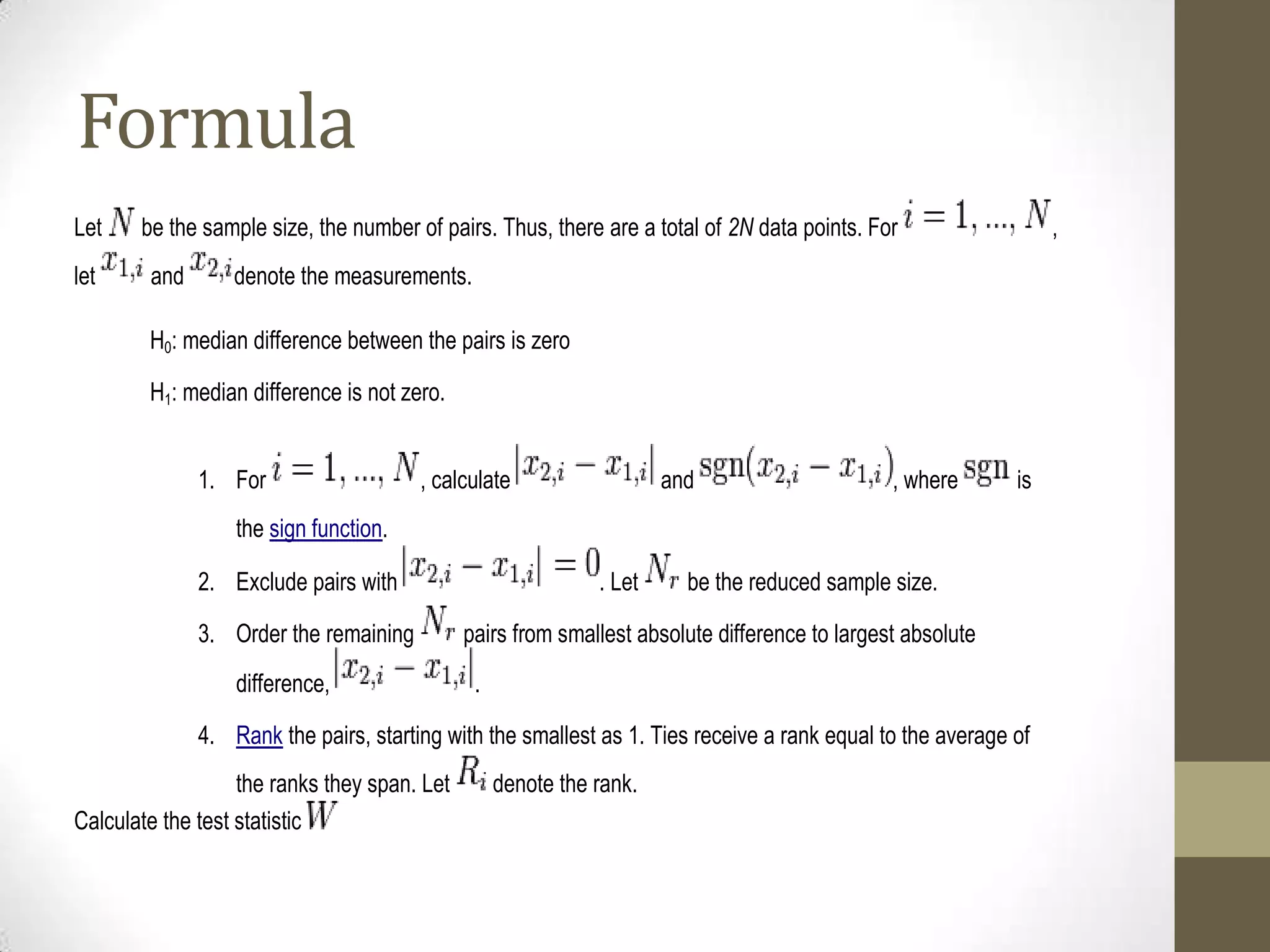
Let
let

be the sample size, the number of pairs. Thus, there are a total of 2N data points. For
and

,

denote the measurements.

H0: median difference between the pairs is zero
H1: median difference is not zero.
1. For

, calculate

and

, where

is

the sign function.
2. Exclude pairs with
3. Order the remaining
difference,

. Let

be the reduced sample size.

pairs from smallest absolute difference to largest absolute
.

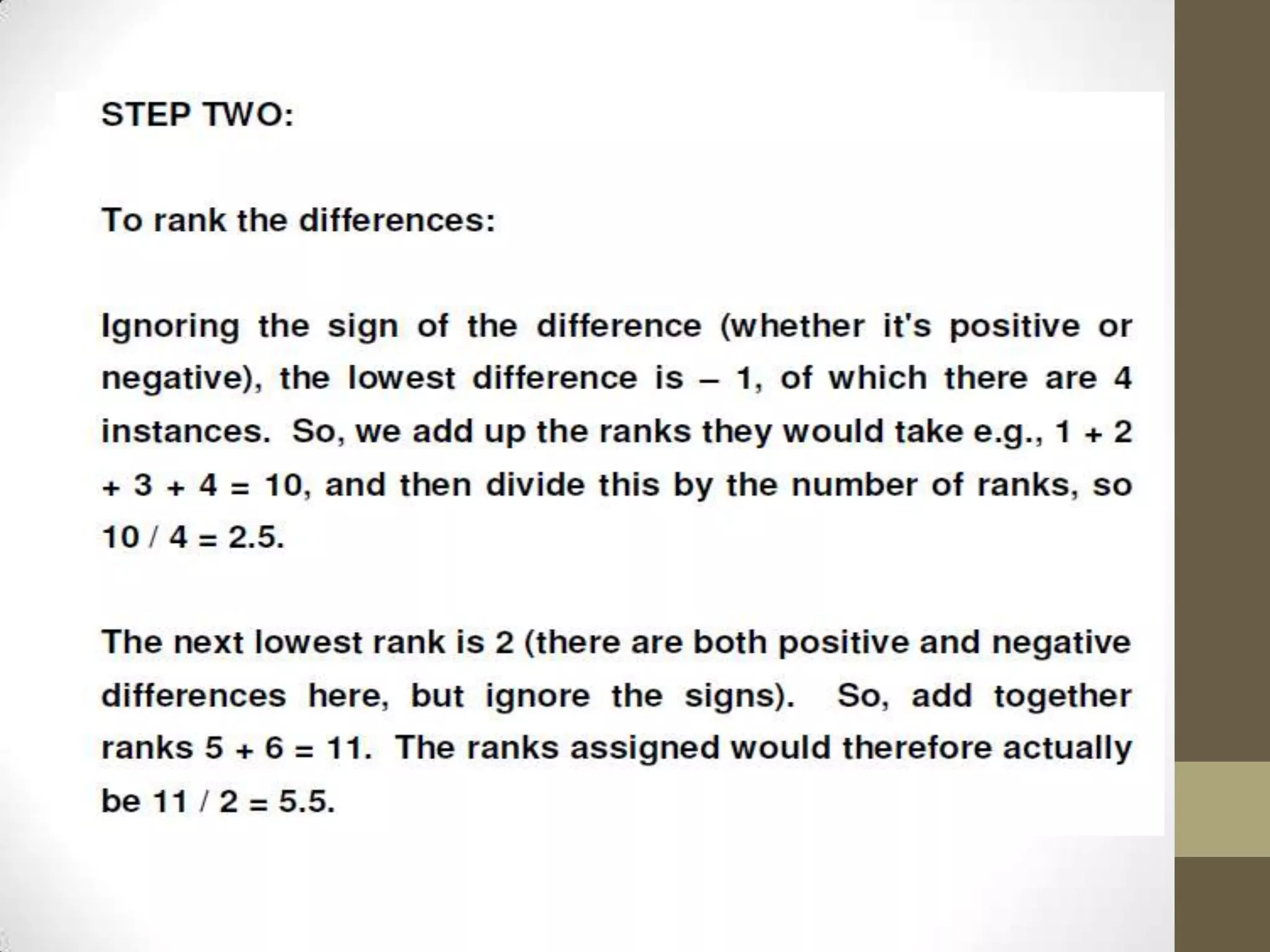
4. Rank the pairs, starting with the smallest as 1. Ties receive a rank equal to the average of
the ranks they span. Let
Calculate the test statistic

denote the rank.
Formula
, the absolute value of the sum of the signed ranks.
1.

As

For

increases, the sampling distribution of

converges to a normal distribution. Thus,

, a z-score can be calculated

as

.

If

then reject

For

,

If

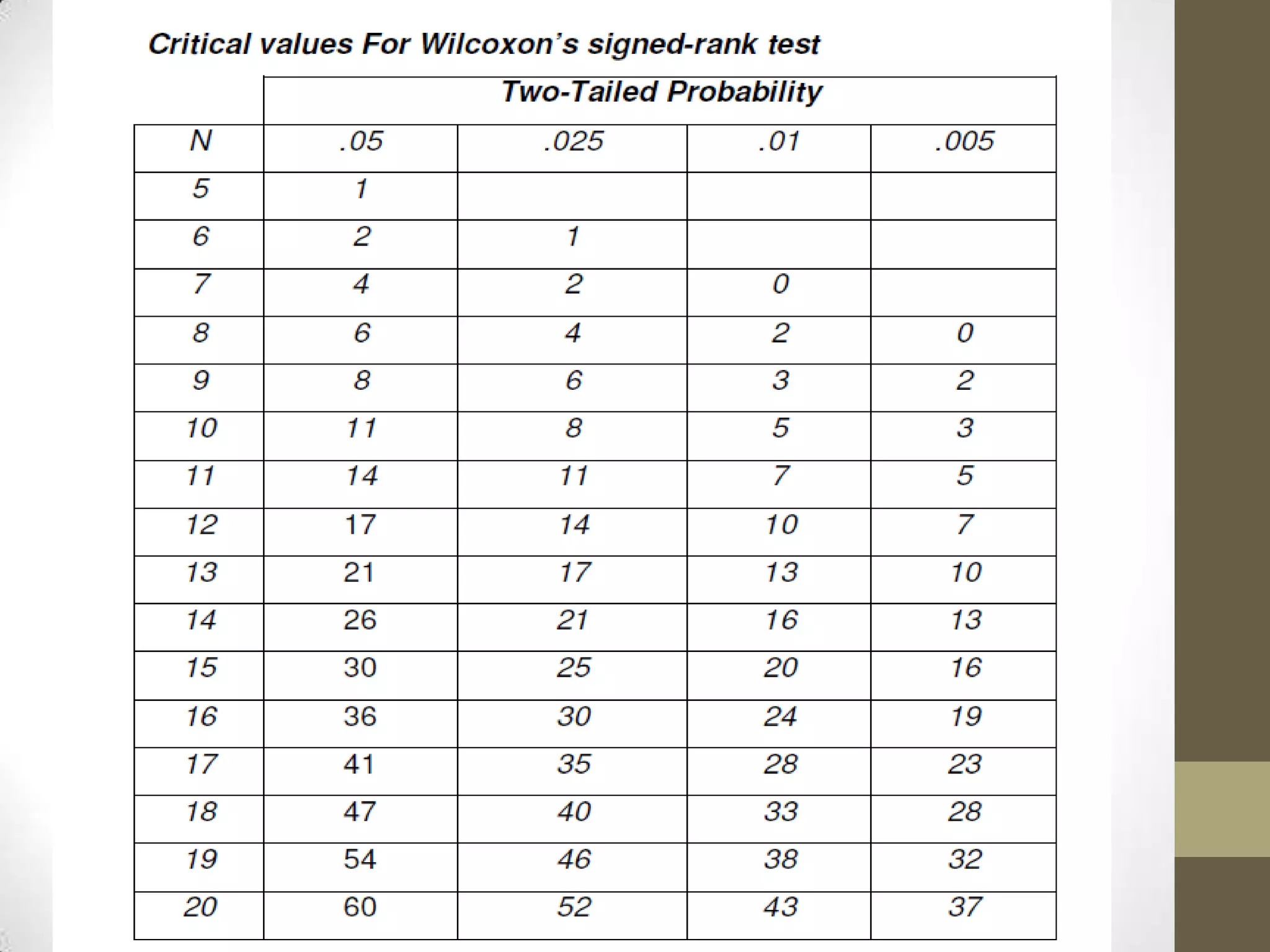
is compared to a critical value from a reference table.[1]

then reject

Alternatively, a p-value can be calculated from enumeration of all possible combinations
of

given

.
Sample Application
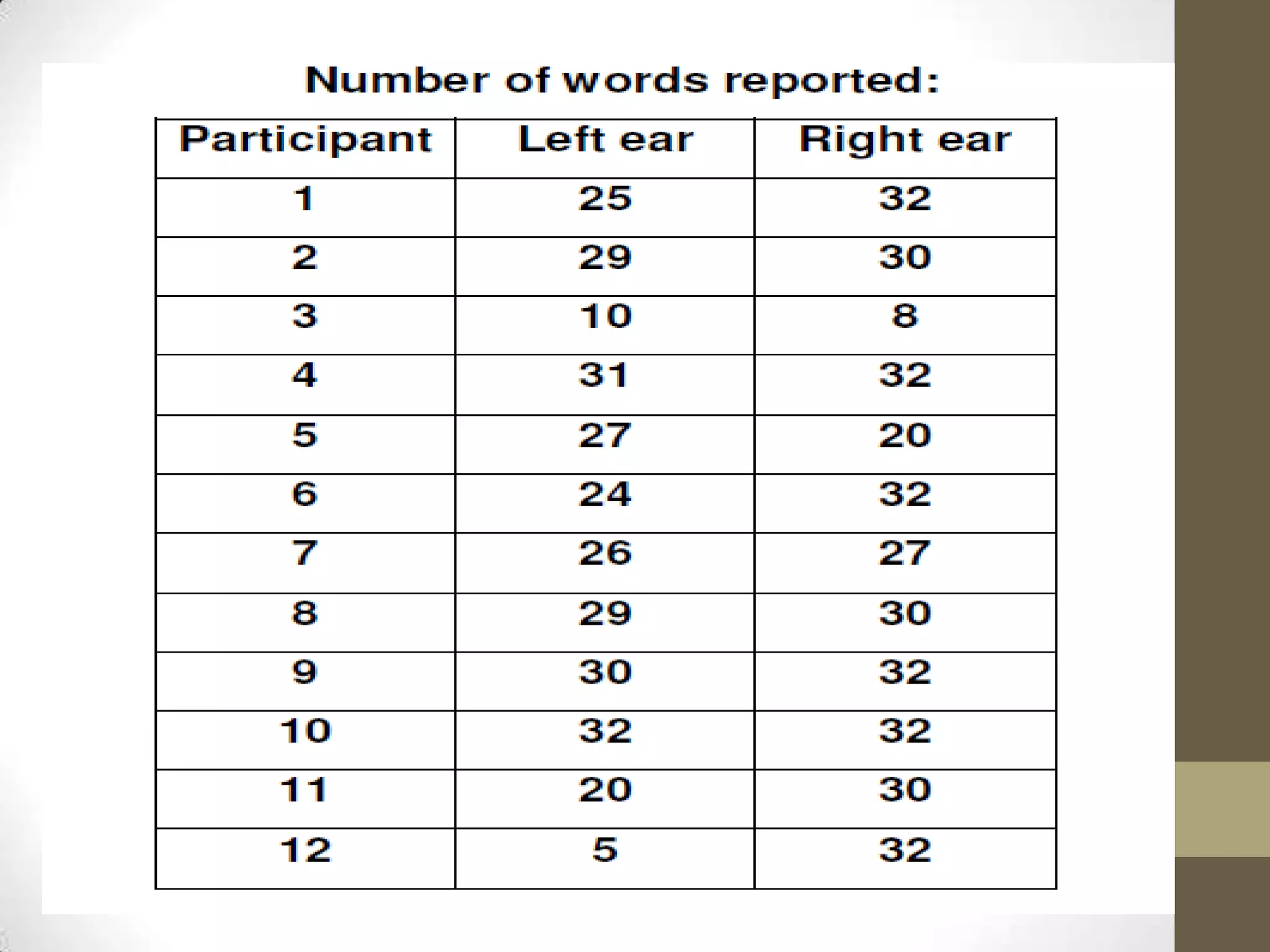
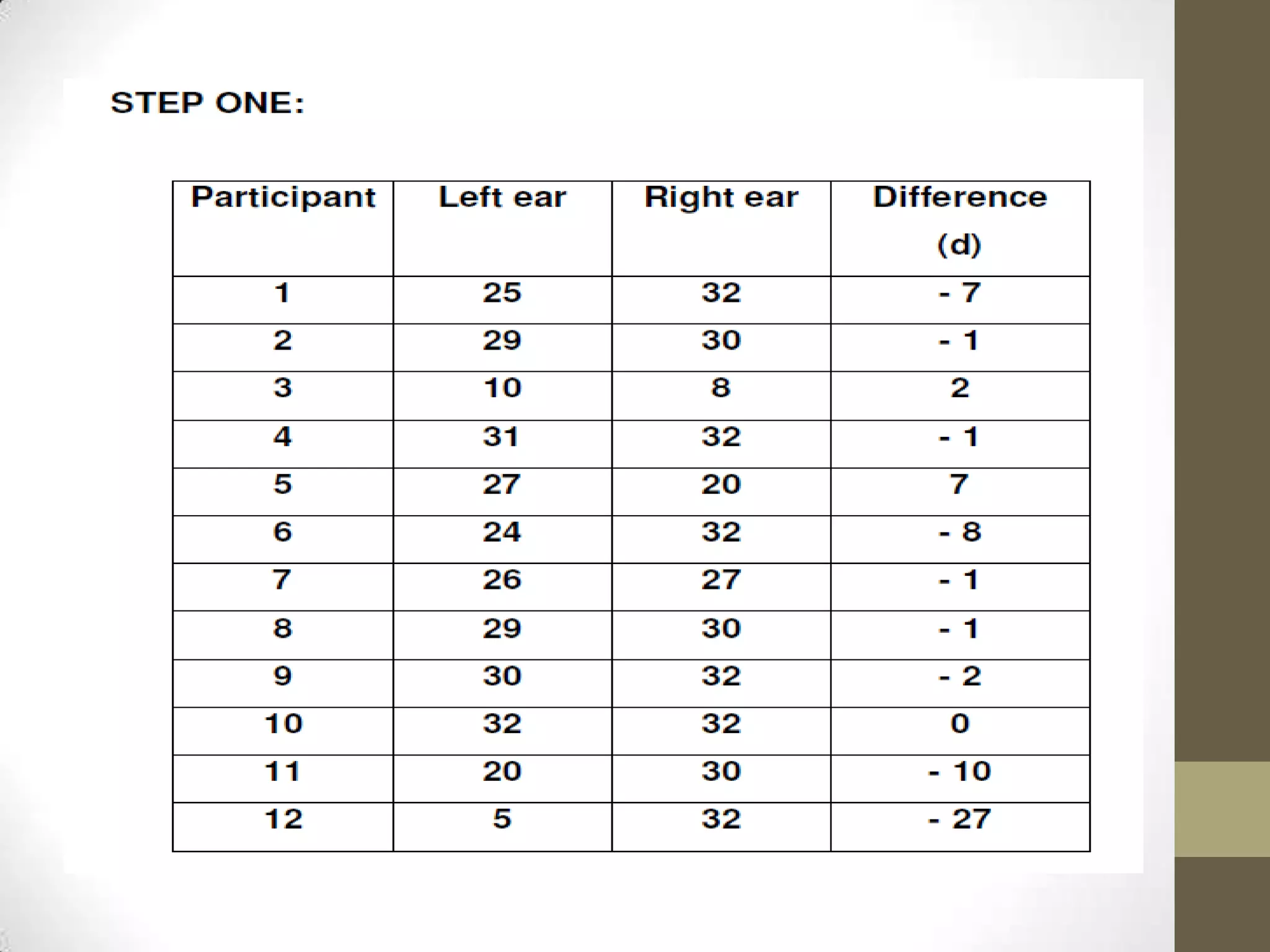
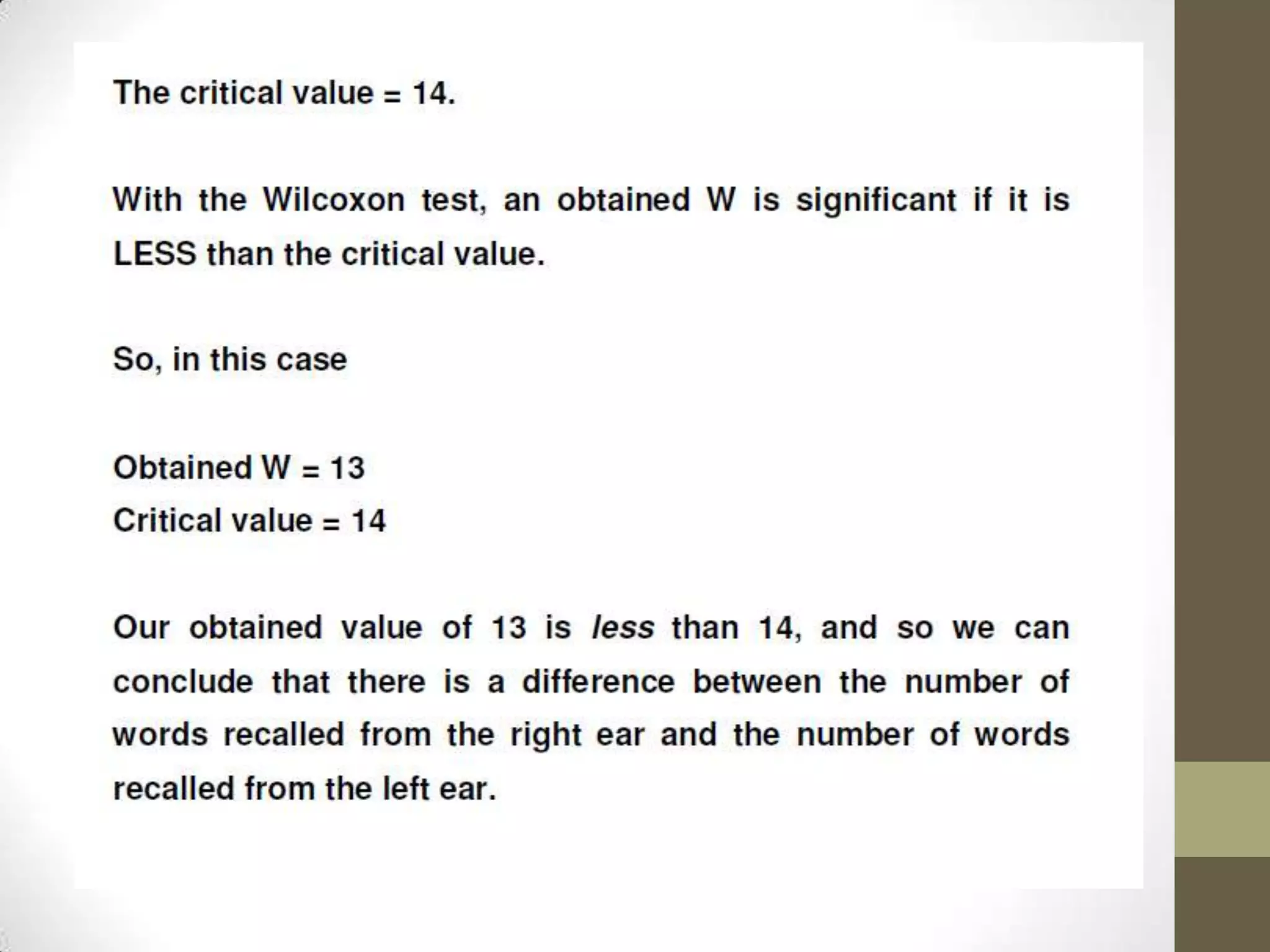
Wilcoxon test Worked Example:

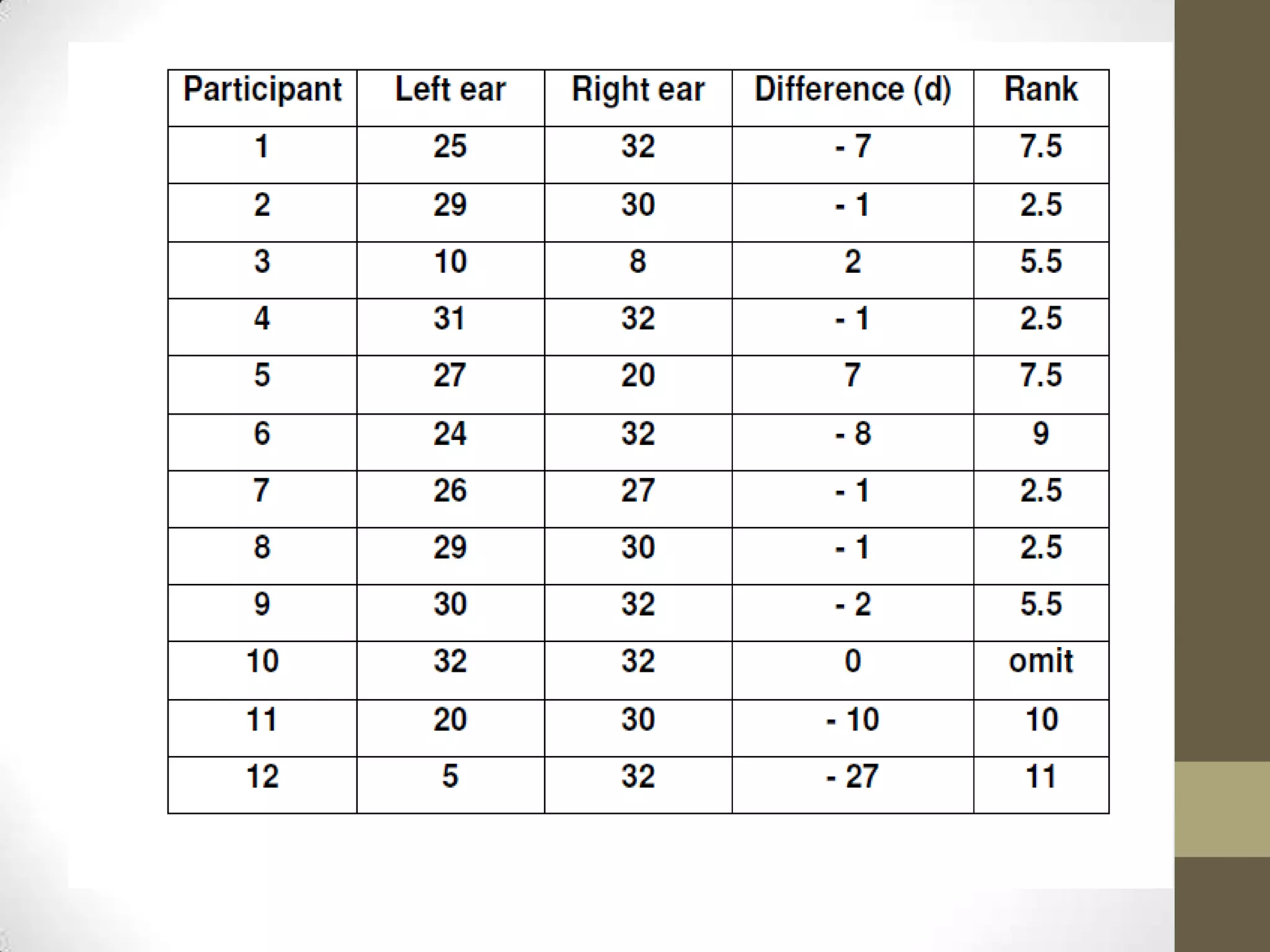
In order to investigate whether adults report verbally
presented material more accurately from their right than from
their left ear, a dichotic listening task was carried out. The data
were found to be positively skewed.
Advance Statistics - Wilcoxon Signed Rank Test

Advance Statistics - Wilcoxon Signed Rank Test

  • 1.
    Wilcoxon signedrank test AdvanceStatistics Joshua Batalla MP-Industrial
  • 2.
    Introduction of thestatistical concept • The test is named for Frank Wilcoxon (1892–1965) • The Wilcoxon Signed Ranks test is designed to test a hypothesis about the location (median) of a population distribution. It often involves the use of matched pairs, for example, before and after data, in which case it tests for a median difference of zero. • The Wilcoxon Signed Ranks test does not require the assumption that the population is normally distributed
  • 3.
    Uses of Wilcoxonsigned rank test • You use the Wilcoxon signed-rank test when there are two nominal variables and onemeasurement variable. One of the nominal variables has only two values, such as "before" and "after," and the other nominal variable often represents individuals. This is the non-parametric analogue to the paired t-test, and should be used if the distribution of differences between pairs may be non-normally distributed.
  • 4.
    Requirements • Data arepaired and come from the same population. • Each pair is chosen randomly and independent. • The data are measured at least on an ordinal scale, but need not be normal. • The distribution of the differences is symmetric around the median
  • 5.
    Formula Let let be the samplesize, the number of pairs. Thus, there are a total of 2N data points. For and , denote the measurements. H0: median difference between the pairs is zero H1: median difference is not zero. 1. For , calculate and , where is the sign function. 2. Exclude pairs with 3. Order the remaining difference, . Let be the reduced sample size. pairs from smallest absolute difference to largest absolute . 4. Rank the pairs, starting with the smallest as 1. Ties receive a rank equal to the average of the ranks they span. Let Calculate the test statistic denote the rank.
  • 6.
    Formula , the absolutevalue of the sum of the signed ranks. 1. As For increases, the sampling distribution of converges to a normal distribution. Thus, , a z-score can be calculated as . If then reject For , If is compared to a critical value from a reference table.[1] then reject Alternatively, a p-value can be calculated from enumeration of all possible combinations of given .
  • 7.
    Sample Application Wilcoxon testWorked Example: In order to investigate whether adults report verbally presented material more accurately from their right than from their left ear, a dichotic listening task was carried out. The data were found to be positively skewed.