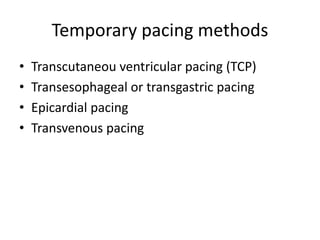
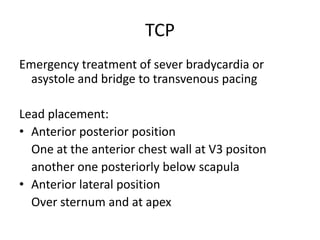
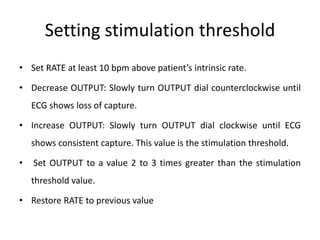
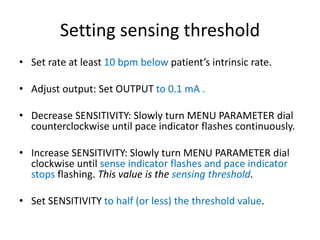
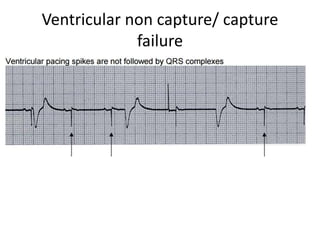
Temporary cardiac pacing is used to treat acute bradyarrhythmias or tachyarrhythmias until the underlying condition resolves or permanent pacing can be initiated. It aims to re-establish normal hemodynamics compromised by abnormal heart rates. Transvenous pacing is the preferred method, involving insertion of endocardial leads through veins to the heart. Precise lead placement is important and is confirmed with imaging. Pacing parameters like threshold, rate and sensing are optimized. Complications include those related to vascular access and device malfunction requiring troubleshooting. Close monitoring is needed to ensure proper pacing and detect any issues.