Dissociative Electron Attachment
Bobby K. Antony
Indian School of Mines, Dhanbad, INDIA
 Introduction
 Applications
 Theoretical Method
 Sample results (LiH)
 Summary & Conclusion
Outline of the presentation
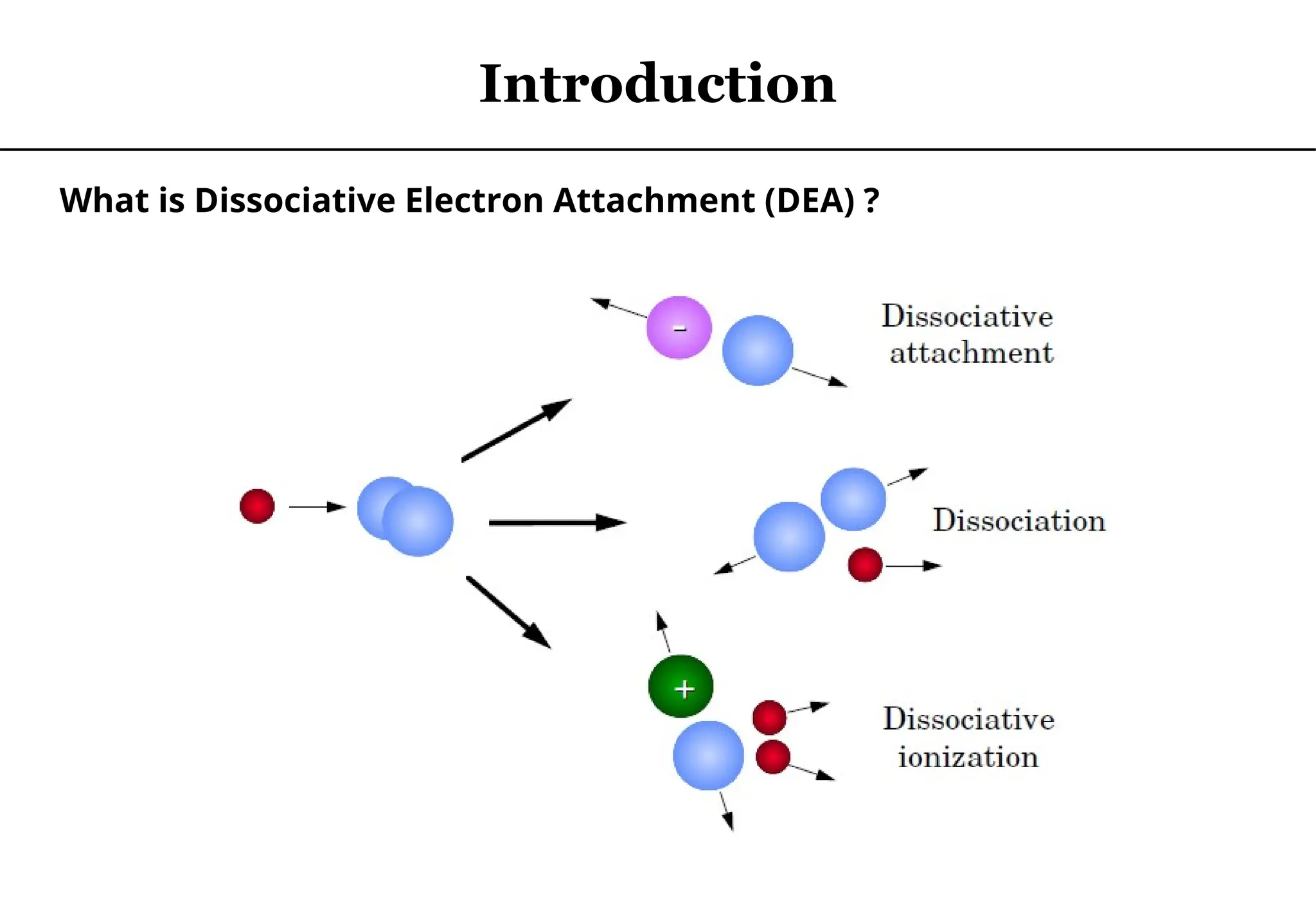
What is Dissociative Electron Attachment (DEA) ?
Introduction
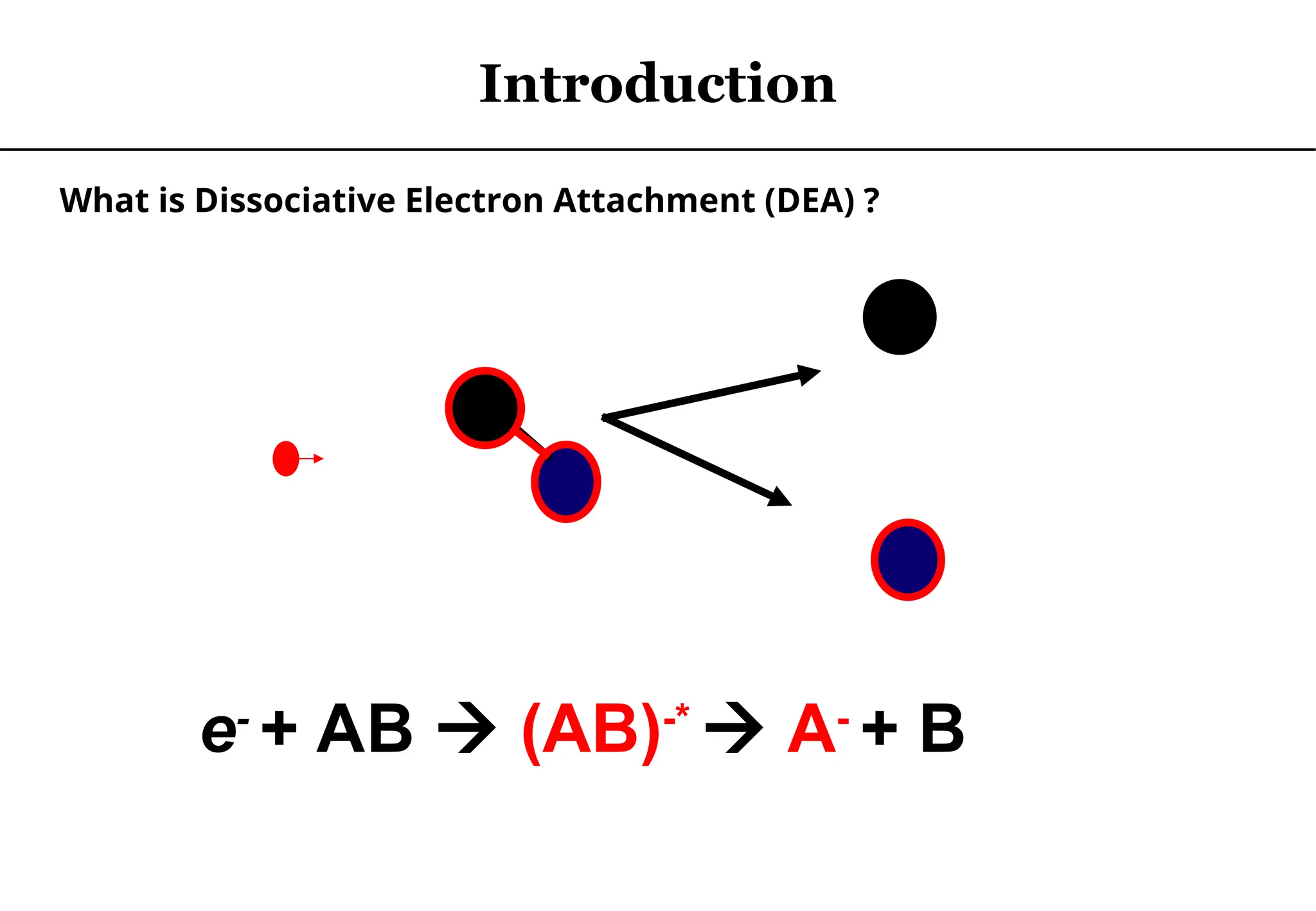
What is Dissociative Electron Attachment (DEA) ?
Introduction
e-
+ AB  (AB)-*
 A-
+ B
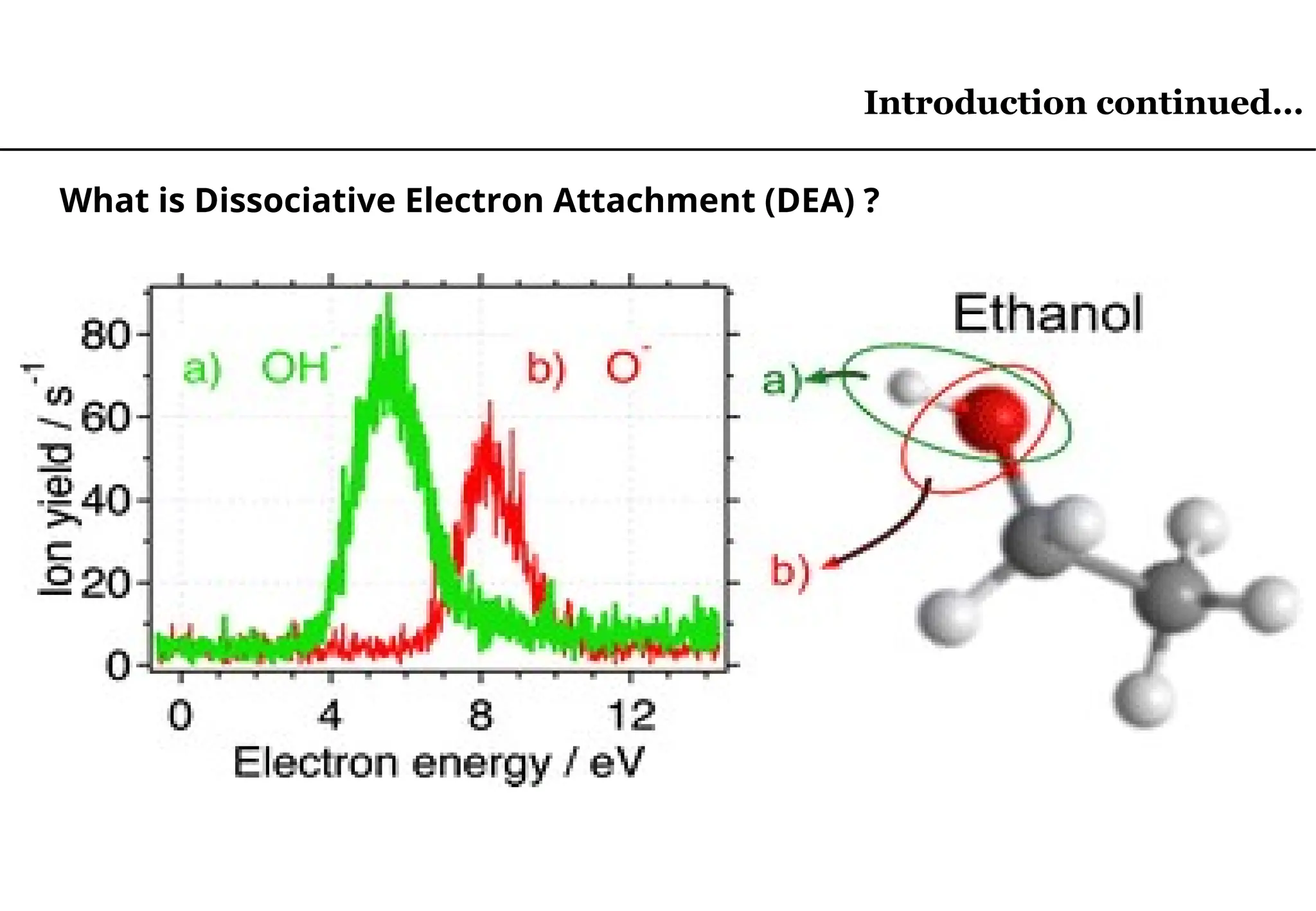
What is Dissociative Electron Attachment (DEA) ?
Introduction continued…
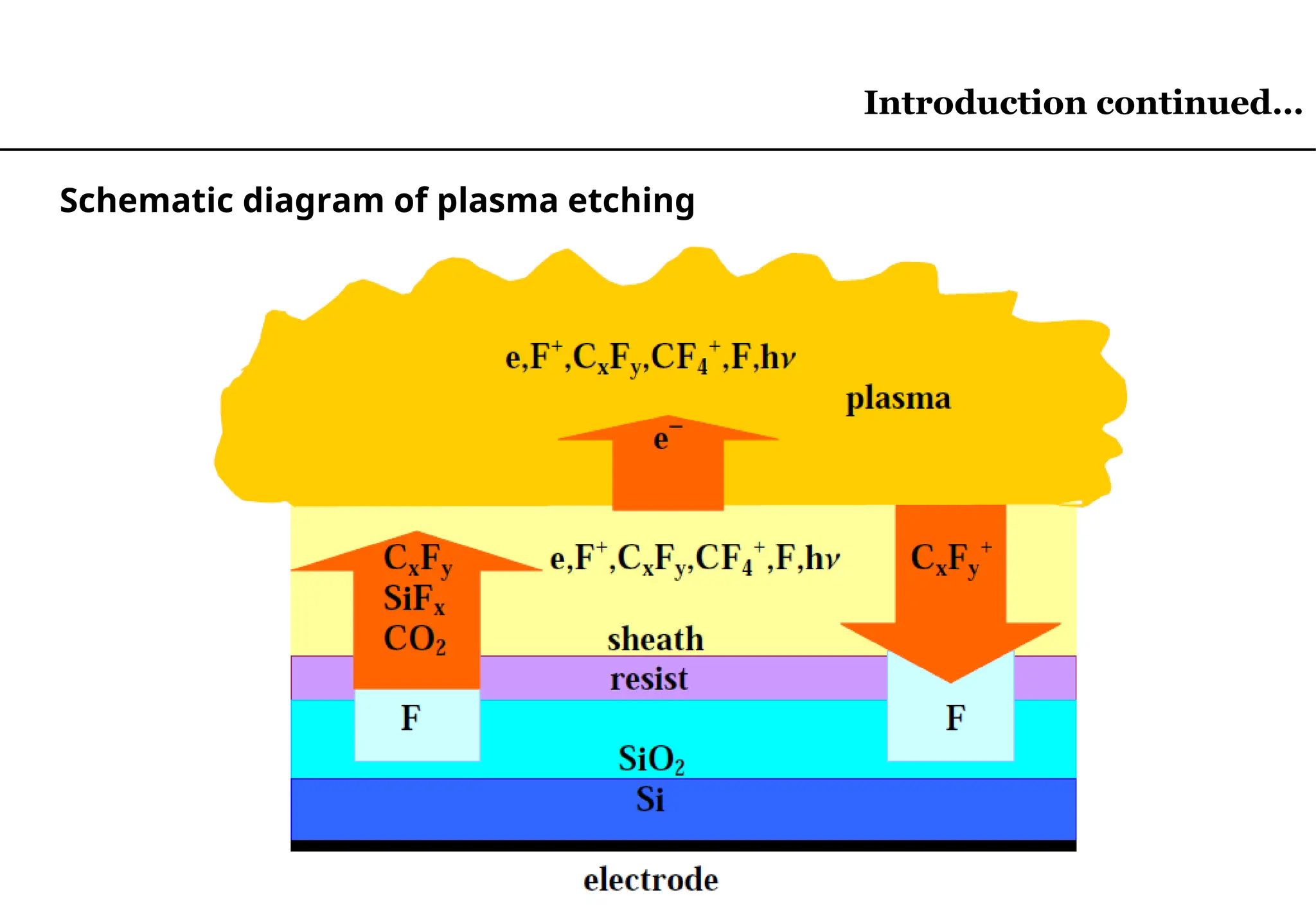
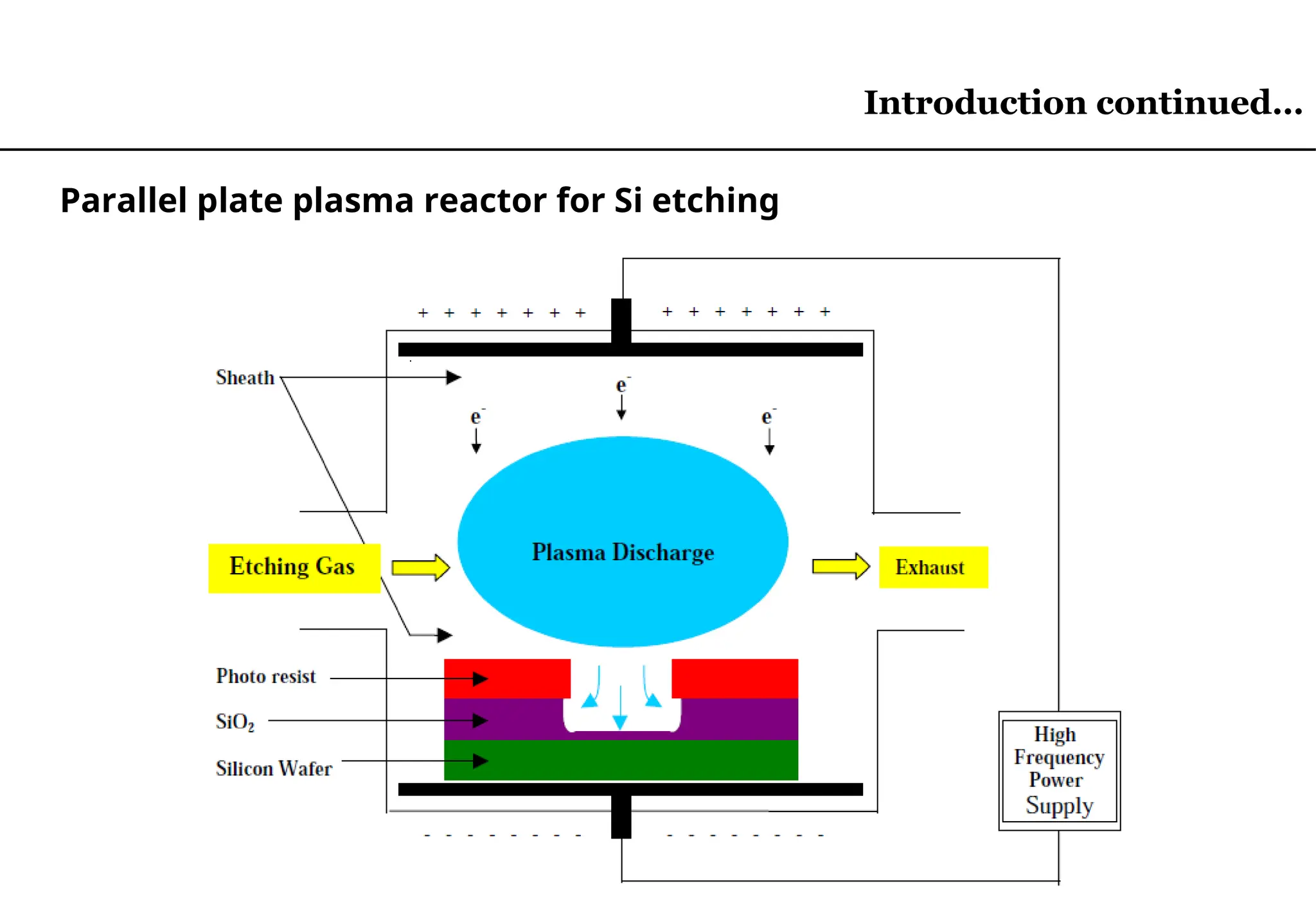
Schematic diagram of plasma etching
Introduction continued…
Parallel plate plasma reactor for Si etching
Introduction continued…
 Applications of e-atom / molecule CS to,
 atmospheric sciences (ozone, climate change etc.)
 plasma etching
 understanding & modeling plasmas in fusion devices
 In radiation physics (medical science) etc.
 Electrons: an effective source
 Difficulty in performing experiments
 Expensive
 Limitation to targets
 Time consuming
 Need for accurate and reliable calculations
Applications
 Recent surge in the study of DEA due to:
 the presence of complex molecules in astrophysical objects
 the low energy electron that can cause DNA damage in radiation etc.
R-matrix Method
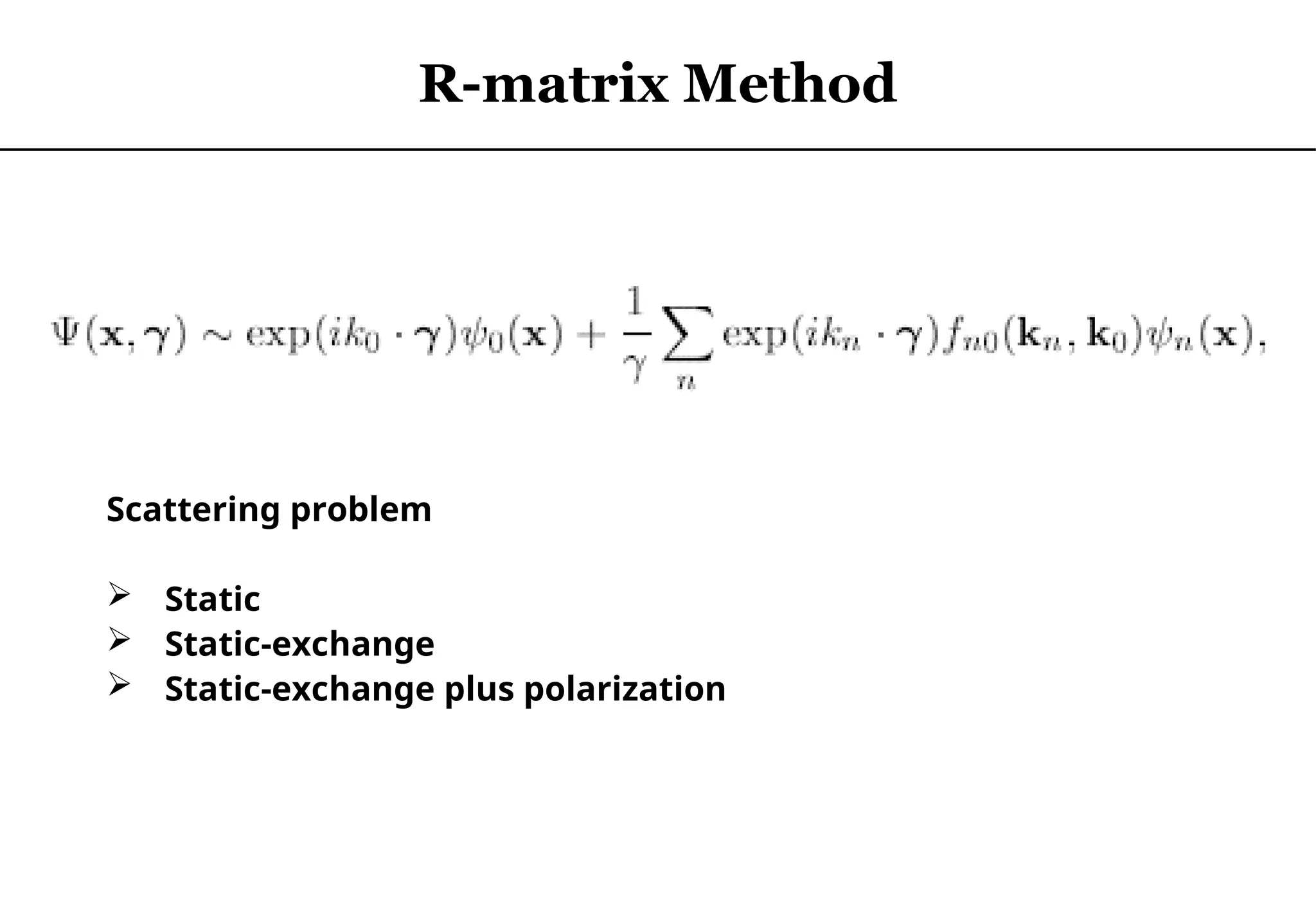
Scattering problem
 Static
 Static-exchange
 Static-exchange plus polarization
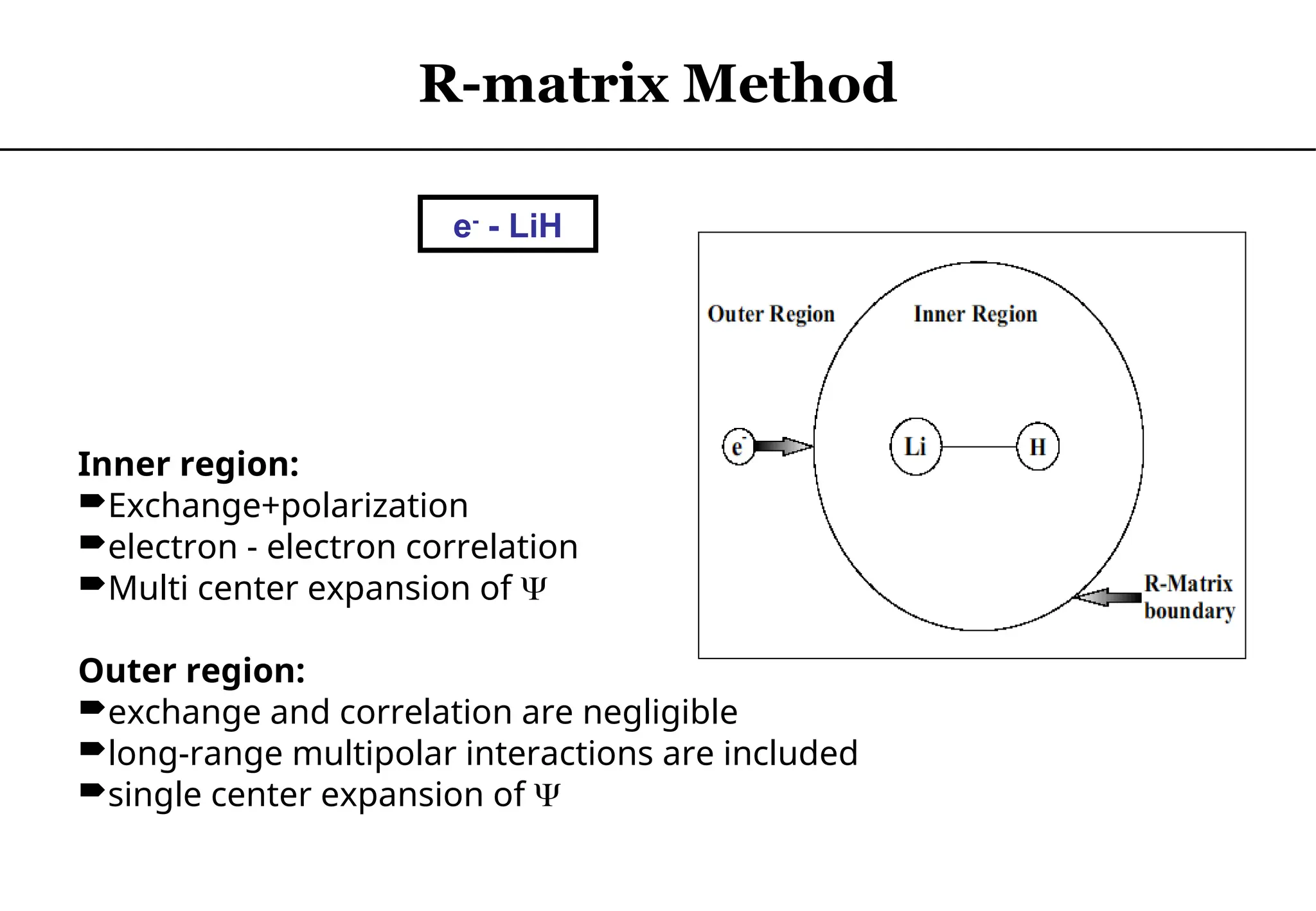
Inner region:
Exchange+polarization
electron - electron correlation
Multi center expansion of 
Outer region:
exchange and correlation are negligible
long-range multipolar interactions are included
single center expansion of 
e-
- LiH
R-matrix Method
R-matrix Method continued…
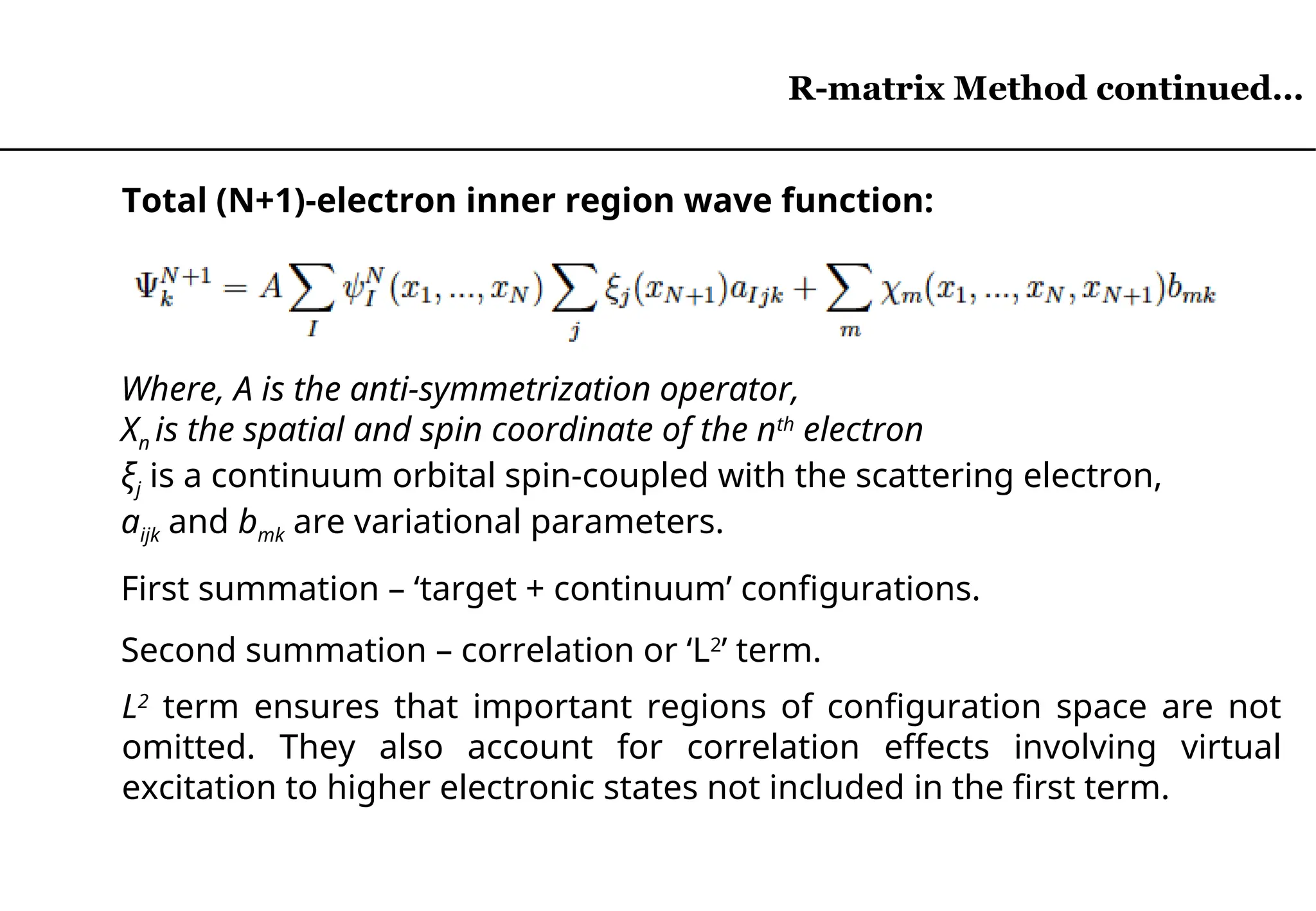
Total (N+1)-electron inner region wave function:
L2
term ensures that important regions of configuration space are not
omitted. They also account for correlation effects involving virtual
excitation to higher electronic states not included in the first term.
Where, A is the anti-symmetrization operator,
Xn is the spatial and spin coordinate of the nth
electron
ξj is a continuum orbital spin-coupled with the scattering electron,
aijk and bmk are variational parameters.
First summation – ‘target + continuum’ configurations.
Second summation – correlation or ‘L2
’ term.
R-matrix Method continued…
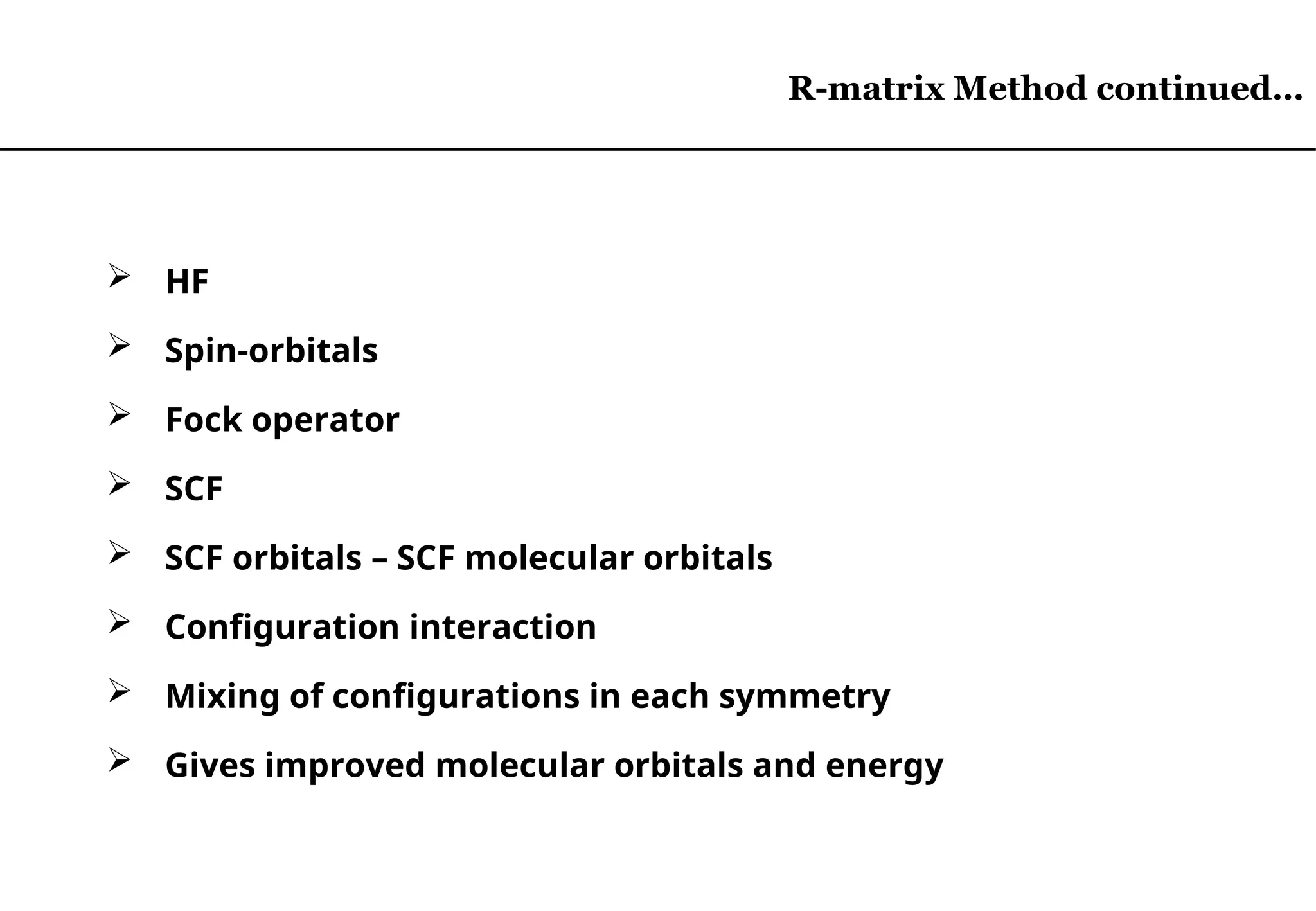
 HF
 Spin-orbitals
 Fock operator
 SCF
 SCF orbitals – SCF molecular orbitals
 Configuration interaction
 Mixing of configurations in each symmetry
 Gives improved molecular orbitals and energy
R-matrix Method continued…
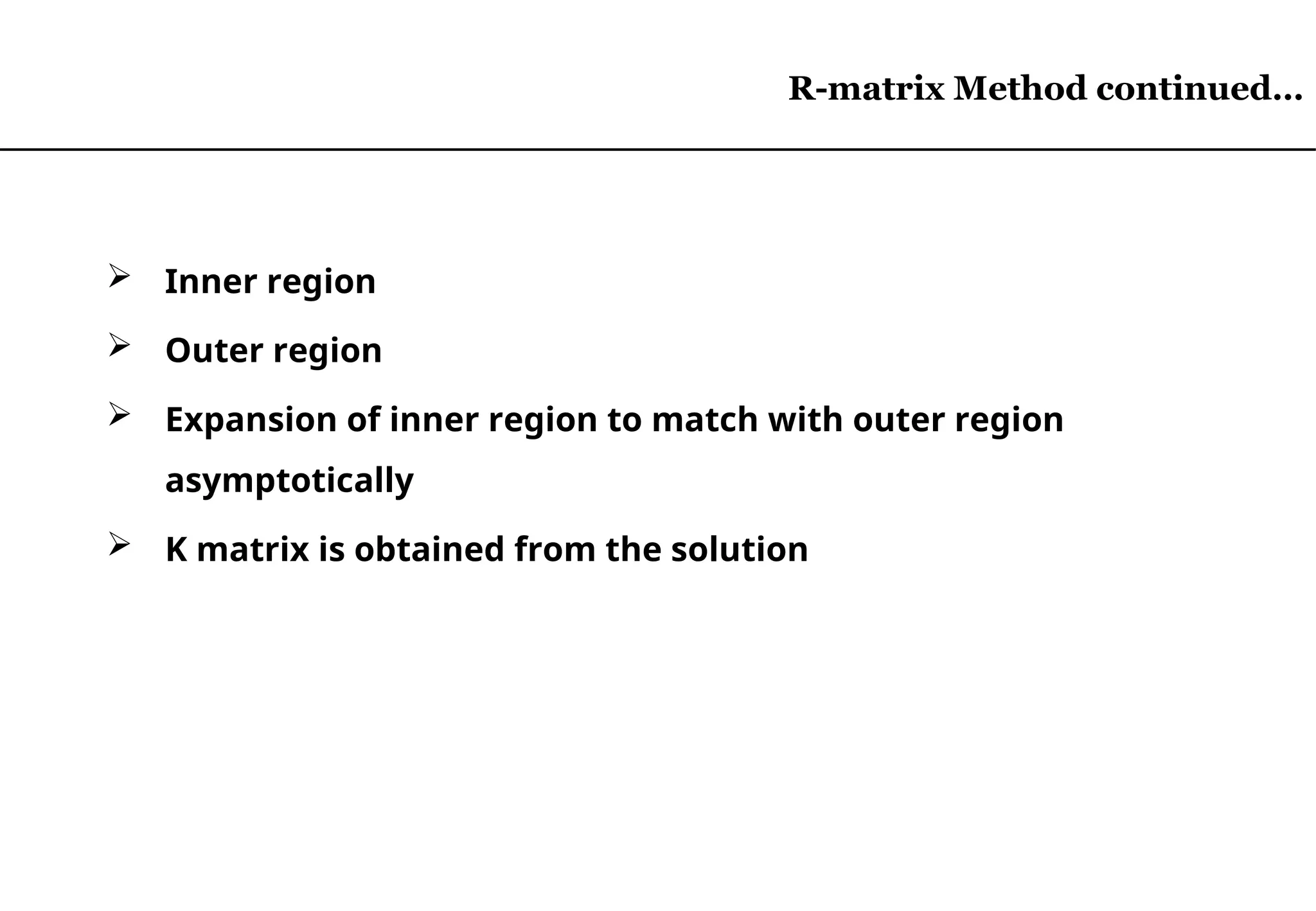
 Inner region
 Outer region
 Expansion of inner region to match with outer region
asymptotically
 K matrix is obtained from the solution
R-matrix Method continued…
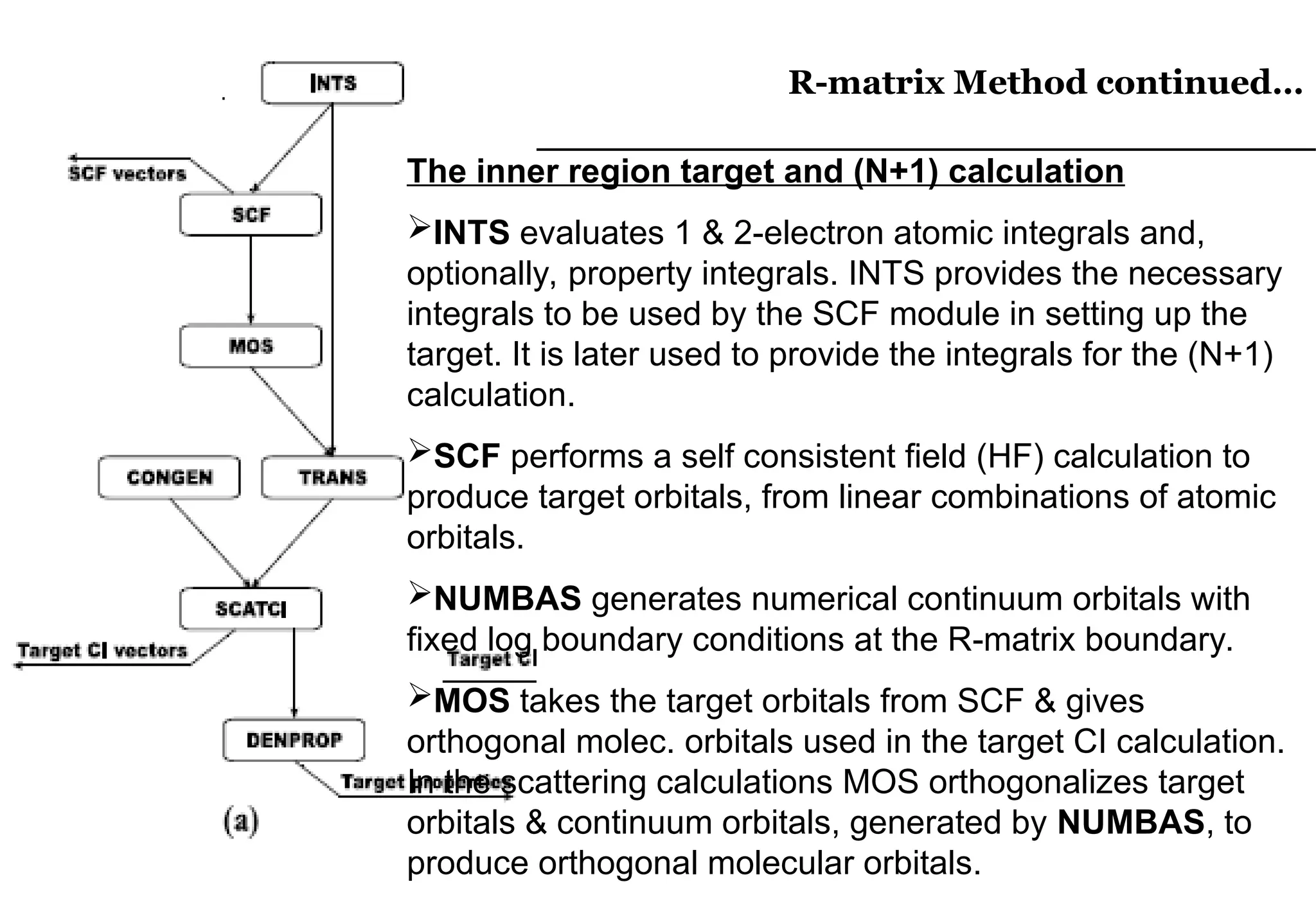
The inner region target and (N+1) calculation
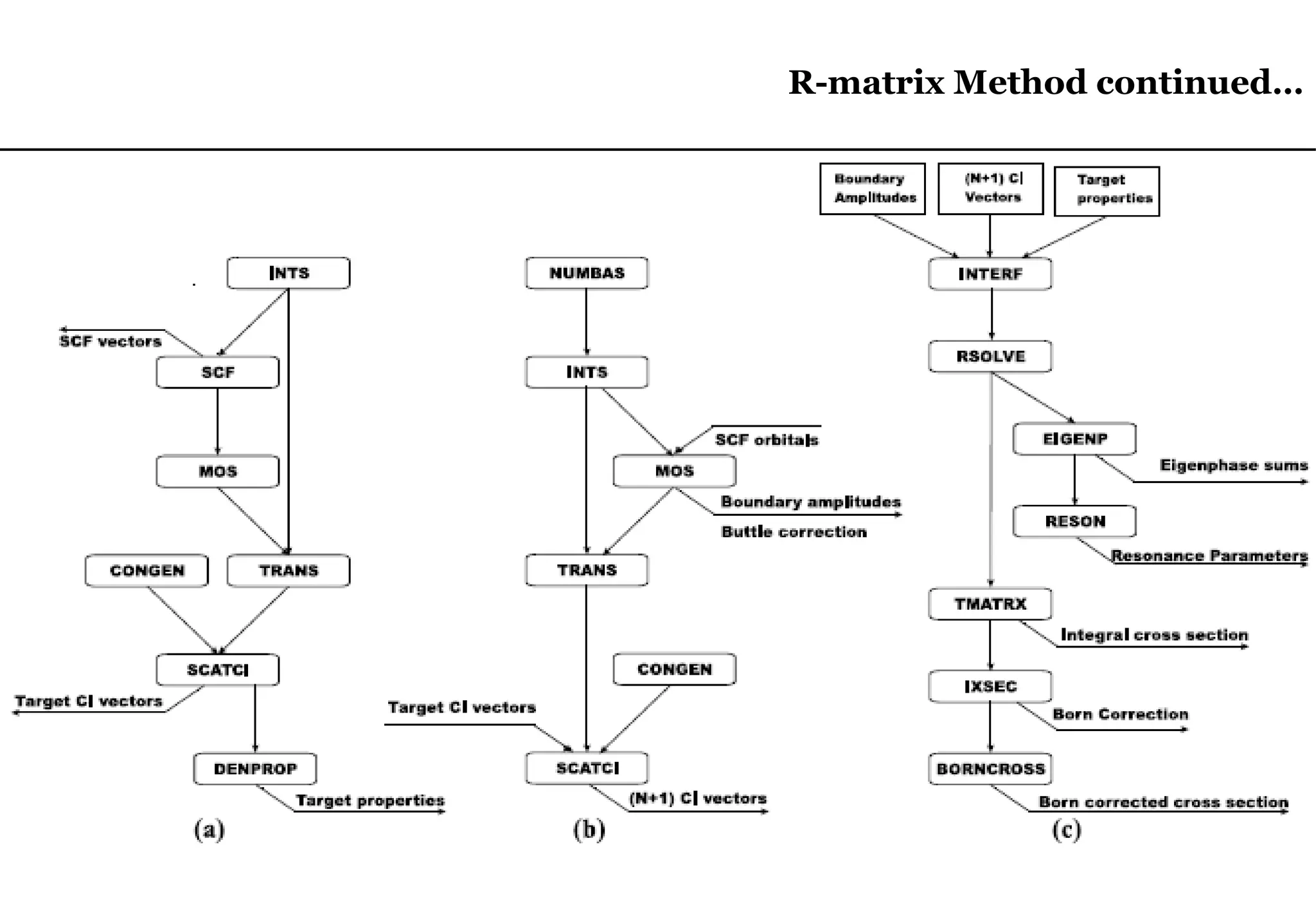
INTS evaluates 1 & 2-electron atomic integrals and,
optionally, property integrals. INTS provides the necessary
integrals to be used by the SCF module in setting up the
target. It is later used to provide the integrals for the (N+1)
calculation.
SCF performs a self consistent field (HF) calculation to
produce target orbitals, from linear combinations of atomic
orbitals.
NUMBAS generates numerical continuum orbitals with
fixed log boundary conditions at the R-matrix boundary.
MOS takes the target orbitals from SCF & gives
orthogonal molec. orbitals used in the target CI calculation.
In the scattering calculations MOS orthogonalizes target
orbitals & continuum orbitals, generated by NUMBAS, to
produce orthogonal molecular orbitals.
R-matrix Method continued…
TRANS carries out the four-index transformation of atomic integrals. This module
first orders the atomic integrals produced by INTS and then multiplies them by
combinations of molecular orbital coefficients to transform them into molecular
integrals which are required for the construction of the Hamiltonian.
CONGEN generates configuration state functions (CSFs) with appropriate spin and
symmetry couplings. The module also computes a phase factor for each target orbital,
to keep the phases between the target and (N+1)-electron system consistent.
SCATCI constructs and diagonalizes the Hamiltonian matrix for both N and (N+1)-
electron calculations, to find the eigenvalues and eigenvectors. It takes configurations
generated by CONGEN and molecular integrals supplied by TRANS to build up the
Hamiltonian matrix. SCATCI also generates CI target wavefunctions.
DENPROP calculates properties such as permanent dipoles, transition moments
and polarizabilities from input target wavefunctions generated by SCATCI and the
property integrals produced by INTS. The target properties are then used in the outer
region calculation.
R-matrix Method continued…
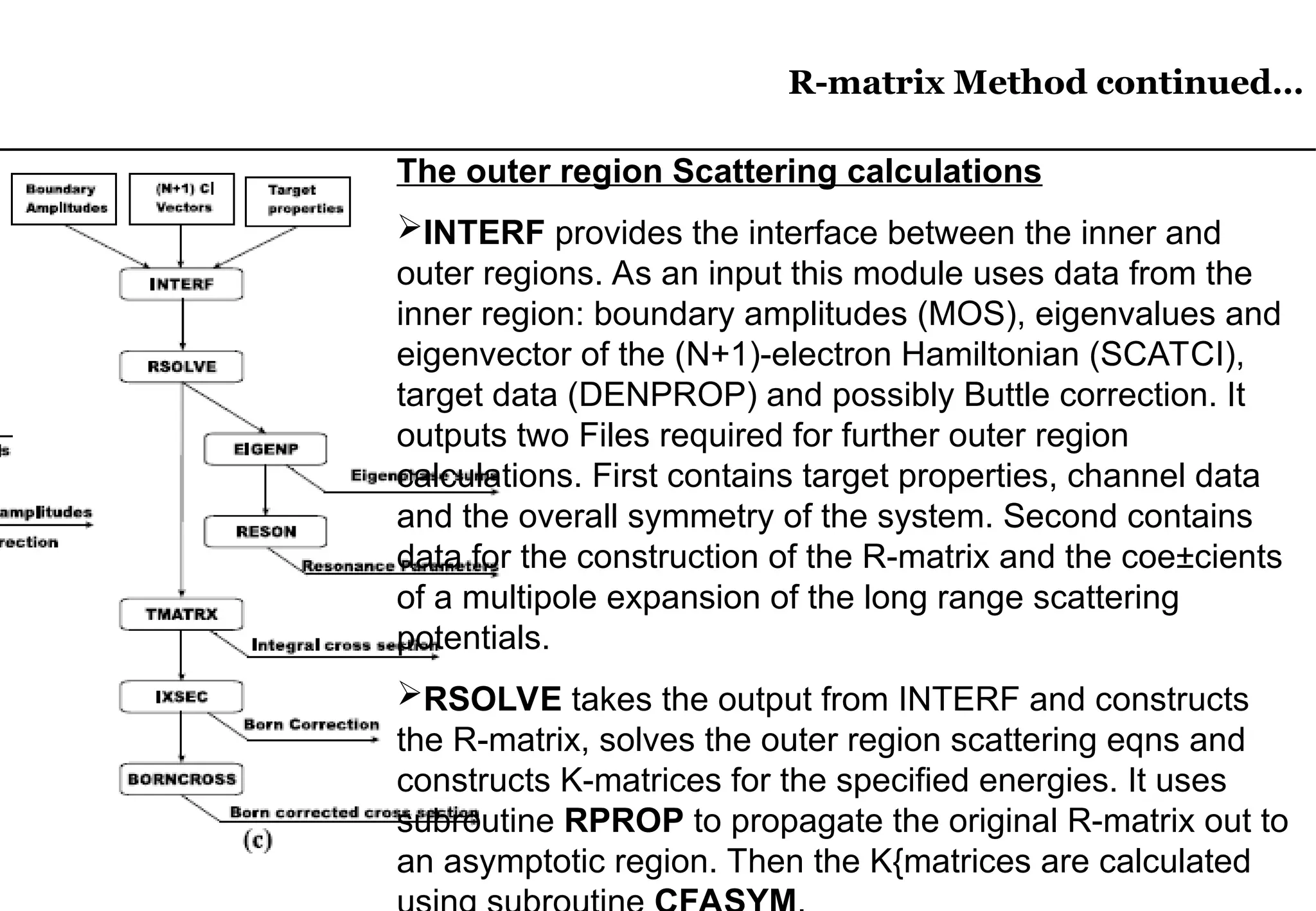
The outer region Scattering calculations
INTERF provides the interface between the inner and
outer regions. As an input this module uses data from the
inner region: boundary amplitudes (MOS), eigenvalues and
eigenvector of the (N+1)-electron Hamiltonian (SCATCI),
target data (DENPROP) and possibly Buttle correction. It
outputs two Files required for further outer region
calculations. First contains target properties, channel data
and the overall symmetry of the system. Second contains
data for the construction of the R-matrix and the coe±cients
of a multipole expansion of the long range scattering
potentials.
RSOLVE takes the output from INTERF and constructs
the R-matrix, solves the outer region scattering eqns and
constructs K-matrices for the specified energies. It uses
subroutine RPROP to propagate the original R-matrix out to
an asymptotic region. Then the K{matrices are calculated
R-matrix Method continued…
EIGENP diagonalizes the K-matrices, generated by RSOLVE, to obtain eigenphase
sums.
RESON searches the eigenphase for resonances.
TMATRX calculates the S-matrix from the K-matrix. The S-matrices can then be
used by IXSECS to calculate the integral cross sections.
BOUND solves the scattering problem with bound state boundary conditions to
obtain true bound state energies and wavefunctions of the (N+1) system.
BORNCROS calculates the Born corrections and adds them to the total integral
cross section. It also has an option to sum the integral cross sections of different total
symmetries calculated by IXSECS to produce the total integral cross section.
R-matrix Method continued…
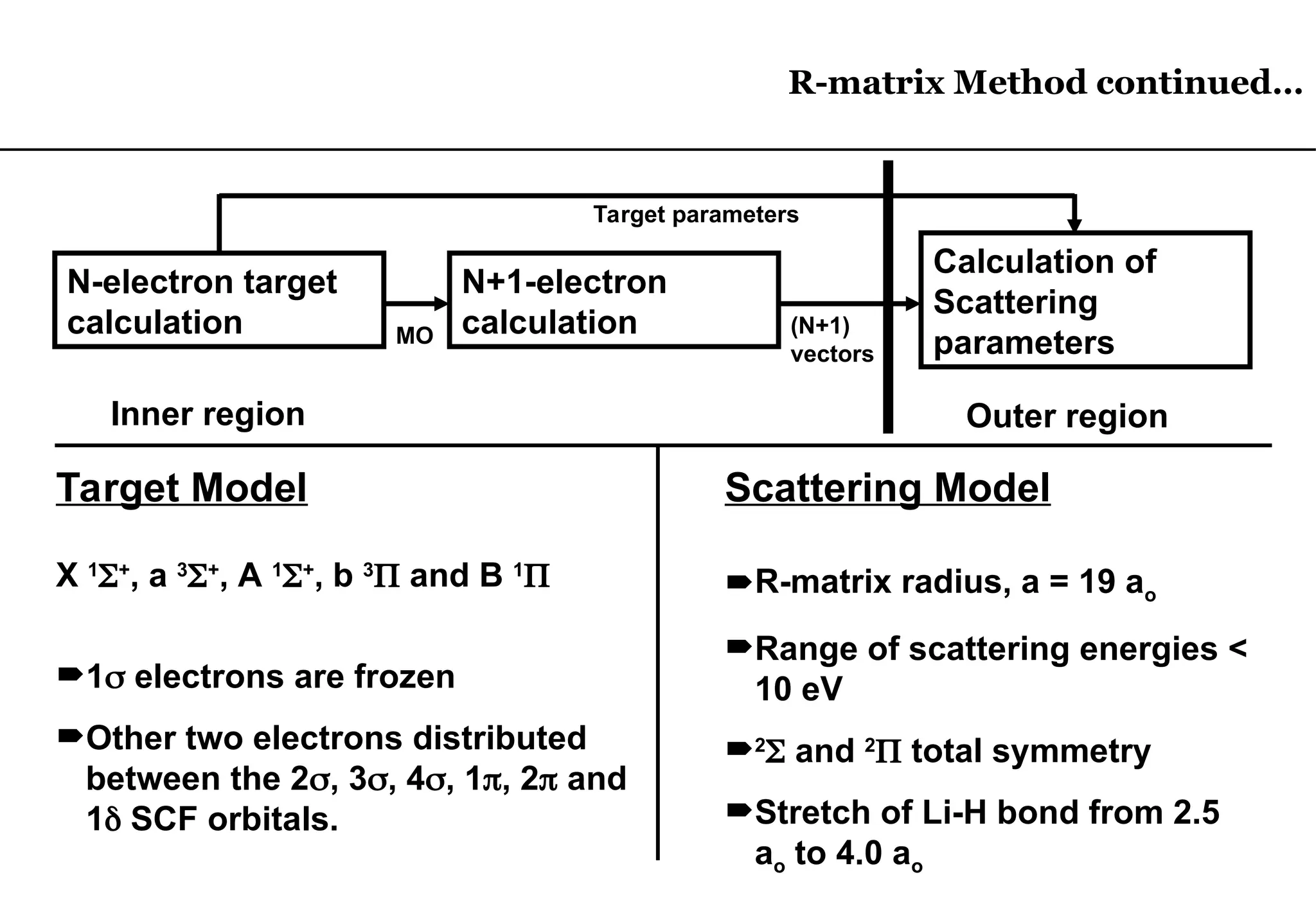
Scattering Model
Target Model
N-electron target
calculation
N+1-electron
calculation
Calculation of
Scattering
parameters
Inner region Outer region
Target parameters
MO (N+1)
vectors
X 1
+
, a 3
+
, A 1
+
, b 3
 and B 1

1 electrons are frozen
Other two electrons distributed
between the 2, 3, 4, 1, 2 and
1 SCF orbitals.
R-matrix radius, a = 19 ao
Range of scattering energies <
10 eV
2
 and 2
 total symmetry
Stretch of Li-H bond from 2.5
ao to 4.0 ao
R-matrix Method continued…
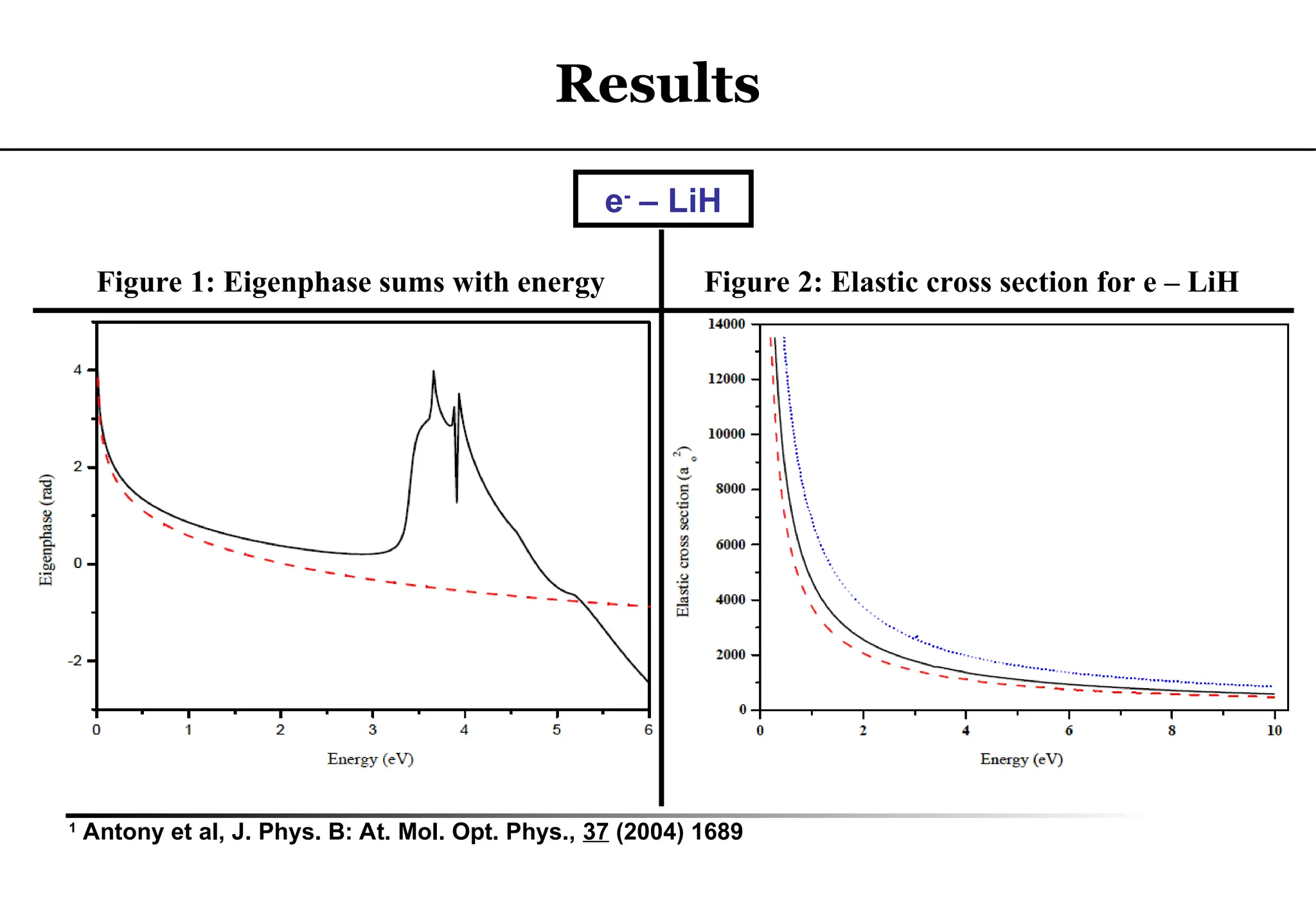
Figure 1: Eigenphase sums with energy Figure 2: Elastic cross section for e – LiH
e-
– LiH
Results
1
Antony et al, J. Phys. B: At. Mol. Opt. Phys., 37 (2004) 1689
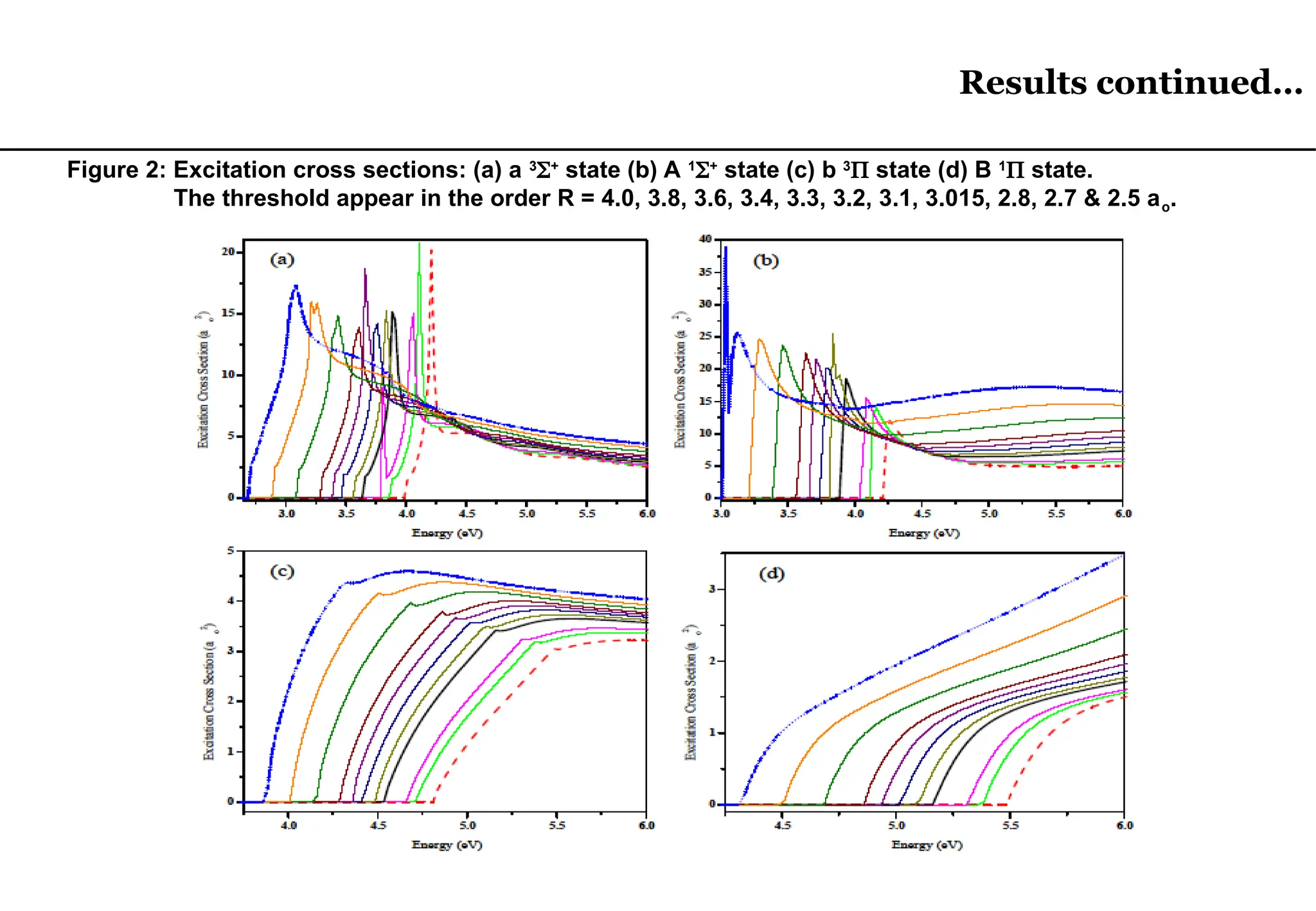
Figure 2: Excitation cross sections: (a) a 3
+
state (b) A 1
+
state (c) b 3
 state (d) B 1
 state.
The threshold appear in the order R = 4.0, 3.8, 3.6, 3.4, 3.3, 3.2, 3.1, 3.015, 2.8, 2.7 & 2.5 ao.
Results continued…
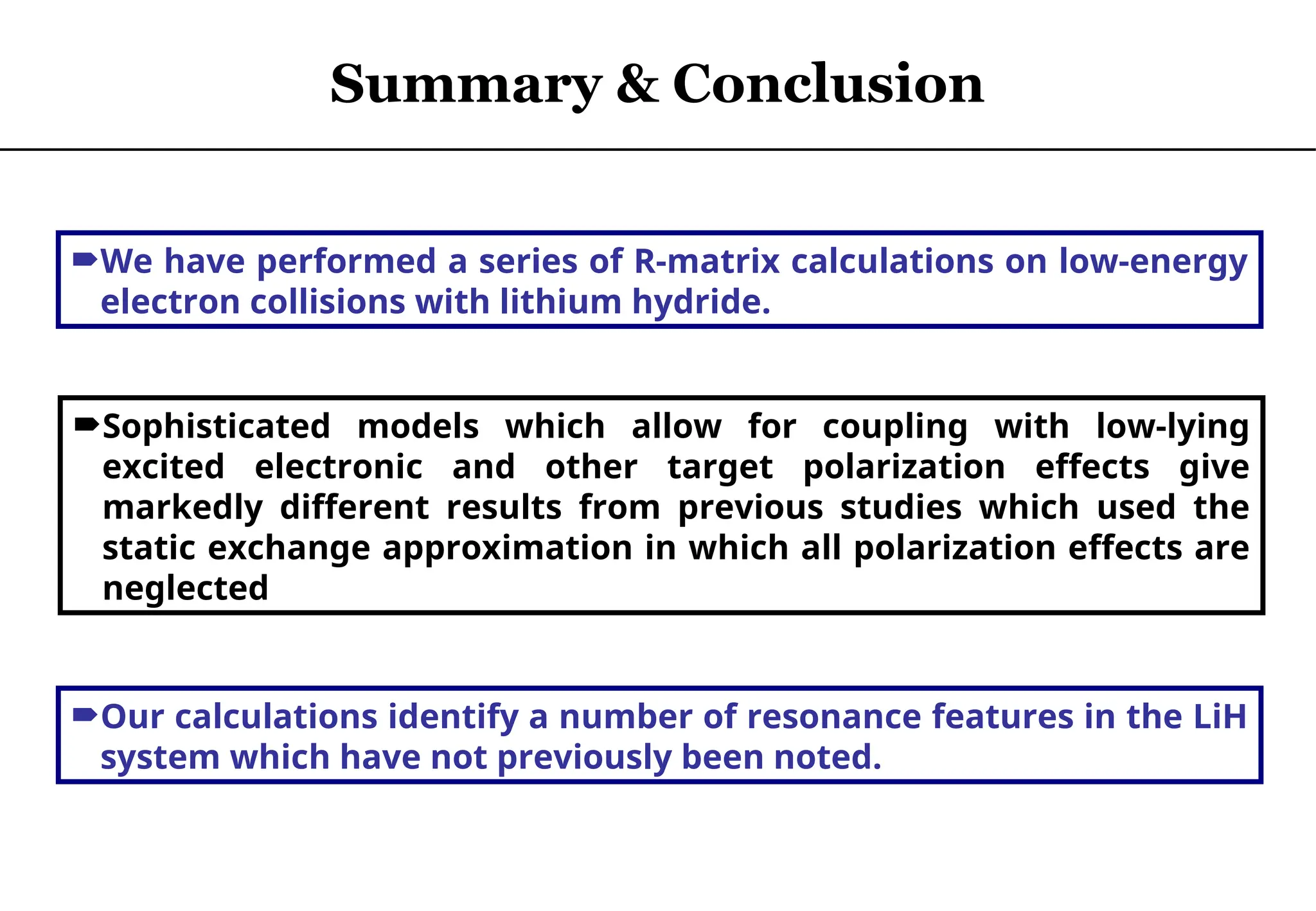
We have performed a series of R-matrix calculations on low-energy
electron collisions with lithium hydride.
Sophisticated models which allow for coupling with low-lying
excited electronic and other target polarization effects give
markedly different results from previous studies which used the
static exchange approximation in which all polarization effects are
neglected
Our calculations identify a number of resonance features in the LiH
system which have not previously been noted.
Summary & Conclusion
Particularly important is the lowest, 2
+
symmetry resonance. This
resonance may lead to significant vibrational excitation.
Furthermore, given the shape of this resonance curve, it will
undoubtedly provide a route to dissociative attachment and hence
provide a low energy route for destruction of LiH molecules by
electrons.
The present results may also have some interesting applications for
the stability of LiH in the early universe and the appearance of any
fluctuations in the Cosmic Ray Background.
Summary & conclusion continued…

Thanks

Electron Impact Scattering r-matrix method.ppt

  • 1.
    Dissociative Electron Attachment BobbyK. Antony Indian School of Mines, Dhanbad, INDIA
  • 2.
     Introduction  Applications Theoretical Method  Sample results (LiH)  Summary & Conclusion Outline of the presentation
  • 3.
    What is DissociativeElectron Attachment (DEA) ? Introduction
  • 4.
    What is DissociativeElectron Attachment (DEA) ? Introduction e- + AB  (AB)-*  A- + B
  • 5.
    What is DissociativeElectron Attachment (DEA) ? Introduction continued…
  • 6.
    Schematic diagram ofplasma etching Introduction continued…
  • 7.
    Parallel plate plasmareactor for Si etching Introduction continued…
  • 8.
     Applications ofe-atom / molecule CS to,  atmospheric sciences (ozone, climate change etc.)  plasma etching  understanding & modeling plasmas in fusion devices  In radiation physics (medical science) etc.  Electrons: an effective source  Difficulty in performing experiments  Expensive  Limitation to targets  Time consuming  Need for accurate and reliable calculations Applications  Recent surge in the study of DEA due to:  the presence of complex molecules in astrophysical objects  the low energy electron that can cause DNA damage in radiation etc.
  • 9.
    R-matrix Method Scattering problem Static  Static-exchange  Static-exchange plus polarization
  • 10.
    Inner region: Exchange+polarization electron -electron correlation Multi center expansion of  Outer region: exchange and correlation are negligible long-range multipolar interactions are included single center expansion of  e- - LiH R-matrix Method
  • 11.
    R-matrix Method continued… Total(N+1)-electron inner region wave function: L2 term ensures that important regions of configuration space are not omitted. They also account for correlation effects involving virtual excitation to higher electronic states not included in the first term. Where, A is the anti-symmetrization operator, Xn is the spatial and spin coordinate of the nth electron ξj is a continuum orbital spin-coupled with the scattering electron, aijk and bmk are variational parameters. First summation – ‘target + continuum’ configurations. Second summation – correlation or ‘L2 ’ term. R-matrix Method continued…
  • 12.
    R-matrix Method continued… R-matrixMethod continued…  HF  Spin-orbitals  Fock operator  SCF  SCF orbitals – SCF molecular orbitals  Configuration interaction  Mixing of configurations in each symmetry  Gives improved molecular orbitals and energy
  • 13.
    R-matrix Method continued… R-matrixMethod continued…  Inner region  Outer region  Expansion of inner region to match with outer region asymptotically  K matrix is obtained from the solution
  • 14.
    R-matrix Method continued… R-matrixMethod continued… The inner region target and (N+1) calculation INTS evaluates 1 & 2-electron atomic integrals and, optionally, property integrals. INTS provides the necessary integrals to be used by the SCF module in setting up the target. It is later used to provide the integrals for the (N+1) calculation. SCF performs a self consistent field (HF) calculation to produce target orbitals, from linear combinations of atomic orbitals. NUMBAS generates numerical continuum orbitals with fixed log boundary conditions at the R-matrix boundary. MOS takes the target orbitals from SCF & gives orthogonal molec. orbitals used in the target CI calculation. In the scattering calculations MOS orthogonalizes target orbitals & continuum orbitals, generated by NUMBAS, to produce orthogonal molecular orbitals.
  • 15.
    R-matrix Method continued… R-matrixMethod continued… TRANS carries out the four-index transformation of atomic integrals. This module first orders the atomic integrals produced by INTS and then multiplies them by combinations of molecular orbital coefficients to transform them into molecular integrals which are required for the construction of the Hamiltonian. CONGEN generates configuration state functions (CSFs) with appropriate spin and symmetry couplings. The module also computes a phase factor for each target orbital, to keep the phases between the target and (N+1)-electron system consistent. SCATCI constructs and diagonalizes the Hamiltonian matrix for both N and (N+1)- electron calculations, to find the eigenvalues and eigenvectors. It takes configurations generated by CONGEN and molecular integrals supplied by TRANS to build up the Hamiltonian matrix. SCATCI also generates CI target wavefunctions. DENPROP calculates properties such as permanent dipoles, transition moments and polarizabilities from input target wavefunctions generated by SCATCI and the property integrals produced by INTS. The target properties are then used in the outer region calculation.
  • 16.
    R-matrix Method continued… R-matrixMethod continued… The outer region Scattering calculations INTERF provides the interface between the inner and outer regions. As an input this module uses data from the inner region: boundary amplitudes (MOS), eigenvalues and eigenvector of the (N+1)-electron Hamiltonian (SCATCI), target data (DENPROP) and possibly Buttle correction. It outputs two Files required for further outer region calculations. First contains target properties, channel data and the overall symmetry of the system. Second contains data for the construction of the R-matrix and the coe±cients of a multipole expansion of the long range scattering potentials. RSOLVE takes the output from INTERF and constructs the R-matrix, solves the outer region scattering eqns and constructs K-matrices for the specified energies. It uses subroutine RPROP to propagate the original R-matrix out to an asymptotic region. Then the K{matrices are calculated
  • 17.
    R-matrix Method continued… R-matrixMethod continued… EIGENP diagonalizes the K-matrices, generated by RSOLVE, to obtain eigenphase sums. RESON searches the eigenphase for resonances. TMATRX calculates the S-matrix from the K-matrix. The S-matrices can then be used by IXSECS to calculate the integral cross sections. BOUND solves the scattering problem with bound state boundary conditions to obtain true bound state energies and wavefunctions of the (N+1) system. BORNCROS calculates the Born corrections and adds them to the total integral cross section. It also has an option to sum the integral cross sections of different total symmetries calculated by IXSECS to produce the total integral cross section.
  • 18.
  • 19.
    Scattering Model Target Model N-electrontarget calculation N+1-electron calculation Calculation of Scattering parameters Inner region Outer region Target parameters MO (N+1) vectors X 1 + , a 3 + , A 1 + , b 3  and B 1  1 electrons are frozen Other two electrons distributed between the 2, 3, 4, 1, 2 and 1 SCF orbitals. R-matrix radius, a = 19 ao Range of scattering energies < 10 eV 2  and 2  total symmetry Stretch of Li-H bond from 2.5 ao to 4.0 ao R-matrix Method continued…
  • 20.
    Figure 1: Eigenphasesums with energy Figure 2: Elastic cross section for e – LiH e- – LiH Results 1 Antony et al, J. Phys. B: At. Mol. Opt. Phys., 37 (2004) 1689
  • 21.
    Figure 2: Excitationcross sections: (a) a 3 + state (b) A 1 + state (c) b 3  state (d) B 1  state. The threshold appear in the order R = 4.0, 3.8, 3.6, 3.4, 3.3, 3.2, 3.1, 3.015, 2.8, 2.7 & 2.5 ao. Results continued…
  • 22.
    We have performeda series of R-matrix calculations on low-energy electron collisions with lithium hydride. Sophisticated models which allow for coupling with low-lying excited electronic and other target polarization effects give markedly different results from previous studies which used the static exchange approximation in which all polarization effects are neglected Our calculations identify a number of resonance features in the LiH system which have not previously been noted. Summary & Conclusion
  • 23.
    Particularly important isthe lowest, 2 + symmetry resonance. This resonance may lead to significant vibrational excitation. Furthermore, given the shape of this resonance curve, it will undoubtedly provide a route to dissociative attachment and hence provide a low energy route for destruction of LiH molecules by electrons. The present results may also have some interesting applications for the stability of LiH in the early universe and the appearance of any fluctuations in the Cosmic Ray Background. Summary & conclusion continued…
  • 24.