DNA
METHYLATION
DEFINITION
• It is a process by which methyl group are added to the DNA
molecule.
• It is a heritable epigenetic mark involving the covalent transfer
of methyl group to the C-5 position of the cytosine ring of the
DNA by DNA methyltransferases (DNMTs).
It plays a very important role in normal development and in a
number of key processes including genomic imprinting, X-
chromosome inactivation and contributes to diseases like
cancer.
CYTOSINE METHYLATION
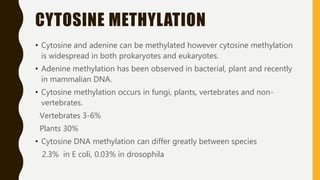
• Cytosine and adenine can be methylated however cytosine methylation
is widespread in both prokaryotes and eukaryotes.
• Adenine methylation has been observed in bacterial, plant and recently
in mammalian DNA.
• Cytosine methylation occurs in fungi, plants, vertebrates and non-
vertebrates.
Vertebrates 3-6%
Plants 30%
• Cytosine DNA methylation can differ greatly between species
2.3% in E coli, 0.03% in drosophila
CYTOSINE METHYLATION
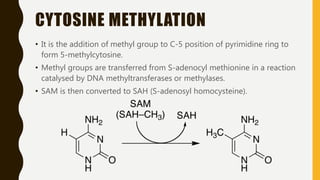
• It is the addition of methyl group to C-5 position of pyrimidine ring to
form 5-methylcytosine.
• Methyl groups are transferred from S-adenocyl methionine in a reaction
catalysed by DNA methyltransferases or methylases.
• SAM is then converted to SAH (S-adenosyl homocysteine).
REPRESSION OF CPG-DENSE
PROMOTERS
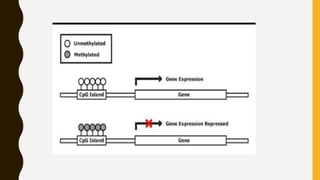
• In humans about 60-70% of genes have a CpG-islands in their promoter
region.
• DNA methylation of CpG-islands is linked with transcriptional
repression.
• DNA methylation may effect transcription od genes in two ways :
1. DNA methylation effects the binding of transcriptional proteins to the
gene.
2. Methylated DNA may binds with methyl-CpG-binding domain proteins
( MBDs). They attract histone deacetylases and other chromatin
remodelling proteins which modify histones forming compact inactive
chromatin ( heterochromatin ).
METHYLATION IN CANCER:
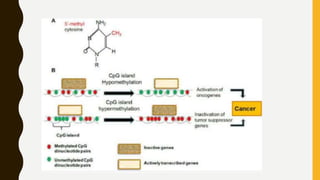
Alteration of DNA methylation is important component of
cancer development. Generally in progression of cancer
hundred of genes are silenced or activated.
Typically there is hypermethylation of tumour suppressor
and hypomethylation of oncogenes.
GENOMIC
IMPRINTING
GENOMIC IMPRINTING
DEFINITION:
• The differential expression of genetic material at either
chromosomal or allelic level depending on whether genetic
material has come from the male or female parent.
OR
• An epigenetic form of gene regulation that results in only
copy inherited from father or mother to function.
• For majority of autosomal genes expression occur for both
alleles from each parent however <1% genes are imprinted (
gene expression occurs from only one allele).
• There are more than 25 identified imprinted genes, and
estimates based on mouse models indicate that as many as
100 to 200 may exist. The first imprinted gene identified was
mouse insulin-like growth factor 2 (Igf2), which encodes for a
critical fetal-specific growth factor. (Emirjeta Bajrami, 2016)
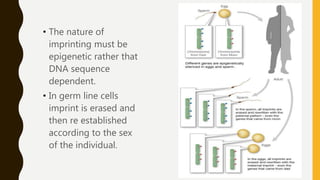
• The nature of
imprinting must be
epigenetic rather that
DNA sequence
dependent.
• In germ line cells
imprint is erased and
then re established
according to the sex
of the individual.
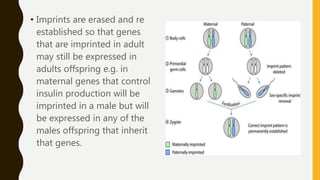
• Imprints are erased and re
established so that genes
that are imprinted in adult
may still be expressed in
adults offspring e.g. in
maternal genes that control
insulin production will be
imprinted in a male but will
be expressed in any of the
males offspring that inherit
that genes.
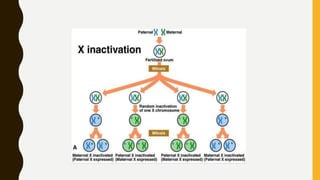
X-INACTIVATION
• It is a process by which one of the copies of X chromosome
present in female mammals is inactivated.
• Female mammals have two X chromosomes, X inactivation
prevents having twice X chromosome gene products as males.
• X-inactivation is random and independent in the cells of early
blastocyst.
• Once an X chromosome is inactivated it will remain inactive
throughout the lifetime of the cell and its descendants in that
organism.
• X-inactivation is reversed in the female gametes, so that
all oocytes contain an active X chromosome.
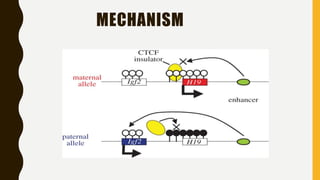
IGF2 IMPRINTING
• The gene encoding insulin like growth factor 2 is only
expressed from allele inherited from the father.
• Cluster containing maternally expressed H19 and paternally
expressed Igf2.
• Regulated by an ICR designated imprinting centre1 (IC1) in
humans and ICR or Differentially Methylated Domain (DMD)
in mouse.
• Proper imprinting of H19 AND Igf2 requires that the ICR or
DMD is methylated on the paternal allele and unmethylated
on the maternal allele.
MECHANISM
GENOMIC IMPRINTING IN DISEASES
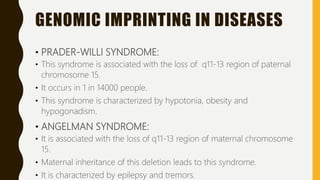
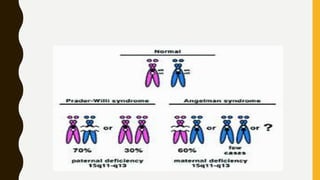
• PRADER-WILLI SYNDROME:
• This syndrome is associated with the loss of q11-13 region of paternal
chromosome 15.
• It occurs in 1 in 14000 people.
• This syndrome is characterized by hypotonia, obesity and
hypogonadism.
• ANGELMAN SYNDROME:
• It is associated with the loss of q11-13 region of maternal chromosome
15.
• Maternal inheritance of this deletion leads to this syndrome.
• It is characterized by epilepsy and tremors.
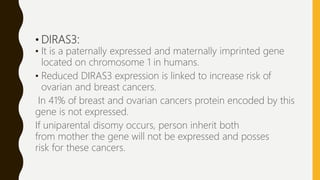
• DIRAS3:
• It is a paternally expressed and maternally imprinted gene
located on chromosome 1 in humans.
• Reduced DIRAS3 expression is linked to increase risk of
ovarian and breast cancers.
In 41% of breast and ovarian cancers protein encoded by this
gene is not expressed.
If uniparental disomy occurs, person inherit both
from mother the gene will not be expressed and posses
risk for these cancers.

Dna methylation ppt

  • 1.
  • 2.
    DEFINITION • It isa process by which methyl group are added to the DNA molecule. • It is a heritable epigenetic mark involving the covalent transfer of methyl group to the C-5 position of the cytosine ring of the DNA by DNA methyltransferases (DNMTs). It plays a very important role in normal development and in a number of key processes including genomic imprinting, X- chromosome inactivation and contributes to diseases like cancer.
  • 3.
    CYTOSINE METHYLATION • Cytosineand adenine can be methylated however cytosine methylation is widespread in both prokaryotes and eukaryotes. • Adenine methylation has been observed in bacterial, plant and recently in mammalian DNA. • Cytosine methylation occurs in fungi, plants, vertebrates and non- vertebrates. Vertebrates 3-6% Plants 30% • Cytosine DNA methylation can differ greatly between species 2.3% in E coli, 0.03% in drosophila
  • 4.
    CYTOSINE METHYLATION • Itis the addition of methyl group to C-5 position of pyrimidine ring to form 5-methylcytosine. • Methyl groups are transferred from S-adenocyl methionine in a reaction catalysed by DNA methyltransferases or methylases. • SAM is then converted to SAH (S-adenosyl homocysteine).
  • 5.
    REPRESSION OF CPG-DENSE PROMOTERS •In humans about 60-70% of genes have a CpG-islands in their promoter region. • DNA methylation of CpG-islands is linked with transcriptional repression. • DNA methylation may effect transcription od genes in two ways : 1. DNA methylation effects the binding of transcriptional proteins to the gene. 2. Methylated DNA may binds with methyl-CpG-binding domain proteins ( MBDs). They attract histone deacetylases and other chromatin remodelling proteins which modify histones forming compact inactive chromatin ( heterochromatin ).
  • 7.
    METHYLATION IN CANCER: Alterationof DNA methylation is important component of cancer development. Generally in progression of cancer hundred of genes are silenced or activated. Typically there is hypermethylation of tumour suppressor and hypomethylation of oncogenes.
  • 9.
  • 10.
    GENOMIC IMPRINTING DEFINITION: • Thedifferential expression of genetic material at either chromosomal or allelic level depending on whether genetic material has come from the male or female parent. OR • An epigenetic form of gene regulation that results in only copy inherited from father or mother to function.
  • 11.
    • For majorityof autosomal genes expression occur for both alleles from each parent however <1% genes are imprinted ( gene expression occurs from only one allele). • There are more than 25 identified imprinted genes, and estimates based on mouse models indicate that as many as 100 to 200 may exist. The first imprinted gene identified was mouse insulin-like growth factor 2 (Igf2), which encodes for a critical fetal-specific growth factor. (Emirjeta Bajrami, 2016)
  • 12.
    • The natureof imprinting must be epigenetic rather that DNA sequence dependent. • In germ line cells imprint is erased and then re established according to the sex of the individual.
  • 13.
    • Imprints areerased and re established so that genes that are imprinted in adult may still be expressed in adults offspring e.g. in maternal genes that control insulin production will be imprinted in a male but will be expressed in any of the males offspring that inherit that genes.
  • 14.
    X-INACTIVATION • It isa process by which one of the copies of X chromosome present in female mammals is inactivated. • Female mammals have two X chromosomes, X inactivation prevents having twice X chromosome gene products as males. • X-inactivation is random and independent in the cells of early blastocyst. • Once an X chromosome is inactivated it will remain inactive throughout the lifetime of the cell and its descendants in that organism. • X-inactivation is reversed in the female gametes, so that all oocytes contain an active X chromosome.
  • 16.
    IGF2 IMPRINTING • Thegene encoding insulin like growth factor 2 is only expressed from allele inherited from the father. • Cluster containing maternally expressed H19 and paternally expressed Igf2. • Regulated by an ICR designated imprinting centre1 (IC1) in humans and ICR or Differentially Methylated Domain (DMD) in mouse. • Proper imprinting of H19 AND Igf2 requires that the ICR or DMD is methylated on the paternal allele and unmethylated on the maternal allele.
  • 17.
  • 18.
    GENOMIC IMPRINTING INDISEASES • PRADER-WILLI SYNDROME: • This syndrome is associated with the loss of q11-13 region of paternal chromosome 15. • It occurs in 1 in 14000 people. • This syndrome is characterized by hypotonia, obesity and hypogonadism. • ANGELMAN SYNDROME: • It is associated with the loss of q11-13 region of maternal chromosome 15. • Maternal inheritance of this deletion leads to this syndrome. • It is characterized by epilepsy and tremors.
  • 20.
    • DIRAS3: • Itis a paternally expressed and maternally imprinted gene located on chromosome 1 in humans. • Reduced DIRAS3 expression is linked to increase risk of ovarian and breast cancers. In 41% of breast and ovarian cancers protein encoded by this gene is not expressed. If uniparental disomy occurs, person inherit both from mother the gene will not be expressed and posses risk for these cancers.