DNA METHYLATION
Name-Samadrita Banik
St. George College of
Management and Science
2nd Semester
M.Sc Microbiology
INTRODUCTION
DNA methylation is a biological process by which methyl
groups are added to the DNA molecule.
 Methylation can change the activity of a DNA segment without
changing the sequence. When located in a gene promoter, DNA
methylation typically acts to repress gene transcription.
In mammals, DNA methylation is essential for normal
development and is associated with a number of key processes
including genomic imprinting, X-chromosome inactivation,
aging, and carcinogenesis.
 DNA Methylation of most organism is modified by a post
replicative process which resuls in three types of
methylated bases in DNA:
C5-methylcytosine
N4-methylcytosine
N6-methylcytosine
 This modification is called DNA Methylation.
 DNA Methylation is a covalent modification of DNA that
does not change the DNA sequence, but had an influence
on gene activity.
 It occurs in the cells of fungi, plants, non-vertebrates
and vertebrates.
 In vertebrates , 3-6% of DNA cytosine is methylated.
 No methylation in many insects and single celled
eukaryotes.
 In plants, 30% of DNA cytosine is methylated.
Epigenetic Factor
DNA methylation is an epigenetic mechanism that occurs by the
addition of a methyl (CH3) group to DNA, thereby often modifying the
function of the genes and affecting gene expression.
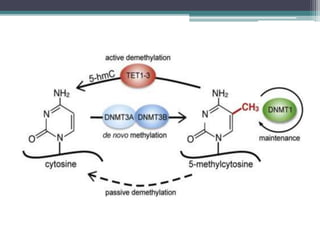
 The most widely characterized DNA methylation process is the
covalent addition of the methyl group at the 5-carbon of the cytosine
ring resulting in 5-methylcytosine (5-mC), also informally known as the
“fifth base” of DNA.
These methyl groups project into the major groove of DNA and inhibit
transcription.
Mechanism
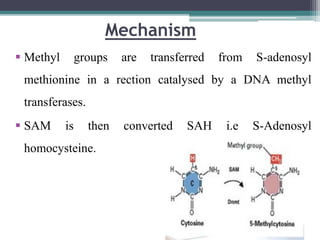
 Methyl groups are transferred from S-adenosyl
methionine in a rection catalysed by a DNA methyl
transferases.
 SAM is then converted SAH i.e S-Adenosyl
homocysteine.
Enzymes Involved In DNA
Methylation
The addition of methyl groups is controlled at several different levels in
cells and is carried out by a family of enzymes called DNA
methyltransferases (DNMTs).
DNMTs catalyses the reaction at different times during the cell cycle.
In mammals:
1. DNMT1-Maintanence methylase
2. DNMT 2
3. DNMT 3a and DNMT 3b
4. DNMT 3L
Enzymes
DNMT 1:
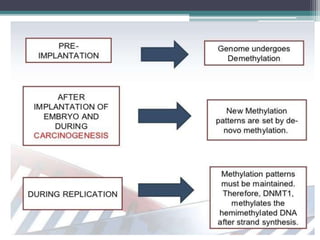
• Maintains the pattern of DNA methylation after DNA replication.
• Requires a hemi-methylated DNA substrate and will faithfully reproduce the pattern of DNA
methylation on the newly synthesized strands.
• DNA methylation- “an automatic semi conservative mechanism”
DNAMT 3a and DNMT 3B:
• This will add methyl groups to C G dinucleotides which are previously unmethylated on both the
strands.
• It re-establish the methylation pattern.
 Active Methylation:
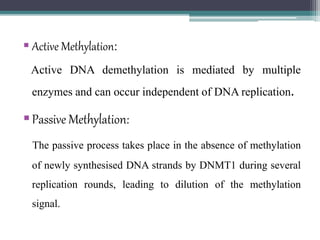
Active DNA demethylation is mediated by multiple
enzymes and can occur independent of DNA replication.
Passive Methylation:
The passive process takes place in the absence of methylation
of newly synthesised DNA strands by DNMT1 during several
replication rounds, leading to dilution of the methylation
signal.
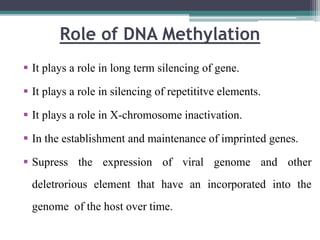
Role of DNA Methylation
 It plays a role in long term silencing of gene.
 It plays a role in silencing of repetititve elements.
 It plays a role in X-chromosome inactivation.
 In the establishment and maintenance of imprinted genes.
 Supress the expression of viral genome and other
deletrorious element that have an incorporated into the
genome of the host over time.
DNA methylation in Stem Cells
 DNA methylation mechanism has been characterized in
embryonic stem cells. Although this in vitro model may predict
the function of DNA methylation in a dividing cell.
 Embryonic stem cells are an inadequate model for studying DNA
methylation in a postmitotic cell.
 The fact that DNMTs are required for normal neuronal
differentiation and maturation hinders the study of DNA
methylation solely in postmitotic neurons.
 Despite these limitations, two models have emerged to study
DNA methylation in postmitotic neurons.
DNA Methylation in Cancer
• DNA methylation in cancer plays a variety of roles, helping to change the
healthy regulation of gene expression to a disease pattern.
• All mammalian cells descended from a fertilized egg share a common DNA sequence.
However, during development and formation of different tissues epigenetic factors change.
• The changes include histone modifications, CpG island methylations and chromatin
reorganizations which can cause the stable silencing or activation of particular genes.
• Once differentiated tissues are formed, CpG island methylation is generally stably inherited
from one cell division to the next through the DNA methylation maintenance machinery.
• In cancer, a number of mutational changes are found in protein coding
genes. Colorectal cancers typically have 3 to 6 driver mutations and 33 to
66 hitchhiker or passenger mutations that silence protein expression in the
genes affected.
• However, transcriptional silencing may be more important than mutation
in causing gene silencing in progression to cancer.
• In colorectal cancers about 600 to 800 genes are transcriptionally
silenced, compared to adjacent normal-appearing tissues, by CpG island
methylation. Transcriptional repression in cancer can also occur by
other epigenetic mechanisms, such as altered expression of micro-RNAs.
Conclusion
 DNA methylation represents an annotation system for marking the genetic text, thus providing
instruction as to how and when to read the information and control transcription.
 Unlike sequence information, which is inherited, methylation patterns are established in a
programmed process that continues throughout development, thus setting up stable gene expression
profiles.
 This DNA methylation paradigm is a key player in medicine. Some changes in methylation closely
correlate with age providing a marker for biological ageing, and these same sites could also play a
part in cancer.
 The genome continues to undergo programmed variation in methylation after birth in response to
environmental inputs, serving as a memory device that could affect ageing and predisposition to
various metabolic, autoimmune, and neurological diseases.
 Taking advantage of tissue-specific differences, methylation can be used to detect cell death and
thereby monitor many common diseases with a simple cell-free circulating-DNA blood test.

Dna methylation

  • 1.
    DNA METHYLATION Name-Samadrita Banik St.George College of Management and Science 2nd Semester M.Sc Microbiology
  • 2.
    INTRODUCTION DNA methylation isa biological process by which methyl groups are added to the DNA molecule.  Methylation can change the activity of a DNA segment without changing the sequence. When located in a gene promoter, DNA methylation typically acts to repress gene transcription. In mammals, DNA methylation is essential for normal development and is associated with a number of key processes including genomic imprinting, X-chromosome inactivation, aging, and carcinogenesis.
  • 3.
     DNA Methylationof most organism is modified by a post replicative process which resuls in three types of methylated bases in DNA: C5-methylcytosine N4-methylcytosine N6-methylcytosine  This modification is called DNA Methylation.  DNA Methylation is a covalent modification of DNA that does not change the DNA sequence, but had an influence on gene activity.
  • 4.
     It occursin the cells of fungi, plants, non-vertebrates and vertebrates.  In vertebrates , 3-6% of DNA cytosine is methylated.  No methylation in many insects and single celled eukaryotes.  In plants, 30% of DNA cytosine is methylated.
  • 5.
    Epigenetic Factor DNA methylationis an epigenetic mechanism that occurs by the addition of a methyl (CH3) group to DNA, thereby often modifying the function of the genes and affecting gene expression.  The most widely characterized DNA methylation process is the covalent addition of the methyl group at the 5-carbon of the cytosine ring resulting in 5-methylcytosine (5-mC), also informally known as the “fifth base” of DNA. These methyl groups project into the major groove of DNA and inhibit transcription.
  • 6.
    Mechanism  Methyl groupsare transferred from S-adenosyl methionine in a rection catalysed by a DNA methyl transferases.  SAM is then converted SAH i.e S-Adenosyl homocysteine.
  • 7.
    Enzymes Involved InDNA Methylation The addition of methyl groups is controlled at several different levels in cells and is carried out by a family of enzymes called DNA methyltransferases (DNMTs). DNMTs catalyses the reaction at different times during the cell cycle. In mammals: 1. DNMT1-Maintanence methylase 2. DNMT 2 3. DNMT 3a and DNMT 3b 4. DNMT 3L
  • 8.
    Enzymes DNMT 1: • Maintainsthe pattern of DNA methylation after DNA replication. • Requires a hemi-methylated DNA substrate and will faithfully reproduce the pattern of DNA methylation on the newly synthesized strands. • DNA methylation- “an automatic semi conservative mechanism” DNAMT 3a and DNMT 3B: • This will add methyl groups to C G dinucleotides which are previously unmethylated on both the strands. • It re-establish the methylation pattern.
  • 10.
     Active Methylation: ActiveDNA demethylation is mediated by multiple enzymes and can occur independent of DNA replication. Passive Methylation: The passive process takes place in the absence of methylation of newly synthesised DNA strands by DNMT1 during several replication rounds, leading to dilution of the methylation signal.
  • 12.
    Role of DNAMethylation  It plays a role in long term silencing of gene.  It plays a role in silencing of repetititve elements.  It plays a role in X-chromosome inactivation.  In the establishment and maintenance of imprinted genes.  Supress the expression of viral genome and other deletrorious element that have an incorporated into the genome of the host over time.
  • 13.
    DNA methylation inStem Cells  DNA methylation mechanism has been characterized in embryonic stem cells. Although this in vitro model may predict the function of DNA methylation in a dividing cell.  Embryonic stem cells are an inadequate model for studying DNA methylation in a postmitotic cell.  The fact that DNMTs are required for normal neuronal differentiation and maturation hinders the study of DNA methylation solely in postmitotic neurons.  Despite these limitations, two models have emerged to study DNA methylation in postmitotic neurons.
  • 14.
    DNA Methylation inCancer • DNA methylation in cancer plays a variety of roles, helping to change the healthy regulation of gene expression to a disease pattern. • All mammalian cells descended from a fertilized egg share a common DNA sequence. However, during development and formation of different tissues epigenetic factors change. • The changes include histone modifications, CpG island methylations and chromatin reorganizations which can cause the stable silencing or activation of particular genes. • Once differentiated tissues are formed, CpG island methylation is generally stably inherited from one cell division to the next through the DNA methylation maintenance machinery.
  • 15.
    • In cancer,a number of mutational changes are found in protein coding genes. Colorectal cancers typically have 3 to 6 driver mutations and 33 to 66 hitchhiker or passenger mutations that silence protein expression in the genes affected. • However, transcriptional silencing may be more important than mutation in causing gene silencing in progression to cancer. • In colorectal cancers about 600 to 800 genes are transcriptionally silenced, compared to adjacent normal-appearing tissues, by CpG island methylation. Transcriptional repression in cancer can also occur by other epigenetic mechanisms, such as altered expression of micro-RNAs.
  • 16.
    Conclusion  DNA methylationrepresents an annotation system for marking the genetic text, thus providing instruction as to how and when to read the information and control transcription.  Unlike sequence information, which is inherited, methylation patterns are established in a programmed process that continues throughout development, thus setting up stable gene expression profiles.  This DNA methylation paradigm is a key player in medicine. Some changes in methylation closely correlate with age providing a marker for biological ageing, and these same sites could also play a part in cancer.  The genome continues to undergo programmed variation in methylation after birth in response to environmental inputs, serving as a memory device that could affect ageing and predisposition to various metabolic, autoimmune, and neurological diseases.  Taking advantage of tissue-specific differences, methylation can be used to detect cell death and thereby monitor many common diseases with a simple cell-free circulating-DNA blood test.