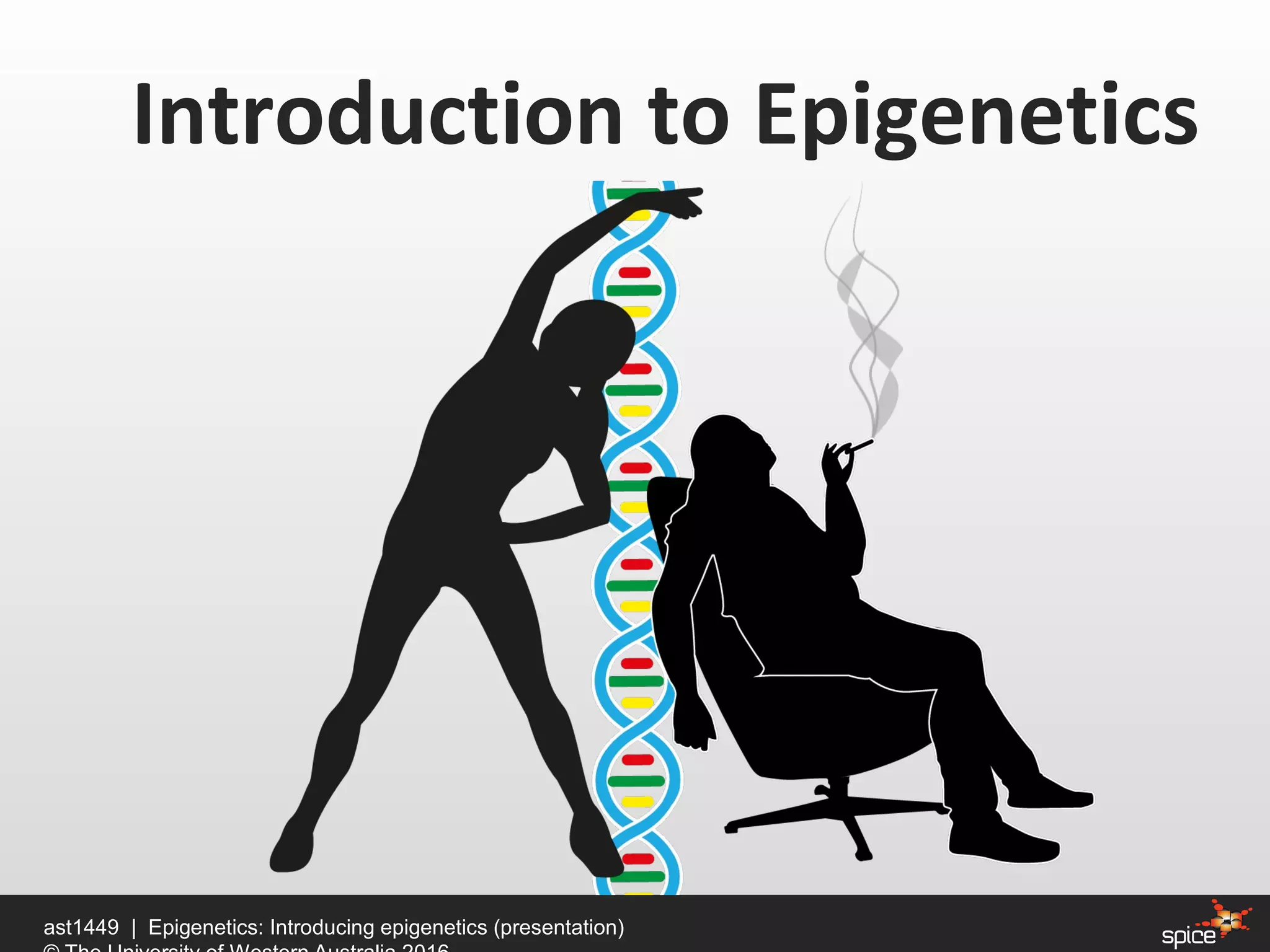
Introduction to Epigenetics
ast1449 | Epigenetics: Introducing epigenetics (presentation)
What is epigenetics?
Chapter 1
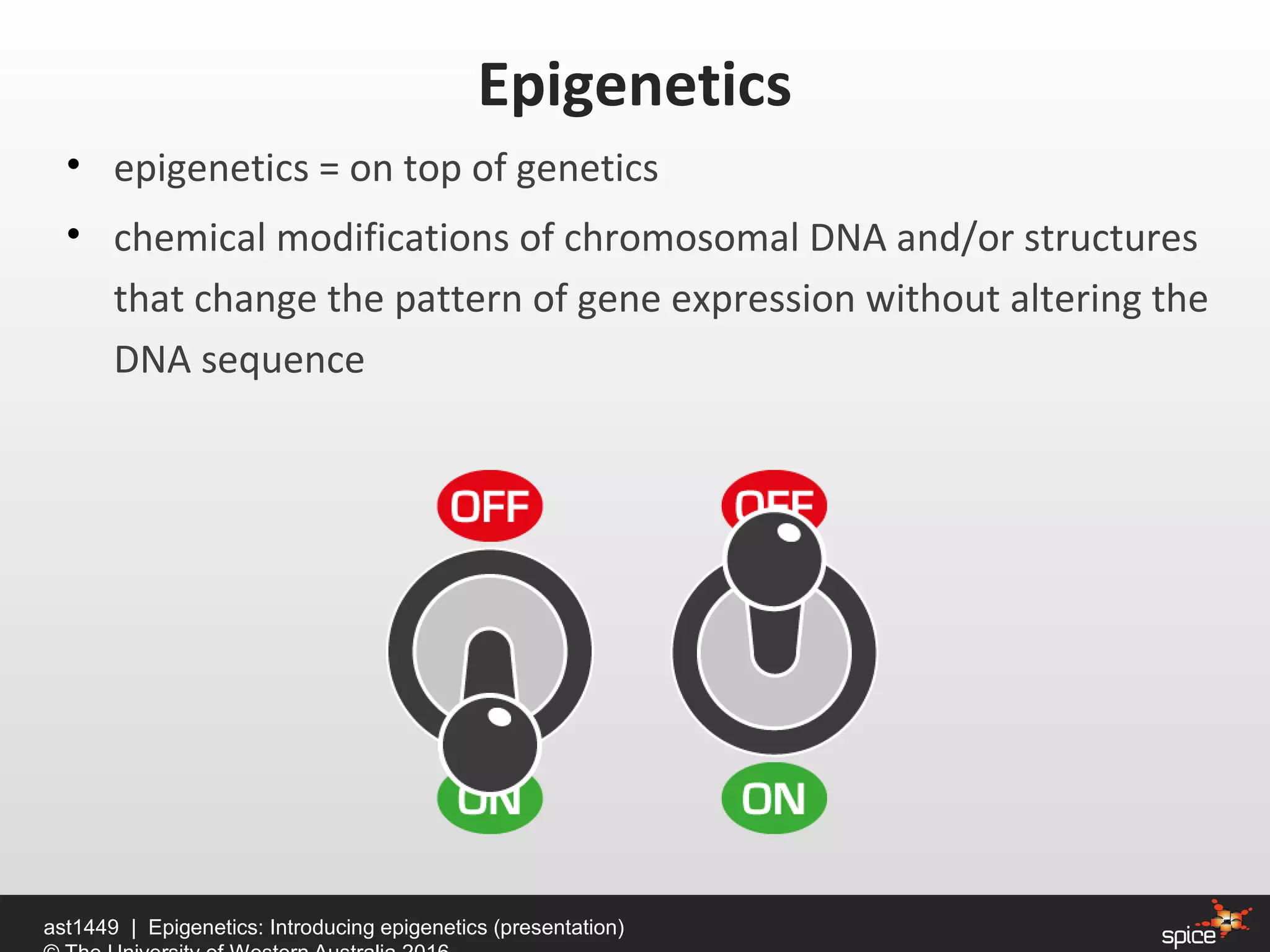
• epigenetics = on top of genetics
• chemical modifications of chromosomal DNA and/or structures
that change the pattern of gene expression without altering the
DNA sequence
Epigenetics
ast1449 | Epigenetics: Introducing epigenetics (presentation)
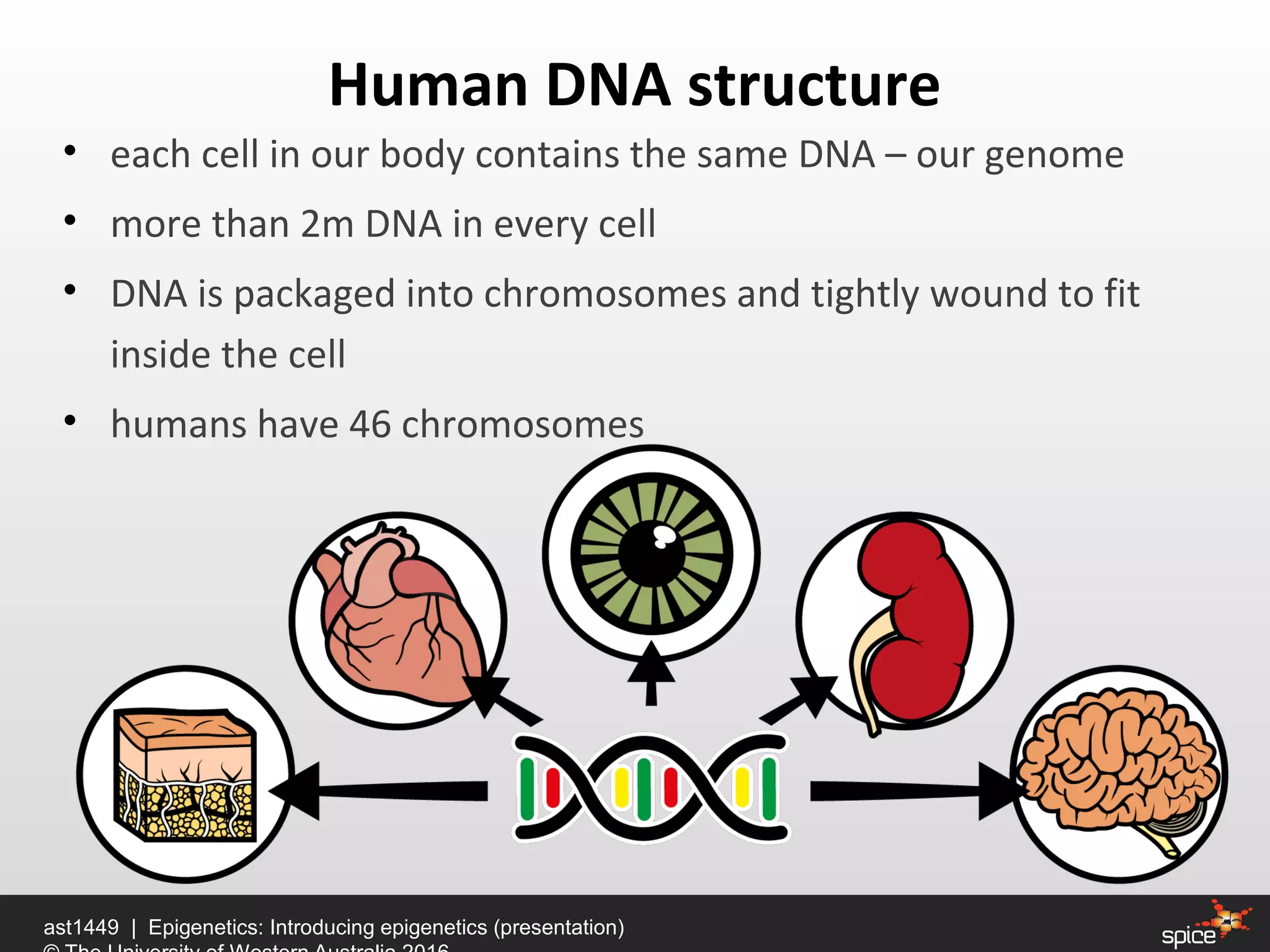
• each cell in our body contains the same DNA – our genome
• more than 2m DNA in every cell
• DNA is packaged into chromosomes and tightly wound to fit
inside the cell
• humans have 46 chromosomes
Human DNA structure
ast1449 | Epigenetics: Introducing epigenetics (presentation)
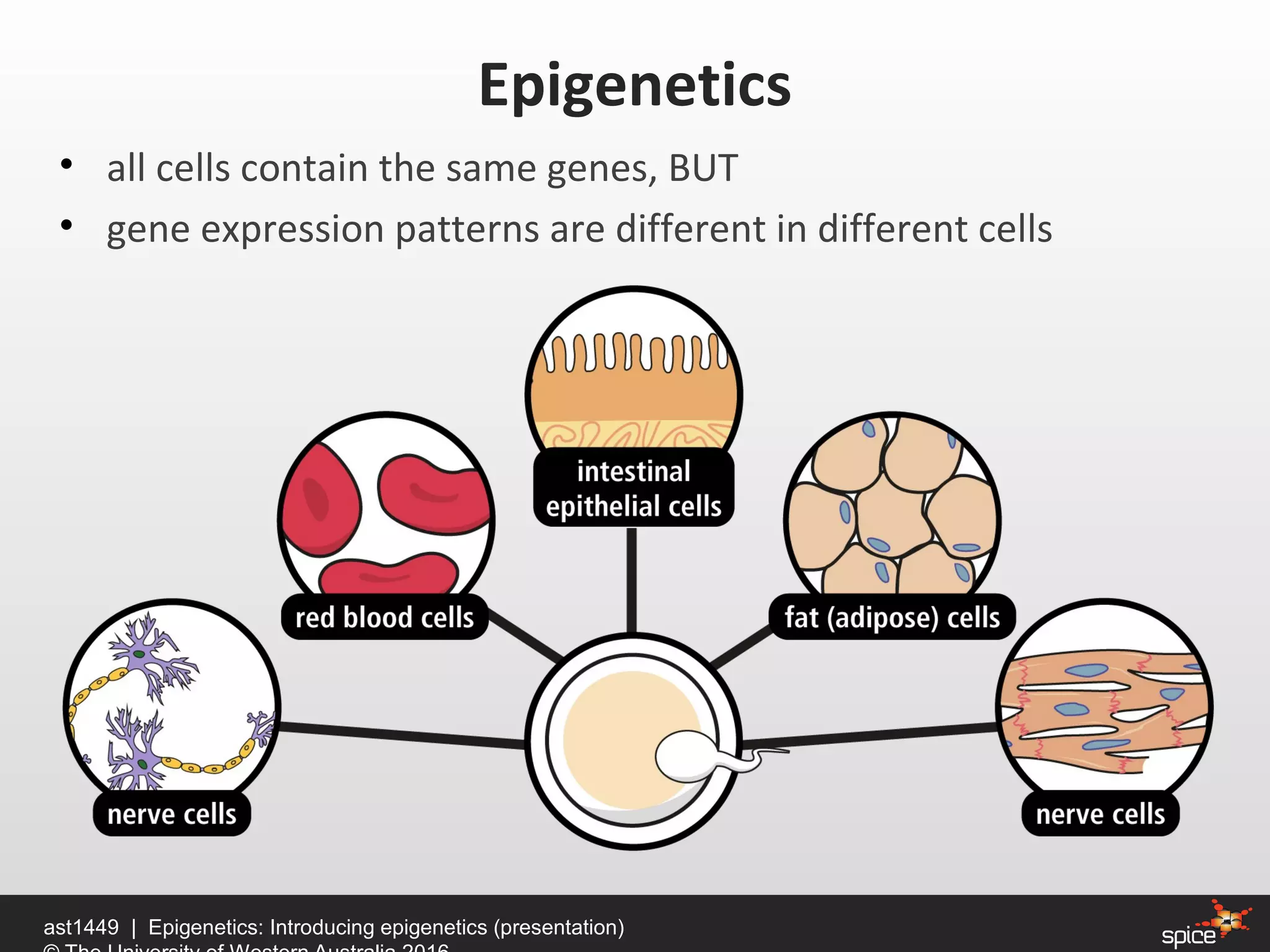
• all cells contain the same genes, BUT
• gene expression patterns are different in different cells
Epigenetics
ast1449 | Epigenetics: Introducing epigenetics (presentation)
The changing epigenome
Chapter 2
ast1449 | Epigenetics: Introducing epigenetics (presentation)
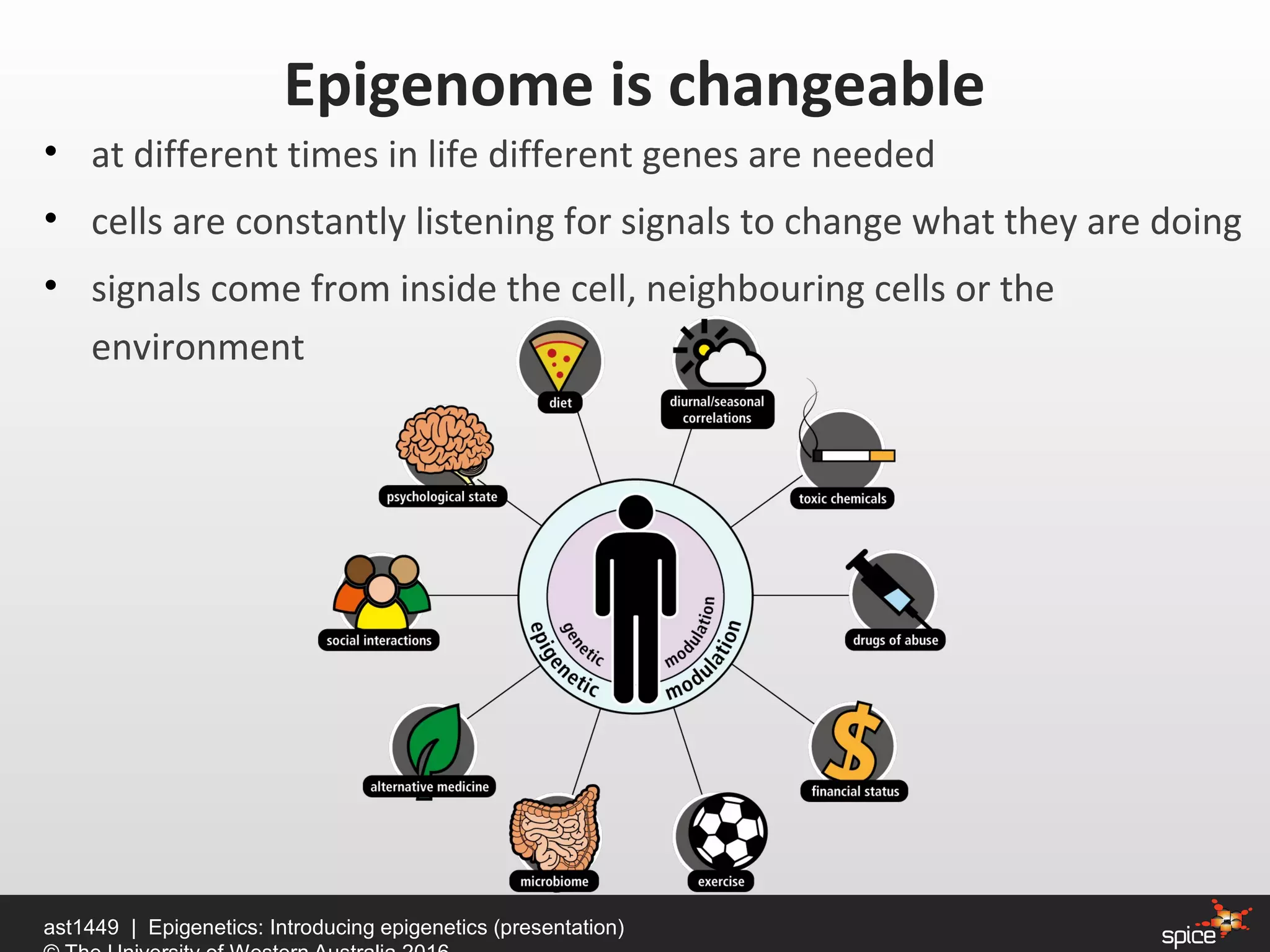
• at different times in life different genes are needed
• cells are constantly listening for signals to change what they are doing
• signals come from inside the cell, neighbouring cells or the
environment
Epigenome is changeable
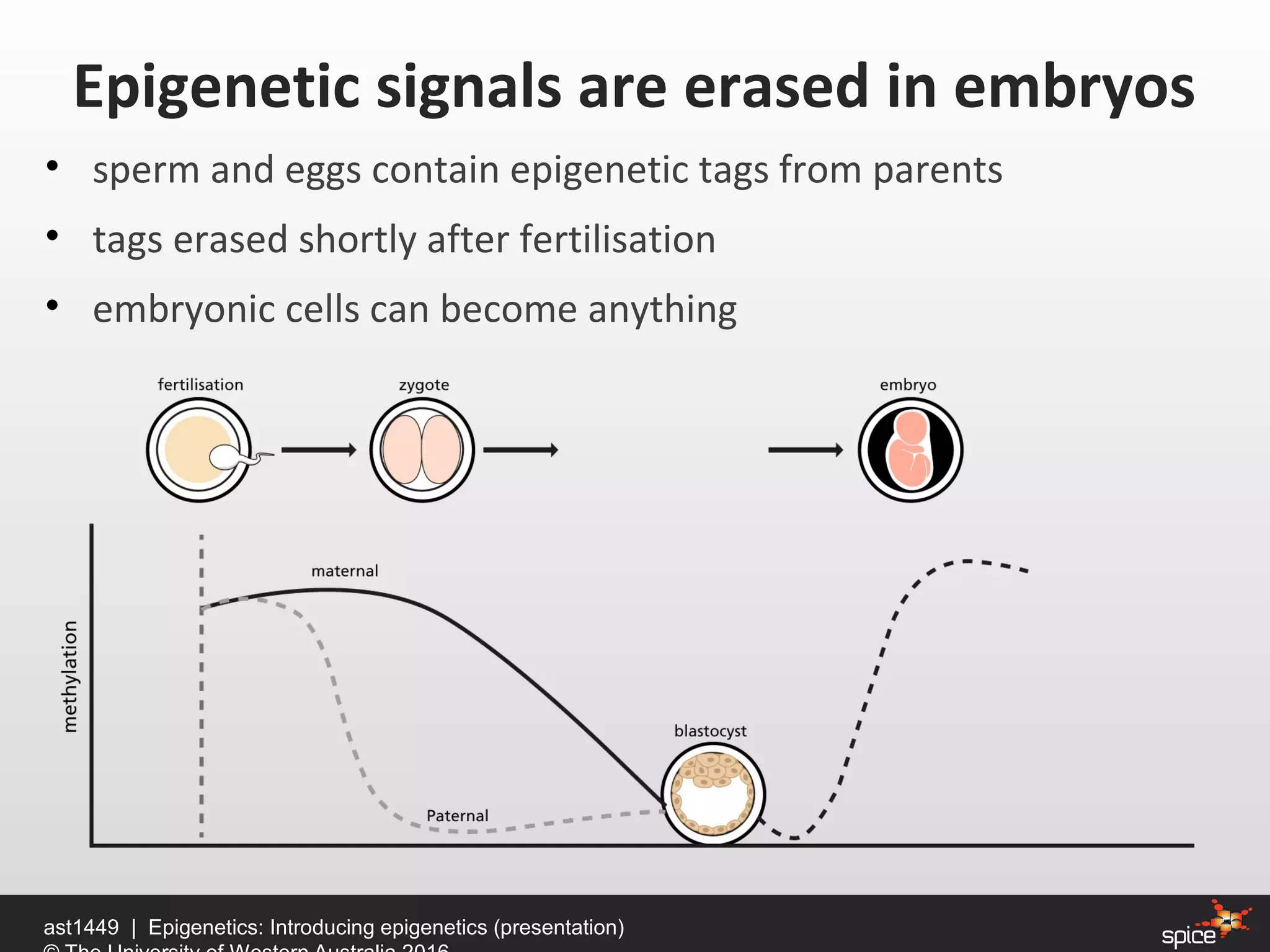
• sperm and eggs contain epigenetic tags from parents
• tags erased shortly after fertilisation
• embryonic cells can become anything
Epigenetic signals are erased in embryos
ast1449 | Epigenetics: Introducing epigenetics (presentation)
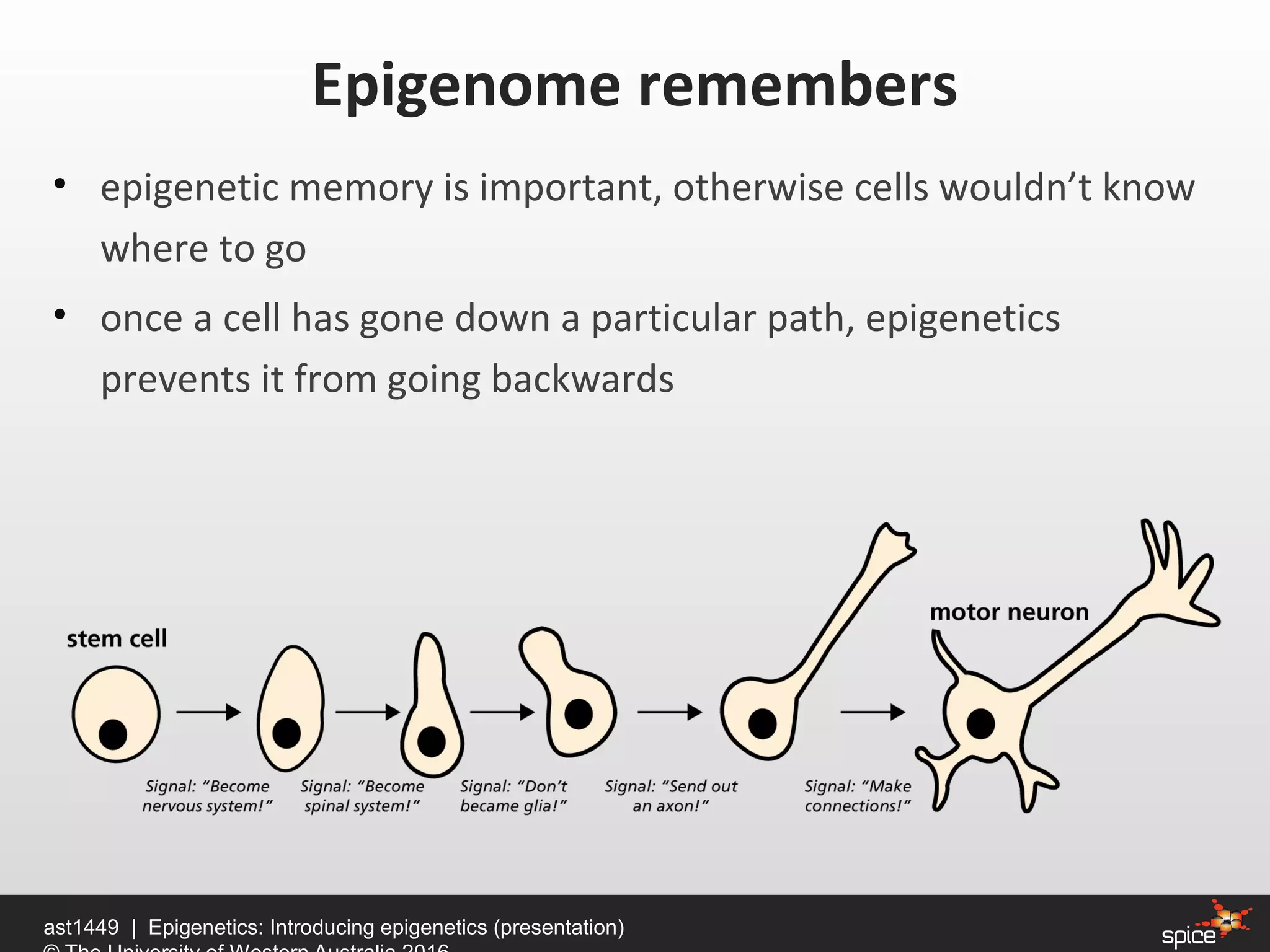
• epigenetic memory is important, otherwise cells wouldn’t know
where to go
• once a cell has gone down a particular path, epigenetics
prevents it from going backwards
ast1449 | Epigenetics: Introducing epigenetics (presentation)
Epigenome remembers
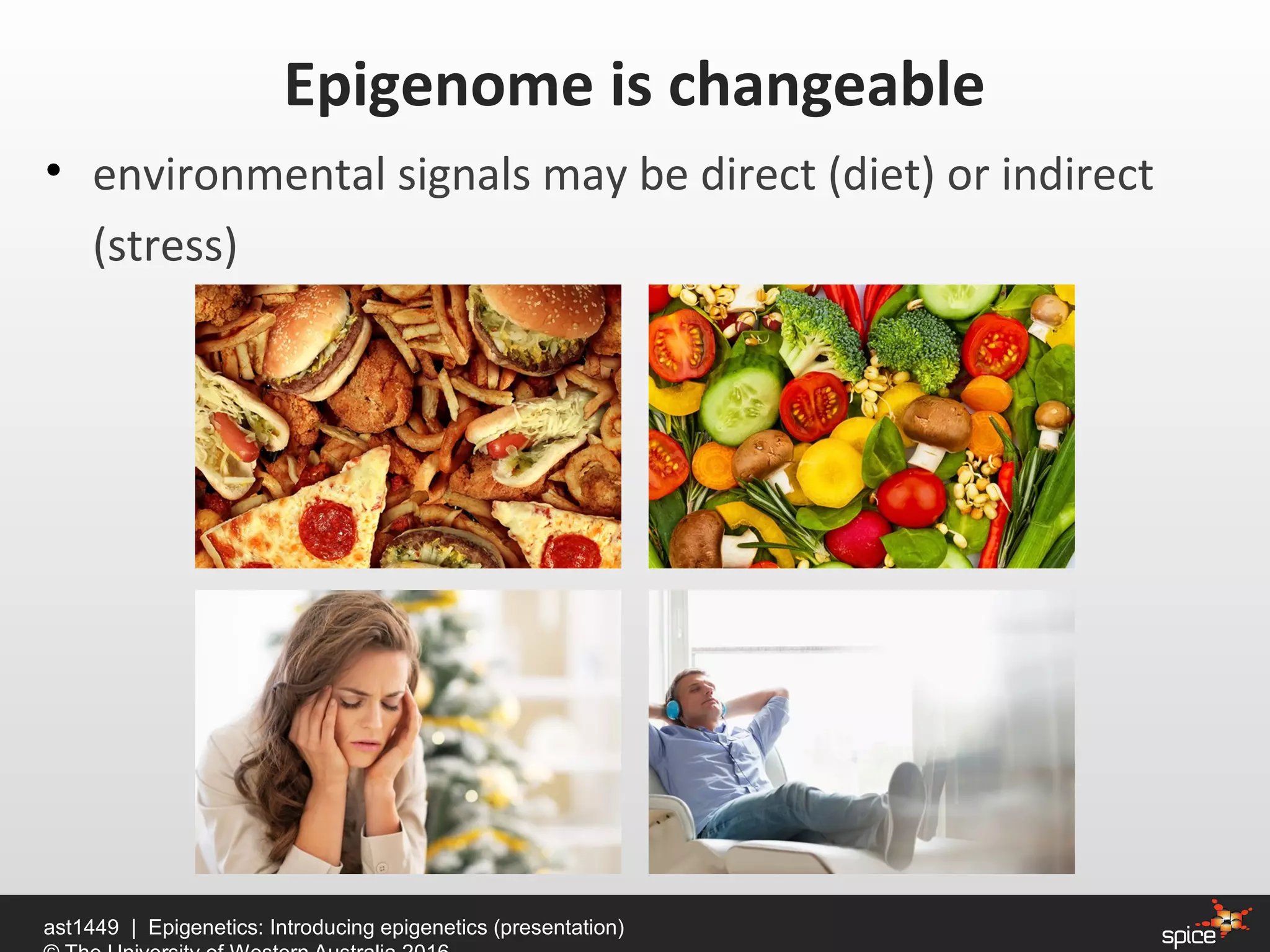
• environmental signals may be direct (diet) or indirect
(stress)
Epigenome is changeable
ast1449 | Epigenetics: Introducing epigenetics (presentation)
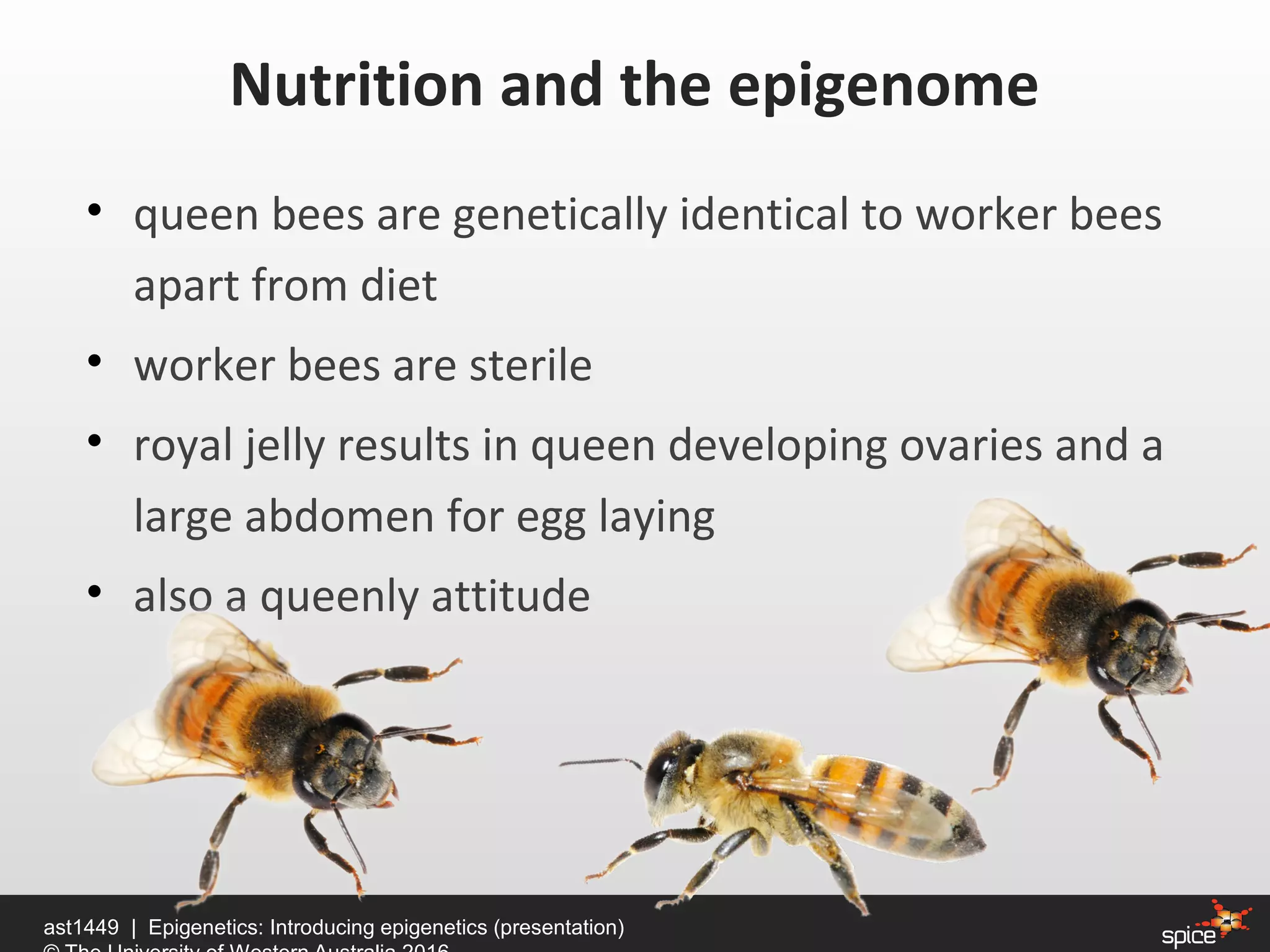
• queen bees are genetically identical to worker bees
apart from diet
• worker bees are sterile
• royal jelly results in queen developing ovaries and a
large abdomen for egg laying
• also a queenly attitude
Nutrition and the epigenome
ast1449 | Epigenetics: Introducing epigenetics (presentation)
DNA structure and
epigenetic modifications
Chapter 3
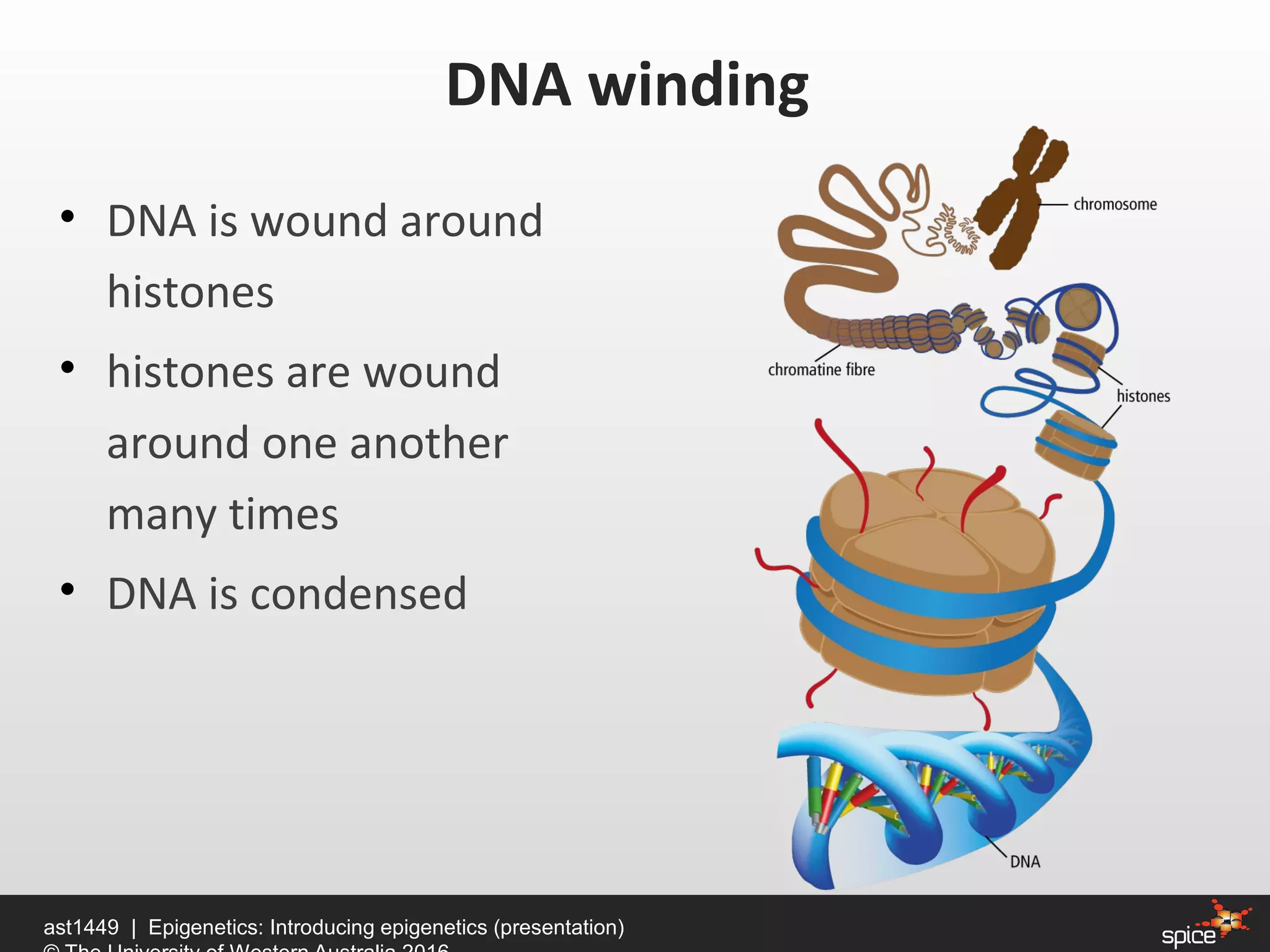
• DNA is wound around
histones
• histones are wound
around one another
many times
• DNA is condensed
DNA winding
ast1449 | Epigenetics: Introducing epigenetics (presentation)
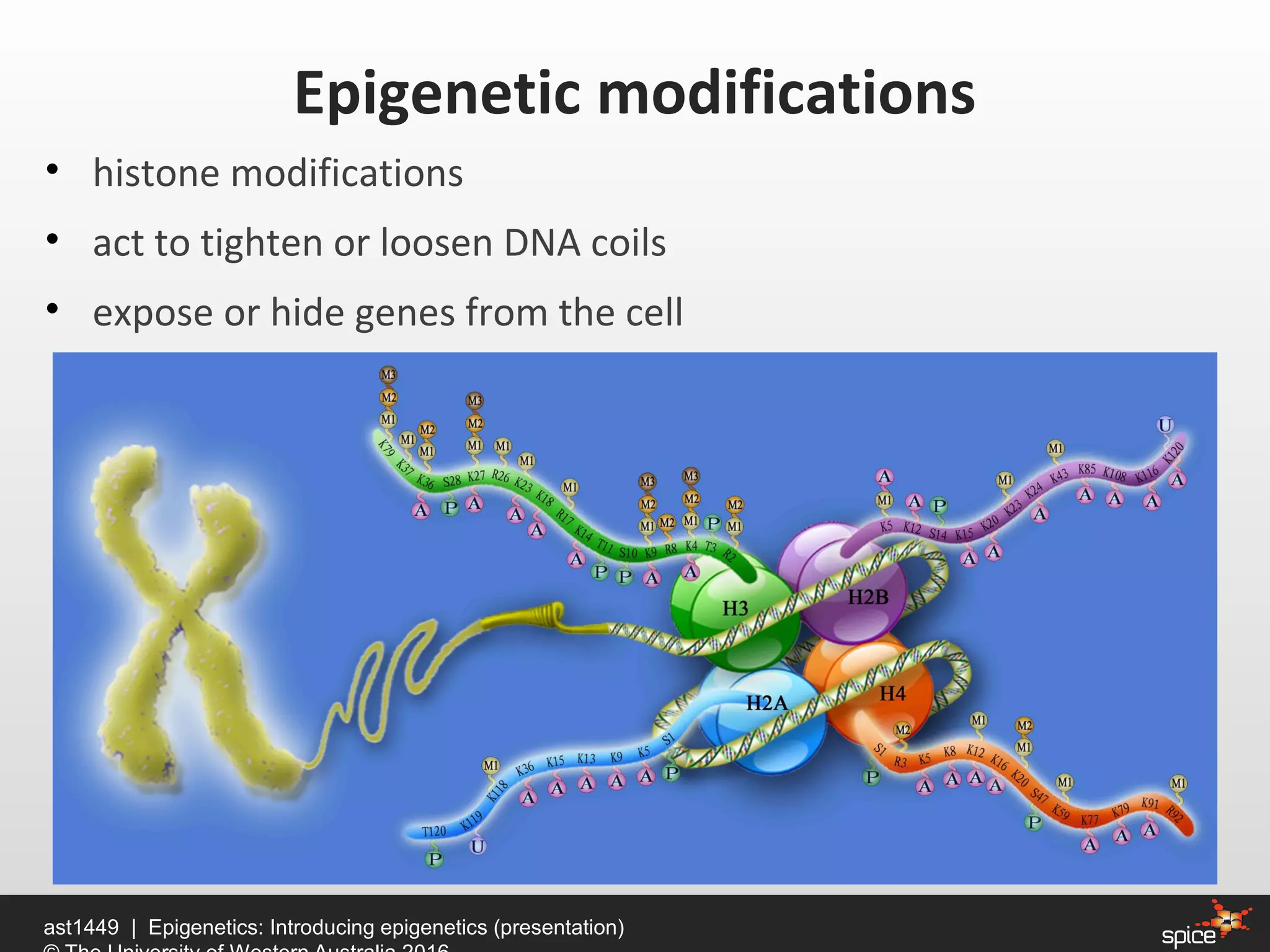
• histone modifications
• act to tighten or loosen DNA coils
• expose or hide genes from the cell
Epigenetic modifications
ast1449 | Epigenetics: Introducing epigenetics (presentation)
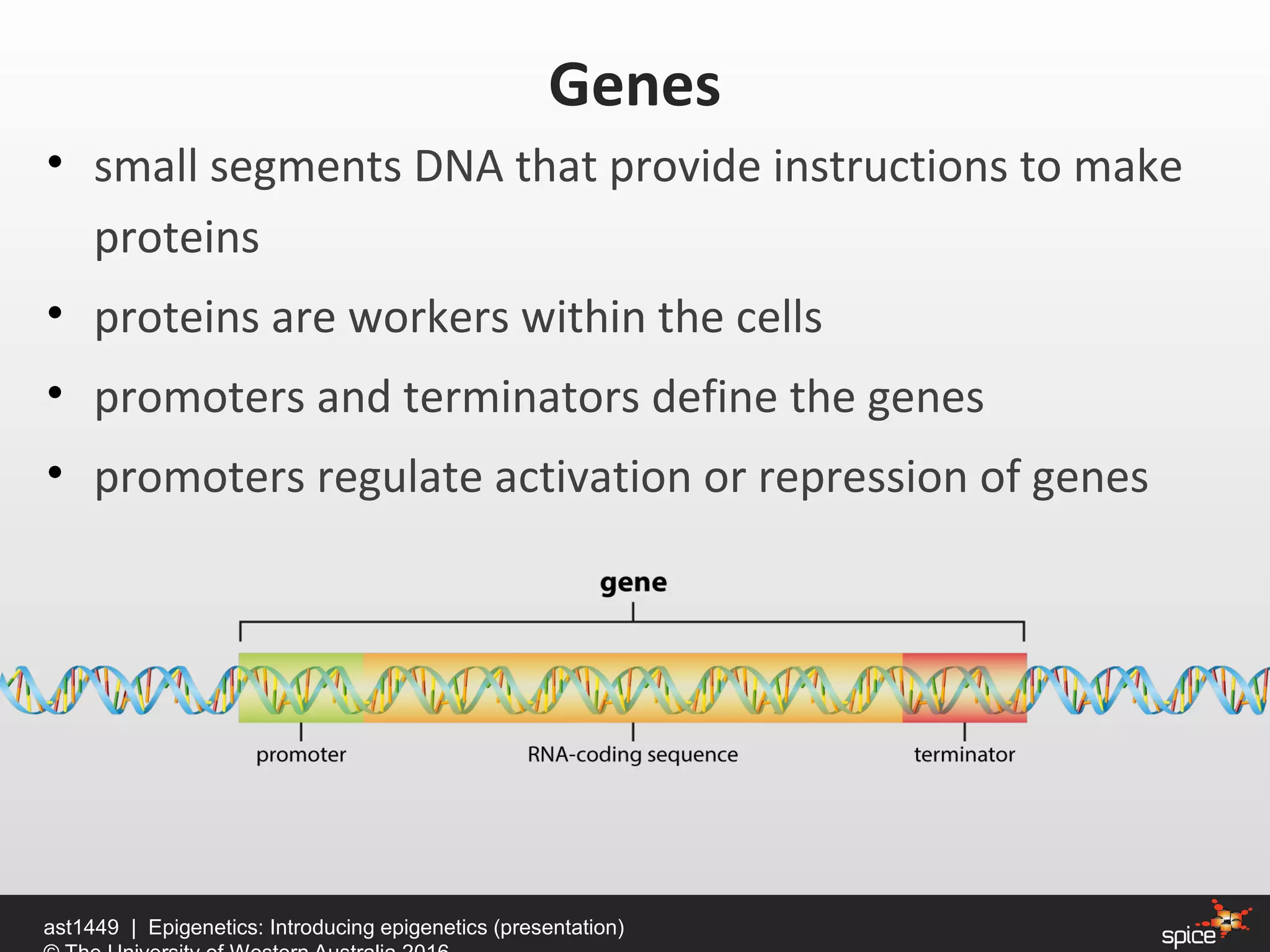
• small segments DNA that provide instructions to make
proteins
• proteins are workers within the cells
• promoters and terminators define the genes
• promoters regulate activation or repression of genes
ast1449 | Epigenetics: Introducing epigenetics (presentation)
Genes
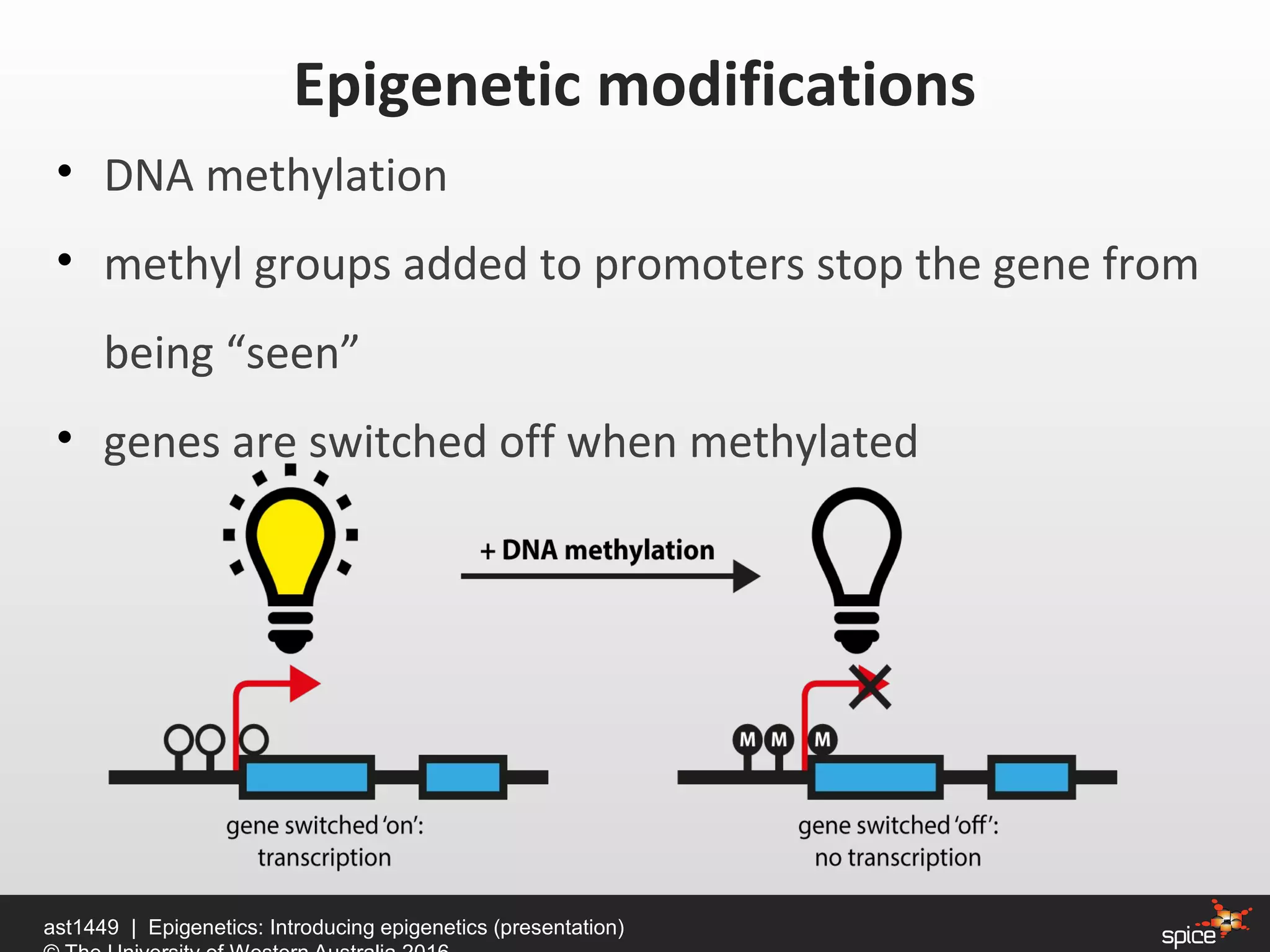
• DNA methylation
• methyl groups added to promoters stop the gene from
being “seen”
• genes are switched off when methylated
ast1449 | Epigenetics: Introducing epigenetics (presentation)
Epigenetic modifications
The epigenome and twins
Chapter 4
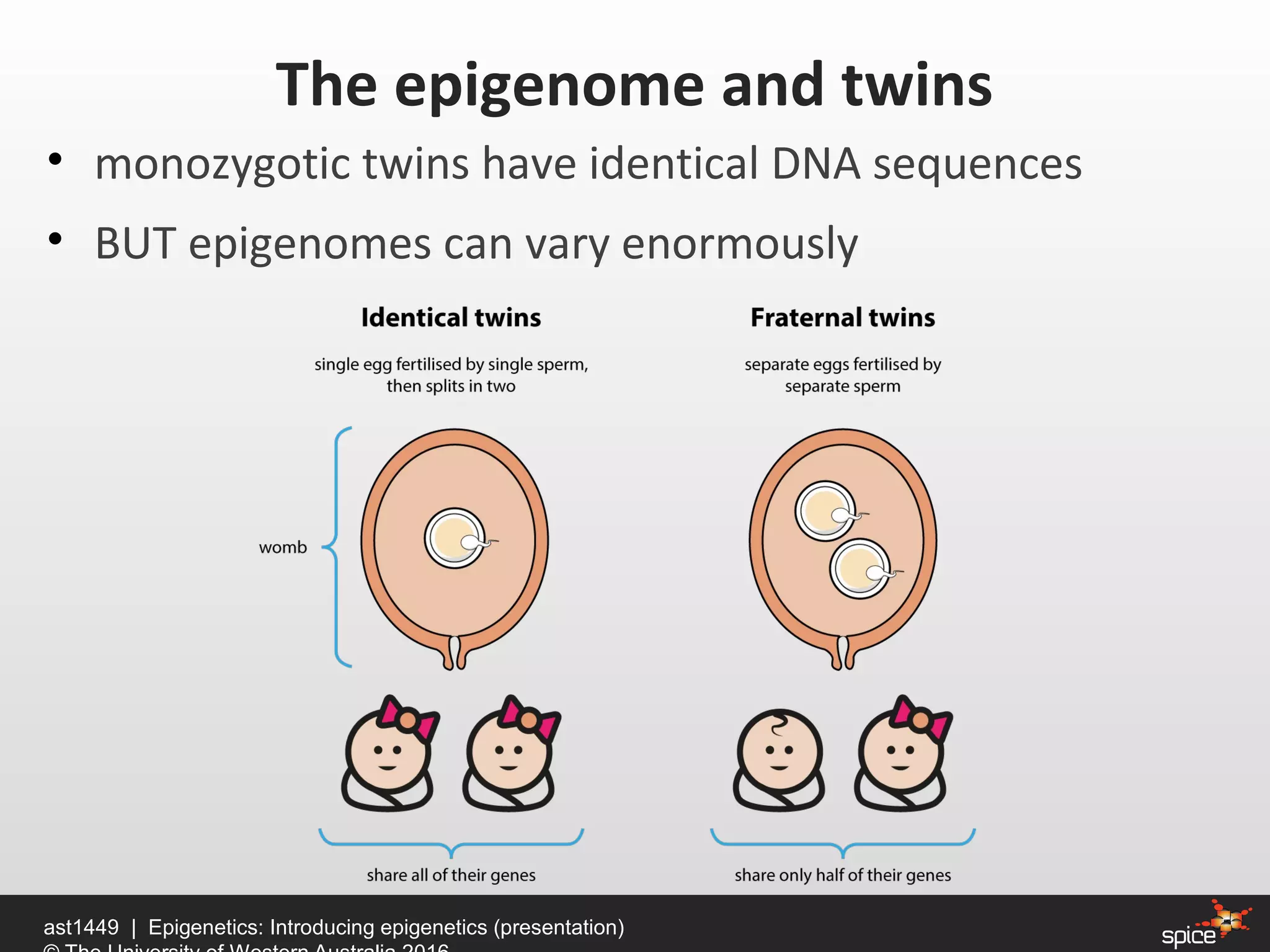
• monozygotic twins have identical DNA sequences
• BUT epigenomes can vary enormously
ast1449 | Epigenetics: Introducing epigenetics (presentation)
The epigenome and twins
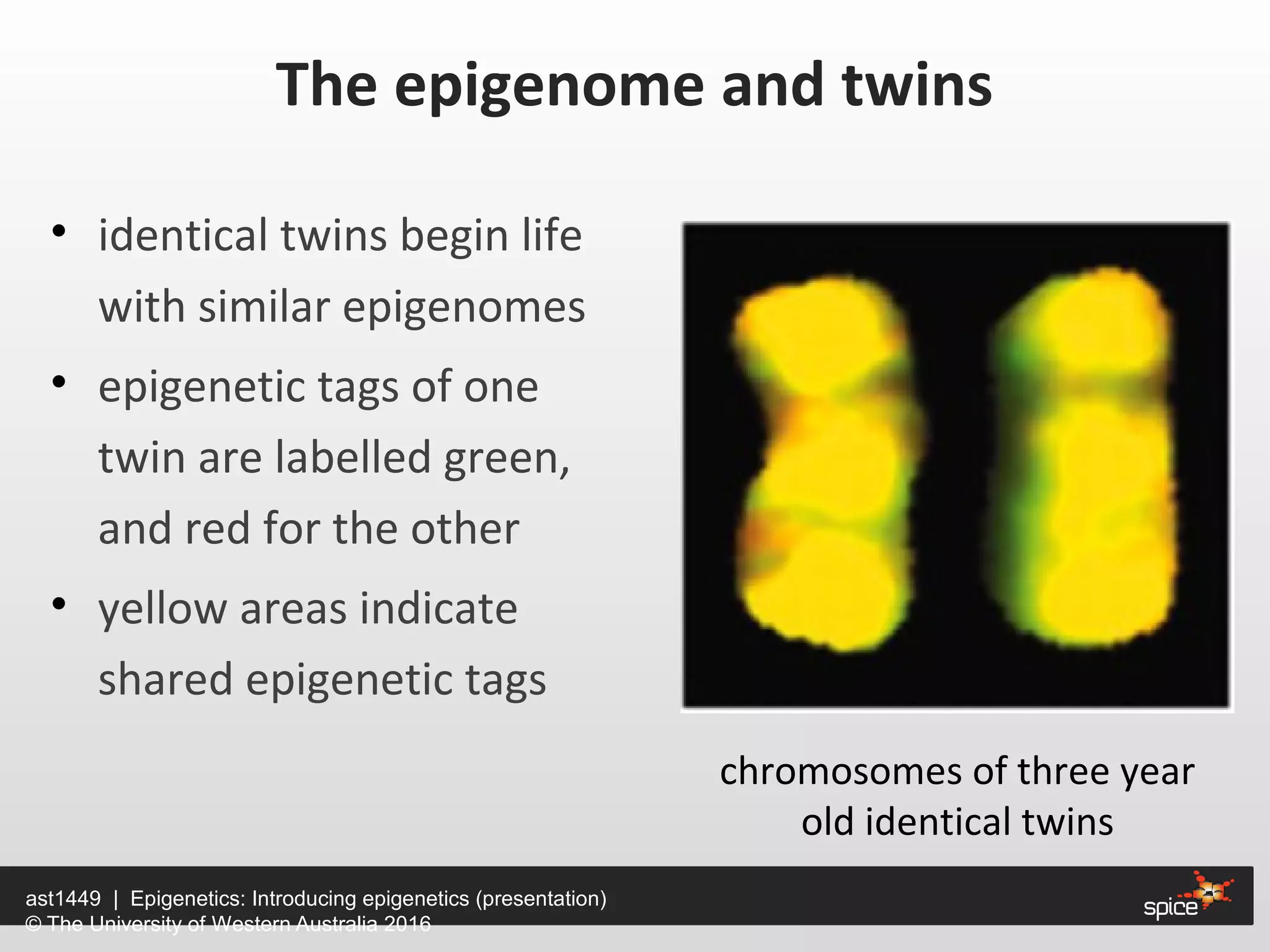
• identical twins begin life
with similar epigenomes
• epigenetic tags of one
twin are labelled green,
and red for the other
• yellow areas indicate
shared epigenetic tags
The epigenome and twins
ast1449 | Epigenetics: Introducing epigenetics (presentation)
© The University of Western Australia 2016
chromosomes of three year
old identical twins
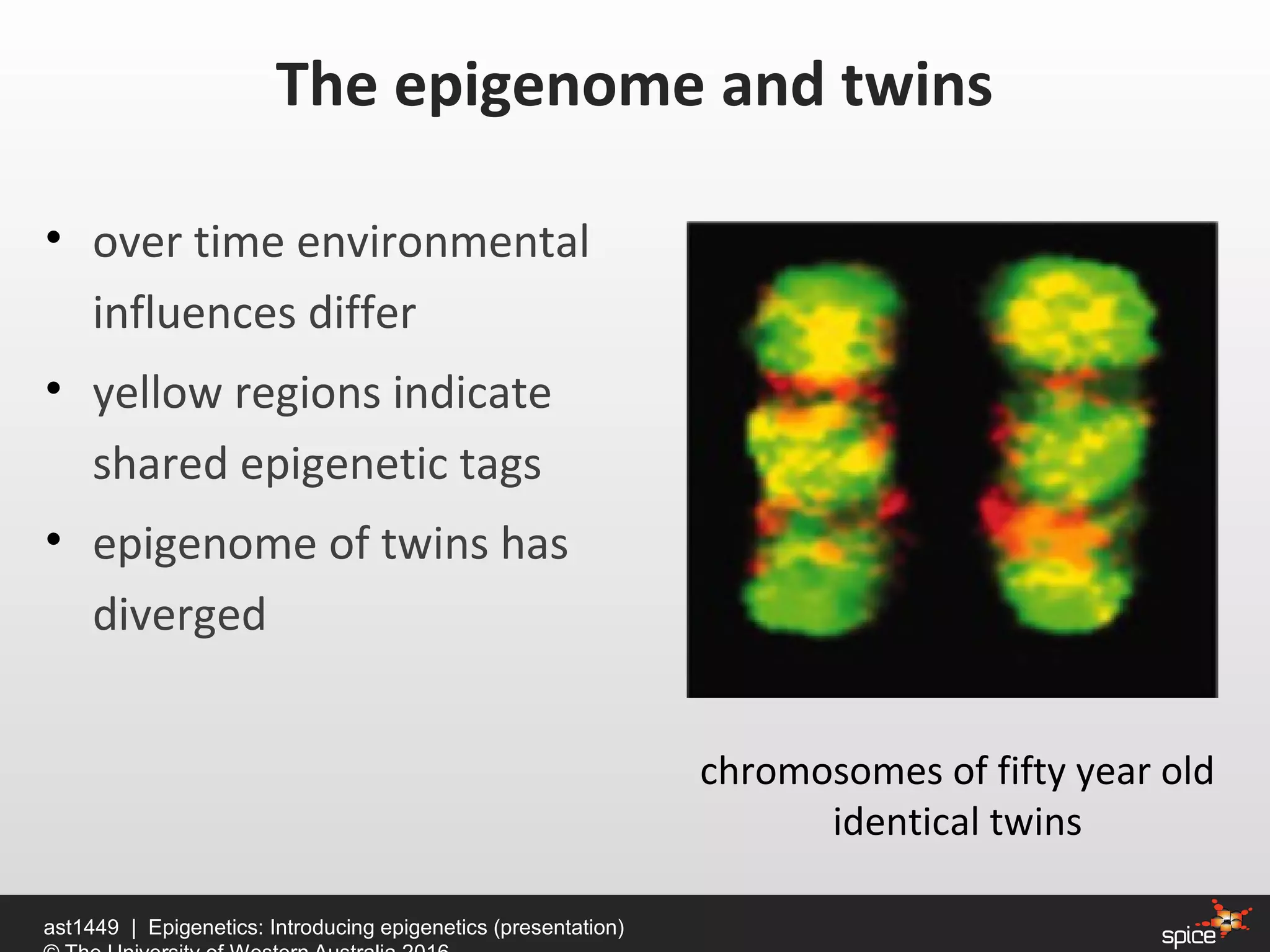
• over time environmental
influences differ
• yellow regions indicate
shared epigenetic tags
• epigenome of twins has
diverged
The epigenome and twins
ast1449 | Epigenetics: Introducing epigenetics (presentation)
chromosomes of fifty year old
identical twins
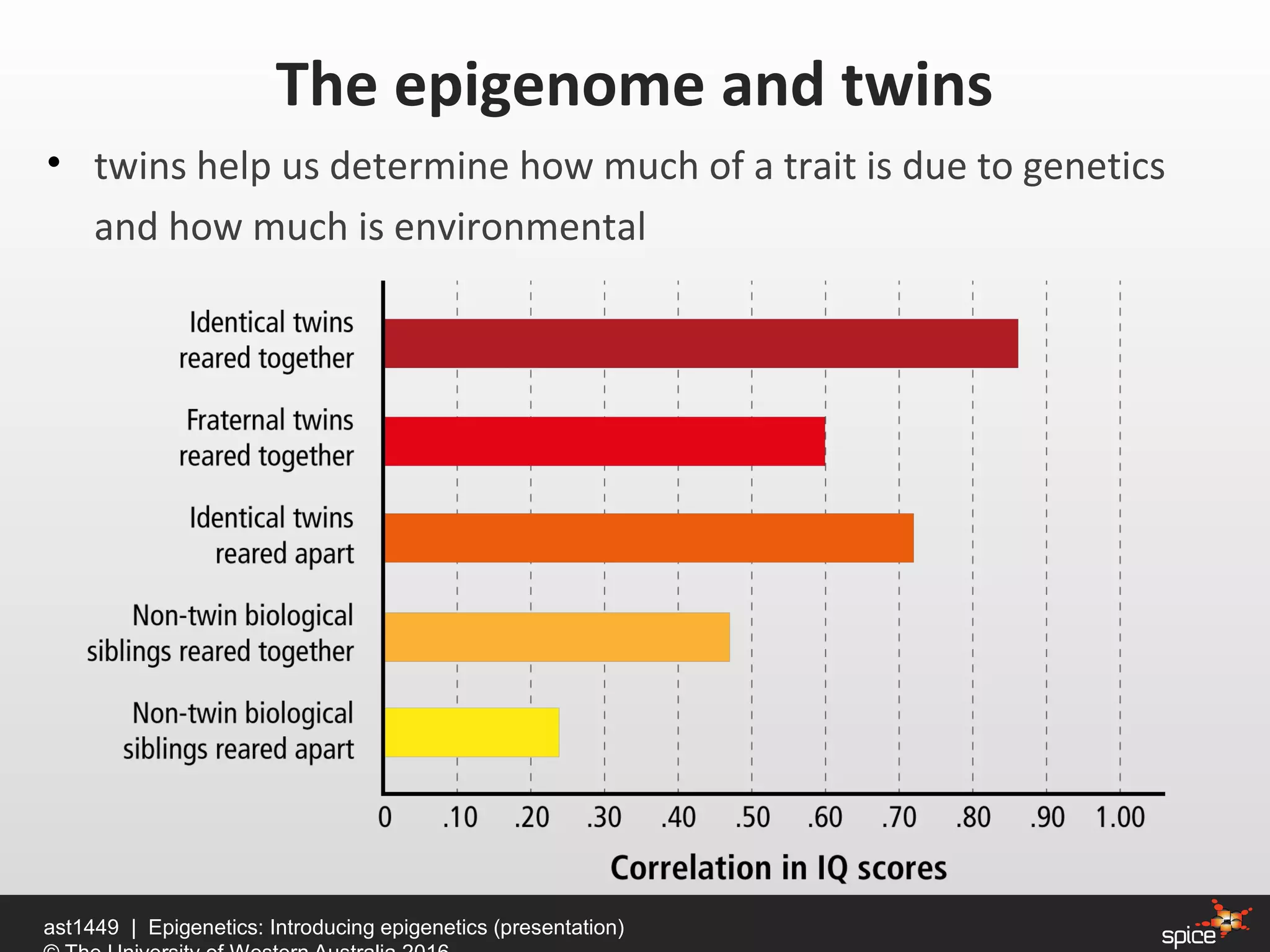
• twins help us determine how much of a trait is due to genetics
and how much is environmental
ast1449 | Epigenetics: Introducing epigenetics (presentation)
The epigenome and twins
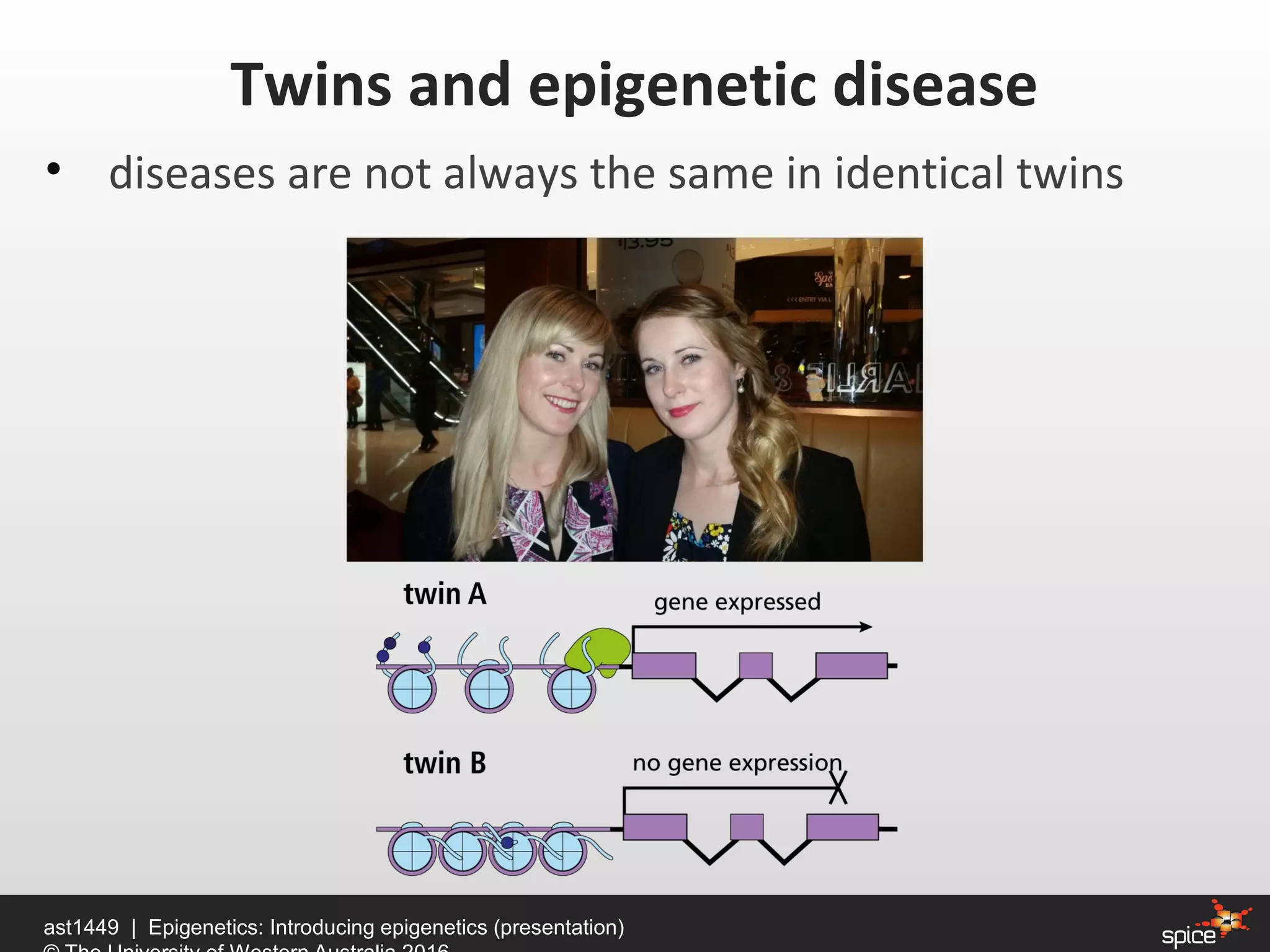
• diseases are not always the same in identical twins
ast1449 | Epigenetics: Introducing epigenetics (presentation)
Twins and epigenetic disease
Epigenetic therapy
Chapter 5
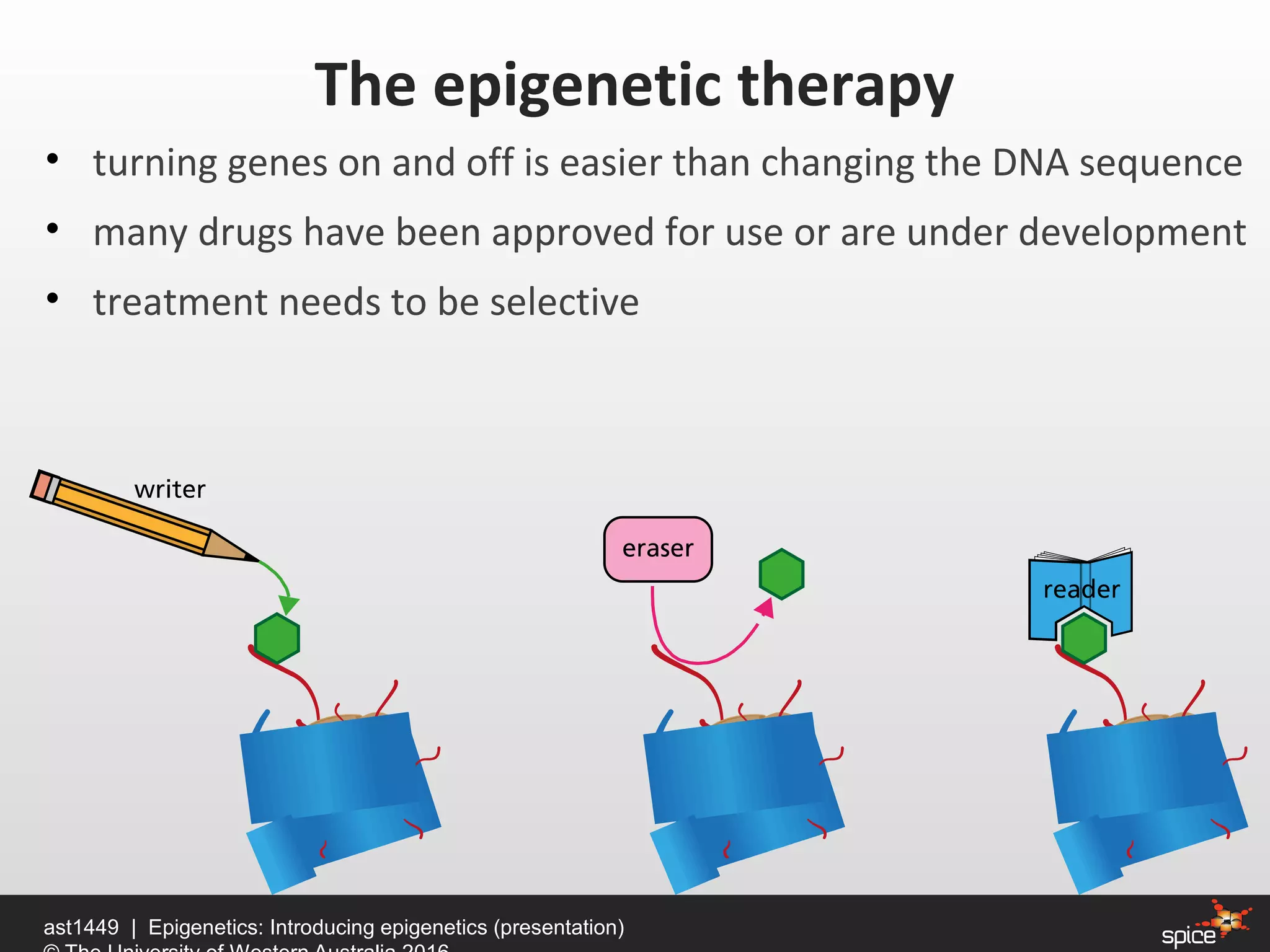
• turning genes on and off is easier than changing the DNA sequence
• many drugs have been approved for use or are under development
• treatment needs to be selective
ast1449 | Epigenetics: Introducing epigenetics (presentation)
The epigenetic therapy

Introduction to Epigenetics

  • 1.
    Introduction to Epigenetics ast1449| Epigenetics: Introducing epigenetics (presentation)
  • 2.
  • 3.
    • epigenetics =on top of genetics • chemical modifications of chromosomal DNA and/or structures that change the pattern of gene expression without altering the DNA sequence Epigenetics ast1449 | Epigenetics: Introducing epigenetics (presentation)
  • 4.
    • each cellin our body contains the same DNA – our genome • more than 2m DNA in every cell • DNA is packaged into chromosomes and tightly wound to fit inside the cell • humans have 46 chromosomes Human DNA structure ast1449 | Epigenetics: Introducing epigenetics (presentation)
  • 5.
    • all cellscontain the same genes, BUT • gene expression patterns are different in different cells Epigenetics ast1449 | Epigenetics: Introducing epigenetics (presentation)
  • 6.
  • 7.
    ast1449 | Epigenetics:Introducing epigenetics (presentation) • at different times in life different genes are needed • cells are constantly listening for signals to change what they are doing • signals come from inside the cell, neighbouring cells or the environment Epigenome is changeable
  • 8.
    • sperm andeggs contain epigenetic tags from parents • tags erased shortly after fertilisation • embryonic cells can become anything Epigenetic signals are erased in embryos ast1449 | Epigenetics: Introducing epigenetics (presentation)
  • 9.
    • epigenetic memoryis important, otherwise cells wouldn’t know where to go • once a cell has gone down a particular path, epigenetics prevents it from going backwards ast1449 | Epigenetics: Introducing epigenetics (presentation) Epigenome remembers
  • 10.
    • environmental signalsmay be direct (diet) or indirect (stress) Epigenome is changeable ast1449 | Epigenetics: Introducing epigenetics (presentation)
  • 11.
    • queen beesare genetically identical to worker bees apart from diet • worker bees are sterile • royal jelly results in queen developing ovaries and a large abdomen for egg laying • also a queenly attitude Nutrition and the epigenome ast1449 | Epigenetics: Introducing epigenetics (presentation)
  • 12.
    DNA structure and epigeneticmodifications Chapter 3
  • 13.
    • DNA iswound around histones • histones are wound around one another many times • DNA is condensed DNA winding ast1449 | Epigenetics: Introducing epigenetics (presentation)
  • 14.
    • histone modifications •act to tighten or loosen DNA coils • expose or hide genes from the cell Epigenetic modifications ast1449 | Epigenetics: Introducing epigenetics (presentation)
  • 15.
    • small segmentsDNA that provide instructions to make proteins • proteins are workers within the cells • promoters and terminators define the genes • promoters regulate activation or repression of genes ast1449 | Epigenetics: Introducing epigenetics (presentation) Genes
  • 16.
    • DNA methylation •methyl groups added to promoters stop the gene from being “seen” • genes are switched off when methylated ast1449 | Epigenetics: Introducing epigenetics (presentation) Epigenetic modifications
  • 17.
    The epigenome andtwins Chapter 4
  • 18.
    • monozygotic twinshave identical DNA sequences • BUT epigenomes can vary enormously ast1449 | Epigenetics: Introducing epigenetics (presentation) The epigenome and twins
  • 19.
    • identical twinsbegin life with similar epigenomes • epigenetic tags of one twin are labelled green, and red for the other • yellow areas indicate shared epigenetic tags The epigenome and twins ast1449 | Epigenetics: Introducing epigenetics (presentation) © The University of Western Australia 2016 chromosomes of three year old identical twins
  • 20.
    • over timeenvironmental influences differ • yellow regions indicate shared epigenetic tags • epigenome of twins has diverged The epigenome and twins ast1449 | Epigenetics: Introducing epigenetics (presentation) chromosomes of fifty year old identical twins
  • 21.
    • twins helpus determine how much of a trait is due to genetics and how much is environmental ast1449 | Epigenetics: Introducing epigenetics (presentation) The epigenome and twins
  • 22.
    • diseases arenot always the same in identical twins ast1449 | Epigenetics: Introducing epigenetics (presentation) Twins and epigenetic disease
  • 23.
  • 24.
    • turning geneson and off is easier than changing the DNA sequence • many drugs have been approved for use or are under development • treatment needs to be selective ast1449 | Epigenetics: Introducing epigenetics (presentation) The epigenetic therapy

Editor's Notes

  • #2 <number>
  • #4 Epigenetics is the level of control that sits above the genes and helps determine which genes are turned on and which genes are turned off. Chemical modifications to either the DNA, or structures associated with DNA, alter gene expression, without changes to the DNA sequence. The epigenome is like a chemical switch, instructing DNA/genes to be turned on or turned off. <number>
  • #5 Every cell in the human body contains exactly the same DNA sequence. There is more than 2 metres of DNA inside every cell. DNA is very thin, but it still needs some compacting in order to fit inside the nucleus of each and every cell. The first step is to break the DNA up into smaller pieces, called chromosomes, and then the DNA is wound up tightly until it can all fit inside. Humans have a total of 46 chromosomes; 23 from mum and 23 from dad. <number>
  • #6 Epigenetic control of which genes can be switched on and which remain off allows each cell in the human body to specialise and carry out distinctive roles. If all the cells used all genes at the same time the result would be chaos. The ability of cells to switch off some genes and switch on others allows us to have a wonderfully co-ordinated system of tissues and organs. For instance, kidney cells don’t need to use the genes that allow for extensive signalling and messaging, and brain cells don’t need to use the genes that allow for filtration of blood and production of urine. So the genes that aren’t necessary for a particular cell are switched off. <number>
  • #8 If epigenetic modifications were permanent, we might as well be changing the DNA itself to gain control. Instead epigenetic modifications can change during the lifetime of a person as a result of a variety of factors. At different times in development some genes are switched on, but once their role is complete, they are switched off again. Cells are constantly responding to internal and external environmental changes. Signals can come from inside the cell, from nearby cells, or indeed from the environment. During embryonic development the signals from nearby cells are extremely important, these help determine what a cell will become. As humans age environmental signals become increasingly important in directing gene expression within cells. Environmental influences include physiological state, social group, smoker or non-smoker and whether or not you smoke - all influence epigenetic modifications. <number>
  • #9 Almost as important as being able to change epigenetic signals is the ability for an embryo to be able to erase them. When an egg and a sperm get together they contain epigenetic modifications of both parents. If these were carried on into the baby all the different cells and tissue types needed for life would not be able to develop. Shortly after fertilisation, in a rapid fashion, epigenetic tags from sperm are erased. Epigentic tags from the egg are erased more slowly. When a fertilised egg is ready to implant in the uterus all epigenetic tags have been removed, and these cells can now become anything. The signals these cells receive from their neighbours helps determine what each will become. By the time the embryo has developed into a recognisable baby shape, most of the epigenetic tags needed for tissue and organ specificity have already been laid down. <number>
  • #10 Any epigenetic tags or modifications that are made within a cell are carried through into the daughter cells when the cell divides. This is extremely important, as cells that have started down one functional path keep going down that path. If epigenetic tags were not passed on then each daughter cell would be able to do anything and we would not develop properly. In this diagram the cell receives a signal to develop into a nervous system cell. This message is maintained within the daughter cell, building up a cellular history. This cell may then receive signals to become a spinal cord cell, with more signals until it develops into a specialised motor neuron cell. <number>
  • #11 As we get older the environment plays a more important role in determining our epigeneome. Direct influences such as diet, smoking status and other lifestyle choices all impart on epigenetic tags. Indirect things such as stress levels, friendship groups, parental relations, can also leave their mark on your epigenome. <number>
  • #12 One prime example of how nutrition plays a role in the epigenome is found within bees. Queen bees and worker bees are genetically identical. Their only difference is diet; queen bees are raised on a diet of royal jelly, but worker bees are not. Royal jelly alters the genes that are switched on and off in the queen bee and she develops ovaries and a large abdomen for egg laying. She also obtains a rather queenly attitude. On the other hand, worker bees live on a diet of pollen, nectar and water and do not develop down the path of a queen bee. <number>
  • #14 To understand epigenetic modifications we need to consider in detail how DNA fits inside of our cells. DNA is stored in chromosomes and then wound up tightly. Initially winding is accomplished by the natural helical shape of DNA, but more winding is required for DNA to fit inside each cell. DNA is further wound around small proteins called histones. A group of eight histones come together to form a histone octamer, and DNA is wound around the histone octamer two and a half times. These histones wind around one another repeatedly, until DNA is tightly compacted into the familiar chromosome shape. <number>
  • #15 One type of epigenetic modification involves adding chemicals to the small histones that the DNA winds around. Each of the histones that make up the histone octamer (group eight histones) has a tail that protrudes from the molecule. At various points along these tails chemicals can be added or removed. Tighter winding of DNA around histone octamers, or relaxing of DNA around histone octamers, depends on which chemicals are added to histone tails, and where along the tail these chemicals are added. If DNA winds tightly around specific regions, genes are effectively hidden from the cells. In regions where DNA is unwound/loosened, the genes are exposed and are accessible by the cell. <number>
  • #16 A second type of epigenetic modification works on individual genes directly, DNA methylation. Each chromosome has a number of genes that make up the instruction manual for life. Each gene carries information needed to make a particular protein, and these proteins then act within the cell, or outside of the cell, performing a specific function. For instance a gene provides the instructions to make the protein insulin, the insulin protein helps the body take up and use sugars following a meal. Each gene is made up of three main parts, instructions or RNA coding sequence, plus a promoter at the start of the gene and a terminator at the end of the gene. The promoter and terminator regions instruct the cellular machinery on where a gene begins and ends. In addition, the promoter region of a gene contains a number of different regulatory sequences to which other molecules can bind to either speed up or slow down expression of a gene. <number>
  • #17 DNA methylation targets the promoter region of the genes. Promoter contain areas with a high number of C (cytosine) and G (guanine) DNA bases. The cytosine, or C, residues in these areas can have methyl groups added to them and when this occurs the genes are effectively switched off. The methyl groups basically block other proteins from binding to the promoter region and the gene sequence cannot be read. <number>
  • #19 Due to the enormous influence of environment on our epigenome it can be quite hard to study and difficult to determine if environmental or genetic factors are involved in epigenetic changes. One of the best way to characterise epigenetic changes is to study traits in identical, or monozygotic twins. Monozygotic twins occur when the zygote splits into two not long after fertilisation. The DNA of the two formed embryos is identical, but the epigenomes can be vastly different. <number>
  • #20 As you would expect, identical twins start out life with very similar epigenomes. They grew up in the same womb and were generally raised in the same household, and have many shared experiences. In this image researchers examined and compared the epigenetic tags of three year old twins. One twin’s methylated DNA was labelled in green, and the other with red. The twins chromosomal photos were then overlaid. Appearance of a yellow colour indicates identical methylation patterns. In some areas green or red colours are evident, these indicate small differences in methylation patterns between the identical twins. These differences could have developed due to something as simple as one twin learning to roll over earlier, or one twin receiving more nutrients in the womb. Overall at the age of three years DNA methylation patterns are virtually identical. <number>
  • #21 Forty seven years later, at age fifty, and it is not the same story. In this image one twin’s methylated DNA is labelled in green and the other in red, areas of yellow indicate identical DNA methylation patterns. You can see here that the two chromosomes have diverged significantly, there are clear areas of red and clear areas of green now visible. These epigeneitc changes are due to the influence of their environment. Unless these twins spend every waking moment together, their life experiences will differ. Environmental differences may be simple, such as one twin preferring to read books while the other plays sports, or having different social groups or different jobs. But all environmental influences these twins come into contact with that differ from the other’s experience will leave a mark on their epigenome. These differences are the greatest in older twins that live apart, as their life experiences are the most varied. <number>
  • #22 Many traits will be shared by identical twins, purely because they have the same genes. But other traits, which can be influenced by the environment, may differ. Looking at these traits in identical twins can tell us how much of a trait is genetically controlled and how much is affected by the environment. This graph reveals IQ scores between a range of different siblings. Identical twins raised together have more than an 85% correlation in IQ scores. If IQ was entirely controlled by genes, then we would expect a 100% correlation as both twins have the same genes. However, because there is not a 100% matching of IQ scores, there must be something else influencing IQ. <number>
  • #23 Other characteristics, such as disease status, may also differ between identical twins. Due to differing environmental exposures some genes may be turned on in one twin but turned off in the other. This can mean the difference between one twin having asthma and the other not, or one twin developing cardiovascular disease and the other not. Epigenetics can play a huge role in the health of all individuals, not just twins. <number>
  • #25 Why is it a good idea to find out which epigenetic tags are controlling gen expression? Epigenetic modifications do vary between individuals with and without a specific disease. If we can determine which genes are switched off that should be turned on, or vice versa, these genes can be targets for treatment. Currently it is considered easier to turn genes on or off by activating or removing epigenetic modifications than it is to change the actual DNA sequence. Therapeutic drugs which alter epigenetic tags have either already been approved for use or are under development. The biggest challenge for epigenetic therapies is to make these drugs selective, as turning off a certain gene in one cell may be advantageous, but turning it off in others may do more harm than good. <number>