VIRUSES
It’s a Small World
• Virus: a microscopic particle that gets inside
  a cell and often destroys the cell
• Viruses are tiny
  • Smaller than the smallest bacteria
  • Change rapidly
  • So small and change so often that
    scientists don’t know exactly how many
    types exist
  • These properties make viruses difficult to
    fight
Are Viruses Living?
• Like living things, viruses contain
 protein and genetic material

• But viruses don’t act like living things
 • Can’t eat, grow, or break down food
 • Can’t use oxygen
 • Cannot function on its own
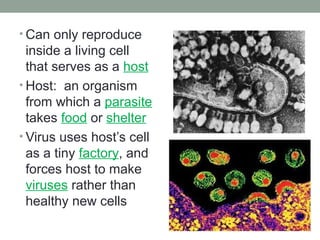
• Can only reproduce
  inside a living cell
  that serves as a host
• Host: an organism
  from which a parasite
  takes food or shelter
• Virus uses host’s cell
  as a tiny factory, and
  forces host to make
  viruses rather than
  healthy new cells
• Can be grouped      Classifying Viruses
 together by:
  • Their shape
  • Type of disease
    they cause
  • Life cycle
  • Kind of genetic
    material they
    contain

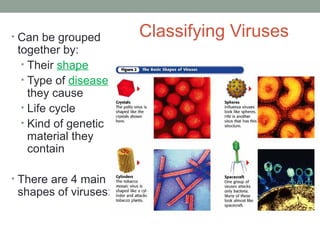
• There are 4 main
 shapes of viruses:
Crystals: The polio virus is shaped like
                                            the crystal shown here.


Cylinders: The tobacco mosaic virus
Is shaped like a cylinder and attacks
           tobacco plants.
Spheres: Influenza viruses look like
                                   spheres. HIV is another virus that has
                                               this structure.


Spacecraft: One group of viruses attacks
only bacteria. Many of these look almost
       like spacecraft (also called
             Bacteriophage).
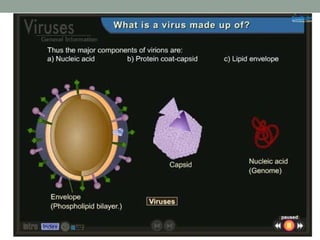
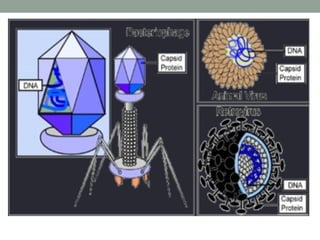
• Every virus is made up of genetic material
  inside a protein coat (also known as capsid)
• The protein coat protects the genetic material
  and helps a virus enter a host cell
• Many viruses have protein coat that matches
  characteristics of their specific host
• There are 4 main shapes of viruses: crystals,
  spheres, cylinders, and spacecraft


     Capsid: protein coat that
         surrounds virus
Genetic Material
• Genetic material either DNA or RNA
• Most RNA is made up of one strand of nucleotides,
  most DNA is two strands of nucleotides
• Both DNA and RNA contain info for making
  proteins
• Example: viruses that cause chickenpox & warts
  contain DNA
• Example: viruses that cause flu, HIV, and common
  cold contain RNA
• One strain of virus cannot infect both plants and
 animals
      Virus          Affects     Which organisms?
                     What?
Tobacco mosaic   Plants         Tobacco, tomato,
                                peppers
Potato X         Plants         Potatoes, tomatoes,
                                peppers
Adenovirus       Animals        Humans & other
                                vertebrates
HIV              Animals        Humans & other
                                primates
Bacteriophage    Bacteria       E.Coli & other
                                bacteria
Different Kinds of Viruses
       & their sizes
Chicken pox (Varisella zoster virus        Flu (Influenza virus)
              (VZV)


                                      Rabies virus
A Destructive House Guest
• One thing that viruses
  do that living things also
  do is make more of
  themselves
• Viruses attack living
  cells and turn them into
  virus factories
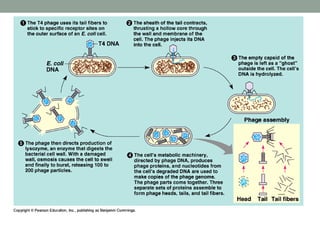
     • The cycle if a virus
    incorporating its genes
   into the genes of a host
       cell is called : THE
         LYTIC CYCLE
A Time Bomb
• Some viruses don’t go straight into lytic
  cycle—they put genetic material in host
  cells, but don’t make new viruses right
  away
• In the lysogenic cycle, each new cells gets
  a copy of the virus’s genes when the host
  cell divides
• The genes stay inactive for a long time
• When they do become active, they begin
  the lytic cycle and make copies of the virus
Treating a Virus
• Antibiotics don’t kill
  viruses
• Scientists have
  developed antiviral
  medications
• Because many viral
  diseases do not have a
  cure, it is best to
  prevent a viral infection
  from happening in the
  first place
• Childhood
  vaccinations give
  your immune
  system a “head
  start” on fighting
  viruses
• Vaccinations need
  to be kept current
• Also a good
  practice to always
  wash your hands

Viruses ppt

  • 1.
  • 2.
    It’s a SmallWorld • Virus: a microscopic particle that gets inside a cell and often destroys the cell • Viruses are tiny • Smaller than the smallest bacteria • Change rapidly • So small and change so often that scientists don’t know exactly how many types exist • These properties make viruses difficult to fight
  • 4.
    Are Viruses Living? •Like living things, viruses contain protein and genetic material • But viruses don’t act like living things • Can’t eat, grow, or break down food • Can’t use oxygen • Cannot function on its own
  • 5.
    • Can onlyreproduce inside a living cell that serves as a host • Host: an organism from which a parasite takes food or shelter • Virus uses host’s cell as a tiny factory, and forces host to make viruses rather than healthy new cells
  • 6.
    • Can begrouped Classifying Viruses together by: • Their shape • Type of disease they cause • Life cycle • Kind of genetic material they contain • There are 4 main shapes of viruses:
  • 7.
    Crystals: The poliovirus is shaped like the crystal shown here. Cylinders: The tobacco mosaic virus Is shaped like a cylinder and attacks tobacco plants.
  • 8.
    Spheres: Influenza viruseslook like spheres. HIV is another virus that has this structure. Spacecraft: One group of viruses attacks only bacteria. Many of these look almost like spacecraft (also called Bacteriophage).
  • 9.
    • Every virusis made up of genetic material inside a protein coat (also known as capsid) • The protein coat protects the genetic material and helps a virus enter a host cell • Many viruses have protein coat that matches characteristics of their specific host • There are 4 main shapes of viruses: crystals, spheres, cylinders, and spacecraft Capsid: protein coat that surrounds virus
  • 12.
    Genetic Material • Geneticmaterial either DNA or RNA • Most RNA is made up of one strand of nucleotides, most DNA is two strands of nucleotides • Both DNA and RNA contain info for making proteins • Example: viruses that cause chickenpox & warts contain DNA • Example: viruses that cause flu, HIV, and common cold contain RNA
  • 13.
    • One strainof virus cannot infect both plants and animals Virus Affects Which organisms? What? Tobacco mosaic Plants Tobacco, tomato, peppers Potato X Plants Potatoes, tomatoes, peppers Adenovirus Animals Humans & other vertebrates HIV Animals Humans & other primates Bacteriophage Bacteria E.Coli & other bacteria
  • 14.
    Different Kinds ofViruses & their sizes
  • 15.
    Chicken pox (Varisellazoster virus Flu (Influenza virus) (VZV) Rabies virus
  • 16.
    A Destructive HouseGuest • One thing that viruses do that living things also do is make more of themselves • Viruses attack living cells and turn them into virus factories • The cycle if a virus incorporating its genes into the genes of a host cell is called : THE LYTIC CYCLE
  • 18.
    A Time Bomb •Some viruses don’t go straight into lytic cycle—they put genetic material in host cells, but don’t make new viruses right away • In the lysogenic cycle, each new cells gets a copy of the virus’s genes when the host cell divides • The genes stay inactive for a long time • When they do become active, they begin the lytic cycle and make copies of the virus
  • 20.
    Treating a Virus •Antibiotics don’t kill viruses • Scientists have developed antiviral medications • Because many viral diseases do not have a cure, it is best to prevent a viral infection from happening in the first place
  • 21.
    • Childhood vaccinations give your immune system a “head start” on fighting viruses • Vaccinations need to be kept current • Also a good practice to always wash your hands