Plant Responses to
 the Environment
Plant Tropisms

•When you hear
   the word
  “tropism”,
  what do you
   think of?
Maybe it reminds you of
  the words “tropical
        island”
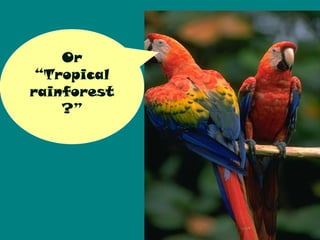
Or
 “Tropical
rainforest
    ?”
Or maybe you’re just a tired
  student who is sick of hearing
  about plants and just wants a
      stinking answer?!?!

 I swear, if she makes
me take notes on plants
 again, I will throw this
book at the wall and run
      for the hills!
So here are the facts…
• Plant tropisms
  – Plants respond to an
    environmental stimulus by
    growing in a particular direction
  – Growth in response to a
    stimulus is called a tropism
• Like a 7th-grader’s attitude, a tropism
  can be positive or negative
      I better hurry up
         and get this
            report
      finished..then I’ll
      have more time
           for math         Forget that book
          problems!         report, I’m going
                            to IM my friends
                                all night!


 POSITIVE                               NEGATIVE
• Light Tropism
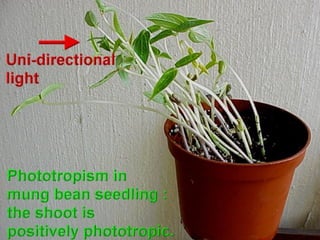
  – When you place a houseplant so
    that it gets light from only one
    direction, such as a window,
    what happens?
  – You may have noticed that the
    plant will start bending towards
    the light
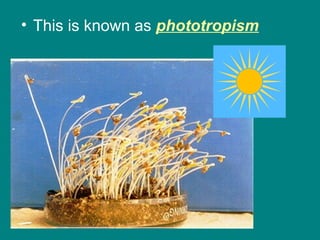
• This is known as phototropism
• Gravity Tropism
  – Plant growth also changes in
    response to the direction of gravity
  – This change is called gravitropism
  – If a plant is placed on its side or
    turned upside down, the shoot tips
    have a negative gravitropism (away
    from the center of the Earth) and
    the roots have a positive
    gravitropism (towards center of
    Earth).
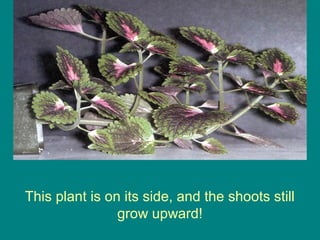
This plant is on its side, and the shoots still
                grow upward!
Seasonal Changes
• Plants living in regions with cold winters
  can detect changes in seasons because
  the days get shorter and nights get
  longer
• The opposite happens when spring and
  summer approach
• Plants respond to the change in the
  length of day
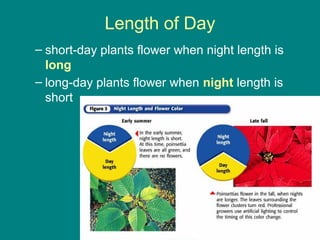
Length of Day
– short-day plants flower when night length is
  long
– long-day plants flower when night length is
  short
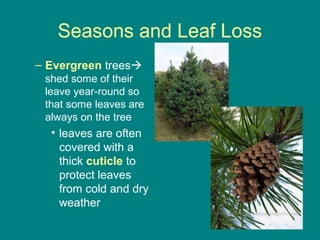
Seasons and Leaf Loss
– Evergreen trees
 shed some of their
 leave year-round so
 that some leaves are
 always on the tree
  • leaves are often
    covered with a
    thick cuticle to
    protect leaves
    from cold and dry
    weather
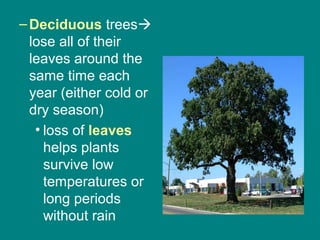
– Deciduous trees
  lose all of their
  leaves around the
  same time each
  year (either cold or
  dry season)
   • loss of leaves
     helps plants
     survive low
     temperatures or
     long periods
     without rain
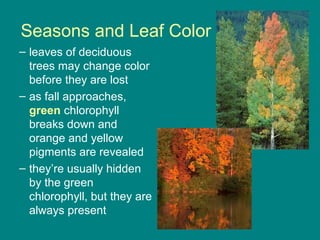
Seasons and Leaf Color
– leaves of deciduous
  trees may change color
  before they are lost
– as fall approaches,
  green chlorophyll
  breaks down and
  orange and yellow
  pigments are revealed
– they’re usually hidden
  by the green
  chlorophyll, but they are
  always present

Plant responses to the environment 1

  • 1.
    Plant Responses to the Environment
  • 2.
    Plant Tropisms •When youhear the word “tropism”, what do you think of?
  • 3.
    Maybe it remindsyou of the words “tropical island”
  • 4.
  • 5.
    Or maybe you’rejust a tired student who is sick of hearing about plants and just wants a stinking answer?!?! I swear, if she makes me take notes on plants again, I will throw this book at the wall and run for the hills!
  • 6.
    So here arethe facts… • Plant tropisms – Plants respond to an environmental stimulus by growing in a particular direction – Growth in response to a stimulus is called a tropism
  • 7.
    • Like a7th-grader’s attitude, a tropism can be positive or negative I better hurry up and get this report finished..then I’ll have more time for math Forget that book problems! report, I’m going to IM my friends all night! POSITIVE NEGATIVE
  • 8.
    • Light Tropism – When you place a houseplant so that it gets light from only one direction, such as a window, what happens? – You may have noticed that the plant will start bending towards the light
  • 9.
    • This isknown as phototropism
  • 11.
    • Gravity Tropism – Plant growth also changes in response to the direction of gravity – This change is called gravitropism – If a plant is placed on its side or turned upside down, the shoot tips have a negative gravitropism (away from the center of the Earth) and the roots have a positive gravitropism (towards center of Earth).
  • 12.
    This plant ison its side, and the shoots still grow upward!
  • 13.
    Seasonal Changes • Plantsliving in regions with cold winters can detect changes in seasons because the days get shorter and nights get longer • The opposite happens when spring and summer approach • Plants respond to the change in the length of day
  • 14.
    Length of Day –short-day plants flower when night length is long – long-day plants flower when night length is short
  • 15.
    Seasons and LeafLoss – Evergreen trees shed some of their leave year-round so that some leaves are always on the tree • leaves are often covered with a thick cuticle to protect leaves from cold and dry weather
  • 16.
    – Deciduous trees lose all of their leaves around the same time each year (either cold or dry season) • loss of leaves helps plants survive low temperatures or long periods without rain
  • 17.
    Seasons and LeafColor – leaves of deciduous trees may change color before they are lost – as fall approaches, green chlorophyll breaks down and orange and yellow pigments are revealed – they’re usually hidden by the green chlorophyll, but they are always present