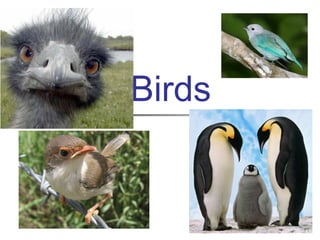
Birds
Characteristics of Birds
   Feathers
   Help birds stay dry and warm,
    attract mates, and fly
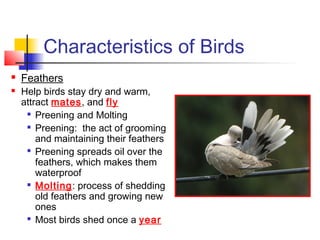
      Preening and Molting

     
        Preening: the act of grooming
        and maintaining their feathers
      Preening spreads oil over the

        feathers, which makes them
        waterproof
      Molting: process of shedding

        old feathers and growing new
        ones
     
        Most birds shed once a year

    Two kinds of feathers
      Down feathers  fluffy

       feathers that lie next to the
       bird’s body
          Keep birds warm by

            trapping body heat next to
            body
      Contour feathers  stiff

       feathers that cover a bird’s body
       and wings
          Colors and shapes attract

            mates
         
            Streamlined surface helps
            bird fly
   Fast Digestion
        Birds eat a lot because they need
         a lot of energy
        Birds eat seeds, insects, nuts, and
         meat because they are high in
         protein
     
         Modern birds don’t have teeth, so
         they can’t chew
     
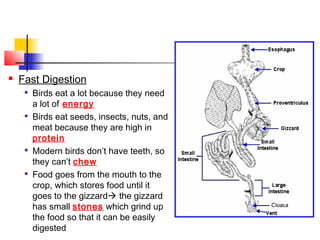
         Food goes from the mouth to the
         crop, which stores food until it
         goes to the gizzard the gizzard
         has small stones which grind up
         the food so that it can be easily
         digested
   Flying
     
         Birds have air sacs attached to their lungs
         to store air
     
         Most birds have large eyes and excellent
         eyesight; birds such as hawks and eagles
         can see 8 times better than humans can see!
     
         Wing shape is related to how a bird flies-
         short wings for quick turning, long wings for
         soaring

    Rigid skeleton allows a bird to
    move its wings efficiently

    Powerful flight muscle attached to a
    large breastbone called a keel

    Birds have hollow bones so that
    they are light

    Getting off the ground
       Air moving around a bird’s wing

        changes in speed and
        direction, creating an upward
        force that keeps a bird in the air
       “lift” is an upward force on a

        bird’s wings
   Raising Baby Birds
     
         Most birds build nests to lay
         their eggs
     
         Brooding act of sitting on
         eggs and using body heat to
         keep them warm

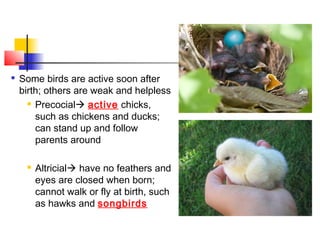
    Some birds are active soon after
    birth; others are weak and helpless
       Precocial active chicks,

        such as chickens and ducks;
        can stand up and follow
        parents around

        Altricial have no feathers and
         eyes are closed when born;
         cannot walk or fly at birth, such
         as hawks and songbirds
Kinds of Birds
   Flightless birds
       
           Most do not have
           the large keel that
           anchors a birds’
           flight muscles
       
           Some run quickly
           to move around
       
           Others are skilled
           swimmers
       
           Examples:
           penguins, kiwi,
           ostrich
   Water birds
   Usually have webbed
    feet for swimming or
    long legs for wading
          Examples:

           cranes, ducks,
           geese, swans,
           pelicans
   Perching birds
       
           Have special adaptations
           for resting on branches
       
           Its feet automatically
           close around a branch
          Even if it falls asleep, its
           feet will stay closed—it
           won’t fall off the branch
          Examples: chickadees,
           parrots, robins, sparrows
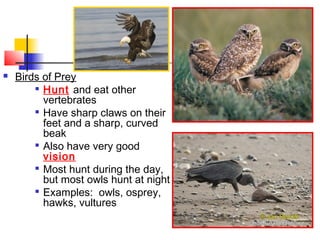
   Birds of Prey
         Hunt and eat other

          vertebrates
         Have sharp claws on their

          feet and a sharp, curved
          beak
         Also have very good

          vision
        
          Most hunt during the day,
          but most owls hunt at night
        
          Examples: owls, osprey,
          hawks, vultures

Birds

  • 1.
  • 2.
    Characteristics of Birds  Feathers  Help birds stay dry and warm, attract mates, and fly  Preening and Molting  Preening: the act of grooming and maintaining their feathers  Preening spreads oil over the feathers, which makes them waterproof  Molting: process of shedding old feathers and growing new ones  Most birds shed once a year
  • 3.
    Two kinds of feathers  Down feathers  fluffy feathers that lie next to the bird’s body  Keep birds warm by trapping body heat next to body  Contour feathers  stiff feathers that cover a bird’s body and wings  Colors and shapes attract mates  Streamlined surface helps bird fly
  • 4.
    Fast Digestion  Birds eat a lot because they need a lot of energy  Birds eat seeds, insects, nuts, and meat because they are high in protein  Modern birds don’t have teeth, so they can’t chew  Food goes from the mouth to the crop, which stores food until it goes to the gizzard the gizzard has small stones which grind up the food so that it can be easily digested
  • 5.
    Flying  Birds have air sacs attached to their lungs to store air  Most birds have large eyes and excellent eyesight; birds such as hawks and eagles can see 8 times better than humans can see!  Wing shape is related to how a bird flies- short wings for quick turning, long wings for soaring
  • 6.
    Rigid skeleton allows a bird to move its wings efficiently  Powerful flight muscle attached to a large breastbone called a keel  Birds have hollow bones so that they are light  Getting off the ground  Air moving around a bird’s wing changes in speed and direction, creating an upward force that keeps a bird in the air  “lift” is an upward force on a bird’s wings
  • 7.
    Raising Baby Birds  Most birds build nests to lay their eggs  Brooding act of sitting on eggs and using body heat to keep them warm
  • 8.
    Some birds are active soon after birth; others are weak and helpless  Precocial active chicks, such as chickens and ducks; can stand up and follow parents around  Altricial have no feathers and eyes are closed when born; cannot walk or fly at birth, such as hawks and songbirds
  • 9.
    Kinds of Birds  Flightless birds  Most do not have the large keel that anchors a birds’ flight muscles  Some run quickly to move around  Others are skilled swimmers  Examples: penguins, kiwi, ostrich
  • 10.
    Water birds  Usually have webbed feet for swimming or long legs for wading  Examples: cranes, ducks, geese, swans, pelicans
  • 11.
    Perching birds  Have special adaptations for resting on branches  Its feet automatically close around a branch  Even if it falls asleep, its feet will stay closed—it won’t fall off the branch  Examples: chickadees, parrots, robins, sparrows
  • 12.
    Birds of Prey  Hunt and eat other vertebrates  Have sharp claws on their feet and a sharp, curved beak  Also have very good vision  Most hunt during the day, but most owls hunt at night  Examples: owls, osprey, hawks, vultures