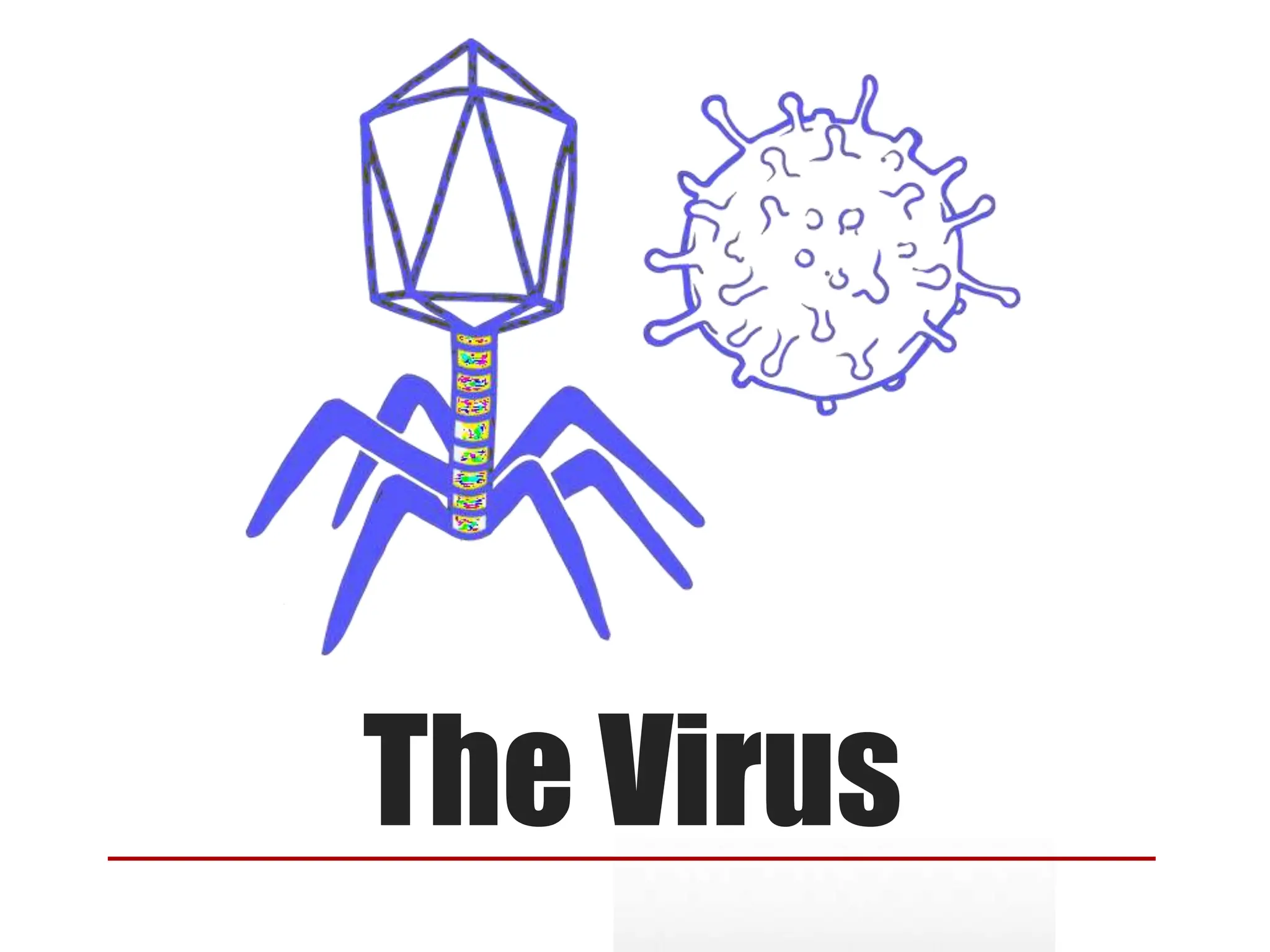
The Virus
CONTENT
Morphology
Classification
Reproduction/ Replication
Cultivation
Viruses:
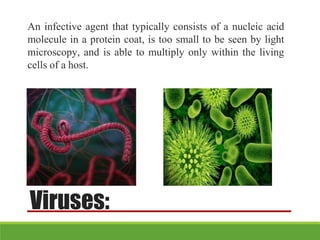
An infective agent that typically consists of a nucleic acid
molecule in a protein coat, is too small to be seen by light
microscopy, and is able to multiply only within the living
cells of a host.
Introduction to viruses
Viruses do not have cells that divide; new viruses are
assembled in the infected host cell
 But unlike still simpler infectious agents, viruses contain
genes, which gives them the ability to mutate and evolve.
Evolved from plasmids: pieces of DNA that can move between
cells
while others may have evolved from bacteria.
Over 5,000 species of viruses have been discovered.
Introduction to viruses
 A virus consists of two or three parts:
 genes, made from either DNA or RNA,
long molecules that carry genetic information
protein coat that protects the genes; and in some viruses, an
envelope of fat
Viruses vary in shape from the simple
helical and icosahedral to more
complex structures.
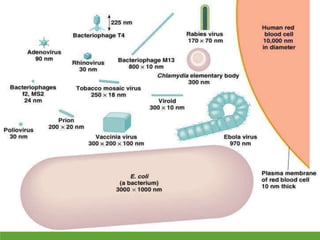
Viruses range in size from 20 to 300 nanometres; it would
take 30,000 to 750,000 of them, side by side, to stretch to 1
centimeter.
Viruses spread in many ways. Just as many viruses are
they
very specific as to which host species or tissue
attack,
Plant viruses are often spread from plant to plant by
insects and other organisms, known as vectors.
Some viruses of animals, including humans, are spread
by exposure to infected bodily fluids
Viruses such as influenza are spread through the air by
droplets of moisture when people cough or sneeze.
Viruses such as norovirus are transmitted by the
faecal–oral route, which involves the
contamination of hands, food and water.
Spreading , Vectors:
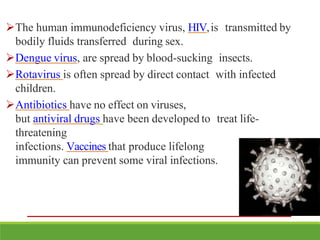
The human immunodeficiency virus, HIV,is transmitted by
bodily fluids transferred during sex.
Dengue virus, are spread by blood-sucking insects.
Rotavirus is often spread by direct contact with infected
children.
Antibiotics have no effect on viruses,
but antiviral drugs have been developed to treat life-
threatening
infections. Vaccines that produce lifelong
immunity can prevent some viral infections.
Characteristics
 Obligate intracellular parasites of bacteria, protozoa, fungi, algae, plants, and
animals.
 Ultramicroscopic size, ranging from 20 nm up to 450 nm
(diameter).
 Not cellular in nature; structure is very compact and economical.
 Do not independently fulfill the characteristics of life.
 Inactive macromolecules outside the host cell and active only
inside host cells.
 Basic structure consists of protein shell (capsid) surrounding nucleic acid core.
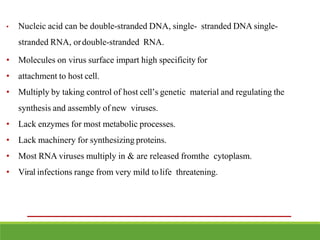
• Nucleic acid can be either DNA or RNA but notboth
• Nucleic acid can be double-stranded DNA, single- stranded DNA single-
stranded RNA, ordouble-stranded RNA.
• Molecules on virus surface impart high specificity for
• attachment to host cell.
• Multiply by taking control of host cell’s genetic material and regulating the
synthesis and assembly of new viruses.
• Lack enzymes for most metabolic processes.
• Lack machinery for synthesizing proteins.
• Most RNA viruses multiply in & are released fromthe cytoplasm.
• Viral infections range from very mild tolife threatening.
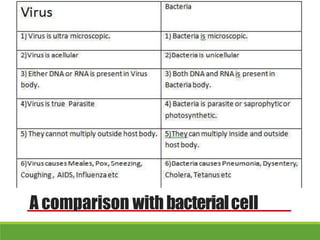
A comparison withbacterialcell
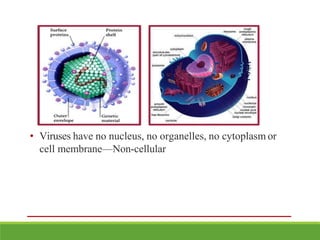
• Viruses have no nucleus, no organelles, no cytoplasm or
cell membrane—Non-cellular
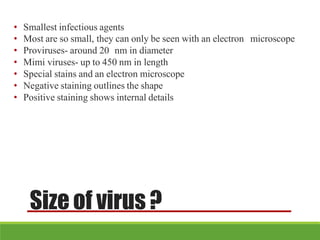
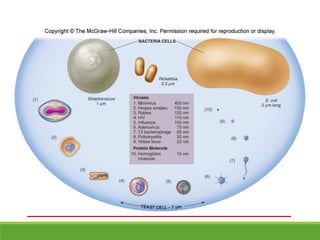
Size of virus?
• Smallest infectious agents
• Most are so small, they can only be seen with an electron microscope
• Proviruses- around 20 nm in diameter
• Mimi viruses- up to 450 nm in length
• Special stains and an electron microscope
• Negative staining outlines the shape
• Positive staining shows internal details
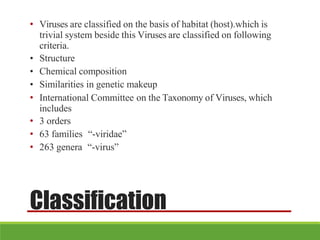
Classification
• Viruses are classified on the basis of habitat (host).which is
trivial system beside this Viruses are classified on following
criteria.
• Structure
• Chemical composition
• Similarities in genetic makeup
• International Committee on the Taxonomy of Viruses, which
includes
• 3 orders
• 63 families “-viridae”
• 263 genera “-virus”
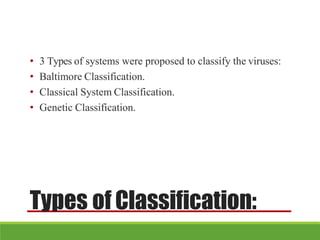
Types of Classification:
• 3 Types of systems were proposed to classify the viruses:
• Baltimore Classification.
• Classical System Classification.
• Genetic Classification.
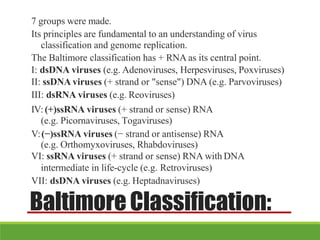
7 groups were made.
Its principles are fundamental to an understanding of virus
classification and genome replication.
The Baltimore classification has + RNA as its central point.
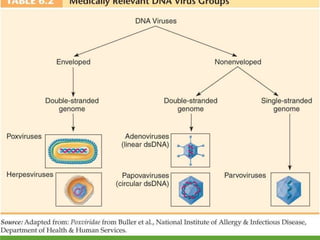
I: dsDNA viruses (e.g. Adenoviruses, Herpesviruses, Poxviruses)
II: ssDNA viruses (+ strand or "sense") DNA (e.g. Parvoviruses)
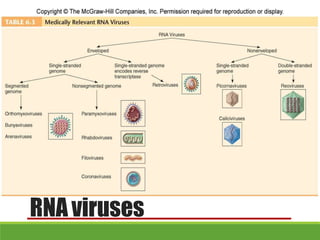
III: dsRNA viruses (e.g. Reoviruses)
IV:(+)ssRNA viruses (+ strand or sense) RNA
(e.g. Picornaviruses, Togaviruses)
V:(−)ssRNA viruses (− strand or antisense) RNA
(e.g. Orthomyxoviruses, Rhabdoviruses)
VI: ssRNA viruses (+ strand or sense) RNA with DNA
intermediate in life-cycle (e.g. Retroviruses)
VII: dsDNA viruses (e.g. Heptadnaviruses)
BaltimoreClassification:
Classification on basis of
host
• Animal viruses:
• Viruses of animal host
• Rabies, Polio, Mumps, Chicken pox, Small pox, and
Influenza.
• Plant Viruses:
• viruses which show their live characteristics when
attached to plants.
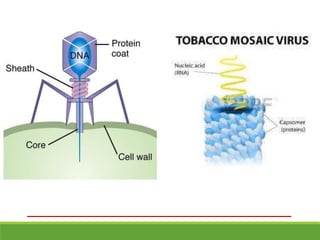
• Tobacco mosaic virus (TMV), Banana streak virus,
Carrot thin leaf virus
• Bacterial Virus: Bacteriophages ( T1, T2, T3, andT4.)
Classificationon
Geneticsbasis
• According to genetic consequences viruses are classified as.
DNA Viruses and RNAViruses
• Genes may be linear or circular
• The smallest have only 4 genes and largest have several
hundred.
• DNAViruses
• DNA Viruses are the viruses which consist of DNA genome .
They complete their activities by transcription and most of
them attack on organisms of similar genome.
• RNAViruses
• RNA Viruses are the viruses which consist of RNAgenome.
They complete their activities by reverse transcription.
Classificationon
structuralbasis
• With relevant to morphology of viral structure viruses are
organized as Enveloped and Nonenveloped viruses.
• However they are also arranges subclasses of DNAand
RNA viruses
Structure of virus
• Questions Relating to Structure
• Is it rigid?
• How big is it?
• Is it flexible?
• Structure Must Serve Virus
• It should provide protection for genome
• It should allow virus to move from one host to next
• It should allow for attachment of virus on to new host
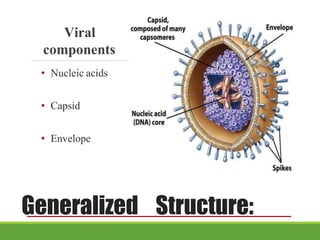
Generalized Structure:
Viral
components
• Nucleic acids
• Capsid
• Envelope
Capsids:
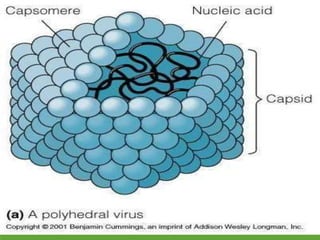
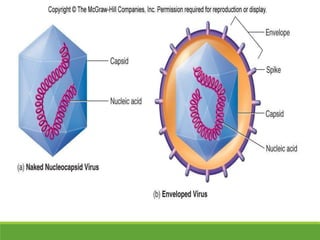
⦿ Viruses consists of nucleic acid core surrounded by a protein
called capsid.
⦿ Capsid is composed of large number of capsomer which is
made up of polypeptide molecules.
⦿ The capsid with the enclosed nucleic acid is known as
nucleocapsid.
⦿ Fully formed virus that is able to establish an infection in a host
cell is known as virion.
Functions of Capsid
⦿ It protects the viral genome from physical
destruction and enzymatic inactivation by
nucleases in biological material.
⦿ It provides the binding site which enable the virus to
attach to specific site on the host cell.
⦿ It facilitates the assembly and packaging of viral
genetic information.
⦿ It serves as a vehicle of transmission from host to another.
⦿ It is antigenic and specific for each viruses
⦿ It provides the structural symmetry to the virus
particle.
Nucleic Acids:
• Genome:
• the sum total of the genetic information carried by an organism
• Number of viral genes compared with a cell- quite small
• They only have the genes necessary to invade host cells and redirect
their activity
DNA Viruses :
• ssDND
(single stranded DNA)
• dsDNA
(double stranded DNA)
RNA Viruses:
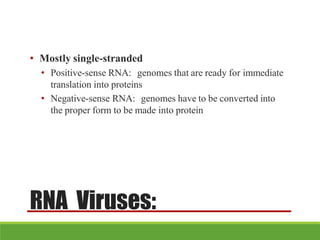
• Mostly single-stranded
• Positive-sense RNA: genomes that are ready for immediate
translation into proteins
• Negative-sense RNA: genomes have to be converted into
the proper form to be made into protein
RNAviruses
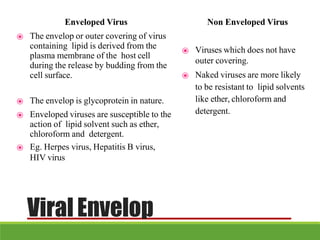
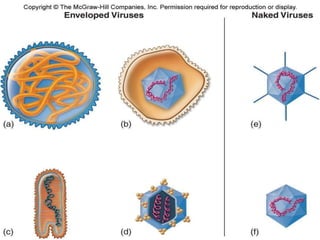
Enveloped Virus
⦿ The envelop or outer covering of virus
containing lipid is derived from the
plasma membrane of the host cell
during the release by budding from the
cell surface.
⦿ The envelop is glycoprotein in nature.
⦿ Enveloped viruses are susceptible to the
action of lipid solvent such as ether,
chloroform and detergent.
⦿ Eg. Herpes virus, Hepatitis B virus,
HIV virus
Non Enveloped Virus
⦿ Viruses which does not have
outer covering.
⦿ Naked viruses are more likely
to be resistant to lipid solvents
like ether, chloroform and
detergent.
Viral Envelop
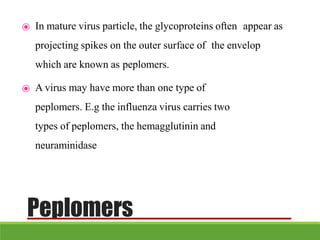
⦿ In mature virus particle, the glycoproteins often appear as
projecting spikes on the outer surface of the envelop
which are known as peplomers.
⦿ A virus may have more than one type of
peplomers. E.g the influenza virus carries two
types of peplomers, the hemagglutinin and
neuraminidase
Peplomers
Functions of Peplomers
⦿ It helps for attachment of virus to the host cell receptors
to initiate the entrance of the virion into the cell.
⦿ It attach to receptors on red blood cells, causing
these cell to agglutinate.
⦿ It has enzymatic activity like neuraminidase which cleave
neuraminic acid from host cell glycoproteins.
⦿ It has antigenic properties.
StructuralSymmetries:
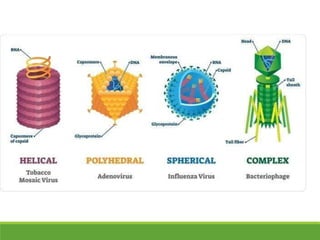
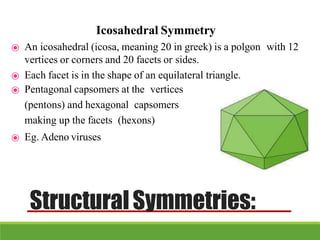
Icosahedral Symmetry
⦿ An icosahedral (icosa, meaning 20 in greek) is a polgon with 12
vertices or corners and 20 facets or sides.
⦿ Each facet is in the shape of an equilateral triangle.
⦿ Pentagonal capsomers at the vertices
(pentons) and hexagonal capsomers
making up the facets (hexons)
⦿ Eg. Adeno viruses
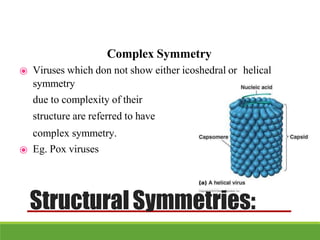
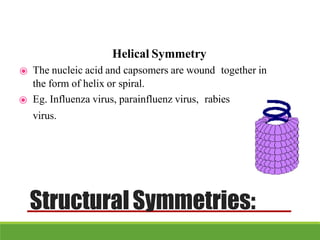
Helical Symmetry
⦿ The nucleic acid and capsomers are wound together in
the form of helix or spiral.
⦿ Eg. Influenza virus, parainfluenz virus, rabies
virus.
StructuralSymmetries:
Complex Symmetry
⦿ Viruses which don not show either icoshedral or helical
symmetry
due to complexity of their
structure are referred to have
complex symmetry.
⦿ Eg. Pox viruses
StructuralSymmetries:
The genomic information necessary for viral replication is contained in the
viral nucleic acid but lacking biosynthetic enzymes.
The virus depend on the synthetic machinery of the host cell for replication.
Viral multiplication proceeds as following manner.
• Adsorption,
• Penetration,
• Uncoating,
• Synthesis,
• Assembly and Release
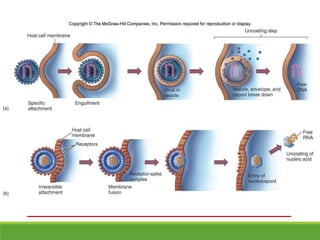
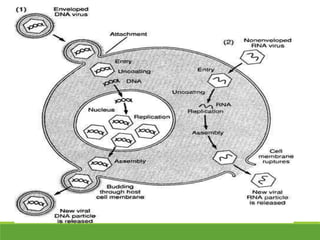
• Adsorption.
Viral Replication
Adsorption/Attachment
• Virus encounters susceptible host cells
• Adsorbs specifically to receptor sites on the cell
membrane
• Because of the exact fit required, viruses have a limited
host range
Penetration
• Flexible cell membrane of the host is penetrated by the
whole virus or its nucleic acid
• Endocytosis: entire virus engulfed by the cell and
enclosed in a vacuole or vesicle
• The viral envelope can also directly fuse with the host
cell membrane
Uncoating
• Enzymes in the vacuole dissolve the envelope and capsid
• The virus is now uncoated
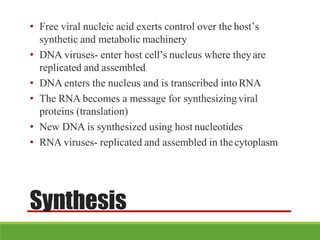
Synthesis
• Free viral nucleic acid exerts control over the host’s
synthetic and metabolic machinery
• DNA viruses- enter host cell’s nucleus where theyare
replicated and assembled
• DNA enters the nucleus and is transcribed intoRNA
• The RNA becomes a message for synthesizing viral
proteins (translation)
• New DNA is synthesized using host nucleotides
• RNA viruses- replicated and assembled in thecytoplasm
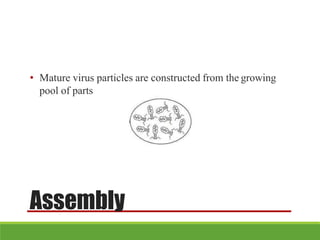
Assembly
• Mature virus particles are constructed from the growing
pool of parts
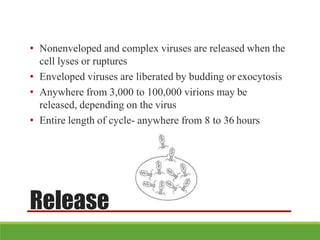
Release
• Nonenveloped and complex viruses are released when the
cell lyses or ruptures
• Enveloped viruses are liberated by budding or exocytosis
• Anywhere from 3,000 to 100,000 virions may be
released, depending on the virus
• Entire length of cycle- anywhere from 8 to 36 hours
Bacteriophagelifecycle
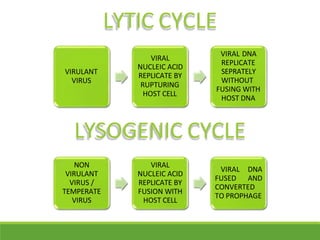
LYTIC CYCLE & LYSOGENIC CYCLE
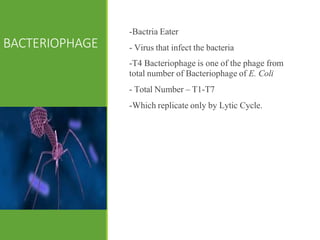
BACTERIOPHAGE
-Bactria Eater
- Virus that infect the bacteria
-T4 Bacteriophage is one of the phage from
total number of Bacteriophage of E. Coli
- Total Number – T1-T7
-Which replicate only by Lytic Cycle.
VIRULANT
VIRUS
VIRAL
NUCLEIC ACID
REPLICATE BY
RUPTURING
HOST CELL
VIRAL DNA
REPLICATE
SEPRATELY
WITHOUT
FUSING WITH
HOST DNA
NON
VIRULANT
VIRUS /
TEMPERATE
VIRUS
VIRAL
NUCLEIC ACID
REPLICATE BY
FUSION WITH
HOST CELL
VIRAL DNA
FUSED AND
CONVERTED
TO PROPHAGE
LYTIC CYCLE
LYSOGENIC CYCLE
CULTIVATIONOF VIRUS
PURPOSE OF VIRUS CULTIVATION
• To isolate and identify viruses in clinical samples.
• To prepare viruses for vaccine production.
• To do research on viral structure, replication , genetics
and effects on host cells.
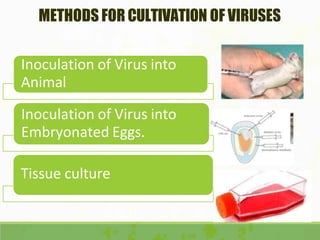
METHODS FOR CULTIVATION OF VIRUSES
Inoculation of Virus into
Animal
Inoculation of Virus into
Embryonated Eggs.
Tissue culture
Inoculation of Virus in Animals
1. Viruses which are not cultivated in embryonated egg and tissue culture
are cultivated in laboratory animals. e.g: mice, guinea pig , hamester ,
rabbits and primates are used.
2. The selected animals should be healthy and free from any communicable
diseases.
3. Suckling mice (less than 48 hours old) are most commonly used.
4. Route for Inoculation-
Intracerebral.
Subcutaneous.
Intraperitoneal.
Intranasal.
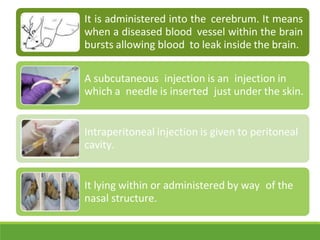
It is administered into the cerebrum. It means
when a diseased blood vessel within the brain
bursts allowing blood to leak inside the brain.
A subcutaneous injection is an injection in
which a needle is inserted just under the skin.
Intraperitoneal injection is given to peritoneal
cavity.
It lying within or administered by way of the
nasal structure.
ADVANTAGES
• Production of antibodies can be identified.
• Diagnosis, pathogenesis and clinical symptoms
are determined.
• Primary isolation of certain viruses.
• Mice provide a reliable model for studying viral
replication.
• Used for the study of immune responses,
epidemiology and oncogenesis
DISADVANTAGES
• Expensive and difficulties to maintained animals.
• Difficulty in choosing of animals for particular
virus.
• Some human viruses cannot be grown in animals
or can be grown but do not cause diseases.
• Mice do not provide models for vaccine
development.
Inoculation of Virus in Egg Embryo
1. The process of cultivation of viruses in
upon the type of egg being used.
2. Egg provide a suitable means for :
embryonated eggs depend
-The primary isolation and identification of viruses.
-The production of vaccines.
-The maintained of stock culture.
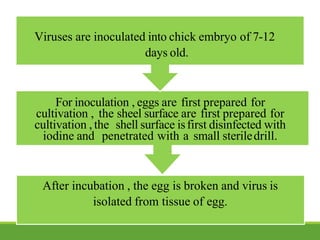
Viruses are inoculated into chick embryo of 7-12
days old.
For inoculation , eggs are first prepared for
cultivation , the sheel surface are first prepared for
cultivation , the shell surface isfirst disinfected with
iodine and penetrated with a small steriledrill.
After incubation , the egg is broken and virus is
isolated from tissue of egg.
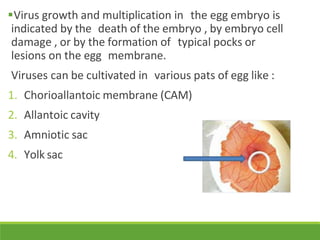
Virus growth and multiplication in the egg embryo is
indicated by the death of the embryo , by embryo cell
damage , or by the formation of typical pocks or
lesions on the egg membrane.
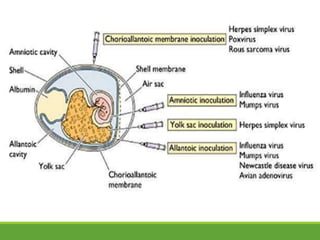
Viruses can be cultivated in various pats of egg like :
1. Chorioallantoic membrane (CAM)
2. Allantoic cavity
3. Amniotic sac
4. Yolk sac
1.Chorioallantoic Membrane(CAM)
• Inoculation is mainly for growing provirus.
• After incubation visible lesions called pocks are observed ,
which isgrey white area in transparent CAM.
• Herpes simplex virus isalso grown.
• Single virus gives single pocks.
• Thismethod issuitable for plaque studies.
2.AllantoicCavity
• Inoculation is mainly done for production of vaccine of
influenza virus , yellow fever , rabies.
• Most of avaian viruses can be isolated using this method.
• Allantoic inoculation is a quick and easy method that yields
large amounts (8-15ml) of virus-infected egg fluids.
3.AmnioticSac
• Inoculation is mainly done for primary isolation of
influenzavirus and the mumps virus.
• Growth and replication of virus in egg embryo can be
detected by haemagglutination assay.
• The virus is introduced directly into the amniotic fluid that
bathes the developing embryo.
4.YolkSac
• Inoculation is done for some bacteria and some viruses.
• Thismethod issimpleforcultivationandmultiplicationofvirus.
ADVANTAGES
• Widely used method for the isolation of virus and growth.
• Cost effective and maintenance is much easier.
• The embryonated eggs are readily available.
• They are free from contaminating bacteria and many
latent viruses.
• Ideal substrate for the viral growth and replication.
• less labor is needed.
• Widely used method to grow virus for some vaccine
production.
• Defense mechanisms are not involved in embryonated
eggs.
DISADVANTAGES
• The site of inoculation for varies with different virus . That
is , each virus have different sites for growth and
replication.
Inoculation of Virus Using Tissue Culture
There are three types of tissue culture:
- Organ culture.
- Explant culture.
- Cell culture.
1. Small bits of organs can be maintained in vitro for days
and weeks, preserving their original architecture and
function.
2. Organs culture are useful for the isolation of some
viruses which appear to be highly specialised parasite of
certain organs.
3. For example, the tracheal ring organ culture is employed
for the isolation of coronavirus, a respiratory pathogen.
Inoculation of VirusUsing OrganCulture
1. Fragments of minced tissue can be grown
embedded in plasma clots.
2. They may also be cultivated in suspension.
as ‘explants’
3. This method is now seldom employed in virology.
4. Adenoid tissue explant culture were used for the
isolation of adenoviruses.
Inoculation of Virus Using Explant Culture
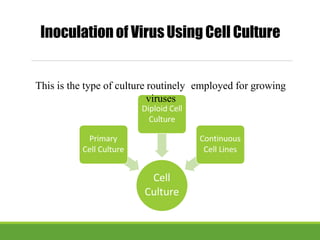
Inoculation of VirusUsing Cell Culture
Cell
Culture
Primary
Cell Culture
This is the type of culture routinely employed for growing
viruses
Diploid Cell
Culture
Continuous
Cell Lines
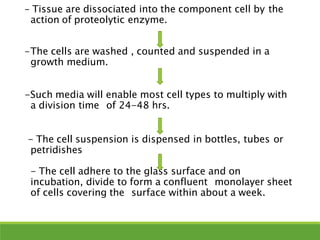
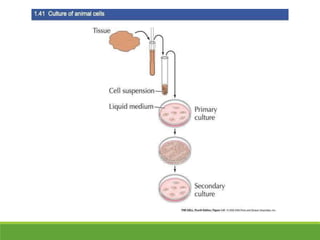
- Tissue are dissociated into the component cell by the
action of proteolytic enzyme.
-The cells are washed , counted and suspended in a
growth medium.
-Such media will enable most cell types to multiply with
a division time of 24-48 hrs.
- The cell suspension is dispensed in bottles, tubes or
petridishes
- The cell adhere to the glass surface and on
incubation, divide to form a confluent monolayer sheet
of cells covering the surface within about a week.
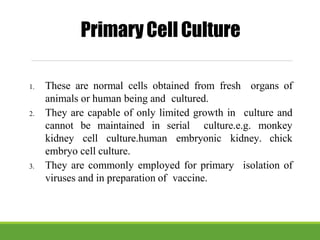
1. These are normal cells obtained from fresh
animals or human being and cultured.
2. They are capable of only limited growth in
organs of
culture and
cannot be maintained in serial culture.e.g. monkey
kidney cell culture.human embryonic kidney. chick
embryo cell culture.
3. They are commonly employed for primary
viruses and in preparation of vaccine.
isolation of
PrimaryCell Culture
1. These are cells of single type, contain the same number
of chromosome as the parent cells and are diploid.
2. The diploid cell strains can be subculture for limited
number of times.
3. After about 50 serial passage they undergo senescence.
4. They are also employed for the production of viral
vaccine. Eg. human embryonic lung cell strain WI-38
DiploidCellCulture
1. Animal cells capable of indefinite growth are called continuous cell lines or cell
lines.
2. These are the cells of a single type , usually derived from cancer cells , that are
capable of continuous serial cultivation indefinitely.
3. Standard cell lines derived from human cancers , such as HeLa , HEp – 2 and
KB cell lines have been used in laboratories throughout the world for many
years.
4. These cell linesmay be maintained by serial subcultivation or stored in the cold (
5. -70⁰C ) for use when necessary.
6. Some cell lines are now permitted to be used for vaccine manufacture, for
example: Vero cells for rabies vaccine.
ContinuousCellLine
Advantages
• Relative ease, broad
spectrum, cheaper and
sensitivity
Disadvantages
• The process requires
trained technicians with
experience in working on a
full time basis.
• Tissue or serum for
analysis is sent to
central laboratories to
identify virus.
• State health laboratory and
hospital Laboratory do not
isolate and identify virus
for clinical work.
ThankYou
For Your
Precious Time

morphology of virus and classification..

  • 1.
  • 2.
  • 3.
    Viruses: An infective agentthat typically consists of a nucleic acid molecule in a protein coat, is too small to be seen by light microscopy, and is able to multiply only within the living cells of a host.
  • 4.
    Introduction to viruses Virusesdo not have cells that divide; new viruses are assembled in the infected host cell  But unlike still simpler infectious agents, viruses contain genes, which gives them the ability to mutate and evolve. Evolved from plasmids: pieces of DNA that can move between cells while others may have evolved from bacteria. Over 5,000 species of viruses have been discovered.
  • 5.
    Introduction to viruses A virus consists of two or three parts:  genes, made from either DNA or RNA, long molecules that carry genetic information protein coat that protects the genes; and in some viruses, an envelope of fat Viruses vary in shape from the simple helical and icosahedral to more complex structures. Viruses range in size from 20 to 300 nanometres; it would take 30,000 to 750,000 of them, side by side, to stretch to 1 centimeter.
  • 6.
    Viruses spread inmany ways. Just as many viruses are they very specific as to which host species or tissue attack, Plant viruses are often spread from plant to plant by insects and other organisms, known as vectors. Some viruses of animals, including humans, are spread by exposure to infected bodily fluids Viruses such as influenza are spread through the air by droplets of moisture when people cough or sneeze. Viruses such as norovirus are transmitted by the faecal–oral route, which involves the contamination of hands, food and water. Spreading , Vectors:
  • 7.
    The human immunodeficiencyvirus, HIV,is transmitted by bodily fluids transferred during sex. Dengue virus, are spread by blood-sucking insects. Rotavirus is often spread by direct contact with infected children. Antibiotics have no effect on viruses, but antiviral drugs have been developed to treat life- threatening infections. Vaccines that produce lifelong immunity can prevent some viral infections.
  • 8.
    Characteristics  Obligate intracellularparasites of bacteria, protozoa, fungi, algae, plants, and animals.  Ultramicroscopic size, ranging from 20 nm up to 450 nm (diameter).  Not cellular in nature; structure is very compact and economical.  Do not independently fulfill the characteristics of life.  Inactive macromolecules outside the host cell and active only inside host cells.  Basic structure consists of protein shell (capsid) surrounding nucleic acid core. • Nucleic acid can be either DNA or RNA but notboth
  • 9.
    • Nucleic acidcan be double-stranded DNA, single- stranded DNA single- stranded RNA, ordouble-stranded RNA. • Molecules on virus surface impart high specificity for • attachment to host cell. • Multiply by taking control of host cell’s genetic material and regulating the synthesis and assembly of new viruses. • Lack enzymes for most metabolic processes. • Lack machinery for synthesizing proteins. • Most RNA viruses multiply in & are released fromthe cytoplasm. • Viral infections range from very mild tolife threatening.
  • 10.
  • 11.
    • Viruses haveno nucleus, no organelles, no cytoplasm or cell membrane—Non-cellular
  • 12.
    Size of virus? •Smallest infectious agents • Most are so small, they can only be seen with an electron microscope • Proviruses- around 20 nm in diameter • Mimi viruses- up to 450 nm in length • Special stains and an electron microscope • Negative staining outlines the shape • Positive staining shows internal details
  • 14.
    Classification • Viruses areclassified on the basis of habitat (host).which is trivial system beside this Viruses are classified on following criteria. • Structure • Chemical composition • Similarities in genetic makeup • International Committee on the Taxonomy of Viruses, which includes • 3 orders • 63 families “-viridae” • 263 genera “-virus”
  • 15.
    Types of Classification: •3 Types of systems were proposed to classify the viruses: • Baltimore Classification. • Classical System Classification. • Genetic Classification.
  • 16.
    7 groups weremade. Its principles are fundamental to an understanding of virus classification and genome replication. The Baltimore classification has + RNA as its central point. I: dsDNA viruses (e.g. Adenoviruses, Herpesviruses, Poxviruses) II: ssDNA viruses (+ strand or "sense") DNA (e.g. Parvoviruses) III: dsRNA viruses (e.g. Reoviruses) IV:(+)ssRNA viruses (+ strand or sense) RNA (e.g. Picornaviruses, Togaviruses) V:(−)ssRNA viruses (− strand or antisense) RNA (e.g. Orthomyxoviruses, Rhabdoviruses) VI: ssRNA viruses (+ strand or sense) RNA with DNA intermediate in life-cycle (e.g. Retroviruses) VII: dsDNA viruses (e.g. Heptadnaviruses) BaltimoreClassification:
  • 17.
    Classification on basisof host • Animal viruses: • Viruses of animal host • Rabies, Polio, Mumps, Chicken pox, Small pox, and Influenza. • Plant Viruses: • viruses which show their live characteristics when attached to plants. • Tobacco mosaic virus (TMV), Banana streak virus, Carrot thin leaf virus • Bacterial Virus: Bacteriophages ( T1, T2, T3, andT4.)
  • 19.
    Classificationon Geneticsbasis • According togenetic consequences viruses are classified as. DNA Viruses and RNAViruses • Genes may be linear or circular • The smallest have only 4 genes and largest have several hundred. • DNAViruses • DNA Viruses are the viruses which consist of DNA genome . They complete their activities by transcription and most of them attack on organisms of similar genome. • RNAViruses • RNA Viruses are the viruses which consist of RNAgenome. They complete their activities by reverse transcription.
  • 20.
    Classificationon structuralbasis • With relevantto morphology of viral structure viruses are organized as Enveloped and Nonenveloped viruses. • However they are also arranges subclasses of DNAand RNA viruses
  • 21.
    Structure of virus •Questions Relating to Structure • Is it rigid? • How big is it? • Is it flexible? • Structure Must Serve Virus • It should provide protection for genome • It should allow virus to move from one host to next • It should allow for attachment of virus on to new host
  • 23.
  • 24.
    Capsids: ⦿ Viruses consistsof nucleic acid core surrounded by a protein called capsid. ⦿ Capsid is composed of large number of capsomer which is made up of polypeptide molecules. ⦿ The capsid with the enclosed nucleic acid is known as nucleocapsid. ⦿ Fully formed virus that is able to establish an infection in a host cell is known as virion.
  • 26.
    Functions of Capsid ⦿It protects the viral genome from physical destruction and enzymatic inactivation by nucleases in biological material. ⦿ It provides the binding site which enable the virus to attach to specific site on the host cell. ⦿ It facilitates the assembly and packaging of viral genetic information. ⦿ It serves as a vehicle of transmission from host to another. ⦿ It is antigenic and specific for each viruses ⦿ It provides the structural symmetry to the virus particle.
  • 27.
    Nucleic Acids: • Genome: •the sum total of the genetic information carried by an organism • Number of viral genes compared with a cell- quite small • They only have the genes necessary to invade host cells and redirect their activity
  • 28.
    DNA Viruses : •ssDND (single stranded DNA) • dsDNA (double stranded DNA)
  • 30.
    RNA Viruses: • Mostlysingle-stranded • Positive-sense RNA: genomes that are ready for immediate translation into proteins • Negative-sense RNA: genomes have to be converted into the proper form to be made into protein
  • 31.
  • 32.
    Enveloped Virus ⦿ Theenvelop or outer covering of virus containing lipid is derived from the plasma membrane of the host cell during the release by budding from the cell surface. ⦿ The envelop is glycoprotein in nature. ⦿ Enveloped viruses are susceptible to the action of lipid solvent such as ether, chloroform and detergent. ⦿ Eg. Herpes virus, Hepatitis B virus, HIV virus Non Enveloped Virus ⦿ Viruses which does not have outer covering. ⦿ Naked viruses are more likely to be resistant to lipid solvents like ether, chloroform and detergent. Viral Envelop
  • 34.
    ⦿ In maturevirus particle, the glycoproteins often appear as projecting spikes on the outer surface of the envelop which are known as peplomers. ⦿ A virus may have more than one type of peplomers. E.g the influenza virus carries two types of peplomers, the hemagglutinin and neuraminidase Peplomers
  • 35.
    Functions of Peplomers ⦿It helps for attachment of virus to the host cell receptors to initiate the entrance of the virion into the cell. ⦿ It attach to receptors on red blood cells, causing these cell to agglutinate. ⦿ It has enzymatic activity like neuraminidase which cleave neuraminic acid from host cell glycoproteins. ⦿ It has antigenic properties.
  • 37.
    StructuralSymmetries: Icosahedral Symmetry ⦿ Anicosahedral (icosa, meaning 20 in greek) is a polgon with 12 vertices or corners and 20 facets or sides. ⦿ Each facet is in the shape of an equilateral triangle. ⦿ Pentagonal capsomers at the vertices (pentons) and hexagonal capsomers making up the facets (hexons) ⦿ Eg. Adeno viruses
  • 38.
    Helical Symmetry ⦿ Thenucleic acid and capsomers are wound together in the form of helix or spiral. ⦿ Eg. Influenza virus, parainfluenz virus, rabies virus. StructuralSymmetries:
  • 39.
    Complex Symmetry ⦿ Viruseswhich don not show either icoshedral or helical symmetry due to complexity of their structure are referred to have complex symmetry. ⦿ Eg. Pox viruses StructuralSymmetries:
  • 41.
    The genomic informationnecessary for viral replication is contained in the viral nucleic acid but lacking biosynthetic enzymes. The virus depend on the synthetic machinery of the host cell for replication. Viral multiplication proceeds as following manner. • Adsorption, • Penetration, • Uncoating, • Synthesis, • Assembly and Release • Adsorption. Viral Replication
  • 42.
    Adsorption/Attachment • Virus encounterssusceptible host cells • Adsorbs specifically to receptor sites on the cell membrane • Because of the exact fit required, viruses have a limited host range
  • 43.
    Penetration • Flexible cellmembrane of the host is penetrated by the whole virus or its nucleic acid • Endocytosis: entire virus engulfed by the cell and enclosed in a vacuole or vesicle • The viral envelope can also directly fuse with the host cell membrane
  • 44.
    Uncoating • Enzymes inthe vacuole dissolve the envelope and capsid • The virus is now uncoated
  • 46.
    Synthesis • Free viralnucleic acid exerts control over the host’s synthetic and metabolic machinery • DNA viruses- enter host cell’s nucleus where theyare replicated and assembled • DNA enters the nucleus and is transcribed intoRNA • The RNA becomes a message for synthesizing viral proteins (translation) • New DNA is synthesized using host nucleotides • RNA viruses- replicated and assembled in thecytoplasm
  • 47.
    Assembly • Mature virusparticles are constructed from the growing pool of parts
  • 48.
    Release • Nonenveloped andcomplex viruses are released when the cell lyses or ruptures • Enveloped viruses are liberated by budding or exocytosis • Anywhere from 3,000 to 100,000 virions may be released, depending on the virus • Entire length of cycle- anywhere from 8 to 36 hours
  • 50.
  • 51.
    BACTERIOPHAGE -Bactria Eater - Virusthat infect the bacteria -T4 Bacteriophage is one of the phage from total number of Bacteriophage of E. Coli - Total Number – T1-T7 -Which replicate only by Lytic Cycle.
  • 52.
    VIRULANT VIRUS VIRAL NUCLEIC ACID REPLICATE BY RUPTURING HOSTCELL VIRAL DNA REPLICATE SEPRATELY WITHOUT FUSING WITH HOST DNA NON VIRULANT VIRUS / TEMPERATE VIRUS VIRAL NUCLEIC ACID REPLICATE BY FUSION WITH HOST CELL VIRAL DNA FUSED AND CONVERTED TO PROPHAGE LYTIC CYCLE LYSOGENIC CYCLE
  • 53.
    CULTIVATIONOF VIRUS PURPOSE OFVIRUS CULTIVATION • To isolate and identify viruses in clinical samples. • To prepare viruses for vaccine production. • To do research on viral structure, replication , genetics and effects on host cells.
  • 54.
    METHODS FOR CULTIVATIONOF VIRUSES Inoculation of Virus into Animal Inoculation of Virus into Embryonated Eggs. Tissue culture
  • 55.
    Inoculation of Virusin Animals 1. Viruses which are not cultivated in embryonated egg and tissue culture are cultivated in laboratory animals. e.g: mice, guinea pig , hamester , rabbits and primates are used. 2. The selected animals should be healthy and free from any communicable diseases. 3. Suckling mice (less than 48 hours old) are most commonly used. 4. Route for Inoculation- Intracerebral. Subcutaneous. Intraperitoneal. Intranasal.
  • 56.
    It is administeredinto the cerebrum. It means when a diseased blood vessel within the brain bursts allowing blood to leak inside the brain. A subcutaneous injection is an injection in which a needle is inserted just under the skin. Intraperitoneal injection is given to peritoneal cavity. It lying within or administered by way of the nasal structure.
  • 57.
    ADVANTAGES • Production ofantibodies can be identified. • Diagnosis, pathogenesis and clinical symptoms are determined. • Primary isolation of certain viruses. • Mice provide a reliable model for studying viral replication. • Used for the study of immune responses, epidemiology and oncogenesis DISADVANTAGES • Expensive and difficulties to maintained animals. • Difficulty in choosing of animals for particular virus. • Some human viruses cannot be grown in animals or can be grown but do not cause diseases. • Mice do not provide models for vaccine development.
  • 58.
    Inoculation of Virusin Egg Embryo 1. The process of cultivation of viruses in upon the type of egg being used. 2. Egg provide a suitable means for : embryonated eggs depend -The primary isolation and identification of viruses. -The production of vaccines. -The maintained of stock culture.
  • 59.
    Viruses are inoculatedinto chick embryo of 7-12 days old. For inoculation , eggs are first prepared for cultivation , the sheel surface are first prepared for cultivation , the shell surface isfirst disinfected with iodine and penetrated with a small steriledrill. After incubation , the egg is broken and virus is isolated from tissue of egg.
  • 61.
    Virus growth andmultiplication in the egg embryo is indicated by the death of the embryo , by embryo cell damage , or by the formation of typical pocks or lesions on the egg membrane. Viruses can be cultivated in various pats of egg like : 1. Chorioallantoic membrane (CAM) 2. Allantoic cavity 3. Amniotic sac 4. Yolk sac
  • 62.
    1.Chorioallantoic Membrane(CAM) • Inoculationis mainly for growing provirus. • After incubation visible lesions called pocks are observed , which isgrey white area in transparent CAM. • Herpes simplex virus isalso grown. • Single virus gives single pocks. • Thismethod issuitable for plaque studies.
  • 63.
    2.AllantoicCavity • Inoculation ismainly done for production of vaccine of influenza virus , yellow fever , rabies. • Most of avaian viruses can be isolated using this method. • Allantoic inoculation is a quick and easy method that yields large amounts (8-15ml) of virus-infected egg fluids.
  • 64.
    3.AmnioticSac • Inoculation ismainly done for primary isolation of influenzavirus and the mumps virus. • Growth and replication of virus in egg embryo can be detected by haemagglutination assay. • The virus is introduced directly into the amniotic fluid that bathes the developing embryo.
  • 65.
    4.YolkSac • Inoculation isdone for some bacteria and some viruses. • Thismethod issimpleforcultivationandmultiplicationofvirus.
  • 66.
    ADVANTAGES • Widely usedmethod for the isolation of virus and growth. • Cost effective and maintenance is much easier. • The embryonated eggs are readily available. • They are free from contaminating bacteria and many latent viruses. • Ideal substrate for the viral growth and replication. • less labor is needed. • Widely used method to grow virus for some vaccine production. • Defense mechanisms are not involved in embryonated eggs. DISADVANTAGES • The site of inoculation for varies with different virus . That is , each virus have different sites for growth and replication.
  • 67.
    Inoculation of VirusUsing Tissue Culture There are three types of tissue culture: - Organ culture. - Explant culture. - Cell culture.
  • 68.
    1. Small bitsof organs can be maintained in vitro for days and weeks, preserving their original architecture and function. 2. Organs culture are useful for the isolation of some viruses which appear to be highly specialised parasite of certain organs. 3. For example, the tracheal ring organ culture is employed for the isolation of coronavirus, a respiratory pathogen. Inoculation of VirusUsing OrganCulture
  • 69.
    1. Fragments ofminced tissue can be grown embedded in plasma clots. 2. They may also be cultivated in suspension. as ‘explants’ 3. This method is now seldom employed in virology. 4. Adenoid tissue explant culture were used for the isolation of adenoviruses. Inoculation of Virus Using Explant Culture
  • 70.
    Inoculation of VirusUsingCell Culture Cell Culture Primary Cell Culture This is the type of culture routinely employed for growing viruses Diploid Cell Culture Continuous Cell Lines
  • 71.
    - Tissue aredissociated into the component cell by the action of proteolytic enzyme. -The cells are washed , counted and suspended in a growth medium. -Such media will enable most cell types to multiply with a division time of 24-48 hrs. - The cell suspension is dispensed in bottles, tubes or petridishes - The cell adhere to the glass surface and on incubation, divide to form a confluent monolayer sheet of cells covering the surface within about a week.
  • 73.
    1. These arenormal cells obtained from fresh animals or human being and cultured. 2. They are capable of only limited growth in organs of culture and cannot be maintained in serial culture.e.g. monkey kidney cell culture.human embryonic kidney. chick embryo cell culture. 3. They are commonly employed for primary viruses and in preparation of vaccine. isolation of PrimaryCell Culture
  • 74.
    1. These arecells of single type, contain the same number of chromosome as the parent cells and are diploid. 2. The diploid cell strains can be subculture for limited number of times. 3. After about 50 serial passage they undergo senescence. 4. They are also employed for the production of viral vaccine. Eg. human embryonic lung cell strain WI-38 DiploidCellCulture
  • 75.
    1. Animal cellscapable of indefinite growth are called continuous cell lines or cell lines. 2. These are the cells of a single type , usually derived from cancer cells , that are capable of continuous serial cultivation indefinitely. 3. Standard cell lines derived from human cancers , such as HeLa , HEp – 2 and KB cell lines have been used in laboratories throughout the world for many years. 4. These cell linesmay be maintained by serial subcultivation or stored in the cold ( 5. -70⁰C ) for use when necessary. 6. Some cell lines are now permitted to be used for vaccine manufacture, for example: Vero cells for rabies vaccine. ContinuousCellLine
  • 76.
    Advantages • Relative ease,broad spectrum, cheaper and sensitivity Disadvantages • The process requires trained technicians with experience in working on a full time basis. • Tissue or serum for analysis is sent to central laboratories to identify virus. • State health laboratory and hospital Laboratory do not isolate and identify virus for clinical work.
  • 77.