Downloaded 2,303 times
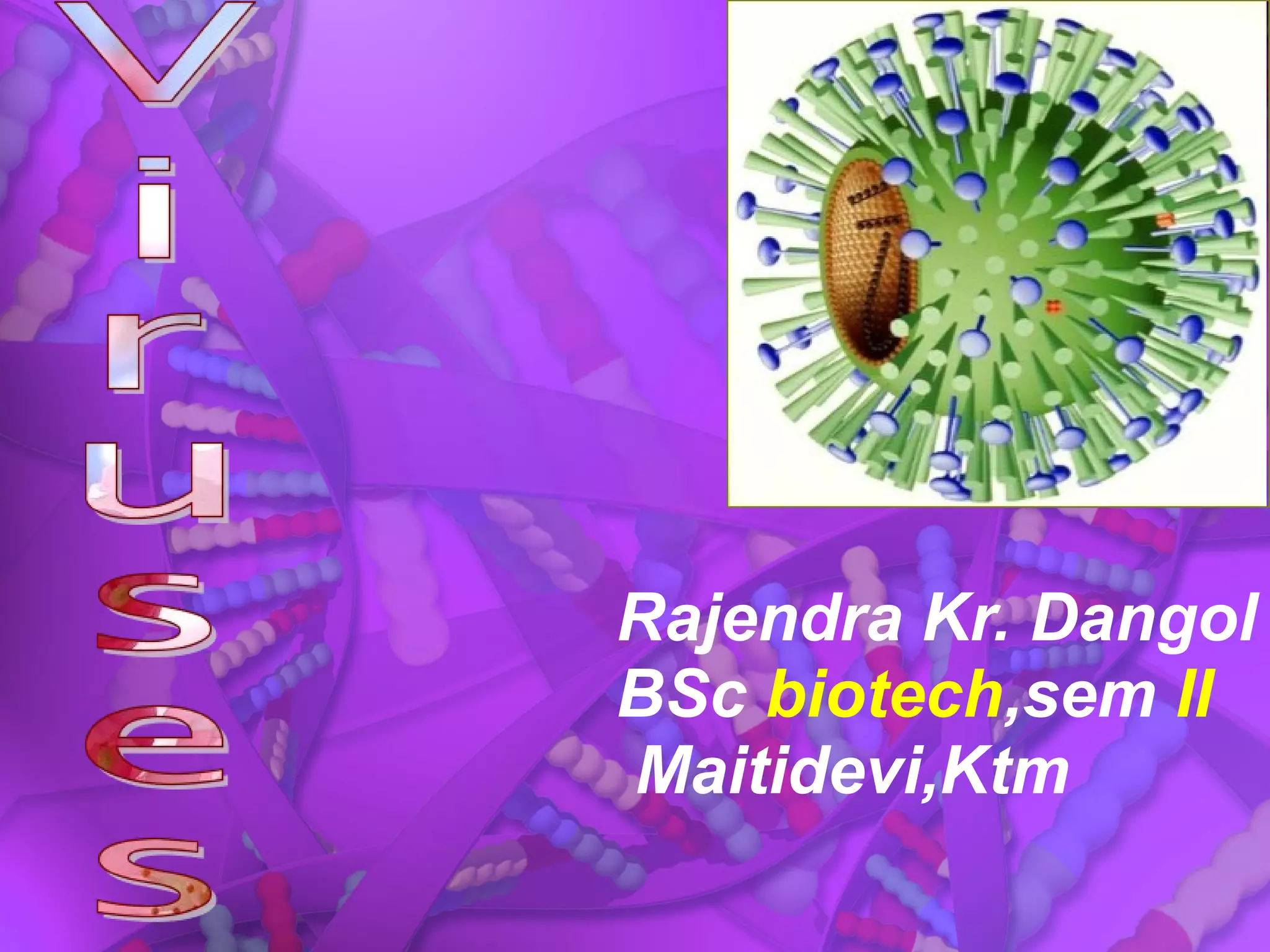

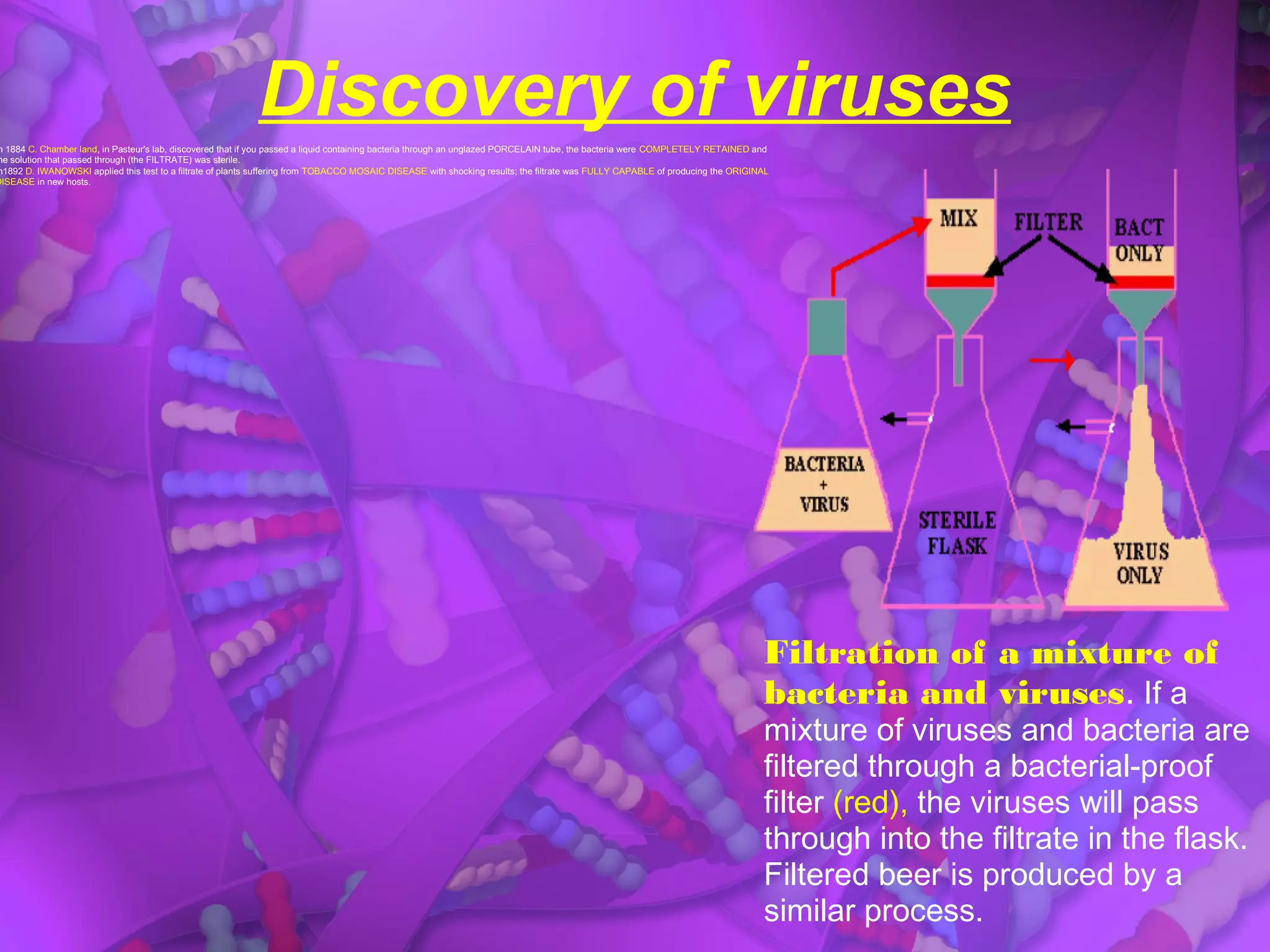



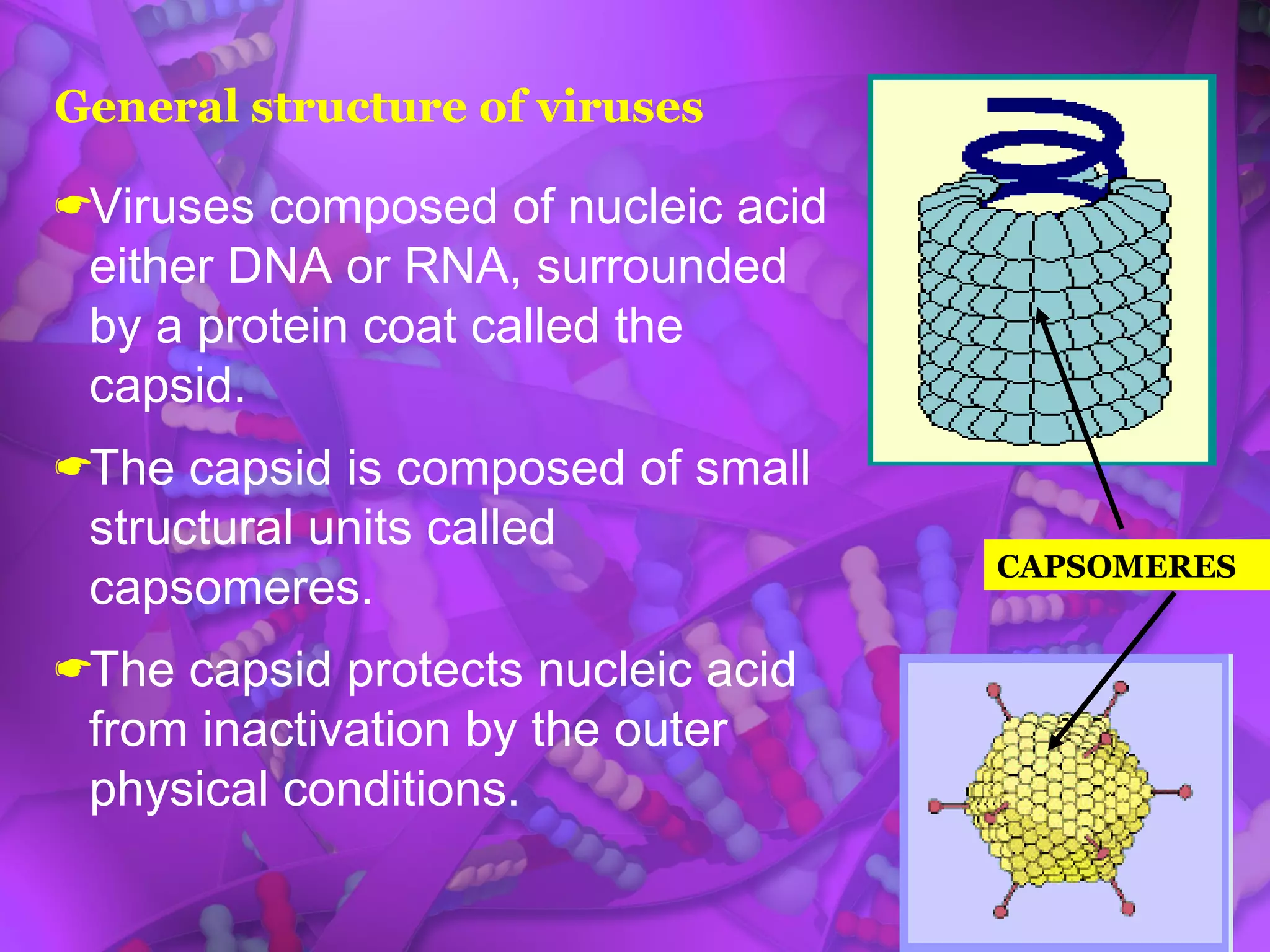

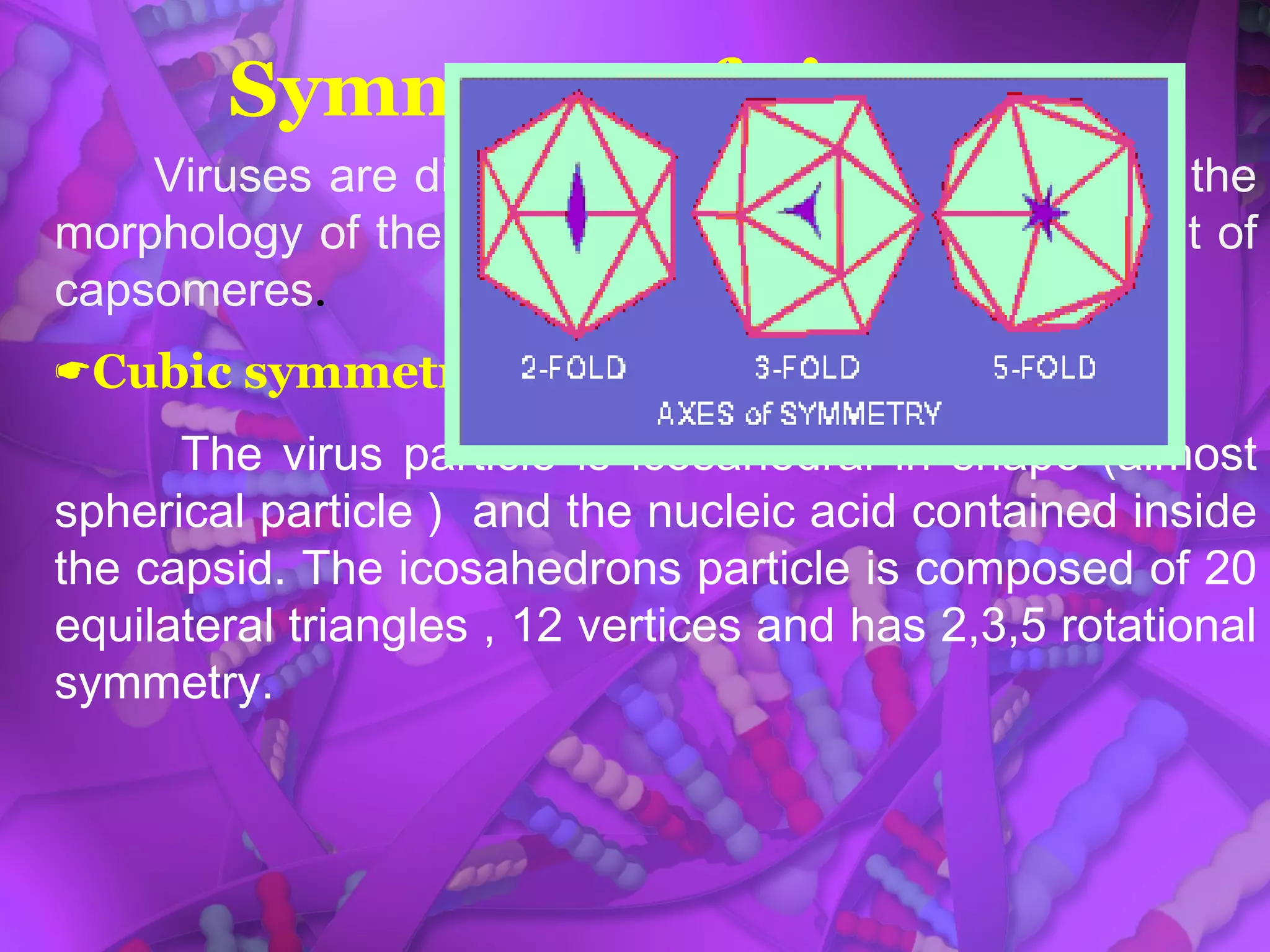


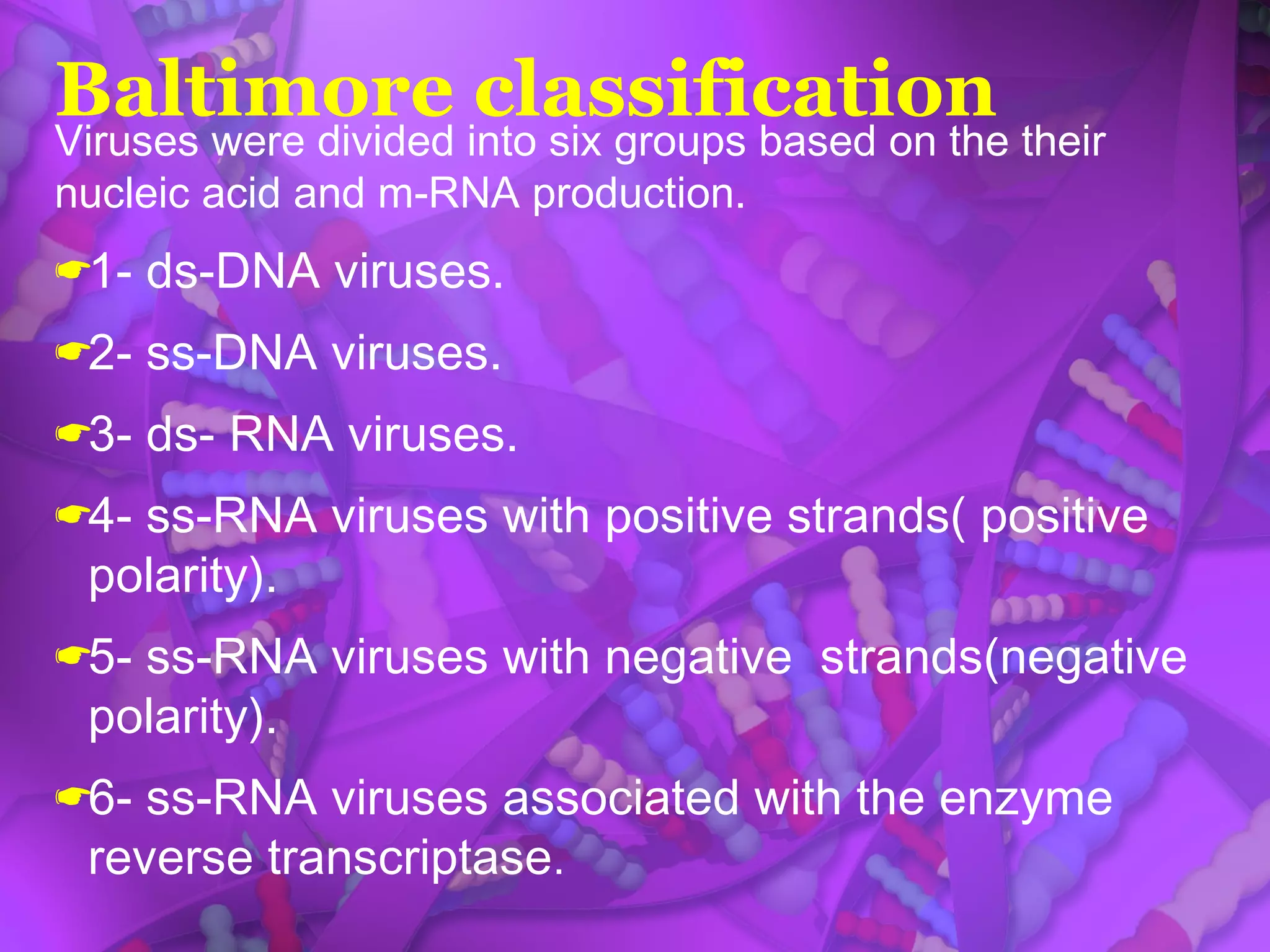

This document defines viruses and summarizes their key characteristics and classification. It describes how viruses were first discovered through experiments filtering bacteria and plant extracts. Viruses are non-cellular particles that contain genetic material and invade living cells. They are smaller than bacteria, contain either DNA or RNA, and lack organelles. Viruses replicate only inside host cells and do not undergo binary fission. They have various structures depending on their nucleic acid arrangement and symmetry. Viruses are classified into groups based on their nucleic acids and ability to produce mRNA.


![1. introduction to_virology[1]](https://cdn.slidesharecdn.com/ss_thumbnails/1-210814125616-thumbnail.jpg?width=640&height=640&fit=bounds)


