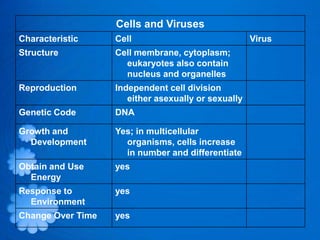
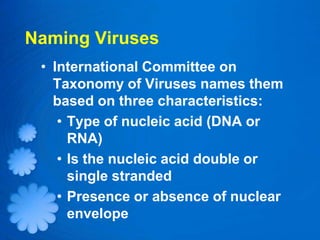
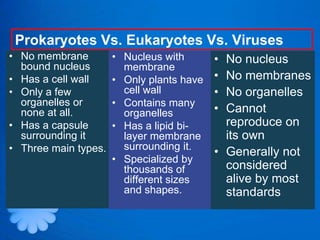
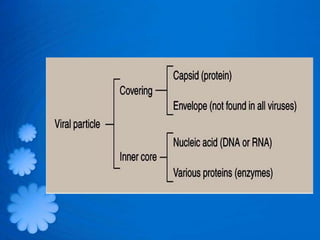
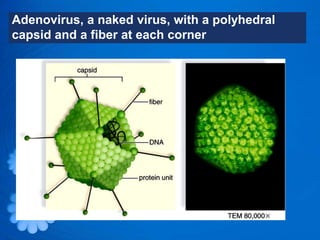
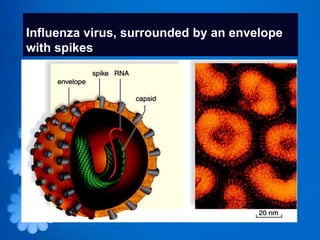
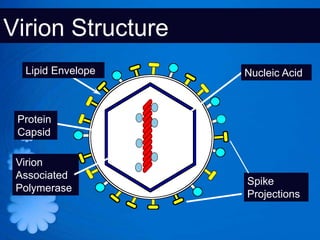
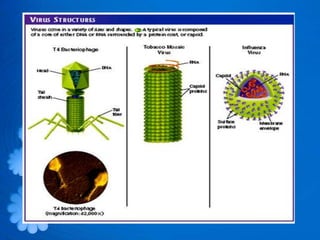
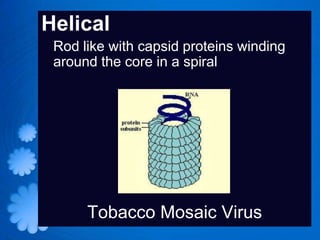
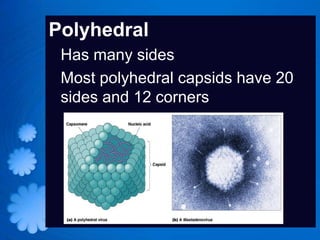
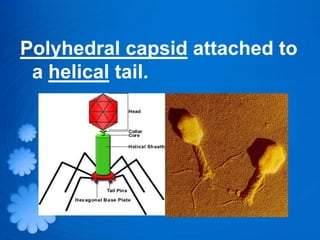
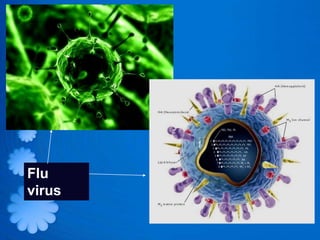
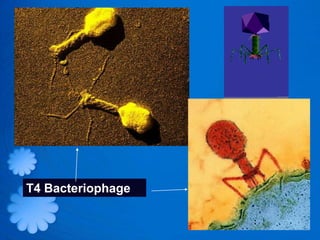
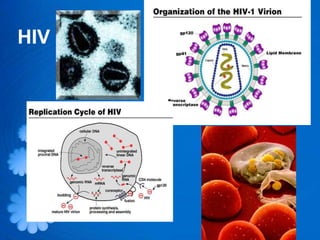
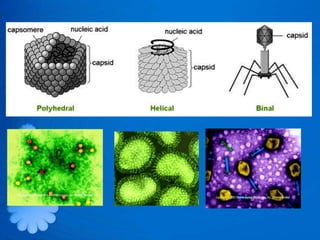
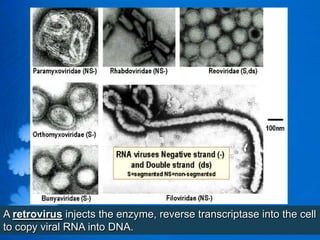
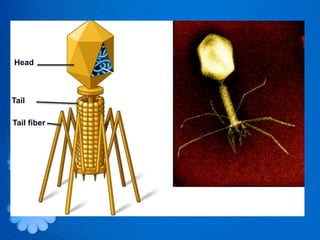
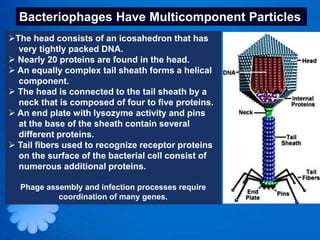
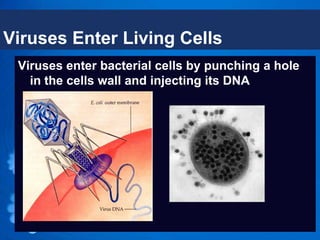
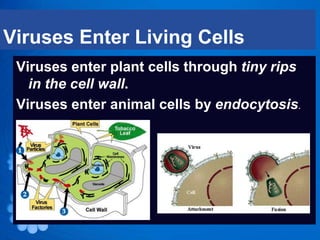
Viruses exist at the boundary between living and non-living things. They consist of nucleic acids and proteins but cannot reproduce outside of a host cell. Viruses come in different shapes and sizes and have unique structures suited to their method of infection. They hijack the machinery of living cells to reproduce either through lytic or lysogenic cycles, ultimately resulting in the destruction of the host cell. While viruses rely on host cells, they are not considered alive as they do not have their own metabolism or respond to their environment.