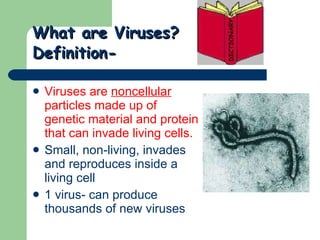
Viruses are non-living particles that can only reproduce inside host cells. They are much smaller than bacteria and come in various shapes. Viruses cause diseases like smallpox, influenza, and AIDS. They enter cells and use the cell's machinery to replicate themselves before destroying the cell. While viruses cannot live outside of a host, they have developed ways to spread between hosts, such as through respiratory droplets or animal vectors. The best ways to prevent viral spread are vaccination, good hygiene like handwashing, and avoiding contact with infected bodily fluids.