CHARACTERISTICS OF VIRUSES
Are Viruses Living or Non-living?Biologists consider viruses to be non-living because:Are not cellsDo not grow or respond to their surroundingsCannot make food, take in food, or produce wastesViruses do not respond to stimuli.They can only multiply if in another living cell
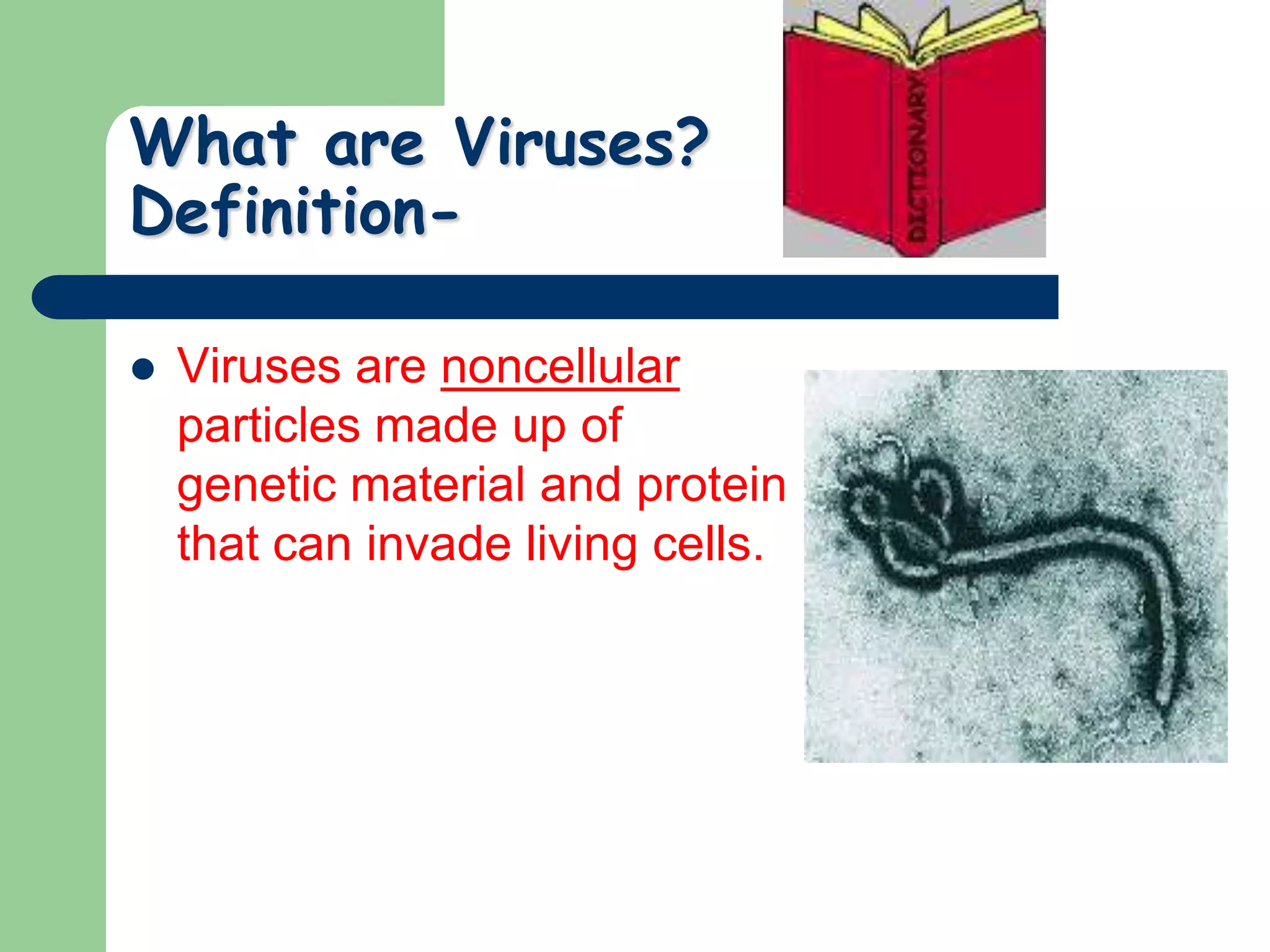
What are Viruses?Definition-Viruses are noncellular particles made up of genetic material and protein that can invade living cells.
4Discovery of VirusesBeijerinck (1897) coined the Latin name “virus” meaning poison
5Tobacco Mosaic VirusWendell Stanley (1935) discovered viruses were made of nucleic acid and protein
6SmallpoxEdward Jenner (1796) developed a smallpox vaccine using milder cowpox virusesSmallpox has been eradicated in the world today
How Big is a Virus?Viruses are very small – smaller than the smallest cell.
8CharacteristicsNon living structuresNon-cellularContain a protein coat called the capsidHave a nucleic acid core containing DNA or RNA (one or the other - not both)Capable of reproducing only when inside a HOST cell
9CharacteristicsCAPSIDSome viruses are enclosed in an protective envelopeSome viruses may have spikes to help attach to the host cellMost viruses infect only SPECIFIC host cellsDNAENVELOPESPIKES
10EBOLA VIRUSHIV VIRUSOutside of host cells, viruses are inactiveViruses cause many common illnesses/ diseases Some viruses may cause some cancers like leukemiaCharacteristicsMEASLES
11CharacteristicsViruses cause many common illnesses diseases             Some viruses may cause some cancers like leukemiaMEASLES
What do Viruses look like?Viruses are unusual and different from other things in nature.Viruses come in a variety of shapesSome may be helical shape like the Ebola virusSome may be polyhedral shapes like the influenza virusOthers have more complex shapes like bacteriophages
13Types of Viruses:     Helical Viruses
14Polyhedral Viruses
15Complex Viruses
16Viral TaxonomyFamily names end in -viridaeGenus names end in -virus Viral species: A group of viruses sharing the same genetic information and ecological niche (host). Common names are used for speciesSubspecies are designated by a number
17Used for Virus IdentificationMorophologyRNA or DNA VirusDo or do NOT have an envelopeCapsid shapeHOST they infect
18Herpes Virus     SIMPLEX I and II
19Adenovirus   COMMON COLD
20Influenza Virus
21Chickenpox Virus
22Papillomavirus – Warts!
HOST SPECIFICITYAll kingdoms can be infected by virusesViruses are kingdom specific but they may or may not be species specificSpread is specific to the type of virus
PARASITISMViruses are parasites.A parasite is an organism that depends upon another living organism for its existence in such a way that it harms that organism.
25Bacteriophages
26CylcesLysogenic CycleViral DNAMay stay inactive in host for long periods of timeLong lasting Example Mono or chickenpoxLyticCylceShort and can be over come Example flu virus
Vaccine Is a weaken form of the virus To expose your immune system to the virus which will allow your body to better fight off the virus when exposed to the full blow virus.
Vector ControlThis is controlling the vectors that are carrying the virus. Examples:We stay home when sick, cover our mouth when we cough etc. We control the mosquito population in order to control the West Nile virus
29Other DrugTreatmentsSpecific to certain viruses. They don’t cure the virus but they can slow down and inhibit the multiplication of the virus. copyright cmassengale
Reducing the RiskThey can’t be treated but they can be prevented! Cover mouth/nose when you sneeze of coughWash hands frequentlyAvoid contact with the body fluidsNot foolproof but reduces the risks

virus powerpoint

  • 1.
  • 2.
    Are Viruses Livingor Non-living?Biologists consider viruses to be non-living because:Are not cellsDo not grow or respond to their surroundingsCannot make food, take in food, or produce wastesViruses do not respond to stimuli.They can only multiply if in another living cell
  • 3.
    What are Viruses?Definition-Virusesare noncellular particles made up of genetic material and protein that can invade living cells.
  • 4.
    4Discovery of VirusesBeijerinck(1897) coined the Latin name “virus” meaning poison
  • 5.
    5Tobacco Mosaic VirusWendellStanley (1935) discovered viruses were made of nucleic acid and protein
  • 6.
    6SmallpoxEdward Jenner (1796)developed a smallpox vaccine using milder cowpox virusesSmallpox has been eradicated in the world today
  • 7.
    How Big isa Virus?Viruses are very small – smaller than the smallest cell.
  • 8.
    8CharacteristicsNon living structuresNon-cellularContaina protein coat called the capsidHave a nucleic acid core containing DNA or RNA (one or the other - not both)Capable of reproducing only when inside a HOST cell
  • 9.
    9CharacteristicsCAPSIDSome viruses areenclosed in an protective envelopeSome viruses may have spikes to help attach to the host cellMost viruses infect only SPECIFIC host cellsDNAENVELOPESPIKES
  • 10.
    10EBOLA VIRUSHIV VIRUSOutsideof host cells, viruses are inactiveViruses cause many common illnesses/ diseases Some viruses may cause some cancers like leukemiaCharacteristicsMEASLES
  • 11.
    11CharacteristicsViruses cause manycommon illnesses diseases Some viruses may cause some cancers like leukemiaMEASLES
  • 12.
    What do Viruseslook like?Viruses are unusual and different from other things in nature.Viruses come in a variety of shapesSome may be helical shape like the Ebola virusSome may be polyhedral shapes like the influenza virusOthers have more complex shapes like bacteriophages
  • 13.
    13Types of Viruses: Helical Viruses
  • 14.
  • 15.
  • 16.
    16Viral TaxonomyFamily namesend in -viridaeGenus names end in -virus Viral species: A group of viruses sharing the same genetic information and ecological niche (host). Common names are used for speciesSubspecies are designated by a number
  • 17.
    17Used for VirusIdentificationMorophologyRNA or DNA VirusDo or do NOT have an envelopeCapsid shapeHOST they infect
  • 18.
    18Herpes Virus SIMPLEX I and II
  • 19.
    19Adenovirus COMMON COLD
  • 20.
  • 21.
  • 22.
  • 23.
    HOST SPECIFICITYAll kingdomscan be infected by virusesViruses are kingdom specific but they may or may not be species specificSpread is specific to the type of virus
  • 24.
    PARASITISMViruses are parasites.Aparasite is an organism that depends upon another living organism for its existence in such a way that it harms that organism.
  • 25.
  • 26.
    26CylcesLysogenic CycleViral DNAMaystay inactive in host for long periods of timeLong lasting Example Mono or chickenpoxLyticCylceShort and can be over come Example flu virus
  • 27.
    Vaccine Is aweaken form of the virus To expose your immune system to the virus which will allow your body to better fight off the virus when exposed to the full blow virus.
  • 28.
    Vector ControlThis iscontrolling the vectors that are carrying the virus. Examples:We stay home when sick, cover our mouth when we cough etc. We control the mosquito population in order to control the West Nile virus
  • 29.
    29Other DrugTreatmentsSpecific tocertain viruses. They don’t cure the virus but they can slow down and inhibit the multiplication of the virus. copyright cmassengale
  • 30.
    Reducing the RiskTheycan’t be treated but they can be prevented! Cover mouth/nose when you sneeze of coughWash hands frequentlyAvoid contact with the body fluidsNot foolproof but reduces the risks