
Types of 
Evaluation
Evaluation – is classified 
according to the period in which 
it is conducted and whether or 
not the score of one student will 
affect the grade of other 
students.
A.) As to the period the evaluation 
is conducted in, there are three 
types: 
1.) Formative Evaluation 
2.) Summative Evaluation 
3.) Diagnostic Evaluation
B.) As to whether or not the score 
of one student will affect the grade 
of another student, there are two 
types: 
1.) Criterion-Referenced Test 
2.) Norm-Referenced Evaluation
C.) Other Type of Evaluation 
Placement Evaluation – this defines 
student entry behavior. It determines 
knowledge and skills possessed, which 
are necessary at the beginning of 
instruction. It is used to place students 
in a section or group.
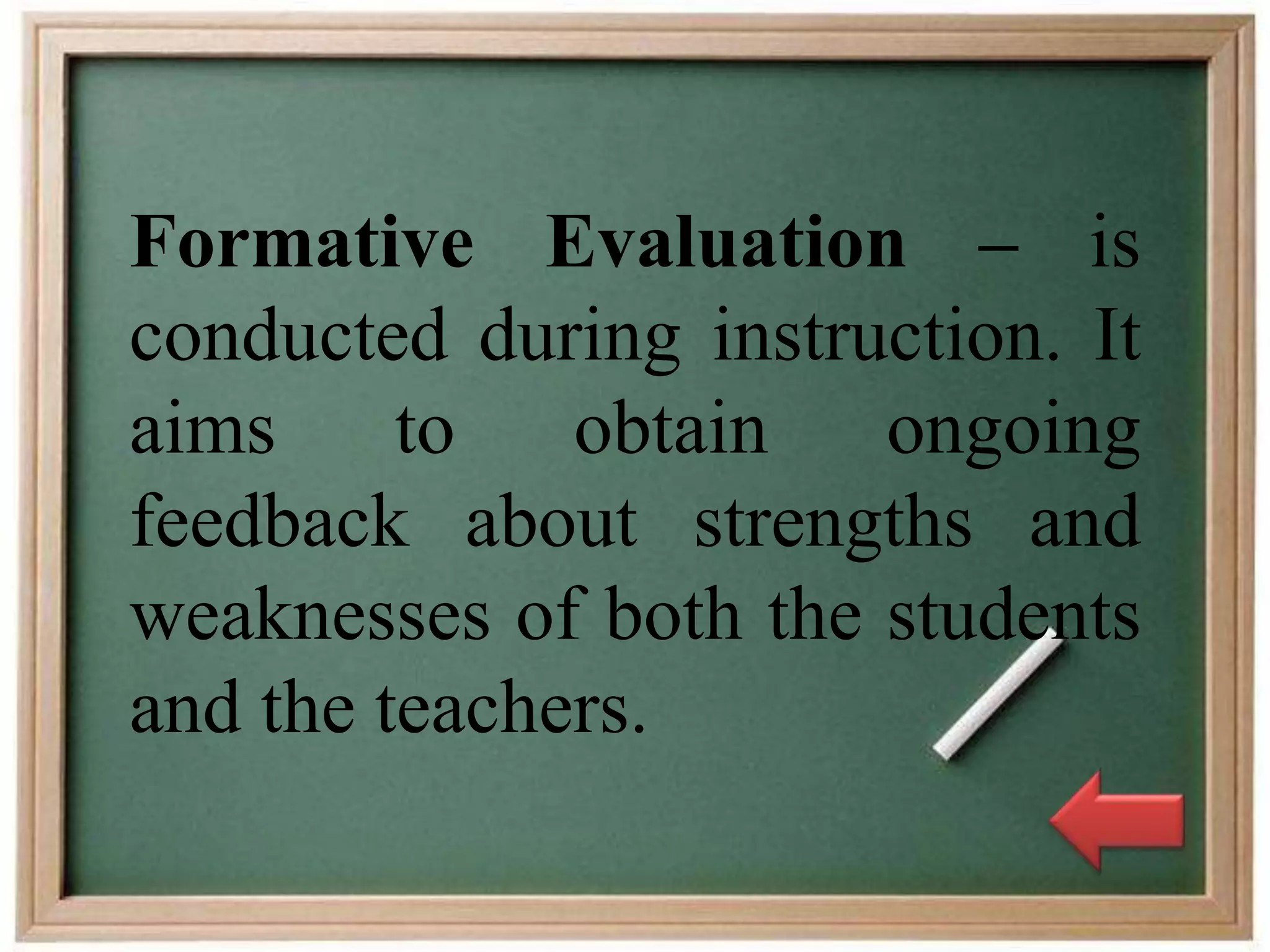
Formative Evaluation – is 
conducted during instruction. It 
aims to obtain ongoing 
feedback about strengths and 
weaknesses of both the students 
and the teachers.
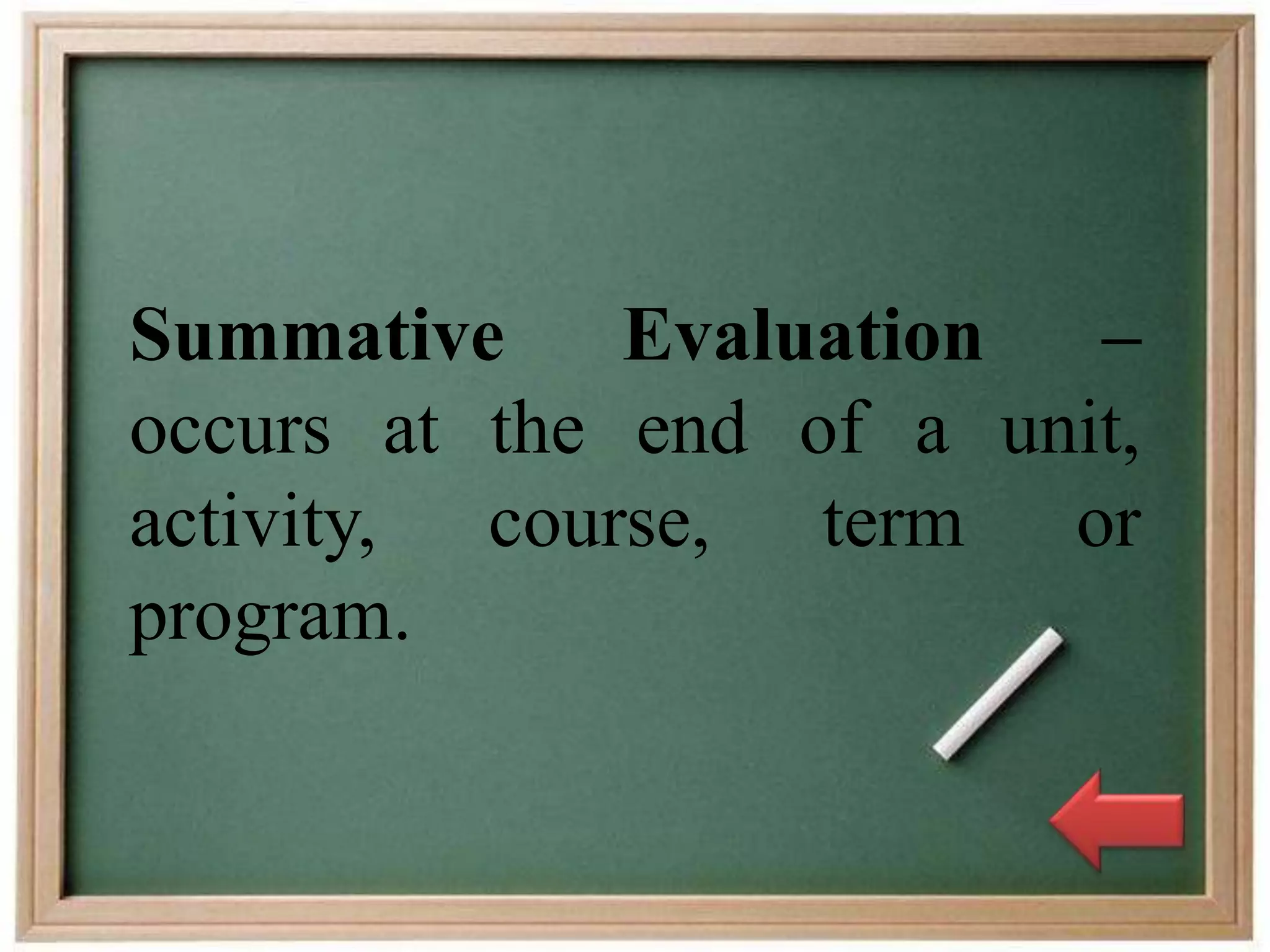
Summative Evaluation – 
occurs at the end of a unit, 
activity, course, term or 
program.
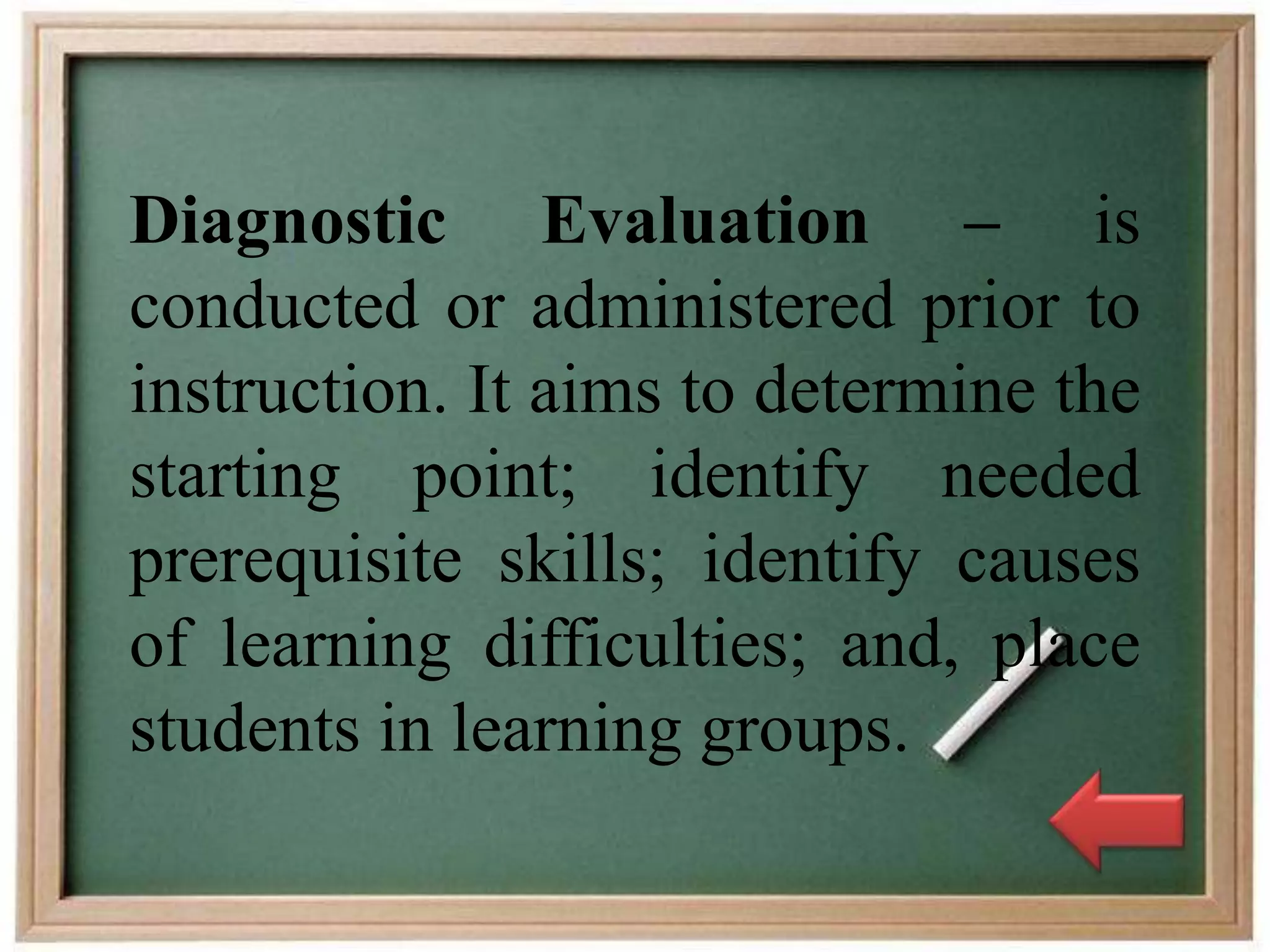
Diagnostic Evaluation – is 
conducted or administered prior to 
instruction. It aims to determine the 
starting point; identify needed 
prerequisite skills; identify causes 
of learning difficulties; and, place 
students in learning groups.
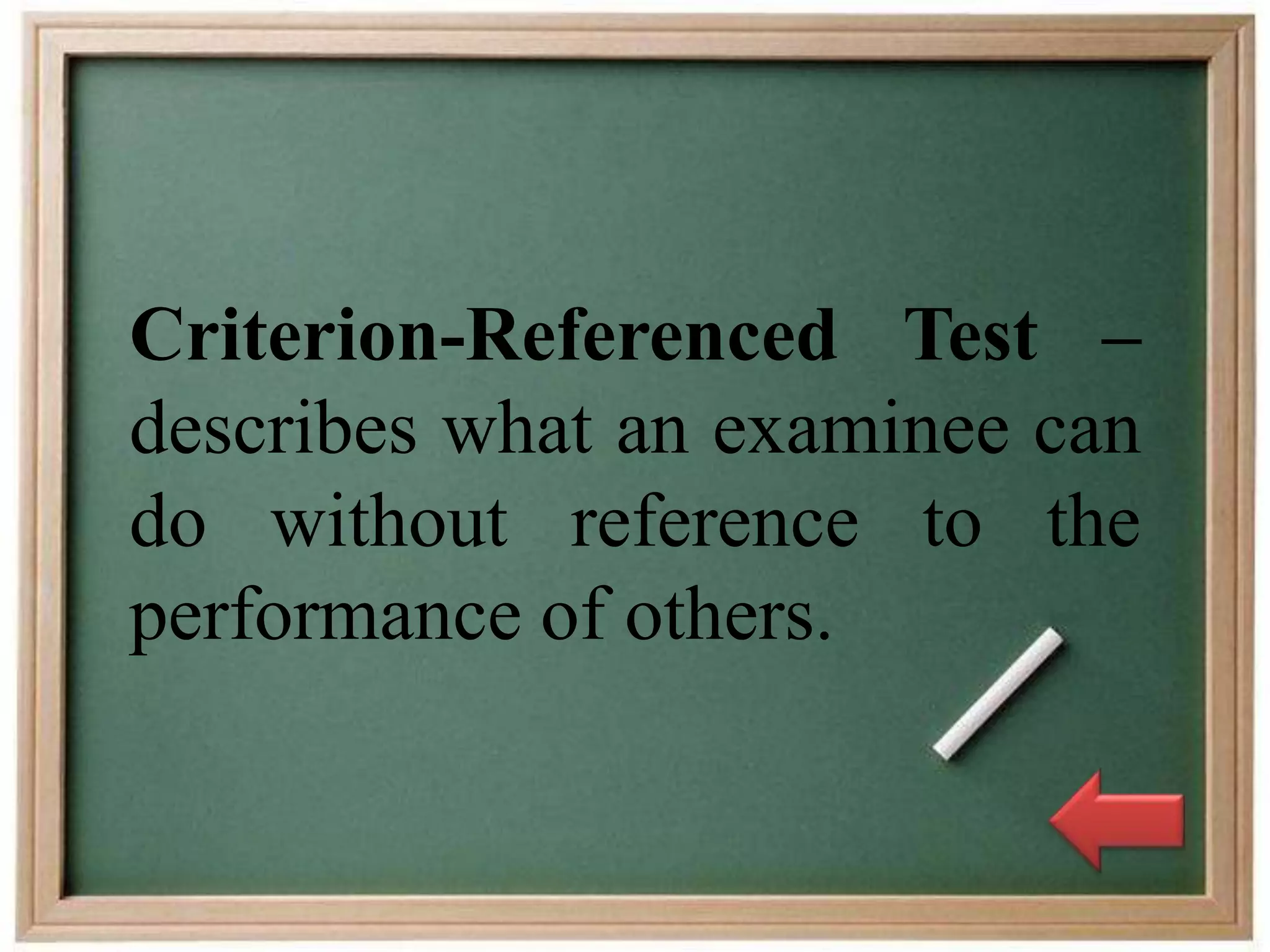
Criterion-Referenced Test – 
describes what an examinee can 
do without reference to the 
performance of others.
Norm-Referenced Evaluation 
– is a measure to find out how 
well a student performs on a 
defined set of tasks in relation 
with the performance of other 
students who take the same test.

Types of Evaluation

  • 1.
  • 2.
    Evaluation – isclassified according to the period in which it is conducted and whether or not the score of one student will affect the grade of other students.
  • 3.
    A.) As tothe period the evaluation is conducted in, there are three types: 1.) Formative Evaluation 2.) Summative Evaluation 3.) Diagnostic Evaluation
  • 4.
    B.) As towhether or not the score of one student will affect the grade of another student, there are two types: 1.) Criterion-Referenced Test 2.) Norm-Referenced Evaluation
  • 5.
    C.) Other Typeof Evaluation Placement Evaluation – this defines student entry behavior. It determines knowledge and skills possessed, which are necessary at the beginning of instruction. It is used to place students in a section or group.
  • 6.
    Formative Evaluation –is conducted during instruction. It aims to obtain ongoing feedback about strengths and weaknesses of both the students and the teachers.
  • 7.
    Summative Evaluation – occurs at the end of a unit, activity, course, term or program.
  • 8.
    Diagnostic Evaluation –is conducted or administered prior to instruction. It aims to determine the starting point; identify needed prerequisite skills; identify causes of learning difficulties; and, place students in learning groups.
  • 9.
    Criterion-Referenced Test – describes what an examinee can do without reference to the performance of others.
  • 10.
    Norm-Referenced Evaluation –is a measure to find out how well a student performs on a defined set of tasks in relation with the performance of other students who take the same test.