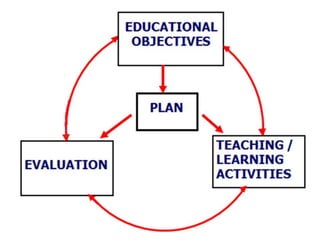
Educational Objectives
Dr. Devender
Objectives of this session
• To define educational objectives
• To different types of educational objectives
• To identify important sources
• Should be able to make examples for their
institutions and departments
What is education?
Knowledge & Skills
Expected change in learners
– Psychomotor, Affective
After a particular course/time
Educational objectives
• Are statements which explain
– What students should be able to do (Do able)
– at the end of learning period (Time bound)
– that they could not do beforehand (Measurable)
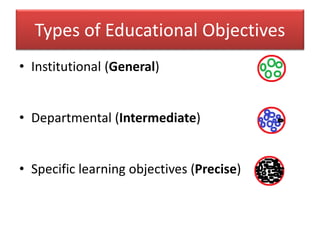
Types of Educational Objectives
• Institutional (General)
• Departmental (Intermediate)
• Specific learning objectives (Precise)
Institutional (General)
• Broad
• General statements for outcome or provides
general directions
• Supportive role
Departmental (Intermediate)
• Discipline based / Competency based
• Teaching-Learning activities for different
departments
• Part of whole Institute
• Interact / Integrate (Horizontal or Vertical)
Specific Learning Objectives (Precise)
• Specific activity in Cognitive, Psychomotor,
and Affective domain
• Topic / Student centered
Example
• Control of Hypertension
• Pathogenesis & Diagnosis of Hypertension
• Blood pressure measurement & effects of
high BP on different organs
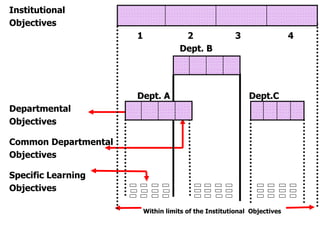
Institutional
Objectives
1 2 3 4
Dept. B
Dept. A Dept.C
Departmental
Objectives
Common Departmental
Objectives
Specific Learning
Objectives
Within limits of the Institutional Objectives
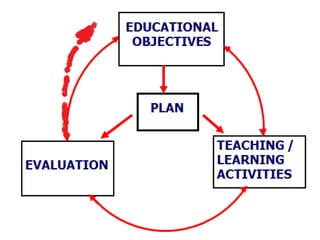
Spiral
• Review & Make changes in the educational
objectives
Sources
• Present information & Recent advances in Bio
medical sciences
– Journals, Internet, Books, CME etc
• Health needs of society
• National polices
• Special needs
– Medico legal aspects
Qualities of educational objectives
• Feasible
• Observable
• Relevant
• Measurable
• Unequivocal
• Logical
• Acquirable
Make your Objectives SMART…
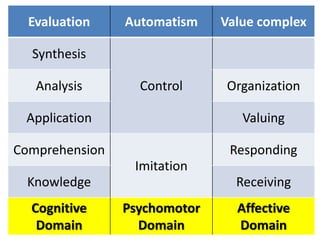
Evaluation Automatism Value complex
Synthesis
ControlAnalysis Organization
Application Valuing
Comprehension
Imitation
Responding
Knowledge Receiving
Cognitive
Domain
Psychomotor
Domain
Affective
Domain
Educational objectives Uses
• Frame curriculum
• Design teaching learning
programs
• Decides evaluation
Institution
Departments
sections
A B C D for educational objectives
At the end of 5&half year course of MBBS, students will
be able to understand, diagnose and treat common
diseases in society.
• A (Audience or learner) = Students
• B (Behavior change) = understand, diagnose, treat
• C (Condition) = course duration
• D (Degree) = Qualification / MBBS
Unsuccessful……if not done properly
• Anemia control
• Family planning
Directions with no concrete outcome
Discourage Creativity
Impossible or not applicable
MEDICAL COUNCIL OF INDIA
REGULATIONS ON
GRADUATE MEDICAL EDUCATION,
1997 (under revision 2012)
Summary
• Relevant educational objectives
– Priority based, National polices
• Attainment of excellence in knowledge, skills,
attitude
• Success depends on clarity and proficiency
Make few examples
• Institutional
• Departmental
• SLO (will be taken in next session….)

Educational objectives

  • 1.
  • 2.
    Objectives of thissession • To define educational objectives • To different types of educational objectives • To identify important sources • Should be able to make examples for their institutions and departments
  • 3.
    What is education? Knowledge& Skills Expected change in learners – Psychomotor, Affective After a particular course/time
  • 4.
    Educational objectives • Arestatements which explain – What students should be able to do (Do able) – at the end of learning period (Time bound) – that they could not do beforehand (Measurable)
  • 5.
    Types of EducationalObjectives • Institutional (General) • Departmental (Intermediate) • Specific learning objectives (Precise)
  • 6.
    Institutional (General) • Broad •General statements for outcome or provides general directions • Supportive role
  • 7.
    Departmental (Intermediate) • Disciplinebased / Competency based • Teaching-Learning activities for different departments • Part of whole Institute • Interact / Integrate (Horizontal or Vertical)
  • 8.
    Specific Learning Objectives(Precise) • Specific activity in Cognitive, Psychomotor, and Affective domain • Topic / Student centered
  • 9.
    Example • Control ofHypertension • Pathogenesis & Diagnosis of Hypertension • Blood pressure measurement & effects of high BP on different organs
  • 10.
    Institutional Objectives 1 2 34 Dept. B Dept. A Dept.C Departmental Objectives Common Departmental Objectives Specific Learning Objectives Within limits of the Institutional Objectives
  • 13.
    Spiral • Review &Make changes in the educational objectives
  • 14.
    Sources • Present information& Recent advances in Bio medical sciences – Journals, Internet, Books, CME etc • Health needs of society • National polices • Special needs – Medico legal aspects
  • 15.
    Qualities of educationalobjectives • Feasible • Observable • Relevant • Measurable • Unequivocal • Logical • Acquirable
  • 16.
  • 17.
    Evaluation Automatism Valuecomplex Synthesis ControlAnalysis Organization Application Valuing Comprehension Imitation Responding Knowledge Receiving Cognitive Domain Psychomotor Domain Affective Domain
  • 18.
    Educational objectives Uses •Frame curriculum • Design teaching learning programs • Decides evaluation Institution Departments sections
  • 19.
    A B CD for educational objectives At the end of 5&half year course of MBBS, students will be able to understand, diagnose and treat common diseases in society. • A (Audience or learner) = Students • B (Behavior change) = understand, diagnose, treat • C (Condition) = course duration • D (Degree) = Qualification / MBBS
  • 20.
    Unsuccessful……if not doneproperly • Anemia control • Family planning Directions with no concrete outcome Discourage Creativity Impossible or not applicable
  • 21.
    MEDICAL COUNCIL OFINDIA REGULATIONS ON GRADUATE MEDICAL EDUCATION, 1997 (under revision 2012)
  • 22.
    Summary • Relevant educationalobjectives – Priority based, National polices • Attainment of excellence in knowledge, skills, attitude • Success depends on clarity and proficiency
  • 23.
    Make few examples •Institutional • Departmental • SLO (will be taken in next session….)