MARITES A. BALOT
Faculty, Philippine Normal University-North Luzon
PRINCIPLES OF
GUIDANCE
1. Guidance is a
continuous process.
2. Guidance activities are
specifically planned and
developed to ensure
program effectiveness.
3. Guidance should not
be limited to few.
4. Guidance is
fundamentally the
responsibility of the
parents in the home and
of teachers in school.
5. Guidance is
education but not all
education is guidance.
6. Guidance is a
learning process.
7. Guidance is helping
the client understand
himself.
8. Guidance is based on
the true concept of the
client.
9. The guidance program
should be flexible in
terms of individual and
community needs or else
it will lose its value.
10. The function of
guidance is to help a
person formulate goals
of behavior which can
be achieved.
11. The responsibility
for the administration of
the guidance program
should be centered on a
qualified, trained head.
12. Continuous or
periodic appraisals
should be made.
13. Guidance is based
upon individual needs
i.e. freedom, respect,
dignity.
14. Each individual is different from
every other individual. Each
individual is the combination of
characteristics which provides
uniqueness to each person. Similarly
human beings have an immense
potential. The dignity of the individual
is supreme.
GUIDANCE IS PREMISED ON THE FOLLOWING:
1. Every individual has needs that must be
attended to.
2. Guidance should be extended to all.
3. Every individual is unique and possesses
worth and dignity.
4. Human beings can develop their own
insights.
5. All individuals have the right and capability
to make decisions and plans.
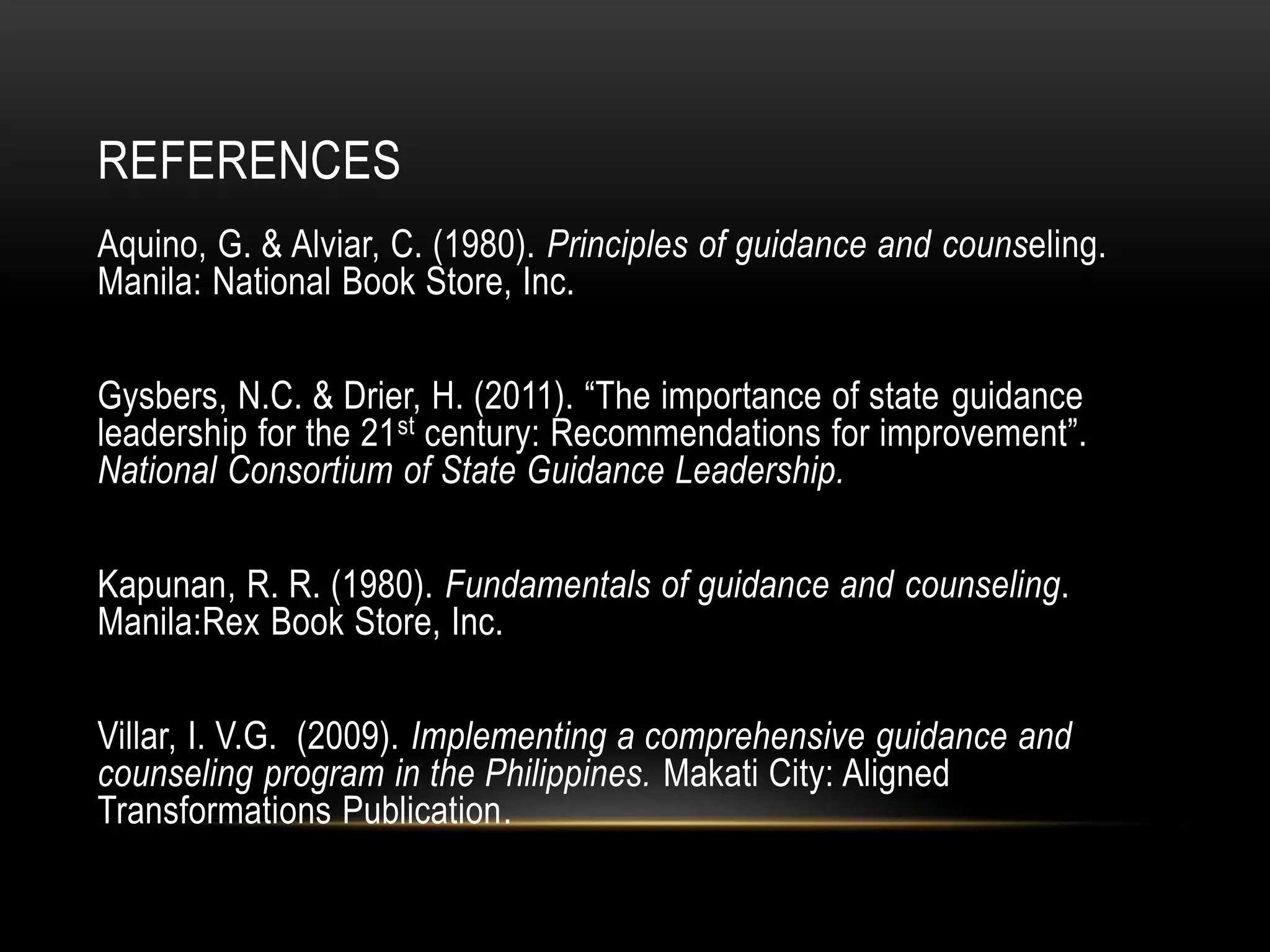
REFERENCES
Aquino, G. & Alviar, C. (1980). Principles of guidance and counseling.
Manila: National Book Store, Inc.
Gysbers, N.C. & Drier, H. (2011). “The importance of state guidance
leadership for the 21st century: Recommendations for improvement”.
National Consortium of State Guidance Leadership.
Kapunan, R. R. (1980). Fundamentals of guidance and counseling.
Manila:Rex Book Store, Inc.
Villar, I. V.G. (2009). Implementing a comprehensive guidance and
counseling program in the Philippines. Makati City: Aligned
Transformations Publication.

Principles of guidance

  • 1.
    MARITES A. BALOT Faculty,Philippine Normal University-North Luzon PRINCIPLES OF GUIDANCE
  • 2.
    1. Guidance isa continuous process.
  • 3.
    2. Guidance activitiesare specifically planned and developed to ensure program effectiveness.
  • 4.
    3. Guidance shouldnot be limited to few.
  • 5.
    4. Guidance is fundamentallythe responsibility of the parents in the home and of teachers in school.
  • 6.
    5. Guidance is educationbut not all education is guidance.
  • 7.
    6. Guidance isa learning process.
  • 8.
    7. Guidance ishelping the client understand himself.
  • 9.
    8. Guidance isbased on the true concept of the client.
  • 10.
    9. The guidanceprogram should be flexible in terms of individual and community needs or else it will lose its value.
  • 11.
    10. The functionof guidance is to help a person formulate goals of behavior which can be achieved.
  • 12.
    11. The responsibility forthe administration of the guidance program should be centered on a qualified, trained head.
  • 13.
    12. Continuous or periodicappraisals should be made.
  • 14.
    13. Guidance isbased upon individual needs i.e. freedom, respect, dignity.
  • 15.
    14. Each individualis different from every other individual. Each individual is the combination of characteristics which provides uniqueness to each person. Similarly human beings have an immense potential. The dignity of the individual is supreme.
  • 16.
    GUIDANCE IS PREMISEDON THE FOLLOWING: 1. Every individual has needs that must be attended to. 2. Guidance should be extended to all. 3. Every individual is unique and possesses worth and dignity. 4. Human beings can develop their own insights. 5. All individuals have the right and capability to make decisions and plans.
  • 17.
    REFERENCES Aquino, G. &Alviar, C. (1980). Principles of guidance and counseling. Manila: National Book Store, Inc. Gysbers, N.C. & Drier, H. (2011). “The importance of state guidance leadership for the 21st century: Recommendations for improvement”. National Consortium of State Guidance Leadership. Kapunan, R. R. (1980). Fundamentals of guidance and counseling. Manila:Rex Book Store, Inc. Villar, I. V.G. (2009). Implementing a comprehensive guidance and counseling program in the Philippines. Makati City: Aligned Transformations Publication.