INDEX
1. Interaction and coordination in human beings
2. Nervous tissues and neurons
3. Receptors
4. Nervous system
5. Diseases related to the nervous system
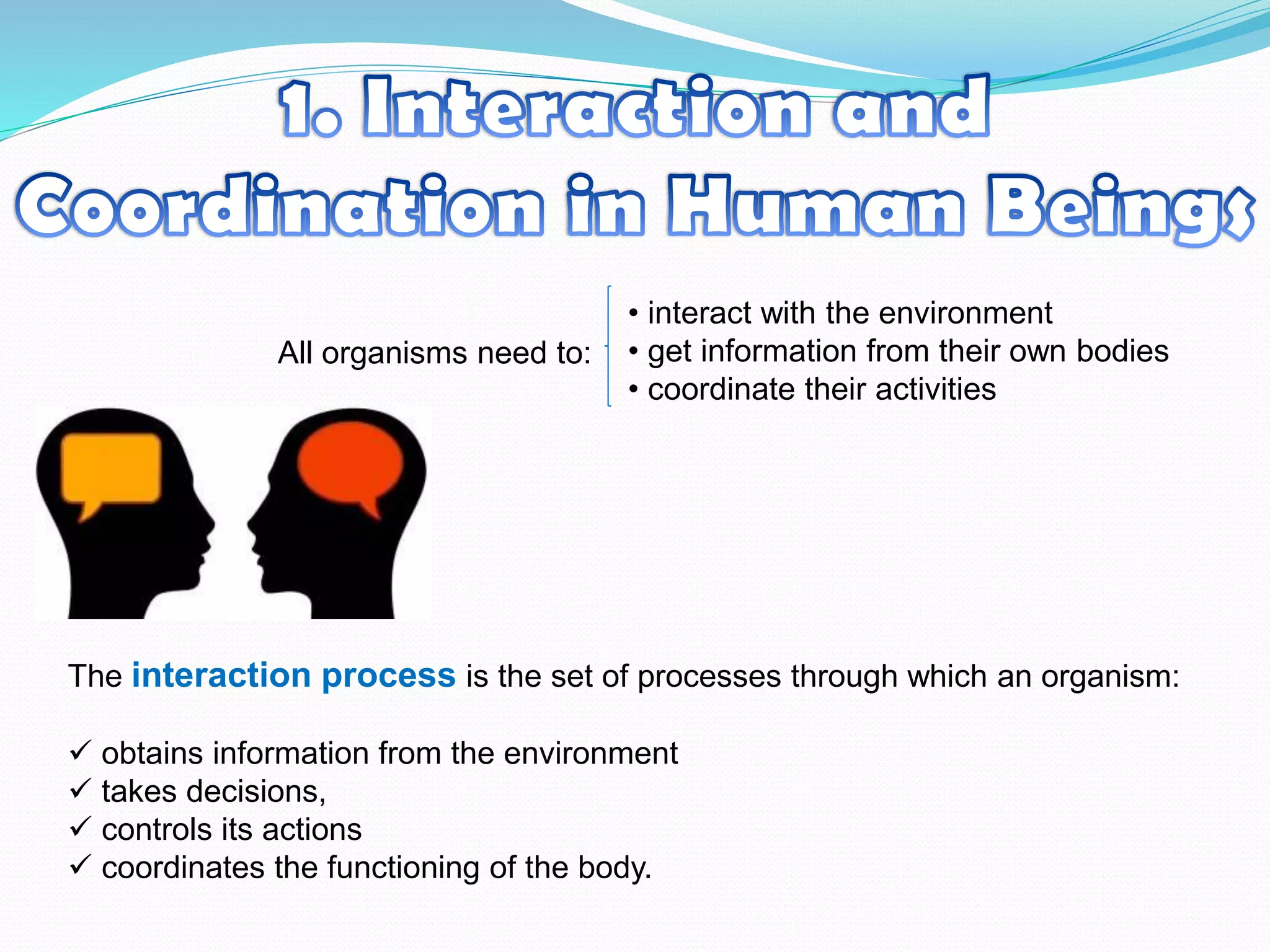
All organisms need to:
• interact with the environment
• get information from their own bodies
• coordinate their activities
The interaction process is the set of processes through which an organism:
 obtains information from the environment
 takes decisions,
 controls its actions
 coordinates the functioning of the body.
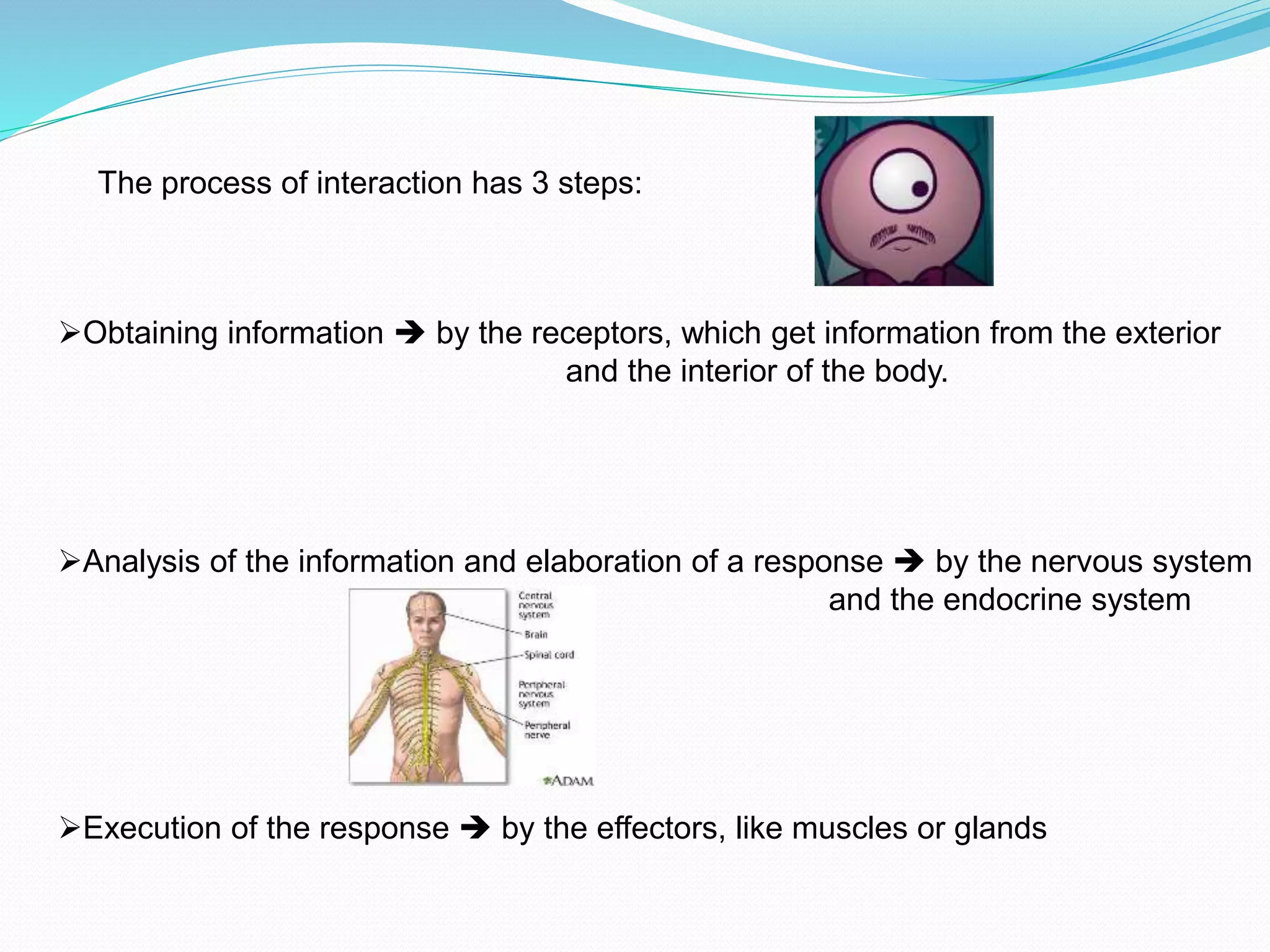
The process of interaction has 3 steps:
Obtaining information  by the receptors, which get information from the exterior
and the interior of the body.
Analysis of the information and elaboration of a response  by the nervous system
and the endocrine system
Execution of the response  by the effectors, like muscles or glands
Systems involved in interaction and co-ordination
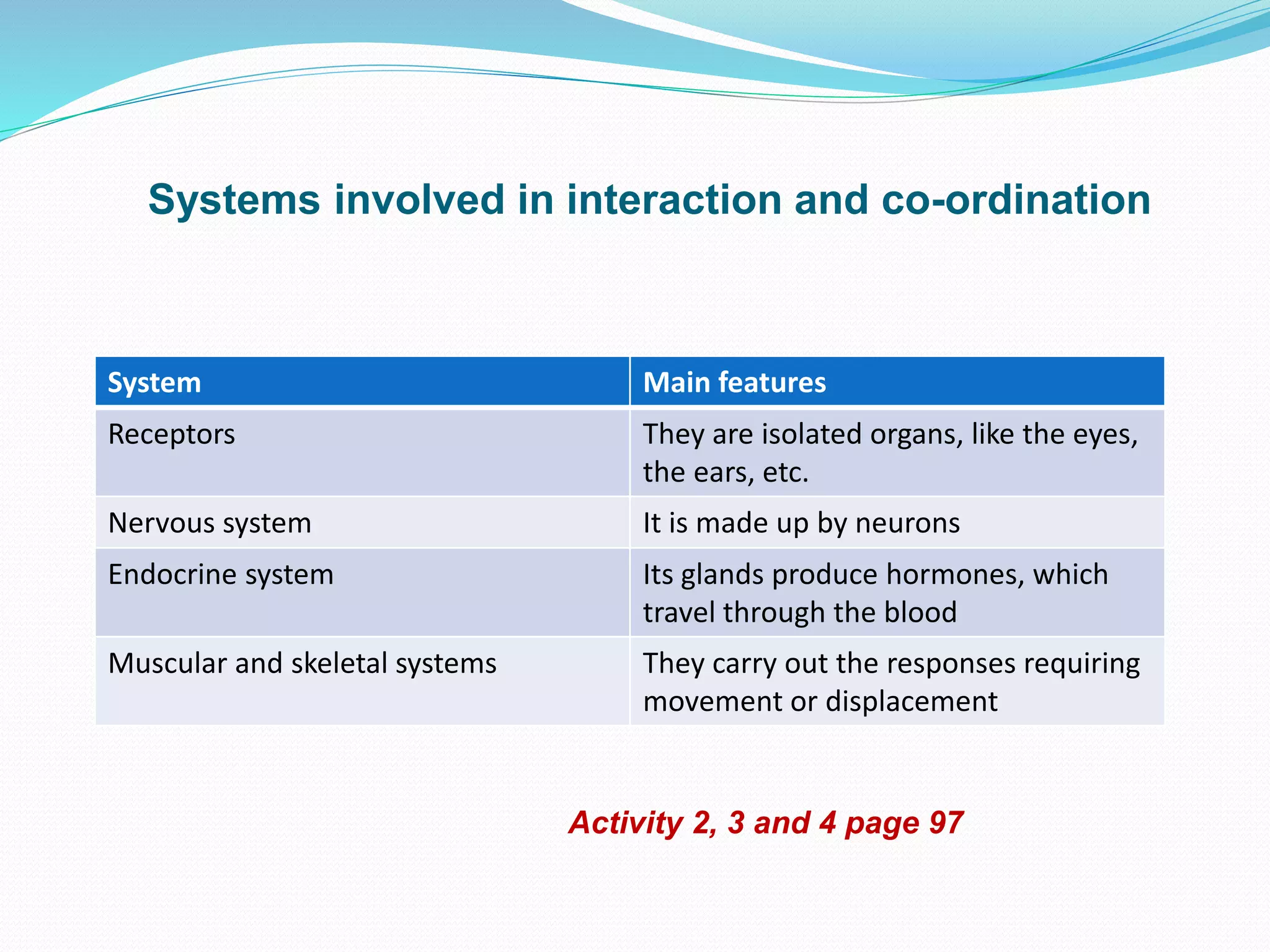
System Main features
Receptors They are isolated organs, like the eyes,
the ears, etc.
Nervous system It is made up by neurons
Endocrine system Its glands produce hormones, which
travel through the blood
Muscular and skeletal systems They carry out the responses requiring
movement or displacement
Activity 2, 3 and 4 page 97
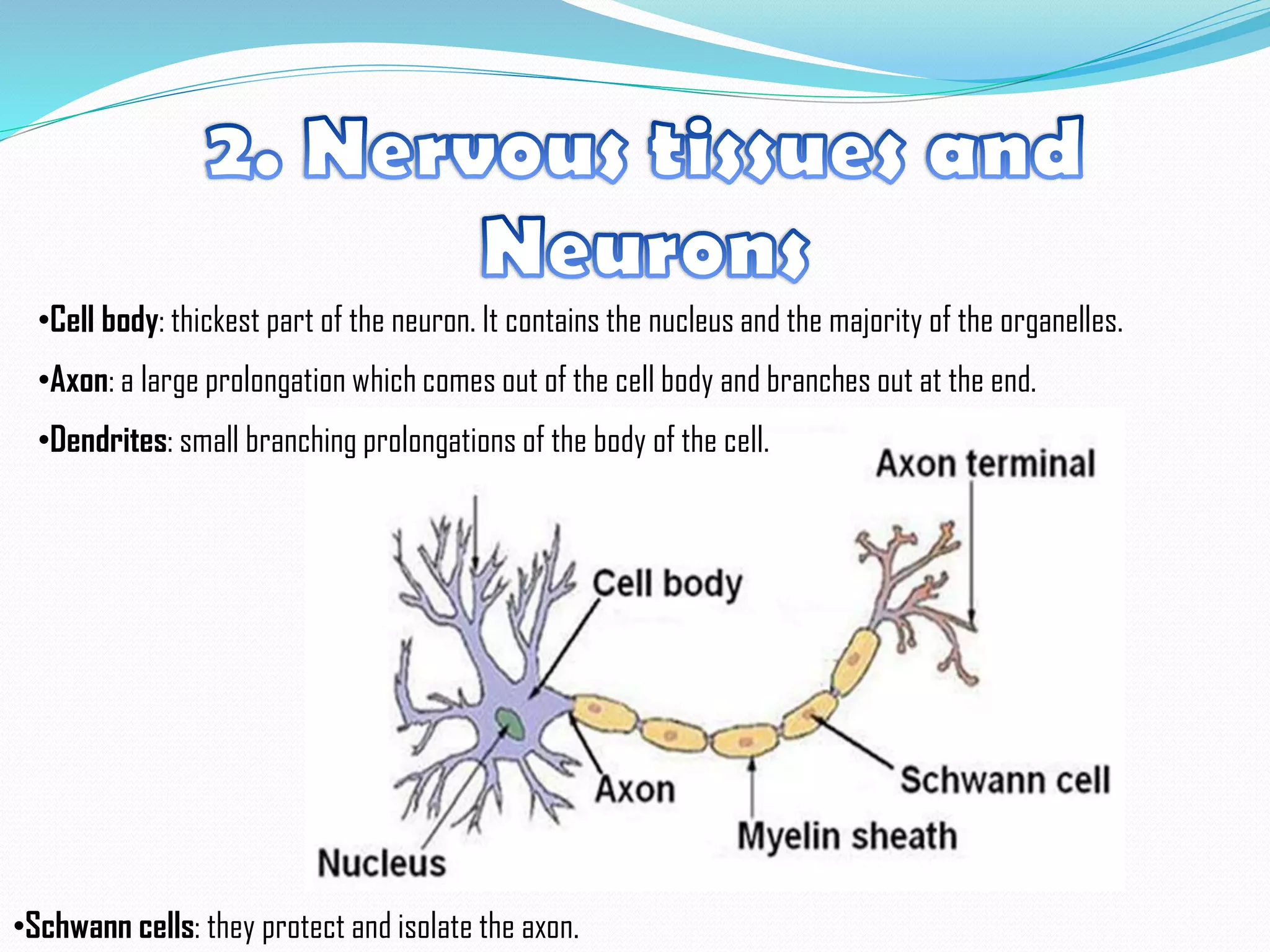
•Cell body: thickest part of the neuron. It contains the nucleus and the majority of the organelles.
•Axon: a large prolongation which comes out of the cell body and branches out at the end.
•Dendrites: small branching prolongations of the body of the cell.
•Schwann cells: they protect and isolate the axon.
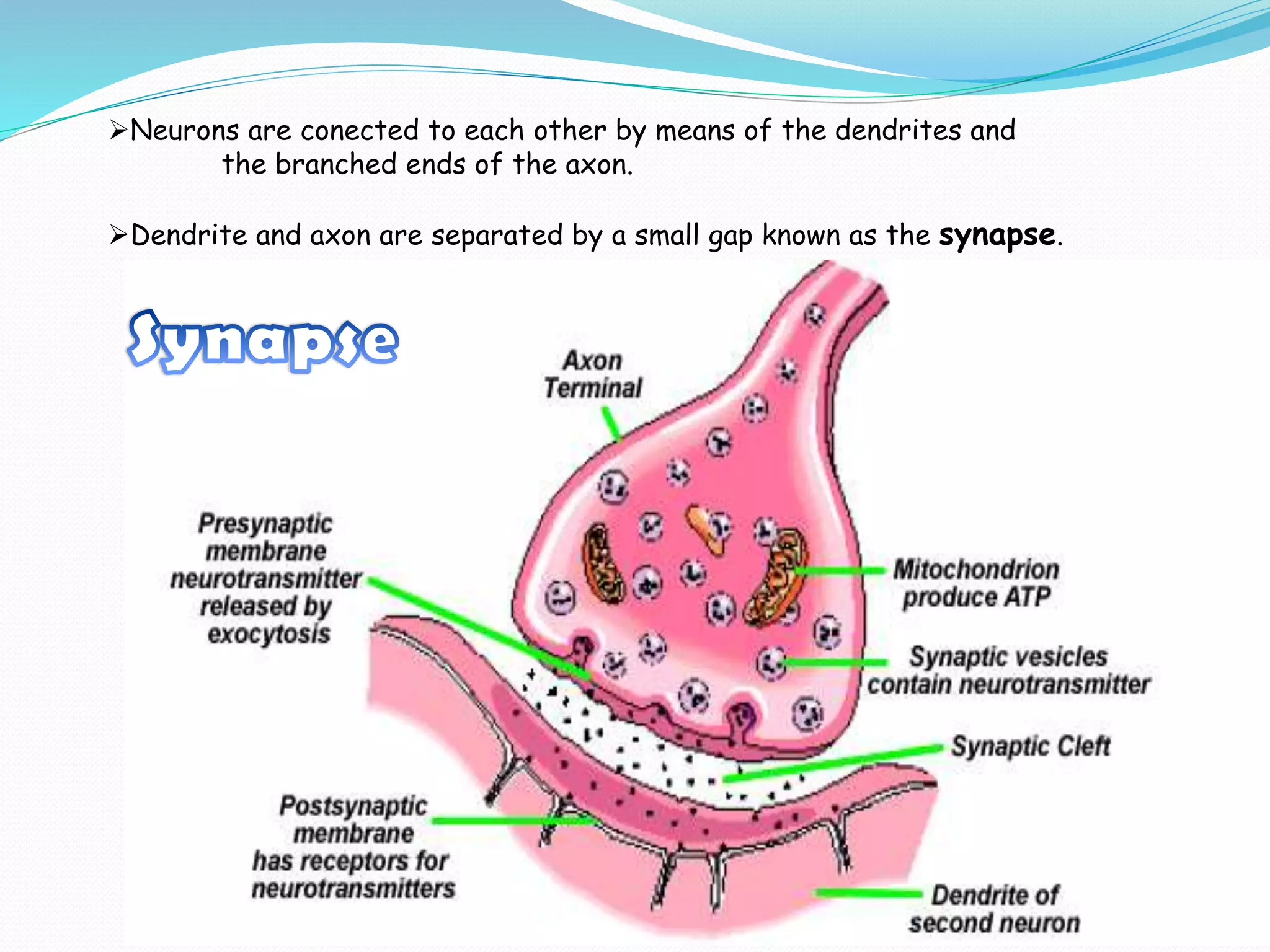
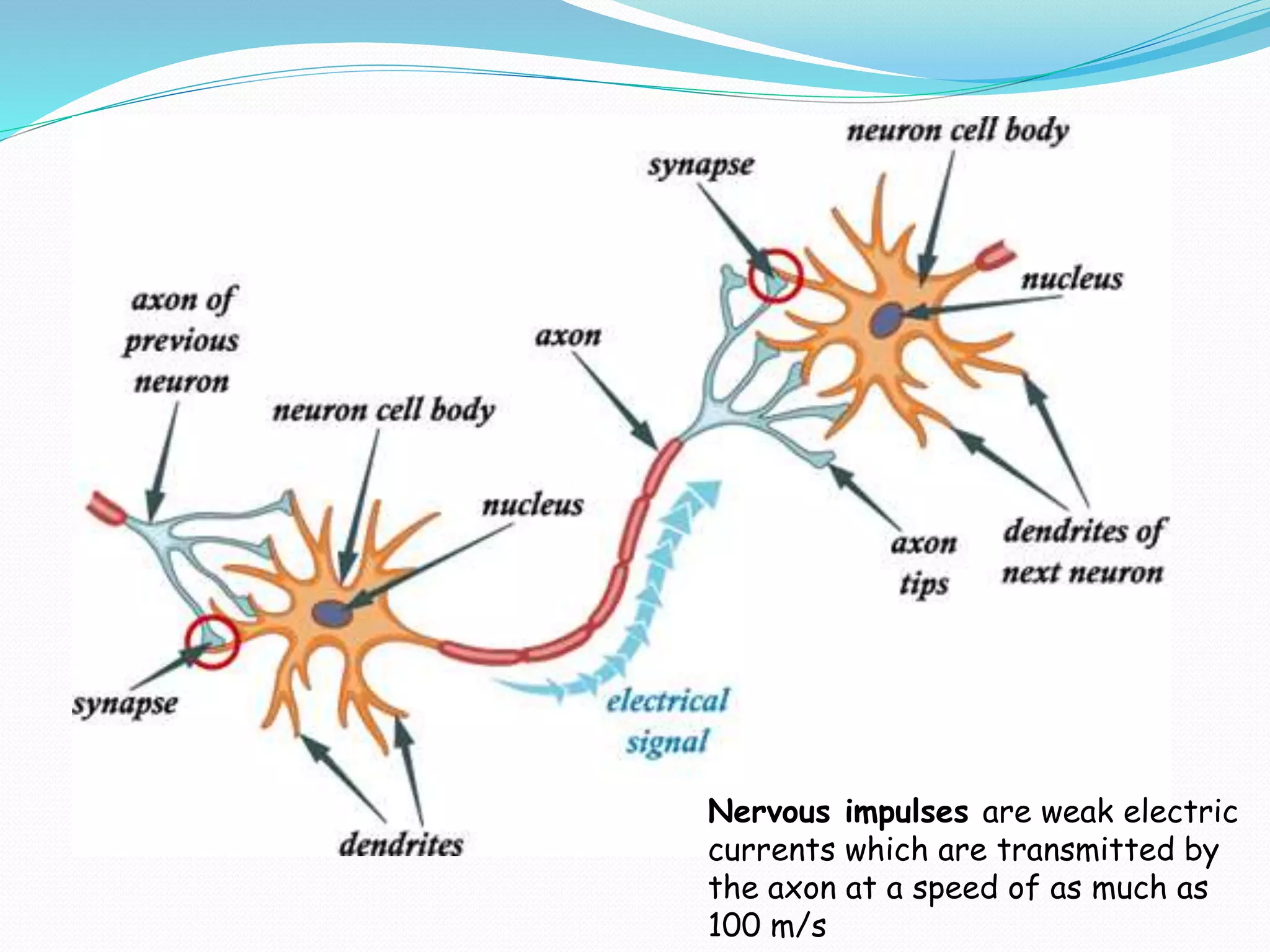
Neurons are conected to each other by means of the dendrites and
the branched ends of the axon.
Dendrite and axon are separated by a small gap known as the synapse.
Nervous impulses are weak electric
currents which are transmitted by
the axon at a speed of as much as
100 m/s
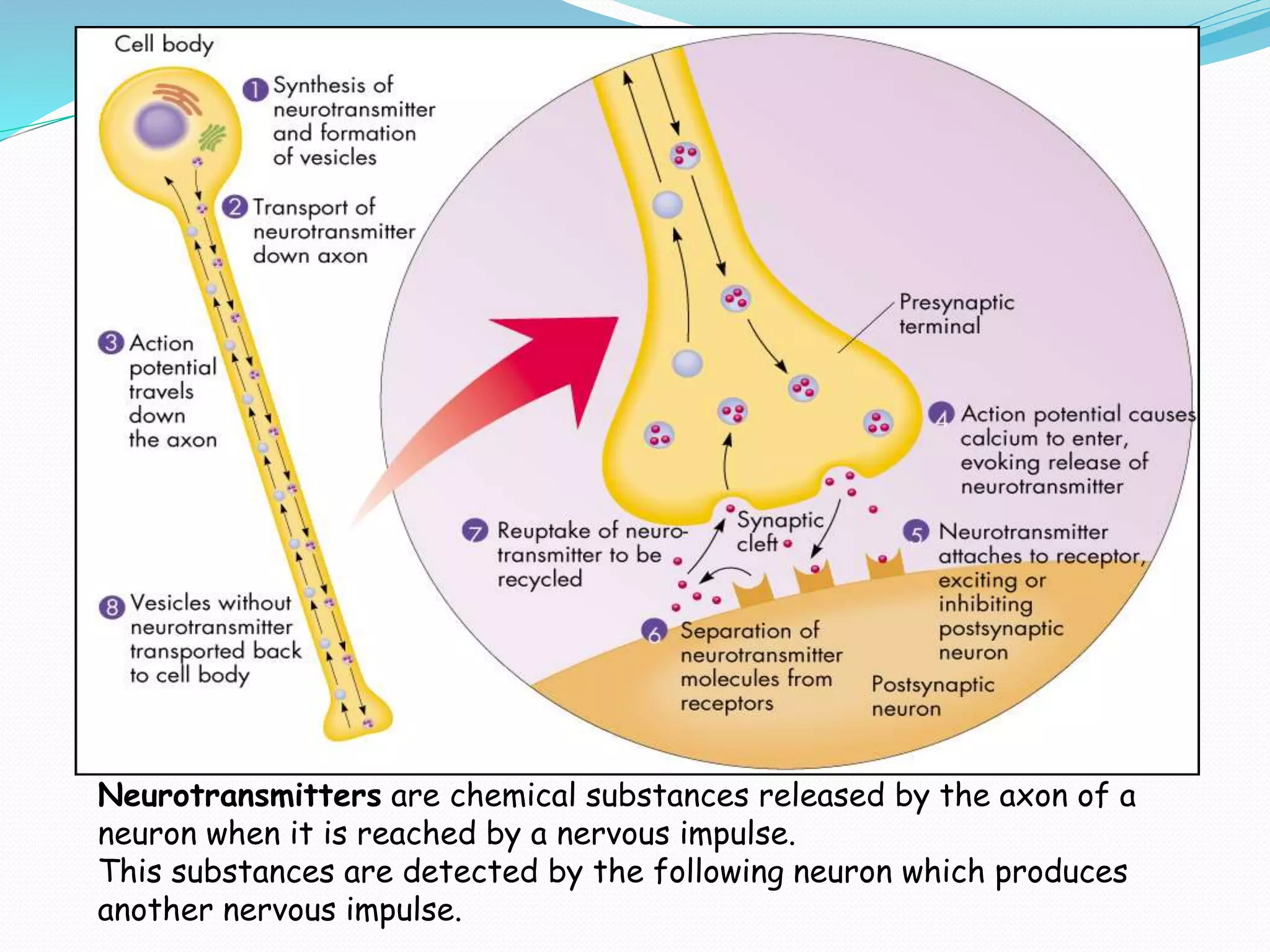
Neurotransmitters are chemical substances released by the axon of a
neuron when it is reached by a nervous impulse.
This substances are detected by the following neuron which produces
another nervous impulse.
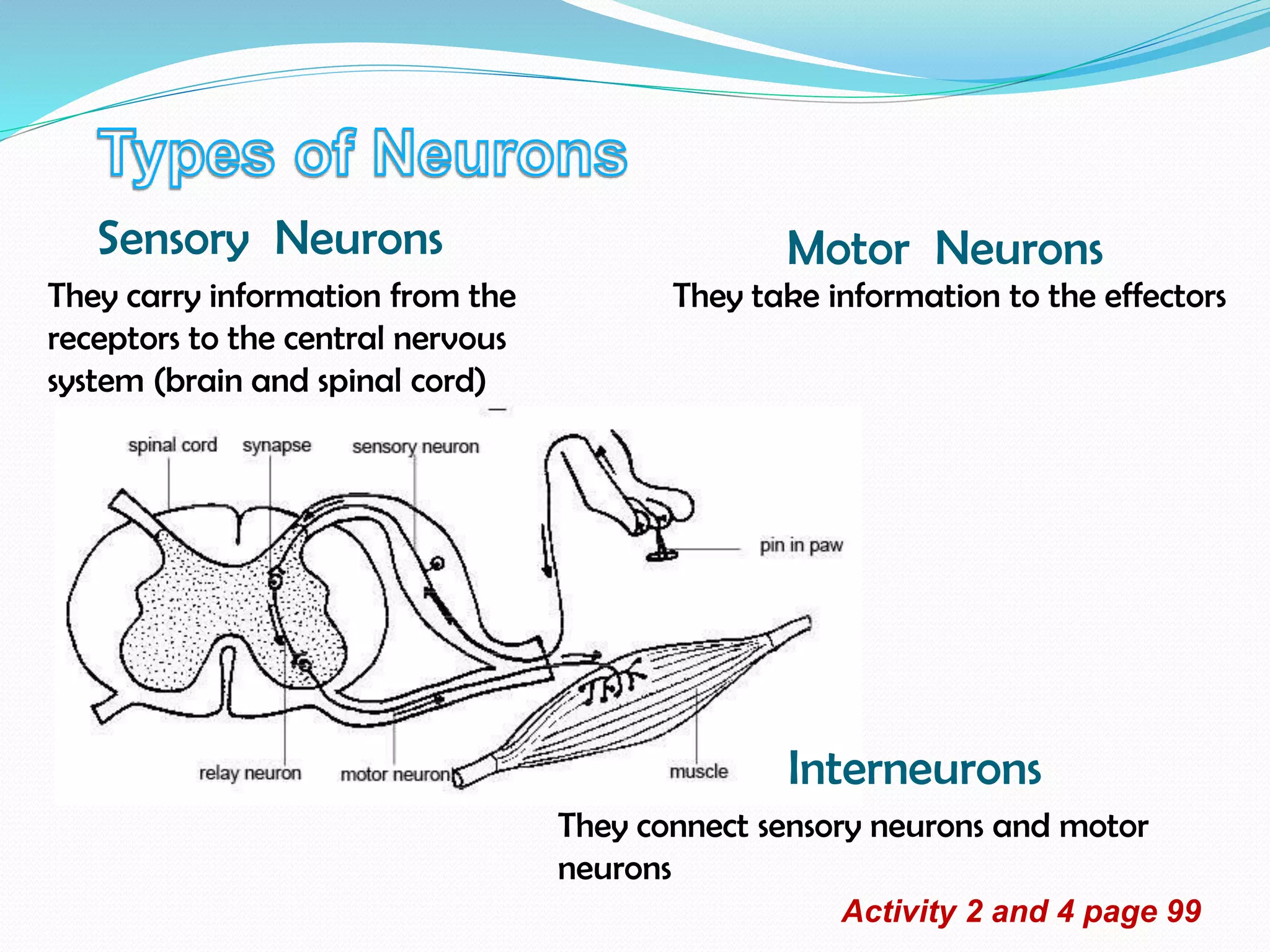
Sensory Neurons
They carry information from the
receptors to the central nervous
system (brain and spinal cord)
Motor Neurons
They take information to the effectors
Interneurons
They connect sensory neurons and motor
neurons
Activity 2 and 4 page 99
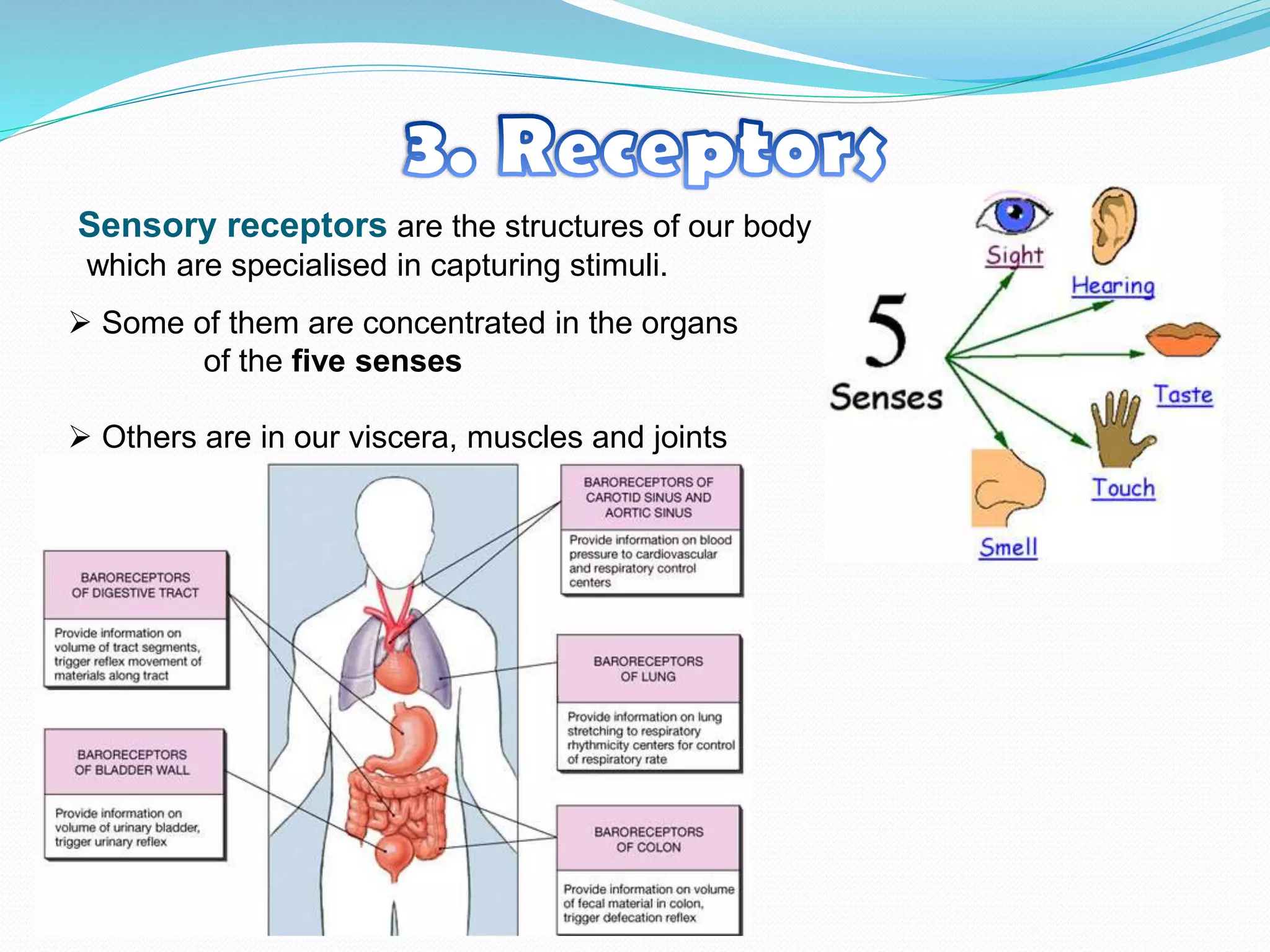
Sensory receptors are the structures of our body
which are specialised in capturing stimuli.
 Some of them are concentrated in the organs
of the five senses
 Others are in our viscera, muscles and joints
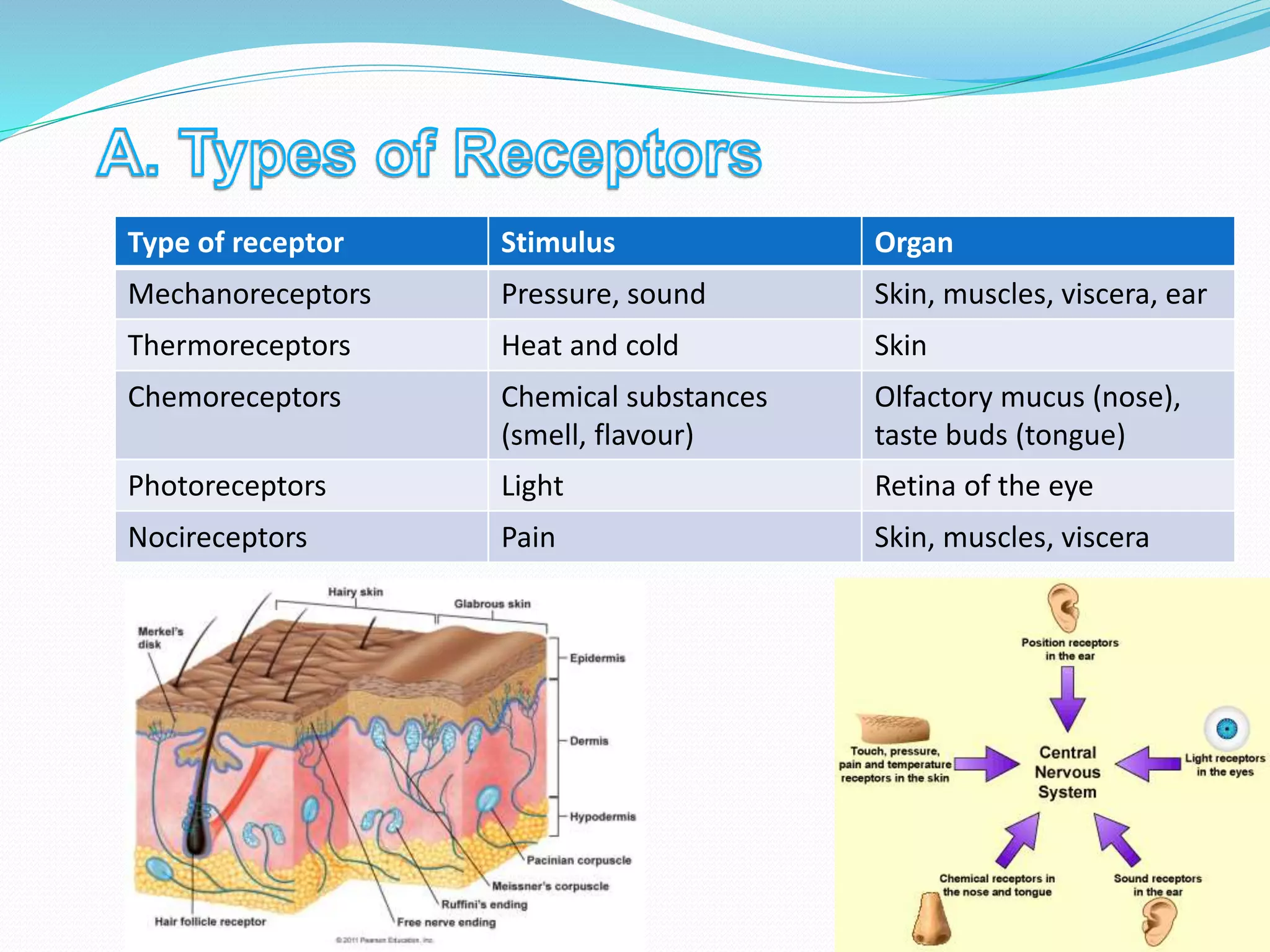
Type of receptor Stimulus Organ
Mechanoreceptors Pressure, sound Skin, muscles, viscera, ear
Thermoreceptors Heat and cold Skin
Chemoreceptors Chemical substances
(smell, flavour)
Olfactory mucus (nose),
taste buds (tongue)
Photoreceptors Light Retina of the eye
Nocireceptors Pain Skin, muscles, viscera
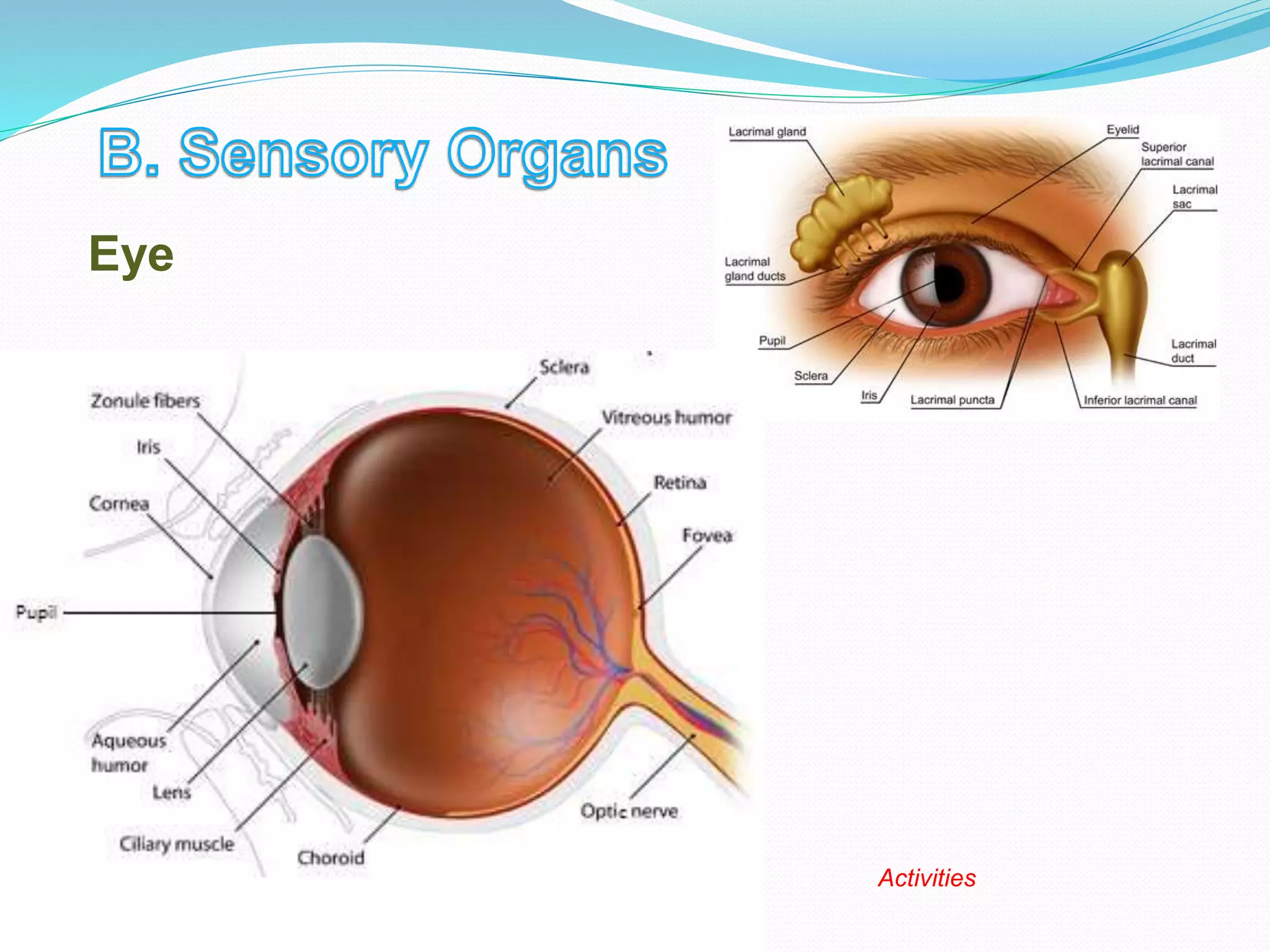
Eye
Activities
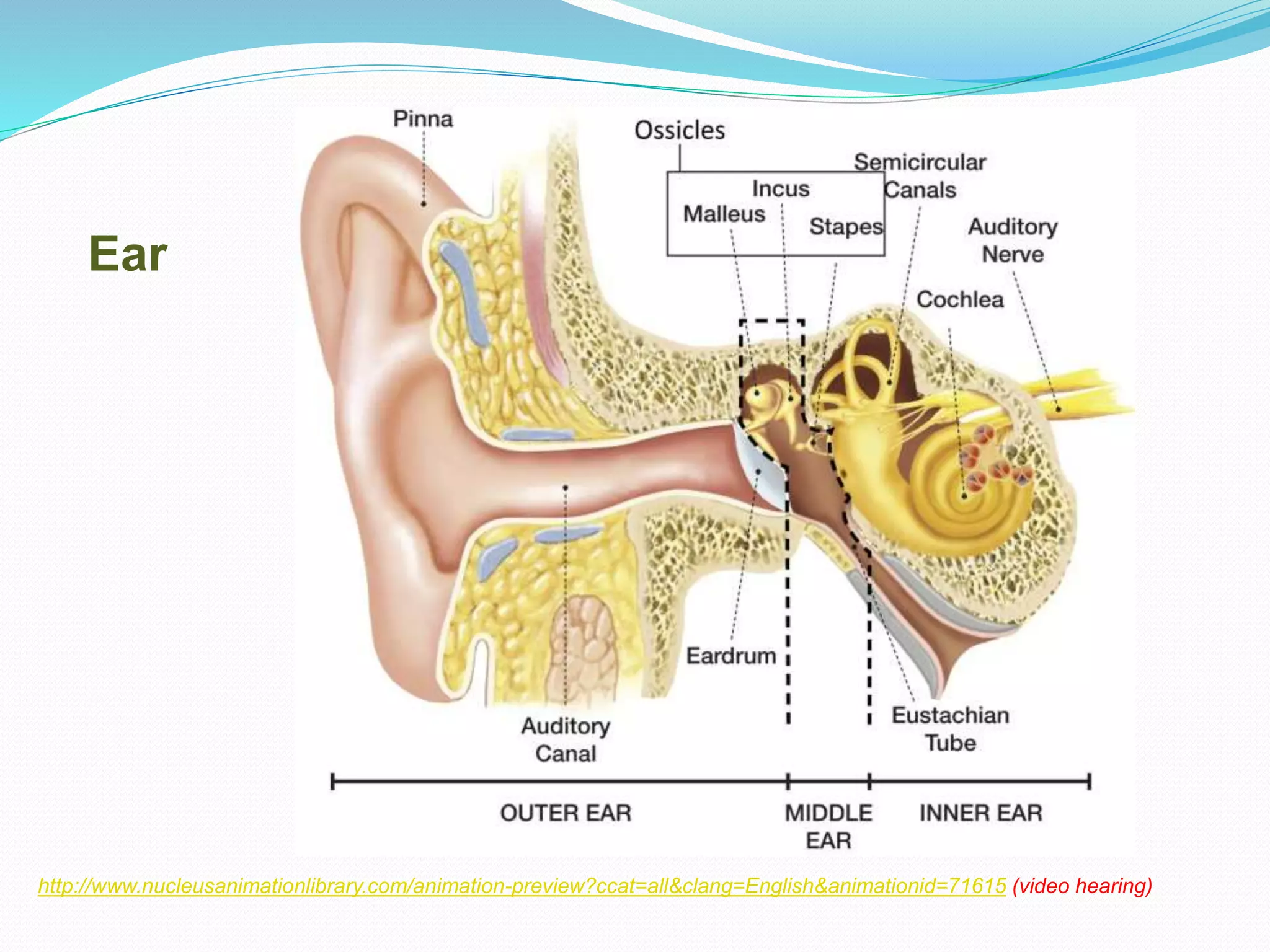
Ear
http://www.nucleusanimationlibrary.com/animation-preview?ccat=all&clang=English&animationid=71615 (video hearing)
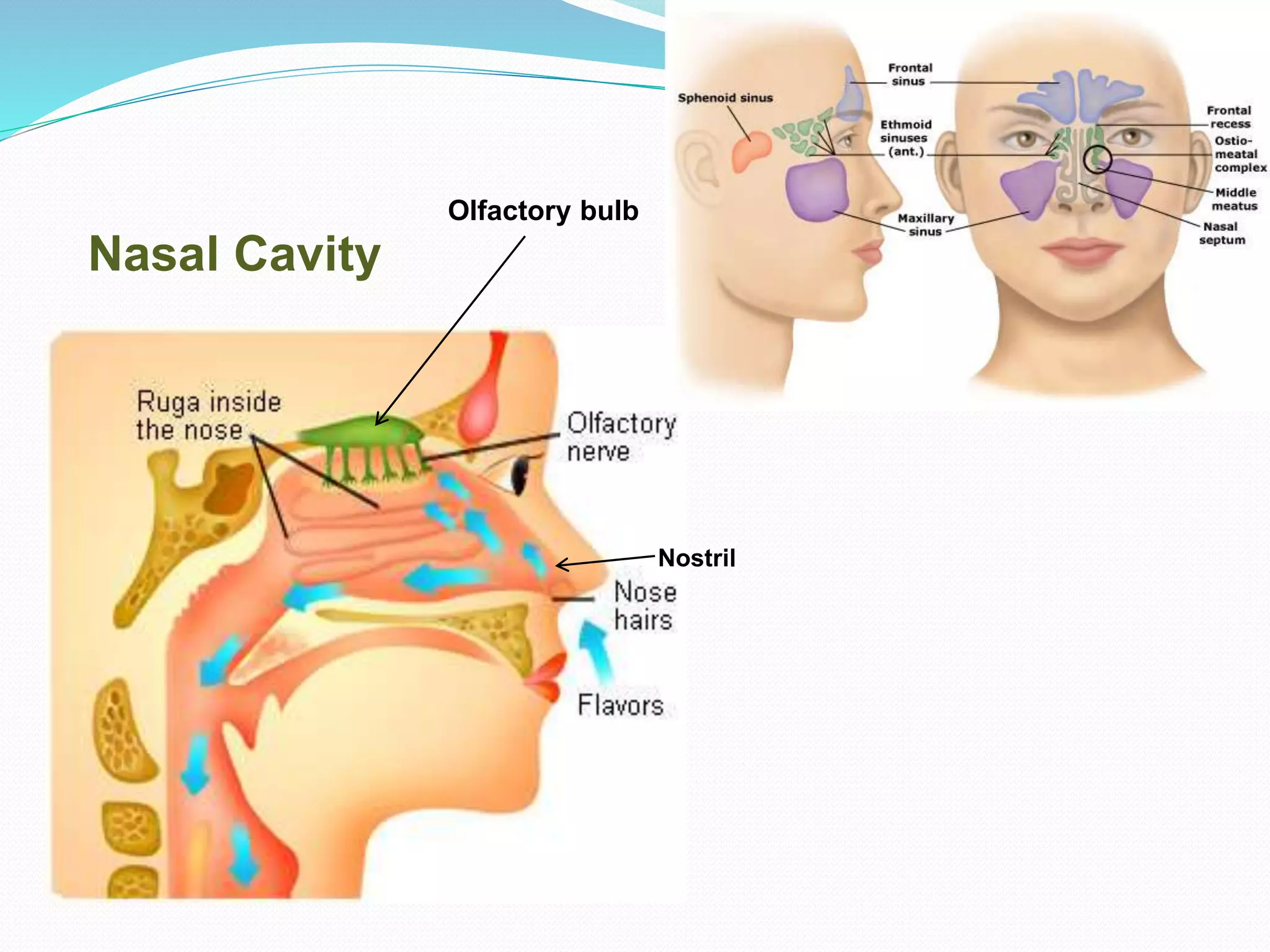
Nasal Cavity
Olfactory bulb
Nostril
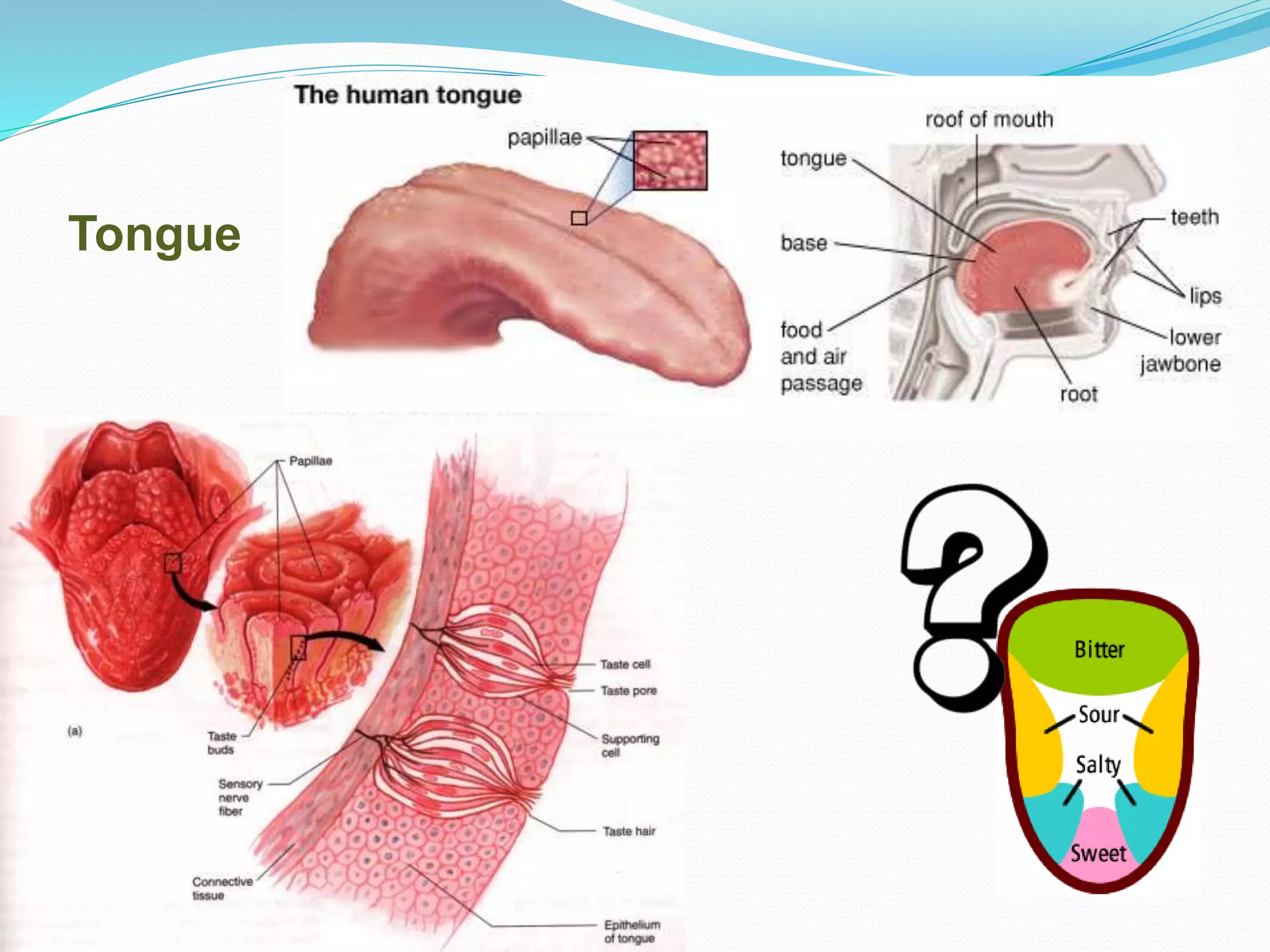
Tongue
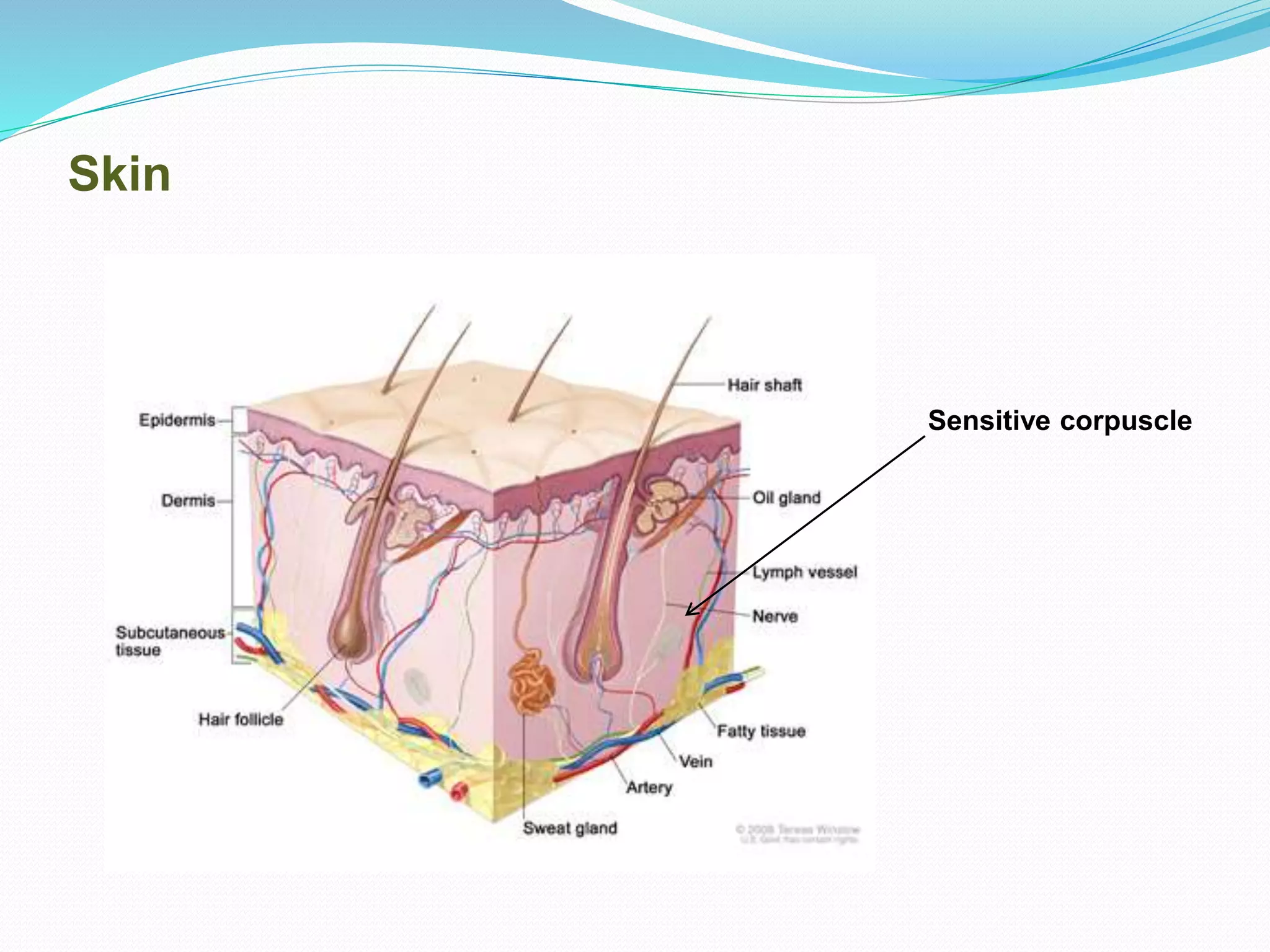
Skin
Sensitive corpuscle
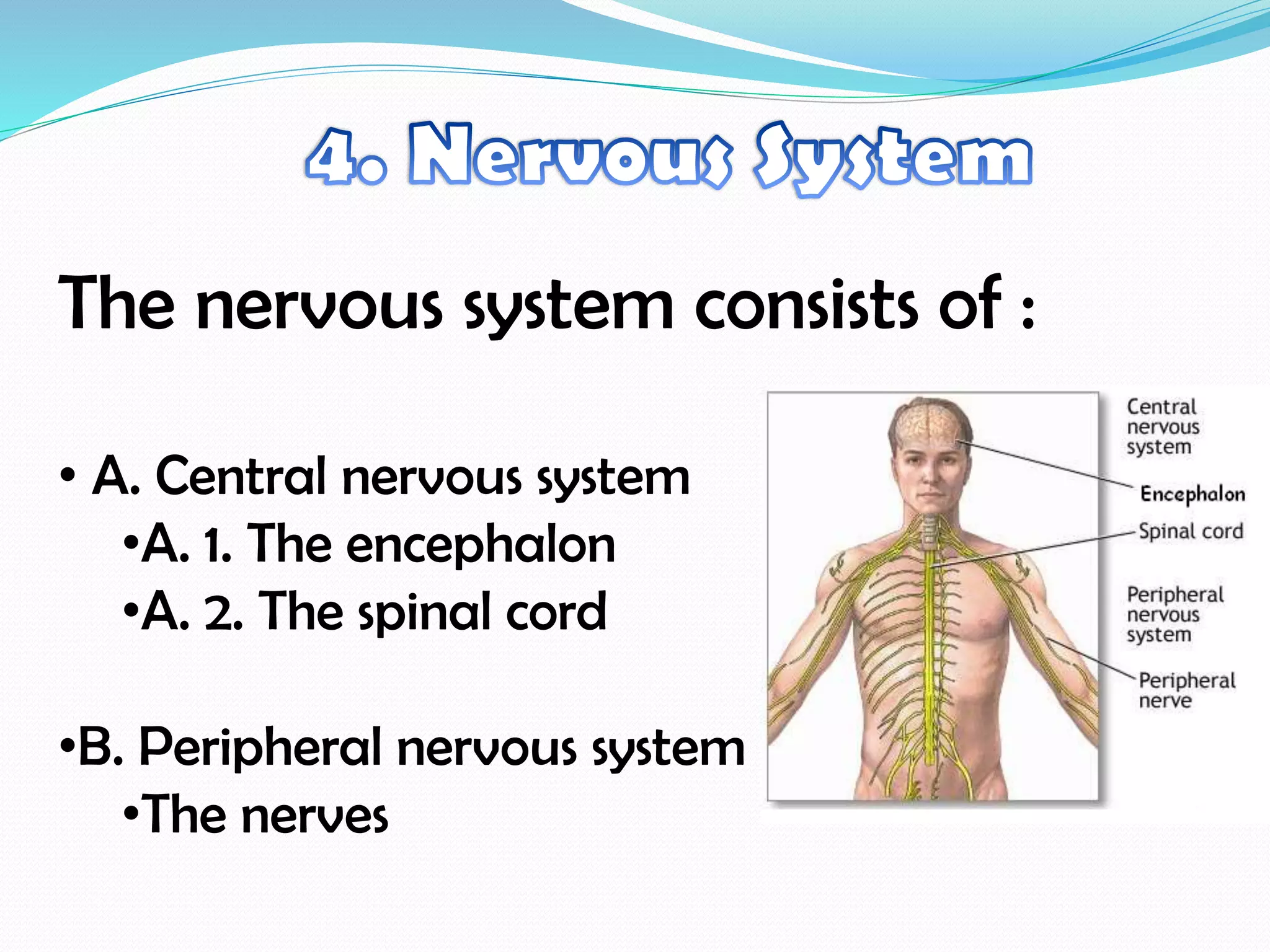
The nervous system consists of :
• A. Central nervous system
•A. 1. The encephalon
•A. 2. The spinal cord
•B. Peripheral nervous system
•The nerves
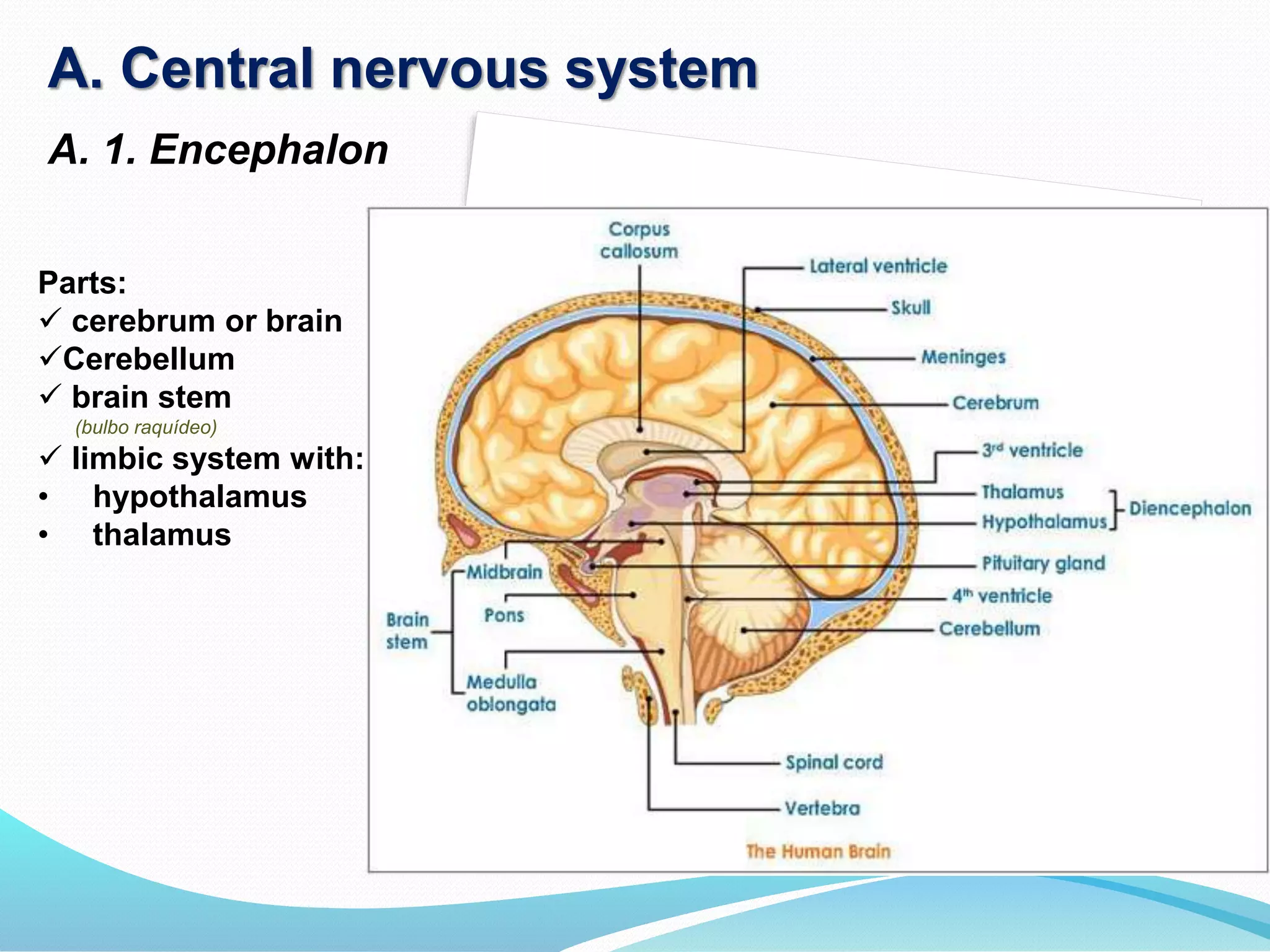
A. Central nervous system
A. 1. Encephalon
Parts:
 cerebrum or brain
Cerebellum
 brain stem
(bulbo raquídeo)
 limbic system with:
• hypothalamus
• thalamus
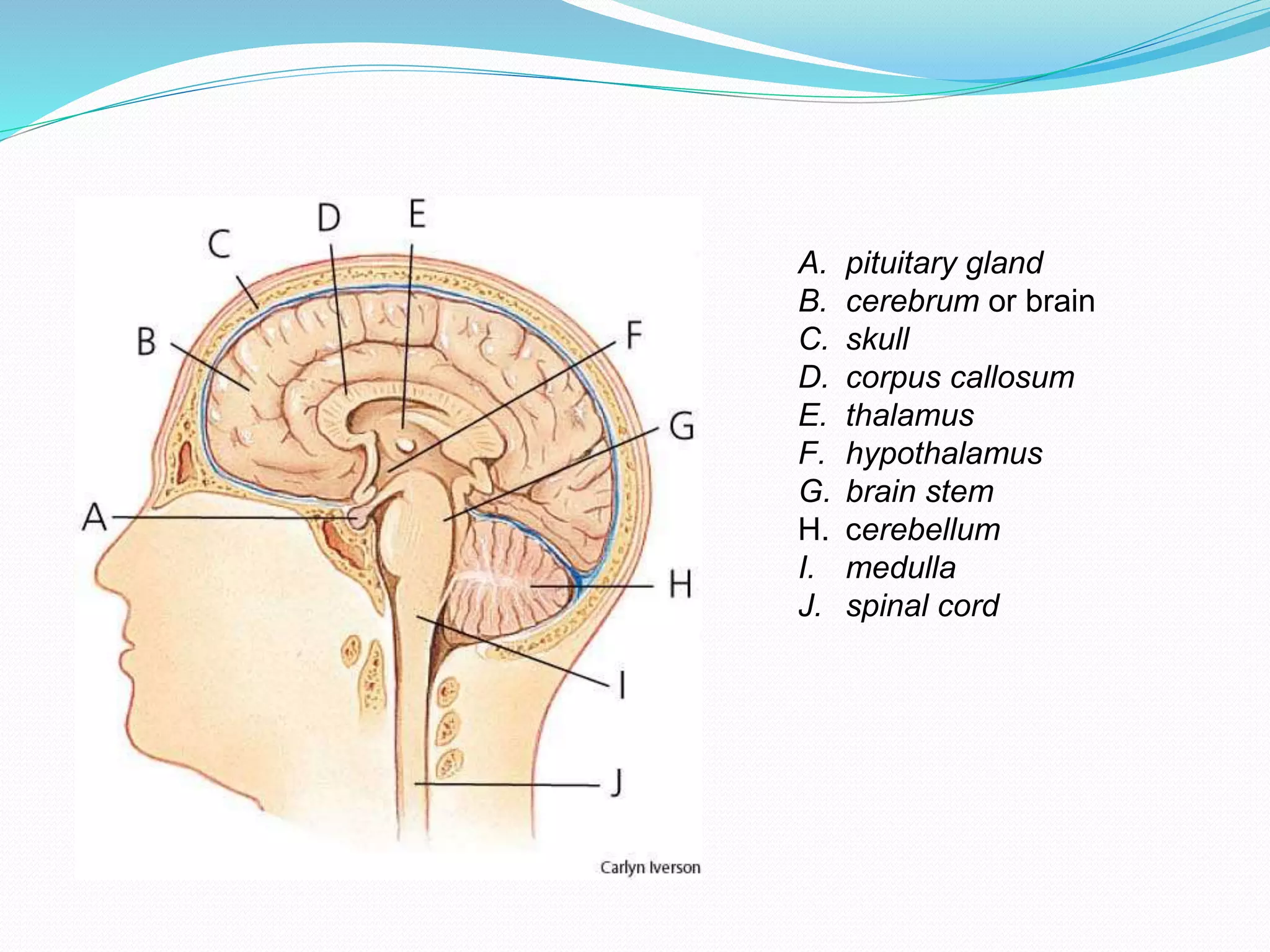
A. pituitary gland
B. cerebrum or brain
C. skull
D. corpus callosum
E. thalamus
F. hypothalamus
G. brain stem
H. cerebellum
I. medulla
J. spinal cord
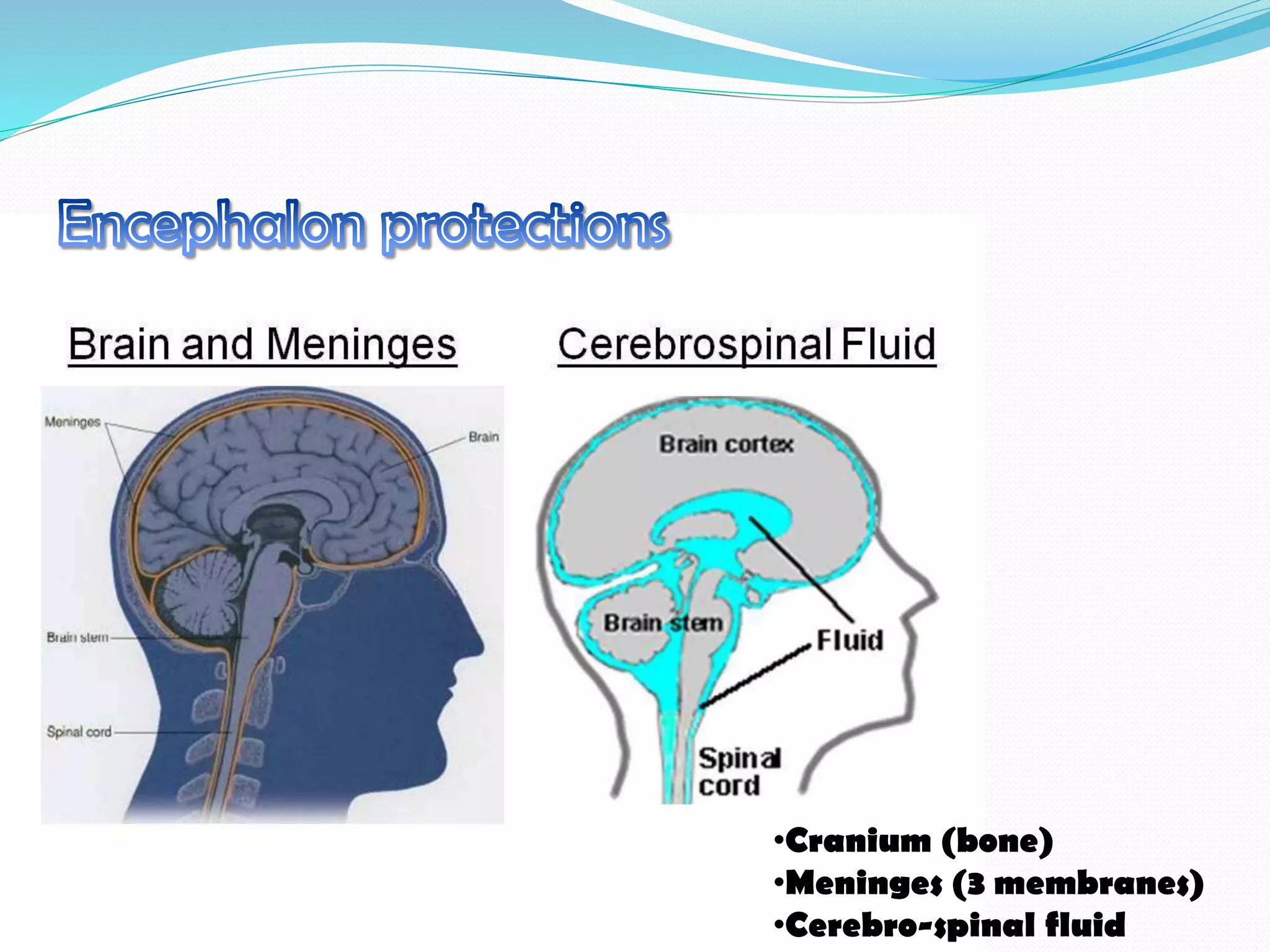
•Cranium (bone)
•Meninges (3 membranes)
•Cerebro-spinal fluid
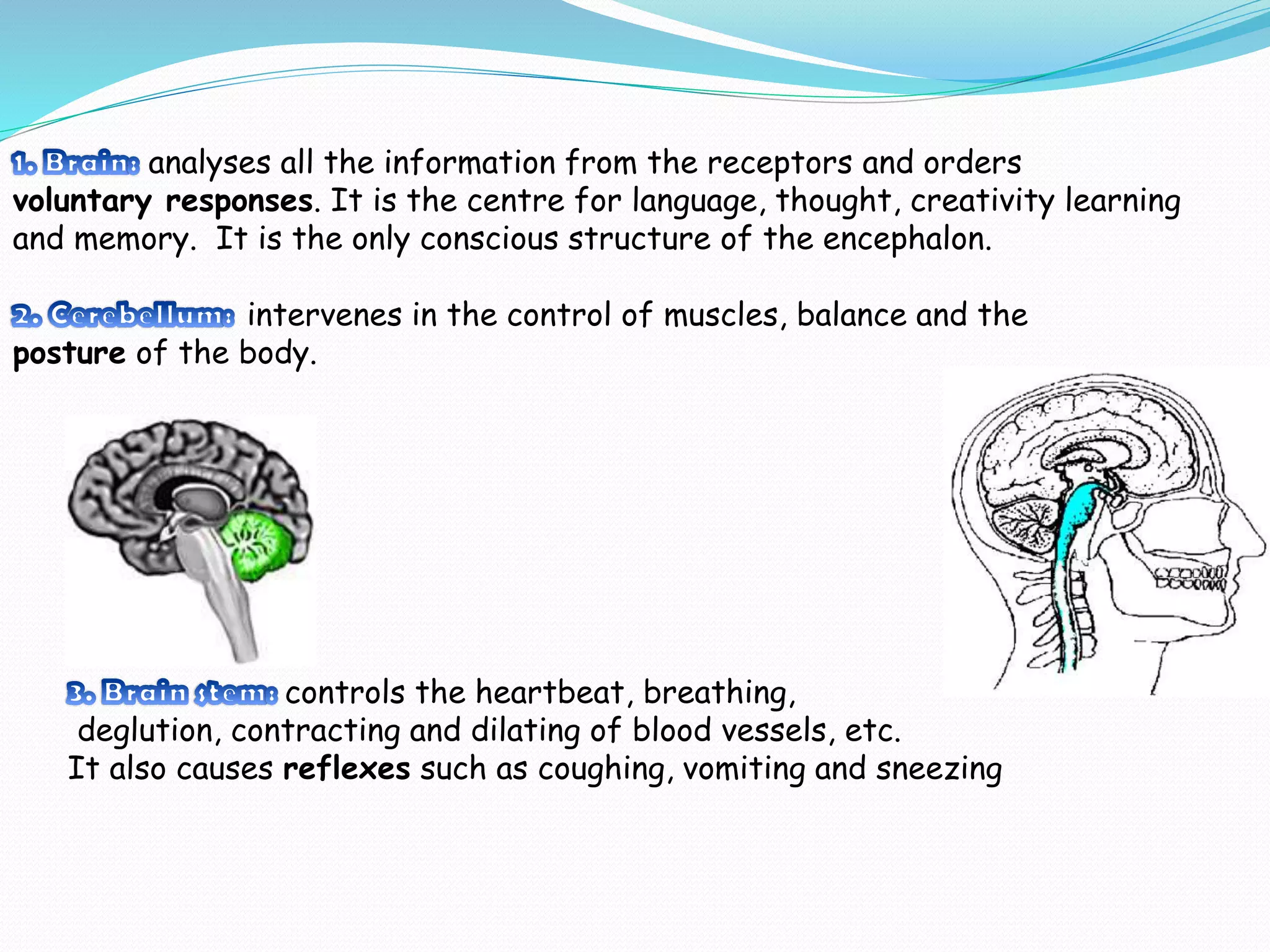
analyses all the information from the receptors and orders
voluntary responses. It is the centre for language, thought, creativity learning
and memory. It is the only conscious structure of the encephalon.
intervenes in the control of muscles, balance and the
posture of the body.
controls the heartbeat, breathing,
deglution, contracting and dilating of blood vessels, etc.
It also causes reflexes such as coughing, vomiting and sneezing
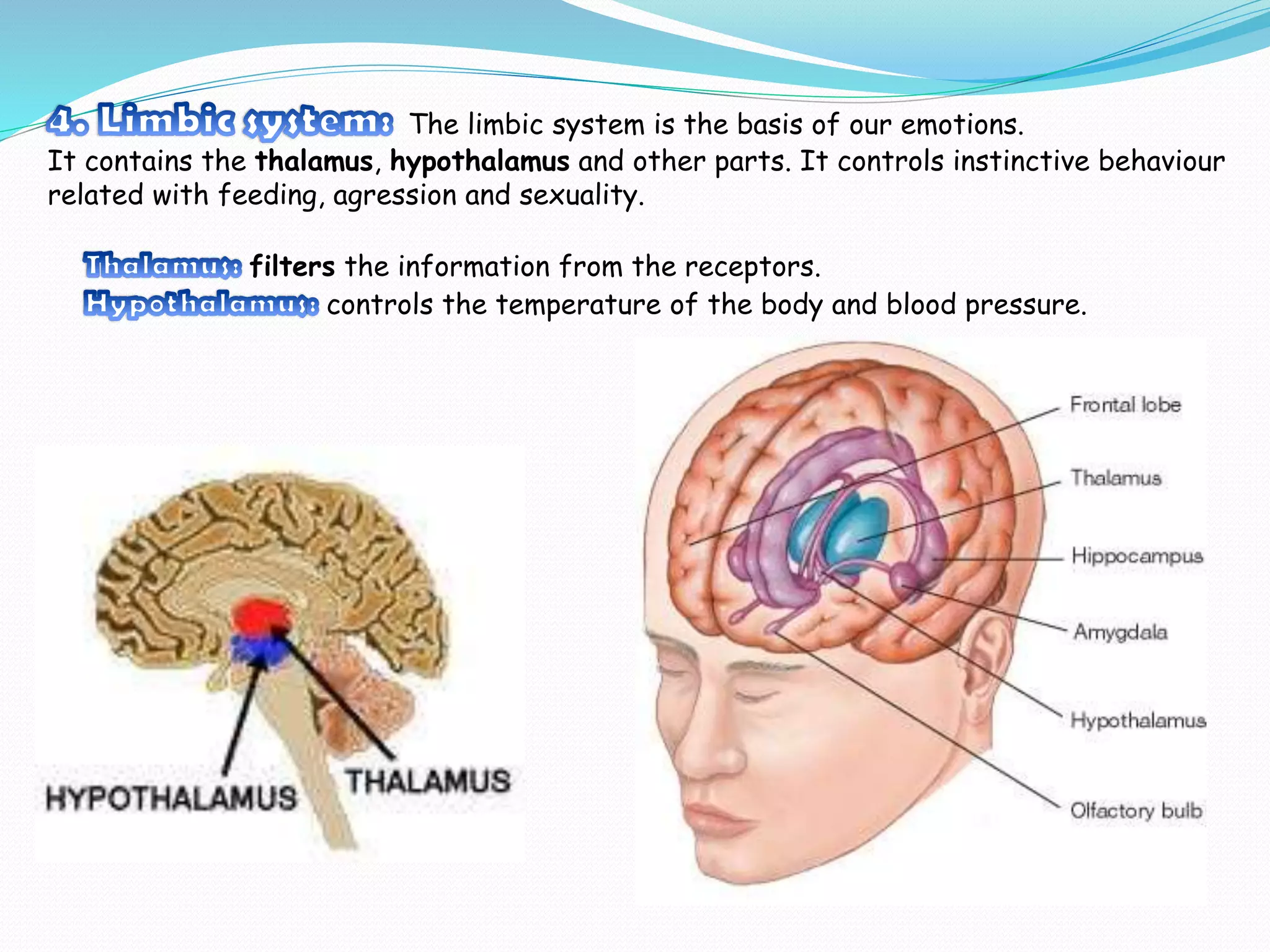
The limbic system is the basis of our emotions.
It contains the thalamus, hypothalamus and other parts. It controls instinctive behaviour
related with feeding, agression and sexuality.
filters the information from the receptors.
controls the temperature of the body and blood pressure.
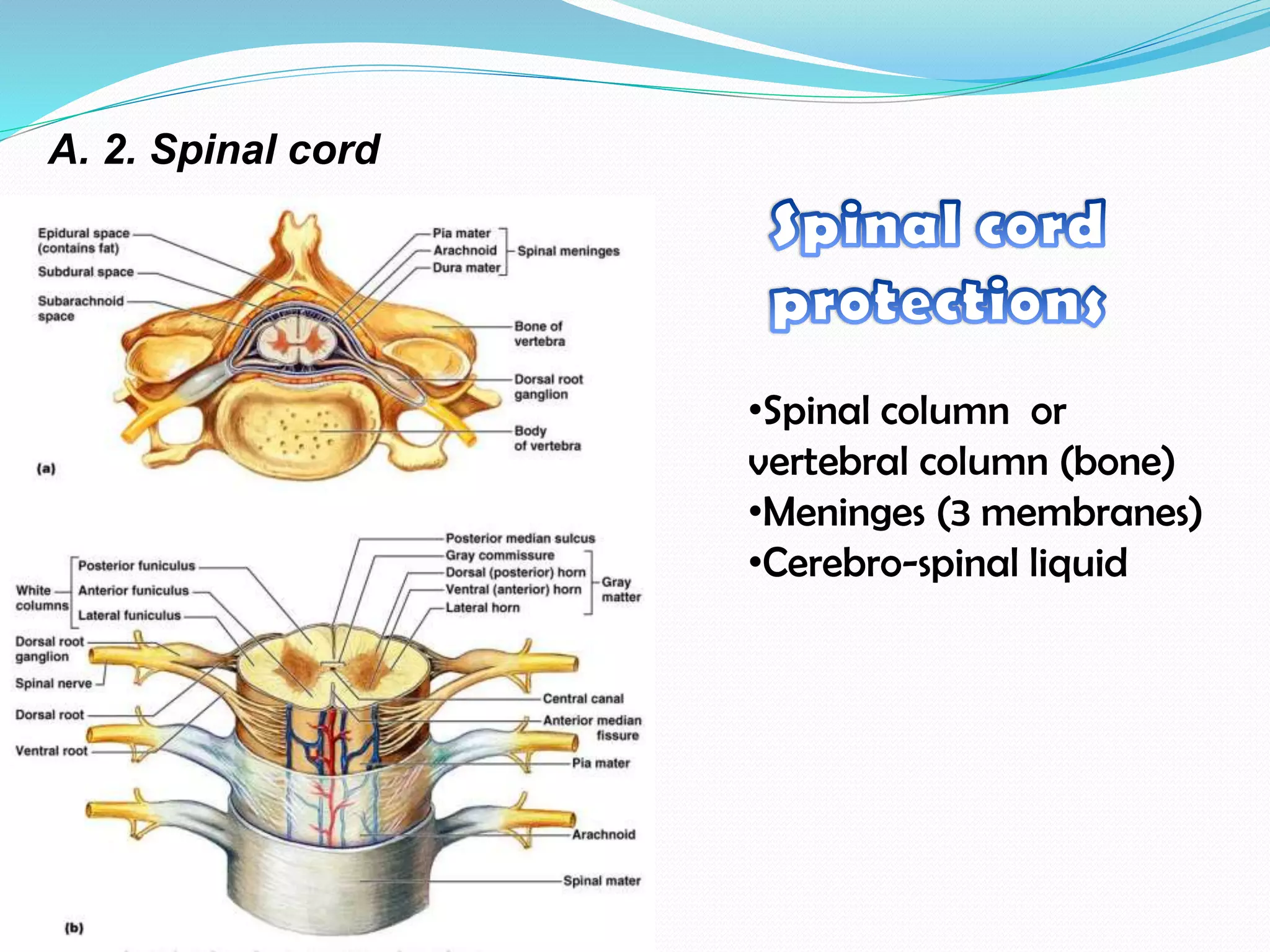
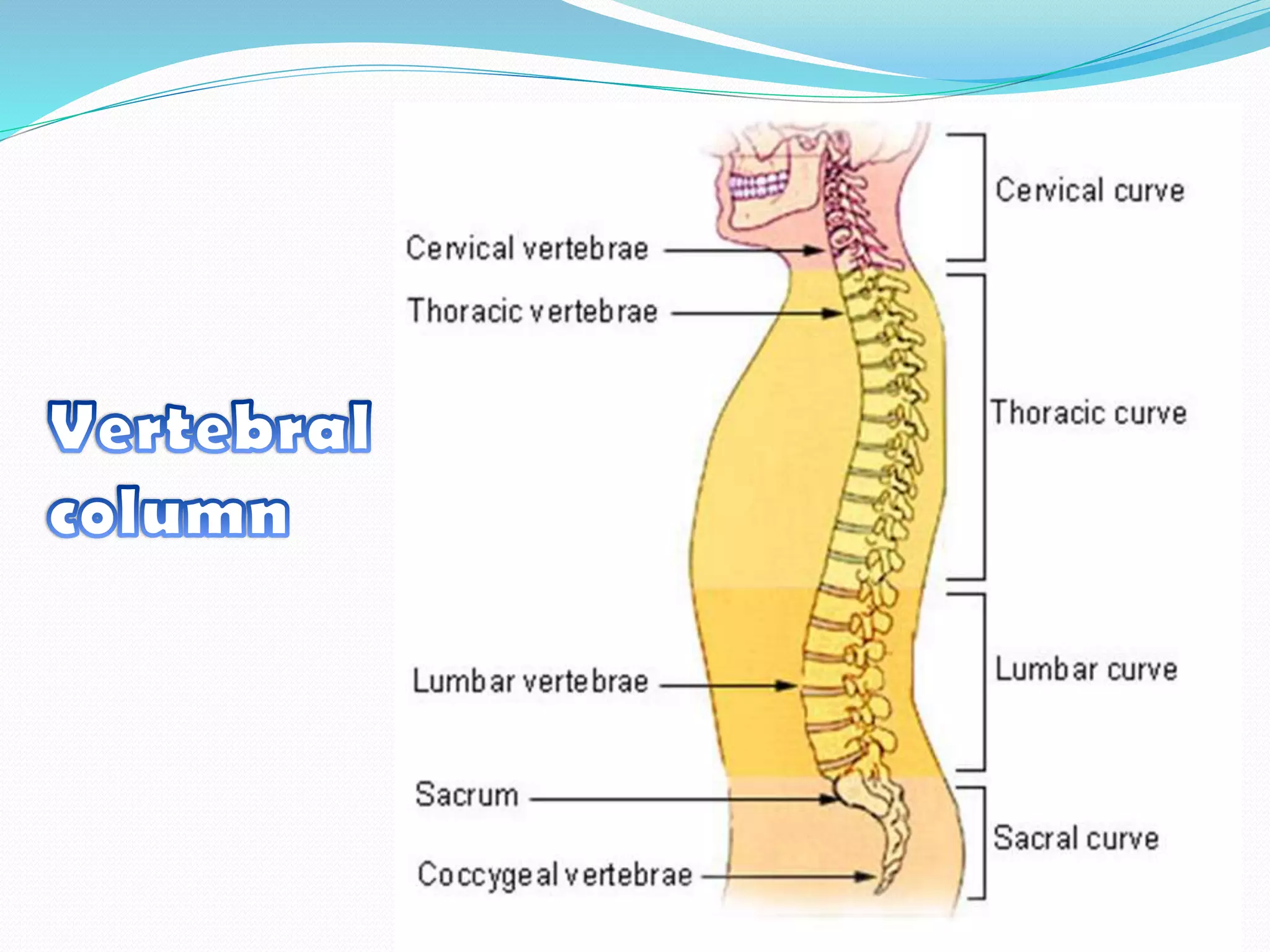
•Spinal column or
vertebral column (bone)
•Meninges (3 membranes)
•Cerebro-spinal liquid
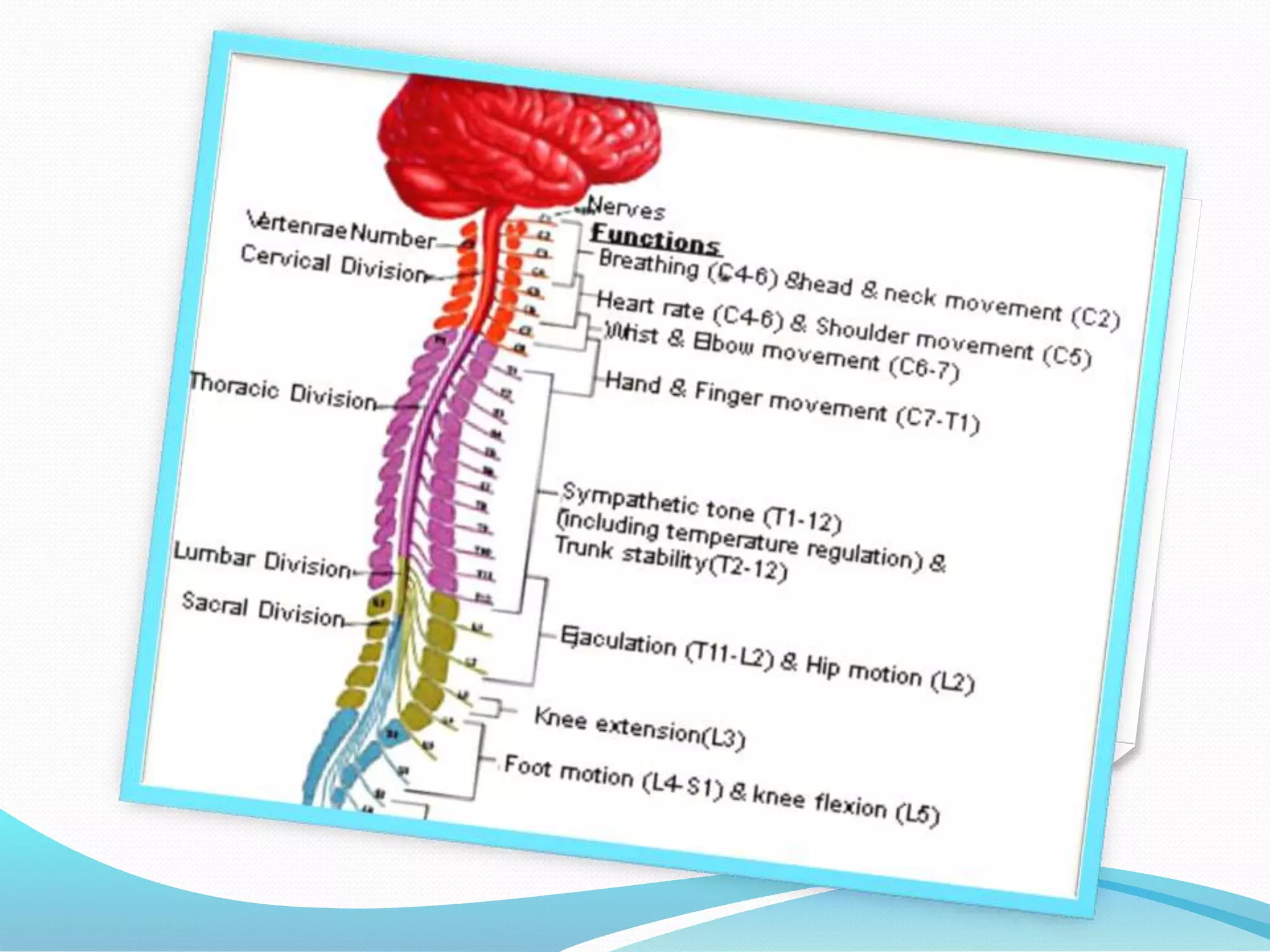
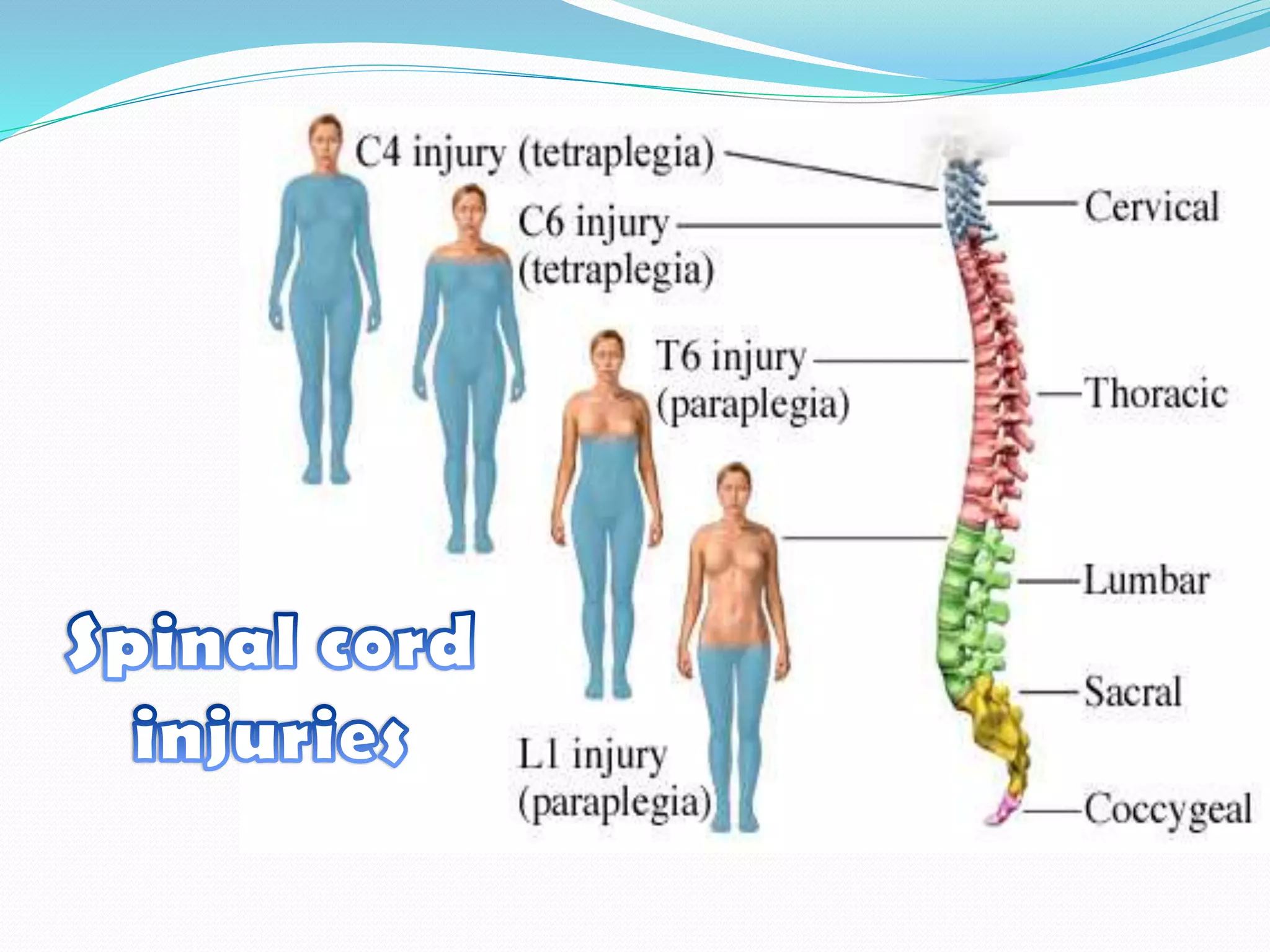
A. 2. Spinal cord
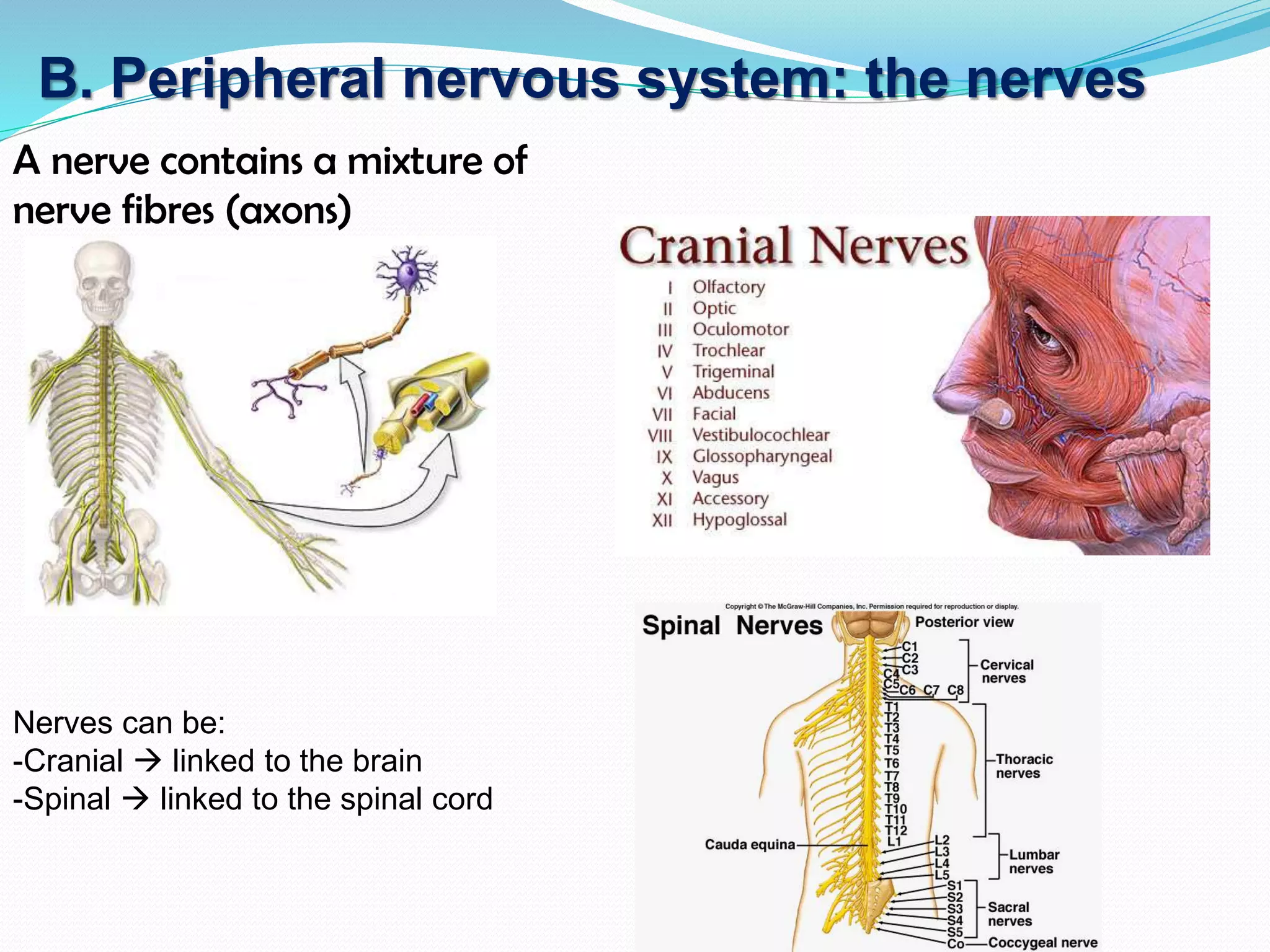
A nerve contains a mixture of
nerve fibres (axons)
B. Peripheral nervous system: the nerves
Nerves can be:
-Cranial  linked to the brain
-Spinal  linked to the spinal cord
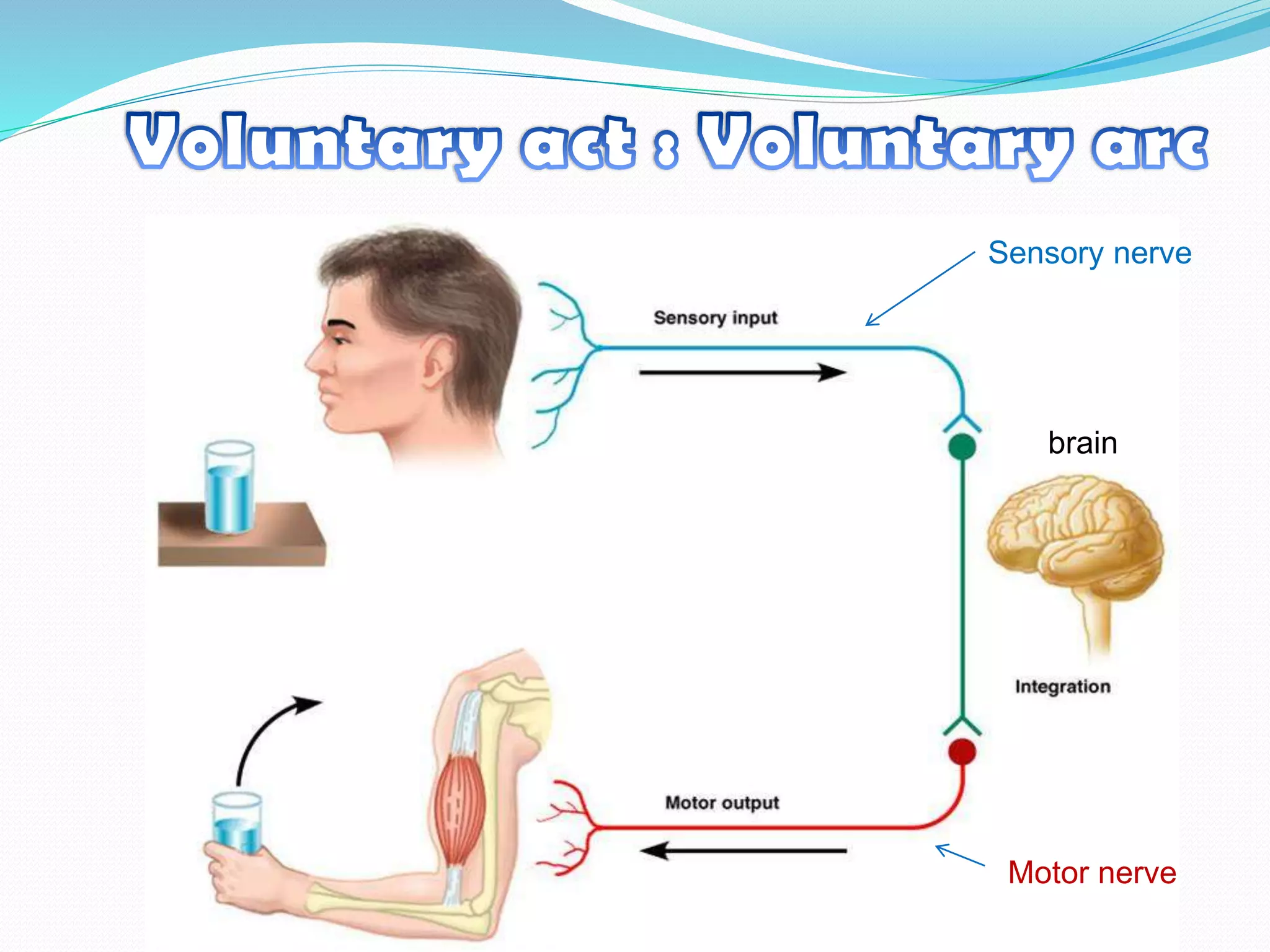
Sensory nerve
brain
Motor nerve
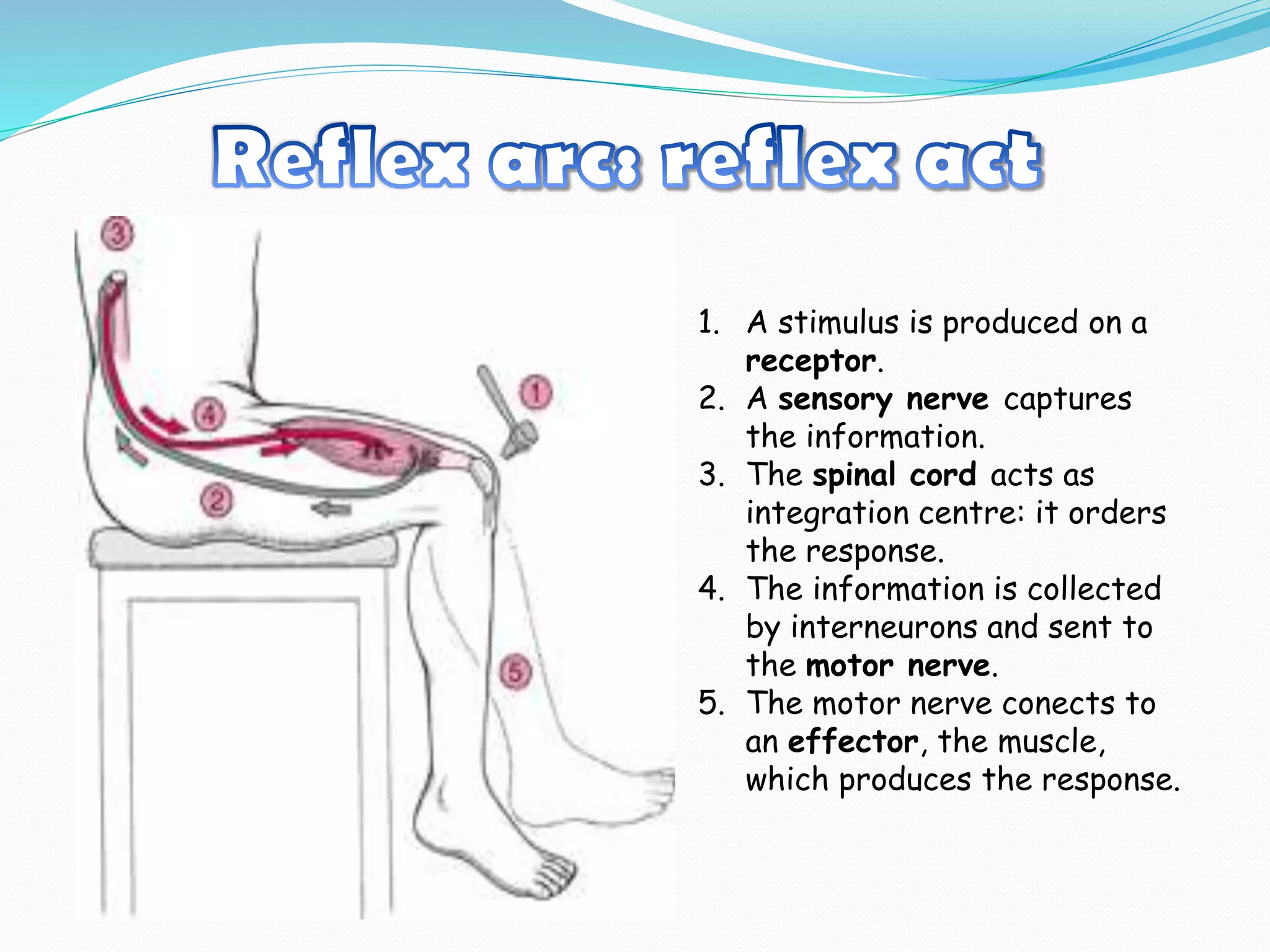
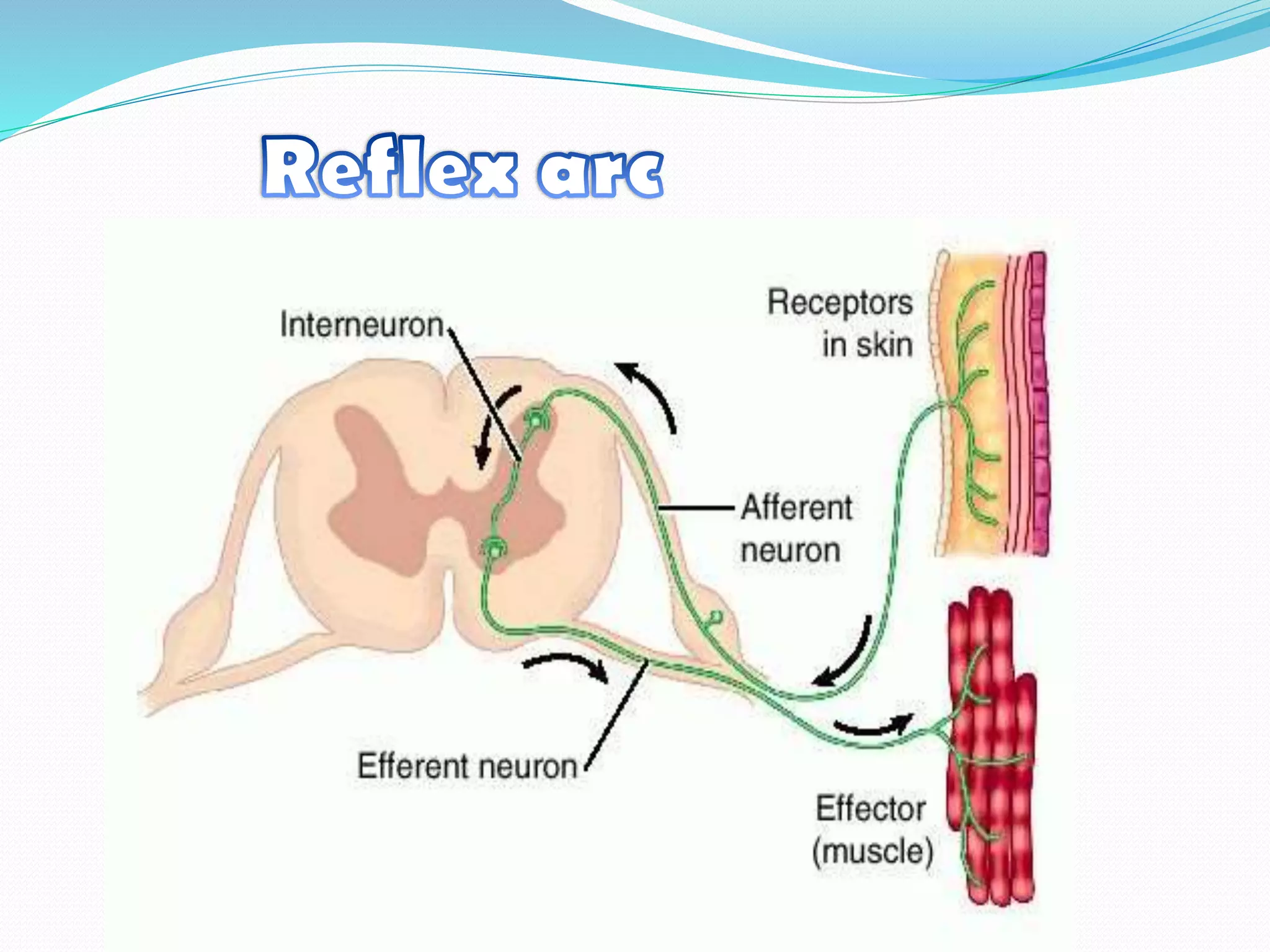
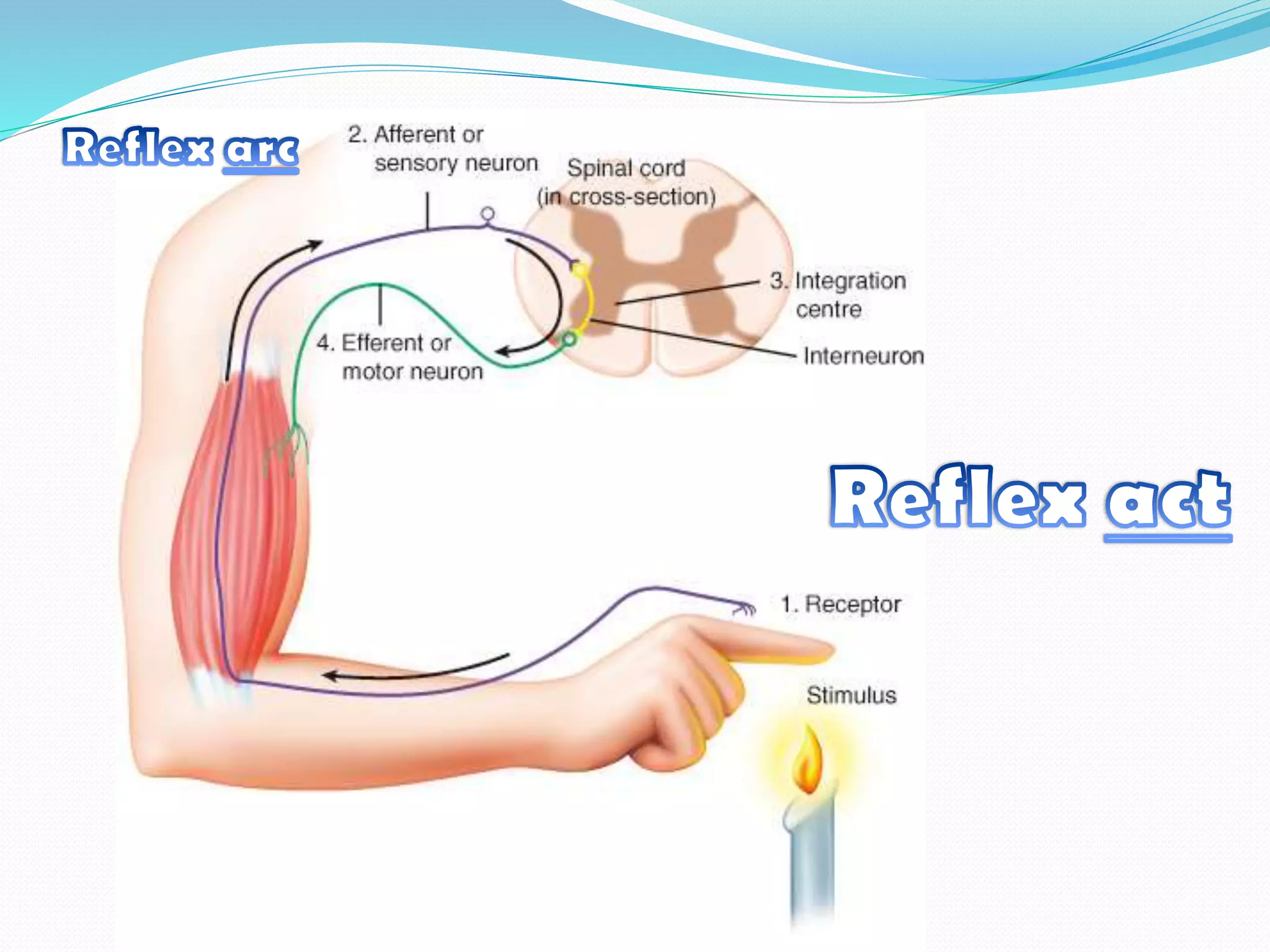
1. A stimulus is produced on a
receptor.
2. A sensory nerve captures
the information.
3. The spinal cord acts as
integration centre: it orders
the response.
4. The information is collected
by interneurons and sent to
the motor nerve.
5. The motor nerve conects to
an effector, the muscle,
which produces the response.
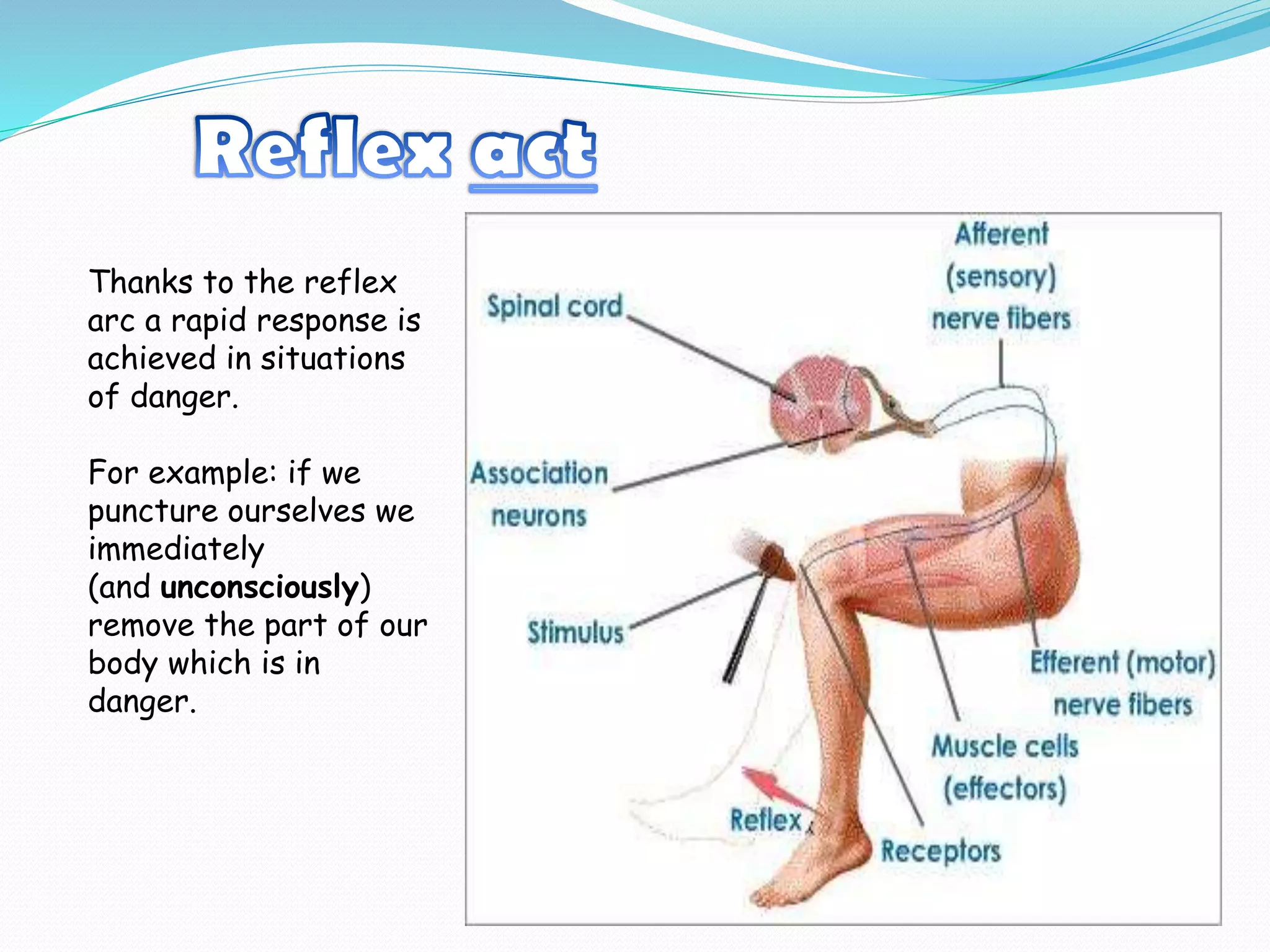
Thanks to the reflex
arc a rapid response is
achieved in situations
of danger.
For example: if we
puncture ourselves we
immediately
(and unconsciously)
remove the part of our
body which is in
danger.
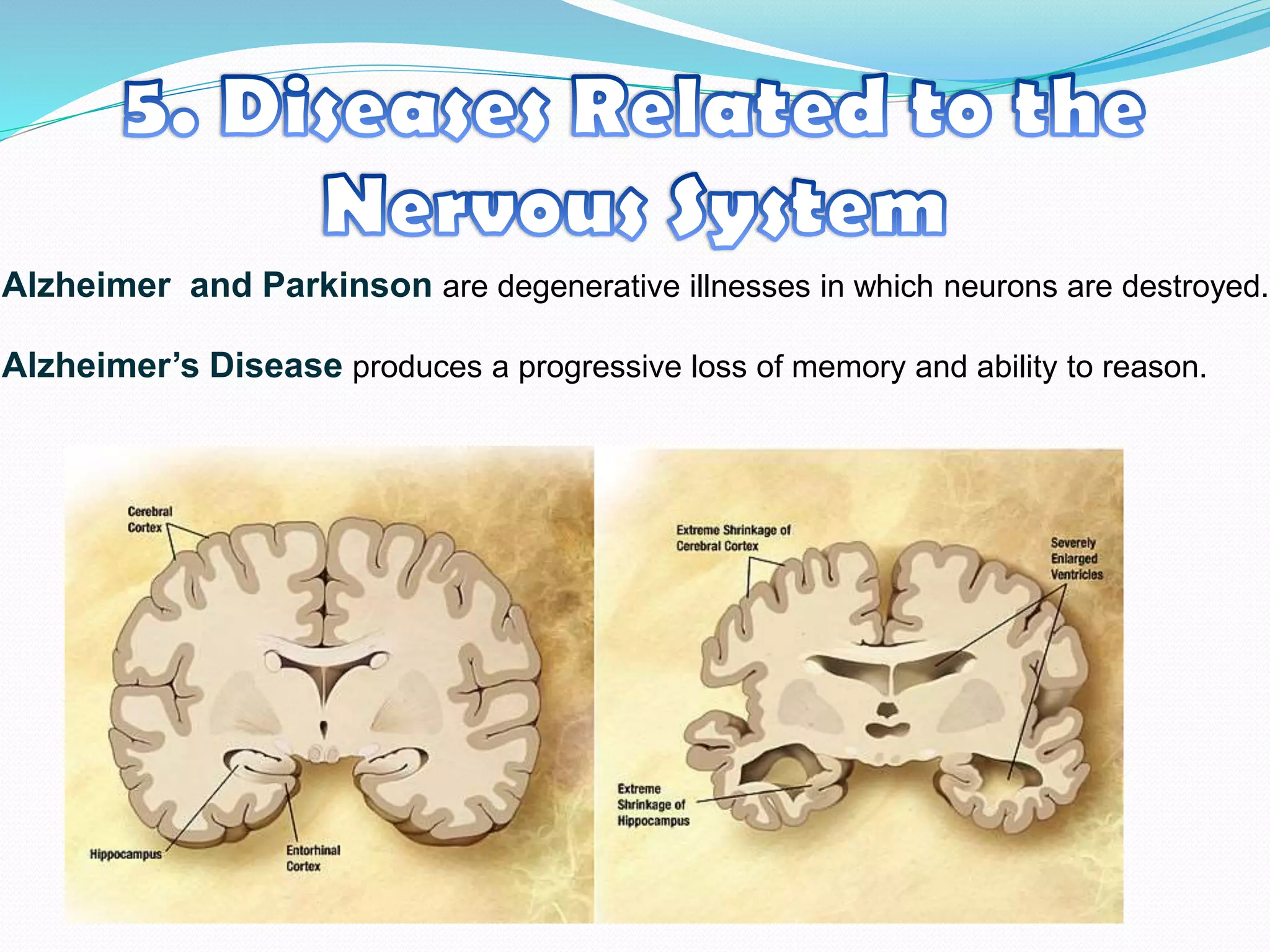
Alzheimer and Parkinson are degenerative illnesses in which neurons are destroyed.
Alzheimer’s Disease produces a progressive loss of memory and ability to reason.
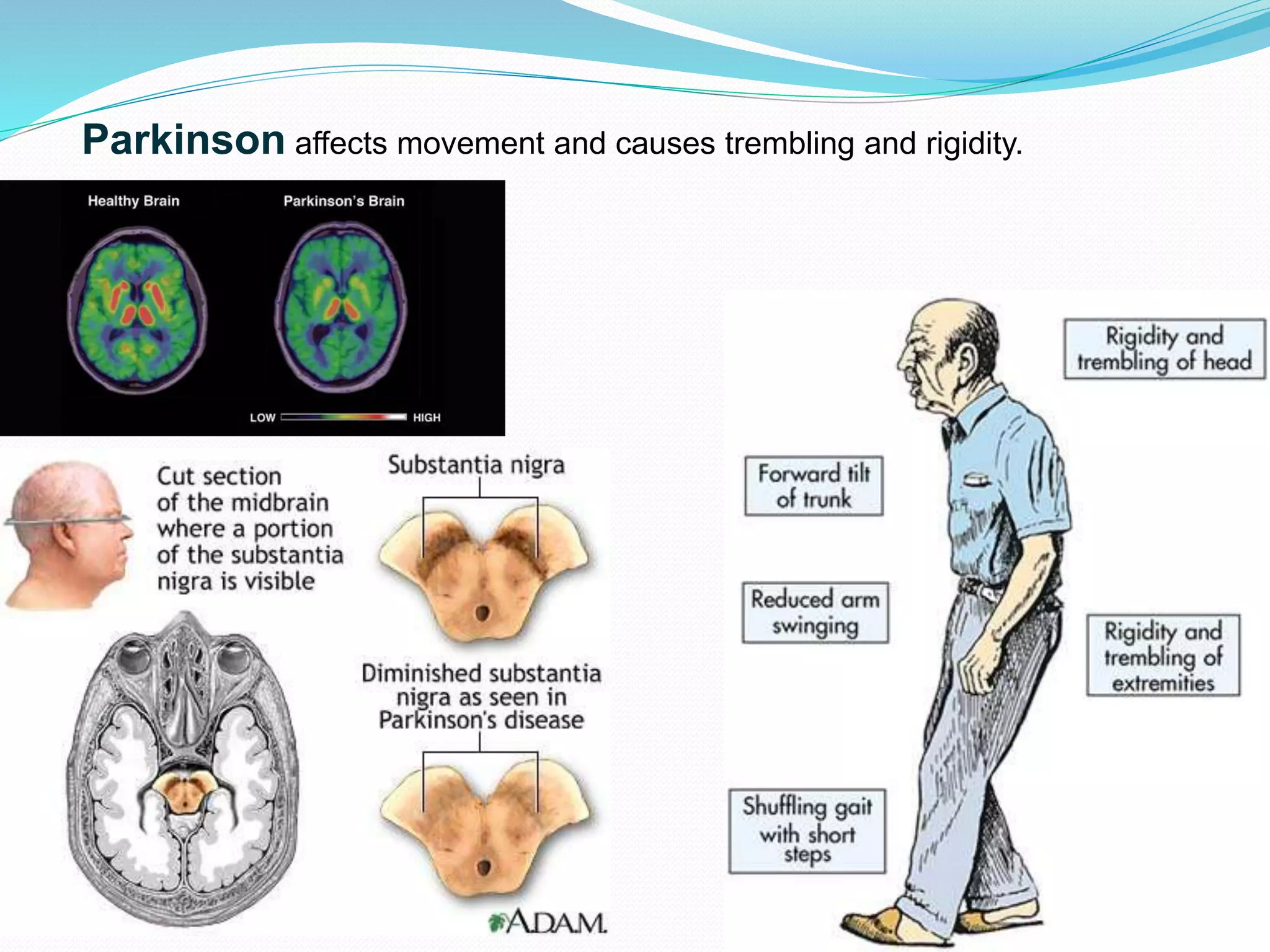
Parkinson affects movement and causes trembling and rigidity.
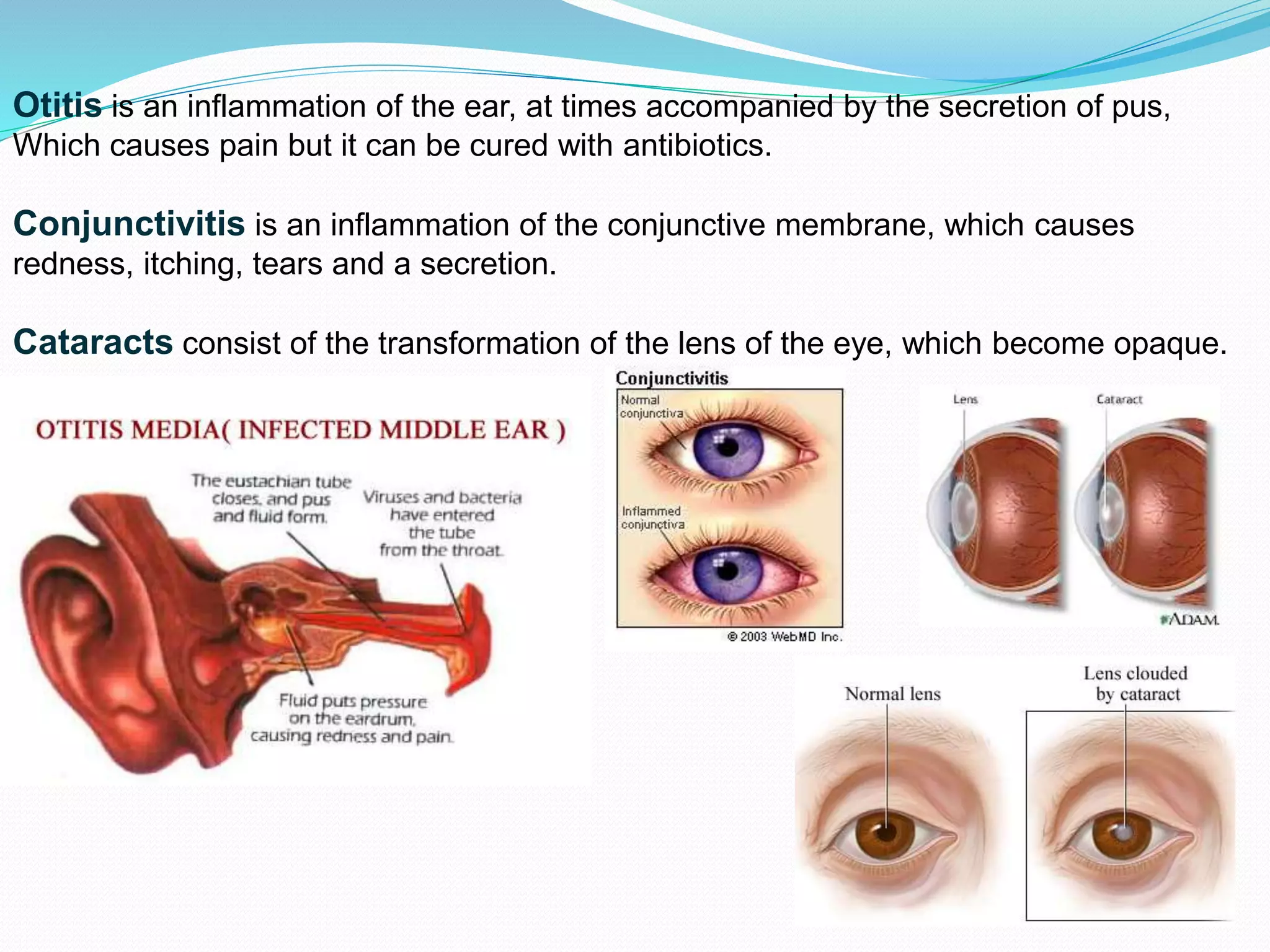
Otitis is an inflammation of the ear, at times accompanied by the secretion of pus,
Which causes pain but it can be cured with antibiotics.
Conjunctivitis is an inflammation of the conjunctive membrane, which causes
redness, itching, tears and a secretion.
Cataracts consist of the transformation of the lens of the eye, which become opaque.

The Nervous System

  • 2.
    INDEX 1. Interaction andcoordination in human beings 2. Nervous tissues and neurons 3. Receptors 4. Nervous system 5. Diseases related to the nervous system
  • 3.
    All organisms needto: • interact with the environment • get information from their own bodies • coordinate their activities The interaction process is the set of processes through which an organism:  obtains information from the environment  takes decisions,  controls its actions  coordinates the functioning of the body.
  • 4.
    The process ofinteraction has 3 steps: Obtaining information  by the receptors, which get information from the exterior and the interior of the body. Analysis of the information and elaboration of a response  by the nervous system and the endocrine system Execution of the response  by the effectors, like muscles or glands
  • 5.
    Systems involved ininteraction and co-ordination System Main features Receptors They are isolated organs, like the eyes, the ears, etc. Nervous system It is made up by neurons Endocrine system Its glands produce hormones, which travel through the blood Muscular and skeletal systems They carry out the responses requiring movement or displacement Activity 2, 3 and 4 page 97
  • 6.
    •Cell body: thickestpart of the neuron. It contains the nucleus and the majority of the organelles. •Axon: a large prolongation which comes out of the cell body and branches out at the end. •Dendrites: small branching prolongations of the body of the cell. •Schwann cells: they protect and isolate the axon.
  • 7.
    Neurons are conectedto each other by means of the dendrites and the branched ends of the axon. Dendrite and axon are separated by a small gap known as the synapse.
  • 8.
    Nervous impulses areweak electric currents which are transmitted by the axon at a speed of as much as 100 m/s
  • 9.
    Neurotransmitters are chemicalsubstances released by the axon of a neuron when it is reached by a nervous impulse. This substances are detected by the following neuron which produces another nervous impulse.
  • 10.
    Sensory Neurons They carryinformation from the receptors to the central nervous system (brain and spinal cord) Motor Neurons They take information to the effectors Interneurons They connect sensory neurons and motor neurons Activity 2 and 4 page 99
  • 11.
    Sensory receptors arethe structures of our body which are specialised in capturing stimuli.  Some of them are concentrated in the organs of the five senses  Others are in our viscera, muscles and joints
  • 12.
    Type of receptorStimulus Organ Mechanoreceptors Pressure, sound Skin, muscles, viscera, ear Thermoreceptors Heat and cold Skin Chemoreceptors Chemical substances (smell, flavour) Olfactory mucus (nose), taste buds (tongue) Photoreceptors Light Retina of the eye Nocireceptors Pain Skin, muscles, viscera
  • 13.
  • 14.
  • 15.
  • 16.
  • 17.
  • 18.
    The nervous systemconsists of : • A. Central nervous system •A. 1. The encephalon •A. 2. The spinal cord •B. Peripheral nervous system •The nerves
  • 19.
    A. Central nervoussystem A. 1. Encephalon Parts:  cerebrum or brain Cerebellum  brain stem (bulbo raquídeo)  limbic system with: • hypothalamus • thalamus
  • 20.
    A. pituitary gland B.cerebrum or brain C. skull D. corpus callosum E. thalamus F. hypothalamus G. brain stem H. cerebellum I. medulla J. spinal cord
  • 21.
    •Cranium (bone) •Meninges (3membranes) •Cerebro-spinal fluid
  • 22.
    analyses all theinformation from the receptors and orders voluntary responses. It is the centre for language, thought, creativity learning and memory. It is the only conscious structure of the encephalon. intervenes in the control of muscles, balance and the posture of the body. controls the heartbeat, breathing, deglution, contracting and dilating of blood vessels, etc. It also causes reflexes such as coughing, vomiting and sneezing
  • 23.
    The limbic systemis the basis of our emotions. It contains the thalamus, hypothalamus and other parts. It controls instinctive behaviour related with feeding, agression and sexuality. filters the information from the receptors. controls the temperature of the body and blood pressure.
  • 24.
    •Spinal column or vertebralcolumn (bone) •Meninges (3 membranes) •Cerebro-spinal liquid A. 2. Spinal cord
  • 28.
    A nerve containsa mixture of nerve fibres (axons) B. Peripheral nervous system: the nerves Nerves can be: -Cranial  linked to the brain -Spinal  linked to the spinal cord
  • 29.
  • 30.
    1. A stimulusis produced on a receptor. 2. A sensory nerve captures the information. 3. The spinal cord acts as integration centre: it orders the response. 4. The information is collected by interneurons and sent to the motor nerve. 5. The motor nerve conects to an effector, the muscle, which produces the response.
  • 32.
    Thanks to thereflex arc a rapid response is achieved in situations of danger. For example: if we puncture ourselves we immediately (and unconsciously) remove the part of our body which is in danger.
  • 34.
    Alzheimer and Parkinsonare degenerative illnesses in which neurons are destroyed. Alzheimer’s Disease produces a progressive loss of memory and ability to reason.
  • 35.
    Parkinson affects movementand causes trembling and rigidity.
  • 36.
    Otitis is aninflammation of the ear, at times accompanied by the secretion of pus, Which causes pain but it can be cured with antibiotics. Conjunctivitis is an inflammation of the conjunctive membrane, which causes redness, itching, tears and a secretion. Cataracts consist of the transformation of the lens of the eye, which become opaque.