Unit 4. B:
Endocrine System
Index
1.Introduction
2. How Parathormone Works
3. Main Hormones
4.Regulation of the Hormones’ Production
5. How Pancreas Works
6. Differences between Nervous System and
Endocrine System
7. Ilnesses related to the Endocrine System
1. Introduction
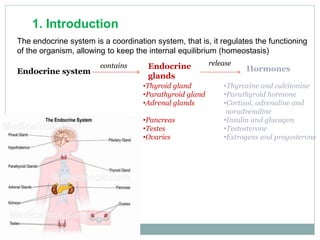
The endocrine system is a coordination system, that is, it regulates the functioning
of the organism, allowing to keep the internal equilibrium (homeostasis)
Endocrine system
Endocrine
glands
release
Hormones
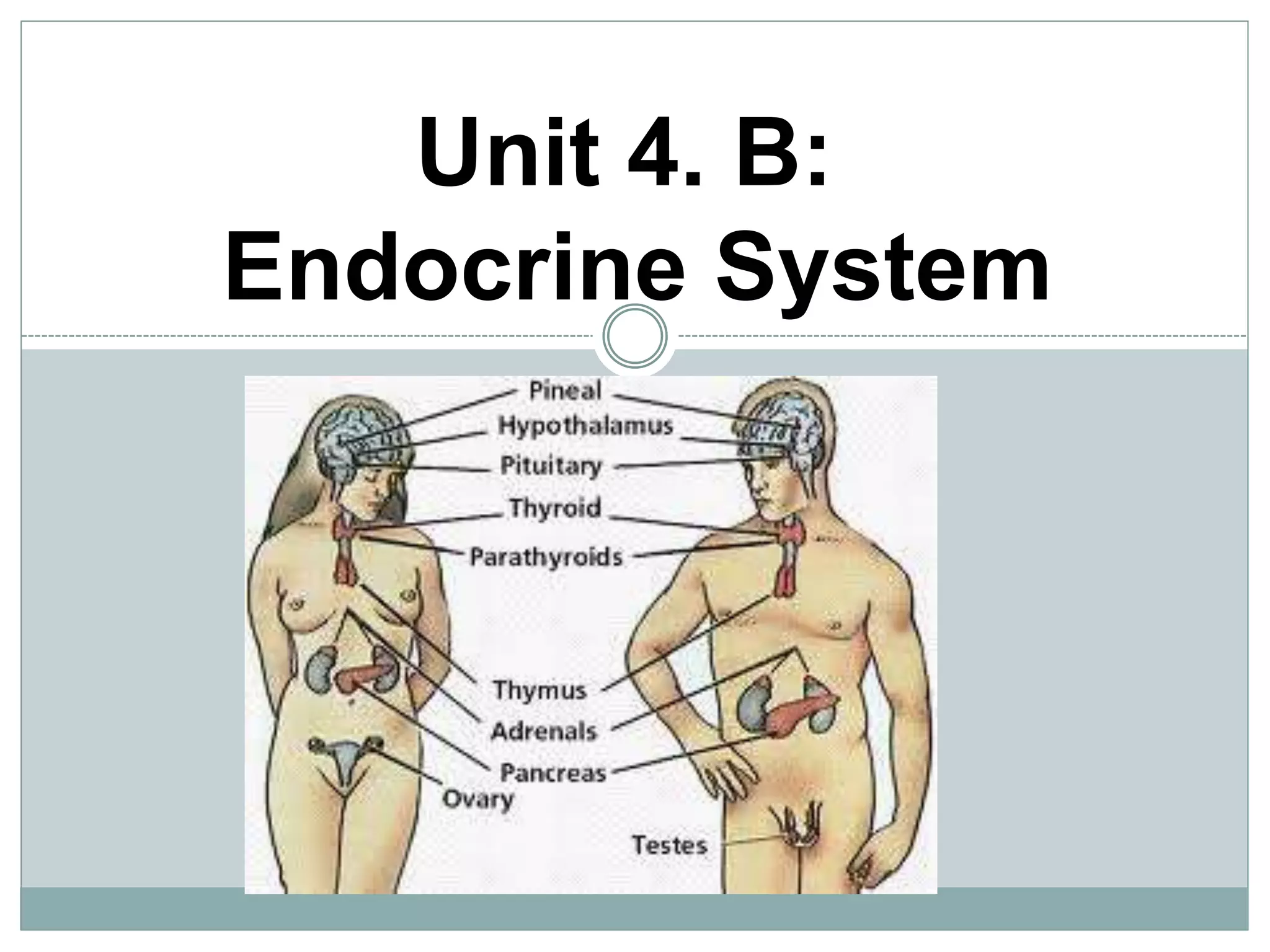
•Thyroid gland
•Parathyroid gland
•Adrenal glands
•Pancreas
•Testes
•Ovaries
•Thyroxine and calcitonine
•Parathyroid hormone
•Cortisol, adrenaline and
noradrenaline
•Insulin and glucagon
•Testosterone
•Estrogens and progesterone
contains
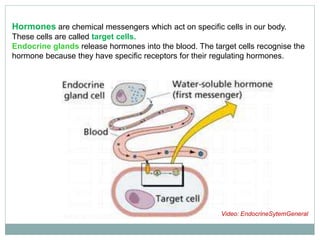
Hormones are chemical messengers which act on specific cells in our body.
These cells are called target cells.
Endocrine glands release hormones into the blood. The target cells recognise the
hormone because they have specific receptors for their regulating hormones.
Video: EndocrineSytemGeneral
2. How Parathormone Works
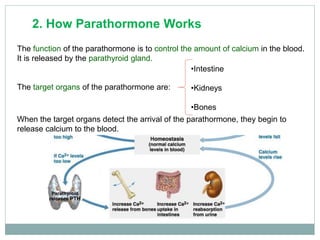
The function of the parathormone is to control the amount of calcium in the blood.
It is released by the parathyroid gland.
The target organs of the parathormone are:
•Intestine
•Kidneys
•Bones
When the target organs detect the arrival of the parathormone, they begin to
release calcium to the blood.
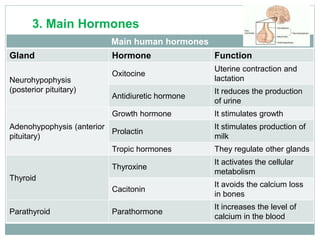
3. Main Hormones
Main human hormones
Gland Hormone Function
Neurohypophysis
(posterior pituitary)
Oxitocine
Uterine contraction and
lactation
Antidiuretic hormone
It reduces the production
of urine
Adenohypophysis (anterior
pituitary)
Growth hormone It stimulates growth
Prolactin
It stimulates production of
milk
Tropic hormones They regulate other glands
Thyroid
Thyroxine
It activates the cellular
metabolism
Cacitonin
It avoids the calcium loss
in bones
Parathyroid Parathormone
It increases the level of
calcium in the blood
Main human hormones
Gland Hormone Function
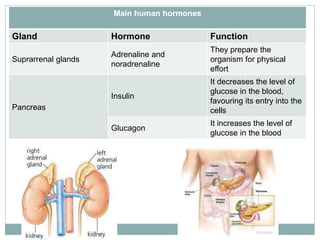
Suprarrenal glands
Adrenaline and
noradrenaline
They prepare the
organism for physical
effort
Pancreas
Insulin
It decreases the level of
glucose in the blood,
favouring its entry into the
cells
Glucagon
It increases the level of
glucose in the blood
Main human hormones
Gland Hormone Function
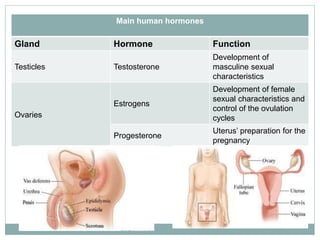
Testicles Testosterone
Development of
masculine sexual
characteristics
Ovaries
Estrogens
Development of female
sexual characteristics and
control of the ovulation
cycles
Progesterone
Uterus’ preparation for the
pregnancy
3. Regulation of the hormones’ production
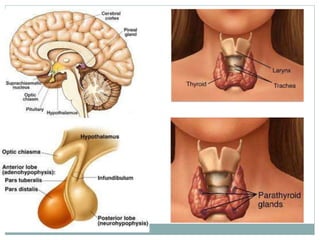
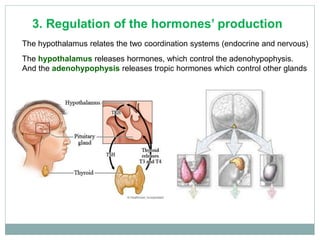
The hypothalamus relates the two coordination systems (endocrine and nervous)
The hypothalamus releases hormones, which control the adenohypophysis.
And the adenohypophysis releases tropic hormones which control other glands
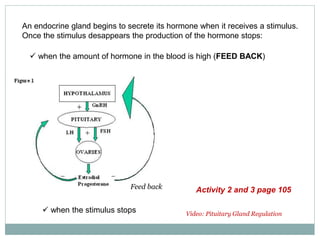
An endocrine gland begins to secrete its hormone when it receives a stimulus.
Once the stimulus desappears the production of the hormone stops:
 when the amount of hormone in the blood is high (FEED BACK)
Feed back
 when the stimulus stops Video: Pituitary Gland Regulation
Activity 2 and 3 page 105
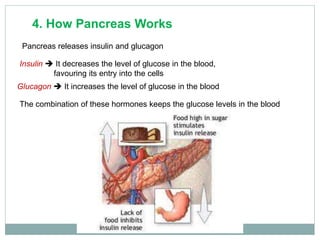
4. How Pancreas Works
Pancreas releases insulin and glucagon
Insulin  It decreases the level of glucose in the blood,
favouring its entry into the cells
Glucagon  It increases the level of glucose in the blood
The combination of these hormones keeps the glucose levels in the blood
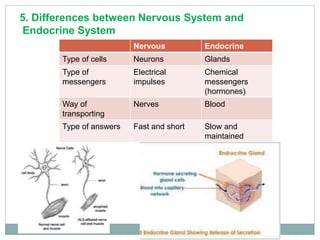
5. Differences between Nervous System and
Endocrine System
Nervous Endocrine
Type of cells Neurons Glands
Type of
messengers
Electrical
impulses
Chemical
messengers
(hormones)
Way of
transporting
Nerves Blood
Type of answers Fast and short Slow and
maintained
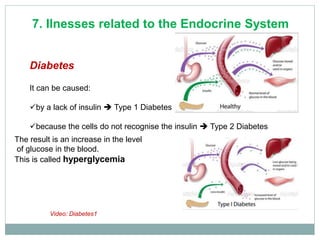
Diabetes
It can be caused:
by a lack of insulin  Type 1 Diabetes
because the cells do not recognise the insulin  Type 2 Diabetes
The result is an increase in the level
of glucose in the blood.
This is called hyperglycemia
7. Ilnesses related to the Endocrine System
Video: Diabetes1

Endocrine System

  • 1.
  • 2.
    Index 1.Introduction 2. How ParathormoneWorks 3. Main Hormones 4.Regulation of the Hormones’ Production 5. How Pancreas Works 6. Differences between Nervous System and Endocrine System 7. Ilnesses related to the Endocrine System
  • 3.
    1. Introduction The endocrinesystem is a coordination system, that is, it regulates the functioning of the organism, allowing to keep the internal equilibrium (homeostasis) Endocrine system Endocrine glands release Hormones •Thyroid gland •Parathyroid gland •Adrenal glands •Pancreas •Testes •Ovaries •Thyroxine and calcitonine •Parathyroid hormone •Cortisol, adrenaline and noradrenaline •Insulin and glucagon •Testosterone •Estrogens and progesterone contains
  • 4.
    Hormones are chemicalmessengers which act on specific cells in our body. These cells are called target cells. Endocrine glands release hormones into the blood. The target cells recognise the hormone because they have specific receptors for their regulating hormones. Video: EndocrineSytemGeneral
  • 5.
    2. How ParathormoneWorks The function of the parathormone is to control the amount of calcium in the blood. It is released by the parathyroid gland. The target organs of the parathormone are: •Intestine •Kidneys •Bones When the target organs detect the arrival of the parathormone, they begin to release calcium to the blood.
  • 6.
    3. Main Hormones Mainhuman hormones Gland Hormone Function Neurohypophysis (posterior pituitary) Oxitocine Uterine contraction and lactation Antidiuretic hormone It reduces the production of urine Adenohypophysis (anterior pituitary) Growth hormone It stimulates growth Prolactin It stimulates production of milk Tropic hormones They regulate other glands Thyroid Thyroxine It activates the cellular metabolism Cacitonin It avoids the calcium loss in bones Parathyroid Parathormone It increases the level of calcium in the blood
  • 8.
    Main human hormones GlandHormone Function Suprarrenal glands Adrenaline and noradrenaline They prepare the organism for physical effort Pancreas Insulin It decreases the level of glucose in the blood, favouring its entry into the cells Glucagon It increases the level of glucose in the blood
  • 9.
    Main human hormones GlandHormone Function Testicles Testosterone Development of masculine sexual characteristics Ovaries Estrogens Development of female sexual characteristics and control of the ovulation cycles Progesterone Uterus’ preparation for the pregnancy
  • 10.
    3. Regulation ofthe hormones’ production The hypothalamus relates the two coordination systems (endocrine and nervous) The hypothalamus releases hormones, which control the adenohypophysis. And the adenohypophysis releases tropic hormones which control other glands
  • 11.
    An endocrine glandbegins to secrete its hormone when it receives a stimulus. Once the stimulus desappears the production of the hormone stops:  when the amount of hormone in the blood is high (FEED BACK) Feed back  when the stimulus stops Video: Pituitary Gland Regulation Activity 2 and 3 page 105
  • 12.
    4. How PancreasWorks Pancreas releases insulin and glucagon Insulin  It decreases the level of glucose in the blood, favouring its entry into the cells Glucagon  It increases the level of glucose in the blood The combination of these hormones keeps the glucose levels in the blood
  • 13.
    5. Differences betweenNervous System and Endocrine System Nervous Endocrine Type of cells Neurons Glands Type of messengers Electrical impulses Chemical messengers (hormones) Way of transporting Nerves Blood Type of answers Fast and short Slow and maintained
  • 14.
    Diabetes It can becaused: by a lack of insulin  Type 1 Diabetes because the cells do not recognise the insulin  Type 2 Diabetes The result is an increase in the level of glucose in the blood. This is called hyperglycemia 7. Ilnesses related to the Endocrine System Video: Diabetes1