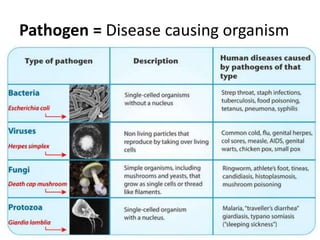
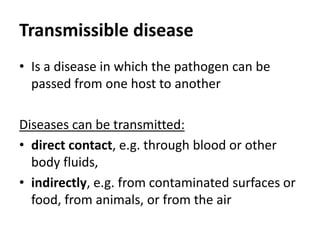
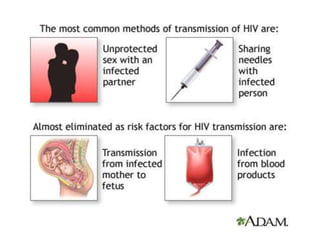
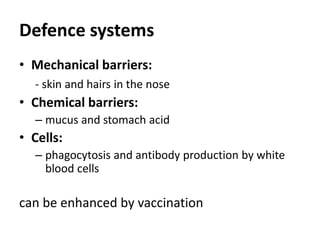
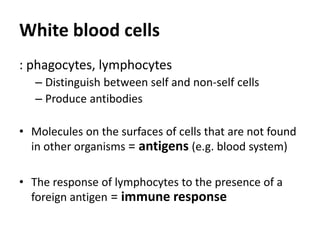
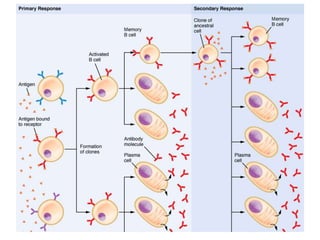
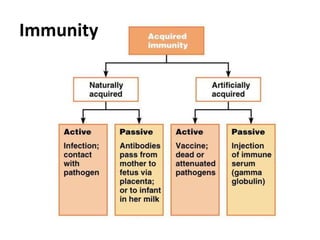
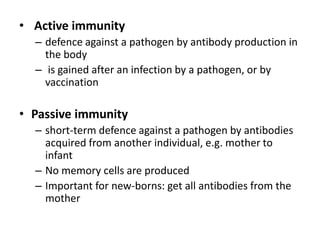
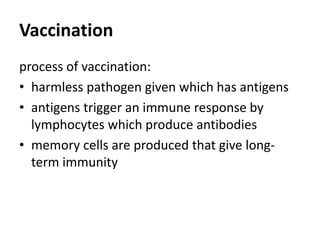
This document defines key terms related to disease transmission and the immune system. It explains that pathogens can transmit diseases through direct or indirect contact. The body has mechanical, chemical, and cellular defenses against pathogens, including white blood cells that distinguish self from non-self and produce antibodies. Vaccination exposes the body to harmless antigens to trigger antibody production and develop immunological memory for long-term protection. Both active and passive immunity are described, with active immunity resulting from infection or vaccination and producing memory cells, while passive immunity involves acquiring antibodies without memory cell development.





![Transport In Animals[1].pptx Cambridge IGCSE](https://cdn.slidesharecdn.com/ss_thumbnails/transportinanimals1-240526233901-c748a533-thumbnail.jpg?width=640&height=640&fit=bounds)


![Sub 1[1].5 form 5](https://cdn.slidesharecdn.com/ss_thumbnails/sub11-5bodydefencemechanism-120602213445-phpapp01-thumbnail.jpg?width=640&height=640&fit=bounds)


