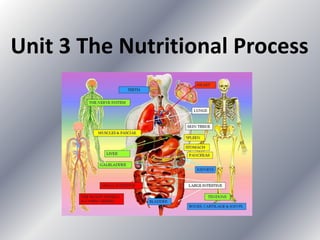
Unit 3 The Nutritional Process
Index
1. Introduction
2. Digestive system
3. Respiratory system
4. Circulatory system
5. Excretory system
1. Introduction
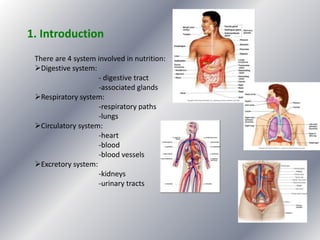
There are 4 system involved in nutrition:
Digestive system:
- digestive tract
-associated glands
Respiratory system:
-respiratory paths
-lungs
Circulatory system:
-heart
-blood
-blood vessels
Excretory system:
-kidneys
-urinary tracts
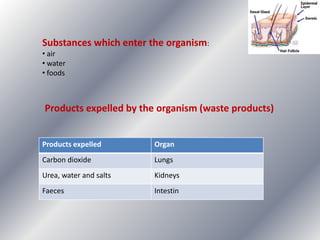
Substances which enter the organism:
• air
• water
• foods

Products expelled by the organism (waste products)
Products expelled

Organ

Carbon dioxide

Lungs

Urea, water and salts

Kidneys

Faeces

Intestin
2. Digestive system
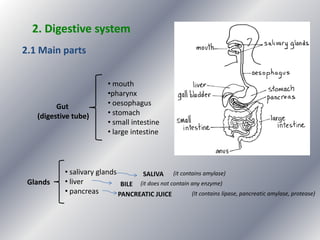
2.1 Main parts

Gut
(digestive tube)

Glands

• mouth
•pharynx
• oesophagus
• stomach
• small intestine
• large intestine

• salivary glands
SALIVA (it contains amylase)
• liver
BILE (it does not contain any enzyme)
• pancreas
(It contains lipase, pancreatic amylase, protease)
PANCREATIC JUICE
2.2 The digestive process
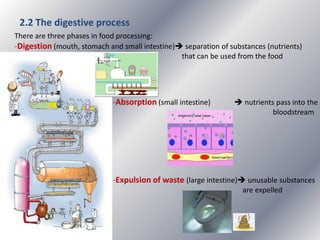
There are three phases in food processing:
-Digestion (mouth, stomach and small intestine) separation of substances (nutrients)
that can be used from the food

-Absorption (small intestine)

 nutrients pass into the
bloodstream

-Expulsion of waste (large intestine) unusable substances
are expelled
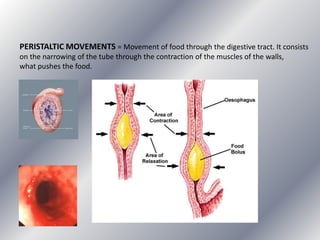
PERISTALTIC MOVEMENTS = Movement of food through the digestive tract. It consists
on the narrowing of the tube through the contraction of the muscles of the walls,
what pushes the food.
2.3 Digestion
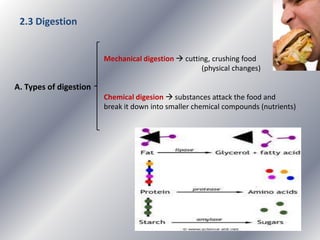
Mechanical digestion  cutting, crushing food
(physical changes)

A. Types of digestion
Chemical digesion  substances attack the food and
break it down into smaller chemical compounds (nutrients)
B. Stages of digestion

Physical digestion

Chemical digestion

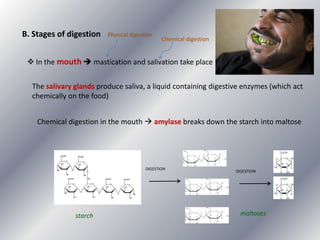
 In the mouth  mastication and salivation take place
The salivary glands produce saliva, a liquid containing digestive enzymes (which act
chemically on the food)
Chemical digestion in the mouth  amylase breaks down the starch into maltose

DIGESTION

starch

DIGESTION

maltoses
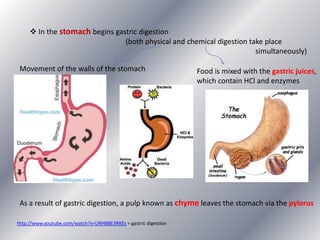
 In the stomach begins gastric digestion
(both physical and chemical digestion take place
simultaneously)
Movement of the walls of the stomach

Food is mixed with the gastric juices,
which contain HCl and enzymes

As a result of gastric digestion, a pulp known as chyme leaves the stomach via the pylorus
http://www.youtube.com/watch?v=URHBBE3RKEs = gastric digestion
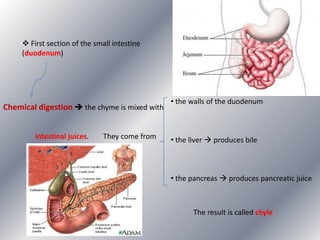
 First section of the small intestine
(duodenum)

Chemical digestion  the chyme is mixed with
intestinal juices.

They come from

• the walls of the duodenum

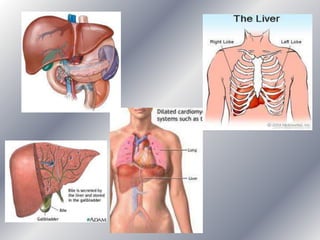
• the liver  produces bile

• the pancreas  produces pancreatic juice

The result is called chyle
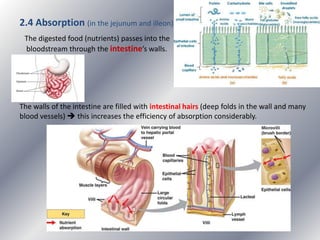
2.4 Absorption (in the jejunum and illeon)
The digested food (nutrients) passes into the
bloodstream through the intestine’s walls.

The walls of the intestine are filled with intestinal hairs (deep folds in the wall and many
blood vessels)  this increases the efficiency of absorption considerably.
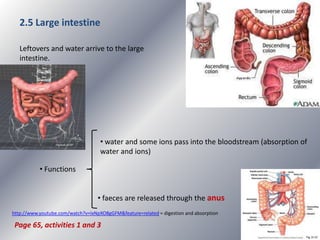
2.5 Large intestine
Leftovers and water arrive to the large
intestine.

• water and some ions pass into the bloodstream (absorption of
water and ions)
• Functions

• faeces are released through the anus
http://www.youtube.com/watch?v=IxNpXO8gGFM&feature=related = digestion and absorption

Page 65, activities 1 and 3
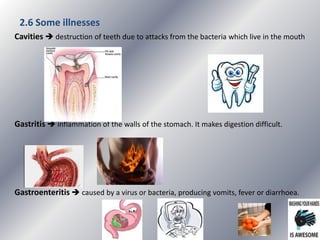
2.6 Some illnesses
Cavities  destruction of teeth due to attacks from the bacteria which live in the mouth

Gastritis  inflammation of the walls of the stomach. It makes digestion difficult.

Gastroenteritis  caused by a virus or bacteria, producing vomits, fever or diarrhoea.

Unit3 nutritionalprocessdigestive_illnesses

  • 1.
    Unit 3 TheNutritional Process
  • 2.
    Index 1. Introduction 2. Digestivesystem 3. Respiratory system 4. Circulatory system 5. Excretory system
  • 3.
    1. Introduction There are4 system involved in nutrition: Digestive system: - digestive tract -associated glands Respiratory system: -respiratory paths -lungs Circulatory system: -heart -blood -blood vessels Excretory system: -kidneys -urinary tracts
  • 4.
    Substances which enterthe organism: • air • water • foods Products expelled by the organism (waste products) Products expelled Organ Carbon dioxide Lungs Urea, water and salts Kidneys Faeces Intestin
  • 5.
    2. Digestive system 2.1Main parts Gut (digestive tube) Glands • mouth •pharynx • oesophagus • stomach • small intestine • large intestine • salivary glands SALIVA (it contains amylase) • liver BILE (it does not contain any enzyme) • pancreas (It contains lipase, pancreatic amylase, protease) PANCREATIC JUICE
  • 6.
    2.2 The digestiveprocess There are three phases in food processing: -Digestion (mouth, stomach and small intestine) separation of substances (nutrients) that can be used from the food -Absorption (small intestine)  nutrients pass into the bloodstream -Expulsion of waste (large intestine) unusable substances are expelled
  • 7.
    PERISTALTIC MOVEMENTS =Movement of food through the digestive tract. It consists on the narrowing of the tube through the contraction of the muscles of the walls, what pushes the food.
  • 8.
    2.3 Digestion Mechanical digestion cutting, crushing food (physical changes) A. Types of digestion Chemical digesion  substances attack the food and break it down into smaller chemical compounds (nutrients)
  • 9.
    B. Stages ofdigestion Physical digestion Chemical digestion  In the mouth  mastication and salivation take place The salivary glands produce saliva, a liquid containing digestive enzymes (which act chemically on the food) Chemical digestion in the mouth  amylase breaks down the starch into maltose DIGESTION starch DIGESTION maltoses
  • 10.
     In thestomach begins gastric digestion (both physical and chemical digestion take place simultaneously) Movement of the walls of the stomach Food is mixed with the gastric juices, which contain HCl and enzymes As a result of gastric digestion, a pulp known as chyme leaves the stomach via the pylorus http://www.youtube.com/watch?v=URHBBE3RKEs = gastric digestion
  • 11.
     First sectionof the small intestine (duodenum) Chemical digestion  the chyme is mixed with intestinal juices. They come from • the walls of the duodenum • the liver  produces bile • the pancreas  produces pancreatic juice The result is called chyle
  • 12.
    2.4 Absorption (inthe jejunum and illeon) The digested food (nutrients) passes into the bloodstream through the intestine’s walls. The walls of the intestine are filled with intestinal hairs (deep folds in the wall and many blood vessels)  this increases the efficiency of absorption considerably.
  • 13.
    2.5 Large intestine Leftoversand water arrive to the large intestine. • water and some ions pass into the bloodstream (absorption of water and ions) • Functions • faeces are released through the anus http://www.youtube.com/watch?v=IxNpXO8gGFM&feature=related = digestion and absorption Page 65, activities 1 and 3
  • 15.
    2.6 Some illnesses Cavities destruction of teeth due to attacks from the bacteria which live in the mouth Gastritis  inflammation of the walls of the stomach. It makes digestion difficult. Gastroenteritis  caused by a virus or bacteria, producing vomits, fever or diarrhoea.