CHAPTER 3
COORDINATION AND
RESPONSE
3.1 Response and
coordination
 Changes may occur around us or inside of our
body
 Organisms can detect the changes in the
environment and respond to the changes in
certain ways
 The external environment- physical & chemical
conditions outside an organism and how these
conditions affect it(light,sound,smell,etc..)
 The internal environment- physical & chemical
conditions of the tissue fluid surrounding the
tissues of an organism(body temperature, osmotic
pressure and blood glucose level)
The need for an organism to be
sensitive
 The internal environment must be constant for
an organism to be healthy or survive
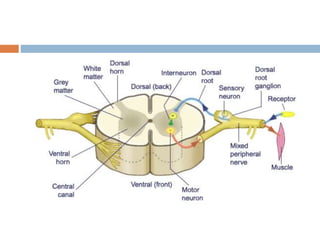
 An organism cannot control its external
environment, can control internal env. to a
certain extent
Being able to respond enables an
organism:
 To regulate its internal environment
 Obtain and use resources, grow, reproduce,
and maintain stable internal conditions while
living in a constantly changing external
environment
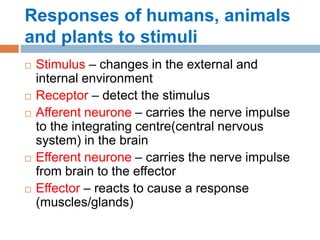
Responses of humans, animals
and plants to stimuli
 Stimulus – changes in the external and
internal environment
 Receptor – detect the stimulus
 Afferent neurone – carries the nerve impulse
to the integrating centre(central nervous
system) in the brain
 Efferent neurone – carries the nerve impulse
from brain to the effector
 Effector – reacts to cause a response
(muscles/glands)
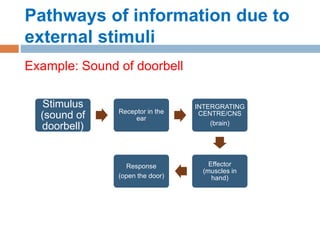
Pathways of information due to
external stimuli
Example: Sound of doorbell
Stimulus
(sound of
doorbell)
Receptor in the
ear
INTERGRATING
CENTRE/CNS
(brain)
Effector
(muscles in
hand)
Response
(open the door)
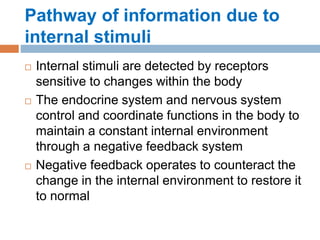
Pathway of information due to
internal stimuli
 Internal stimuli are detected by receptors
sensitive to changes within the body
 The endocrine system and nervous system
control and coordinate functions in the body to
maintain a constant internal environment
through a negative feedback system
 Negative feedback operates to counteract the
change in the internal environment to restore it
to normal
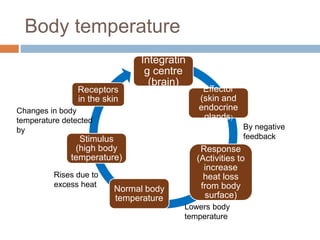
Body temperature
Integratin
g centre
(brain)
Effector
(skin and
endocrine
glands)
Response
(Activities to
increase
heat loss
from body
surface)
Normal body
temperature
Stimulus
(high body
temperature)
Receptors
in the skin
By negative
feedback
Lowers body
temperature
Rises due to
excess heat
Changes in body
temperature detected
by
Coordination
 Is the process involved in the detection of
stimulus and the subsequent response of the
organism towards the stimulus
 Involve nervous system and endocrine system
3.2 Role of human nervous
system
 Role of nervous system:
- Detect changes by receptors, process the
received sensory information and initiates the
response
- Helps us think and act consciously
- Stores information and allows us to learn from
past experiences
- Adapts the body to changes in the
environment
- Controls and coordinates the activities of all
other systems in the body
Organisation of nervous
system
 NS is made up of :
1) Central nervous system [brain & spinal
cord]
2) Peripheral nervous system [cranial nerve &
spinal nerve]
Central nervous system
 Control centre of the body
 Consists of brain & spinal cord
 Processes sensory information, making
decision and initiating responses
Peripheral nervous system
 Is responsible for the communication between
the CNS and the rest of the body
 Consists of all the nerves that branch out from
the CNS and connects it to the rest of the body
 Cranial nerves – nerves that carry impulses to
and from the brain
 Spinal nerves – nerves that carry impulses to
and from the spinal cord
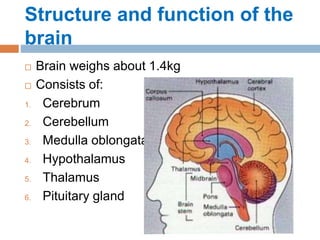
Structure and function of the
brain
 Brain weighs about 1.4kg
 Consists of:
1. Cerebrum
2. Cerebellum
3. Medulla oblongata
4. Hypothalamus
5. Thalamus
6. Pituitary gland
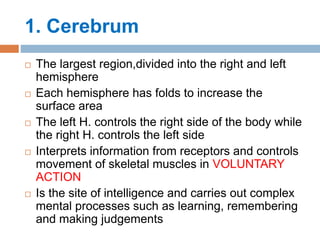
1. Cerebrum
 The largest region,divided into the right and left
hemisphere
 Each hemisphere has folds to increase the
surface area
 The left H. controls the right side of the body while
the right H. controls the left side
 Interprets information from receptors and controls
movement of skeletal muscles in VOLUNTARY
ACTION
 Is the site of intelligence and carries out complex
mental processes such as learning, remembering
and making judgements
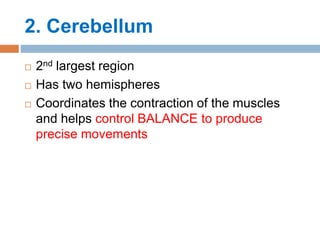
2. Cerebellum
 2nd largest region
 Has two hemispheres
 Coordinates the contraction of the muscles
and helps control BALANCE to produce
precise movements
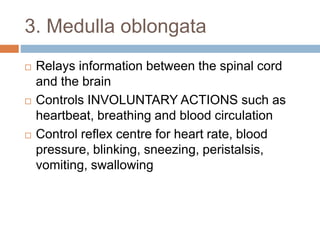
3. Medulla oblongata
 Relays information between the spinal cord
and the brain
 Controls INVOLUNTARY ACTIONS such as
heartbeat, breathing and blood circulation
 Control reflex centre for heart rate, blood
pressure, blinking, sneezing, peristalsis,
vomiting, swallowing
4. Thalamus
 Receives information from all sensory
receptors and then transmits it to the proper
region of the cerebrum for further processing
5. Hypothalamus
 Control centre for recognition and analysis of
hunger,thirst,fatigue, anger and body
temperature
 Controls the coordination and the nervous
system and endocrine system
6. Pituitary gland
 Is attached to hypothalamus
 Connects the central nervous system with the
endocrine system
 Produce many important hormones
Spinal cord
 Is the link between the brain and the
peripheral NS
 Consists of grey matter in the middle and white
matter around it
 Spinal nerves arise from spinal cord
 Each spinal nerve has a dorsal root (contains
afferent neuron) and ventral root (contains
efferent neurone)
 CONTROL REFLEX ACTION
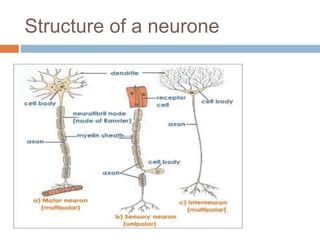
Structure of a neurone
Coordination and response

Coordination and response

  • 1.
  • 2.
    3.1 Response and coordination Changes may occur around us or inside of our body  Organisms can detect the changes in the environment and respond to the changes in certain ways  The external environment- physical & chemical conditions outside an organism and how these conditions affect it(light,sound,smell,etc..)  The internal environment- physical & chemical conditions of the tissue fluid surrounding the tissues of an organism(body temperature, osmotic pressure and blood glucose level)
  • 3.
    The need foran organism to be sensitive  The internal environment must be constant for an organism to be healthy or survive  An organism cannot control its external environment, can control internal env. to a certain extent
  • 4.
    Being able torespond enables an organism:  To regulate its internal environment  Obtain and use resources, grow, reproduce, and maintain stable internal conditions while living in a constantly changing external environment
  • 5.
    Responses of humans,animals and plants to stimuli  Stimulus – changes in the external and internal environment  Receptor – detect the stimulus  Afferent neurone – carries the nerve impulse to the integrating centre(central nervous system) in the brain  Efferent neurone – carries the nerve impulse from brain to the effector  Effector – reacts to cause a response (muscles/glands)
  • 6.
    Pathways of informationdue to external stimuli Example: Sound of doorbell Stimulus (sound of doorbell) Receptor in the ear INTERGRATING CENTRE/CNS (brain) Effector (muscles in hand) Response (open the door)
  • 7.
    Pathway of informationdue to internal stimuli  Internal stimuli are detected by receptors sensitive to changes within the body  The endocrine system and nervous system control and coordinate functions in the body to maintain a constant internal environment through a negative feedback system  Negative feedback operates to counteract the change in the internal environment to restore it to normal
  • 8.
    Body temperature Integratin g centre (brain) Effector (skinand endocrine glands) Response (Activities to increase heat loss from body surface) Normal body temperature Stimulus (high body temperature) Receptors in the skin By negative feedback Lowers body temperature Rises due to excess heat Changes in body temperature detected by
  • 9.
    Coordination  Is theprocess involved in the detection of stimulus and the subsequent response of the organism towards the stimulus  Involve nervous system and endocrine system
  • 10.
    3.2 Role ofhuman nervous system  Role of nervous system: - Detect changes by receptors, process the received sensory information and initiates the response - Helps us think and act consciously - Stores information and allows us to learn from past experiences - Adapts the body to changes in the environment - Controls and coordinates the activities of all other systems in the body
  • 11.
    Organisation of nervous system NS is made up of : 1) Central nervous system [brain & spinal cord] 2) Peripheral nervous system [cranial nerve & spinal nerve]
  • 12.
    Central nervous system Control centre of the body  Consists of brain & spinal cord  Processes sensory information, making decision and initiating responses
  • 13.
    Peripheral nervous system Is responsible for the communication between the CNS and the rest of the body  Consists of all the nerves that branch out from the CNS and connects it to the rest of the body  Cranial nerves – nerves that carry impulses to and from the brain  Spinal nerves – nerves that carry impulses to and from the spinal cord
  • 14.
    Structure and functionof the brain  Brain weighs about 1.4kg  Consists of: 1. Cerebrum 2. Cerebellum 3. Medulla oblongata 4. Hypothalamus 5. Thalamus 6. Pituitary gland
  • 15.
    1. Cerebrum  Thelargest region,divided into the right and left hemisphere  Each hemisphere has folds to increase the surface area  The left H. controls the right side of the body while the right H. controls the left side  Interprets information from receptors and controls movement of skeletal muscles in VOLUNTARY ACTION  Is the site of intelligence and carries out complex mental processes such as learning, remembering and making judgements
  • 16.
    2. Cerebellum  2ndlargest region  Has two hemispheres  Coordinates the contraction of the muscles and helps control BALANCE to produce precise movements
  • 17.
    3. Medulla oblongata Relays information between the spinal cord and the brain  Controls INVOLUNTARY ACTIONS such as heartbeat, breathing and blood circulation  Control reflex centre for heart rate, blood pressure, blinking, sneezing, peristalsis, vomiting, swallowing
  • 18.
    4. Thalamus  Receivesinformation from all sensory receptors and then transmits it to the proper region of the cerebrum for further processing
  • 19.
    5. Hypothalamus  Controlcentre for recognition and analysis of hunger,thirst,fatigue, anger and body temperature  Controls the coordination and the nervous system and endocrine system
  • 20.
    6. Pituitary gland Is attached to hypothalamus  Connects the central nervous system with the endocrine system  Produce many important hormones
  • 21.
    Spinal cord  Isthe link between the brain and the peripheral NS  Consists of grey matter in the middle and white matter around it  Spinal nerves arise from spinal cord  Each spinal nerve has a dorsal root (contains afferent neuron) and ventral root (contains efferent neurone)  CONTROL REFLEX ACTION
  • 23.