WELCOME TO
       Workshop
           ON

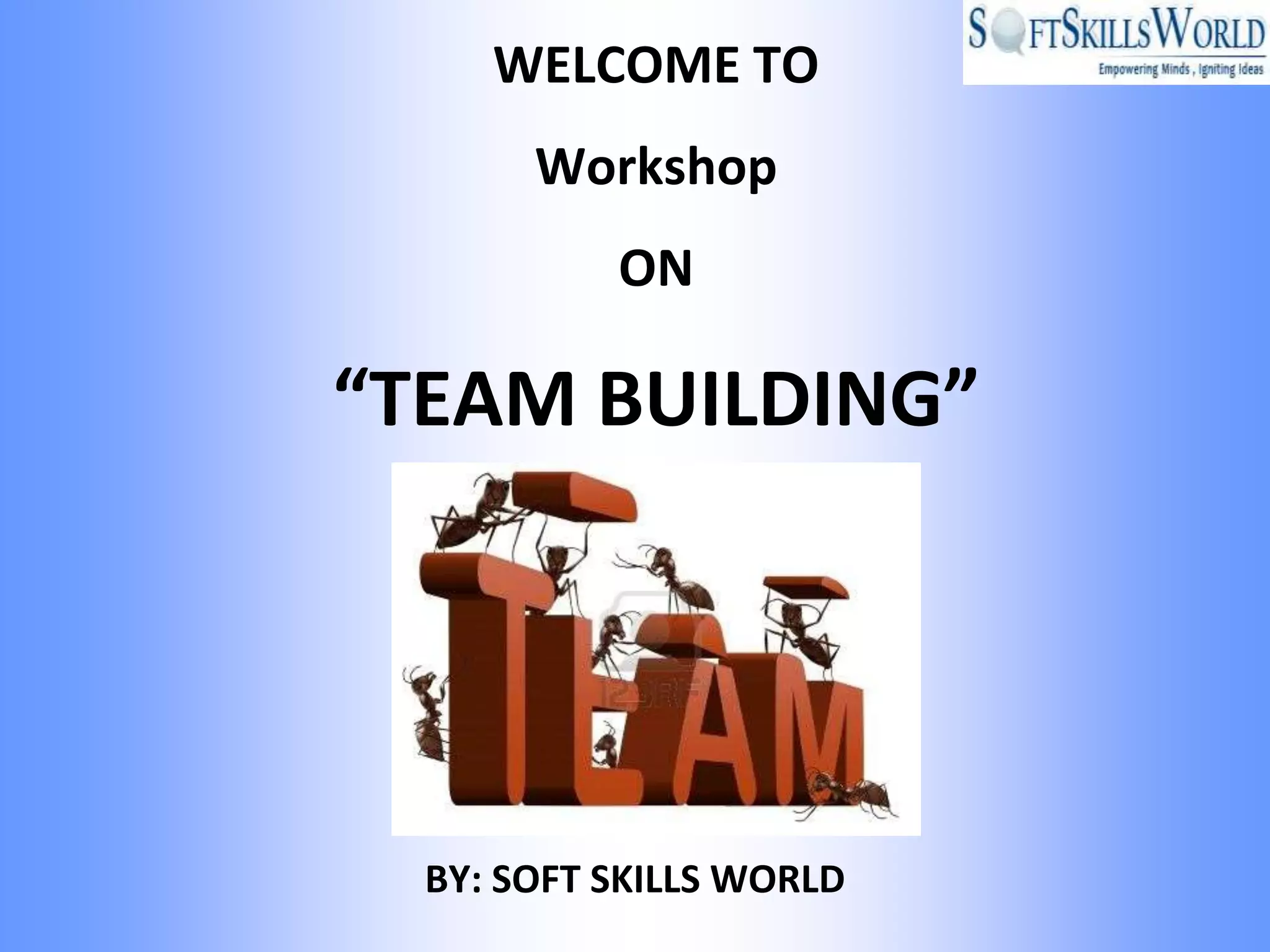
“TEAM BUILDING”


  BY: SOFT SKILLS WORLD
Team Building - Definition


• Team building" (or "'teambuilding'") refers to the process
  of establishing and developing a greater sense of
  collaboration and trust between team members.
  Interactive exercises, team assessments, and group
  discussions enable groups to cultivate this greater sense
  of teamwork.
Team work & Team building


• To understand the basic concepts and ideas of team work
  and team building.
• To appreciate the strengths and difficulties of working as a
  team.
• To learn the basics of promoting team work in the
  organization.
Types of Teams


• Formal versus informal
• Mechanical versus organic
• Inter-team versus intra-team
• Inter-agency versus intra-agency
• Same discipline versus different disciplines
• User-involved versus user-led
Synergy of Teams


• Synergy: the creation of a whole that is greater than the
  sum of its parts.
• Usefulness of synergy includes:
  o   increasing resources for problem solving
  o   improving quality of decision making
  o   enhancing members’ commitments to tasks
  o   fostering creativity and innovation
  o   satisfying individual needs for growth
Task Activities of a Team


• Initiating
• Information sharing
• Summarizing
• Elaborating
• Opinion giving
• Distributed leadership
Maintenance Activities of a Team


• Gatekeeping
• Encouraging
• Harmonizing
• Reducing tension
• Norming
• Self-managing
Avoidance of disruptive activities or behavior


• Being aggressive
• Blocking
• Self-confessing
• Seeking sympathy
• Competing
• Withdrawal
• Seeking recognition
Obstacles to Team Work


• Personality conflicts: Individual differences in personality
  and work style may disrupt the group.
• Task ambiguity: Unclear agendas and ill-defined
  problems.
• Free riding: Diffusion of individual efforts and
  responsibilities.
• Poor readiness to work: Wasting of time in unprepared
  meetings
Characteristics of High Performance Teams


• A clear and elevating goal
• A task-driven, result-oriented structure
• Competent and committed members
• A collaborative climate
• External support, recognition and delegation
• Strong, principled and yet democratic leadership
Team cohesiveness versus performance
norms

• Low productivity: strong commitments to harmful norms
• Low to moderate productivity: weak commitments to
  harmful norms
• High productivity: strong commitments to supportive
  norms
• Moderate productivity: weak commitments to supportive
  norms
Teamthink/Groupthink


• Teamthink or Groupthink is the tendency for highly
  cohesive groups to lose their critical evaluative
  capabilities for undermining their weaknesses and
  promoting their strengths. Because of undesirable
  competition and disruption between teams, alienation
  will be resulted accordingly.
Symptoms of Groupthink


• Illusions of group invulnerability
• Belief in inherent group morality
• Applying direct pressure to ‘deviants’ to conform to group
  wishes
• Self-censorship by members
• Accepting consensus prematurely
• Protecting the team from hearing disturbing viewpoints
  from outsiders
How to handle groupthink


• Encourage a sharing of viewpoints
• Create subgroups to work on the same problem and then
  share their proposed solutions
• Assign one member to play a ‘devil’s advocate’ role at
  each group meeting
• Review the decision after consensus is apparently
  achieved
Inputs of Team building


• Organizational setting: resources, technology, structures,
  atmosphere
• Nature of task: clarity and complexity
• Group size: number of members
• Membership characteristics: abilities, values and
  personalities
• User participation: primary versus secondary users
Throughputs of team building


• The way members interact and work together to
  transform inputs into outputs.
• The process through which ideas and contribution of team
  members are recognized.
Outputs of team building


 • Accomplishment of desired outcomes as follows:
- task performance and productivity
- human resource maintenance and development
- prevention of disruptive groupthink and team alienation
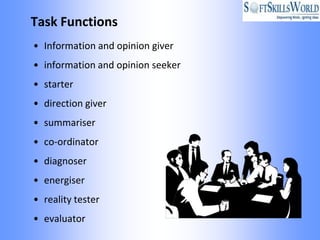
Task Functions
• Information and opinion giver
• information and opinion seeker
• starter
• direction giver
• summariser
• co-ordinator
• diagnoser
• energiser
• reality tester
• evaluator
Task Needs


• Defining the task
• Making a plan
• allocating work
• controlling work quality
• checking performance against the plan
• adjusting the plan
Maintenance Functions

• Encourager Of Participation
• Harmoniser
• Tension Reliever
• Communication Helper
• Evaluator Of Emotional Climate
• Process Observer
• Standard Setter
• Active Listener
• Trust Builder
• Interpersonal Problem Solver
Maintenance Needs


• Setting standards
• maintaining discipline
• building team spirit
• encouraging, motivating, giving a sense of purpose
• ensuring communication with the group
• training the group as a group
Self-oriented Behaviour


• Dominating
• Blocking
• Recognition seeking
• Pairing up
• Withdrawing
Individual Needs


• Attending to personal problems
• Encouraging individuals
• Giving status
• Recognizing and using individual abilities
• Training the individual
Let’s Introduce each other
About Bodhih Training Solution


        BODHIH
Objectives

In this program you will:
• Understand the importance of building high performance
   teams
• Understand the importance of having team objectives and
   goals
• Use effective communication skills to build trust,
   interdependence, mutual respect among team members
• Appreciate and work with the diversity and differences
   within and outside the team
• Lead and develop team members to achieve team goals
• Review their performance regularly
• Use effective decision making for developing and managing
   the team
What are the Challenges Faced by You While
           Working in “Team” ?
What is Team Building?


Team building" (or "'teambuilding'") refers to the process of

establishing and developing a greater sense of collaboration

and trust between team members. Interactive exercises, team

assessments, and group discussions enable groups to cultivate

this greater sense of teamwork
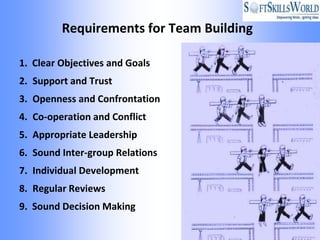
Requirements for Team Building

1. Clear Objectives and Goals
2. Support and Trust
3. Openness and Confrontation
4. Co-operation and Conflict
5. Appropriate Leadership
6. Sound Inter-group Relations
7. Individual Development
8. Regular Reviews
9. Sound Decision Making
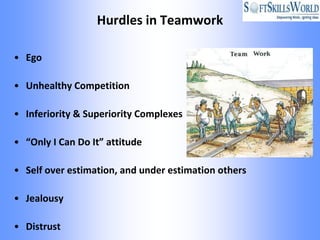
Hurdles in Teamwork

• Ego

• Unhealthy Competition

• Inferiority & Superiority Complexes

• “Only I Can Do It” attitude

• Self over estimation, and under estimation others

• Jealousy

• Distrust
What is a SMART goal?

Specific


Measurable


Attainable


Relevant


Time-Bound
Your Personality Test
Team Name

Team Slogan

Team Leader
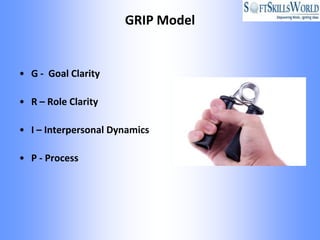
GRIP Model


• G - Goal Clarity

• R – Role Clarity

• I – Interpersonal Dynamics

• P - Process
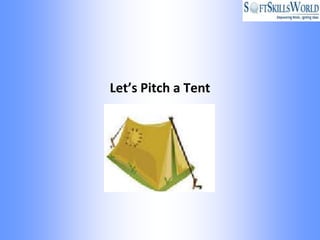
Let’s Pitch a Tent
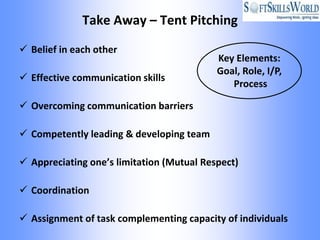
Take Away – Tent Pitching
 Belief in each other
                                           Key Elements:
                                           Goal, Role, I/P,
 Effective communication skills
                                              Process

 Overcoming communication barriers

 Competently leading & developing team

 Appreciating one’s limitation (Mutual Respect)

 Coordination

 Assignment of task complementing capacity of individuals
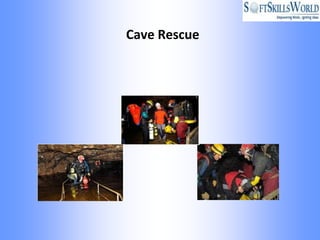
Cave Rescue
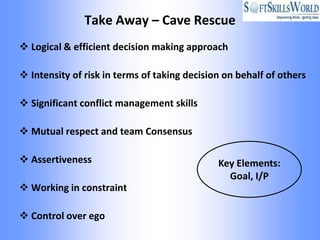
Take Away – Cave Rescue
 Logical & efficient decision making approach

 Intensity of risk in terms of taking decision on behalf of others

 Significant conflict management skills

 Mutual respect and team Consensus

 Assertiveness                               Key Elements:
                                                Goal, I/P
 Working in constraint

 Control over ego
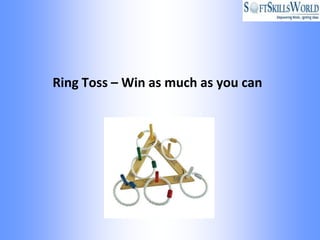
Ring Toss – Win as much as you can
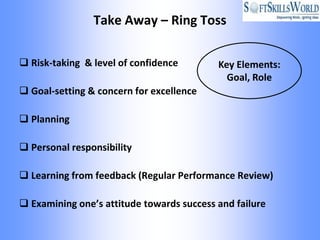
Take Away – Ring Toss

 Risk-taking & level of confidence        Key Elements:
                                             Goal, Role
 Goal-setting & concern for excellence

 Planning

 Personal responsibility

 Learning from feedback (Regular Performance Review)

 Examining one’s attitude towards success and failure
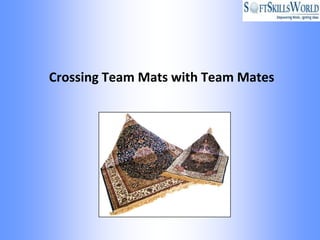
Crossing Team Mats with Team Mates
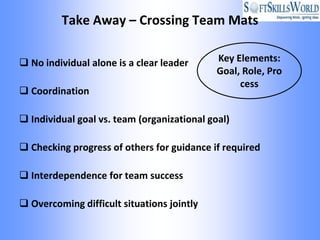
Take Away – Crossing Team Mats

 No individual alone is a clear leader      Key Elements:
                                             Goal, Role, Pro
                                                  cess
 Coordination

 Individual goal vs. team (organizational goal)

 Checking progress of others for guidance if required

 Interdependence for team success

 Overcoming difficult situations jointly
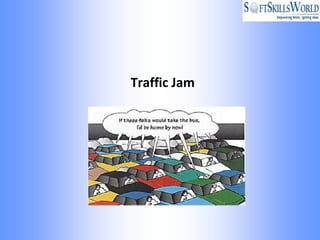
Traffic Jam
Take Away – Traffic Jam

 Foolproof planning                     Key Elements:
                                         Goal, Process
 Valuable time management

 Comprehend and proceeding along with other’s pace

 Synchronization is the key

 Efficient Problem solving skills
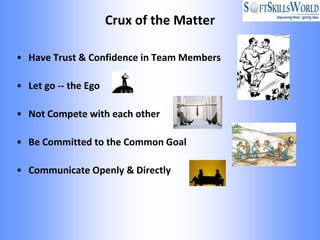
Crux of the Matter

• Have Trust & Confidence in Team Members

• Let go -- the Ego

• Not Compete with each other

• Be Committed to the Common Goal

• Communicate Openly & Directly
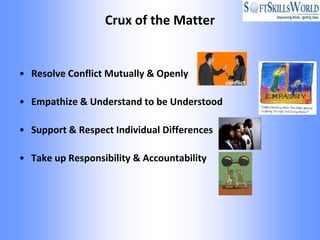
Crux of the Matter


• Resolve Conflict Mutually & Openly

• Empathize & Understand to be Understood

• Support & Respect Individual Differences

• Take up Responsibility & Accountability

Team building

  • 1.
    WELCOME TO Workshop ON “TEAM BUILDING” BY: SOFT SKILLS WORLD
  • 2.
    Team Building -Definition • Team building" (or "'teambuilding'") refers to the process of establishing and developing a greater sense of collaboration and trust between team members. Interactive exercises, team assessments, and group discussions enable groups to cultivate this greater sense of teamwork.
  • 3.
    Team work &Team building • To understand the basic concepts and ideas of team work and team building. • To appreciate the strengths and difficulties of working as a team. • To learn the basics of promoting team work in the organization.
  • 4.
    Types of Teams •Formal versus informal • Mechanical versus organic • Inter-team versus intra-team • Inter-agency versus intra-agency • Same discipline versus different disciplines • User-involved versus user-led
  • 5.
    Synergy of Teams •Synergy: the creation of a whole that is greater than the sum of its parts. • Usefulness of synergy includes: o increasing resources for problem solving o improving quality of decision making o enhancing members’ commitments to tasks o fostering creativity and innovation o satisfying individual needs for growth
  • 6.
    Task Activities ofa Team • Initiating • Information sharing • Summarizing • Elaborating • Opinion giving • Distributed leadership
  • 7.
    Maintenance Activities ofa Team • Gatekeeping • Encouraging • Harmonizing • Reducing tension • Norming • Self-managing
  • 8.
    Avoidance of disruptiveactivities or behavior • Being aggressive • Blocking • Self-confessing • Seeking sympathy • Competing • Withdrawal • Seeking recognition
  • 9.
    Obstacles to TeamWork • Personality conflicts: Individual differences in personality and work style may disrupt the group. • Task ambiguity: Unclear agendas and ill-defined problems. • Free riding: Diffusion of individual efforts and responsibilities. • Poor readiness to work: Wasting of time in unprepared meetings
  • 10.
    Characteristics of HighPerformance Teams • A clear and elevating goal • A task-driven, result-oriented structure • Competent and committed members • A collaborative climate • External support, recognition and delegation • Strong, principled and yet democratic leadership
  • 11.
    Team cohesiveness versusperformance norms • Low productivity: strong commitments to harmful norms • Low to moderate productivity: weak commitments to harmful norms • High productivity: strong commitments to supportive norms • Moderate productivity: weak commitments to supportive norms
  • 12.
    Teamthink/Groupthink • Teamthink orGroupthink is the tendency for highly cohesive groups to lose their critical evaluative capabilities for undermining their weaknesses and promoting their strengths. Because of undesirable competition and disruption between teams, alienation will be resulted accordingly.
  • 13.
    Symptoms of Groupthink •Illusions of group invulnerability • Belief in inherent group morality • Applying direct pressure to ‘deviants’ to conform to group wishes • Self-censorship by members • Accepting consensus prematurely • Protecting the team from hearing disturbing viewpoints from outsiders
  • 14.
    How to handlegroupthink • Encourage a sharing of viewpoints • Create subgroups to work on the same problem and then share their proposed solutions • Assign one member to play a ‘devil’s advocate’ role at each group meeting • Review the decision after consensus is apparently achieved
  • 15.
    Inputs of Teambuilding • Organizational setting: resources, technology, structures, atmosphere • Nature of task: clarity and complexity • Group size: number of members • Membership characteristics: abilities, values and personalities • User participation: primary versus secondary users
  • 16.
    Throughputs of teambuilding • The way members interact and work together to transform inputs into outputs. • The process through which ideas and contribution of team members are recognized.
  • 17.
    Outputs of teambuilding • Accomplishment of desired outcomes as follows: - task performance and productivity - human resource maintenance and development - prevention of disruptive groupthink and team alienation
  • 18.
    Task Functions • Informationand opinion giver • information and opinion seeker • starter • direction giver • summariser • co-ordinator • diagnoser • energiser • reality tester • evaluator
  • 19.
    Task Needs • Definingthe task • Making a plan • allocating work • controlling work quality • checking performance against the plan • adjusting the plan
  • 20.
    Maintenance Functions • EncouragerOf Participation • Harmoniser • Tension Reliever • Communication Helper • Evaluator Of Emotional Climate • Process Observer • Standard Setter • Active Listener • Trust Builder • Interpersonal Problem Solver
  • 21.
    Maintenance Needs • Settingstandards • maintaining discipline • building team spirit • encouraging, motivating, giving a sense of purpose • ensuring communication with the group • training the group as a group
  • 22.
    Self-oriented Behaviour • Dominating •Blocking • Recognition seeking • Pairing up • Withdrawing
  • 23.
    Individual Needs • Attendingto personal problems • Encouraging individuals • Giving status • Recognizing and using individual abilities • Training the individual
  • 24.
  • 25.
    About Bodhih TrainingSolution BODHIH
  • 26.
    Objectives In this programyou will: • Understand the importance of building high performance teams • Understand the importance of having team objectives and goals • Use effective communication skills to build trust, interdependence, mutual respect among team members • Appreciate and work with the diversity and differences within and outside the team • Lead and develop team members to achieve team goals • Review their performance regularly • Use effective decision making for developing and managing the team
  • 27.
    What are theChallenges Faced by You While Working in “Team” ?
  • 28.
    What is TeamBuilding? Team building" (or "'teambuilding'") refers to the process of establishing and developing a greater sense of collaboration and trust between team members. Interactive exercises, team assessments, and group discussions enable groups to cultivate this greater sense of teamwork
  • 29.
    Requirements for TeamBuilding 1. Clear Objectives and Goals 2. Support and Trust 3. Openness and Confrontation 4. Co-operation and Conflict 5. Appropriate Leadership 6. Sound Inter-group Relations 7. Individual Development 8. Regular Reviews 9. Sound Decision Making
  • 30.
    Hurdles in Teamwork •Ego • Unhealthy Competition • Inferiority & Superiority Complexes • “Only I Can Do It” attitude • Self over estimation, and under estimation others • Jealousy • Distrust
  • 31.
    What is aSMART goal? Specific Measurable Attainable Relevant Time-Bound
  • 32.
  • 33.
  • 34.
    GRIP Model • G- Goal Clarity • R – Role Clarity • I – Interpersonal Dynamics • P - Process
  • 35.
  • 36.
    Take Away –Tent Pitching  Belief in each other Key Elements: Goal, Role, I/P,  Effective communication skills Process  Overcoming communication barriers  Competently leading & developing team  Appreciating one’s limitation (Mutual Respect)  Coordination  Assignment of task complementing capacity of individuals
  • 37.
  • 38.
    Take Away –Cave Rescue  Logical & efficient decision making approach  Intensity of risk in terms of taking decision on behalf of others  Significant conflict management skills  Mutual respect and team Consensus  Assertiveness Key Elements: Goal, I/P  Working in constraint  Control over ego
  • 39.
    Ring Toss –Win as much as you can
  • 40.
    Take Away –Ring Toss  Risk-taking & level of confidence Key Elements: Goal, Role  Goal-setting & concern for excellence  Planning  Personal responsibility  Learning from feedback (Regular Performance Review)  Examining one’s attitude towards success and failure
  • 41.
    Crossing Team Matswith Team Mates
  • 42.
    Take Away –Crossing Team Mats  No individual alone is a clear leader Key Elements: Goal, Role, Pro cess  Coordination  Individual goal vs. team (organizational goal)  Checking progress of others for guidance if required  Interdependence for team success  Overcoming difficult situations jointly
  • 43.
  • 44.
    Take Away –Traffic Jam  Foolproof planning Key Elements: Goal, Process  Valuable time management  Comprehend and proceeding along with other’s pace  Synchronization is the key  Efficient Problem solving skills
  • 45.
    Crux of theMatter • Have Trust & Confidence in Team Members • Let go -- the Ego • Not Compete with each other • Be Committed to the Common Goal • Communicate Openly & Directly
  • 46.
    Crux of theMatter • Resolve Conflict Mutually & Openly • Empathize & Understand to be Understood • Support & Respect Individual Differences • Take up Responsibility & Accountability