The document discusses the significance of teams and teamwork within organizations, emphasizing the benefits such as improved problem-solving, creativity, and commitment. It outlines different types of teams, stages of development, and characteristics of high-performance teams, highlighting the importance of both task and maintenance roles for effective collaboration. Furthermore, it addresses communication networks and decision-making processes essential for team effectiveness.
TEAMS AND TEAMWORK
ImportanceOf Teams
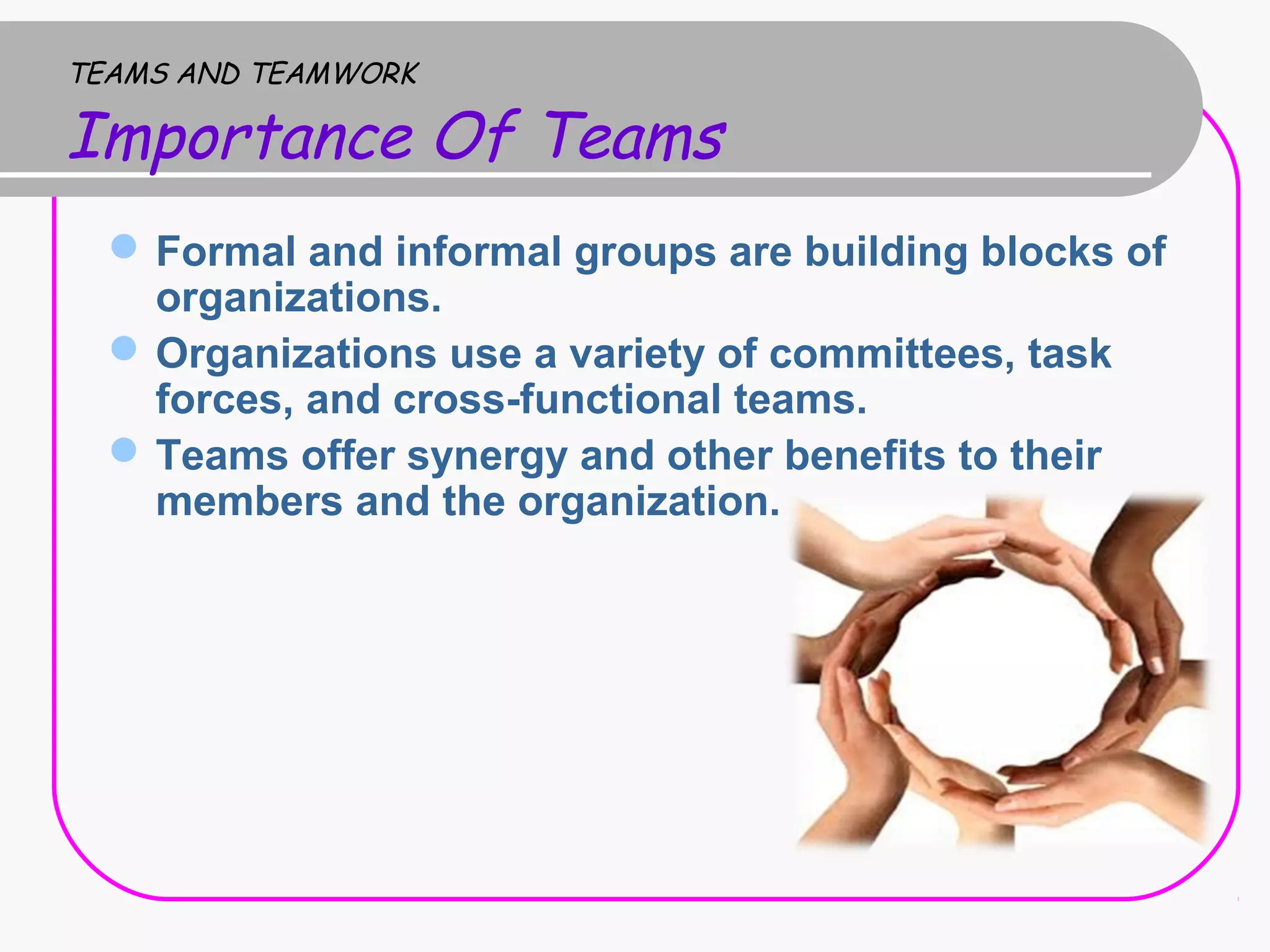
Formal and informal groups are building blocks of
organizations.
Organizations use a variety of committees, task
forces, and cross-functional teams.
Teams offer synergy and other benefits to their
members and the organization.
4.
TEAMS AND TEAMWORK
ImportanceOf Teams
Team
a collection of people who regularly interact to pursue common
goals.
Teamwork
the process of people actively working together to accomplish
common goals.
Formal Group
a group that is officially recognized and supported by the
organization.
Informal Group
a group that is unofficial and emerges from relationships and
shared interests among members.
5.
TEAMS AND TEAMWORK
ImportanceOf Teams
Types of Teams
Project Team
is convened for a specific purpose and disbands
after completing its task.
Cross-functional Team
operates with members who come from different
functional units of an organization.
Employee Involvement Team
meets on a regular basis to help achieve
continuous improvement.
7.
TEAMS AND TEAMWORK
ImportanceOf Teams
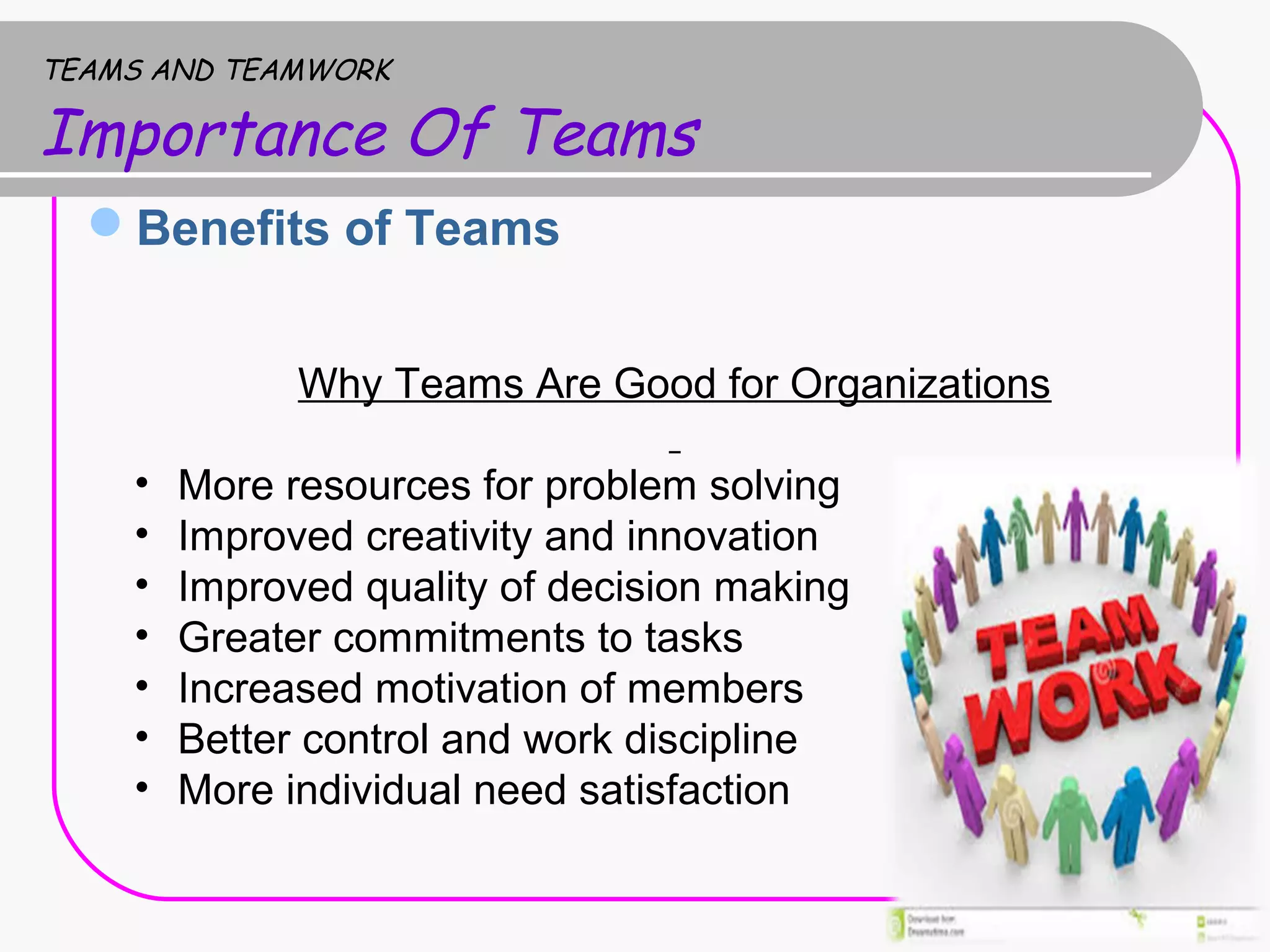
Benefits of Teams
Why Teams Are Good for Organizations
• More resources for problem solving
• Improved creativity and innovation
• Improved quality of decision making
• Greater commitments to tasks
• Increased motivation of members
• Better control and work discipline
• More individual need satisfaction
8.
TEAMS AND TEAMWORK
ImportanceOf Teams
MANAGEMENT TIPS
Characteristics of High Performance Teams
Clear, elevating goals
Results-driven structure
Competent team members
Unified commitments
Collaborative climate
Standards of excellence
External support and recognition
Principled leadership
9.
TEAMS AND TEAMWORK
FoundationsOf Teamwork
Stages of Development
Forming Stage
team development, one of initial task orientation and
interpersonal testing.
Norming Stage
members of the team begin to coordinate their efforts as a
working unit and tend to operate with shared rules of
conduct.
Performing Stage
members are more mature, organized, and well
functioning.
Adjourning Stage
the final stage for temporary committees, task forces, and
project teams.
11.
FOUNDATIONS OF TEAMWORK
EffectiveTeams
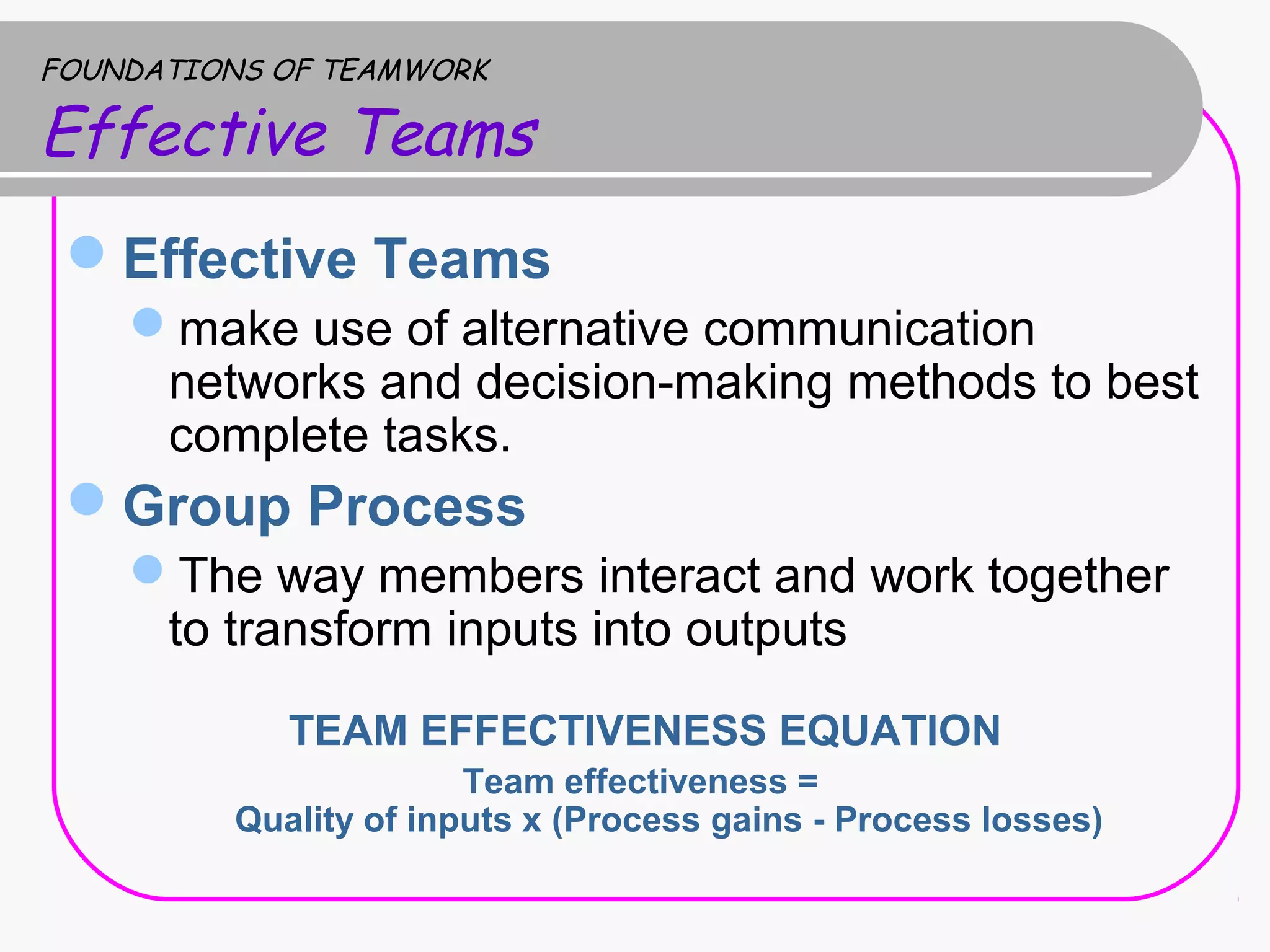
Effective Teams
make use of alternative communication
networks and decision-making methods to best
complete tasks.
Group Process
The way members interact and work together
to transform inputs into outputs
TEAM EFFECTIVENESS EQUATION
Team effectiveness =
Quality of inputs x (Process gains - Process losses)
12.
FOUNDATIONS OF TEAMWORK
EffectiveTeams
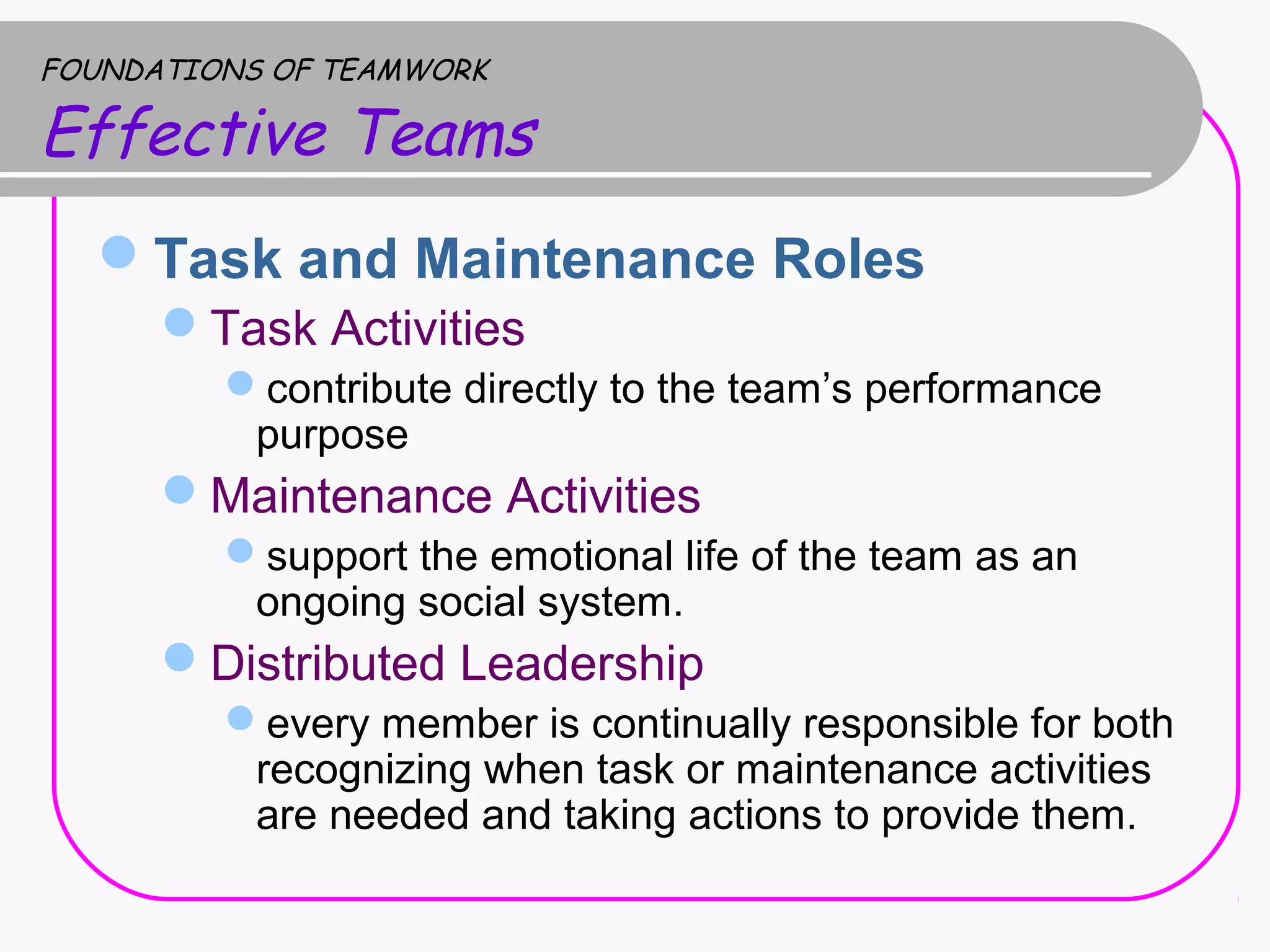
Task and Maintenance Roles
Task Activities
contribute directly to the team’s performance
purpose
Maintenance Activities
support the emotional life of the team as an
ongoing social system.
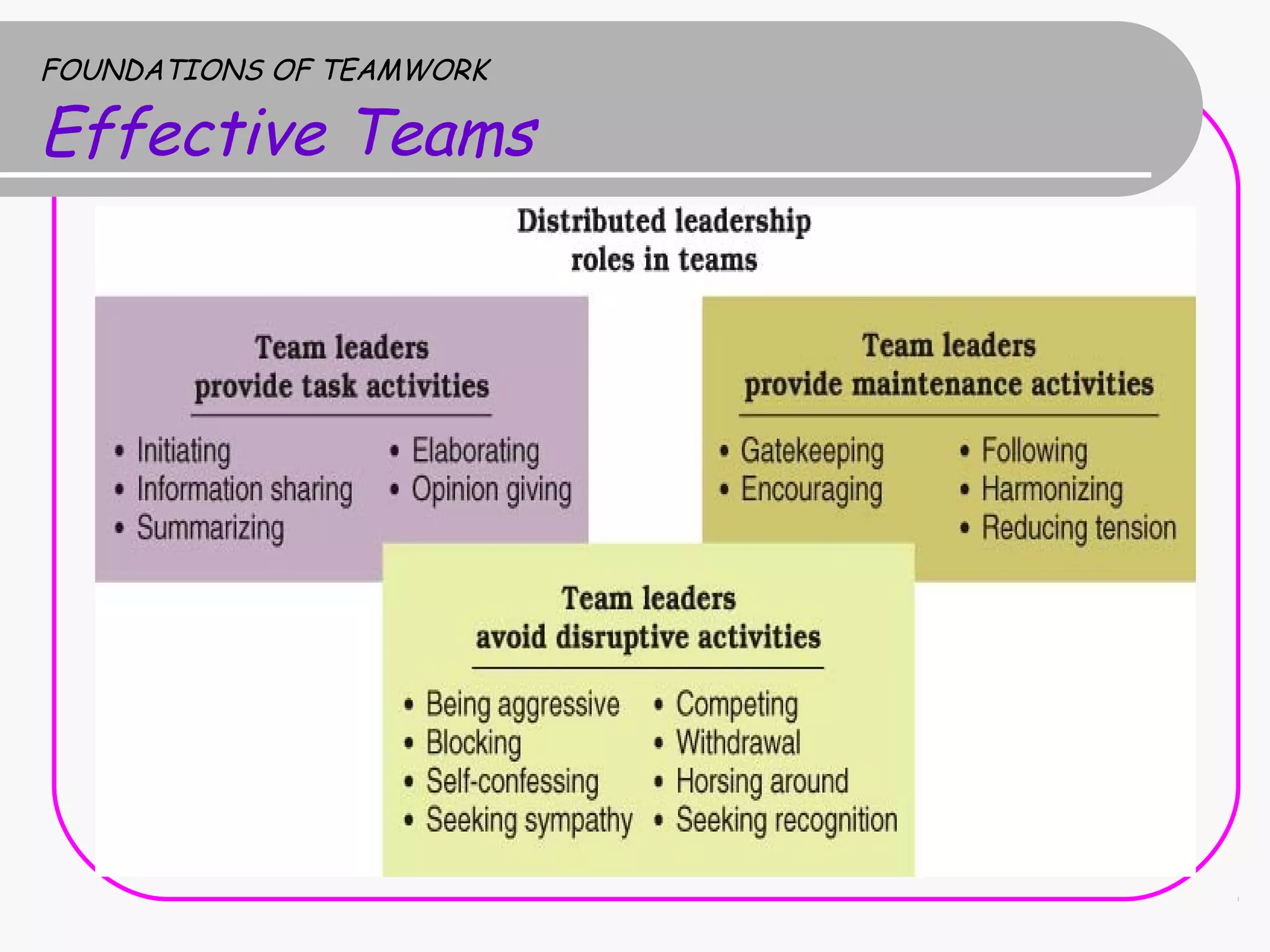
Distributed Leadership
every member is continually responsible for both
recognizing when task or maintenance activities
are needed and taking actions to provide them.
FOUNDATIONS OF TEAMWORK
EffectiveTeams
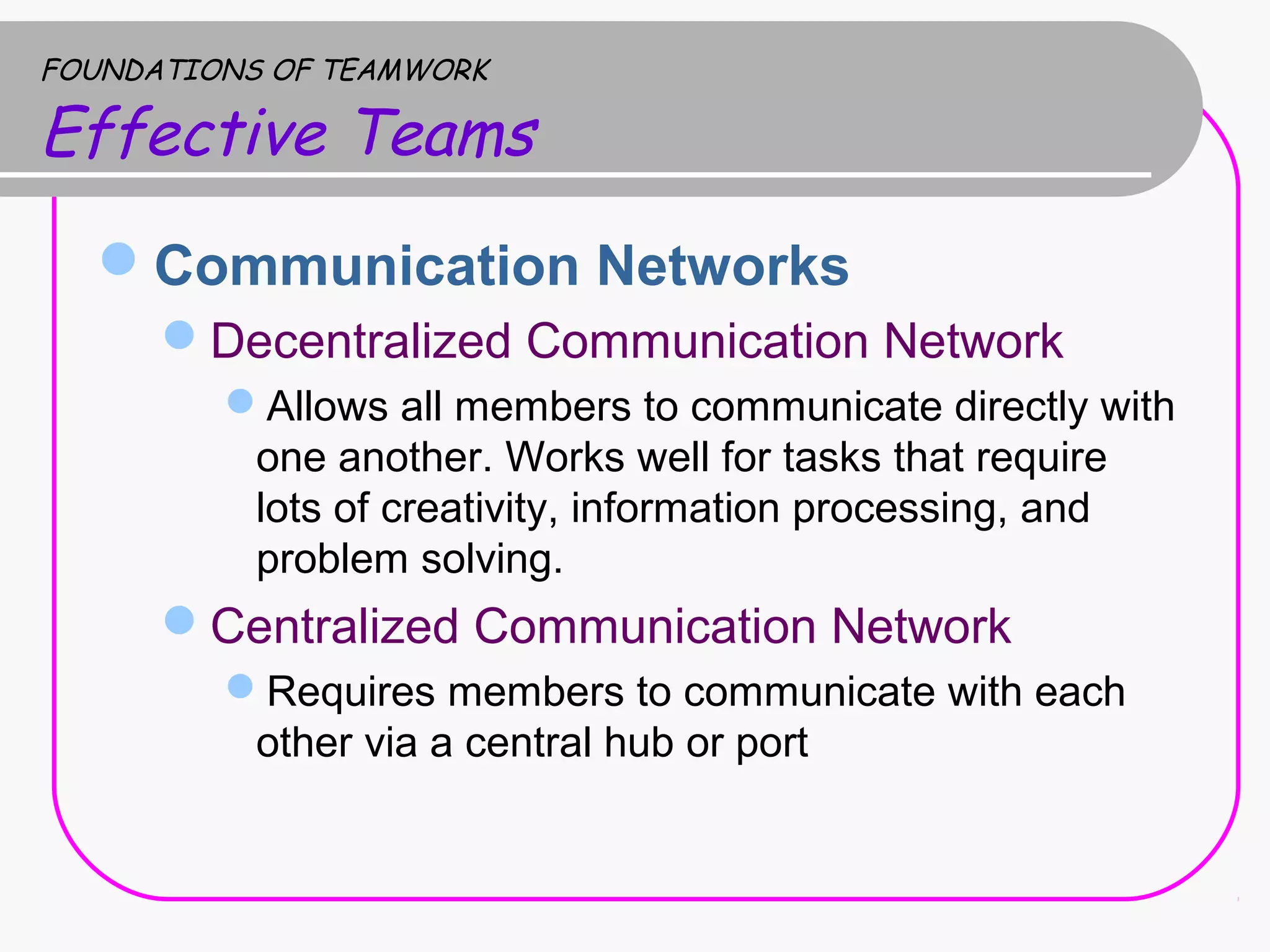
Communication Networks
Decentralized Communication Network
Allows all members to communicate directly with
one another. Works well for tasks that require
lots of creativity, information processing, and
problem solving.
Centralized Communication Network
Requires members to communicate with each
other via a central hub or port
16.
FOUNDATIONS OF TEAMWORK
EffectiveTeams
Decision Making
The process of making choices through
choosing from alternative courses of action
Groupthink
a tendency of members of highly cohesive
teams to lose their critical evaluative
capabilities and make poor decisions.