TEAM WORK

         R P Singh
Associate Director Extension
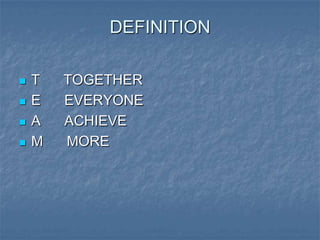
DEFINITION

   T   TOGETHER
   E   EVERYONE
   A   ACHIEVE
   M   MORE
CONCEPT OF TEAMWORK


   WORKING OF PEOPLE TOGETHER AS A
    TEAM
   COMES FROM THE WORLD OF SPORT
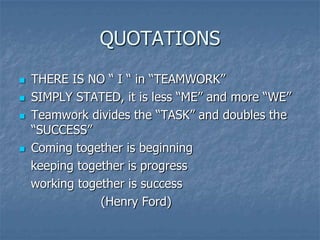
QUOTATIONS
   THERE IS NO “ I “ in “TEAMWORK”
   SIMPLY STATED, it is less “ME” and more “WE”
   Teamwork divides the “TASK” and doubles the
    “SUCCESS”
   Coming together is beginning
    keeping together is progress
    working together is success
                (Henry Ford)
Components of Team


   Goals
   Actors
   Activities
Need to establish team

   Rapid and dramatic changes in the
    economy of industrialized countries
   To establish a dynamic business
    environment
   To create new business opportunities
   Maximize profits
   Globalization
   Technological advancement
COORDINATION MODEL
Coordination Technologies
   Planning the work and keeping track of the state
    of affairs
   Collecting, creating, analyzing and presenting
    information
   Combining or linking individual contributions into
    higher level results
   Monitoring changes in the environment
   Communicating with peers, subordinates and
    supervisors
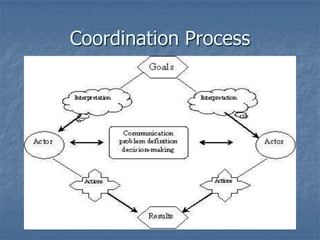
Coordination Process
Skills Required For Teamwork
   Listening
   Questioning
   Persuading
   Respecting
   Helping
   Sharing
   Participating
Stages of team development

    Forming
•   Members come together and lay
    foundation for the team
•   Excitement
•   Anxiety
•   Dependence
•   Uncertainties
Stages of team development
   Storming
•   Members realize the amount of “COMPLICATED
    WORK”
•   Power
•   Conflict
•   Control
•   Panic
•   Frustration
Stages of team development

   Norming
•   People get used to working with one
    another
•   Sharing of responsibilities
•   Confidence building
•   Developing trust
•   Respect among members
Stages of team development

   Performing

•   Members are comfortable with each other
    and everyone is “reading from the same
    page”
•   Continuous accomplishment
•   Maintaining the momentum
Create Culture Of Teamwork


   Communicate clear expectation that
    teamwork and collaboration are expected
   Identify the value of a teamwork culture
   Teamwork is rewarded and recognized
   Performance management system places
    emphasis and value on teamwork
Tips for team building

   Organize seminars, planning sessions and
    team building activities
   Celebrate group successes publicly
   Provide training in systematic method
   Hold department meetings to review
    projects, progress and to coordinate
    shared work processes
   Build fun and shared occasions into the
    agenda
Team Motivation


   Generally associate with “HUMAN
    BEHAVOIR”
   “MEANING”
   State of mind that “MOVES” to “ACTION”
Factors Influence Team Motivation

   Purpose
   Challenge
   Loyalty
   Responsibility
   Leadership
   Growth
Characteristics of a Good Team

   Everyone participates actively and positively
   Carefully listened and receive thoughtful
    feedback
   Willing to take risks
   Focus on the ultimate goal
   Teammates trusts the judgment of others
   Plenty of communication
   Everyone takes initiative to get things done
Characteristics of good team
             Members

   Trust, supports other team members
   Understands and committed to team objectives
   Involve others in decision making
   Influences others
   “OWNS” problems rather then blaming them on
    others
   Encourage and acknowledge others
Benefits of Teamwork

   Members work to establish an effective
    team
   Members accept role
   Meetings are structured
   Record keeping enhances your work
   Each member uses their own and others
    skills
   Differences are welcomed and used
Benefits of team building

   Improves morale and leadership skills
   Clearly defines objectives and goals
   Improves processes and procedures
   Improves organizational productivity
   Improves the ability to problem solve
Guideline for teamwork
   Group becomes a team when each member is
    sure enough of himself and his contribution to
    praise the skills of others
   Believe that thinking, planning, decisions and
    actions are better when done cooperatively
   Create a work culture that values collaboration
   Motivate and appreciate members

Teamwork 1215321061320204-9

  • 1.
    TEAM WORK R P Singh Associate Director Extension
  • 2.
    DEFINITION  T TOGETHER  E EVERYONE  A ACHIEVE  M MORE
  • 3.
    CONCEPT OF TEAMWORK  WORKING OF PEOPLE TOGETHER AS A TEAM  COMES FROM THE WORLD OF SPORT
  • 4.
    QUOTATIONS  THERE IS NO “ I “ in “TEAMWORK”  SIMPLY STATED, it is less “ME” and more “WE”  Teamwork divides the “TASK” and doubles the “SUCCESS”  Coming together is beginning keeping together is progress working together is success (Henry Ford)
  • 5.
    Components of Team  Goals  Actors  Activities
  • 6.
    Need to establishteam  Rapid and dramatic changes in the economy of industrialized countries  To establish a dynamic business environment  To create new business opportunities  Maximize profits  Globalization  Technological advancement
  • 7.
  • 8.
    Coordination Technologies  Planning the work and keeping track of the state of affairs  Collecting, creating, analyzing and presenting information  Combining or linking individual contributions into higher level results  Monitoring changes in the environment  Communicating with peers, subordinates and supervisors
  • 9.
  • 10.
    Skills Required ForTeamwork  Listening  Questioning  Persuading  Respecting  Helping  Sharing  Participating
  • 11.
    Stages of teamdevelopment  Forming • Members come together and lay foundation for the team • Excitement • Anxiety • Dependence • Uncertainties
  • 12.
    Stages of teamdevelopment  Storming • Members realize the amount of “COMPLICATED WORK” • Power • Conflict • Control • Panic • Frustration
  • 13.
    Stages of teamdevelopment  Norming • People get used to working with one another • Sharing of responsibilities • Confidence building • Developing trust • Respect among members
  • 14.
    Stages of teamdevelopment  Performing • Members are comfortable with each other and everyone is “reading from the same page” • Continuous accomplishment • Maintaining the momentum
  • 15.
    Create Culture OfTeamwork  Communicate clear expectation that teamwork and collaboration are expected  Identify the value of a teamwork culture  Teamwork is rewarded and recognized  Performance management system places emphasis and value on teamwork
  • 16.
    Tips for teambuilding  Organize seminars, planning sessions and team building activities  Celebrate group successes publicly  Provide training in systematic method  Hold department meetings to review projects, progress and to coordinate shared work processes  Build fun and shared occasions into the agenda
  • 17.
    Team Motivation  Generally associate with “HUMAN BEHAVOIR”  “MEANING”  State of mind that “MOVES” to “ACTION”
  • 18.
    Factors Influence TeamMotivation  Purpose  Challenge  Loyalty  Responsibility  Leadership  Growth
  • 19.
    Characteristics of aGood Team  Everyone participates actively and positively  Carefully listened and receive thoughtful feedback  Willing to take risks  Focus on the ultimate goal  Teammates trusts the judgment of others  Plenty of communication  Everyone takes initiative to get things done
  • 20.
    Characteristics of goodteam Members  Trust, supports other team members  Understands and committed to team objectives  Involve others in decision making  Influences others  “OWNS” problems rather then blaming them on others  Encourage and acknowledge others
  • 21.
    Benefits of Teamwork  Members work to establish an effective team  Members accept role  Meetings are structured  Record keeping enhances your work  Each member uses their own and others skills  Differences are welcomed and used
  • 22.
    Benefits of teambuilding  Improves morale and leadership skills  Clearly defines objectives and goals  Improves processes and procedures  Improves organizational productivity  Improves the ability to problem solve
  • 23.
    Guideline for teamwork  Group becomes a team when each member is sure enough of himself and his contribution to praise the skills of others  Believe that thinking, planning, decisions and actions are better when done cooperatively  Create a work culture that values collaboration  Motivate and appreciate members