
The ‘A’Team How To Build An Effective  Working Team
 
Overview Of Seminar TEAMS Stages of Team Development Effective and Successful Teams Effective Meetings
“ Mission  is at the heart of what you do as a  TEAM .  Goals  are merely steps along the way to achievement."  Patrick Dixon   -  Building a Better Business 2005
Why Work In Teams?
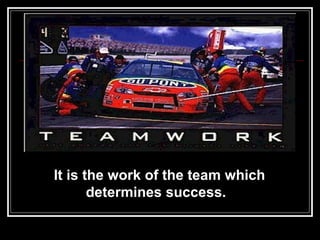
It is the work of the team which  determines success.
“ On Average, Managers spend 50% of their Working Day WORKING with People in Teams. Senior Managers can spend 80%” Dr. Charles B.Handy Seminar Coach
Why Work in Teams? Why?   Identify Your Own Weaknesses Weaknesses Being an INDIVIDUAL Limited Ideas Limited Human Resource Limited Fundamental Sources Limited Contact
Limited Division of Power and Attention Limited Specialization = Limited Success!
All This Because As An   INDIVIDUAL ALONE YOU ARE   LIMITED
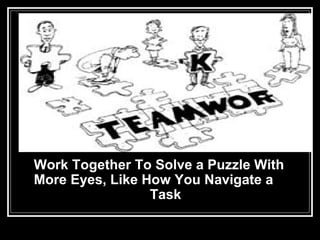
Work Together To Solve a Puzzle With More Eyes, Like How You Navigate a  Task
Group Problem-Solving Recognize an  Already Problem  or  Impending Problem Obtain Information  Develop Ideas  COLLECTIVELY
Evaluate  Alternatives and  Select One  or Afew Best Alternatives for  Execution Continuous Supervision  on Work “ Never Ever Leave The Outpost  Unguarded” This same Concept applies towards Monitoring Team Task / Assignments
The Need of Team Identity
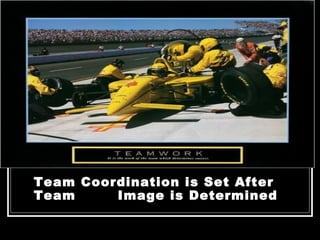
Team Coordination is Set After Team  Image is Determined
How Do You Want People to View Your Group? An Assignment Group A Sports Group A Student Council A Government A Company
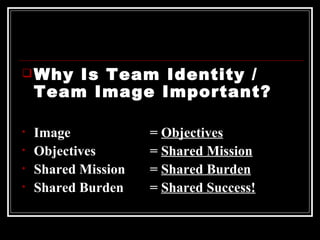
Why Is Team Identity / Team Image Important? Image  =  Objectives Objectives  =  Shared Mission Shared Mission  =  Shared Burden Shared Burden  =  Shared Success!
The ‘A’ Team
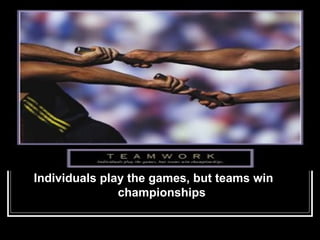
Individuals play the games, but teams win  championships
The ‘A’ Team  =  The Effective Engine What Does A Team Need?
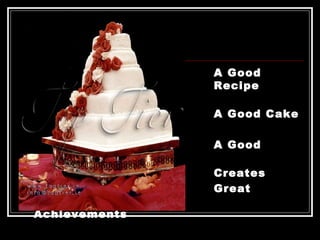
A Good  Recipe Bakes A Good Cake A Good Team Creates Great  Achievements
Create Good Ideas Analyze Problems Effectively Get Things Done
Good, Effective Communication  Leadership Qualities Logical Evaluation
Technical Ability  Work Control Fluent in Writing and Speaking
Team Roles and  Team Styles
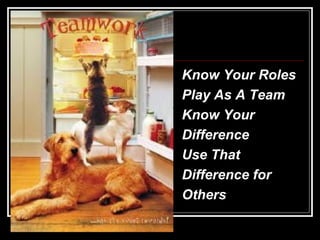
Know Your Roles Play As A Team Know Your  Difference Use That  Difference for Others
BEBLIN Team-Style Each Individual of Every Team is Different People  Same Skills  +   People in  Same Group = People With  DIFFERENT Behaviors
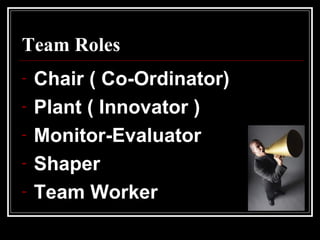
Team Roles Chair ( Co-Ordinator) Plant ( Innovator ) Monitor-Evaluator Shaper Team Worker
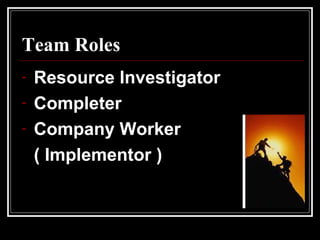
Team Roles Resource Investigator Completer  Company Worker  ( Implementor )
Team Norms and Conformity
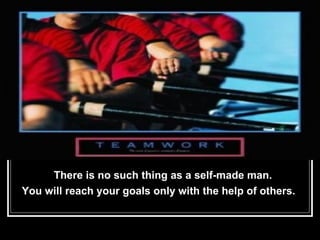
There is no such thing as a self-made man.  You will reach your goals only with the help of others.
Team Needs : A Written Period Objective / Mission Rules Set of Orders / Definition of Roles Importance of Roles Re-Checking of Roles / Members
Team Norms : What  The Leader  and  The Team  Must Understand  Fairness Reasonableness (If majority rejects) Role Expectations
Characters of an Effective Team Player
 
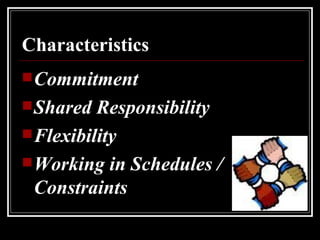
Characteristics Commitment Shared Responsibility Flexibility Working in Schedules / Constraints
Characteristics  Stress Manager Of Your Own Trust and Mutual Support Team-Oriented
Becoming the ‘A’ Team
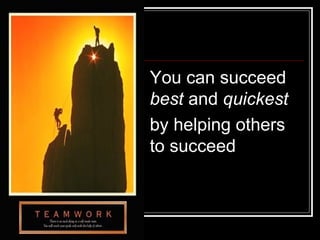
You can succeed  best  and  quickest  by helping others  to succeed
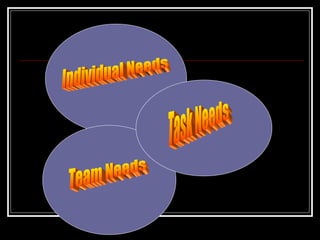
Task Needs Team Needs Individual Needs
The ‘A’ Team Shared Objectives and Agreed Goals Climate of Support and Trust Open Lines of Communication
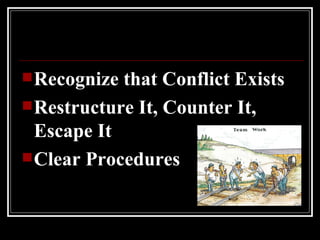
Recognize that Conflict Exists Restructure It, Counter It, Escape It Clear Procedures
Leadership Fitting to the Team Reviews Progress Regularly
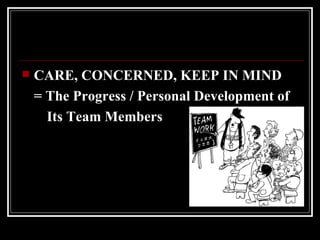
CARE, CONCERNED, KEEP IN MIND = The Progress / Personal Development of Its Team Members
Effective Team Communication
Treat Others With Respect Listen until you  “ Experience the Other Side” State Your  Needs, Views, Feelings
Give  and  Receive  Feedback Be Descriptive  Be Evaluative
Successful Project Teams Everyone  CONTRIBUTES Everyone  LISTENS Everyone is  COURTEOUS Everyone  TELLS THE TRUTH Everyone is  SUPPORTIVE
Effective Meetings
 
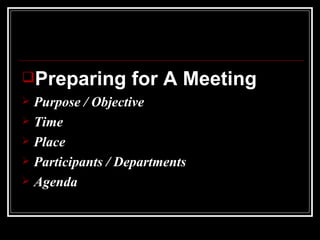
Preparing for A Meeting Purpose / Objective Time Place Participants / Departments Agenda
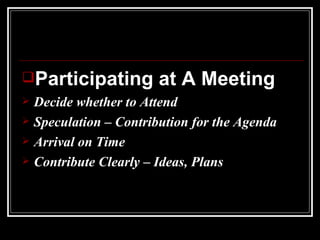
Participating at A Meeting Decide whether to Attend Speculation – Contribution for the Agenda Arrival on Time  Contribute Clearly – Ideas, Plans
Follow-Up to A Meeting Minutes / Action Plan Distribution Complete Task by Deadline
Teamwork
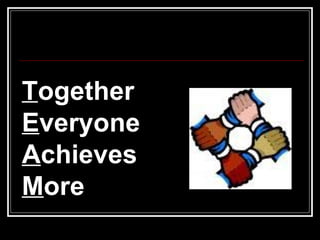
T ogether  E veryone  A chieves  M ore

The ‘A’Team - Teamwork & Leadership

  • 1.
    The ‘A’Team HowTo Build An Effective Working Team
  • 2.
  • 3.
    Overview Of SeminarTEAMS Stages of Team Development Effective and Successful Teams Effective Meetings
  • 4.
    “ Mission is at the heart of what you do as a TEAM . Goals are merely steps along the way to achievement." Patrick Dixon - Building a Better Business 2005
  • 5.
  • 6.
    It is thework of the team which determines success.
  • 7.
    “ On Average,Managers spend 50% of their Working Day WORKING with People in Teams. Senior Managers can spend 80%” Dr. Charles B.Handy Seminar Coach
  • 8.
    Why Work inTeams? Why? Identify Your Own Weaknesses Weaknesses Being an INDIVIDUAL Limited Ideas Limited Human Resource Limited Fundamental Sources Limited Contact
  • 9.
    Limited Division ofPower and Attention Limited Specialization = Limited Success!
  • 10.
    All This BecauseAs An INDIVIDUAL ALONE YOU ARE LIMITED
  • 11.
    Work Together ToSolve a Puzzle With More Eyes, Like How You Navigate a Task
  • 12.
    Group Problem-Solving Recognizean Already Problem or Impending Problem Obtain Information Develop Ideas COLLECTIVELY
  • 13.
    Evaluate Alternativesand Select One or Afew Best Alternatives for Execution Continuous Supervision on Work “ Never Ever Leave The Outpost Unguarded” This same Concept applies towards Monitoring Team Task / Assignments
  • 14.
    The Need ofTeam Identity
  • 15.
    Team Coordination isSet After Team Image is Determined
  • 16.
    How Do YouWant People to View Your Group? An Assignment Group A Sports Group A Student Council A Government A Company
  • 17.
    Why Is TeamIdentity / Team Image Important? Image = Objectives Objectives = Shared Mission Shared Mission = Shared Burden Shared Burden = Shared Success!
  • 18.
  • 19.
    Individuals play thegames, but teams win championships
  • 20.
    The ‘A’ Team = The Effective Engine What Does A Team Need?
  • 21.
    A Good Recipe Bakes A Good Cake A Good Team Creates Great Achievements
  • 22.
    Create Good IdeasAnalyze Problems Effectively Get Things Done
  • 23.
    Good, Effective Communication Leadership Qualities Logical Evaluation
  • 24.
    Technical Ability Work Control Fluent in Writing and Speaking
  • 25.
    Team Roles and Team Styles
  • 26.
    Know Your RolesPlay As A Team Know Your Difference Use That Difference for Others
  • 27.
    BEBLIN Team-Style EachIndividual of Every Team is Different People Same Skills + People in Same Group = People With DIFFERENT Behaviors
  • 28.
    Team Roles Chair( Co-Ordinator) Plant ( Innovator ) Monitor-Evaluator Shaper Team Worker
  • 29.
    Team Roles ResourceInvestigator Completer Company Worker ( Implementor )
  • 30.
    Team Norms andConformity
  • 31.
    There is nosuch thing as a self-made man. You will reach your goals only with the help of others.
  • 32.
    Team Needs :A Written Period Objective / Mission Rules Set of Orders / Definition of Roles Importance of Roles Re-Checking of Roles / Members
  • 33.
    Team Norms :What The Leader and The Team Must Understand Fairness Reasonableness (If majority rejects) Role Expectations
  • 34.
    Characters of anEffective Team Player
  • 35.
  • 36.
    Characteristics Commitment SharedResponsibility Flexibility Working in Schedules / Constraints
  • 37.
    Characteristics StressManager Of Your Own Trust and Mutual Support Team-Oriented
  • 38.
  • 39.
    You can succeed best and quickest by helping others to succeed
  • 40.
    Task Needs TeamNeeds Individual Needs
  • 41.
    The ‘A’ TeamShared Objectives and Agreed Goals Climate of Support and Trust Open Lines of Communication
  • 42.
    Recognize that ConflictExists Restructure It, Counter It, Escape It Clear Procedures
  • 43.
    Leadership Fitting tothe Team Reviews Progress Regularly
  • 44.
    CARE, CONCERNED, KEEPIN MIND = The Progress / Personal Development of Its Team Members
  • 45.
  • 46.
    Treat Others WithRespect Listen until you “ Experience the Other Side” State Your Needs, Views, Feelings
  • 47.
    Give and Receive Feedback Be Descriptive Be Evaluative
  • 48.
    Successful Project TeamsEveryone CONTRIBUTES Everyone LISTENS Everyone is COURTEOUS Everyone TELLS THE TRUTH Everyone is SUPPORTIVE
  • 49.
  • 50.
  • 51.
    Preparing for AMeeting Purpose / Objective Time Place Participants / Departments Agenda
  • 52.
    Participating at AMeeting Decide whether to Attend Speculation – Contribution for the Agenda Arrival on Time Contribute Clearly – Ideas, Plans
  • 53.
    Follow-Up to AMeeting Minutes / Action Plan Distribution Complete Task by Deadline
  • 54.
  • 55.
    T ogether E veryone A chieves M ore