Downloaded 31 times
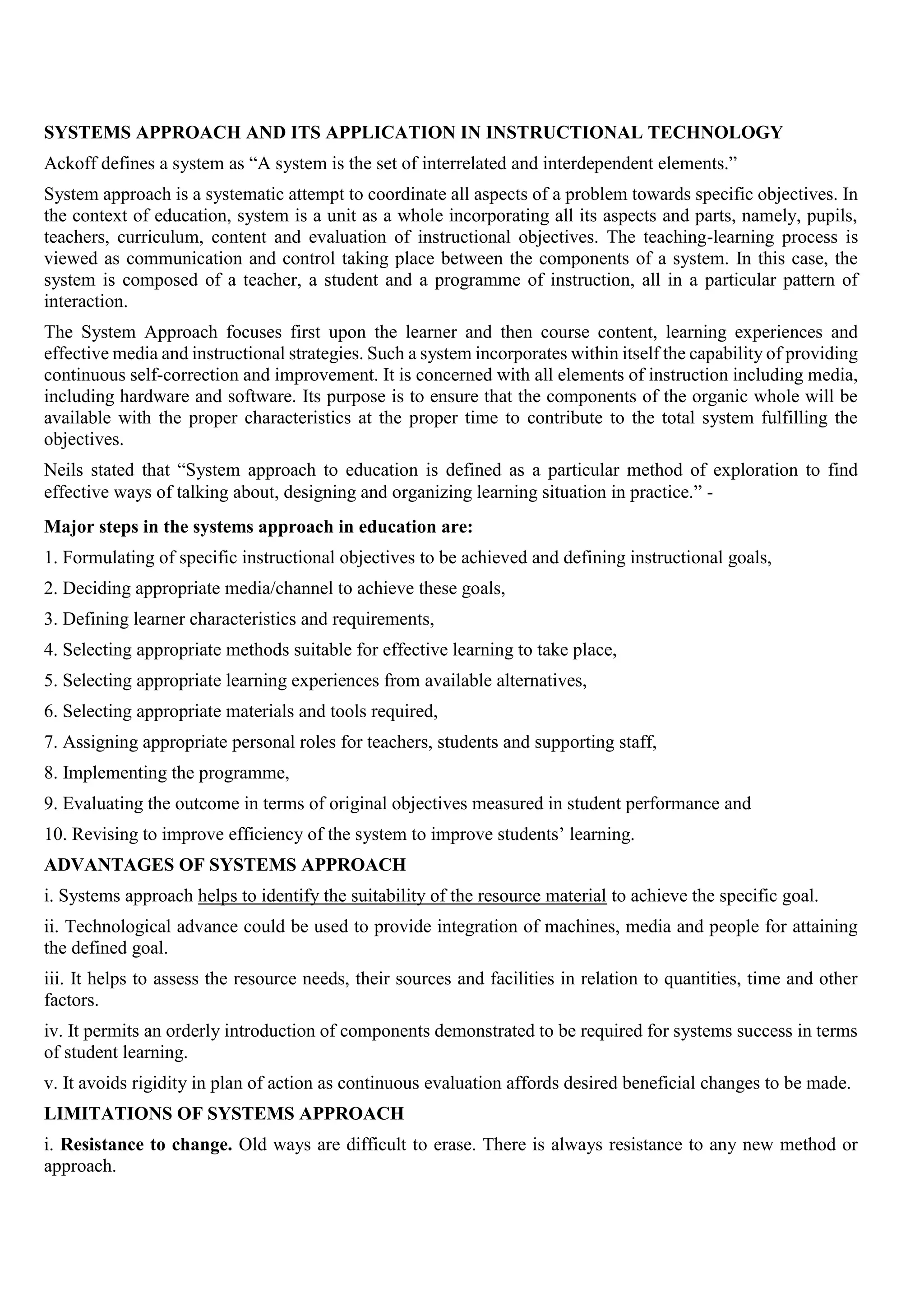
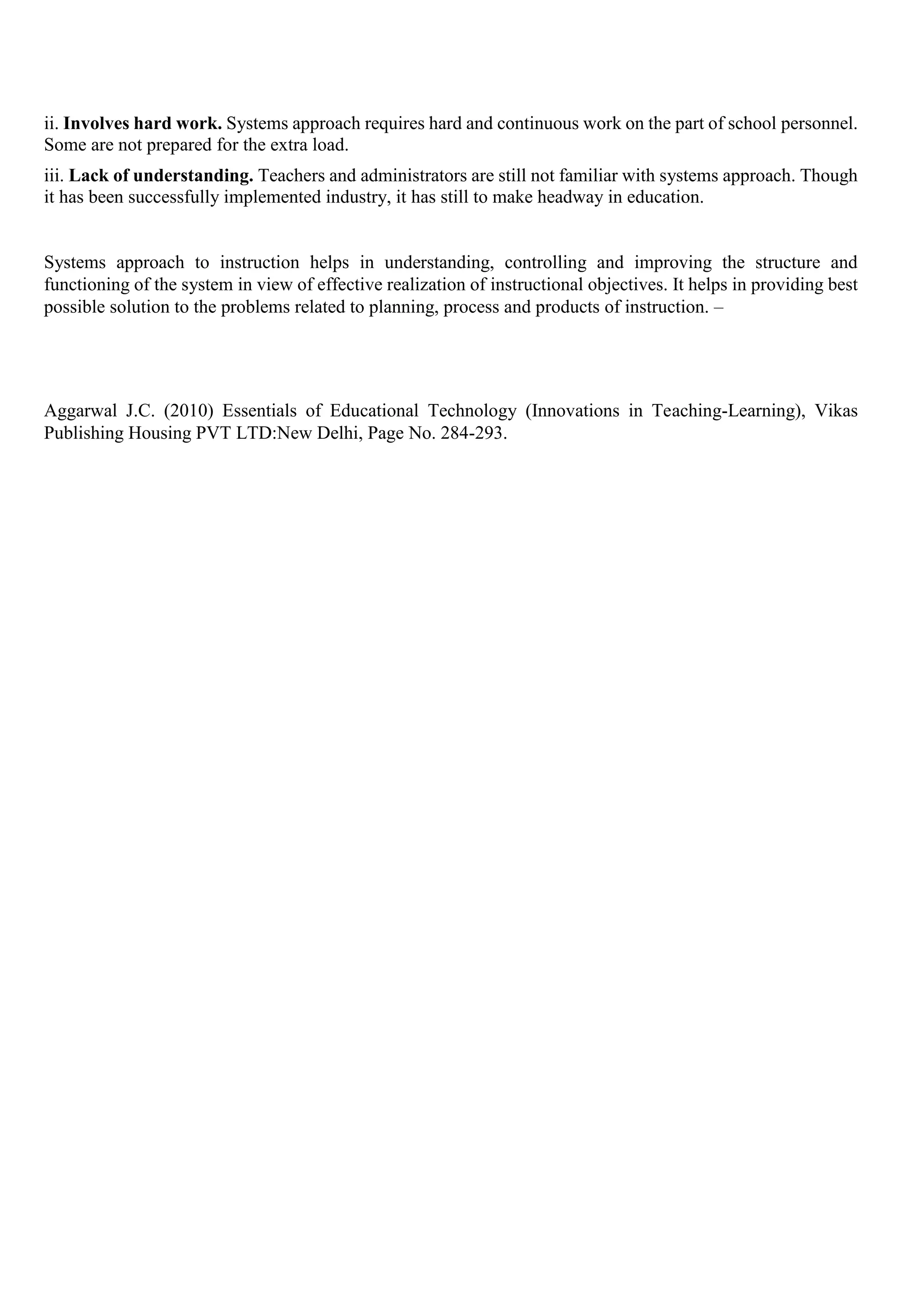

The systems approach views the teaching-learning process as communication and control between components of a system, with the system composed of a teacher, student, and instructional program interacting. It focuses first on the learner and their needs, then the content and effective instructional strategies and media to meet objectives. The major steps are formulating objectives, deciding media, defining learner characteristics, selecting methods, experiences, materials, roles, implementing, evaluating outcomes, and revising to improve the system. Advantages include identifying suitable resources, integrating technology, and assessing needs over time while allowing changes. Limitations are resistance to change, requiring hard work, and lack of understanding among teachers and administrators.


