INCLUSIVE EDUCATION
O P FOUSIYA
Assistant Professor
ATCW
WHEN LEARNING IS
PURPOSEFUL,
CREATIVITY BLOSSOMS,
WHEN CREATIVITY
BLOSSOMS,
THINKING ENAMATES,
WHEN THINKING ENAMATES,
KNOWLEDGE IS FULLY LIT,
WHEN KNOWLEDGE IS FULLY
LIT,
ECONOMY FLOURISHES.
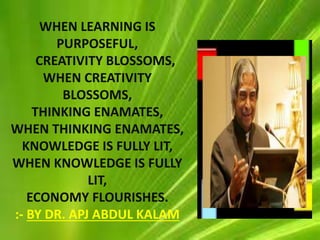
:- BY DR. APJ ABDUL KALAM
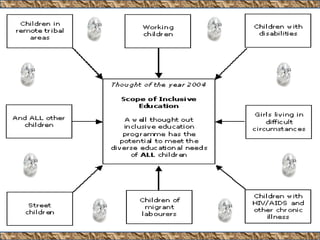
INCLUSIVE EDUCATION
MEANING
• “Inclusive Education is defined
as a learning environment that
promotes the full personal,
academic and professional
development of all learners
irrespective of race, class,
colour, gender, disability, sexual
preference, learning styles and
language.”
₍NCSNET,1997,SOUTH AFRICA ₎
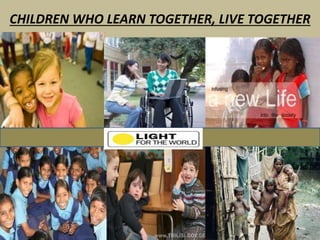
CHILDREN WHO LEARN TOGETHER, LIVE TOGETHER
The District Education Programme ,
1985
The National Policy on Education,
1986
The Project Integrated Education for
the Disabled, launched in 1987
The person with Disabilities Act, 1995
The Integrated Education for
Disabled Children Scheme,
launched in 1974
The sarva shiksha abhiyan, 2000
Making all schools “disabled-
friendly” by 2020…………. (march,
2005)
PRINCIPLES OF INCLUSIVE EDUCATION
No discrimination with students
Equal educational opportunity to all
School adapt to the need of student
Equal educational benefits for all students
The student’s views are listened to and taken
seriously
Individual differences between students are a
source of richness and diversity, and not a
problem
PRACTICE OF INCLUSIVE EDUCATION
Understanding Inclusion as a continuing process,
not a one time event.
 strengthening and sustaining the participation of all
students, teachers, parents and community members in
the work of the school.
Restructuring the cultures, policies and practices in
schools to respond to the diversity of pupils within their
locality.
Providing an accessible curriculum and appropriate
training programmes for all (teachers and students).
Identifying and providing support for staff as well as
students.
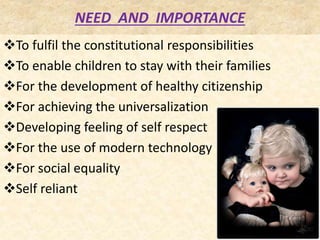
NEED AND IMPORTANCE
To fulfil the constitutional responsibilities
To enable children to stay with their families
For the development of healthy citizenship
For achieving the universalization
Developing feeling of self respect
For the use of modern technology
For social equality
Self reliant
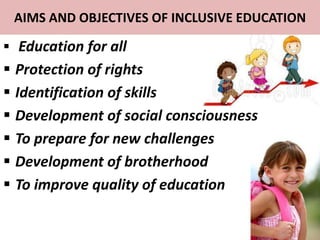
AIMS AND OBJECTIVES OF INCLUSIVE EDUCATION
 Education for all
 Protection of rights
 Identification of skills
 Development of social consciousness
 To prepare for new challenges
 Development of brotherhood
 To improve quality of education
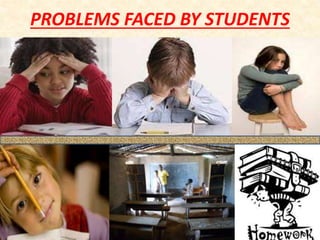
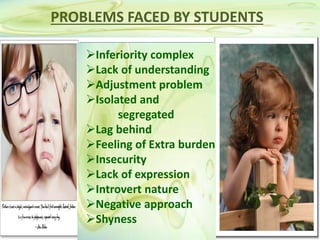
PROBLEMS FACED BY STUDENTS
Inferiority complex
Lack of understanding
Adjustment problem
Isolated and
segregated
Lag behind
Feeling of Extra burden
Insecurity
Lack of expression
Introvert nature
Negative approach
Shyness
ROLE OF TEACHER
Interaction with family
To be able to solve their problem
To develop new learning strategies
To be able to develop self confidence
To be able to provide special facilities
To be able to look after their personal needs
To be able to recognize their hidden talents
To inculcate positive attitude in the able-bodies
children
TEACHING STRATEGIES FOR INCLUSIVE
EDUCATION
Co-operative learning
Peer tutoring
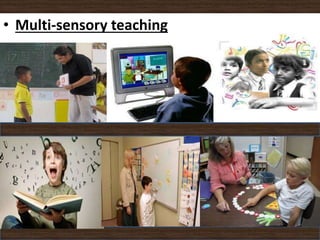
• Multi-sensory teaching
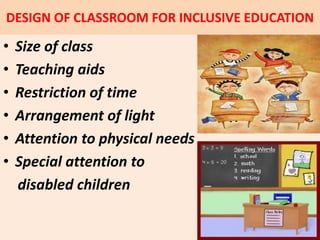
DESIGN OF CLASSROOM FOR INCLUSIVE EDUCATION
• Size of class
• Teaching aids
• Restriction of time
• Arrangement of light
• Attention to physical needs
• Special attention to
disabled children
REFORMS IN CURRICULUM
• Use of teaching Aids
• Simple curriculum
• Adequate facilities
• Participation in games
• Co-operative curriculum
• Providing reading material
• Participation in co-curricular activities
• Multi-level and flexible curriculum
BARRIERS IN INCLUSIVE EDUCATION
• Negative approach
• Lack of physical facilities
• Lack of funds
• Lack of trained teachers
• Social discrimination
• Emotional problems
• Educational problems
STRATEGIES TO IMPROVE INCLUSIVE EDUCATION
• Mainstreaming
• Encourage students
• Improve textbooks
..
• Special training to teachers
• Special care of special children
• Improve methods of teaching
• Provision of required resources

Inclusive education for bed paper 13

  • 1.
    INCLUSIVE EDUCATION O PFOUSIYA Assistant Professor ATCW
  • 2.
    WHEN LEARNING IS PURPOSEFUL, CREATIVITYBLOSSOMS, WHEN CREATIVITY BLOSSOMS, THINKING ENAMATES, WHEN THINKING ENAMATES, KNOWLEDGE IS FULLY LIT, WHEN KNOWLEDGE IS FULLY LIT, ECONOMY FLOURISHES. :- BY DR. APJ ABDUL KALAM
  • 3.
  • 4.
    MEANING • “Inclusive Educationis defined as a learning environment that promotes the full personal, academic and professional development of all learners irrespective of race, class, colour, gender, disability, sexual preference, learning styles and language.” ₍NCSNET,1997,SOUTH AFRICA ₎
  • 5.
    CHILDREN WHO LEARNTOGETHER, LIVE TOGETHER
  • 6.
    The District EducationProgramme , 1985 The National Policy on Education, 1986 The Project Integrated Education for the Disabled, launched in 1987 The person with Disabilities Act, 1995 The Integrated Education for Disabled Children Scheme, launched in 1974 The sarva shiksha abhiyan, 2000 Making all schools “disabled- friendly” by 2020…………. (march, 2005)
  • 7.
    PRINCIPLES OF INCLUSIVEEDUCATION No discrimination with students Equal educational opportunity to all School adapt to the need of student Equal educational benefits for all students The student’s views are listened to and taken seriously Individual differences between students are a source of richness and diversity, and not a problem
  • 8.
    PRACTICE OF INCLUSIVEEDUCATION Understanding Inclusion as a continuing process, not a one time event.  strengthening and sustaining the participation of all students, teachers, parents and community members in the work of the school. Restructuring the cultures, policies and practices in schools to respond to the diversity of pupils within their locality. Providing an accessible curriculum and appropriate training programmes for all (teachers and students). Identifying and providing support for staff as well as students.
  • 10.
    NEED AND IMPORTANCE Tofulfil the constitutional responsibilities To enable children to stay with their families For the development of healthy citizenship For achieving the universalization Developing feeling of self respect For the use of modern technology For social equality Self reliant
  • 11.
    AIMS AND OBJECTIVESOF INCLUSIVE EDUCATION  Education for all  Protection of rights  Identification of skills  Development of social consciousness  To prepare for new challenges  Development of brotherhood  To improve quality of education
  • 12.
  • 13.
    PROBLEMS FACED BYSTUDENTS Inferiority complex Lack of understanding Adjustment problem Isolated and segregated Lag behind Feeling of Extra burden Insecurity Lack of expression Introvert nature Negative approach Shyness
  • 14.
    ROLE OF TEACHER Interactionwith family To be able to solve their problem To develop new learning strategies To be able to develop self confidence To be able to provide special facilities To be able to look after their personal needs To be able to recognize their hidden talents To inculcate positive attitude in the able-bodies children
  • 15.
    TEACHING STRATEGIES FORINCLUSIVE EDUCATION Co-operative learning Peer tutoring
  • 16.
  • 17.
    DESIGN OF CLASSROOMFOR INCLUSIVE EDUCATION • Size of class • Teaching aids • Restriction of time • Arrangement of light • Attention to physical needs • Special attention to disabled children
  • 18.
    REFORMS IN CURRICULUM •Use of teaching Aids • Simple curriculum • Adequate facilities • Participation in games • Co-operative curriculum • Providing reading material • Participation in co-curricular activities • Multi-level and flexible curriculum
  • 20.
    BARRIERS IN INCLUSIVEEDUCATION • Negative approach • Lack of physical facilities • Lack of funds • Lack of trained teachers • Social discrimination • Emotional problems • Educational problems
  • 21.
    STRATEGIES TO IMPROVEINCLUSIVE EDUCATION • Mainstreaming • Encourage students • Improve textbooks
  • 22.
    .. • Special trainingto teachers • Special care of special children • Improve methods of teaching • Provision of required resources