



SYSTEM APPROACH
 The education system, which was
once very easy ; today, has become
very complex.
 System approach has been introduced
in the field of education to manage,
control and improve the process of
education.
MEANING OF SYSTEM
The word “System” from latin word
“systema”
which means: a part made up of multiple
parts or members or mutually joined
things.
A system is a set of objects or elements
that interact to achieve a specific goal .
DEFINITION
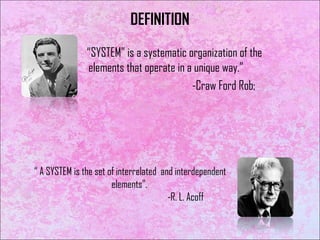
“SYSTEM” is a systematic organization of the
elements that operate in a unique way.”
-Craw Ford Rob;
“ A SYSTEM is the set of interrelated and interdependent
elements”.
-R. L. Acoff
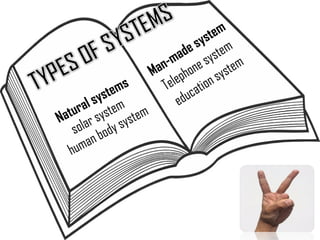
Man-made system
Telephone system
education system
Natural systems
solar system
human body system
Characteristics of “system
System is a general term.
It is applicable to various fields including
education.
It is dynamic.
It functions as a whole and achieves
better results.
It is integrated whole comprising inter
related.
System Approach
System approach is a systematic attempt
to coordinate all aspects of a problem
towards specific objectives.
A systems approach is a technique based
on the systems concepts.
It acts as a link between hardware and
software approach.
Define of System approach
“System approach to education is defined as a
particular method of exploration to find effective
ways of talking about, designing and organizing
learning situation in practice.”
-Neils
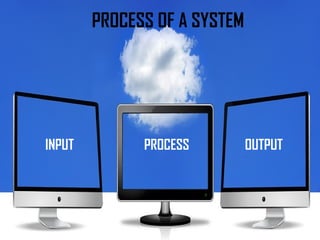
PROCESS OF A SYSTEM
INPUT PROCESS OUTPUT
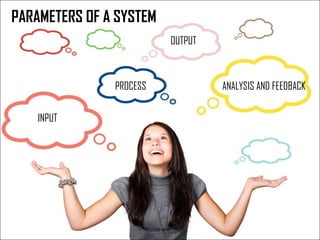
PARAMETERS OF A SYSTEM
INPUT
PROCESS
OUTPUT
ANALYSIS AND FEEDBACK
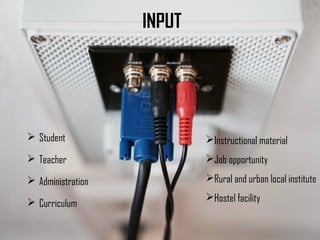
INPUT
 Student
 Teacher
 Administration
 Curriculum
Instructional material
Job opportunity
Rural and urban local institute
Hostel facility
PROCESS
Process refers to what goes on in a system
Curriculum
Institute
Facility
Teachers
OUTPUT
Output Is The Product Of A
System.
Monitored Output
Which Is Used To Revise,
Improve And Evaluate
Analysis and feedback
Monitored environment
provides feedback to the learner and
teacher.
 A system operates in a physical and
social environment.
STEPS INVOLVED IN SYSTEM APPROACH
 SYSTEM ANALYSIS
 SYSTEM DESIGN AND DEVELOPMENT
 SYSTEM OPERATION AND EVALUATION
CHARACTERISTICS OF SYSTEM APPROACH
 Centralized On The Learner
 Interrelated Elements
 Fast Feedback
 Independency
 Evaluation Of Resources
ADVANTAGES
 Systems Approach Helps To Identify The Suitability Of The
Resource Material To Achieve The Specific Goal.
It Helps To Assess The Resource Needs, Facilities In
Relation To Quantities, Time And Other Factors.
 It Permits An Orderly Introduction Of Components
Demonstrated
 It Avoids Rigidity In Plan Of Action As Continuous
Evaluation.
LIMITATIONS OF SYSTEMS APPROACH
Old ways are difficult to erase.
Involves hard work.
Some are not prepared for the extra load.
Lack of understanding.
Teachers and administrators are still not
familiar with systems approach.
ROLE OF A TEACHER IN SYSTEM APPROACH
 Assessment in input
 Data collection
 Alternatives
 Analysing objectives
 Discussions
 Activations
 Feedback data
 Assessment
 Modification of system
System approach and solution of the
“education problems”:
 Identification of the problem
 Defining the objetives
 Analysis of the task
 System analysis
 System evaluation
 Improvement of the system
CONCLUSON
 In education, this means planned and organized
use of all available learning resources,
including audio-visual media, to achieve.
  We conclude that it is improving quality of
education and to maintain control but it is
complex.
 So we have to find ways to make this
approach handy.
THANKING U FOR UR ATTENTION

Systems approach

  • 3.
  • 4.
     The educationsystem, which was once very easy ; today, has become very complex.  System approach has been introduced in the field of education to manage, control and improve the process of education.
  • 5.
    MEANING OF SYSTEM Theword “System” from latin word “systema” which means: a part made up of multiple parts or members or mutually joined things. A system is a set of objects or elements that interact to achieve a specific goal .
  • 6.
    DEFINITION “SYSTEM” is asystematic organization of the elements that operate in a unique way.” -Craw Ford Rob; “ A SYSTEM is the set of interrelated and interdependent elements”. -R. L. Acoff
  • 7.
    Man-made system Telephone system educationsystem Natural systems solar system human body system
  • 8.
    Characteristics of “system Systemis a general term. It is applicable to various fields including education. It is dynamic. It functions as a whole and achieves better results. It is integrated whole comprising inter related.
  • 9.
    System Approach System approachis a systematic attempt to coordinate all aspects of a problem towards specific objectives. A systems approach is a technique based on the systems concepts. It acts as a link between hardware and software approach.
  • 10.
    Define of Systemapproach “System approach to education is defined as a particular method of exploration to find effective ways of talking about, designing and organizing learning situation in practice.” -Neils
  • 11.
    PROCESS OF ASYSTEM INPUT PROCESS OUTPUT
  • 12.
    PARAMETERS OF ASYSTEM INPUT PROCESS OUTPUT ANALYSIS AND FEEDBACK
  • 13.
    INPUT  Student  Teacher Administration  Curriculum Instructional material Job opportunity Rural and urban local institute Hostel facility
  • 14.
    PROCESS Process refers towhat goes on in a system Curriculum Institute Facility Teachers
  • 15.
    OUTPUT Output Is TheProduct Of A System. Monitored Output Which Is Used To Revise, Improve And Evaluate
  • 16.
    Analysis and feedback Monitoredenvironment provides feedback to the learner and teacher.  A system operates in a physical and social environment.
  • 17.
    STEPS INVOLVED INSYSTEM APPROACH  SYSTEM ANALYSIS  SYSTEM DESIGN AND DEVELOPMENT  SYSTEM OPERATION AND EVALUATION
  • 18.
    CHARACTERISTICS OF SYSTEMAPPROACH  Centralized On The Learner  Interrelated Elements  Fast Feedback  Independency  Evaluation Of Resources
  • 19.
    ADVANTAGES  Systems ApproachHelps To Identify The Suitability Of The Resource Material To Achieve The Specific Goal. It Helps To Assess The Resource Needs, Facilities In Relation To Quantities, Time And Other Factors.  It Permits An Orderly Introduction Of Components Demonstrated  It Avoids Rigidity In Plan Of Action As Continuous Evaluation.
  • 20.
    LIMITATIONS OF SYSTEMSAPPROACH Old ways are difficult to erase. Involves hard work. Some are not prepared for the extra load. Lack of understanding. Teachers and administrators are still not familiar with systems approach.
  • 21.
    ROLE OF ATEACHER IN SYSTEM APPROACH  Assessment in input  Data collection  Alternatives  Analysing objectives  Discussions  Activations  Feedback data  Assessment  Modification of system
  • 22.
    System approach andsolution of the “education problems”:  Identification of the problem  Defining the objetives  Analysis of the task  System analysis  System evaluation  Improvement of the system
  • 23.
    CONCLUSON  In education,this means planned and organized use of all available learning resources, including audio-visual media, to achieve.   We conclude that it is improving quality of education and to maintain control but it is complex.  So we have to find ways to make this approach handy.
  • 24.
    THANKING U FORUR ATTENTION