SYSTEMIC LUPUS
ERYTHEMATOSUS
Dr Nadim Iqbal Sheikh
Assoc. Prof. Medicine
Rawalpindi General Hospital
SLE


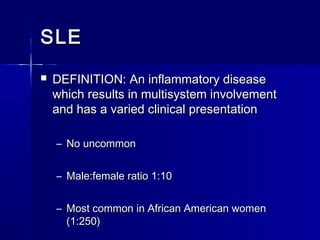
DEFINITION: An inflammatory disease
which results in multisystem involvement
and has a varied clinical presentation
– No uncommon
– Male:female ratio 1:10
– Most common in African American women
(1:250)
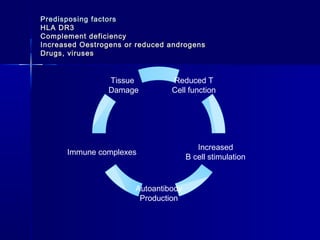
Predisposing factors
HLA DR3
Complement deficiency
Increased Oestrogens or reduced androgens
Drugs, viruses

Tissue
Damage

Reduced T
Cell function

Immune complexes

Autoantibody
Production

Increased
B cell stimulation
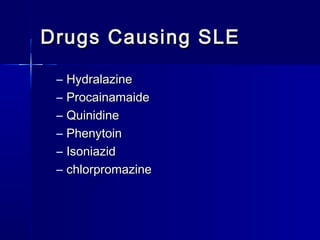
Drugs Causing SLE
–
–
–
–
–
–

Hydralazine
Procainamaide
Quinidine
Phenytoin
Isoniazid
chlorpromazine
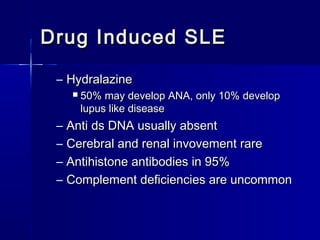
Drug Induced SLE
– Hydralazine


–
–
–
–

50% may develop ANA, only 10% develop
lupus like disease

Anti ds DNA usually absent
Cerebral and renal invovement rare
Antihistone antibodies in 95%
Complement deficiencies are uncommon
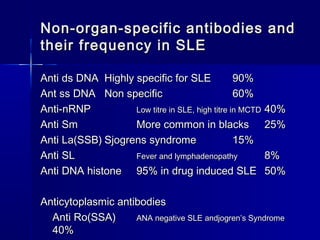
Non-organ-specific antibodies and
their frequency in SLE
Anti ds DNA Highly specific for SLE
90%
Ant ss DNA Non specific
60%
Anti-nRNP
Low titre in SLE, high titre in MCTD 40%
Anti Sm
More common in blacks 25%
Anti La(SSB) Sjogrens syndrome
15%
Anti SL
Fever and lymphadenopathy
8%
Anti DNA histone 95% in drug induced SLE 50%
Anticytoplasmic antibodies
Anti Ro(SSA)
ANA negative SLE andjogren’s Syndrome
40%
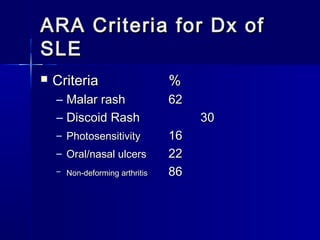
ARA Criteria for Dx of
SLE


Criteria

%

– Malar rash
– Discoid Rash

62

– Photosensitivity

16
22
86

– Oral/nasal ulcers
– Non-deforming arthritis

30


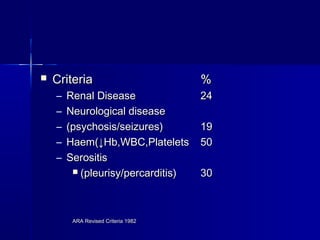
Criteria
–
–
–
–
–

Renal Disease
Neurological disease
(psychosis/seizures)
Haem(↓Hb,WBC,Platelets
Serositis
 (pleurisy/percarditis)

ARA Revised Criteria 1982

%
24
19
50
30
Drug Therapy for SLE


Drug

– NSAIDs
– Antimalarials
cutaneous
disease
– Corticosteroids

–

Indications

synovitis & mild
systemic illness
synovitis &
Moderate to severe

systemic disease
including vasculitis, neurpathy,
nephritis, vasculitis and otyher vital
organs
ImmunosuppressantsSevere disease including
nephritis
Pregnancy and SLE


Fertility is usually normal except in severe
disease
–
–
–
–
–
–
–

No major contraindication to pregnancy
For Contraception Barrier methods rather than
pill are preferable as Oestrogens can precipitate
relapse
Recurrent miscarriages occur (?antiphospholipid
syndrome)
Postpartum exacerbations are not infrequent
Continue usual treatment
Control HTN well
Eetal loss in severe disease and APL syndrome
PROGNOSIS





In 1950’s 5 year survival was 50%
In 1990’s 10 year survival is in excess
of 90%
Patients with renal and neurological
involvement have poorer prognosis
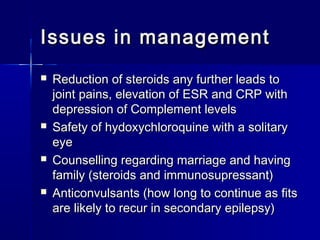
Issues in management








Reduction of steroids any further leads to
joint pains, elevation of ESR and CRP with
depression of Complement levels
Safety of hydoxychloroquine with a solitary
eye
Counselling regarding marriage and having
family (steroids and immunosupressant)
Anticonvulsants (how long to continue as fits
are likely to recur in secondary epilepsy)
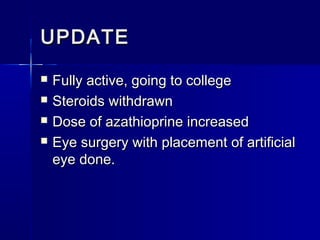
UPDATE





Fully active, going to college
Steroids withdrawn
Dose of azathioprine increased
Eye surgery with placement of artificial
eye done.
THANK YOU

Systemic lupus erythematosus

  • 1.
    SYSTEMIC LUPUS ERYTHEMATOSUS Dr NadimIqbal Sheikh Assoc. Prof. Medicine Rawalpindi General Hospital
  • 2.
    SLE  DEFINITION: An inflammatorydisease which results in multisystem involvement and has a varied clinical presentation – No uncommon – Male:female ratio 1:10 – Most common in African American women (1:250)
  • 3.
    Predisposing factors HLA DR3 Complementdeficiency Increased Oestrogens or reduced androgens Drugs, viruses Tissue Damage Reduced T Cell function Immune complexes Autoantibody Production Increased B cell stimulation
  • 4.
  • 5.
    Drug Induced SLE –Hydralazine  – – – – 50% may develop ANA, only 10% develop lupus like disease Anti ds DNA usually absent Cerebral and renal invovement rare Antihistone antibodies in 95% Complement deficiencies are uncommon
  • 6.
    Non-organ-specific antibodies and theirfrequency in SLE Anti ds DNA Highly specific for SLE 90% Ant ss DNA Non specific 60% Anti-nRNP Low titre in SLE, high titre in MCTD 40% Anti Sm More common in blacks 25% Anti La(SSB) Sjogrens syndrome 15% Anti SL Fever and lymphadenopathy 8% Anti DNA histone 95% in drug induced SLE 50% Anticytoplasmic antibodies Anti Ro(SSA) ANA negative SLE andjogren’s Syndrome 40%
  • 7.
    ARA Criteria forDx of SLE  Criteria % – Malar rash – Discoid Rash 62 – Photosensitivity 16 22 86 – Oral/nasal ulcers – Non-deforming arthritis 30
  • 8.
  • 11.
    Drug Therapy forSLE  Drug – NSAIDs – Antimalarials cutaneous disease – Corticosteroids – Indications synovitis & mild systemic illness synovitis & Moderate to severe systemic disease including vasculitis, neurpathy, nephritis, vasculitis and otyher vital organs ImmunosuppressantsSevere disease including nephritis
  • 12.
    Pregnancy and SLE  Fertilityis usually normal except in severe disease – – – – – – – No major contraindication to pregnancy For Contraception Barrier methods rather than pill are preferable as Oestrogens can precipitate relapse Recurrent miscarriages occur (?antiphospholipid syndrome) Postpartum exacerbations are not infrequent Continue usual treatment Control HTN well Eetal loss in severe disease and APL syndrome
  • 13.
    PROGNOSIS    In 1950’s 5year survival was 50% In 1990’s 10 year survival is in excess of 90% Patients with renal and neurological involvement have poorer prognosis
  • 14.
    Issues in management     Reductionof steroids any further leads to joint pains, elevation of ESR and CRP with depression of Complement levels Safety of hydoxychloroquine with a solitary eye Counselling regarding marriage and having family (steroids and immunosupressant) Anticonvulsants (how long to continue as fits are likely to recur in secondary epilepsy)
  • 15.
    UPDATE     Fully active, goingto college Steroids withdrawn Dose of azathioprine increased Eye surgery with placement of artificial eye done.
  • 16.