BY DR.UZMA TALIB


Defination:



Left ventricular hypertrophy is defined as an increase in the
mass of the left ventricle, which can be secondary to an
increase in wall thickness, an increase in cavity size, or both



Causes:



Hypertension
Hypertrophic cardiomyopathy
Aortic stenosis
Athelitic training














Risk factors for left ventricular hypertrophy include the
following:
Age
Gender
High blood pressure, a blood pressure reading greater than
140/90 mm Hg, is the greatest risk factor.
Aortic stenosis, narrowing of the main valve through which
blood leaves the heart, may increase the left ventricle's
workload.
Obesity can cause high blood pressure and increase your
body's demand for oxygen, factors that may lead to left
ventricular hypertrophy.
Genetic factor


 The development of LVH is a relatively early response to
hypertension,



Ambulatory BP monitoring has suggested that there may be two additional
risk factors for LVH:
The daily BP load (the percentage of pressures above 135/85 during the day
and 120/80 mmHg at night
Nocturnal hypertension (in which the expected nighttime reduction in BP is
not seen)



maximal daytime blood pressure or peak exercise blood
pressure are most predictive of the level of hypertrophy .
There is also evidence that left ventricular mass may be
increased prior to the development of overt hypertension.


High BP → ↑ LV wall stress
Wall stress ∝ 1/ wall thickness
LV wall thickening → ↓ wall stress
Myocyte hypertrophy and ↑ collagen matrix


.The same factors, such as angiotensin II, norepinephrine,
epinephrine, increased peripheral and cardiac sympathetic
drive and endothelin, promote both hypertension and LVH.
The tendency to LVH may be an inherited trait that
predisposes to the development of hypertension
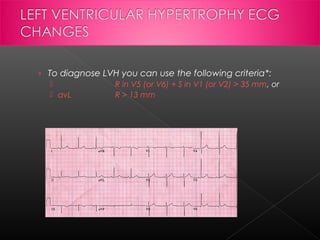
› To diagnose LVH you can use the following criteria*:

 avL

R in V5 (or V6) + S in V1 (or V2) > 35 mm, or
R > 13 mm
Symptoms:










Shortness of breath
Chest pain
palpitations
Dizziness
Fainting
Rapid exhaustion with physical activity
Fatigue
Syncope
Some time patient shows no symptoms
Signs:







•
•
•

systolic murmur best heard between the apex and
left sternal border
- increases in intensity with maneuvers that
decrease preload (Valsalva, squatting to
standing position).
- does not radiate to the carotid arteries
sustained apical impulse
S4
bisferiens pulse (carotids, femoral arteries)







Complications that can occur as a result of these problems
include:
Inability of your heart to pump enough blood to your body
(heart failure)
Abnormal heart rhythm (arrhythmia)
Insufficient supply of oxygen to the heart (ischemic heart
disease)
Interruption of blood supply to the heart (heart attack)
Sudden, unexpected loss of heart function, breathing and
consciousness (sudden cardiac arrest)
Defination:



right ventricular hypertrophy is the enlargement of heart’s
right ventricle
Right ventricular hypertrophy, or simply RVH, is considered to
be one of the rare diseases of the heart. Unlike the left
ventricle, which tends to overwork itself when it detects
abnormalities, the right ventricle dilutes itself. This is the
reason why left ventricular hypertrophy is way more common
than right ventricular hypertrophy.








Pulmonary hypertension
Fallot tetralogy
Pulmonary valve stenosis
Ventricular septal defect (VSD)
High altitude
Cardiac fibrosis
Chronic obstructive pulmonary disease (COPD)







Chest pain and tightness
Palpitation
Dizziness
Loss of consciousness
Light headedness
Edema of feet,leg,ankle
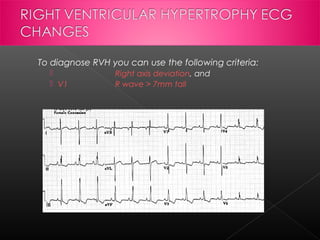
To diagnose RVH you can use the following criteria:

 V1

Right axis deviation, and
R wave > 7mm tall





POTASSIUM
MAGNESIUM
CALCIUM


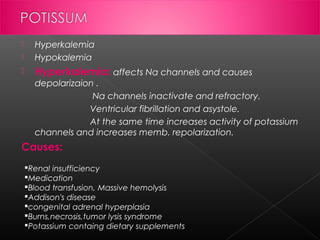
Hyperkalemia
Hypokalemia



Hyperkalemia: affects Na channels and causes



depolarizaion .
Na channels inactivate and refractory.
Ventricular fibrillation and asystole.
At the same time increases activity of potassium
channels and increases memb. repolarization.

Causes:
Renal insufficiency
Medication
Blood transfusion, Massive hemolysis
Addison's disease
congenital adrenal hyperplasia
Burns,necrosis,tumor lysis syndrome
Potassium containg dietary supplements
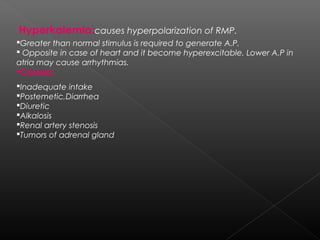
Hyperkalemia:causes hyperpolarization of RMP.
Greater than normal stimulus is required to generate A.P.
 Opposite in case of heart and it become hyperexcitable. Lower A.P in
atria may cause arrhythmias.

Causes:

Inadequate intake
Postemetic,Diarrhea
Diuretic
Alkalosis
Renal artery stenosis
Tumors of adrenal gland


Hypermagnesemia
Hypomagnesemia



Hypomagnesemia



required for Na/K ATPase. Normal Mg inhibits
release of K . In hypo more K is released so cells depolarize
causing tachyarrhythmias


Causes:



Alcohol abuse
Delirium tremens
Ch.Diarhea
Thiamine deficiency
Diuretics
Aminoglycoside
Gentamycin,tobramycin
Cisplatin,cyclosporin





















Hypermagnesemia: Acts as physiological Ca channel
blocker. Causes arrhythmias such as A/F, interventricular
conduction delay.
Causes:
Antacids
Vitamins
Acute renal failure
Maternal eclampsia
Tumor hypoparathyoidism
Iatrogenic
Sis syndrome
Milk alkali syndrome
Hypothyroidism



Hypercalsemia
Hypocalsemia



Hypercalsemia:



rarely too high to effect heart but may cause heart to fail to
relax during diastole and eventually stops in systole(Ca rigor).
Causes:












Hyperparathyroidism
Sarcoidosis
Iatrogenic
Breast cancer
Phaeochromocytoma
Hyperthyroidism
Post renal transplant
Adrenal insufficiency












Hypocalsemia:
exact mech. nt known but ECG changes are seen.
Cause :
Hypoparathyroidism
Sepsis
Alcoholism
Renal failure
Pacreatitis
Hyperphosphatemia
Phosphate enemas
Malnutrition


THANK YOU

Right and left ventricular hypertrophy

  • 1.
  • 2.
     Defination:  Left ventricular hypertrophyis defined as an increase in the mass of the left ventricle, which can be secondary to an increase in wall thickness, an increase in cavity size, or both  Causes:  Hypertension Hypertrophic cardiomyopathy Aortic stenosis Athelitic training   
  • 3.
           Risk factors forleft ventricular hypertrophy include the following: Age Gender High blood pressure, a blood pressure reading greater than 140/90 mm Hg, is the greatest risk factor. Aortic stenosis, narrowing of the main valve through which blood leaves the heart, may increase the left ventricle's workload. Obesity can cause high blood pressure and increase your body's demand for oxygen, factors that may lead to left ventricular hypertrophy. Genetic factor
  • 4.
      The development ofLVH is a relatively early response to hypertension,  Ambulatory BP monitoring has suggested that there may be two additional risk factors for LVH: The daily BP load (the percentage of pressures above 135/85 during the day and 120/80 mmHg at night Nocturnal hypertension (in which the expected nighttime reduction in BP is not seen)  maximal daytime blood pressure or peak exercise blood pressure are most predictive of the level of hypertrophy . There is also evidence that left ventricular mass may be increased prior to the development of overt hypertension. 
  • 5.
    High BP →↑ LV wall stress Wall stress ∝ 1/ wall thickness LV wall thickening → ↓ wall stress Myocyte hypertrophy and ↑ collagen matrix  .The same factors, such as angiotensin II, norepinephrine, epinephrine, increased peripheral and cardiac sympathetic drive and endothelin, promote both hypertension and LVH. The tendency to LVH may be an inherited trait that predisposes to the development of hypertension
  • 6.
    › To diagnoseLVH you can use the following criteria*:   avL R in V5 (or V6) + S in V1 (or V2) > 35 mm, or R > 13 mm
  • 7.
    Symptoms:          Shortness of breath Chestpain palpitations Dizziness Fainting Rapid exhaustion with physical activity Fatigue Syncope Some time patient shows no symptoms
  • 8.
    Signs:      • • • systolic murmur bestheard between the apex and left sternal border - increases in intensity with maneuvers that decrease preload (Valsalva, squatting to standing position). - does not radiate to the carotid arteries sustained apical impulse S4 bisferiens pulse (carotids, femoral arteries)
  • 9.
          Complications that canoccur as a result of these problems include: Inability of your heart to pump enough blood to your body (heart failure) Abnormal heart rhythm (arrhythmia) Insufficient supply of oxygen to the heart (ischemic heart disease) Interruption of blood supply to the heart (heart attack) Sudden, unexpected loss of heart function, breathing and consciousness (sudden cardiac arrest)
  • 10.
    Defination:   right ventricular hypertrophyis the enlargement of heart’s right ventricle Right ventricular hypertrophy, or simply RVH, is considered to be one of the rare diseases of the heart. Unlike the left ventricle, which tends to overwork itself when it detects abnormalities, the right ventricle dilutes itself. This is the reason why left ventricular hypertrophy is way more common than right ventricular hypertrophy.
  • 11.
           Pulmonary hypertension Fallot tetralogy Pulmonaryvalve stenosis Ventricular septal defect (VSD) High altitude Cardiac fibrosis Chronic obstructive pulmonary disease (COPD)
  • 12.
          Chest pain andtightness Palpitation Dizziness Loss of consciousness Light headedness Edema of feet,leg,ankle
  • 13.
    To diagnose RVHyou can use the following criteria:   V1 Right axis deviation, and R wave > 7mm tall
  • 14.
  • 15.
  • 16.
     Hyperkalemia Hypokalemia  Hyperkalemia: affects Nachannels and causes  depolarizaion . Na channels inactivate and refractory. Ventricular fibrillation and asystole. At the same time increases activity of potassium channels and increases memb. repolarization. Causes: Renal insufficiency Medication Blood transfusion, Massive hemolysis Addison's disease congenital adrenal hyperplasia Burns,necrosis,tumor lysis syndrome Potassium containg dietary supplements
  • 17.
    Hyperkalemia:causes hyperpolarization ofRMP. Greater than normal stimulus is required to generate A.P.  Opposite in case of heart and it become hyperexcitable. Lower A.P in atria may cause arrhythmias. Causes: Inadequate intake Postemetic,Diarrhea Diuretic Alkalosis Renal artery stenosis Tumors of adrenal gland
  • 18.
     Hypermagnesemia Hypomagnesemia  Hypomagnesemia  required for Na/KATPase. Normal Mg inhibits release of K . In hypo more K is released so cells depolarize causing tachyarrhythmias  Causes:  Alcohol abuse Delirium tremens Ch.Diarhea Thiamine deficiency Diuretics Aminoglycoside Gentamycin,tobramycin Cisplatin,cyclosporin       
  • 19.
               Hypermagnesemia: Acts asphysiological Ca channel blocker. Causes arrhythmias such as A/F, interventricular conduction delay. Causes: Antacids Vitamins Acute renal failure Maternal eclampsia Tumor hypoparathyoidism Iatrogenic Sis syndrome Milk alkali syndrome Hypothyroidism
  • 20.
      Hypercalsemia Hypocalsemia  Hypercalsemia:  rarely too highto effect heart but may cause heart to fail to relax during diastole and eventually stops in systole(Ca rigor). Causes:          Hyperparathyroidism Sarcoidosis Iatrogenic Breast cancer Phaeochromocytoma Hyperthyroidism Post renal transplant Adrenal insufficiency
  • 21.
               Hypocalsemia: exact mech. ntknown but ECG changes are seen. Cause : Hypoparathyroidism Sepsis Alcoholism Renal failure Pacreatitis Hyperphosphatemia Phosphate enemas Malnutrition
  • 22.