Glomerulonephritis
Glomerulonephritis
• A variety of diseases can affect the
glomerular capillaries
• Glomerulonephritis is an inflammation of the
glomerular capillaries membranes.
• Caused by an immunologic reaction that
result in proliferative and inflammatory
change in glomerular structure
contd
• Antigen–antibody complexes form in the
blood and become trapped in the glomerular
capillaries (the filtering portion of the kidney),
inducing an inflammatory response.
• IgG, the major immunoglobulin(antibody)
found in the blood, can be detected in the
glomerular capillary walls
• The major clinical manifestations of
glomerular injury include proteinuria,
hematuria, decreased glomerular filtration
rate, and alterations in excretion of sodium
(leading to edema and hypertension).
• Glomerulonephritis can be acute or chronic
• It is usually manifested by either a nephrotic
syndrome or a nephritic syndrome.
Nephrotic syndrome
• Nephrotic syndrome is a sate of clinical
manifestations caused by protein wasting
secondary to diffuse glomerular damage.
• Manifestations include proteinuria ( >
3.5g/day), hypoalbuminemia and edema.
Nephritic syndrome
• Nephritic syndrome refers to a set of clinical
manifestations that includes hematuria and at
least one of the following:
• Oliguria ( urine output < 400ml/ 24 hours)
• Hypertension
• Elevated blood urea nitrogen level (BUN)
• Decreased GFR
Contd…
• Inflammation of the glomeruli most often caused by
an autoimmune disease, but it can also result from
infection.
• If glomerulonephritis occurs on its own, it's known as
primary glomerulonephritis.
• If another disease, such as lupus or diabetes, is the
cause, it's called secondary glomerulonephritis
• It may present with isolated hematuria and/or
proteinuria; or as a nephritic syndrome, acute renal
failure, or chronic renal failure.
CLASSIFICATION ( based on etiology)
• PRIMARY GLOMERULONEPHRITIS- immune
response to pathogens
• Acute glomeruonephritis
• Post-infectious glomeruonephritis
• Post streptococcus glomeruonephritis
• Infectious glomeruonephritis
• Membranoproliferative glomeruonephrits
• Rapidly progressive glomerulonephritis
• Idiopathic membranous glomerulonephritis
• Immune globulin A (IgA) nephropathy
• Chronic glomerulonephritis
• Focal glomerular sclerosis
contd
• SECONDARY GLOMERULONEPHRITIS- related
to systemic disease.
• Goodpasture’s syndrome
• Hemolytic uremic syndrome
• Polyarteritis
• Progressive systemic sclerosis
• Systemic Lupus Erythematosis
• Wegener’s granulomatosis
• Thrombocytopenic purpura
• Post partum renal failure
Poststreptococal GN
• Onset- 1 -3 wks after betahemolytic
streptococcal infection of throat or skin.
• Diagnosis finding -Elevated
antistreptolysin o titer
• Prognosis - Variable complete recovery to
end stage renal disease.
Membranoproliferative GN
• Onset-nephrotic syndrome sometime
preceded by a streptococcal infection.
• Diagnosis finding- proteinurea, hematuria.
• Prognosis- gradual progressive chronic renal
failure.
Rapidly progressive GN
• Onset- nephritic syndrome sudden may
follow antigen or infection peak ages 40-
60 yr.
• Diagnosis finding- hematuria, edema,
hypertension, proteinurea, acidosis
• Prognosis- progress to renal failure with in
weeks or month.
Idiopathicmembranous GN
• Onset- peak age 40-70 yrs caused by
unknown antigen.
• Diagnosis finding- asymptomatic protein
urea.
• Prognosis- 25% have spontaneous
remission ,25% have renal failure ,25%
have persistent protein urea 25% have
deteriorating renal function.
Membrenous glomerulonephritis
onset -Nephrotic syndrome
Commonly secondary to drug therapy toxins or
systemic autoimmune disease
Diagnostic findina: heavy proteinuria
Prognosis: variable, 30% have spontenous
remission
Types: according duration or nature
of illness
• Acute
• Chronic
• Rapid progressive glomerulonephritis
ACUTE GLOMERULONEPHRITIS
 Acute glomerulonephritis is the inflammation of
the glomeruli which causes the kidneys to
malfunction
• It is also called Acute Nephritis,
Glomerulonephritis and Post-Streptococcal
Glomerulonephritis
• Predominantly affects children from ages 2 to 12
• Incubation period is 2 to 3 weeks
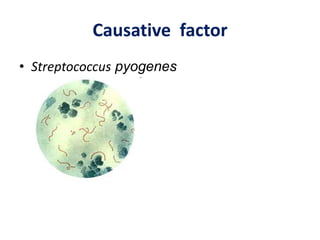
Causative factor
• Streptococcus pyogenes
contd
• Group A beta hemolytic streptococcal
infection of the throat precedes the onset of
glomerulonephritis by 2 to 3 weeks
• It may also follow impetigo (infection of the
skin)
• Acute viral infections(upper respiratory
tract infections, mumps, varicella zoster
virus,
• Epstein-Barr virus, hepatitis B, and human
immunodeficiency virus infection.
Contd..
• In some patients, antigens outside the
body (eg, medications, foreign serum)
• Initiate the process, resulting inantigen-
antibody complexes being deposited in the
glomeruli.
• In other patients, the kidney tissue itself
serves as the provocative antigen.
Causes
• Primary disease: post infectious glomerulonephritis,
membrane proliferative glomerulonephritis, and
membranous glomerulonephritis.
• Group A betahemolytic streptococcal infection of
throat.
• It may follow impetigo and acute viral infection.
• Antigen outside the body
• Autoimmunity
• Heredity
• Infective/ Sclerotic diseases
• Idiopathic
Pathophysiology
• Antigen
• Circulating antigen- antibody immune complex formed
• That is strapped in the glomerular membrane
• Leading to inflammatory response
• Activation of the immune system
• Release of inflammatory mediator
• Endothelial cell proliferation & glomerular membrane swells
• Becomes permeable to plasma protein and blood cells.
• Normal tissue of glomeruli is replaced by fibrous tissue after
inflammation
• Losses of filteration membrane
• Decrease GFR
• Accumulation of metabolic waste products
Clinical Manifestation
• Hematuria (microscopic or macroscopic)
• Edema
• Proteinuria (>3.0g of proteinuria per day)
• Hypoproteinemia
• Reduced glomerular filtration rate/Azotemia
• The urine may apper cola colored because of
red blood cells and protein plugs or casts.
• In sever case renal failure and oliguria
• Hypertention
• Hypoalbuminemia, hyperlipidemia, and fatty
casts in the urine.
• BUN and serum creatinine levels may increase
as urine output decreases.
• May present anaemia
Diagnostic evaluation
• History taking and physical examination: In
acute glomerulonephiritis, the kidneys
become large edematous, and congested.
• Kidney biopsy: kidney biopsy may be needed
for definitive diagnosis.
Contd…
• Serial determinations of antistreptolysin O or
anti-DNase B titers, C - reactive protein are
usually elevated in poststreptococcal
glomerulonephritis.
• More than half of patients with IgA
nephropathy (the most common type of
primary glomerulonephritis) have an elevated
serum IgA.
Complications
• Hypertensive encephalopathy
• Heart failure
• Pulmonary edema
• ESRD (if not treated)
Prognosis
Approximately 60% recover completely
Management:
• Management consists primarily treating
symptoms, attempting to preserve kidney
function, and treating complications promptly.
• Pharmacological therapy: depends on the cause
streptococcal infection penicillin is the agent of
choice. other antibiotics may be prescribed
• Corticosteroids and immunosuppressant
medications may be prescribed for patients with
rapidly progressive acute glomerulonephritis
• Dietary protein is restricted when renal
insufficiency and nitrogen retention (elevated
BUN) developed.
• Potassium and Sodium is restricted when the
patient has hypertension, heart failure, and
edema.
• Loop diuretics and antihypertensive medications
may be prescribed to control hypertension.
• Fluid intake is restricted.
• Carbohydrates are increased liberally to provide
energy and reduce catabolism of protein.
Prevention
• Proper hygiene
• Prompt medical assessment for
necessary antibiotic therapy should be
given when infection is suspected
• Prophylactic immunizations
Chronic Glomerulonephritis
• Chronic glomerulonephritis may be due to
repeated episodes of acute
glomerulonephritis, hypertensive
nephrosclerosis, hyperlipidemia, chronic
tubulointerstitial injury or hemodynamically
mediated glomerular sclerosis.
• Chronic glomerulonephritis a slowly
progressive glomerulonephritis generally
leading to irreversible renal failure over a few
to as many as 30 years.
• In some people there's no history of kidney
disease, so the first indication of chronic
glomerulonephritis is chronic kidney failure.
Pathophysiology
• In Chronic glomerulonephritis the kidneys
are reduced to as little as one-fifth their
normal size (consisting largely of fibrous
tissue).
contd
• The cortex shrinks to a layer 1 to 2 mm thick
or less
• Bands of scar tissue distort the remaining
cortex, making the surface of the kidney
rough and irregular.
• Numerous glomeruli and their tubules
become scarred, and the branches of the
renal artery are thickened.
• The result is severe glomerular damage that
results inESRD.
Clinical Manifestations
• The symptoms of chronic glomerulonephritis
vary.
• Some patient with severe disease have no
symptoms at all for many years
• Hypertension or elevated BUN and serum
creatinine
• Sudden severe nosebleed, a stroke, or a seizure
• Feet slightly swollen at night
• Other general symptoms; loss of weight and
strength, increasing irritability, nocturia,
headache, dizziness, and digestive disturbances
are common
contd
• As chronic glomerulonephritis progresses, sign
and symptoms of chronic kidney disease and
chronic renal failure may develop.
• Poorly nourished, with a yellow-gray
pigmentation of the skin and periorbital and
peripheral (dependent) edema.
• Blood pressure may be normal or severely
elevated.
• Retinal findings include hemorrhage, exudate,
narrowed tortuous arterioles, and papilledema
• Mucous membranes are pale because of anemia
• Cardiomegaly, a gallop rhythm, distended neck
veins, and other signs and symptoms of heart
failure may be present
• Crackles can be heard in the lungs.
• Peripheral neuropathy with diminished deep
tendon reflexes and neurosensory changes occur
late in the disease.
• The patient becomes confused and demonstrates
a limited attention span.
• Late findings evidence of pericarditis with a
pericardial friction rub and pulsus paradoxus
contd
• Many patients report that their feet are
slightly swollen at night.
• Most patients also have general
symptoms, such as loss of weight and
strength, increasing irritability, and an
increased need to urinate at night
(nocturia).
• Headaches, dizziness, and digestive
disturbances are common.
contd
• As chronic glomerulonephritis progresses,
signs and symptoms of renal insufficiency
and chronic renal failure may develop.
• The patient appears poorly nourished, with a
yellow-gray pigmentation of the skin and
periorbital and peripheral (dependent)
• Edema
• Blood pressure may be normal or severely
elevated.
Diagnostic findings
• Urinalysis reveals a fixed specific gravity of about
1.010, variable proteinuria, and urinary casts.
• As renal failure progressses and the GFR falls
below 50ml/min, the following changes occur
• Hyperkalemia
• Metabolic acidosis
• Anaemia
• Hyperalbuminemia with edema
• Increased serum phosphorus lev
Contd…
• decreased serum calcium level
• Mental status changes
• Impaired nerve conduction due to electrolyte
abnormalities and uremia.
• Chest x-ray; may show cardiac enlargement and
pulmonary edema
• ECG: may be normal or may indicate left
ventricular hypertrophy associated with
hypertension and signs of electrolyte
disturbances, such as tall, tented Twave
Medical management
• Symptoms management.
• If hypertention reduction of bloodpressure with
sodium and water restriction, antihypertensive agents,
or both.
• Monitoring weight daily, and diuretics medications are
prescribed to treat fluid overload.
• Providing proteins of high biological value and
adequate calories.
• Urinary tract infection must be treated promptly to
prevent further renal damage.
• Initiation of dialysis early in the course of the disease.
• Prevent fluid and electrolyte imbalances, and minimize
the risk of complications of renal failure
contd
• Adequate calories are also important to
spare protein for tissue growth and repair.
• UTIs must be treated promptly to prevent
further renal damage.
• Initiation of dialysis is considered early in
the course of the disease to keep the
patient in optimal physical condition
contd
• prevent fluid and electrolyte imbalances,
and minimize the risk of complications of
renal failure.
• The course of dialysis is smoother if
treatment begins before the patient
develops significant complications.
contd
2.Reduce inflammation
• Plasmopherosis has been used in some
research protocol to reduce the number of
antigen in certain type of GN.including rapidly
progressive GN.
• Large volume of the client’s plasma cyclically
removed and replace with Fresh frozen
plasma.
contd
• Antibiotic therapy such as penicillin for
streptococcal GN .
• It is also used prophylactically after
streptococcal infection to prevent further
damage.
Rapid progressive glomerulonephritis
• Rapid progressive glomerulonephritis is a
disease of the kidney characterized clinically
by a rapid decrease in the glomerular filtration
rate (GFR) of at least 50% over a short period,
from a few days to 3 months
Prevention
• proper hygiene
• prompt medical assessment for necessary antibiotic
therapy should be sought when infection is suspected
• prophylactic immunizations
• Control the blood sugar to help prevent diabetic
nephropathy.
• Control the blood pressure, which lessens the
likelihood of damage to the kidneys from hypertension
• Seek prompt treatment of a strep infection causing a
sore throat or impetigo.
• To prevent infections, such as HIV and hepatitis that
can lead to some forms of glomerulonephritis follow
safe-sex guidelines and avoid intravenous drug use
Nursing Management
• Assessment: Assess need of the patient through
history taking and physical examination
• Obtain medical history: focus on recent infections or
symptoms of chronic immunologic disorders (systemic
lupus erythmatus, scleroderma).
• Assess urine specimen for blood, protein, color, and
amount.
• Perform physical examinitation specifically looking for
signs of edema, hypertension, and hypervolemia
(engorged neck veins, elevated jugular venous
pressure, adventitious lung sounds, and cardiac
arrhythmia).
• Evaluate cardiac status and serum laboratory values for
electrolyte imbalance.
Nursing Diagnosis and nursing actions
• Ineffective tissue perfusion related to
damage to glomerular function
• Excess fluid volume related to compromised
renal function
• Altered nutrition; less than required related
to anorexia & altered renal function
• Activity intolerance related to fatigue and
hematuria
• Altered emotion and coping related to
questionable prognosis with prolonged
illness
• Skin integrity, high- risk for impaired related
to edema
• High risk for infection related to altered
immune response secondary to treatment
Promoting Renal Function
• Monitor vital sign, intake and output, and
maintain dietary restrictions during acute phase.
• Encourage rest during the acute phase, as
directed, until the urine clears and BUN,
creatinine, and BP normalize.
• Administer medications, as ordered, and evaluate
patient’s response to antihypertensive, diuretics,
H2blockers, phosphate binding agents, and
antibiotics (if indicated).
• Carbohydrates are given liberally to provide
energy and reduce the catabolism of protein.
Improving Fluid Balance
• Carefully monitor fluid balance; replace fluids according to
patient’s fluid losses (urine, respiration, feces) and daily
body weight as prescribed.
• Monitor pulmonary artery pressure and CVP, if indicated,
during acute hospitalization.
• Monitor for signs and symptoms of heart failure: distended
neck veins, tachycardia, gallop rhythm, enlarged and tender
liver, crackles at bases of lungs.
• Fluid intake is usually restricted.
• Thirst may be relieved by sucking on hard candies or lemon
slices or by using ice chips rather than a glass of water.
• Assist to plan fluid distribution during day (eg- with meal
• Observe for hypertensive encephalopathy and any
evidence of seizure activity.
Improve nutritional status
• It is important to protect kidneys while recovering their function.
The diet prescribed by physician is generally high-calorie and low-
protein.
• This diet avoids protein catabolism and allows the kidney to rest
because it handles few protein molecules & metabolism.
• The degree to which protein restricted depends upon the amount
excreted in the urine and the patient’s requirements.
• Sodium is also restricted, depending on the amount of edema
present.
• Anorexia nausea and vomiting may interfere with adequate intake,
requiring creative intervention on a part of nurse.
• Provide antiemetic according to prescription.
• Provide meal frequently in small amount.
• Provide the patient’s diet plan with the help of dietician.
Enhance general wellbeing
• Rest is essential- both physical and emotional;
there is a direct correlation between activity
and amount of hematuria and proteinurea .
• Exercise also increases catabolic activity.
• The allowable amount of activity depends on
the report of serial urinalysis.
Enhance coping
• The patient may need assistance in arranging
personal matters, such as; family, home, finance
and community responsibilities.
• Encourage the patient to talk about fear and
concerns, if needed, help the patient to deal with
emotional reactions; only after handling these
problems will patient be able to rest emotionally.
• Appropriate diversionary activities may help to
cope with prolonged illness.
Improve skin integrity
• Edema interferes with cellular nutrition, which
makes the patient more susceptible to skin
breakdown
• Therefore take precaution to prevent this
complication by providing good hygiene,
massage and position change.
Prevent infection
• Immunosuppressive and Corticosteroids further
reduced host resistance, although isolation is not
needed, take care to protect the client from
others with obvious infections process.
• General supportive measure to boost the defense
mechanism.
Teach appropriate ways to avoid infection:
• use mask
• Treat opportunist infection promptly
• Do not expose self in rush situation
• Take diet high in calorie and vitamins
Thank you

Glumeronephritis

  • 1.
  • 2.
    Glomerulonephritis • A varietyof diseases can affect the glomerular capillaries • Glomerulonephritis is an inflammation of the glomerular capillaries membranes. • Caused by an immunologic reaction that result in proliferative and inflammatory change in glomerular structure
  • 3.
    contd • Antigen–antibody complexesform in the blood and become trapped in the glomerular capillaries (the filtering portion of the kidney), inducing an inflammatory response. • IgG, the major immunoglobulin(antibody) found in the blood, can be detected in the glomerular capillary walls
  • 4.
    • The majorclinical manifestations of glomerular injury include proteinuria, hematuria, decreased glomerular filtration rate, and alterations in excretion of sodium (leading to edema and hypertension).
  • 5.
    • Glomerulonephritis canbe acute or chronic • It is usually manifested by either a nephrotic syndrome or a nephritic syndrome.
  • 6.
    Nephrotic syndrome • Nephroticsyndrome is a sate of clinical manifestations caused by protein wasting secondary to diffuse glomerular damage. • Manifestations include proteinuria ( > 3.5g/day), hypoalbuminemia and edema.
  • 7.
    Nephritic syndrome • Nephriticsyndrome refers to a set of clinical manifestations that includes hematuria and at least one of the following: • Oliguria ( urine output < 400ml/ 24 hours) • Hypertension • Elevated blood urea nitrogen level (BUN) • Decreased GFR
  • 8.
    Contd… • Inflammation ofthe glomeruli most often caused by an autoimmune disease, but it can also result from infection. • If glomerulonephritis occurs on its own, it's known as primary glomerulonephritis. • If another disease, such as lupus or diabetes, is the cause, it's called secondary glomerulonephritis • It may present with isolated hematuria and/or proteinuria; or as a nephritic syndrome, acute renal failure, or chronic renal failure.
  • 9.
    CLASSIFICATION ( basedon etiology) • PRIMARY GLOMERULONEPHRITIS- immune response to pathogens • Acute glomeruonephritis • Post-infectious glomeruonephritis • Post streptococcus glomeruonephritis • Infectious glomeruonephritis • Membranoproliferative glomeruonephrits
  • 10.
    • Rapidly progressiveglomerulonephritis • Idiopathic membranous glomerulonephritis • Immune globulin A (IgA) nephropathy • Chronic glomerulonephritis • Focal glomerular sclerosis
  • 11.
    contd • SECONDARY GLOMERULONEPHRITIS-related to systemic disease. • Goodpasture’s syndrome • Hemolytic uremic syndrome • Polyarteritis • Progressive systemic sclerosis • Systemic Lupus Erythematosis
  • 12.
    • Wegener’s granulomatosis •Thrombocytopenic purpura • Post partum renal failure
  • 13.
    Poststreptococal GN • Onset-1 -3 wks after betahemolytic streptococcal infection of throat or skin. • Diagnosis finding -Elevated antistreptolysin o titer • Prognosis - Variable complete recovery to end stage renal disease.
  • 14.
    Membranoproliferative GN • Onset-nephroticsyndrome sometime preceded by a streptococcal infection. • Diagnosis finding- proteinurea, hematuria. • Prognosis- gradual progressive chronic renal failure.
  • 15.
    Rapidly progressive GN •Onset- nephritic syndrome sudden may follow antigen or infection peak ages 40- 60 yr. • Diagnosis finding- hematuria, edema, hypertension, proteinurea, acidosis • Prognosis- progress to renal failure with in weeks or month.
  • 16.
    Idiopathicmembranous GN • Onset-peak age 40-70 yrs caused by unknown antigen. • Diagnosis finding- asymptomatic protein urea. • Prognosis- 25% have spontaneous remission ,25% have renal failure ,25% have persistent protein urea 25% have deteriorating renal function.
  • 17.
    Membrenous glomerulonephritis onset -Nephroticsyndrome Commonly secondary to drug therapy toxins or systemic autoimmune disease Diagnostic findina: heavy proteinuria Prognosis: variable, 30% have spontenous remission
  • 18.
    Types: according durationor nature of illness • Acute • Chronic • Rapid progressive glomerulonephritis
  • 19.
    ACUTE GLOMERULONEPHRITIS  Acuteglomerulonephritis is the inflammation of the glomeruli which causes the kidneys to malfunction • It is also called Acute Nephritis, Glomerulonephritis and Post-Streptococcal Glomerulonephritis • Predominantly affects children from ages 2 to 12 • Incubation period is 2 to 3 weeks
  • 20.
  • 21.
    contd • Group Abeta hemolytic streptococcal infection of the throat precedes the onset of glomerulonephritis by 2 to 3 weeks • It may also follow impetigo (infection of the skin) • Acute viral infections(upper respiratory tract infections, mumps, varicella zoster virus, • Epstein-Barr virus, hepatitis B, and human immunodeficiency virus infection.
  • 22.
    Contd.. • In somepatients, antigens outside the body (eg, medications, foreign serum) • Initiate the process, resulting inantigen- antibody complexes being deposited in the glomeruli. • In other patients, the kidney tissue itself serves as the provocative antigen.
  • 23.
    Causes • Primary disease:post infectious glomerulonephritis, membrane proliferative glomerulonephritis, and membranous glomerulonephritis. • Group A betahemolytic streptococcal infection of throat. • It may follow impetigo and acute viral infection. • Antigen outside the body • Autoimmunity • Heredity • Infective/ Sclerotic diseases • Idiopathic
  • 24.
    Pathophysiology • Antigen • Circulatingantigen- antibody immune complex formed • That is strapped in the glomerular membrane • Leading to inflammatory response • Activation of the immune system • Release of inflammatory mediator • Endothelial cell proliferation & glomerular membrane swells • Becomes permeable to plasma protein and blood cells. • Normal tissue of glomeruli is replaced by fibrous tissue after inflammation • Losses of filteration membrane • Decrease GFR • Accumulation of metabolic waste products
  • 25.
    Clinical Manifestation • Hematuria(microscopic or macroscopic) • Edema • Proteinuria (>3.0g of proteinuria per day) • Hypoproteinemia • Reduced glomerular filtration rate/Azotemia • The urine may apper cola colored because of red blood cells and protein plugs or casts.
  • 26.
    • In severcase renal failure and oliguria • Hypertention • Hypoalbuminemia, hyperlipidemia, and fatty casts in the urine. • BUN and serum creatinine levels may increase as urine output decreases. • May present anaemia
  • 27.
    Diagnostic evaluation • Historytaking and physical examination: In acute glomerulonephiritis, the kidneys become large edematous, and congested. • Kidney biopsy: kidney biopsy may be needed for definitive diagnosis.
  • 28.
    Contd… • Serial determinationsof antistreptolysin O or anti-DNase B titers, C - reactive protein are usually elevated in poststreptococcal glomerulonephritis. • More than half of patients with IgA nephropathy (the most common type of primary glomerulonephritis) have an elevated serum IgA.
  • 29.
    Complications • Hypertensive encephalopathy •Heart failure • Pulmonary edema • ESRD (if not treated)
  • 30.
  • 31.
    Management: • Management consistsprimarily treating symptoms, attempting to preserve kidney function, and treating complications promptly. • Pharmacological therapy: depends on the cause streptococcal infection penicillin is the agent of choice. other antibiotics may be prescribed • Corticosteroids and immunosuppressant medications may be prescribed for patients with rapidly progressive acute glomerulonephritis
  • 32.
    • Dietary proteinis restricted when renal insufficiency and nitrogen retention (elevated BUN) developed. • Potassium and Sodium is restricted when the patient has hypertension, heart failure, and edema. • Loop diuretics and antihypertensive medications may be prescribed to control hypertension. • Fluid intake is restricted. • Carbohydrates are increased liberally to provide energy and reduce catabolism of protein.
  • 33.
    Prevention • Proper hygiene •Prompt medical assessment for necessary antibiotic therapy should be given when infection is suspected • Prophylactic immunizations
  • 34.
    Chronic Glomerulonephritis • Chronicglomerulonephritis may be due to repeated episodes of acute glomerulonephritis, hypertensive nephrosclerosis, hyperlipidemia, chronic tubulointerstitial injury or hemodynamically mediated glomerular sclerosis.
  • 35.
    • Chronic glomerulonephritisa slowly progressive glomerulonephritis generally leading to irreversible renal failure over a few to as many as 30 years. • In some people there's no history of kidney disease, so the first indication of chronic glomerulonephritis is chronic kidney failure.
  • 36.
    Pathophysiology • In Chronicglomerulonephritis the kidneys are reduced to as little as one-fifth their normal size (consisting largely of fibrous tissue).
  • 37.
    contd • The cortexshrinks to a layer 1 to 2 mm thick or less • Bands of scar tissue distort the remaining cortex, making the surface of the kidney rough and irregular. • Numerous glomeruli and their tubules become scarred, and the branches of the renal artery are thickened. • The result is severe glomerular damage that results inESRD.
  • 38.
    Clinical Manifestations • Thesymptoms of chronic glomerulonephritis vary. • Some patient with severe disease have no symptoms at all for many years • Hypertension or elevated BUN and serum creatinine • Sudden severe nosebleed, a stroke, or a seizure • Feet slightly swollen at night • Other general symptoms; loss of weight and strength, increasing irritability, nocturia, headache, dizziness, and digestive disturbances are common
  • 39.
    contd • As chronicglomerulonephritis progresses, sign and symptoms of chronic kidney disease and chronic renal failure may develop. • Poorly nourished, with a yellow-gray pigmentation of the skin and periorbital and peripheral (dependent) edema. • Blood pressure may be normal or severely elevated. • Retinal findings include hemorrhage, exudate, narrowed tortuous arterioles, and papilledema • Mucous membranes are pale because of anemia
  • 40.
    • Cardiomegaly, agallop rhythm, distended neck veins, and other signs and symptoms of heart failure may be present • Crackles can be heard in the lungs. • Peripheral neuropathy with diminished deep tendon reflexes and neurosensory changes occur late in the disease. • The patient becomes confused and demonstrates a limited attention span. • Late findings evidence of pericarditis with a pericardial friction rub and pulsus paradoxus
  • 41.
    contd • Many patientsreport that their feet are slightly swollen at night. • Most patients also have general symptoms, such as loss of weight and strength, increasing irritability, and an increased need to urinate at night (nocturia). • Headaches, dizziness, and digestive disturbances are common.
  • 42.
    contd • As chronicglomerulonephritis progresses, signs and symptoms of renal insufficiency and chronic renal failure may develop. • The patient appears poorly nourished, with a yellow-gray pigmentation of the skin and periorbital and peripheral (dependent) • Edema • Blood pressure may be normal or severely elevated.
  • 43.
    Diagnostic findings • Urinalysisreveals a fixed specific gravity of about 1.010, variable proteinuria, and urinary casts. • As renal failure progressses and the GFR falls below 50ml/min, the following changes occur • Hyperkalemia • Metabolic acidosis • Anaemia • Hyperalbuminemia with edema • Increased serum phosphorus lev
  • 44.
    Contd… • decreased serumcalcium level • Mental status changes • Impaired nerve conduction due to electrolyte abnormalities and uremia. • Chest x-ray; may show cardiac enlargement and pulmonary edema • ECG: may be normal or may indicate left ventricular hypertrophy associated with hypertension and signs of electrolyte disturbances, such as tall, tented Twave
  • 45.
    Medical management • Symptomsmanagement. • If hypertention reduction of bloodpressure with sodium and water restriction, antihypertensive agents, or both. • Monitoring weight daily, and diuretics medications are prescribed to treat fluid overload. • Providing proteins of high biological value and adequate calories. • Urinary tract infection must be treated promptly to prevent further renal damage. • Initiation of dialysis early in the course of the disease. • Prevent fluid and electrolyte imbalances, and minimize the risk of complications of renal failure
  • 46.
    contd • Adequate caloriesare also important to spare protein for tissue growth and repair. • UTIs must be treated promptly to prevent further renal damage. • Initiation of dialysis is considered early in the course of the disease to keep the patient in optimal physical condition
  • 47.
    contd • prevent fluidand electrolyte imbalances, and minimize the risk of complications of renal failure. • The course of dialysis is smoother if treatment begins before the patient develops significant complications.
  • 48.
    contd 2.Reduce inflammation • Plasmopherosishas been used in some research protocol to reduce the number of antigen in certain type of GN.including rapidly progressive GN. • Large volume of the client’s plasma cyclically removed and replace with Fresh frozen plasma.
  • 49.
    contd • Antibiotic therapysuch as penicillin for streptococcal GN . • It is also used prophylactically after streptococcal infection to prevent further damage.
  • 50.
    Rapid progressive glomerulonephritis •Rapid progressive glomerulonephritis is a disease of the kidney characterized clinically by a rapid decrease in the glomerular filtration rate (GFR) of at least 50% over a short period, from a few days to 3 months
  • 51.
    Prevention • proper hygiene •prompt medical assessment for necessary antibiotic therapy should be sought when infection is suspected • prophylactic immunizations • Control the blood sugar to help prevent diabetic nephropathy. • Control the blood pressure, which lessens the likelihood of damage to the kidneys from hypertension • Seek prompt treatment of a strep infection causing a sore throat or impetigo. • To prevent infections, such as HIV and hepatitis that can lead to some forms of glomerulonephritis follow safe-sex guidelines and avoid intravenous drug use
  • 52.
    Nursing Management • Assessment:Assess need of the patient through history taking and physical examination • Obtain medical history: focus on recent infections or symptoms of chronic immunologic disorders (systemic lupus erythmatus, scleroderma). • Assess urine specimen for blood, protein, color, and amount. • Perform physical examinitation specifically looking for signs of edema, hypertension, and hypervolemia (engorged neck veins, elevated jugular venous pressure, adventitious lung sounds, and cardiac arrhythmia). • Evaluate cardiac status and serum laboratory values for electrolyte imbalance.
  • 53.
    Nursing Diagnosis andnursing actions • Ineffective tissue perfusion related to damage to glomerular function • Excess fluid volume related to compromised renal function • Altered nutrition; less than required related to anorexia & altered renal function • Activity intolerance related to fatigue and hematuria
  • 54.
    • Altered emotionand coping related to questionable prognosis with prolonged illness • Skin integrity, high- risk for impaired related to edema • High risk for infection related to altered immune response secondary to treatment
  • 55.
    Promoting Renal Function •Monitor vital sign, intake and output, and maintain dietary restrictions during acute phase. • Encourage rest during the acute phase, as directed, until the urine clears and BUN, creatinine, and BP normalize. • Administer medications, as ordered, and evaluate patient’s response to antihypertensive, diuretics, H2blockers, phosphate binding agents, and antibiotics (if indicated). • Carbohydrates are given liberally to provide energy and reduce the catabolism of protein.
  • 56.
    Improving Fluid Balance •Carefully monitor fluid balance; replace fluids according to patient’s fluid losses (urine, respiration, feces) and daily body weight as prescribed. • Monitor pulmonary artery pressure and CVP, if indicated, during acute hospitalization. • Monitor for signs and symptoms of heart failure: distended neck veins, tachycardia, gallop rhythm, enlarged and tender liver, crackles at bases of lungs. • Fluid intake is usually restricted. • Thirst may be relieved by sucking on hard candies or lemon slices or by using ice chips rather than a glass of water. • Assist to plan fluid distribution during day (eg- with meal • Observe for hypertensive encephalopathy and any evidence of seizure activity.
  • 57.
    Improve nutritional status •It is important to protect kidneys while recovering their function. The diet prescribed by physician is generally high-calorie and low- protein. • This diet avoids protein catabolism and allows the kidney to rest because it handles few protein molecules & metabolism. • The degree to which protein restricted depends upon the amount excreted in the urine and the patient’s requirements. • Sodium is also restricted, depending on the amount of edema present. • Anorexia nausea and vomiting may interfere with adequate intake, requiring creative intervention on a part of nurse. • Provide antiemetic according to prescription. • Provide meal frequently in small amount. • Provide the patient’s diet plan with the help of dietician.
  • 58.
    Enhance general wellbeing •Rest is essential- both physical and emotional; there is a direct correlation between activity and amount of hematuria and proteinurea . • Exercise also increases catabolic activity. • The allowable amount of activity depends on the report of serial urinalysis.
  • 59.
    Enhance coping • Thepatient may need assistance in arranging personal matters, such as; family, home, finance and community responsibilities. • Encourage the patient to talk about fear and concerns, if needed, help the patient to deal with emotional reactions; only after handling these problems will patient be able to rest emotionally. • Appropriate diversionary activities may help to cope with prolonged illness.
  • 60.
    Improve skin integrity •Edema interferes with cellular nutrition, which makes the patient more susceptible to skin breakdown • Therefore take precaution to prevent this complication by providing good hygiene, massage and position change.
  • 61.
    Prevent infection • Immunosuppressiveand Corticosteroids further reduced host resistance, although isolation is not needed, take care to protect the client from others with obvious infections process. • General supportive measure to boost the defense mechanism. Teach appropriate ways to avoid infection: • use mask • Treat opportunist infection promptly • Do not expose self in rush situation • Take diet high in calorie and vitamins
  • 62.