Dr Rai Muhammad Asghar
Professor of Paediatrics
RGH Rawalpindi
PERTUSSIS
Pertussis
(Whooping Cough)
* Pertussis : Intense Cough
* Highly Infectious disease
Etiology:
* Bordetella Pertussis
* B.Parapertussis
* B. Bronchiseptica
Epidemiology:
* World wide
* 1922-1948--- leading causes of death
* Endemic---Epidemic cycles
* Extremely contagious-attack rate 100%
* Immunity is never complete
* Protection begins to wane in 3-5 yrs after
vaccination
* Unmeasurable after 12 yrs
* Adolescents & adults are major Reservoir
* Age : 1-5 yrs
* Incubation period : 7-10 days
* Infectivity : first 4 weeks
* Transmission by droplet
Pathophysiology:
* B. Pertussis produces many biologically
active substances
* Inflammation of respiratory mucosa
* Patchy necrosis
* Tenacious mucopurulant exudate
* Bronchiolar obstruction :
Atelectasis, Bronchiectasis
Clinical Features:
* Pertussis is a 6 weeks disease
* CATARRHAL STAGE (1-2 WKS)
* Nonspecific features
* Congestion, Rhinorrhoea
* Sneezing
* Lacrimation, Conjunctival redness
* Low grade fever, mild cough
Paroxysmal Stage ( 2-4 wks)
* Cough is first dry & intermittent
* Inexorable paroxysm
* Machine-gun burst of uninterrupted cough
* Series of coughing in single expiration
* Eyes bulging—watering
* Chin & Chest held forward
* Tongue protruding maximally
* Face-Red-Blue
* Whoop at the end of paroxysm
* Post tussive emesis
* Number & Severity of Paroxysm
progress over days to weeks
Infants < 3 months
* No classical stages
* well appearing infants begins to choke
* Gasp & flail extremities
* Reddend face
* Cough may not be prominent
* Woop infrequent
* Immunized children have fore-shortening
of all stages
* Adults have no distinct stages
* Number & severity of paroxysm progress
& remain at that plateau
* Physical examination is unremarkable
Convalescent Stage ( 1-2 wks)
* Episodes of cough becomes less frequent
* Less severe
* Paroxysms of whooping disappear
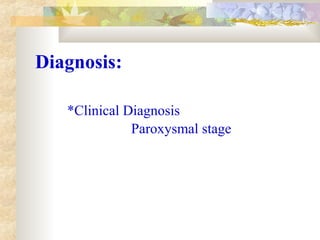
Diagnosis:
*Clinical Diagnosis
Paroxysmal stage
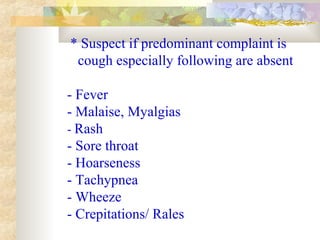
* Suspect if predominant complaint is
cough especially following are absent
- Fever
- Malaise, Myalgias
- Rash
- Sore throat
- Hoarseness
- Tachypnea
- Wheeze
- Crepitations/ Rales
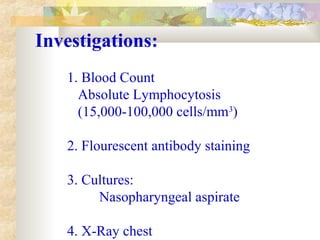
Investigations:
1. Blood Count
Absolute Lymphocytosis
(15,000-100,000 cells/mm3
)
2. Flourescent antibody staining
3. Cultures:
Nasopharyngeal aspirate
4. X-Ray chest
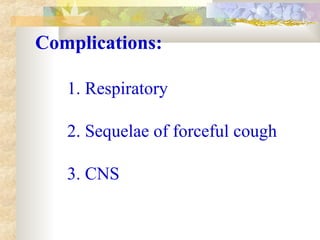
Complications:
1. Respiratory
2. Sequelae of forceful cough
3. CNS
1.Respiratory
- Apnea
- Bronchopneumonia
- Atelectasis
- Bronchiectasis
- Emphysema—Interstitial / Subcutaneous
- Otitis media
- Reactivation of quiescent tuberculosis
2. Sequelae of forceful cough
- Epistaxis, sub-conjunctival hemorrhage
- Intracranial Bleeding
- Rectal prolapse, umbilical hernias
- Dehydration, Malnutrition
- Tetany
3. CNS
- Convulsions…..Hypoxemia,
Hemorrhage
- Encephalopathy
Treatment:
Specific
* Erythromycin 40-50 mg/kg/day for 14 d
* Clarithromycin 15 mg/kg for 7 d
*Azithromycin 10 mg/kg for 5 d
* Ineffective if given in paroxysmal stage
General Measures
* Young infants should be hospitalized
* Adequate hydration, Nutrition
* Oxygen
* Gentle suction
* Cough syrup have no role
Prevention:
* Pertussis vaccine is part of DPT vaccine
* All household contacts should get
Erythromycin for 14 days
* Close contacts < 7 yr should get booster
* If documented pertussis infection exempt
from routine pertussis vaccination
Thank You

Pertussis

  • 1.
    Dr Rai MuhammadAsghar Professor of Paediatrics RGH Rawalpindi
  • 2.
  • 3.
    Pertussis (Whooping Cough) * Pertussis: Intense Cough * Highly Infectious disease
  • 4.
    Etiology: * Bordetella Pertussis *B.Parapertussis * B. Bronchiseptica
  • 5.
    Epidemiology: * World wide *1922-1948--- leading causes of death * Endemic---Epidemic cycles * Extremely contagious-attack rate 100% * Immunity is never complete * Protection begins to wane in 3-5 yrs after vaccination
  • 6.
    * Unmeasurable after12 yrs * Adolescents & adults are major Reservoir * Age : 1-5 yrs * Incubation period : 7-10 days * Infectivity : first 4 weeks * Transmission by droplet
  • 7.
    Pathophysiology: * B. Pertussisproduces many biologically active substances * Inflammation of respiratory mucosa * Patchy necrosis * Tenacious mucopurulant exudate * Bronchiolar obstruction : Atelectasis, Bronchiectasis
  • 8.
    Clinical Features: * Pertussisis a 6 weeks disease * CATARRHAL STAGE (1-2 WKS) * Nonspecific features * Congestion, Rhinorrhoea * Sneezing * Lacrimation, Conjunctival redness * Low grade fever, mild cough
  • 9.
    Paroxysmal Stage (2-4 wks) * Cough is first dry & intermittent * Inexorable paroxysm * Machine-gun burst of uninterrupted cough * Series of coughing in single expiration * Eyes bulging—watering * Chin & Chest held forward * Tongue protruding maximally
  • 10.
    * Face-Red-Blue * Whoopat the end of paroxysm * Post tussive emesis * Number & Severity of Paroxysm progress over days to weeks
  • 11.
    Infants < 3months * No classical stages * well appearing infants begins to choke * Gasp & flail extremities * Reddend face * Cough may not be prominent * Woop infrequent
  • 12.
    * Immunized childrenhave fore-shortening of all stages * Adults have no distinct stages * Number & severity of paroxysm progress & remain at that plateau * Physical examination is unremarkable
  • 13.
    Convalescent Stage (1-2 wks) * Episodes of cough becomes less frequent * Less severe * Paroxysms of whooping disappear
  • 14.
  • 15.
    * Suspect ifpredominant complaint is cough especially following are absent - Fever - Malaise, Myalgias - Rash - Sore throat - Hoarseness - Tachypnea - Wheeze - Crepitations/ Rales
  • 16.
    Investigations: 1. Blood Count AbsoluteLymphocytosis (15,000-100,000 cells/mm3 ) 2. Flourescent antibody staining 3. Cultures: Nasopharyngeal aspirate 4. X-Ray chest
  • 17.
  • 18.
    1.Respiratory - Apnea - Bronchopneumonia -Atelectasis - Bronchiectasis - Emphysema—Interstitial / Subcutaneous - Otitis media - Reactivation of quiescent tuberculosis
  • 19.
    2. Sequelae offorceful cough - Epistaxis, sub-conjunctival hemorrhage - Intracranial Bleeding - Rectal prolapse, umbilical hernias - Dehydration, Malnutrition - Tetany
  • 20.
  • 21.
    Treatment: Specific * Erythromycin 40-50mg/kg/day for 14 d * Clarithromycin 15 mg/kg for 7 d *Azithromycin 10 mg/kg for 5 d * Ineffective if given in paroxysmal stage
  • 22.
    General Measures * Younginfants should be hospitalized * Adequate hydration, Nutrition * Oxygen * Gentle suction * Cough syrup have no role
  • 23.
    Prevention: * Pertussis vaccineis part of DPT vaccine * All household contacts should get Erythromycin for 14 days * Close contacts < 7 yr should get booster * If documented pertussis infection exempt from routine pertussis vaccination
  • 24.