Weathering, Soil Formation &
    Erosion Processes
      by Ann C Cloutier 2011 Earth & Space
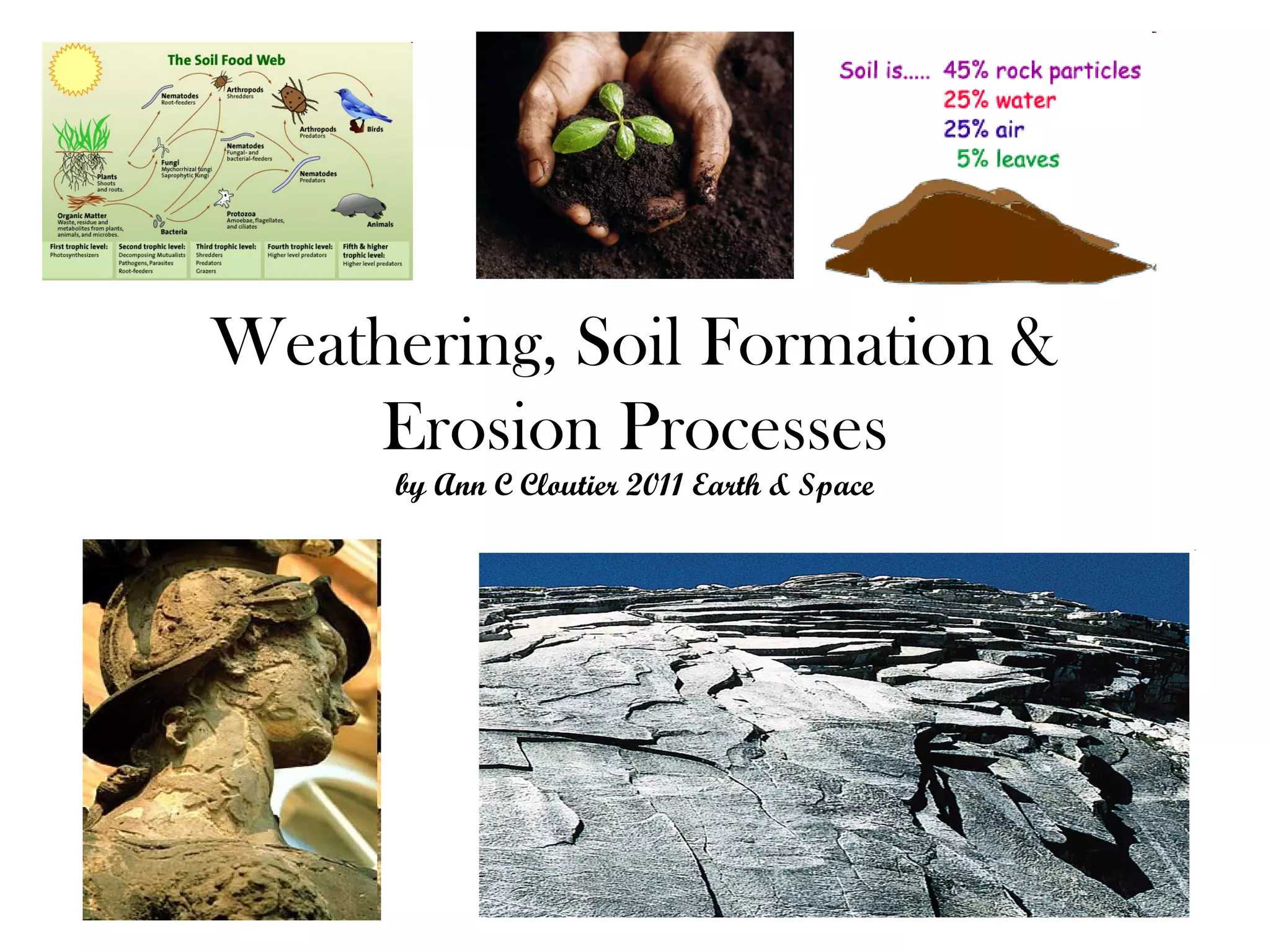
Can you hypothesize how the circle shapes were made ?


               ann c cloutier 2011 copyright
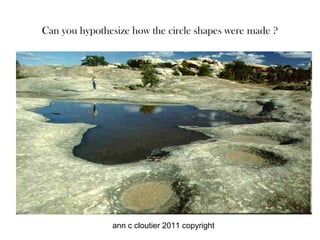
Water is a powerful force
in chemical and physical (mechanical) weathering
                             • Temperature and pressure
                               are major factors in the
                               process of mechanical
                               weathering
                             • Changes in temperature can
                               cause a rock to split
                             • Chemical weathering is a
                               reaction between the rocks
                               and water
                             • It can result in the formation
                               of new rocks and minerals

              ann c cloutier 2011 copyright
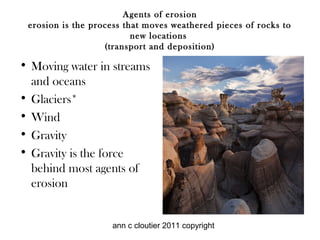
Agents of erosion
 erosion is the process that moves weathered pieces of rocks to
                          new locations
                   (transport and deposition)

• Moving water in streams
  and oceans
• Glaciers*
• Wind
• Gravity
• Gravity is the force
  behind most agents of
  erosion


                    ann c cloutier 2011 copyright
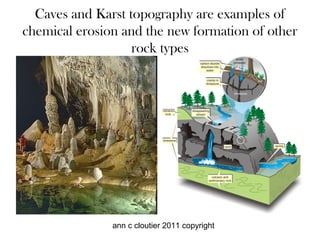
Caves and Karst topography are examples of
chemical erosion and the new formation of other
                   rock types


               ann c cloutier 2011 copyright
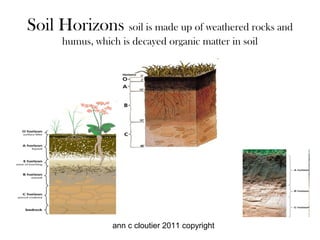
Soil Horizons soil is made up of weathered rocks and
      humus, which is decayed organic matter in soil


                 ann c cloutier 2011 copyright
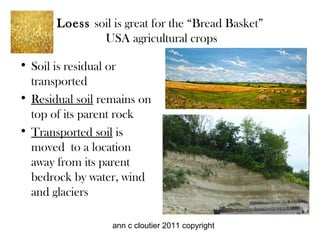
Loess soil is great for the “Bread Basket”
               USA agricultural crops

• Soil is residual or
  transported
• Residual soil remains on
  top of its parent rock
• Transported soil is
  moved to a location
  away from its parent
  bedrock by water, wind
  and glaciers

                  ann c cloutier 2011 copyright
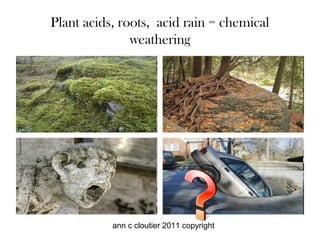
Plant acids, roots, acid rain = chemical
               weathering


           ann c cloutier 2011 copyright
Who are the agents of erosion ?
• Wind                      •   Particles and sediments must be very
                                tiny <2mm for the wind to pick up
                            •   Water is fluid and flows downward;
• Water                         depending on the volume of water,
                                the slope it is descending and its
                                velocity, will determine how and
                                what it can move
• Gravity                   •   Gravity makes rocks and sediments
                                roll downward; usually unsorted and
                                mixed particle sizes
                            •   Glaciers are the BIG movers and
• Glaciers                      shakers of land formation; Sheets of
                                glacial ice can sandpaper bedrocks,
                                make grooves, pluck mountain tops
                                off and mix everything up


             ann c cloutier 2011 copyright
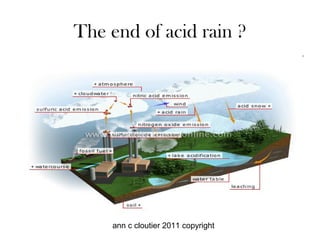
The end of acid rain ?


    ann c cloutier 2011 copyright

Weathering, soil formation, & erosion processes

  • 1.
    Weathering, Soil Formation& Erosion Processes by Ann C Cloutier 2011 Earth & Space
  • 2.
    Can you hypothesizehow the circle shapes were made ? ann c cloutier 2011 copyright
  • 3.
    Water is apowerful force in chemical and physical (mechanical) weathering • Temperature and pressure are major factors in the process of mechanical weathering • Changes in temperature can cause a rock to split • Chemical weathering is a reaction between the rocks and water • It can result in the formation of new rocks and minerals ann c cloutier 2011 copyright
  • 4.
    Agents of erosion erosion is the process that moves weathered pieces of rocks to new locations (transport and deposition) • Moving water in streams and oceans • Glaciers* • Wind • Gravity • Gravity is the force behind most agents of erosion ann c cloutier 2011 copyright
  • 5.
    Caves and Karsttopography are examples of chemical erosion and the new formation of other rock types ann c cloutier 2011 copyright
  • 6.
    Soil Horizons soilis made up of weathered rocks and humus, which is decayed organic matter in soil ann c cloutier 2011 copyright
  • 7.
    Loess soil isgreat for the “Bread Basket” USA agricultural crops • Soil is residual or transported • Residual soil remains on top of its parent rock • Transported soil is moved to a location away from its parent bedrock by water, wind and glaciers ann c cloutier 2011 copyright
  • 8.
    Plant acids, roots,acid rain = chemical weathering ann c cloutier 2011 copyright
  • 9.
    Who are theagents of erosion ? • Wind • Particles and sediments must be very tiny <2mm for the wind to pick up • Water is fluid and flows downward; • Water depending on the volume of water, the slope it is descending and its velocity, will determine how and what it can move • Gravity • Gravity makes rocks and sediments roll downward; usually unsorted and mixed particle sizes • Glaciers are the BIG movers and • Glaciers shakers of land formation; Sheets of glacial ice can sandpaper bedrocks, make grooves, pluck mountain tops off and mix everything up ann c cloutier 2011 copyright
  • 10.
    The end ofacid rain ? ann c cloutier 2011 copyright