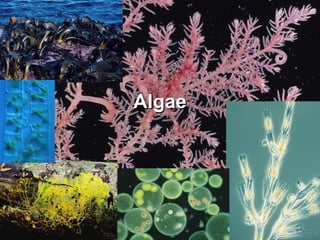
Three main divisionsof marine algae in
Three main divisions of marine algae in
Kingdom Protista:
Kingdom Protista:
• Chlorophyta – green algae
• Rhodophyta – red algae
• Phaeophyta – brown algae
3.
Range in sizefrom tiny microscopic life
to giant ocean kelps over a hundred feet
long!
4.
Psycho Phycos
Psycho Phycos
•“
“phykos” = Greek for “alga”
phykos” = Greek for “alga”
• Phycology = study of algae
Phycology = study of algae
• Phycologist = someone who studies
Phycologist = someone who studies
algae
algae
Every Phycologist’s Pet Peeve:
Every Phycologist’s Pet Peeve:
• “Alga” is singular
• “Algae” is plural
• “Algaes” do not exist!!!
5.
Phylum Chlorophyta
• Greenalgae
Green algae
• 7000 diverse species
• Biologist reason that green algae give rise to
land plants.
• Both green algae and land plants have
chlorophyll a and B as well as carotenoids
and store food as starch
• Both have walls made of cellulose
6.
Phylum Phaeophyta
• 1500species of Brown
Brown
algae
algae
• Mostly marine and include
seaweed and kelp
• All are multicellular and large
(often reaching lengths of
147 feet)
• Individual alga may grow to a
length of 100m with a
holdfast, stipe and blade
• Used in cosmetics and most
ice creams
7.
Phylum Rhodophyta
• 4000species of RED Algae
RED Algae
• Most are marine
• Smaller than brown algae and are often
found at a depth of 200 meters.
• Contain chlorophyll a and C as well as
phycobilins which are important in
absorbing light that can penetrate deep
into the water
• Have cells coated in carageenan which is
used in cosmetics, gelatin capsules and
some cheeses
8.
Phylum Euglenophyta
• 1000species of
Euglenoids
• Have both plantlike
and animal-like
characteristics
• Fresh water
9.
Other Phylum Representatives
Diatoms– used in detergents,
Diatoms – used in detergents,
paint removers, toothpaste
paint removers, toothpaste
Dinoflagellates – red tides
Dinoflagellates – red tides
Important in the
formation of
petroleum
products
Golden algae
Golden algae
Algae is usedfor many purposes
• Fertilizer
• Food for humans and animals
• Hawaiiian cultural practices
• Extracted products:
– potash
– algin
– carrageenan
– agar
14.
Most common algaeused for food
worldwide
• Porphyra (nori)
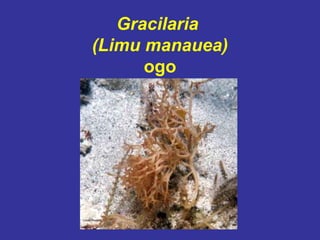
• Gracilaria (ogo)
• Rhodymenia (dulse)
• Chondrus crispus (Irish moss)