Keshav Narayan Pai
Msc I
Department of Botany
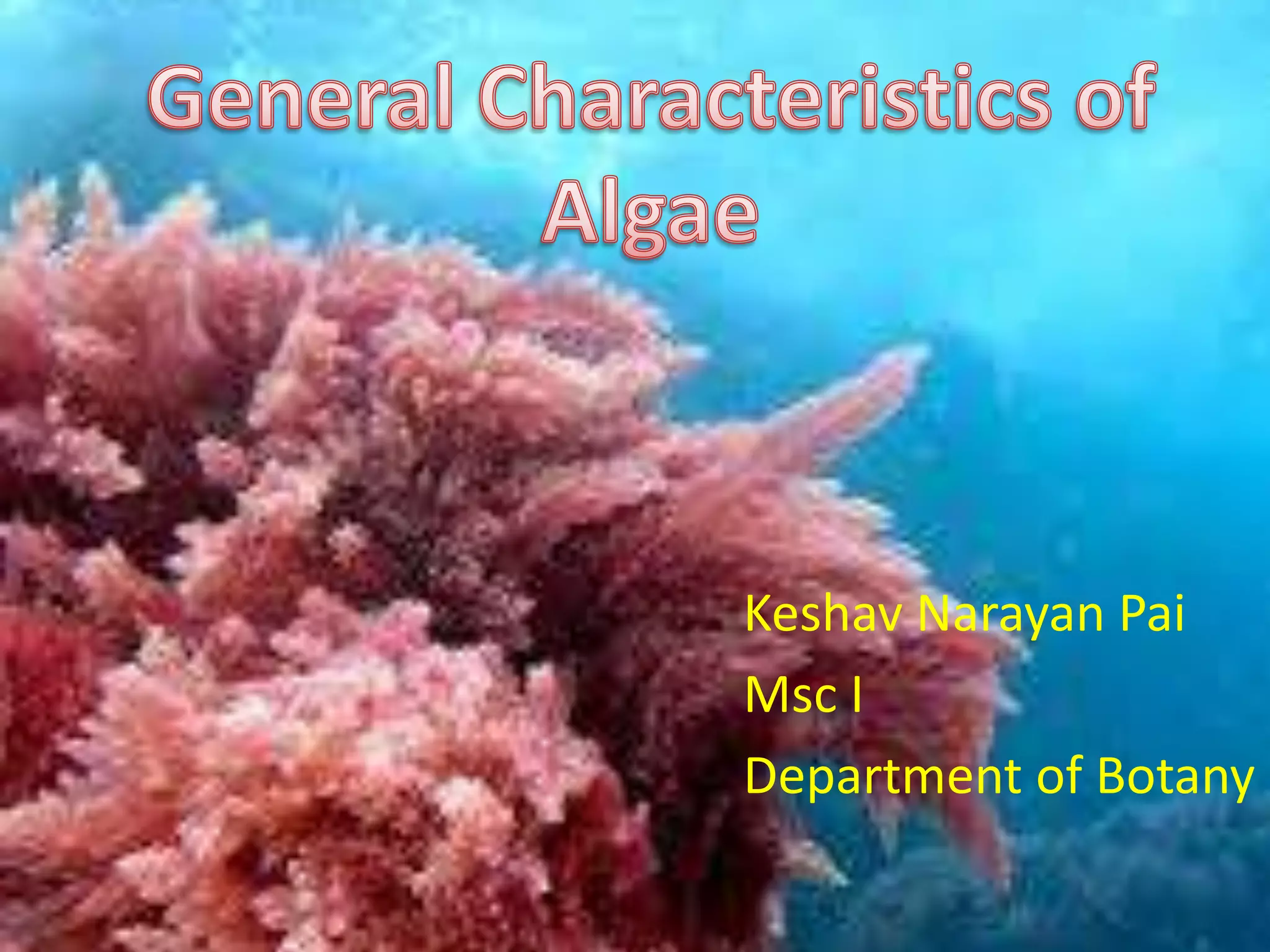
 They are Thallophytes which have chlorophyll
as their primary photosynthetic pigment and
lack a sterile covering of cells around the
reproductive cells.
Habit and Habitat
They may be free floating , free swimming or
attached to the bottom in the shallow water.
According to habitat, algaes can be classified as
follows:
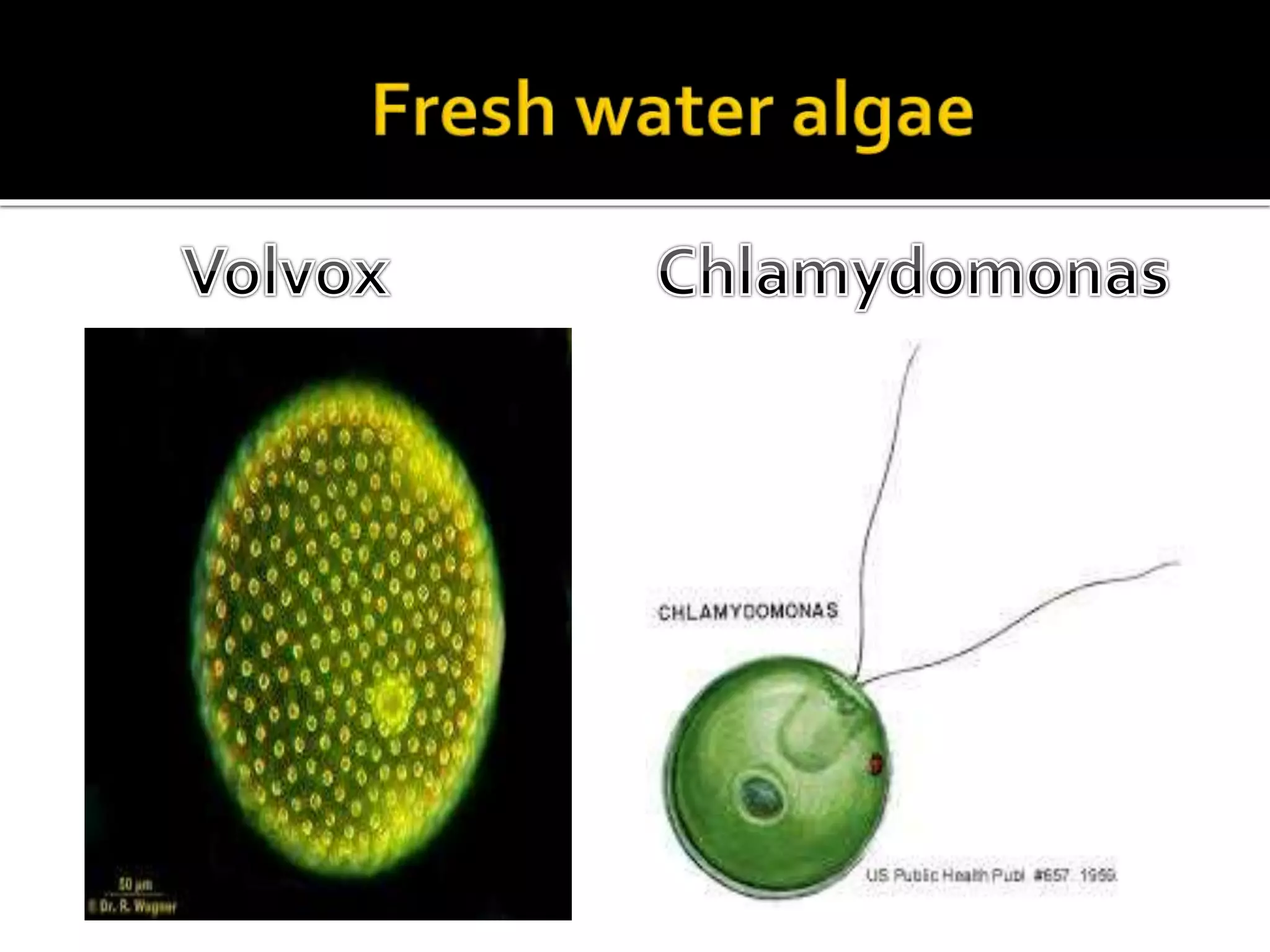
 Aquatic algae: Example:- Chlamydomonas.
 Terrestrial algae : Example:- Fritschiella.
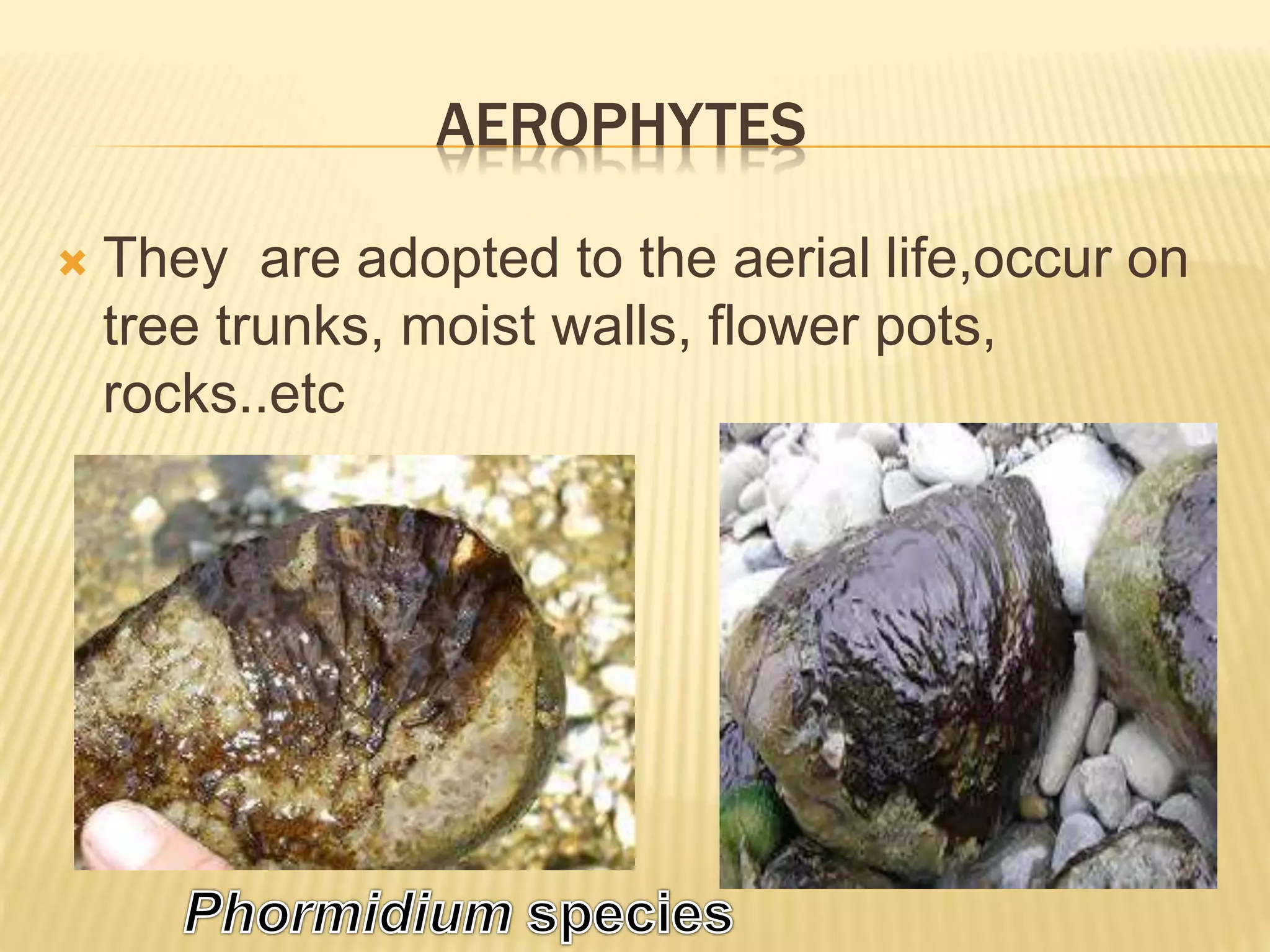
 Aerophytes : Example:- Scytonema.
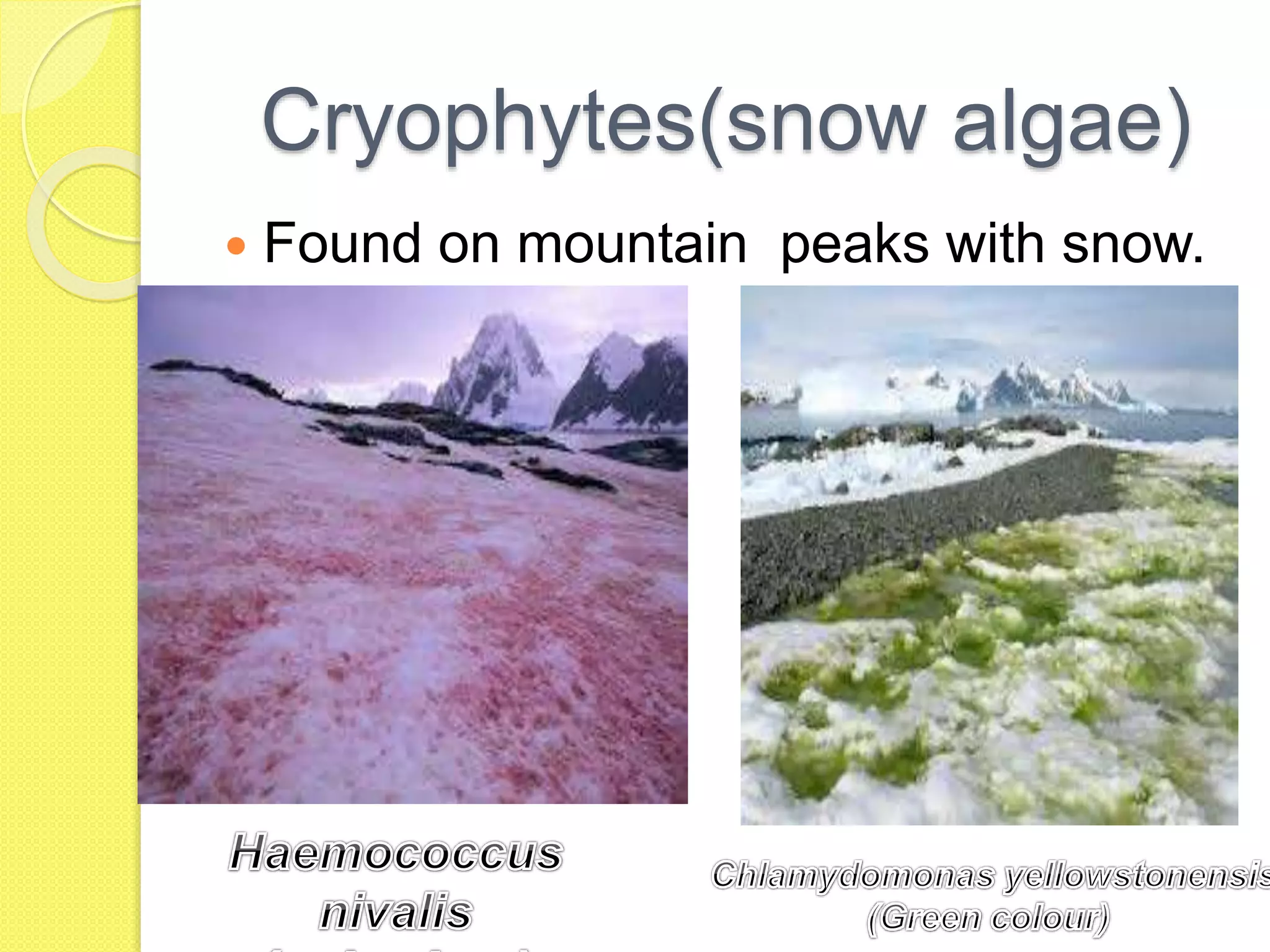
 Cryophytes : Example:- Scotiella.
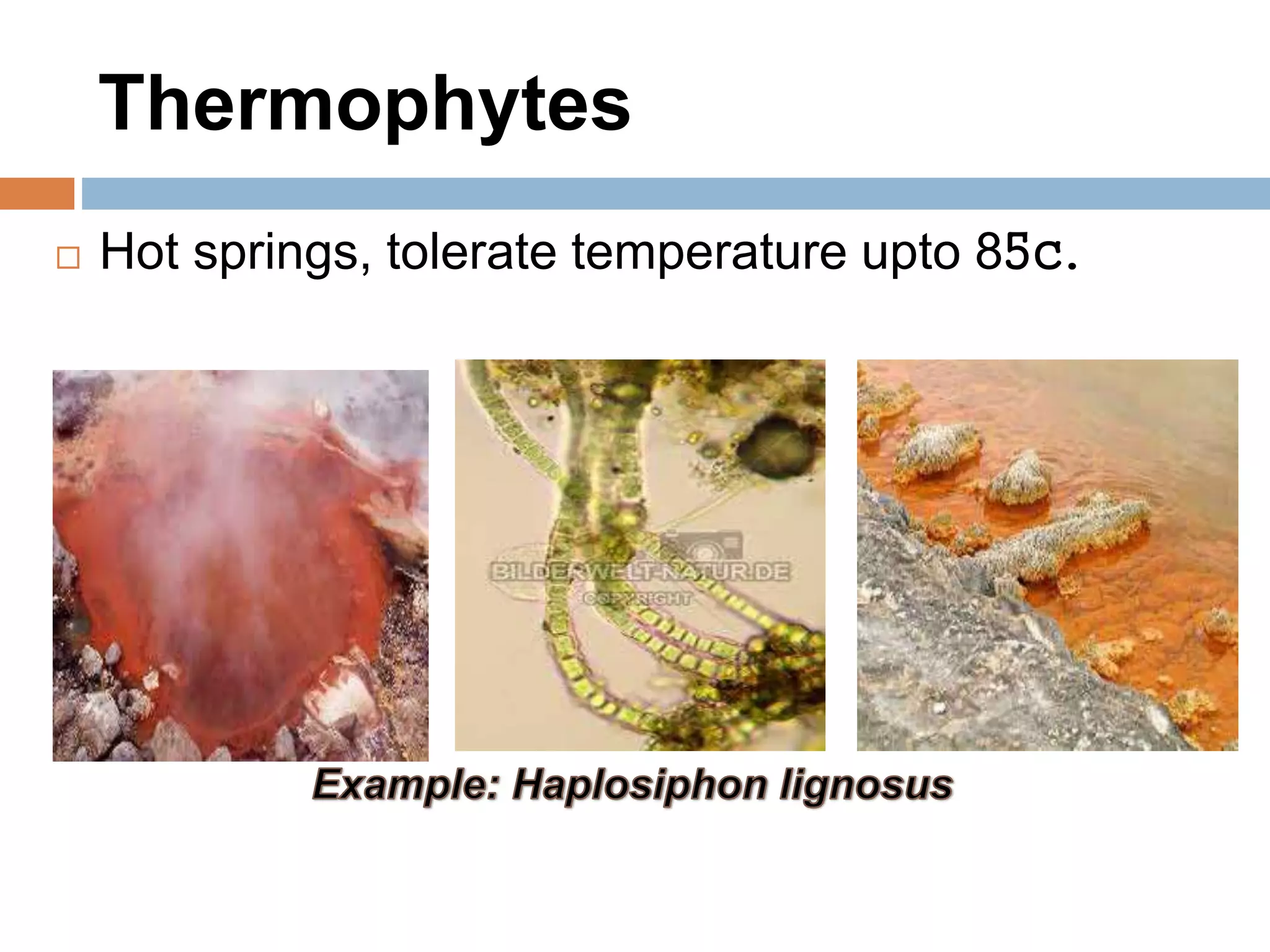
 Thermophytes : Example:- Oscillatoria brevis.
 Algae of unusual habit : Example:- Dunaliella.
Acquatic Algae
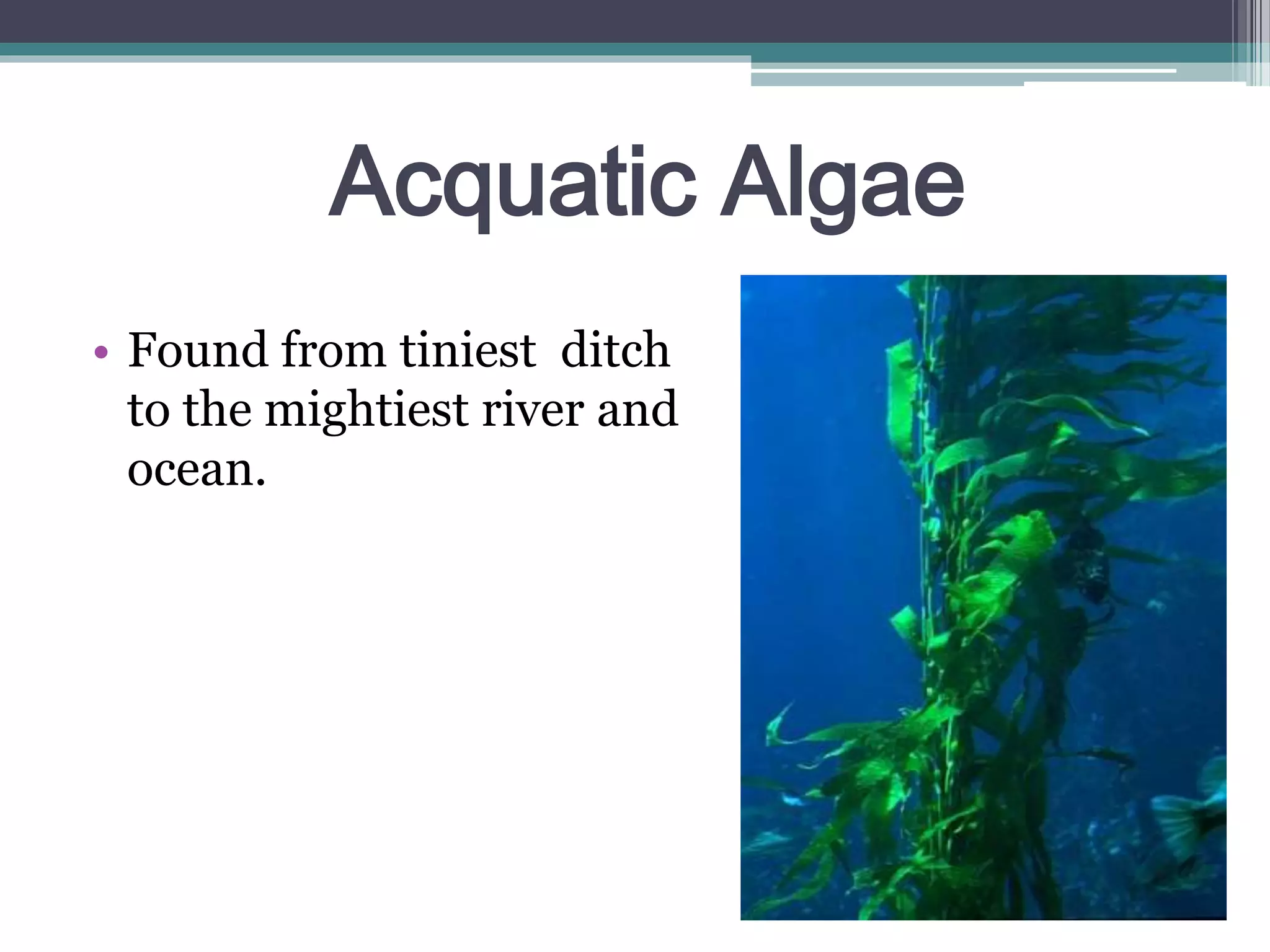
• Found from tiniest ditch
to the mightiest river and
ocean.
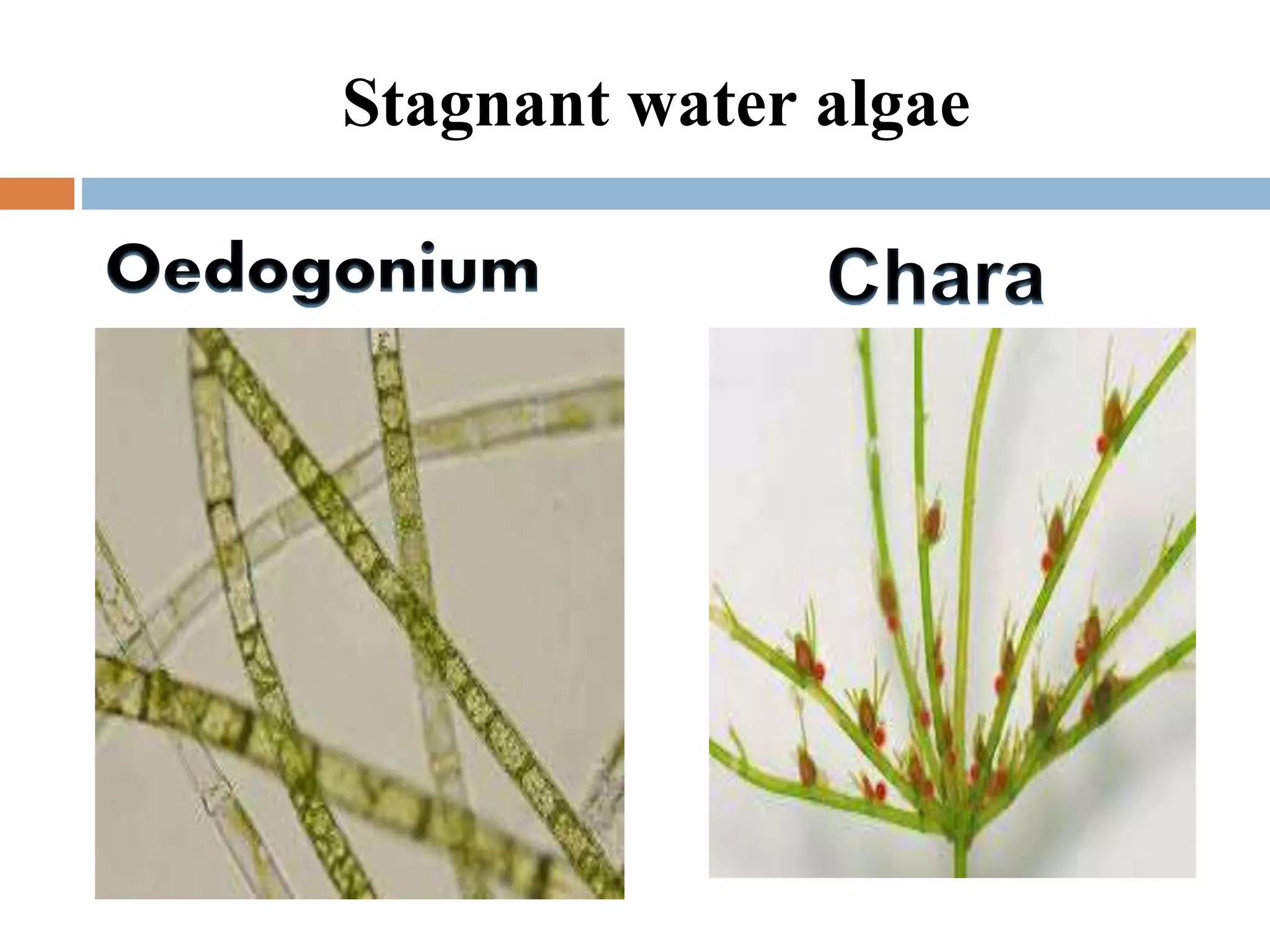
Stagnant water algae
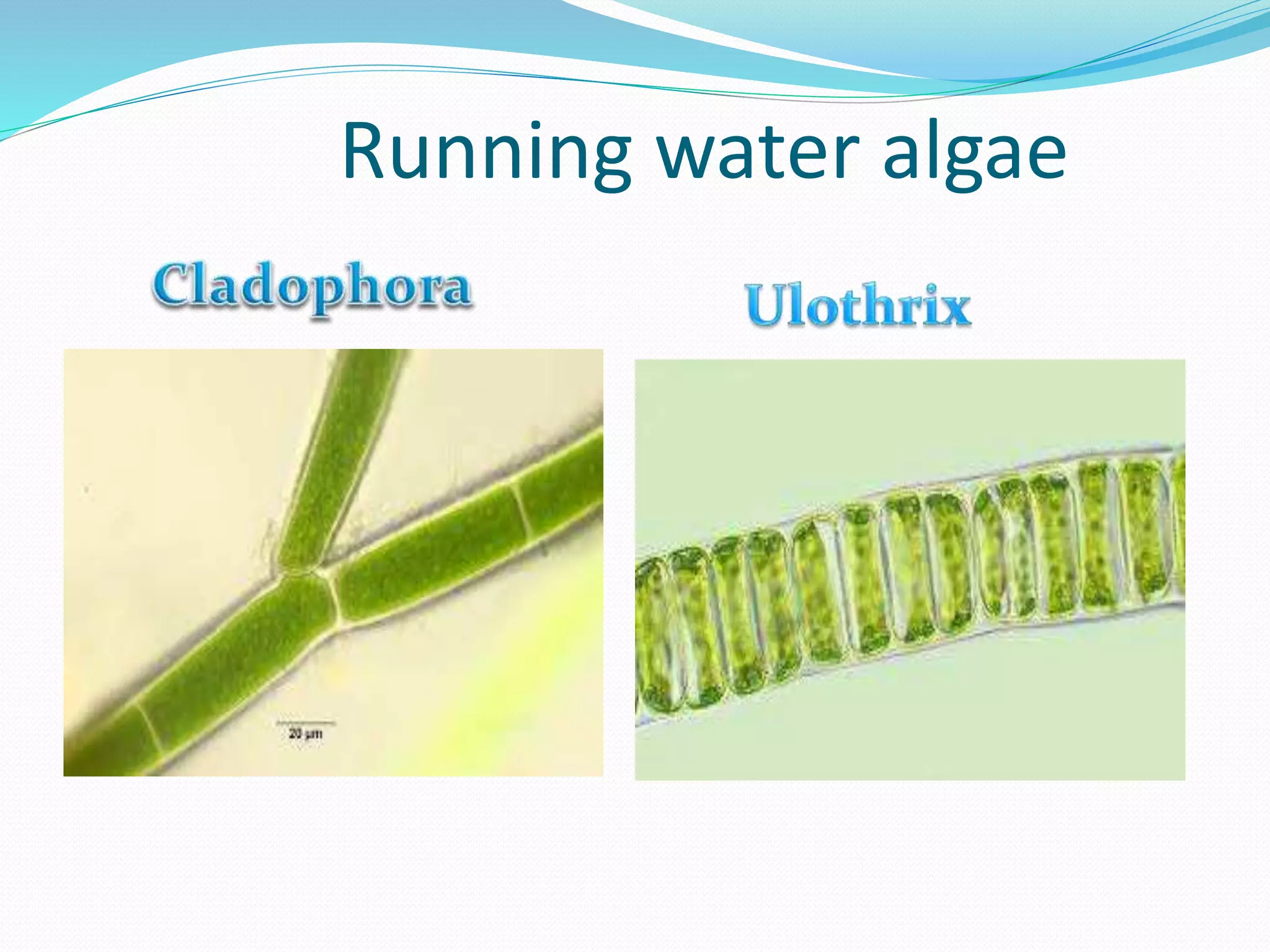
Running water algae
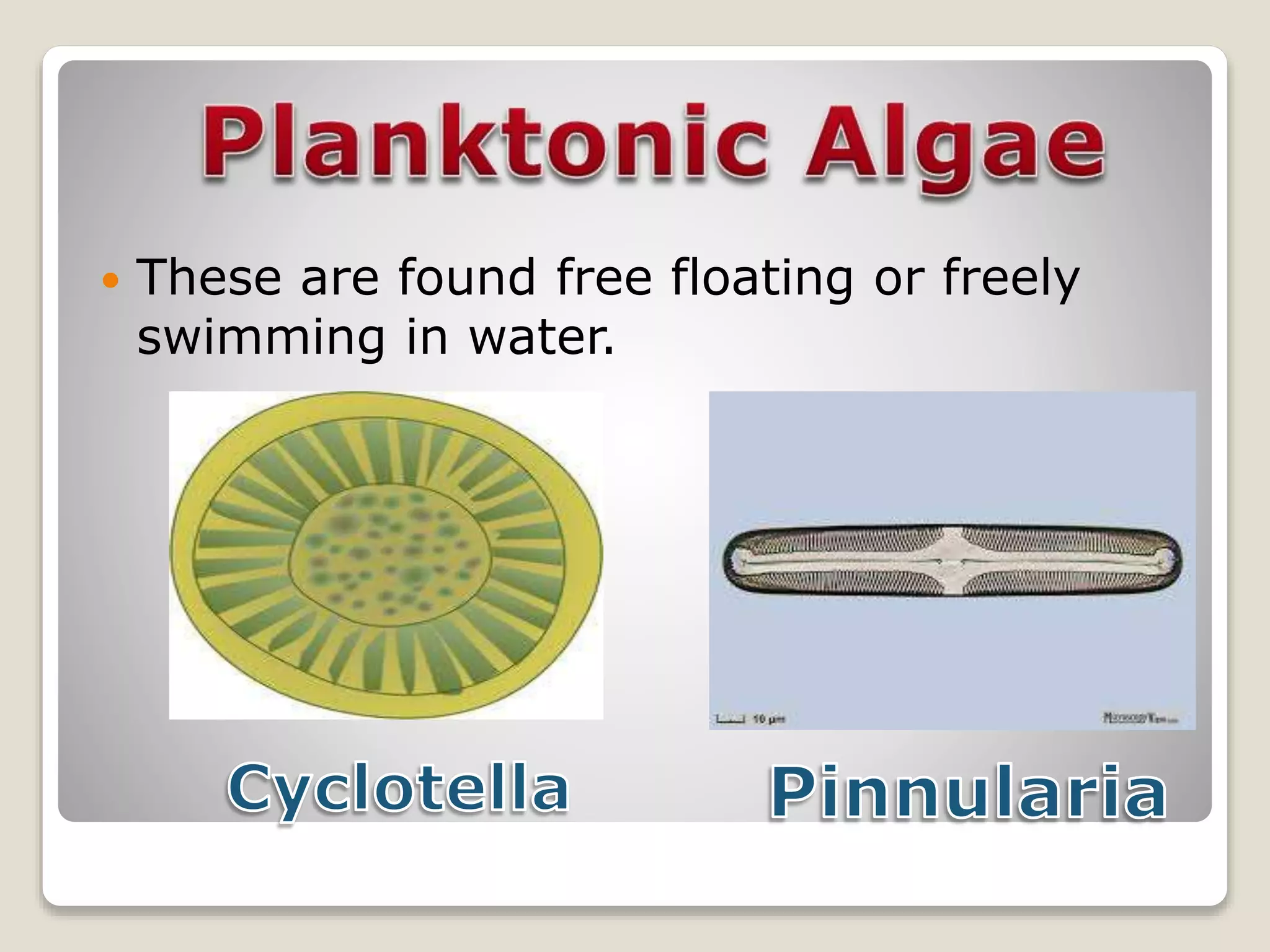
 These are found free floating or freely
swimming in water.
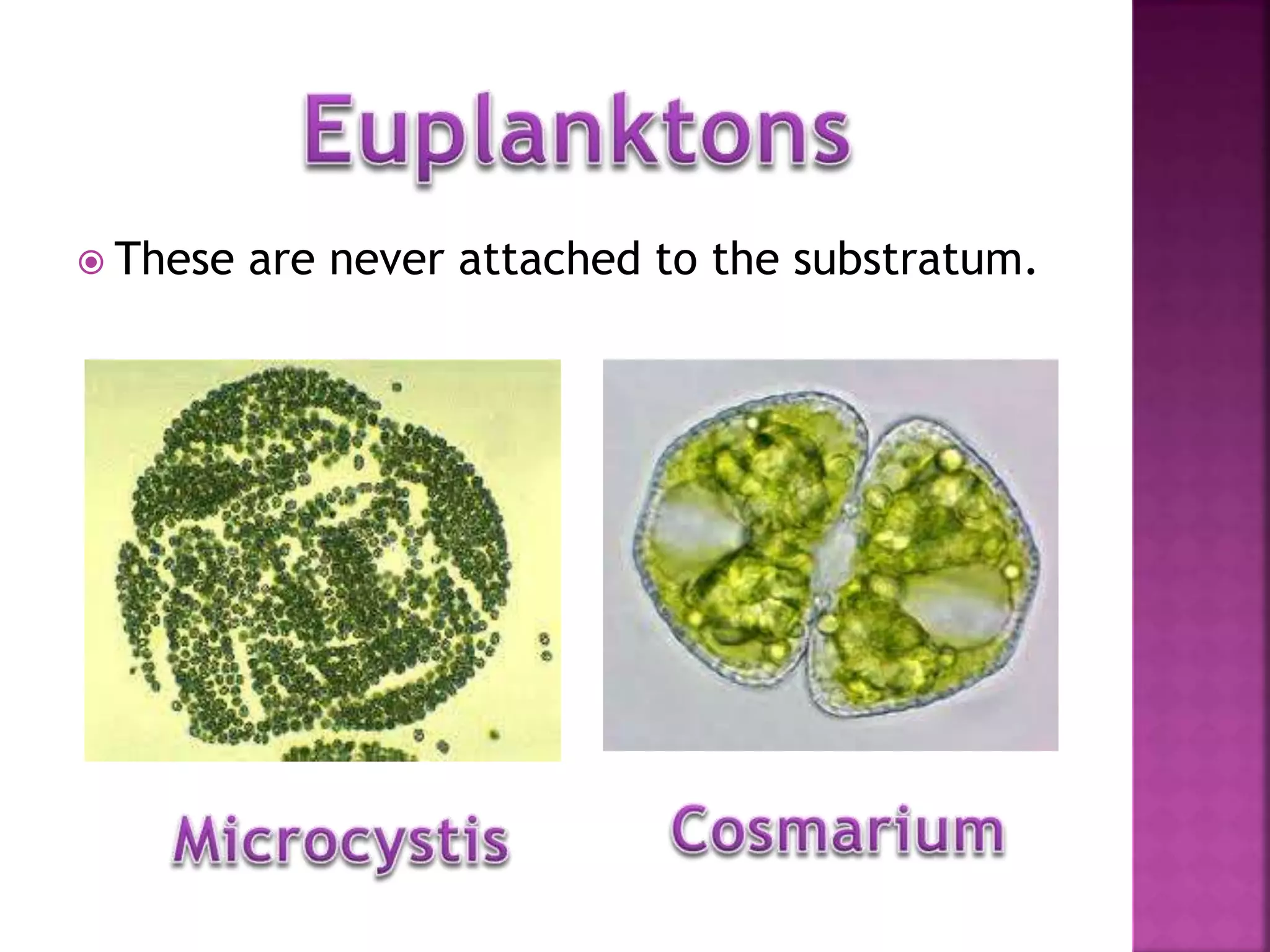
 These are never attached to the substratum.
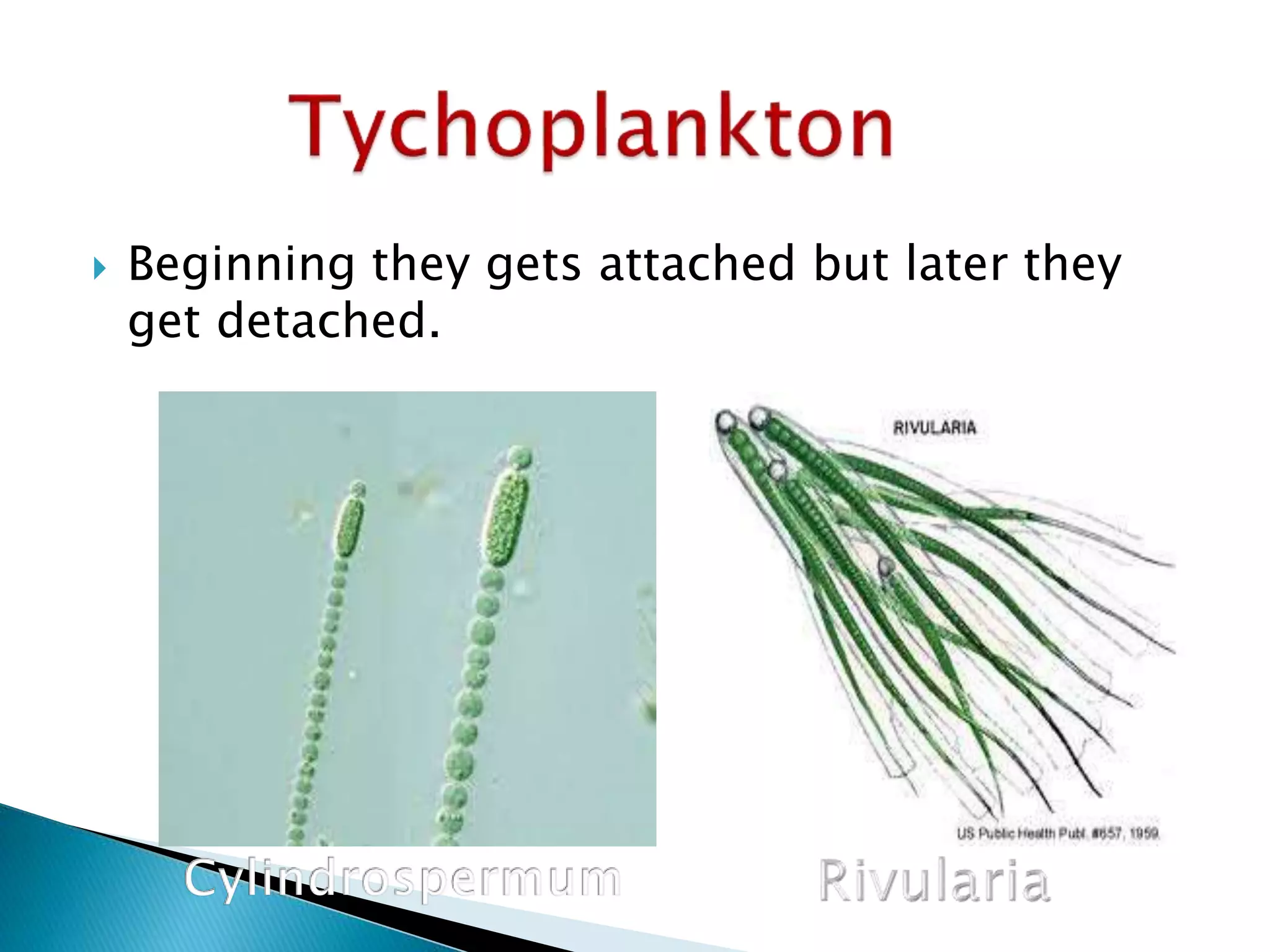
 Beginning they gets attached but later they
get detached.
Terrestrial Algae
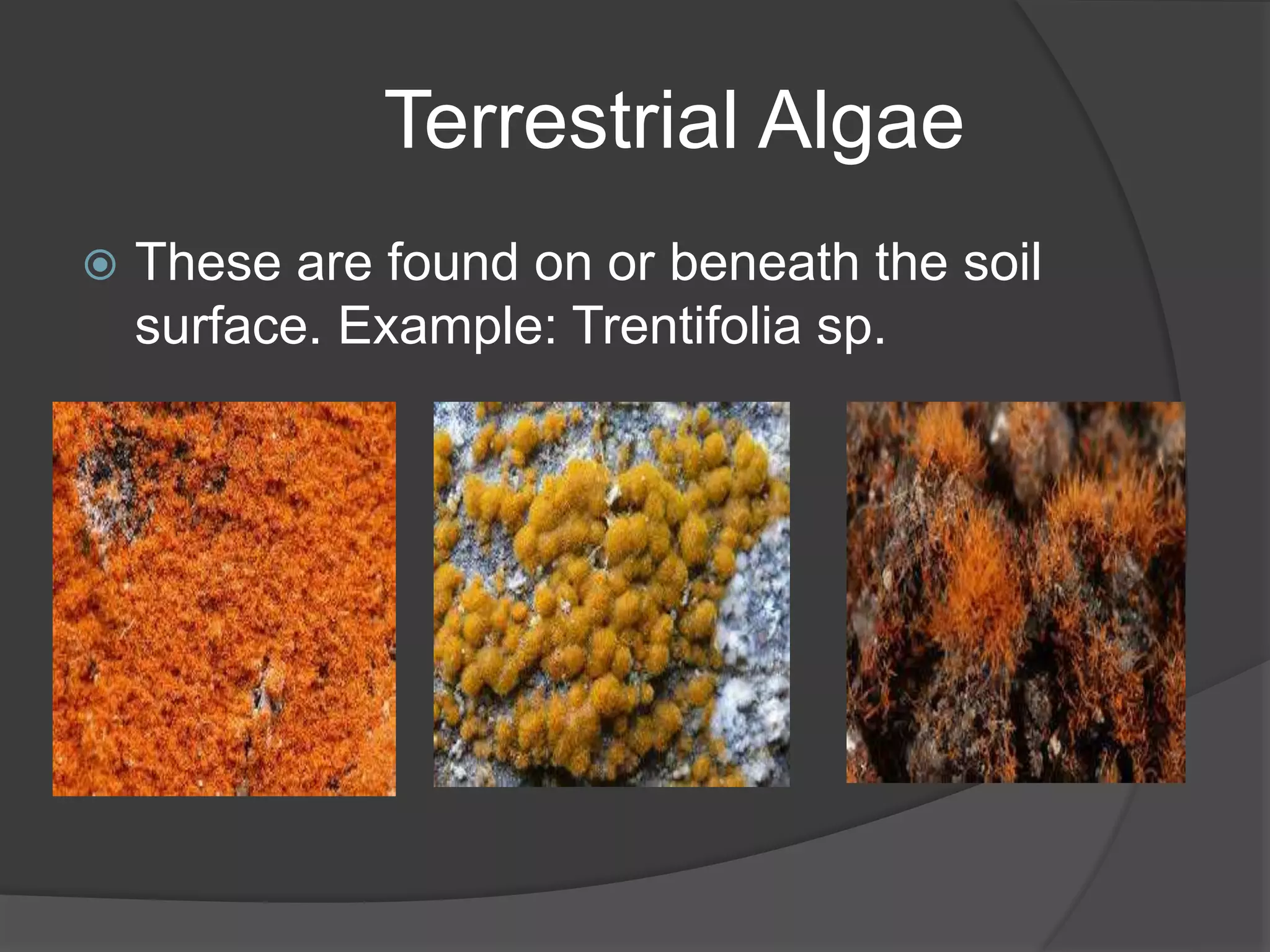
 These are found on or beneath the soil
surface. Example: Trentifolia sp.
AEROPHYTES
 They are adopted to the aerial life,occur on
tree trunks, moist walls, flower pots,
rocks..etc
Cryophytes(snow algae)
 Found on mountain peaks with snow.
Thermophytes
 Hot springs, tolerate temperature upto 85c.
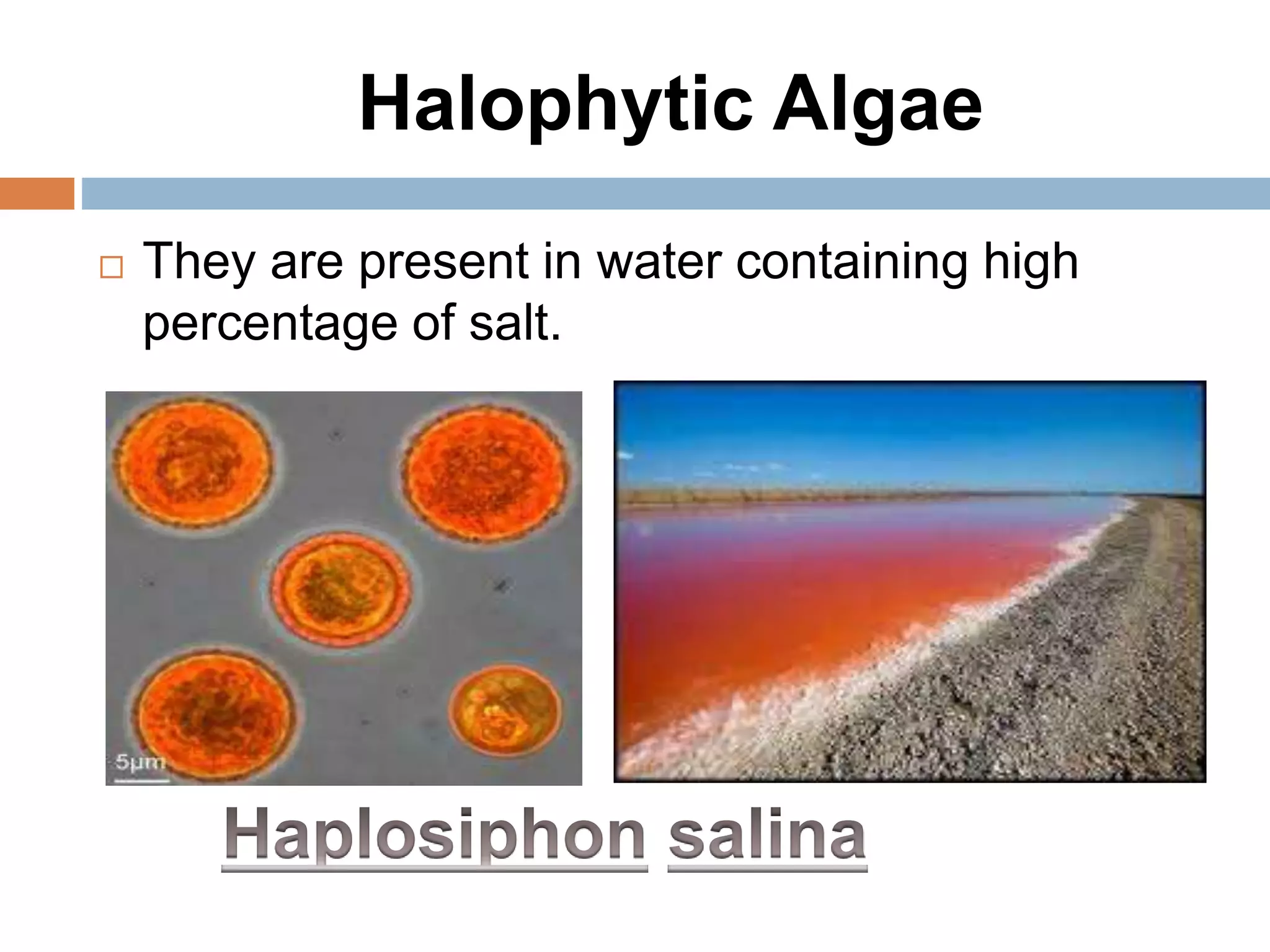
Halophytic Algae
 They are present in water containing high
percentage of salt.
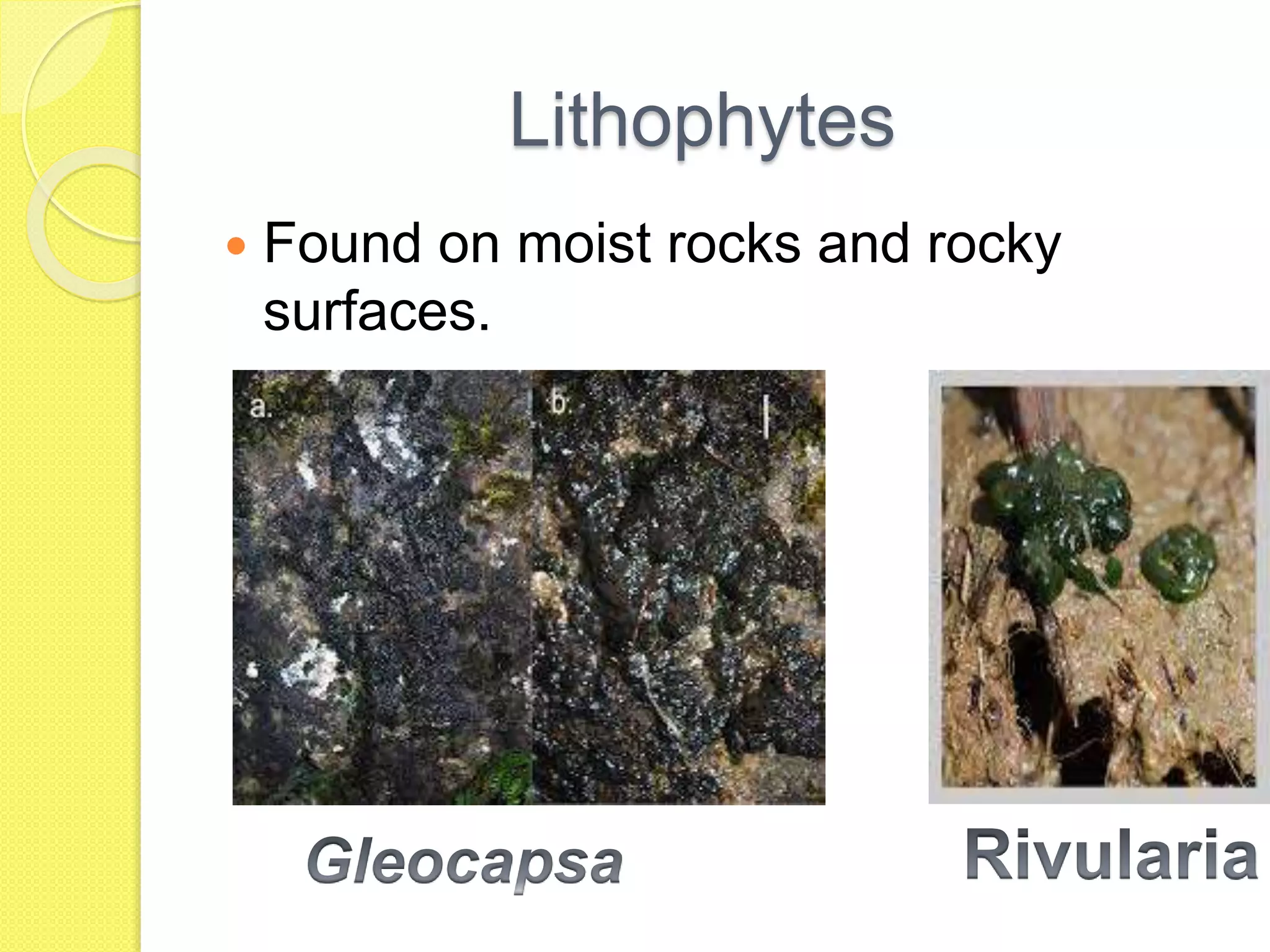
Lithophytes
 Found on moist rocks and rocky
surfaces.
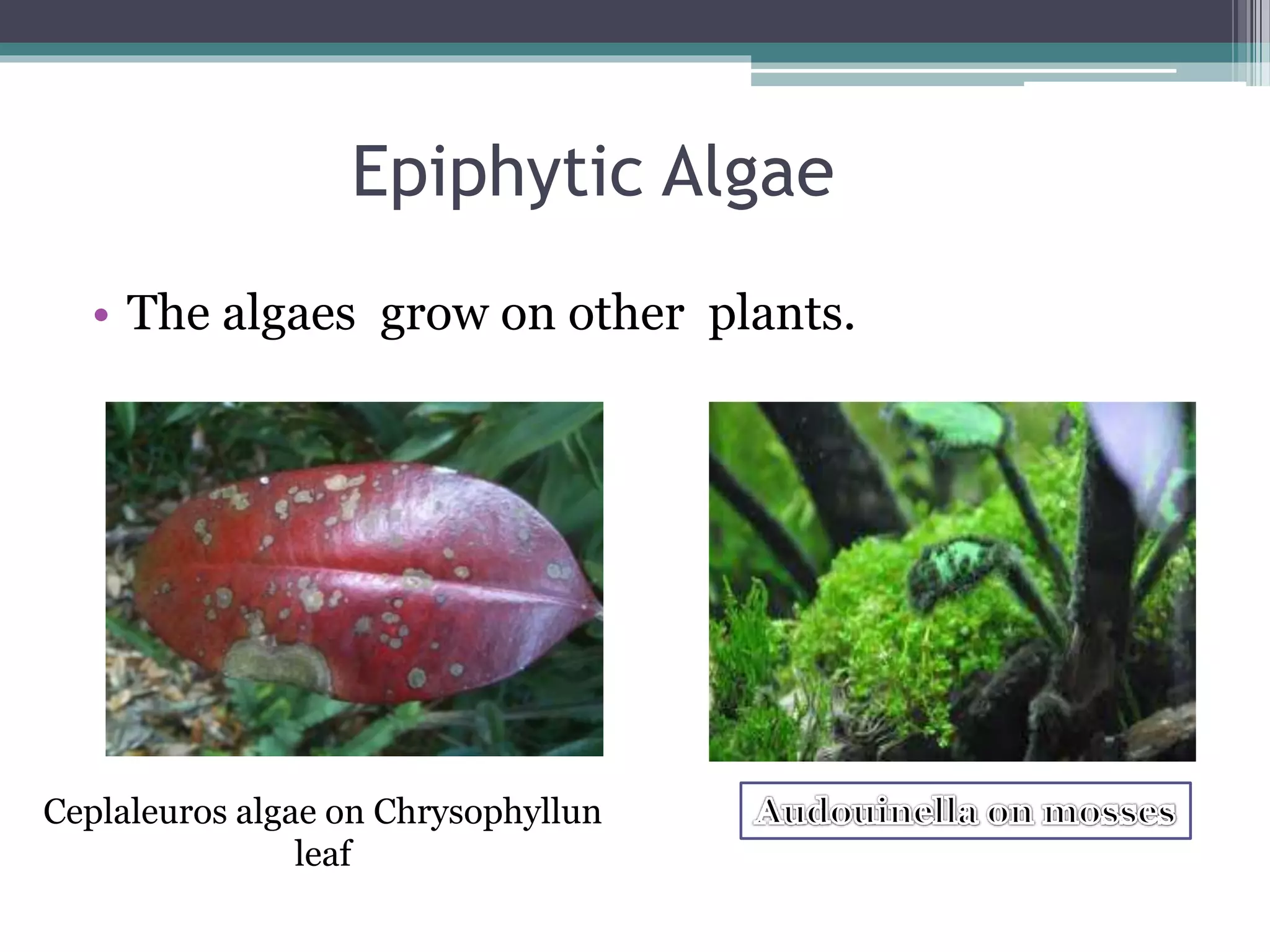
Epiphytic Algae
• The algaes grow on other plants.
Ceplaleuros algae on Chrysophyllun
leaf
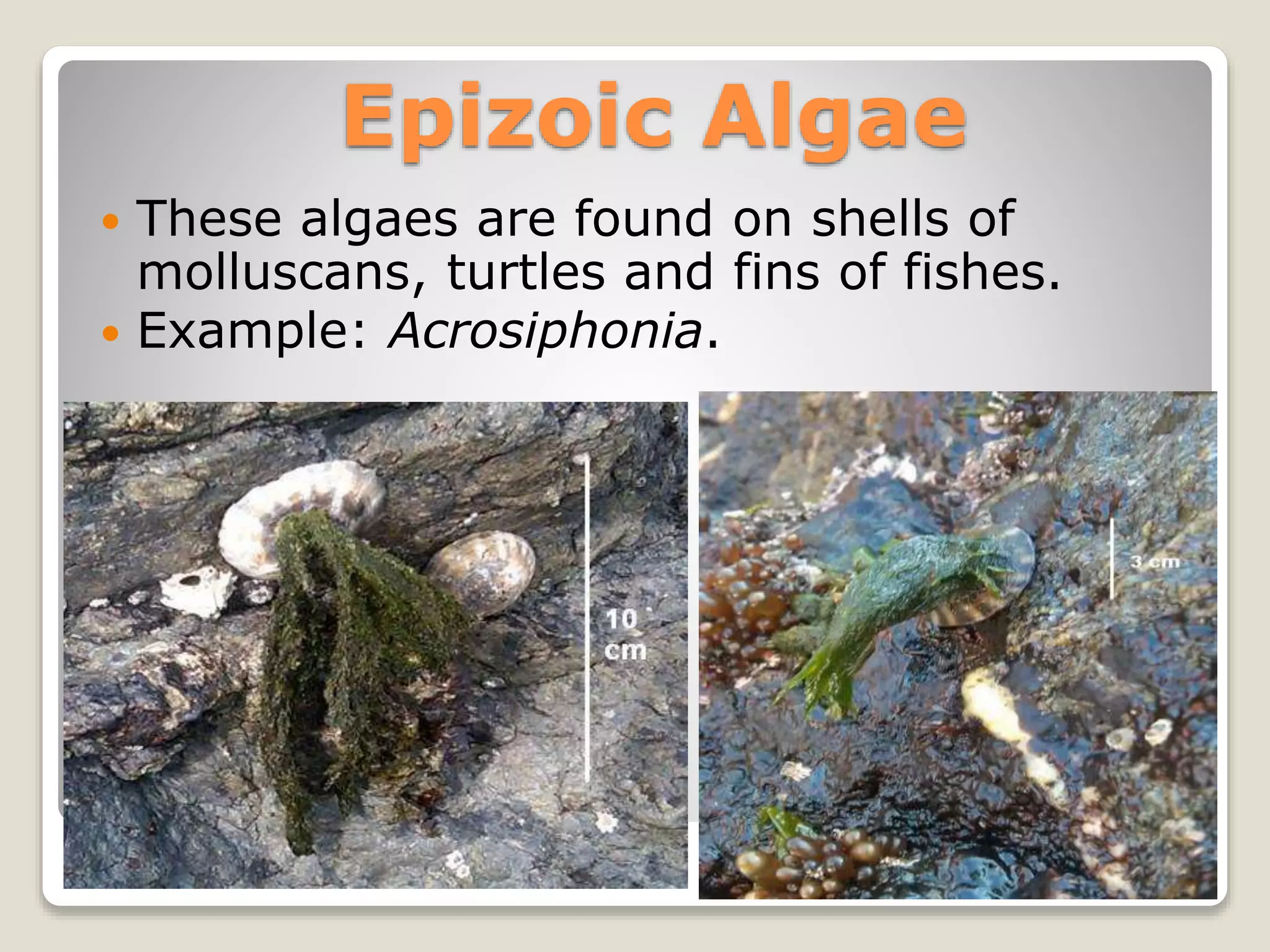
Epizoic Algae
 These algaes are found on shells of
molluscans, turtles and fins of fishes.
 Example: Acrosiphonia.
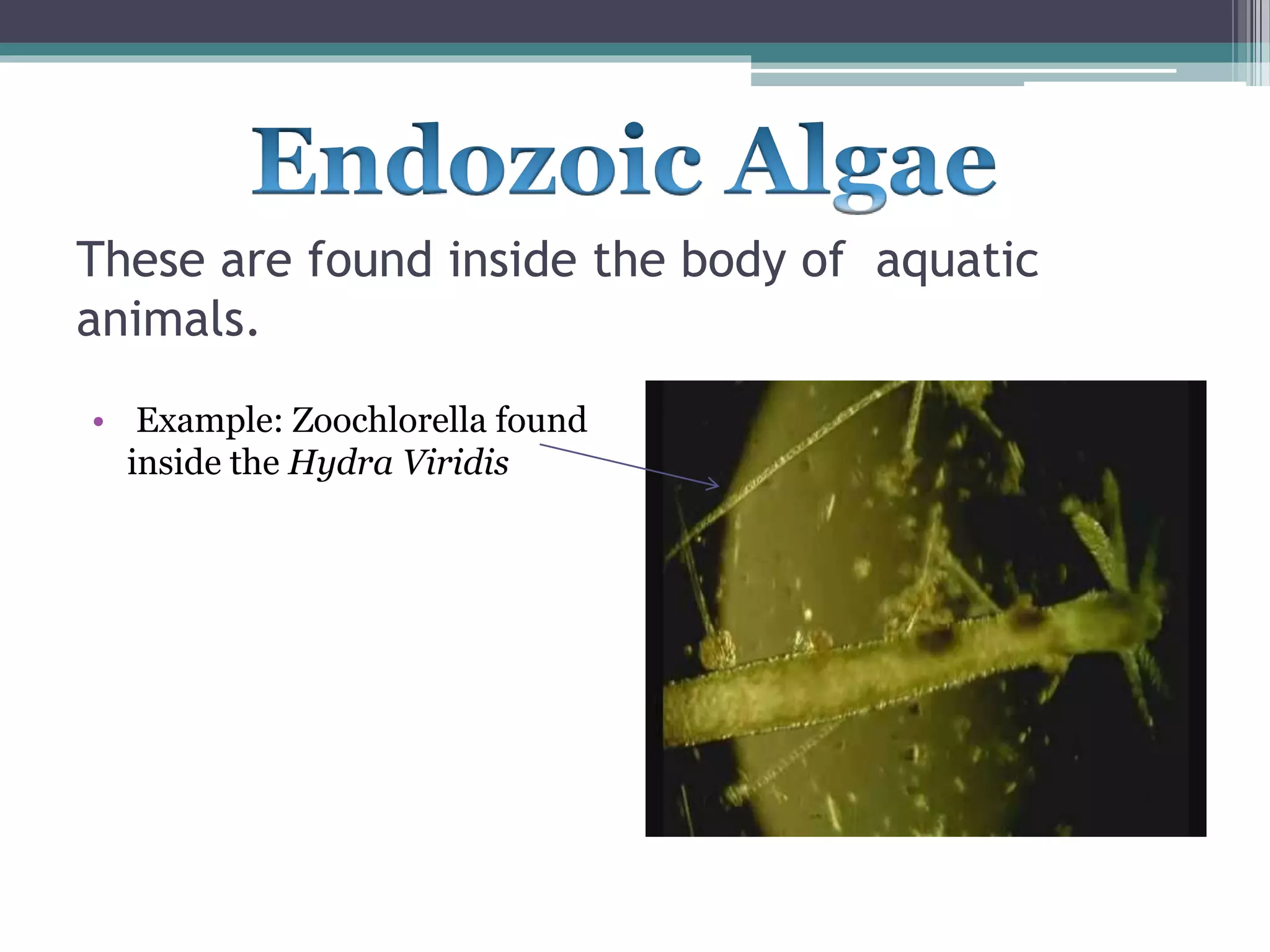
These are found inside the body of aquatic
animals.
• Example: Zoochlorella found
inside the Hydra Viridis
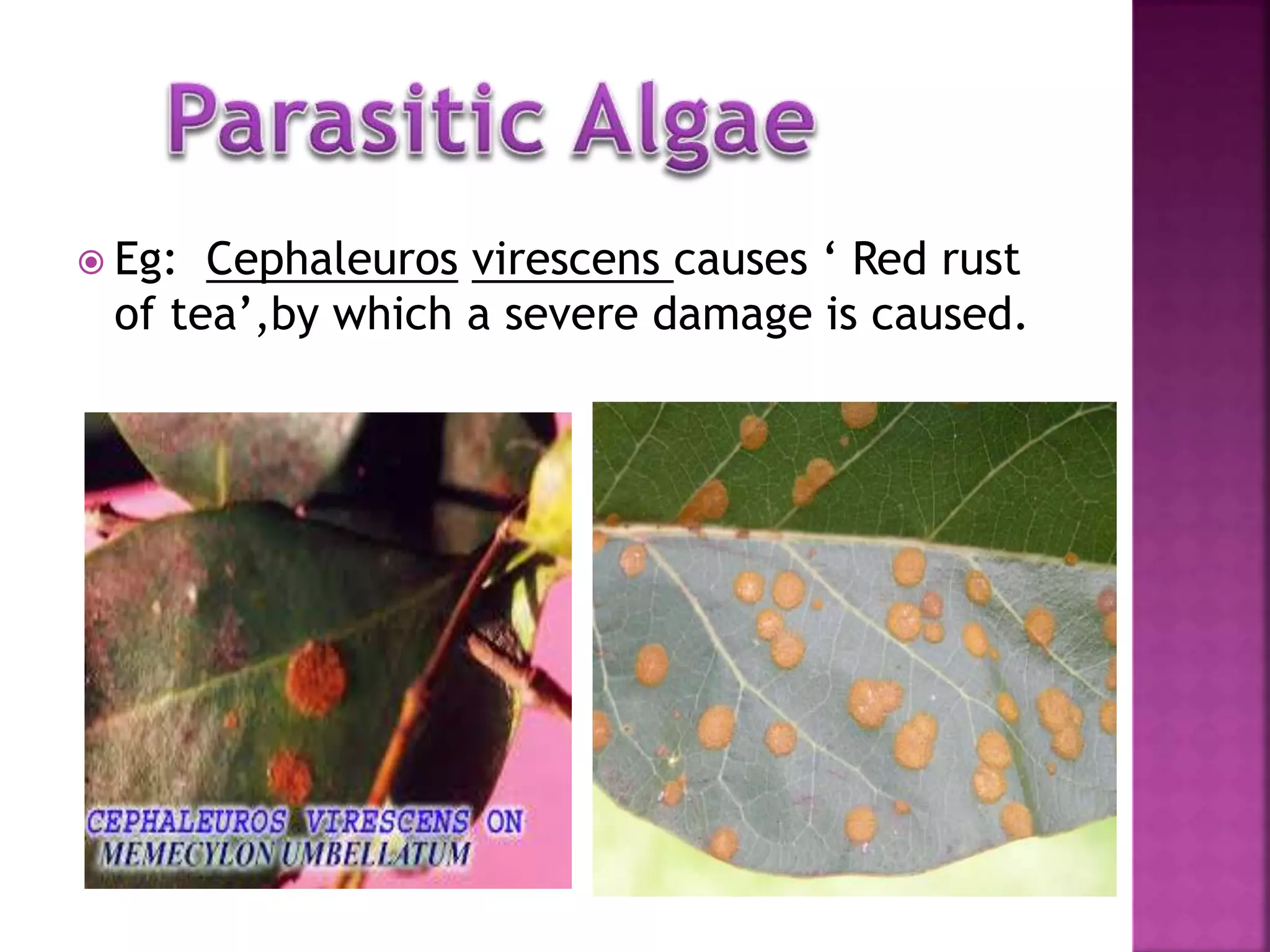
 Eg: Cephaleuros virescens causes ‘ Red rust
of tea’,by which a severe damage is caused.
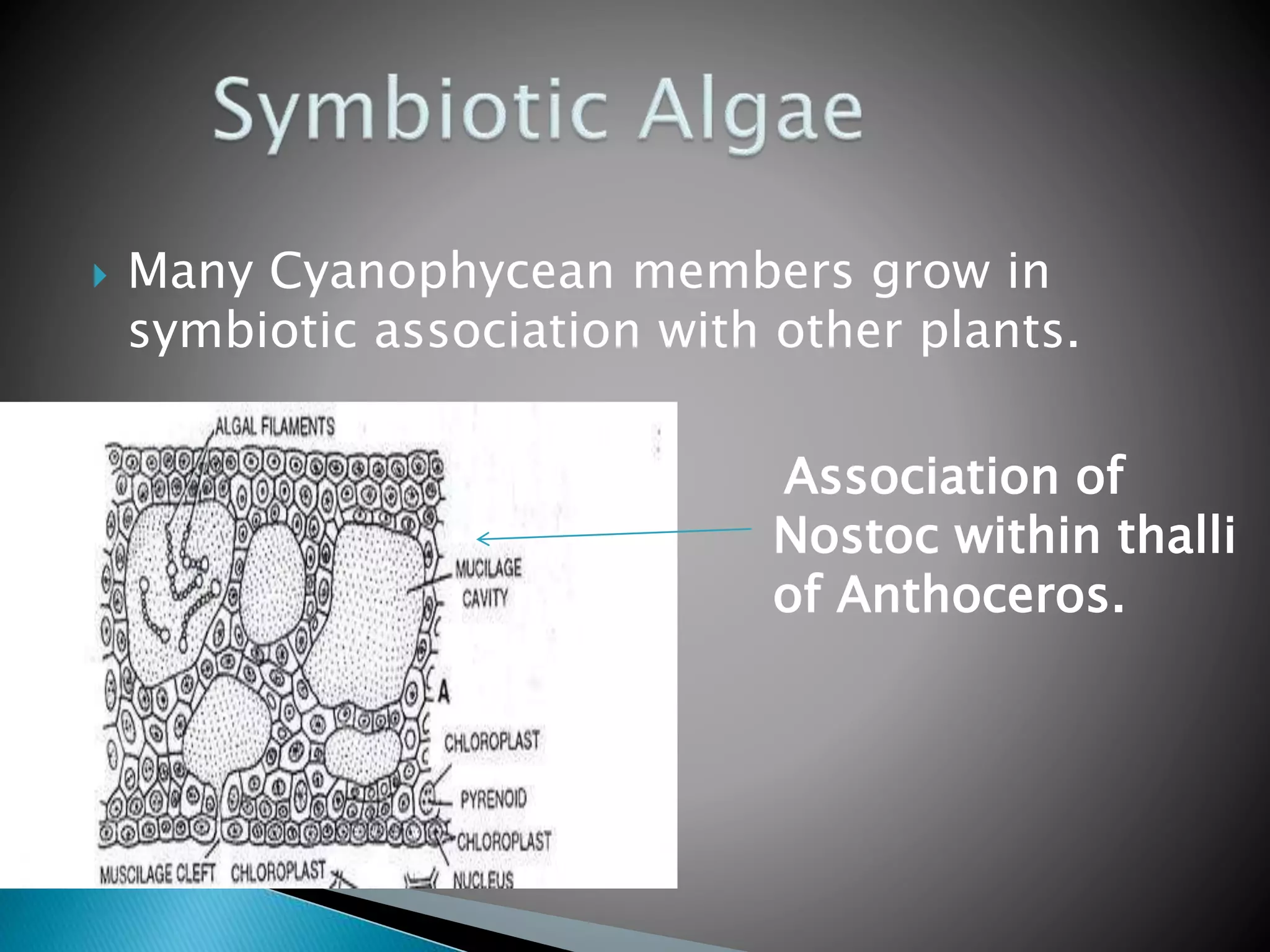
 Many Cyanophycean members grow in
symbiotic association with other plants.
Association of
Nostoc within thalli
of Anthoceros.
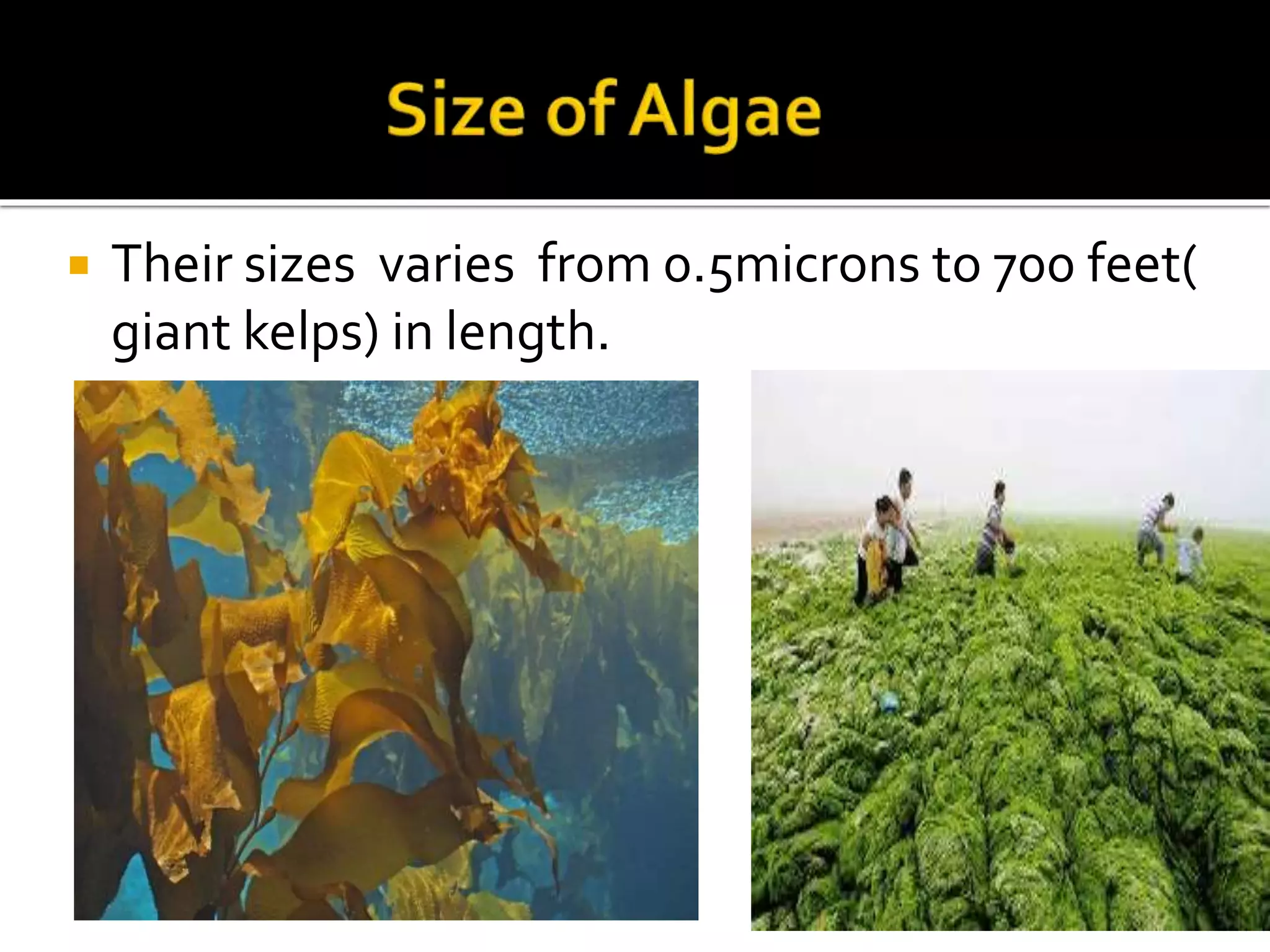
 Their sizes varies from 0.5microns to 700 feet(
giant kelps) in length.
Thallus Organization
 Algae exhibit great diversity in organization of
plant body.
 Unicellular Motile
Non-motile
 Colonial
 Coenobial
 Filamentous Simple
Branched
 Dendroid
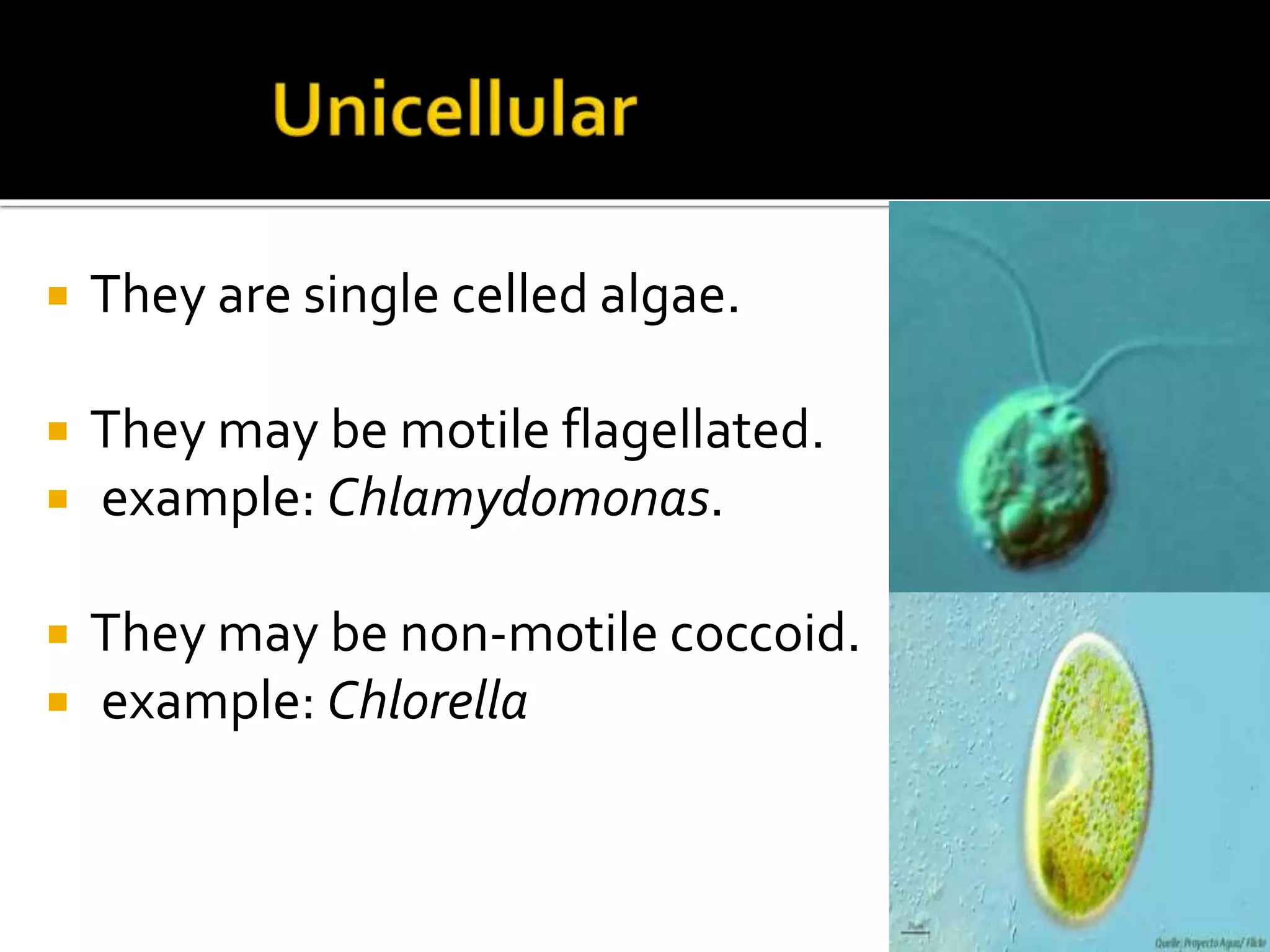
 They are single celled algae.
 They may be motile flagellated.
 example: Chlamydomonas.
 They may be non-motile coccoid.
 example: Chlorella
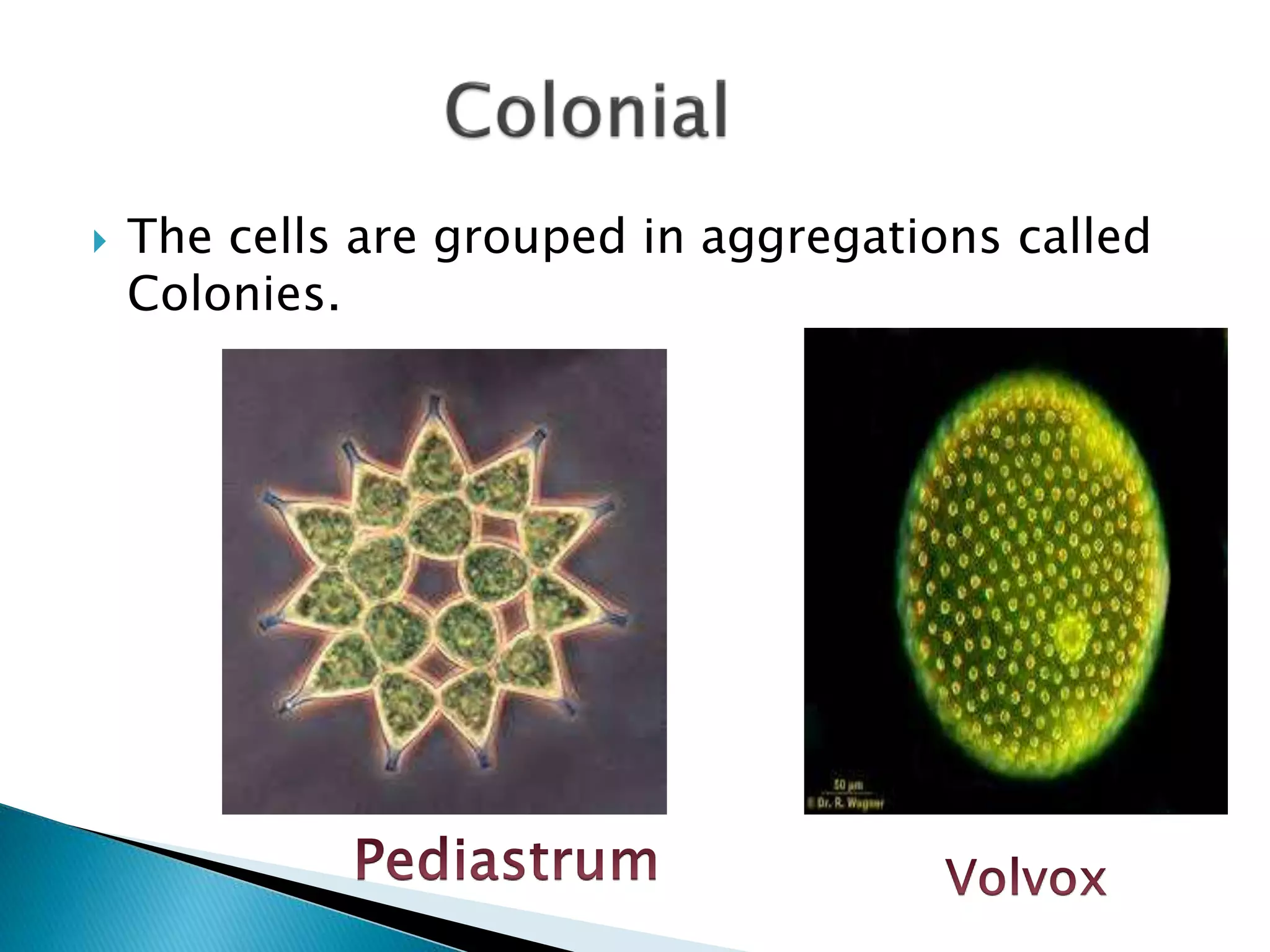
 The cells are grouped in aggregations called
Colonies.
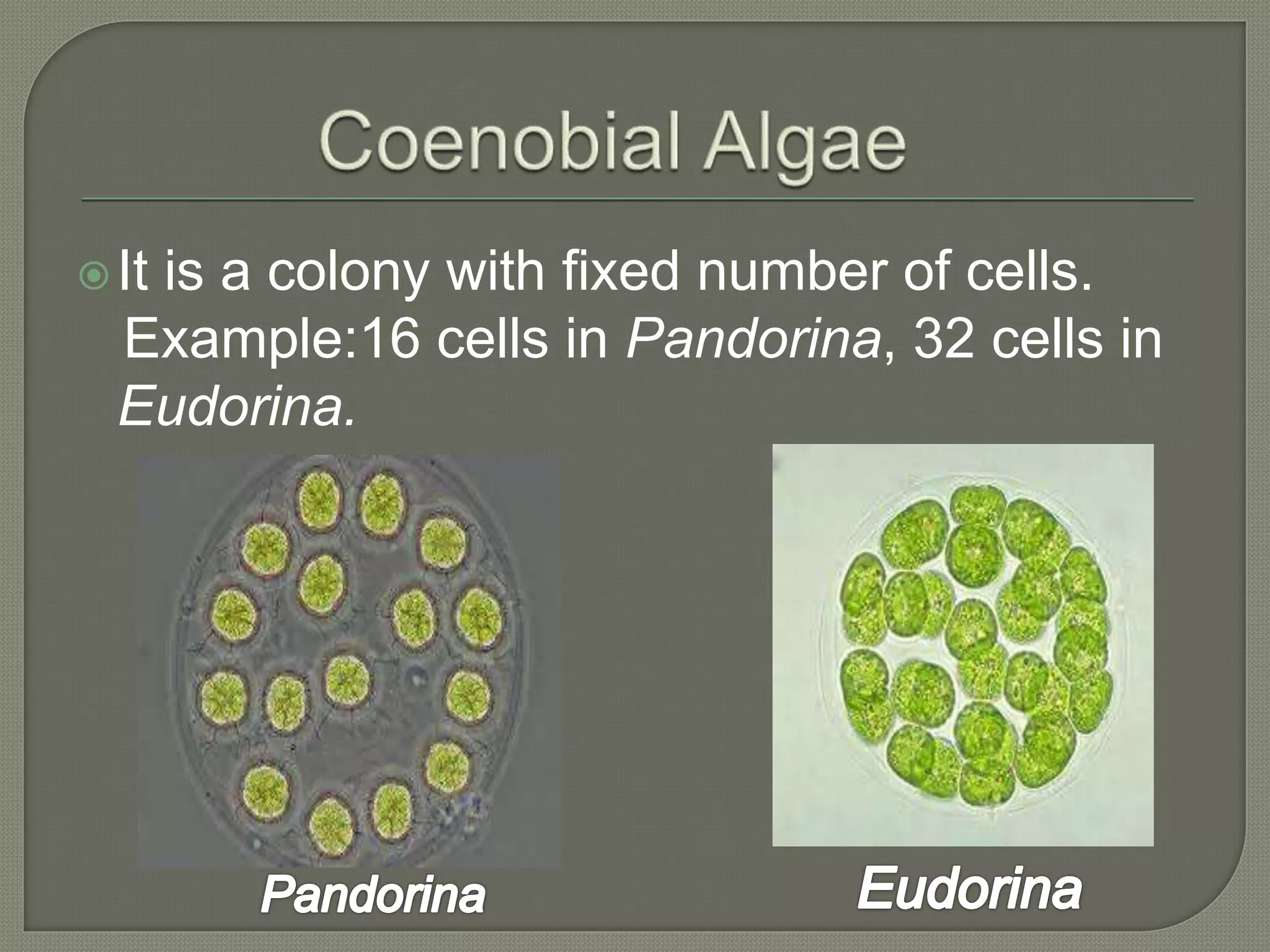
It is a colony with fixed number of cells.
Example:16 cells in Pandorina, 32 cells in
Eudorina.
Filamentous
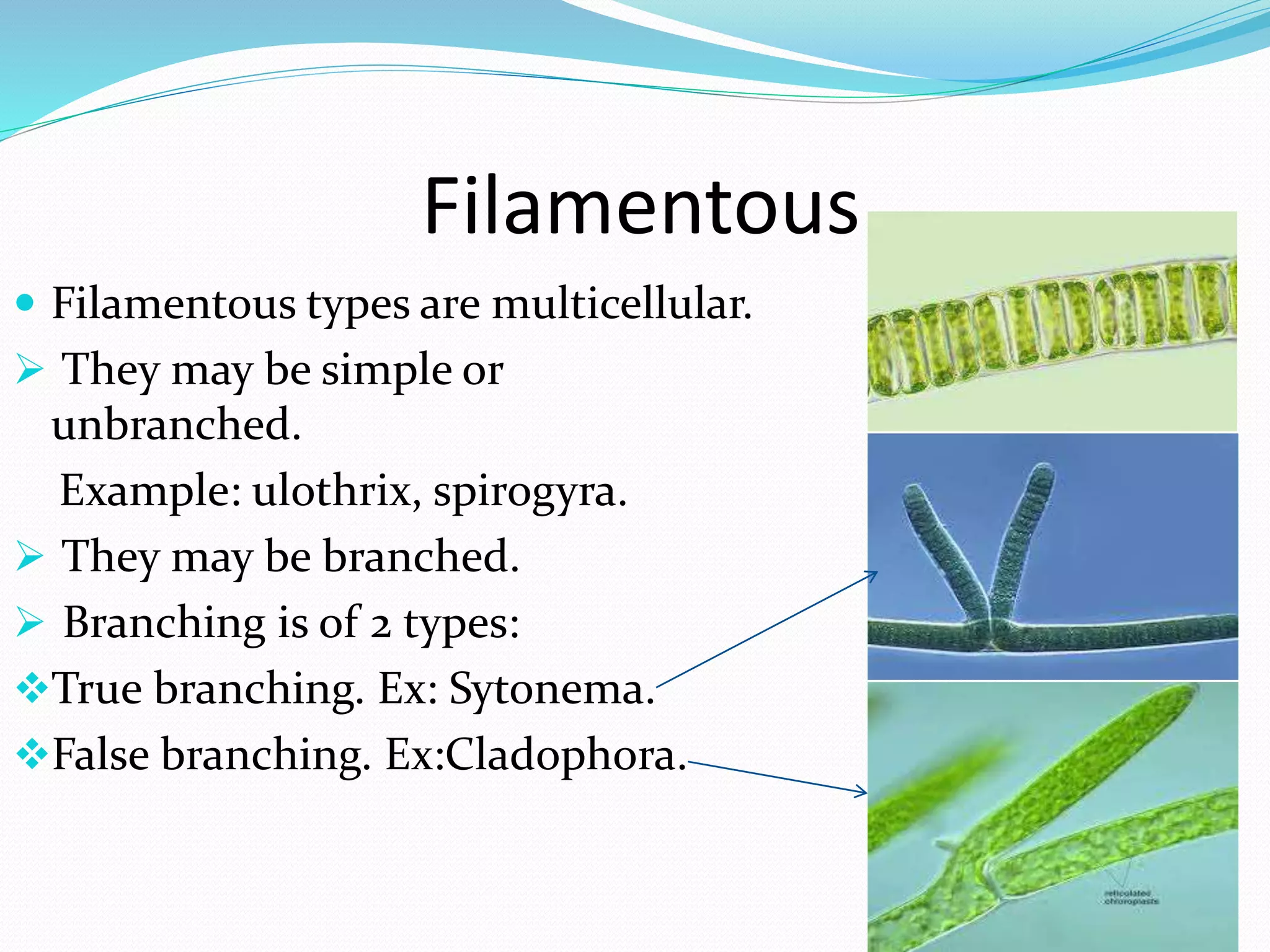
 Filamentous types are multicellular.
 They may be simple or
unbranched.
Example: ulothrix, spirogyra.
 They may be branched.
 Branching is of 2 types:
True branching. Ex: Sytonema.
False branching. Ex:Cladophora.
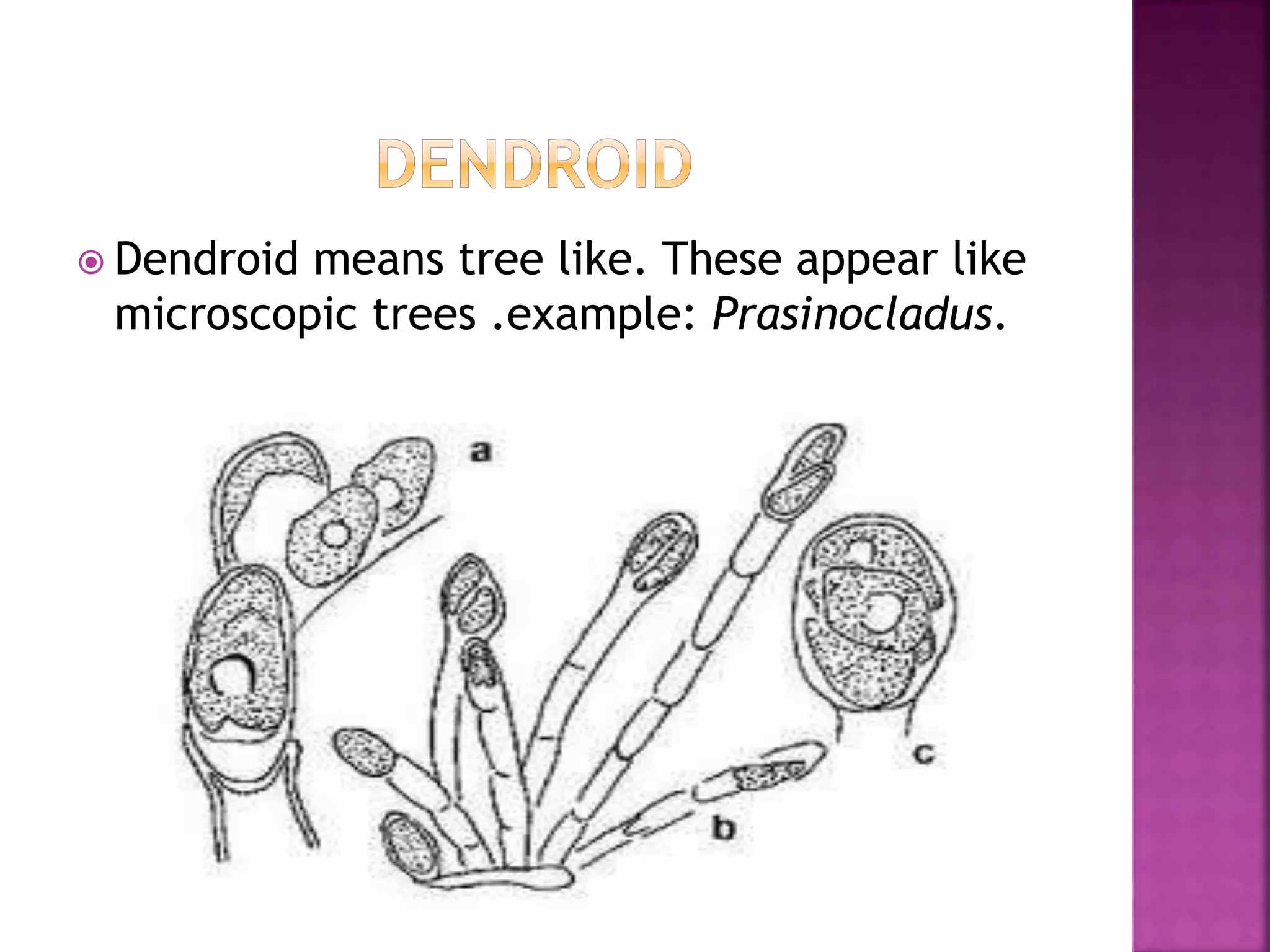
 Dendroid means tree like. These appear like
microscopic trees .example: Prasinocladus.
Structure of the algal cell
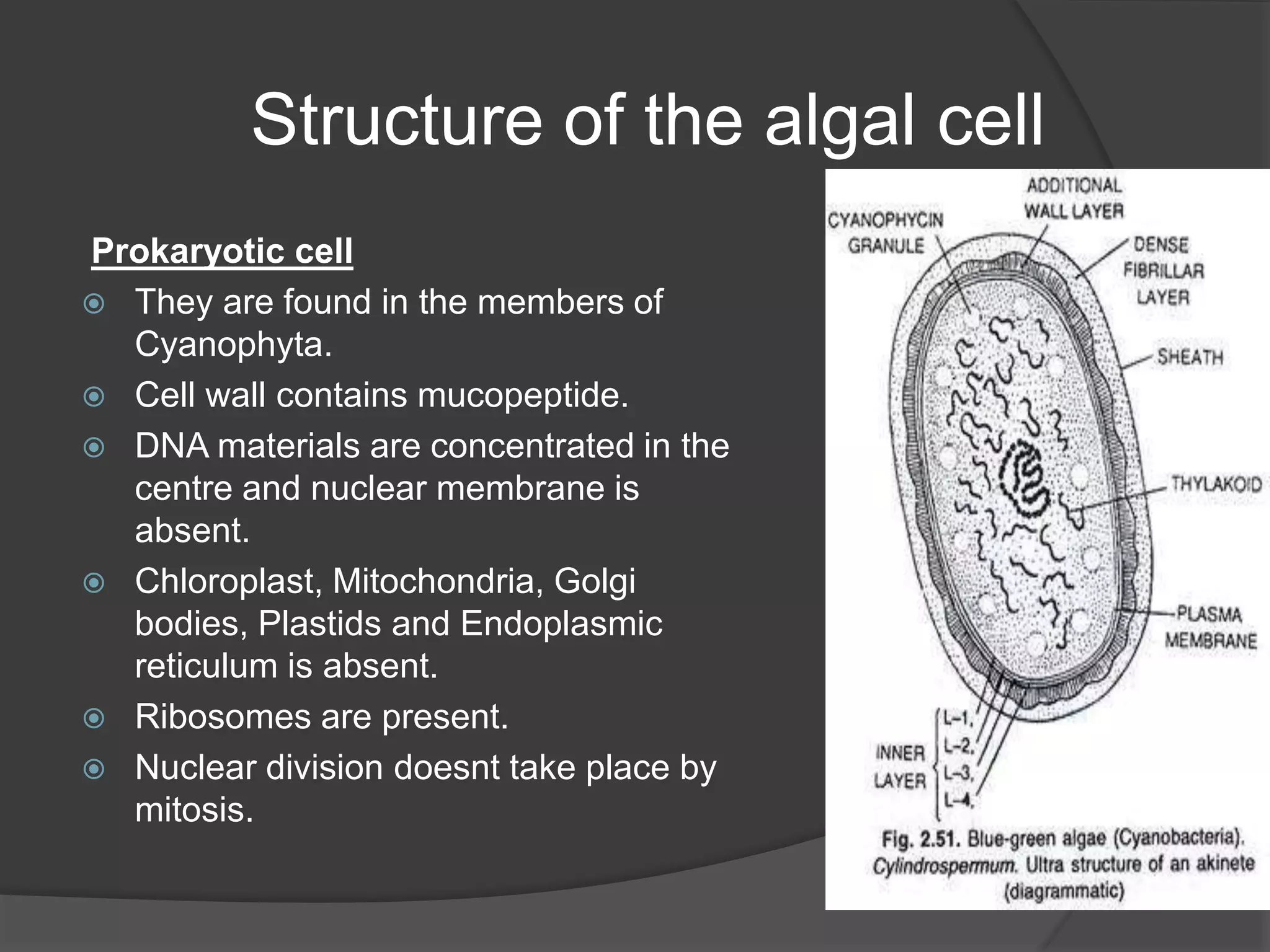
Prokaryotic cell
 They are found in the members of
Cyanophyta.
 Cell wall contains mucopeptide.
 DNA materials are concentrated in the
centre and nuclear membrane is
absent.
 Chloroplast, Mitochondria, Golgi
bodies, Plastids and Endoplasmic
reticulum is absent.
 Ribosomes are present.
 Nuclear division doesnt take place by
mitosis.
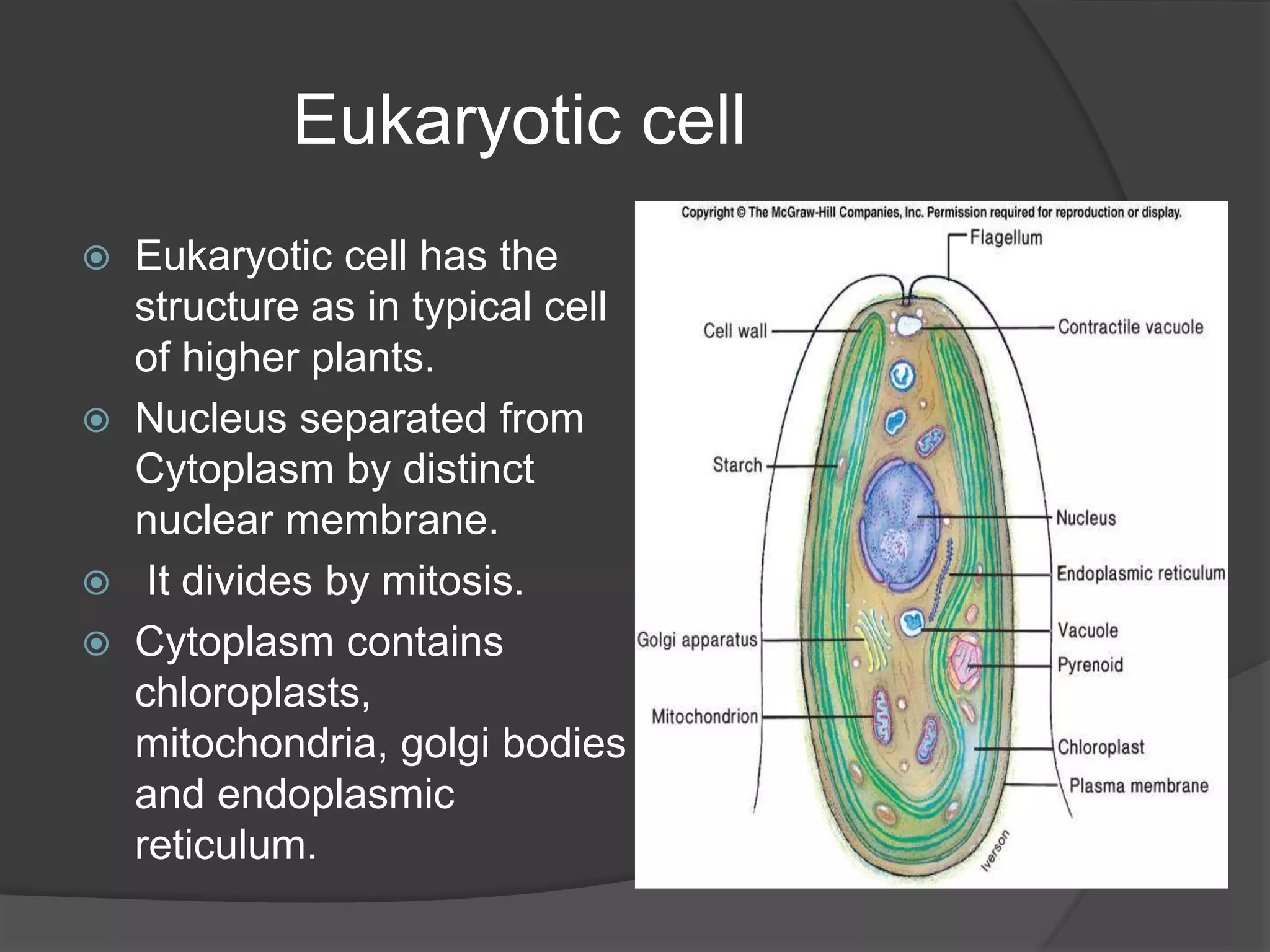
Eukaryotic cell
 Eukaryotic cell has the
structure as in typical cell
of higher plants.
 Nucleus separated from
Cytoplasm by distinct
nuclear membrane.
 It divides by mitosis.
 Cytoplasm contains
chloroplasts,
mitochondria, golgi bodies
and endoplasmic
reticulum.
Algal Pigments
Colour of algaes varies due to
presence of definite chemical
compounds called as pigments.
 Photosynthetic pigments in algae are
of 3kinds,
 Chlorophyll
 Carotenoids
 Phycobilins or biliproteins.
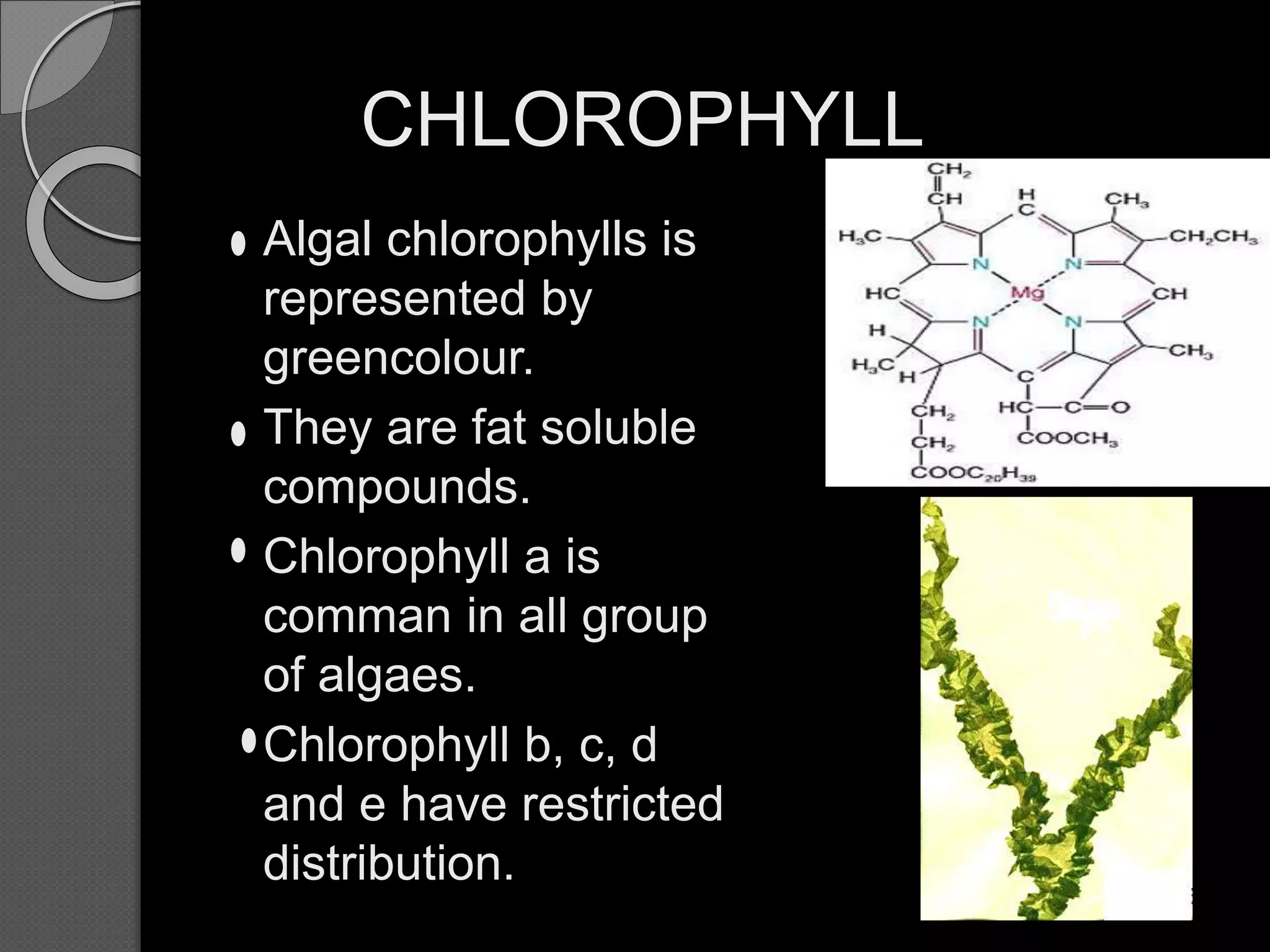
CHLOROPHYLL
Algal chlorophylls is
represented by
greencolour.
They are fat soluble
compounds.
Chlorophyll a is
comman in all group
of algaes.
Chlorophyll b, c, d
and e have restricted
distribution.
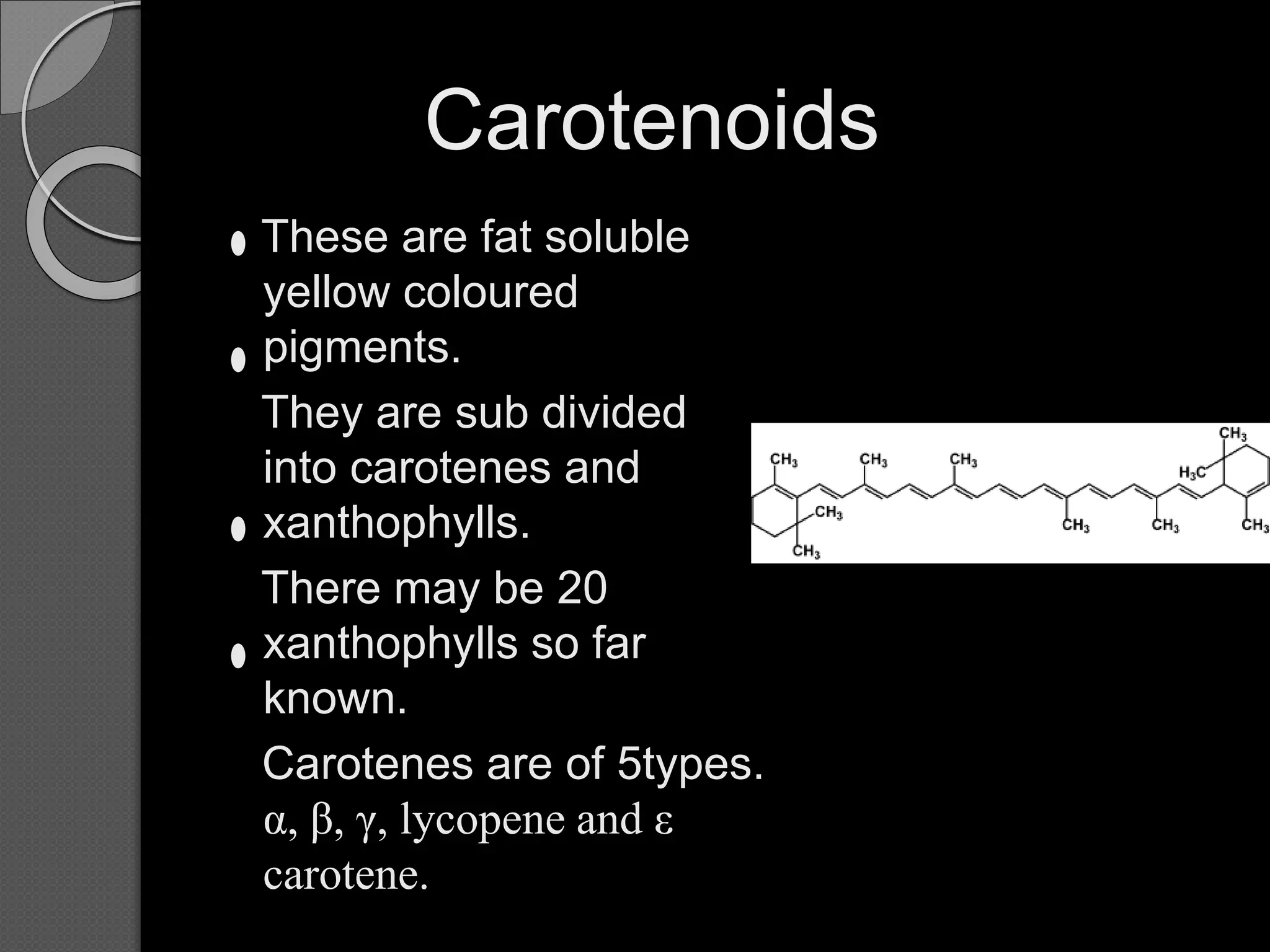
Carotenoids
These are fat soluble
yellow coloured
pigments.
They are sub divided
into carotenes and
xanthophylls.
There may be 20
xanthophylls so far
known.
Carotenes are of 5types.
α, β, γ, lycopene and ε
carotene.
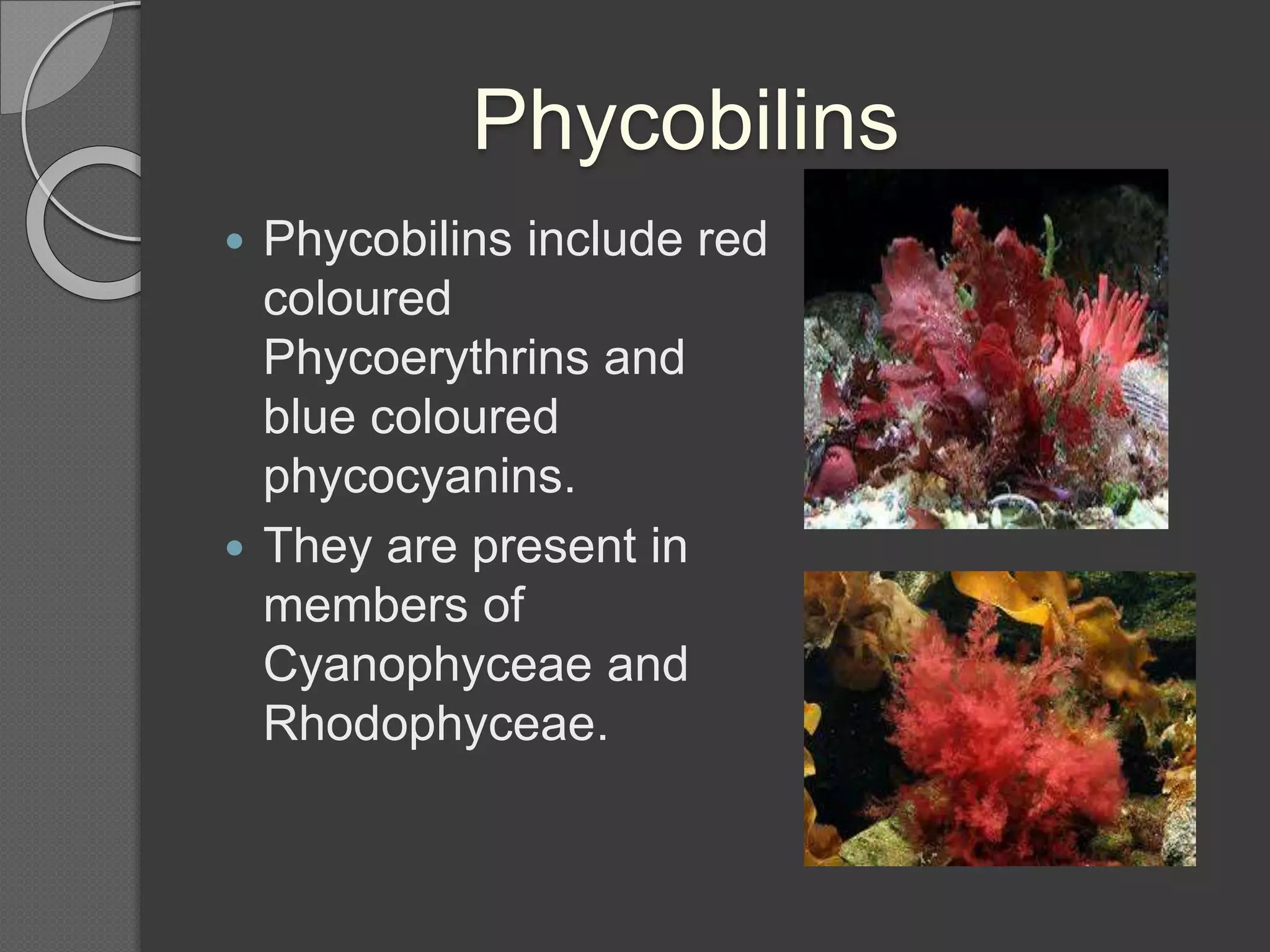
Phycobilins
 Phycobilins include red
coloured
Phycoerythrins and
blue coloured
phycocyanins.
 They are present in
members of
Cyanophyceae and
Rhodophyceae.
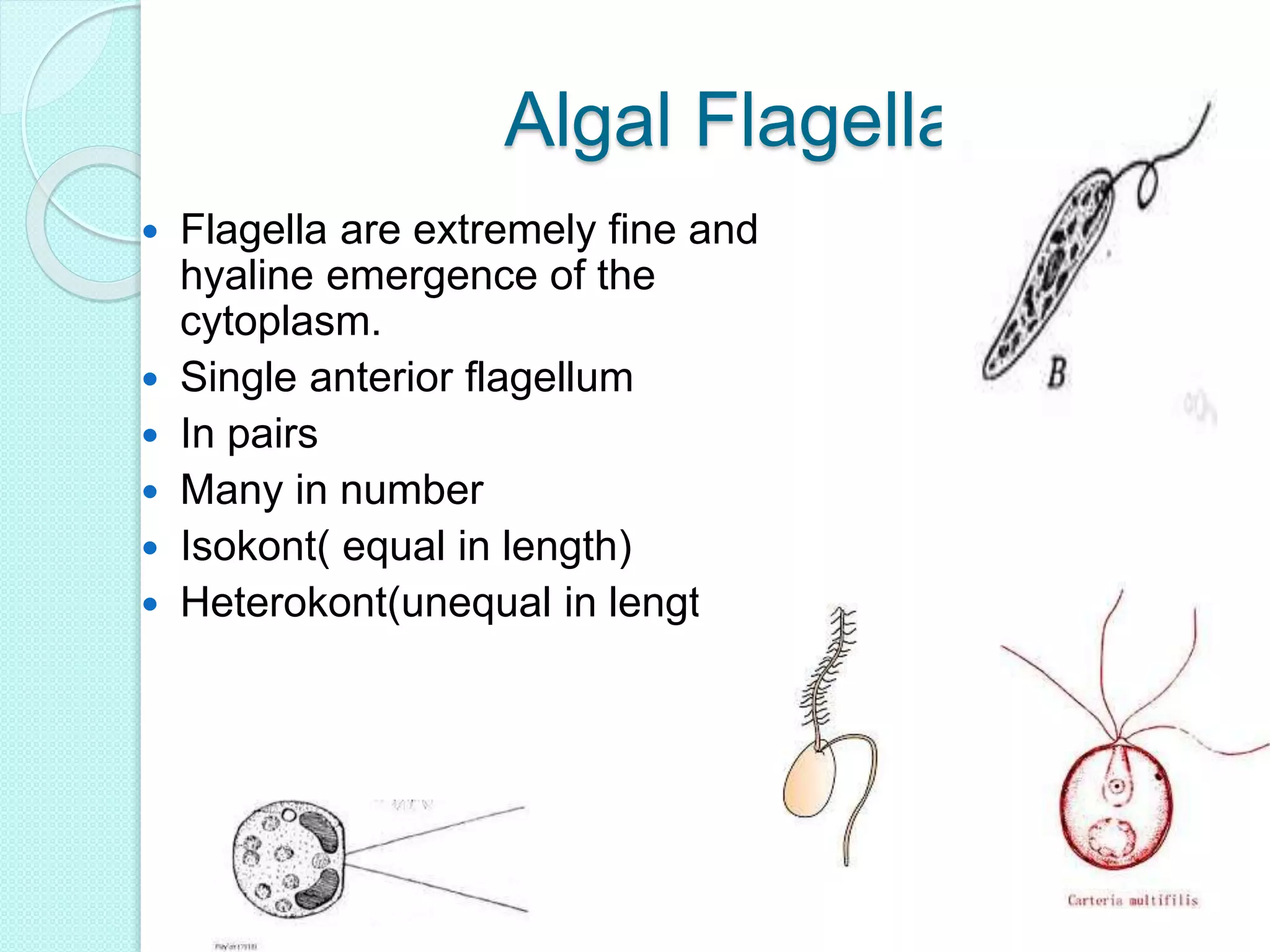
Algal Flagella
 Flagella are extremely fine and
hyaline emergence of the
cytoplasm.
 Single anterior flagellum
 In pairs
 Many in number
 Isokont( equal in length)
 Heterokont(unequal in length)
Nutrition
 Algaes are Autotrophic.
 All or most of the cells of thallus normally
contain chlorophyll.
 The cells can manufacture their own
carbohydrate food from carbon dioxide and
water through the agency of sunlight.
FOOD RESERVES
 Food accumulates in the form of
polysaccharides.
 Those are cyanophycean starch and
floridean starch(rhodophyta).
 Three important reserve food are laminarin,
paramylin and leucosin.
 Mannitol is also another reserve food in red
algae.
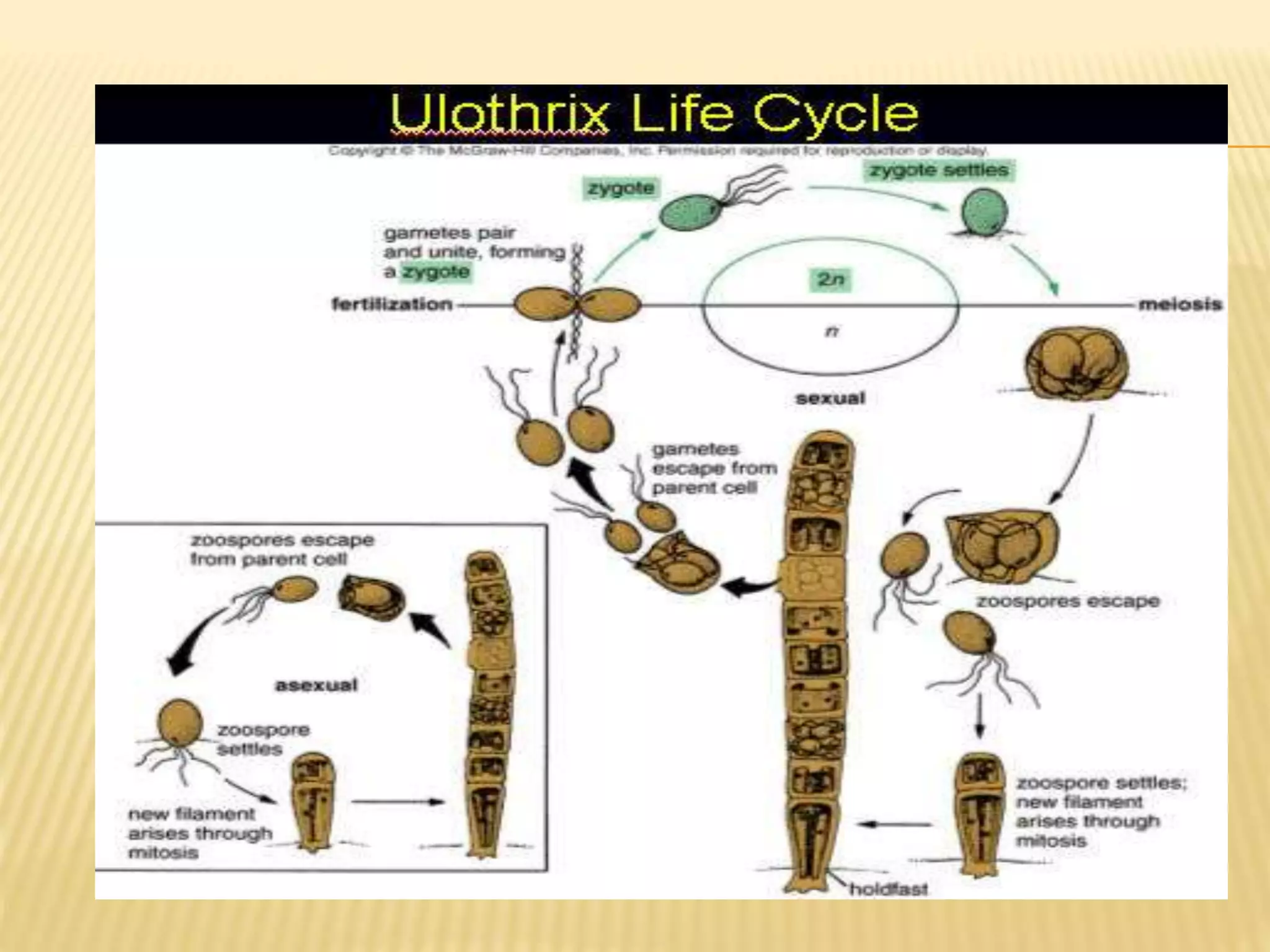
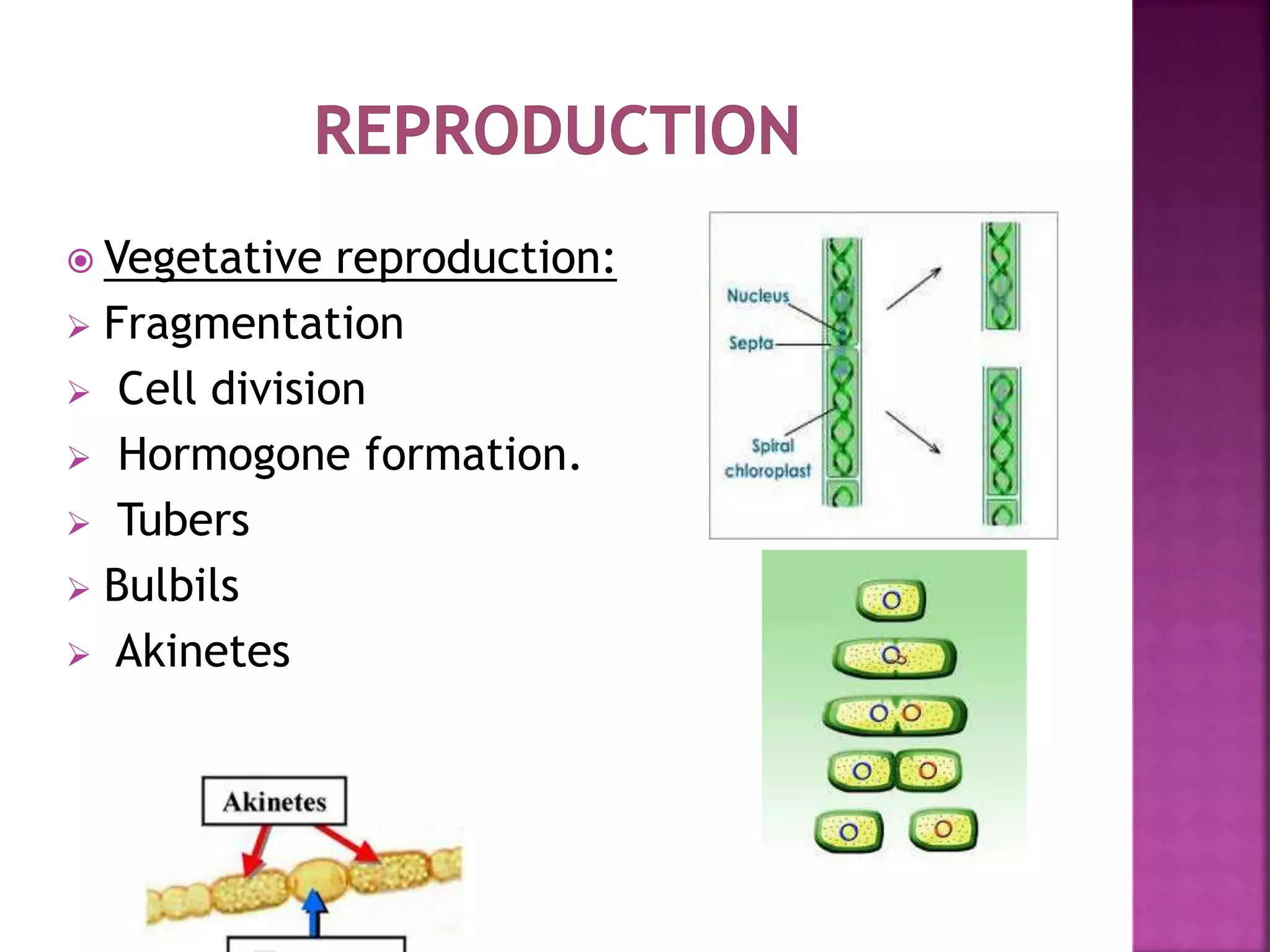
 Vegetative reproduction:
 Fragmentation
 Cell division
 Hormogone formation.
 Tubers
 Bulbils
 Akinetes
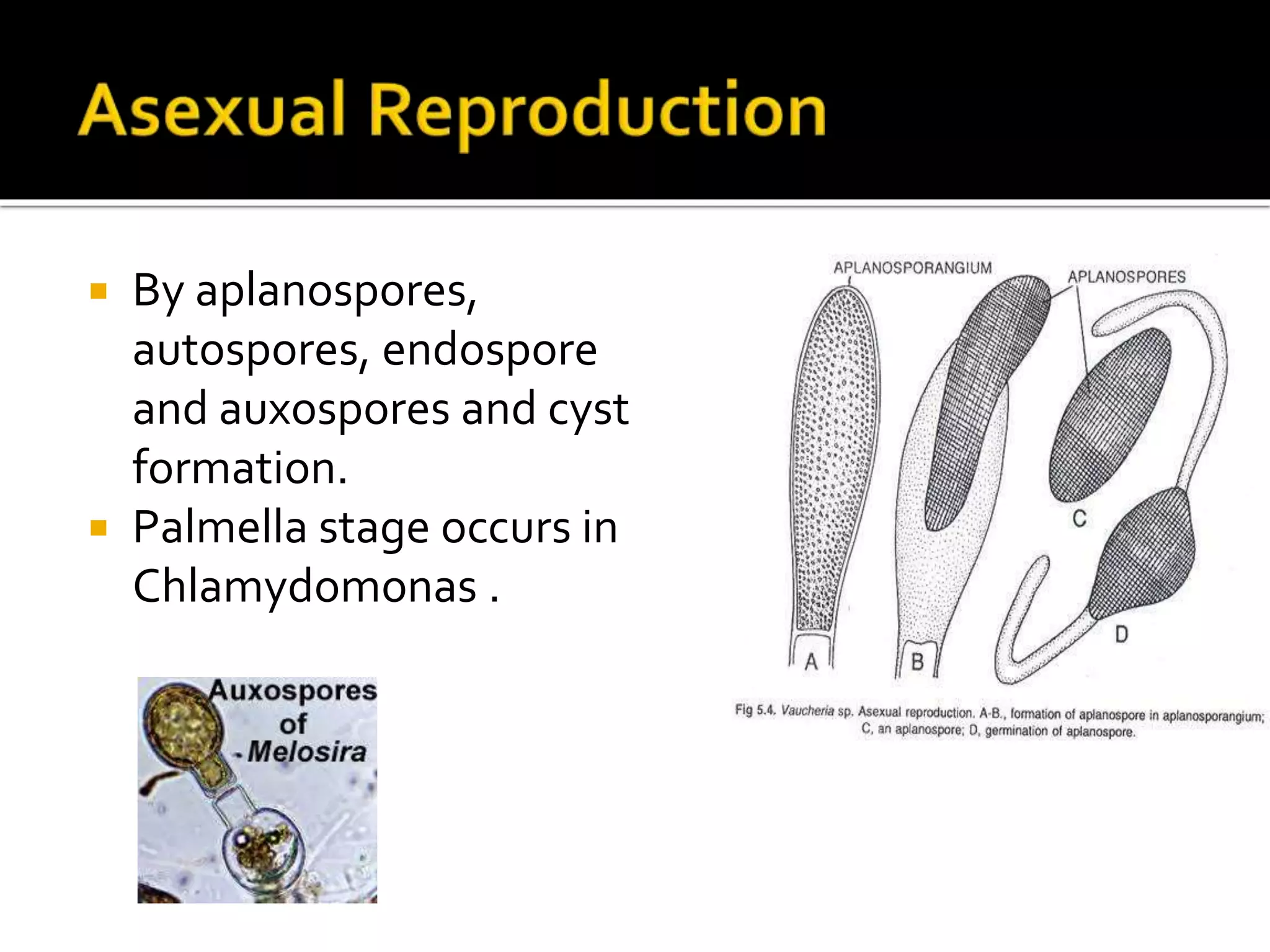
 By aplanospores,
autospores, endospore
and auxospores and cyst
formation.
 Palmella stage occurs in
Chlamydomonas .
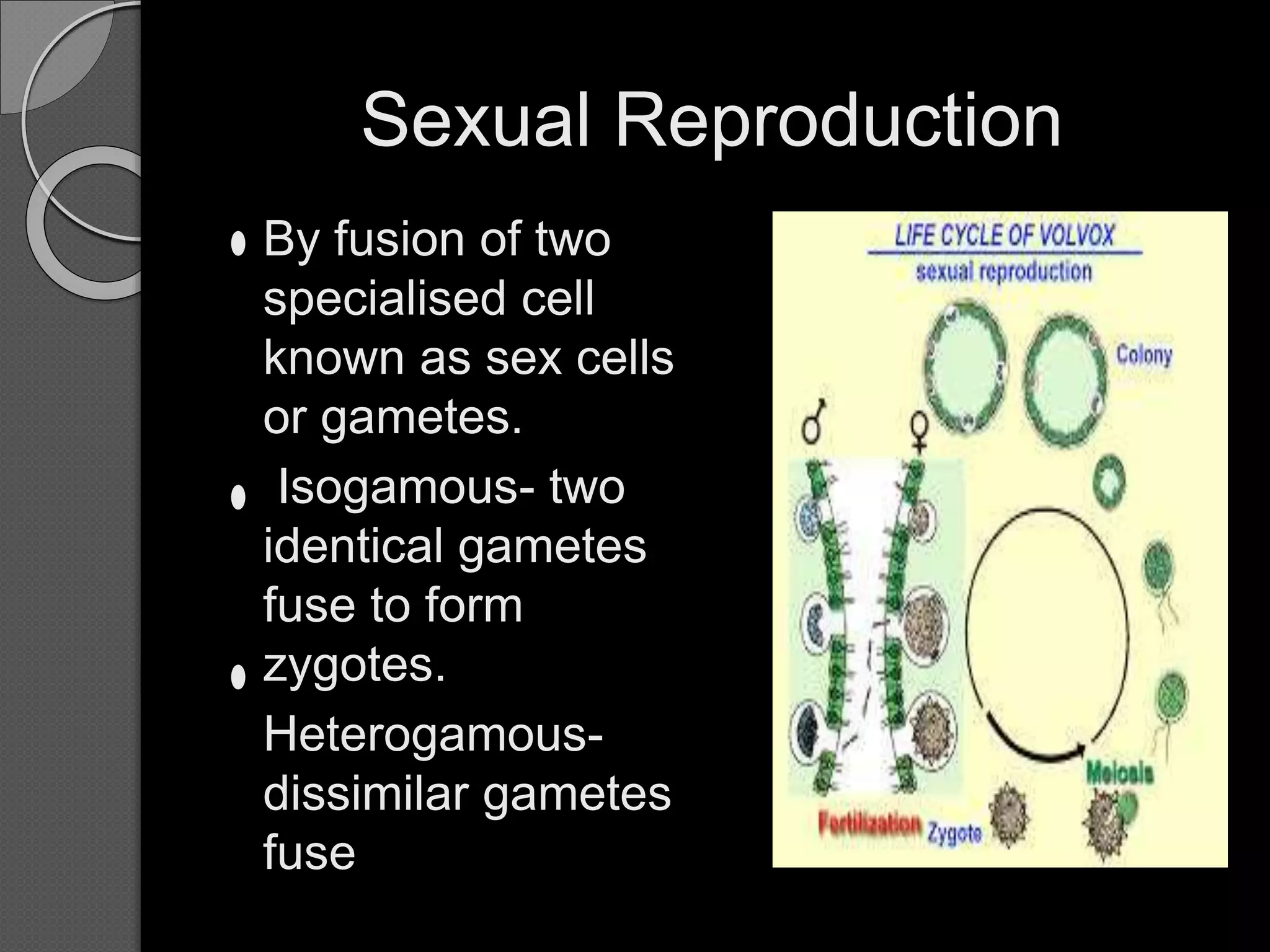
Sexual Reproduction
 By fusion of two
specialised cell
known as sex cells
or gametes.
 Isogamous- two
identical gametes
fuse to form
zygotes.
 Heterogamous-
dissimilar gametes
fuse
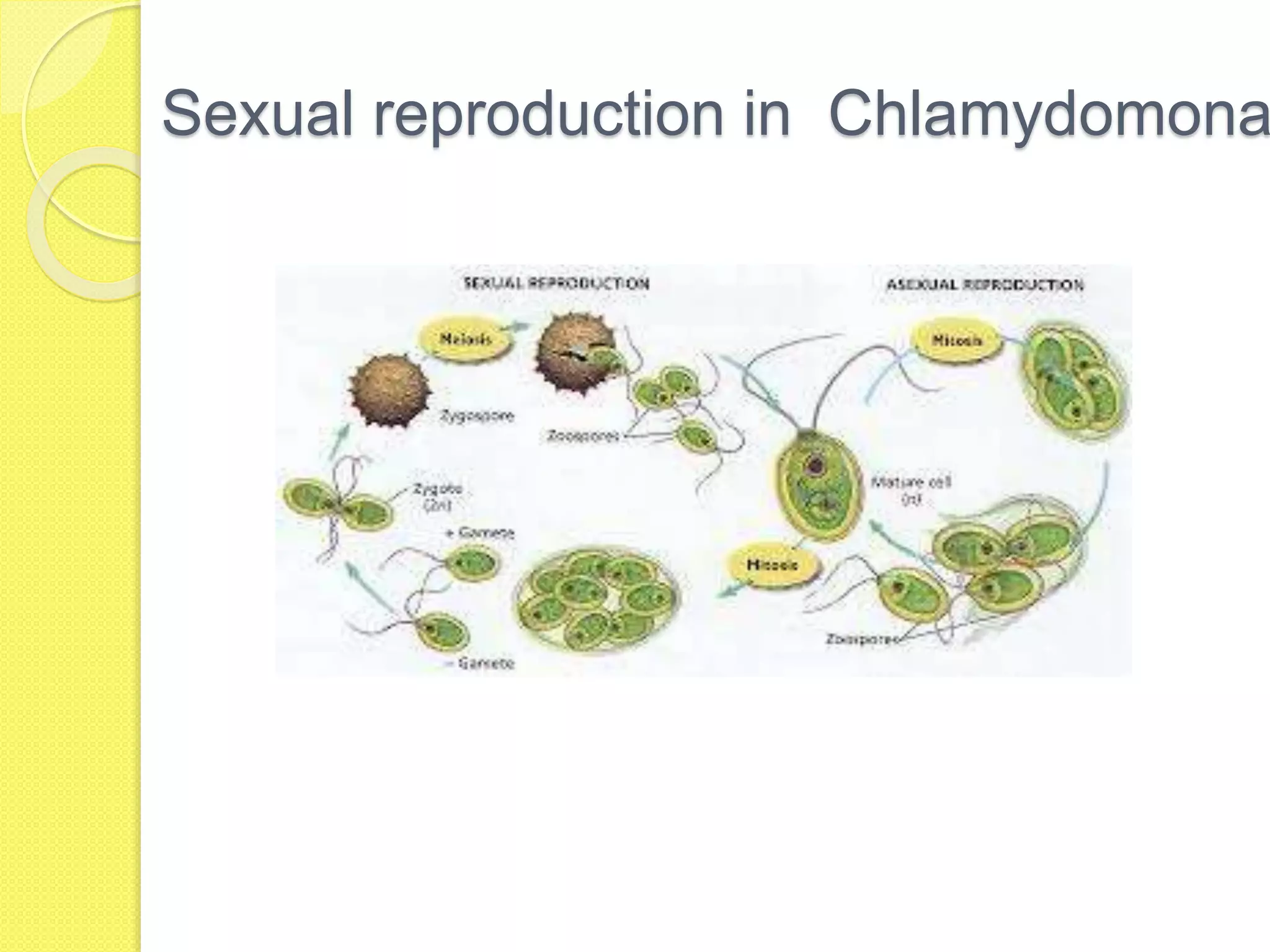
Sexual reproduction in Chlamydomona
Beneficial Aspects of Algae
 Food for humans
 Food for invertebrates and fishes in mariculture
 Animal feed
 Soil fertilizers and conditioners in agriculture
 Treatment of waste water
 Diatomaceous earth (= diatoms)
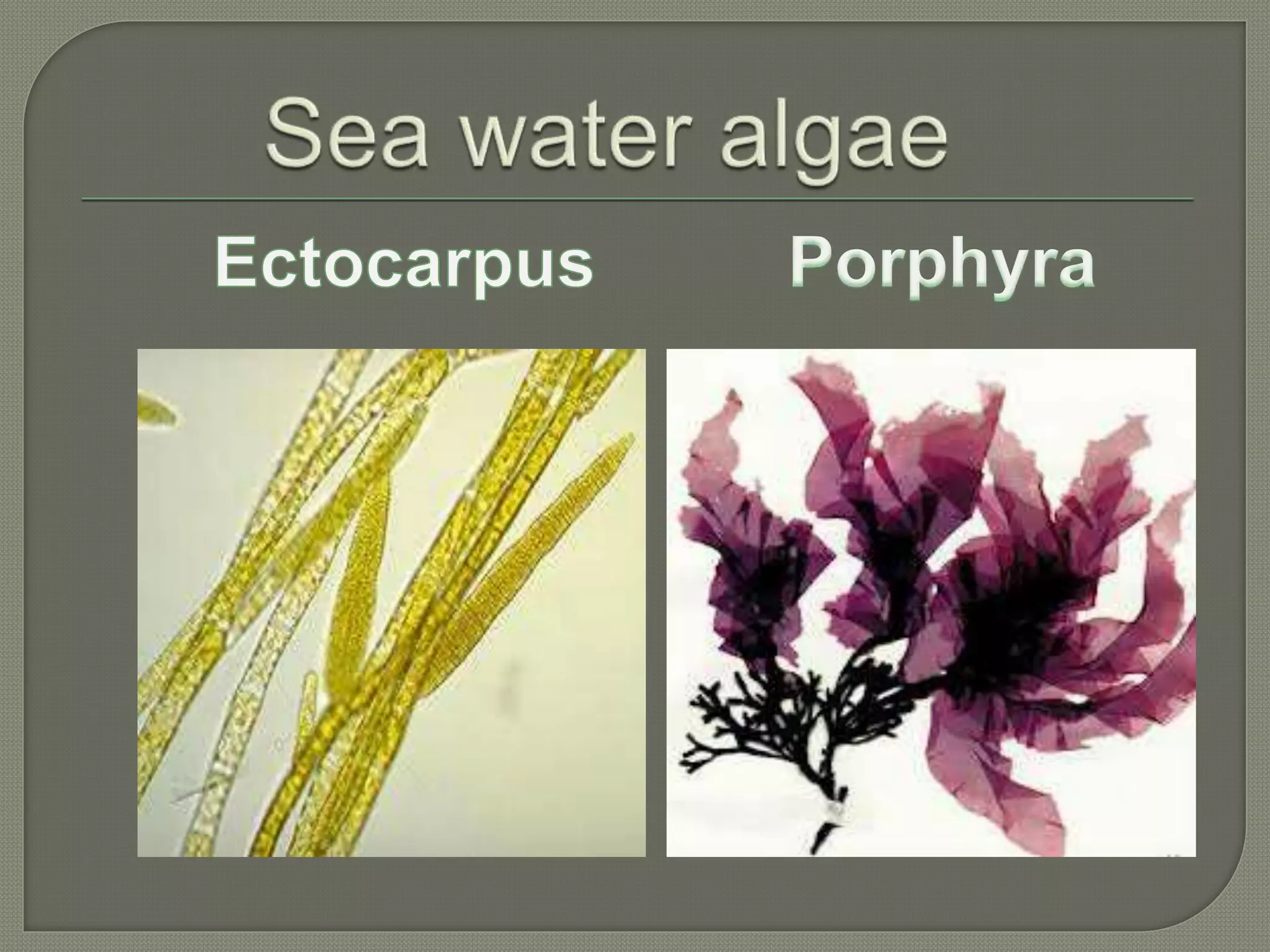
 Phycocolloids (agar, carrageenan from red algae;
alginates from brown algae)
 Drugs
 Model system for research
 Blooms of freshwater algae
 Red tides and marine blooms
 Toxins accumulated in food chains
 Damage to cave paintings, frescoes, and
other works of art
 Fouling of ships and other submerged
surfaces
 Fouling of the shells of commercially
important bivalves
 No other forms of organisms are so
colourful as that of algae.
 Various pigments can be found in the algae.
 They are ubiquitous and the thallus
organisation contains diversity.
References
 O.P.Sharma .1986. Textbook of Algae,
Tata Mcgraw-Hill Education:Pg.no.2-4.
 A.V.S.S.Sambamurty.2005. A Textbook
of Algae, I.K.International
Pvt.Ltd:Pg.no.3-4.
 http://www.algologists.yolasite.com
General characteristics of algae

General characteristics of algae

  • 1.
    Keshav Narayan Pai MscI Department of Botany
  • 2.
     They areThallophytes which have chlorophyll as their primary photosynthetic pigment and lack a sterile covering of cells around the reproductive cells.
  • 3.
    Habit and Habitat Theymay be free floating , free swimming or attached to the bottom in the shallow water. According to habitat, algaes can be classified as follows:  Aquatic algae: Example:- Chlamydomonas.  Terrestrial algae : Example:- Fritschiella.  Aerophytes : Example:- Scytonema.  Cryophytes : Example:- Scotiella.  Thermophytes : Example:- Oscillatoria brevis.  Algae of unusual habit : Example:- Dunaliella.
  • 4.
    Acquatic Algae • Foundfrom tiniest ditch to the mightiest river and ocean.
  • 6.
  • 7.
  • 9.
     These arefound free floating or freely swimming in water.
  • 10.
     These arenever attached to the substratum.
  • 11.
     Beginning theygets attached but later they get detached.
  • 12.
    Terrestrial Algae  Theseare found on or beneath the soil surface. Example: Trentifolia sp.
  • 13.
    AEROPHYTES  They areadopted to the aerial life,occur on tree trunks, moist walls, flower pots, rocks..etc
  • 14.
    Cryophytes(snow algae)  Foundon mountain peaks with snow.
  • 15.
    Thermophytes  Hot springs,tolerate temperature upto 85c.
  • 16.
    Halophytic Algae  Theyare present in water containing high percentage of salt.
  • 17.
    Lithophytes  Found onmoist rocks and rocky surfaces.
  • 18.
    Epiphytic Algae • Thealgaes grow on other plants. Ceplaleuros algae on Chrysophyllun leaf
  • 19.
    Epizoic Algae  Thesealgaes are found on shells of molluscans, turtles and fins of fishes.  Example: Acrosiphonia.
  • 20.
    These are foundinside the body of aquatic animals. • Example: Zoochlorella found inside the Hydra Viridis
  • 21.
     Eg: Cephaleurosvirescens causes ‘ Red rust of tea’,by which a severe damage is caused.
  • 22.
     Many Cyanophyceanmembers grow in symbiotic association with other plants. Association of Nostoc within thalli of Anthoceros.
  • 23.
     Their sizesvaries from 0.5microns to 700 feet( giant kelps) in length.
  • 24.
    Thallus Organization  Algaeexhibit great diversity in organization of plant body.  Unicellular Motile Non-motile  Colonial  Coenobial  Filamentous Simple Branched  Dendroid
  • 25.
     They aresingle celled algae.  They may be motile flagellated.  example: Chlamydomonas.  They may be non-motile coccoid.  example: Chlorella
  • 26.
     The cellsare grouped in aggregations called Colonies.
  • 27.
    It is acolony with fixed number of cells. Example:16 cells in Pandorina, 32 cells in Eudorina.
  • 28.
    Filamentous  Filamentous typesare multicellular.  They may be simple or unbranched. Example: ulothrix, spirogyra.  They may be branched.  Branching is of 2 types: True branching. Ex: Sytonema. False branching. Ex:Cladophora.
  • 29.
     Dendroid meanstree like. These appear like microscopic trees .example: Prasinocladus.
  • 30.
    Structure of thealgal cell Prokaryotic cell  They are found in the members of Cyanophyta.  Cell wall contains mucopeptide.  DNA materials are concentrated in the centre and nuclear membrane is absent.  Chloroplast, Mitochondria, Golgi bodies, Plastids and Endoplasmic reticulum is absent.  Ribosomes are present.  Nuclear division doesnt take place by mitosis.
  • 31.
    Eukaryotic cell  Eukaryoticcell has the structure as in typical cell of higher plants.  Nucleus separated from Cytoplasm by distinct nuclear membrane.  It divides by mitosis.  Cytoplasm contains chloroplasts, mitochondria, golgi bodies and endoplasmic reticulum.
  • 32.
    Algal Pigments Colour ofalgaes varies due to presence of definite chemical compounds called as pigments.  Photosynthetic pigments in algae are of 3kinds,  Chlorophyll  Carotenoids  Phycobilins or biliproteins.
  • 33.
    CHLOROPHYLL Algal chlorophylls is representedby greencolour. They are fat soluble compounds. Chlorophyll a is comman in all group of algaes. Chlorophyll b, c, d and e have restricted distribution.
  • 34.
    Carotenoids These are fatsoluble yellow coloured pigments. They are sub divided into carotenes and xanthophylls. There may be 20 xanthophylls so far known. Carotenes are of 5types. α, β, γ, lycopene and ε carotene.
  • 35.
    Phycobilins  Phycobilins includered coloured Phycoerythrins and blue coloured phycocyanins.  They are present in members of Cyanophyceae and Rhodophyceae.
  • 36.
    Algal Flagella  Flagellaare extremely fine and hyaline emergence of the cytoplasm.  Single anterior flagellum  In pairs  Many in number  Isokont( equal in length)  Heterokont(unequal in length)
  • 37.
    Nutrition  Algaes areAutotrophic.  All or most of the cells of thallus normally contain chlorophyll.  The cells can manufacture their own carbohydrate food from carbon dioxide and water through the agency of sunlight.
  • 38.
    FOOD RESERVES  Foodaccumulates in the form of polysaccharides.  Those are cyanophycean starch and floridean starch(rhodophyta).  Three important reserve food are laminarin, paramylin and leucosin.  Mannitol is also another reserve food in red algae.
  • 39.
     Vegetative reproduction: Fragmentation  Cell division  Hormogone formation.  Tubers  Bulbils  Akinetes
  • 40.
     By aplanospores, autospores,endospore and auxospores and cyst formation.  Palmella stage occurs in Chlamydomonas .
  • 41.
    Sexual Reproduction  Byfusion of two specialised cell known as sex cells or gametes.  Isogamous- two identical gametes fuse to form zygotes.  Heterogamous- dissimilar gametes fuse
  • 42.
  • 46.
    Beneficial Aspects ofAlgae  Food for humans  Food for invertebrates and fishes in mariculture  Animal feed  Soil fertilizers and conditioners in agriculture  Treatment of waste water  Diatomaceous earth (= diatoms)  Phycocolloids (agar, carrageenan from red algae; alginates from brown algae)  Drugs  Model system for research
  • 47.
     Blooms offreshwater algae  Red tides and marine blooms  Toxins accumulated in food chains  Damage to cave paintings, frescoes, and other works of art  Fouling of ships and other submerged surfaces  Fouling of the shells of commercially important bivalves
  • 48.
     No otherforms of organisms are so colourful as that of algae.  Various pigments can be found in the algae.  They are ubiquitous and the thallus organisation contains diversity.
  • 49.
    References  O.P.Sharma .1986.Textbook of Algae, Tata Mcgraw-Hill Education:Pg.no.2-4.  A.V.S.S.Sambamurty.2005. A Textbook of Algae, I.K.International Pvt.Ltd:Pg.no.3-4.  http://www.algologists.yolasite.com