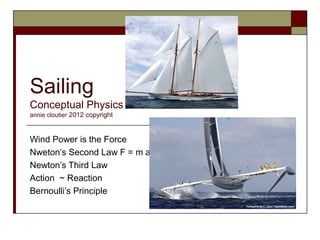
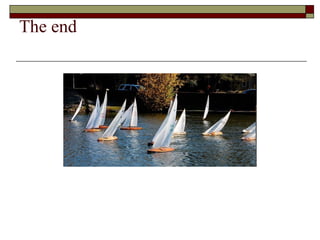
Sailing
Conceptual Physics
annie cloutier 2012 copyright


Wind Power is the Force
Nweton’s Second Law F = m a
Newton’s Third Law
Action ~ Reaction
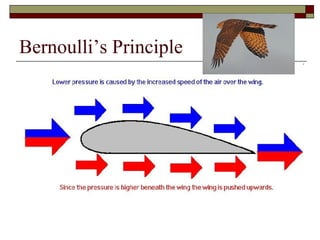
Bernoulli’s Principle
http://science.kqed.org/quest/video/the-physics-of-sailing/
   Position                         Is defined in relation to a
                                      reference point

                                     Velocity is described by
   Velocity                          direction and speed of an
                                      object
   ∆ delta means change
                                     Change in velocity is due
                                      to changes in speed,
                                      direction or both
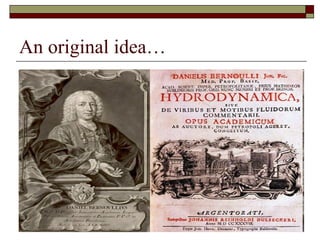
An original idea…
Understanding Motion
   Speed                    How fast an object is moving
                              calculate by dividing the distance
                              covered by time
   Instantaneous speed      The speed at any instant

                             Average speed is the total
   Average speed             distance covered divided by
                              the time
   Total distance           Is the average speed times
                              the travel time
NEWTON’S THIRD LAW Action - Reaction
For every action there is an equal and opposite reaction


    When an object is subjected to multiple forces at
     once, the result is the cumulative effect of all the
     forces
    When forces on an object are balanced, the object
     will change its velocity
    When forces are not balanced, no acceleration occurs
    When a body A exerts a force on a body B, B exerts
     an equal and opposite force on A
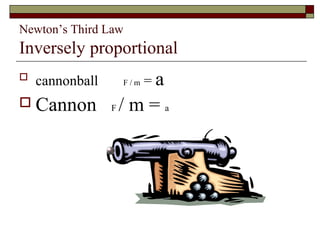
Newton’s Third Law
Inversely proportional
   cannonball       F/m   =a
 Cannon         F   /m=a
Velocity and Acceleration
   Velocity                      Acceleration
   Is speed in a given           Is the rate at which the
    direction                      velocity is changing
   Speed is a description        Acceleration can apply
    of how fast an object is       to decreases as well as
    moving                         increases in speed
   Velocity is how fast          Deceleration is the
    and in what direction it       decreasing of speed
    moves                          (slam on your brakes)
Conservation of Energy
   An unbalances force on an object produces a
    change in momentum
   States that the energy can not be created or
    destroyed
   Energy can be transferred from one form into
    another, but the total amount of energy never
    changes.
Bernoulli’s Principle
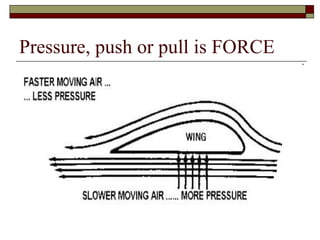
Pressure, push or pull is FORCE
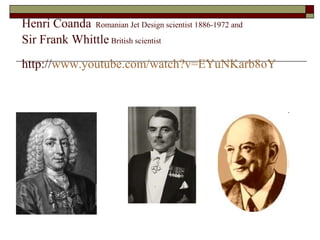
Henri Coanda Romanian Jet Design scientist 1886-1972 and
Sir Frank Whittle British scientist
http://www.youtube.com/watch?v=EYuNKarb8oY
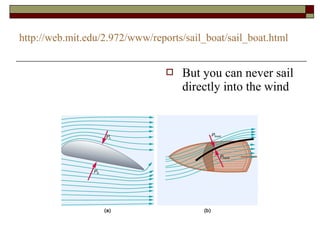
http://web.mit.edu/2.972/www/reports/sail_boat/sail_boat.html


                                    But you can never sail
                                     directly into the wind
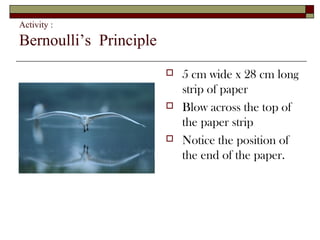
Activity :

Bernoulli’s Principle
                           5 cm wide x 28 cm long
                            strip of paper
                           Blow across the top of
                            the paper strip
                           Notice the position of
                            the end of the paper.
The end

Sailing physics pow pt 2012 edited

  • 1.
    Sailing Conceptual Physics annie cloutier2012 copyright Wind Power is the Force Nweton’s Second Law F = m a Newton’s Third Law Action ~ Reaction Bernoulli’s Principle
  • 2.
    http://science.kqed.org/quest/video/the-physics-of-sailing/  Position  Is defined in relation to a reference point  Velocity is described by  Velocity direction and speed of an object  ∆ delta means change  Change in velocity is due to changes in speed, direction or both
  • 3.
  • 4.
    Understanding Motion  Speed  How fast an object is moving calculate by dividing the distance covered by time  Instantaneous speed  The speed at any instant  Average speed is the total  Average speed distance covered divided by the time  Total distance  Is the average speed times the travel time
  • 5.
    NEWTON’S THIRD LAWAction - Reaction For every action there is an equal and opposite reaction  When an object is subjected to multiple forces at once, the result is the cumulative effect of all the forces  When forces on an object are balanced, the object will change its velocity  When forces are not balanced, no acceleration occurs  When a body A exerts a force on a body B, B exerts an equal and opposite force on A
  • 6.
    Newton’s Third Law Inverselyproportional  cannonball F/m =a  Cannon F /m=a
  • 7.
    Velocity and Acceleration  Velocity  Acceleration  Is speed in a given  Is the rate at which the direction velocity is changing  Speed is a description  Acceleration can apply of how fast an object is to decreases as well as moving increases in speed  Velocity is how fast  Deceleration is the and in what direction it decreasing of speed moves (slam on your brakes)
  • 8.
    Conservation of Energy  An unbalances force on an object produces a change in momentum  States that the energy can not be created or destroyed  Energy can be transferred from one form into another, but the total amount of energy never changes.
  • 9.
  • 10.
    Pressure, push orpull is FORCE
  • 11.
    Henri Coanda RomanianJet Design scientist 1886-1972 and Sir Frank Whittle British scientist http://www.youtube.com/watch?v=EYuNKarb8oY
  • 12.
    http://web.mit.edu/2.972/www/reports/sail_boat/sail_boat.html  But you can never sail directly into the wind
  • 13.
    Activity : Bernoulli’s Principle  5 cm wide x 28 cm long strip of paper  Blow across the top of the paper strip  Notice the position of the end of the paper.
  • 14.