Marine Flowering Plants
Kingdom Plantae
Angiosperms
•
•
•
•
•
•
•

Autotrophs
Have flowers used for sexual reproduction
Have pollen
Have seeds
Multicellular eukaryotes
Mostly on land-very few in the ocean
Evolved from land plants
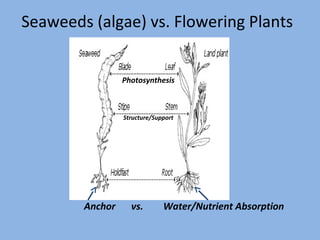
Seaweeds (algae) vs. Flowering Plants
Photosynthesis

Structure/Support

Anchor

vs.

Water/Nutrient Absorption
Three Groups
• Seagrasses
• Mangroves
• Marsh grasses
• VERY IMPORTANT habitat for young marine
organisms – they all act like nursery grounds
for countless species!
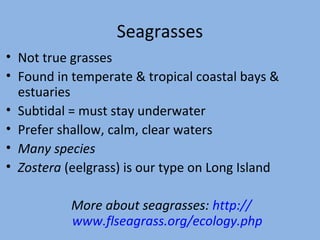
Seagrasses
• Not true grasses
• Found in temperate & tropical coastal bays &
estuaries
• Subtidal = must stay underwater
• Prefer shallow, calm, clear waters
• Many species
• Zostera (eelgrass) is our type on Long Island
More about seagrasses: http://
www.flseagrass.org/ecology.php
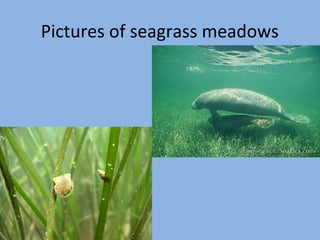
Pictures of seagrass meadows
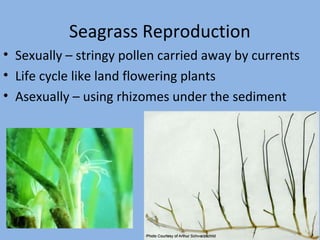
Seagrass Reproduction
• Sexually – stringy pollen carried away by currents
• Life cycle like land flowering plants
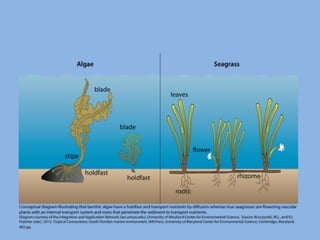
• Asexually – using rhizomes under the sediment
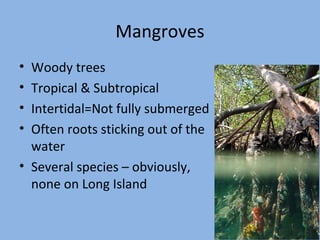
Mangroves
•
•
•
•

Woody trees
Tropical & Subtropical
Intertidal=Not fully submerged
Often roots sticking out of the
water
• Several species – obviously,
none on Long Island
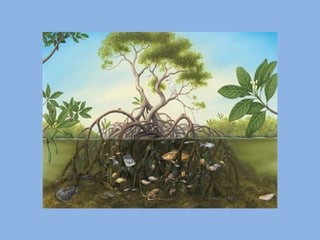
Picture of a Mangrove Forest
Mangrove Reproduction

• Reproduce sexually – with flowers
• “Pencil seed” germinates while
still attached to parent

– If it’s low tide: seed sticks in the mud
– If it’s high tide: seed is carried away
by current
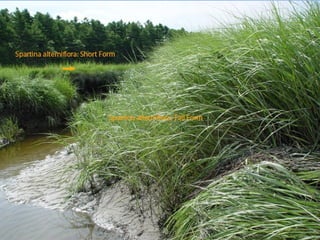
Salt marshes
• Found in calm, sheltered bays on East and Gulf Coasts
of the US
• Intertidal
• Several species - our common ones are:
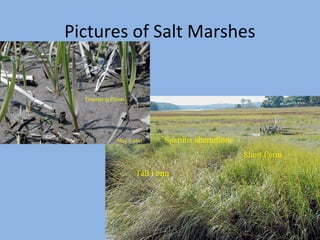
– Spartina alterniflora – salt marsh cordgrass
– Spartina patens – salt marsh hay

Virtual field trip through a salt marsh:
http://zottoli.wordpress.com/saltmarshes/spartina-alterniflora
/
Pictures of Salt Marshes
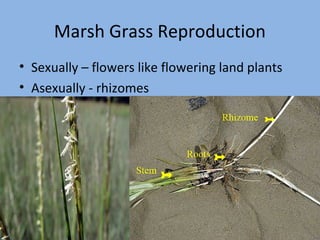
Marsh Grass Reproduction
• Sexually – flowers like flowering land plants
• Asexually - rhizomes
To Learn More…
• http://www.sglearnonline.com/seaweed-and-marineplants.html
• https://www.oceanclassrooms.com/ms101_u9_c1_sa_1

• Watch this:

http://www.oceanclassrooms.com/resources/storyline/uni
t9/MS101_U9_C1_SA_1/story.html

Marine flowering plants

  • 1.
  • 2.
    Angiosperms • • • • • • • Autotrophs Have flowers usedfor sexual reproduction Have pollen Have seeds Multicellular eukaryotes Mostly on land-very few in the ocean Evolved from land plants
  • 3.
    Seaweeds (algae) vs.Flowering Plants Photosynthesis Structure/Support Anchor vs. Water/Nutrient Absorption
  • 5.
    Three Groups • Seagrasses •Mangroves • Marsh grasses • VERY IMPORTANT habitat for young marine organisms – they all act like nursery grounds for countless species!
  • 6.
    Seagrasses • Not truegrasses • Found in temperate & tropical coastal bays & estuaries • Subtidal = must stay underwater • Prefer shallow, calm, clear waters • Many species • Zostera (eelgrass) is our type on Long Island More about seagrasses: http:// www.flseagrass.org/ecology.php
  • 7.
  • 8.
    Seagrass Reproduction • Sexually– stringy pollen carried away by currents • Life cycle like land flowering plants • Asexually – using rhizomes under the sediment
  • 9.
    Mangroves • • • • Woody trees Tropical &Subtropical Intertidal=Not fully submerged Often roots sticking out of the water • Several species – obviously, none on Long Island
  • 10.
    Picture of aMangrove Forest
  • 12.
    Mangrove Reproduction • Reproducesexually – with flowers • “Pencil seed” germinates while still attached to parent – If it’s low tide: seed sticks in the mud – If it’s high tide: seed is carried away by current
  • 13.
    Salt marshes • Foundin calm, sheltered bays on East and Gulf Coasts of the US • Intertidal • Several species - our common ones are: – Spartina alterniflora – salt marsh cordgrass – Spartina patens – salt marsh hay Virtual field trip through a salt marsh: http://zottoli.wordpress.com/saltmarshes/spartina-alterniflora /
  • 14.
  • 16.
    Marsh Grass Reproduction •Sexually – flowers like flowering land plants • Asexually - rhizomes
  • 17.
    To Learn More… •http://www.sglearnonline.com/seaweed-and-marineplants.html • https://www.oceanclassrooms.com/ms101_u9_c1_sa_1 • Watch this: http://www.oceanclassrooms.com/resources/storyline/uni t9/MS101_U9_C1_SA_1/story.html