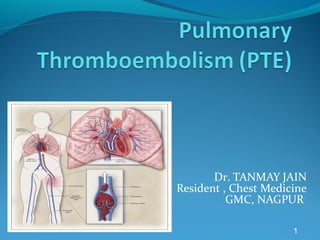
Dr. TANMAY JAIN
Resident , Chest Medicine
GMC, NAGPUR
1
Goals
Understand the historical context of pulmonary emboli
Comprehend the pathophysiology and know some
common risk factors
Be aware of the clinical features of PE and have a basic
understanding of various diagnostic test
Gain a therapeutic approach to the treatment of PE and
discuss a simplified method in the work-up of PE
Attempt to dispel a few “myths”about pulmonary emboli
2
Perspective
A Common disorder and potentially lethal
630,000 cases occurring annually with 2,00000
related deaths
Highest incidence in hospitalized patients
Autopsy reports suggest it is commonly “missed”
diagnosed
3
Perspective
 Presentation is often “atypical”
 Signs and symptoms are frequently vague and
nonspecific and rarely “classic”
 Untreated mortality rate of 20% - 30%,
plummets to 5% with timely intervention
4
Historical Context
Pre-1930’s
Heparin
Eugine Robin article (1977)
5
Historical Context
PIOPED (Prospective Investigation of Pulmonary
Embolism Diagnosis) 1990
Published their data on the sensitivities and
specificities of V/Q scans for PE.
6
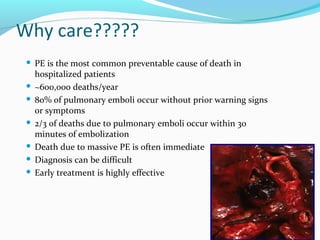
Why care?????
 PE is the most common preventable cause of death in
hospitalized patients
 ~600,000 deaths/year
 80% of pulmonary emboli occur without prior warning signs
or symptoms
 2/3 of deaths due to pulmonary emboli occur within 30
minutes of embolization
 Death due to massive PE is often immediate
 Diagnosis can be difficult
 Early treatment is highly effective
7
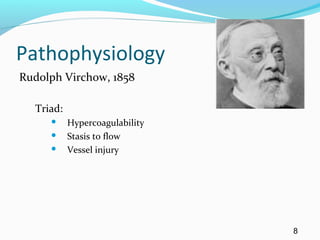
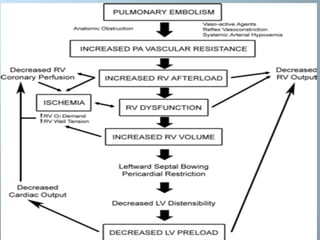
Pathophysiology
Rudolph Virchow, 1858
Triad:
 Hypercoagulability
 Stasis to flow
 Vessel injury
8
9
10
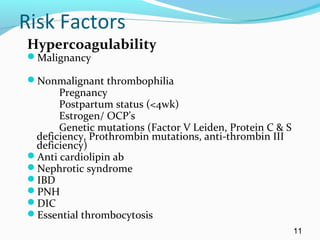
Risk Factors
Hypercoagulability
Malignancy
Nonmalignant thrombophilia
Pregnancy
Postpartum status (<4wk)
Estrogen/ OCP’s
Genetic mutations (Factor V Leiden, Protein C & S
deficiency, Prothrombin mutations, anti-thrombin III
deficiency)
Anti cardiolipin ab
Nephrotic syndrome
IBD
PNH
DIC
Essential thrombocytosis
11
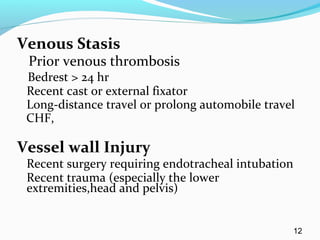
Venous Stasis
Prior venous thrombosis
Bedrest > 24 hr
Recent cast or external fixator
Long-distance travel or prolong automobile travel
CHF,
Vessel wall Injury
Recent surgery requiring endotracheal intubation
Recent trauma (especially the lower
extremities,head and pelvis)
12
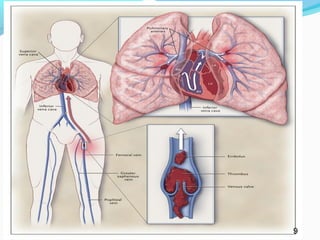
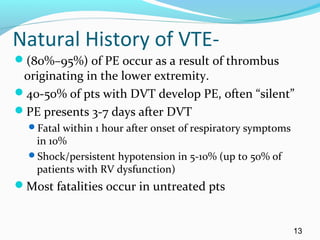
Natural History of VTE-
(80%–95%) of PE occur as a result of thrombus
originating in the lower extremity.
40-50% of pts with DVT develop PE, often “silent”
PE presents 3-7 days after DVT
Fatal within 1 hour after onset of respiratory symptoms
in 10%
Shock/persistent hypotension in 5-10% (up to 50% of
patients with RV dysfunction)
Most fatalities occur in untreated pts
13
Clinical Presentation
 The Classic Triad: (Hemoptysis, Dyspnea, Pleuritic
Pain)
 Not very common!
 Occurs in less than 20% of patients with documented PE
 Syncope=rare presentation, but indicates severely
reduced hemodynamic reserve
 In pts with pre-existing CHF or COPD, worsening
dyspnea may indicate PE
14
 Three Clinical Presentations
 Pulmonary Infarction -have pleuritic chest pain

 Submassive Embolism
 Massive Embolism -a clot which obstructs two lobar
arteries, so-called “Saddle Embolus”. Acute cor
pulmonale
15
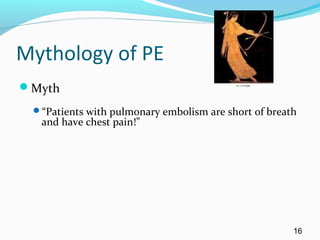
Mythology of PE
Myth
“Patients with pulmonary embolism are short of breath
and have chest pain!”
16
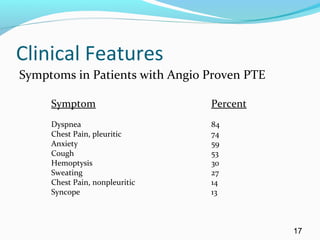
Clinical Features
Symptoms in Patients with Angio Proven PTE
Symptom Percent
Dyspnea 84
Chest Pain, pleuritic 74
Anxiety 59
Cough 53
Hemoptysis 30
Sweating 27
Chest Pain, nonpleuritic 14
Syncope 13
17
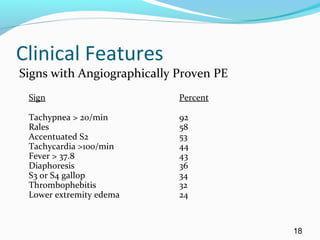
Clinical Features
Signs with Angiographically Proven PE
Sign Percent
Tachypnea > 20/min 92
Rales 58
Accentuated S2 53
Tachycardia >100/min 44
Fever > 37.8 43
Diaphoresis 36
S3 or S4 gallop 34
Thrombophebitis 32
Lower extremity edema 24
18
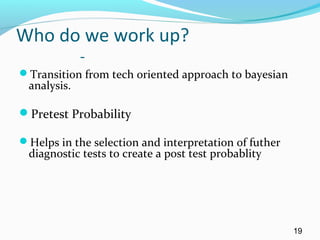
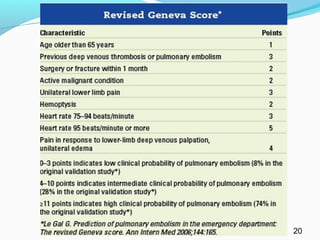
Who do we work up?
-
Transition from tech oriented approach to bayesian
analysis.
Pretest Probability
Helps in the selection and interpretation of futher
diagnostic tests to create a post test probablity
19
20
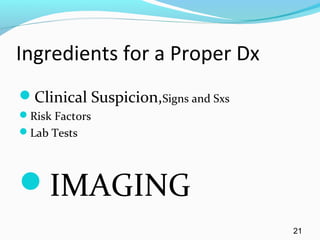
Ingredients for a Proper Dx
Clinical Suspicion,Signs and Sxs
Risk Factors
Lab Tests
IMAGING
21
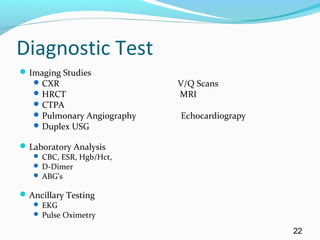
Diagnostic Test
Imaging Studies
CXR V/Q Scans
HRCT MRI
CTPA
Pulmonary Angiography Echocardiograpy
Duplex USG
Laboratory Analysis
 CBC, ESR, Hgb/Hct,
 D-Dimer
 ABG’s
Ancillary Testing
 EKG
 Pulse Oximetry
22
Diagnostic Testing
- CXR’s
Chest X-Ray Myth:
“You have to do a chest x-ray so you can find
Hampton’s hump or a Westermark sign.”
Reality:
Most chest x-rays in patients with PE are
nonspecific and insensitive
23
Diagnostic Testing
- CXR’s
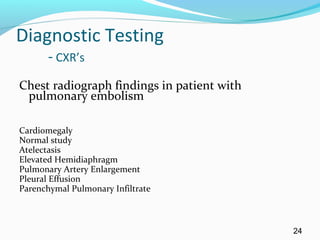
Chest radiograph findings in patient with
pulmonary embolism
Cardiomegaly
Normal study
Atelectasis
Elevated Hemidiaphragm
Pulmonary Artery Enlargement
Pleural Effusion
Parenchymal Pulmonary Infiltrate
24
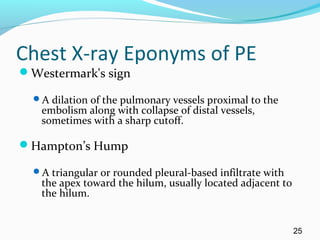
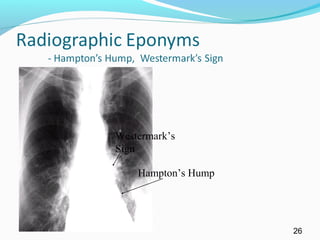
Chest X-ray Eponyms of PE
Westermark's sign
A dilation of the pulmonary vessels proximal to the
embolism along with collapse of distal vessels,
sometimes with a sharp cutoff.
Hampton’s Hump
A triangular or rounded pleural-based infiltrate with
the apex toward the hilum, usually located adjacent to
the hilum.
25
26
Westermark’s
Sign
Hampton’s Hump
Diagnostic Testing
– EKG’s
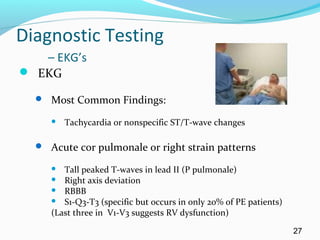
 EKG
 Most Common Findings:
 Tachycardia or nonspecific ST/T-wave changes
 Acute cor pulmonale or right strain patterns
 Tall peaked T-waves in lead II (P pulmonale)
 Right axis deviation
 RBBB
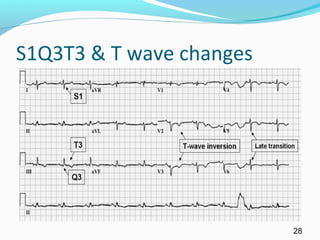
 S1-Q3-T3 (specific but occurs in only 20% of PE patients)
(Last three in V1-V3 suggests RV dysfunction)
27
S1Q3T3 & T wave changes
28
Duplex USG
Main criteria used is non compressibility of a venous
segment.
29
Diagnostic Testing
- Pulse Oximetry
The Pulse Oximetry Myth:
“ You must do a pulse oximetry reading, since patients
with pulmonary embolism are hypoxemic!”
Reality:
Most patients with a PE have a normal pulse oximetry,
and most patients with an abnormal pulse oximetry will
not have a PE.
30
Diagnostic Testing
- ABG’s
The ABG/ A-a Gradient myth:
“You must do an arterial blood gas and calculate the alveolar-
arterial gradient. Normal A-a gradient virtually rules out PE”.
Reality:
The A-a gradient is a better measure of gas exchange than the pO2,
but it is nonspecific and insensitive in ruling out PE.
31
Diagnostic Testing
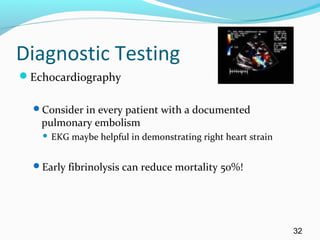
Echocardiography
Consider in every patient with a documented
pulmonary embolism
 EKG maybe helpful in demonstrating right heart strain
Early fibrinolysis can reduce mortality 50%!
32
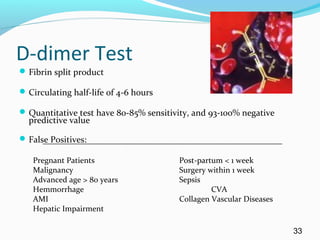
D-dimer Test
Fibrin split product
Circulating half-life of 4-6 hours
Quantitative test have 80-85% sensitivity, and 93-100% negative
predictive value
False Positives:
Pregnant Patients Post-partum < 1 week
Malignancy Surgery within 1 week
Advanced age > 80 years Sepsis
Hemmorrhage CVA
AMI Collagen Vascular Diseases
Hepatic Impairment
33
Diagnostic Testing
D-dimer
Qualitative
 Bed side RBC agglutination test
 “SimpliRED D-dimer”
Quantitative
 Enzyme linked immunosorbent asssay “Dimertest”
 Positive assay is > 500ng/ml
 VIDAS D-dimer, 2nd
generation ELISA test
34
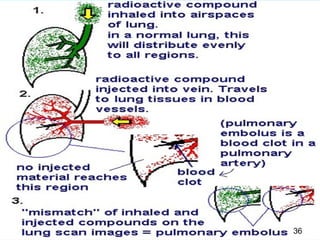
Ventilation/Perfusion Scan
- “V/Q Scan”
A common modality to image the lung and its use
still stems from the PIOPED study.
Relatively noninvasive and sadly most often
nondiagnostic
In many centers remains the initial test of choice
Preferred test in pregnant patients, renal
dysfunction
 50 mrem vs 800mrem (with spiral CT)
35
36
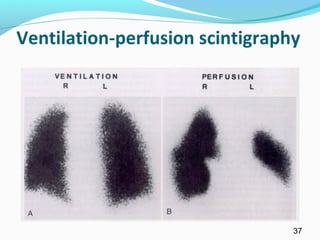
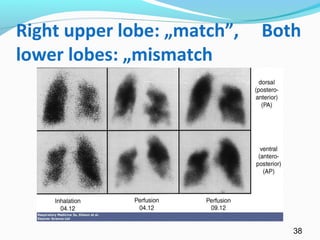
Ventilation-perfusion scintigraphy
37
Right upper lobe: „match”, Both
lower lobes: „mismatch
38
 Interpretation
 Normal
 Low probability/”nondiagnostic” (most common)
 High Probability
 Simplified approached to the interpretation of results:
High probability  Treat for PE
Normal Scan  If low pre-test, your done
Everything else  Purse another study (CT, Angio)
39
Spiral (Helical) Chest CT
Advantages
Noninvasive and Rapid
Alternative Diagnosis
Disadvantages
 Risk to patients with borderline renal function
Hard to detect subsegmental pulmonary emboli
40
At the present time, CT can be considered
confirmatory in excluding embolism in patients with a
low or intermediate likelihood of disease and
confirming embolism in patients with intermediate or
high probability of disease. When discordance
exists between the clinical assessment and CT findings,
additional studies should be considered.
41
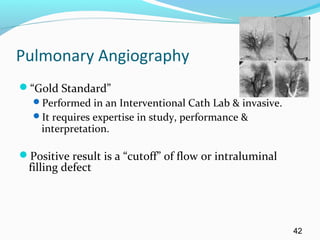
Pulmonary Angiography
“Gold Standard”
Performed in an Interventional Cath Lab & invasive.
It requires expertise in study, performance &
interpretation.
Positive result is a “cutoff” of flow or intraluminal
filling defect
42
CT-PA
First line investigation at present.
Widespread use has resulted in the over diagnosis of
PE, i.e clinically insignificant disease
43
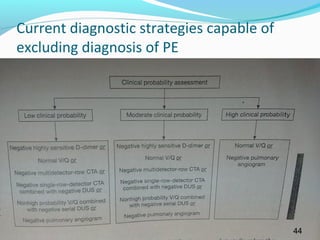
Current diagnostic strategies capable of
excluding diagnosis of PE
44
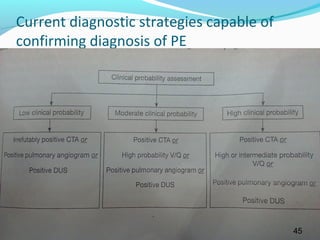
Current diagnostic strategies capable of
confirming diagnosis of PE
45
Treatment:
Goals:
 Prevent death from a current embolic event
 Reduce the likelihood of recurrent embolic
events
 Minimize the long-term morbidity of the
event
46
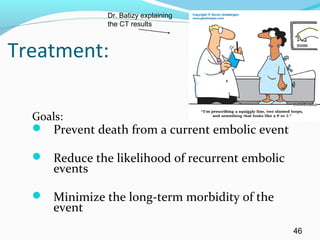
Dr. Batizy explaining
the CT results
When a diagnosis of venous thromboembolism is
suspected, empiric treatment should be considered
until the diagnosis is either objectively excluded or
confirmed.
47
Treatment
Anticoagulants
Heparin
 Provides immediate thrombin inhibition, which prevents
thrombus extension & embolic recurrence
 Does not dissolve existing clot
 Will not work in patients with antithrombin III def.
 In this case use hirudins
 Few absolute contraindications
48
Treatment
Anticoagulants
Heparin
 Available as Unfractionated or LMW Heparin
 FDA approved dosing:
 Unfractionated: 80 units/kg bolus, 18 units/kg/hr
 LMWH: 1 mg/kg every 12hr or 1.5mg/kg per Day
 LMWH (Lovenox) prefered in pregnant patients
49
Fixed dose of s/c UFH without aPTT monitoring, as
an initial dose of 333 U/kg f/b 250 U/kg every 12
hours, has been demonstrated to be as safe and
effective as LMWH in patients presenting with DVT
and PE.
LMWH v/s UFH
 Enoxaparin, Tinzaparin , Nadroparin , Dalteparin
50
FONDAPARINUX
Selectively binds factor Xa and inhibits thrombin
generation.
T1/2 17 hrs- renal excr.
Approved for prophylaxis before major sx and for t/t
of DVT & PE in conjuction with warfarin.
Rivaroxaban is oral factor Xa inhibitor
51
Direct thrombin inhibitors
Lepirudin, Argatroban- synth polysacchrides.
T1/2 40-60 mins, i/v infusion, monitering with aPTT.
Approved for t/t of VTE due to heparin IT.
52
Thrombolysis therapy
 Indications:
 Documented PE with:
 Persistent hypotension
 Syncope with persistent hemodynamic compromise
 Significant hypoxemia
 +/- patient with acute right heart strain
 FDA Approved –Alteplase, STK, Urokinase,
 regimen is 100mg as a continuous IV infusion.
 PEITHO( PE Thrombolysis trial) – for saftey & efficacy of
Tenectiplase
53
Treatment
Embolectomy
Prefibrinolytic therapy this was only therapy for
massive PE
Carries a 40% operative mortality
Last resort for pts with persistant hypotension,shock
who failed thrmbolysis or C/I.
54
Interventional thrombus
fragmentation
Wide variety of devices that use pressured saline and
rotating impellers to break central thrombus.
55
Long term managment
Recurrence common
Anticoagulants
Warfarin (Coumadin)
 Vit k antagonist
 Requires 3-5 days to acieve full therapeutic effecacy
 Important a patient is anticoagulated with heparin before initiating
warfarin therapy
 Target INR is 2.0 – 3.0
56
Side effects-
bleeding
teratogenic
cholesterol microembolism
Dose – 5mg or 10 mg at the start with adjustment acc
to INR
57
Novel agents for long term m/m
1. Dabigatran-oral direct thrombin inhibitor
2.Apixaban
3. Aspirin – reduces major vascular events
58
VENA CAVA INTERRUPTION
AND VENA CAVA FILTER
 IVC filter placement is to prevent PE in patients who
have a contraindication to anticoagulation
59
CTEPH
 Residual thromboembolic burden is sufficiently
extensive to cause CTEPH
 0.5% to 3.8% in initial episode of PE to 13.4%
following recurrent episodes of VTE
 Pulmonary thromboendarterectomy, which involves
the dissection of endothelialized thrombi under
cardiopulmonary bypass and deep hypothermia.
60
PROPHYLAXIS
UFH
LMWH (enoxaparin, dalteparin)
Factor Xa inhibitors (fondaparinux, rivaroxaban)
Warfarin
When administered correctly in appropriate patients,
its safe and effective with an absolute reduction in the
incidence of VTE in the range of 40% to 60%.
 Major bleeding complications occur in less than 1%
of patients
61
Conclusion
Summary Points
 Pulmonary Emboli remain a potentially deadly and common event which may
present in various ways
 Don't’ be fooled if your patient lacks the “classic” signs and symptoms!
 Consider PE in any patient with an unexplainable cause of dyspnea, pleuritic
chest pain, or findings of tachycardia, tachpnea, or hypoxemia
 2nd
Generation Qualitative D-Dimers have NPV of 93-99%
 Heparin remains the mainstay of therapy with the initiation of Warfarin to
follow
 Simplified Algorithm: ( Pretest probability, D-Dimer, +/- CT angio)
62
Thank you
63

Pulmonaryembolism ....tanmay new

  • 1.
    Dr. TANMAY JAIN Resident, Chest Medicine GMC, NAGPUR 1
  • 2.
    Goals Understand the historicalcontext of pulmonary emboli Comprehend the pathophysiology and know some common risk factors Be aware of the clinical features of PE and have a basic understanding of various diagnostic test Gain a therapeutic approach to the treatment of PE and discuss a simplified method in the work-up of PE Attempt to dispel a few “myths”about pulmonary emboli 2
  • 3.
    Perspective A Common disorderand potentially lethal 630,000 cases occurring annually with 2,00000 related deaths Highest incidence in hospitalized patients Autopsy reports suggest it is commonly “missed” diagnosed 3
  • 4.
    Perspective  Presentation isoften “atypical”  Signs and symptoms are frequently vague and nonspecific and rarely “classic”  Untreated mortality rate of 20% - 30%, plummets to 5% with timely intervention 4
  • 5.
  • 6.
    Historical Context PIOPED (ProspectiveInvestigation of Pulmonary Embolism Diagnosis) 1990 Published their data on the sensitivities and specificities of V/Q scans for PE. 6
  • 7.
    Why care?????  PEis the most common preventable cause of death in hospitalized patients  ~600,000 deaths/year  80% of pulmonary emboli occur without prior warning signs or symptoms  2/3 of deaths due to pulmonary emboli occur within 30 minutes of embolization  Death due to massive PE is often immediate  Diagnosis can be difficult  Early treatment is highly effective 7
  • 8.
    Pathophysiology Rudolph Virchow, 1858 Triad: Hypercoagulability  Stasis to flow  Vessel injury 8
  • 9.
  • 10.
  • 11.
    Risk Factors Hypercoagulability Malignancy Nonmalignant thrombophilia Pregnancy Postpartumstatus (<4wk) Estrogen/ OCP’s Genetic mutations (Factor V Leiden, Protein C & S deficiency, Prothrombin mutations, anti-thrombin III deficiency) Anti cardiolipin ab Nephrotic syndrome IBD PNH DIC Essential thrombocytosis 11
  • 12.
    Venous Stasis Prior venousthrombosis Bedrest > 24 hr Recent cast or external fixator Long-distance travel or prolong automobile travel CHF, Vessel wall Injury Recent surgery requiring endotracheal intubation Recent trauma (especially the lower extremities,head and pelvis) 12
  • 13.
    Natural History ofVTE- (80%–95%) of PE occur as a result of thrombus originating in the lower extremity. 40-50% of pts with DVT develop PE, often “silent” PE presents 3-7 days after DVT Fatal within 1 hour after onset of respiratory symptoms in 10% Shock/persistent hypotension in 5-10% (up to 50% of patients with RV dysfunction) Most fatalities occur in untreated pts 13
  • 14.
    Clinical Presentation  TheClassic Triad: (Hemoptysis, Dyspnea, Pleuritic Pain)  Not very common!  Occurs in less than 20% of patients with documented PE  Syncope=rare presentation, but indicates severely reduced hemodynamic reserve  In pts with pre-existing CHF or COPD, worsening dyspnea may indicate PE 14
  • 15.
     Three ClinicalPresentations  Pulmonary Infarction -have pleuritic chest pain   Submassive Embolism  Massive Embolism -a clot which obstructs two lobar arteries, so-called “Saddle Embolus”. Acute cor pulmonale 15
  • 16.
    Mythology of PE Myth “Patientswith pulmonary embolism are short of breath and have chest pain!” 16
  • 17.
    Clinical Features Symptoms inPatients with Angio Proven PTE Symptom Percent Dyspnea 84 Chest Pain, pleuritic 74 Anxiety 59 Cough 53 Hemoptysis 30 Sweating 27 Chest Pain, nonpleuritic 14 Syncope 13 17
  • 18.
    Clinical Features Signs withAngiographically Proven PE Sign Percent Tachypnea > 20/min 92 Rales 58 Accentuated S2 53 Tachycardia >100/min 44 Fever > 37.8 43 Diaphoresis 36 S3 or S4 gallop 34 Thrombophebitis 32 Lower extremity edema 24 18
  • 19.
    Who do wework up? - Transition from tech oriented approach to bayesian analysis. Pretest Probability Helps in the selection and interpretation of futher diagnostic tests to create a post test probablity 19
  • 20.
  • 21.
    Ingredients for aProper Dx Clinical Suspicion,Signs and Sxs Risk Factors Lab Tests IMAGING 21
  • 22.
    Diagnostic Test Imaging Studies CXRV/Q Scans HRCT MRI CTPA Pulmonary Angiography Echocardiograpy Duplex USG Laboratory Analysis  CBC, ESR, Hgb/Hct,  D-Dimer  ABG’s Ancillary Testing  EKG  Pulse Oximetry 22
  • 23.
    Diagnostic Testing - CXR’s ChestX-Ray Myth: “You have to do a chest x-ray so you can find Hampton’s hump or a Westermark sign.” Reality: Most chest x-rays in patients with PE are nonspecific and insensitive 23
  • 24.
    Diagnostic Testing - CXR’s Chestradiograph findings in patient with pulmonary embolism Cardiomegaly Normal study Atelectasis Elevated Hemidiaphragm Pulmonary Artery Enlargement Pleural Effusion Parenchymal Pulmonary Infiltrate 24
  • 25.
    Chest X-ray Eponymsof PE Westermark's sign A dilation of the pulmonary vessels proximal to the embolism along with collapse of distal vessels, sometimes with a sharp cutoff. Hampton’s Hump A triangular or rounded pleural-based infiltrate with the apex toward the hilum, usually located adjacent to the hilum. 25
  • 26.
  • 27.
    Diagnostic Testing – EKG’s EKG  Most Common Findings:  Tachycardia or nonspecific ST/T-wave changes  Acute cor pulmonale or right strain patterns  Tall peaked T-waves in lead II (P pulmonale)  Right axis deviation  RBBB  S1-Q3-T3 (specific but occurs in only 20% of PE patients) (Last three in V1-V3 suggests RV dysfunction) 27
  • 28.
    S1Q3T3 & Twave changes 28
  • 29.
    Duplex USG Main criteriaused is non compressibility of a venous segment. 29
  • 30.
    Diagnostic Testing - PulseOximetry The Pulse Oximetry Myth: “ You must do a pulse oximetry reading, since patients with pulmonary embolism are hypoxemic!” Reality: Most patients with a PE have a normal pulse oximetry, and most patients with an abnormal pulse oximetry will not have a PE. 30
  • 31.
    Diagnostic Testing - ABG’s TheABG/ A-a Gradient myth: “You must do an arterial blood gas and calculate the alveolar- arterial gradient. Normal A-a gradient virtually rules out PE”. Reality: The A-a gradient is a better measure of gas exchange than the pO2, but it is nonspecific and insensitive in ruling out PE. 31
  • 32.
    Diagnostic Testing Echocardiography Consider inevery patient with a documented pulmonary embolism  EKG maybe helpful in demonstrating right heart strain Early fibrinolysis can reduce mortality 50%! 32
  • 33.
    D-dimer Test Fibrin splitproduct Circulating half-life of 4-6 hours Quantitative test have 80-85% sensitivity, and 93-100% negative predictive value False Positives: Pregnant Patients Post-partum < 1 week Malignancy Surgery within 1 week Advanced age > 80 years Sepsis Hemmorrhage CVA AMI Collagen Vascular Diseases Hepatic Impairment 33
  • 34.
    Diagnostic Testing D-dimer Qualitative  Bedside RBC agglutination test  “SimpliRED D-dimer” Quantitative  Enzyme linked immunosorbent asssay “Dimertest”  Positive assay is > 500ng/ml  VIDAS D-dimer, 2nd generation ELISA test 34
  • 35.
    Ventilation/Perfusion Scan - “V/QScan” A common modality to image the lung and its use still stems from the PIOPED study. Relatively noninvasive and sadly most often nondiagnostic In many centers remains the initial test of choice Preferred test in pregnant patients, renal dysfunction  50 mrem vs 800mrem (with spiral CT) 35
  • 36.
  • 37.
  • 38.
    Right upper lobe:„match”, Both lower lobes: „mismatch 38
  • 39.
     Interpretation  Normal Low probability/”nondiagnostic” (most common)  High Probability  Simplified approached to the interpretation of results: High probability  Treat for PE Normal Scan  If low pre-test, your done Everything else  Purse another study (CT, Angio) 39
  • 40.
    Spiral (Helical) ChestCT Advantages Noninvasive and Rapid Alternative Diagnosis Disadvantages  Risk to patients with borderline renal function Hard to detect subsegmental pulmonary emboli 40
  • 41.
    At the presenttime, CT can be considered confirmatory in excluding embolism in patients with a low or intermediate likelihood of disease and confirming embolism in patients with intermediate or high probability of disease. When discordance exists between the clinical assessment and CT findings, additional studies should be considered. 41
  • 42.
    Pulmonary Angiography “Gold Standard” Performedin an Interventional Cath Lab & invasive. It requires expertise in study, performance & interpretation. Positive result is a “cutoff” of flow or intraluminal filling defect 42
  • 43.
    CT-PA First line investigationat present. Widespread use has resulted in the over diagnosis of PE, i.e clinically insignificant disease 43
  • 44.
    Current diagnostic strategiescapable of excluding diagnosis of PE 44
  • 45.
    Current diagnostic strategiescapable of confirming diagnosis of PE 45
  • 46.
    Treatment: Goals:  Prevent deathfrom a current embolic event  Reduce the likelihood of recurrent embolic events  Minimize the long-term morbidity of the event 46 Dr. Batizy explaining the CT results
  • 47.
    When a diagnosisof venous thromboembolism is suspected, empiric treatment should be considered until the diagnosis is either objectively excluded or confirmed. 47
  • 48.
    Treatment Anticoagulants Heparin  Provides immediatethrombin inhibition, which prevents thrombus extension & embolic recurrence  Does not dissolve existing clot  Will not work in patients with antithrombin III def.  In this case use hirudins  Few absolute contraindications 48
  • 49.
    Treatment Anticoagulants Heparin  Available asUnfractionated or LMW Heparin  FDA approved dosing:  Unfractionated: 80 units/kg bolus, 18 units/kg/hr  LMWH: 1 mg/kg every 12hr or 1.5mg/kg per Day  LMWH (Lovenox) prefered in pregnant patients 49
  • 50.
    Fixed dose ofs/c UFH without aPTT monitoring, as an initial dose of 333 U/kg f/b 250 U/kg every 12 hours, has been demonstrated to be as safe and effective as LMWH in patients presenting with DVT and PE. LMWH v/s UFH  Enoxaparin, Tinzaparin , Nadroparin , Dalteparin 50
  • 51.
    FONDAPARINUX Selectively binds factorXa and inhibits thrombin generation. T1/2 17 hrs- renal excr. Approved for prophylaxis before major sx and for t/t of DVT & PE in conjuction with warfarin. Rivaroxaban is oral factor Xa inhibitor 51
  • 52.
    Direct thrombin inhibitors Lepirudin,Argatroban- synth polysacchrides. T1/2 40-60 mins, i/v infusion, monitering with aPTT. Approved for t/t of VTE due to heparin IT. 52
  • 53.
    Thrombolysis therapy  Indications: Documented PE with:  Persistent hypotension  Syncope with persistent hemodynamic compromise  Significant hypoxemia  +/- patient with acute right heart strain  FDA Approved –Alteplase, STK, Urokinase,  regimen is 100mg as a continuous IV infusion.  PEITHO( PE Thrombolysis trial) – for saftey & efficacy of Tenectiplase 53
  • 54.
    Treatment Embolectomy Prefibrinolytic therapy thiswas only therapy for massive PE Carries a 40% operative mortality Last resort for pts with persistant hypotension,shock who failed thrmbolysis or C/I. 54
  • 55.
    Interventional thrombus fragmentation Wide varietyof devices that use pressured saline and rotating impellers to break central thrombus. 55
  • 56.
    Long term managment Recurrencecommon Anticoagulants Warfarin (Coumadin)  Vit k antagonist  Requires 3-5 days to acieve full therapeutic effecacy  Important a patient is anticoagulated with heparin before initiating warfarin therapy  Target INR is 2.0 – 3.0 56
  • 57.
    Side effects- bleeding teratogenic cholesterol microembolism Dose– 5mg or 10 mg at the start with adjustment acc to INR 57
  • 58.
    Novel agents forlong term m/m 1. Dabigatran-oral direct thrombin inhibitor 2.Apixaban 3. Aspirin – reduces major vascular events 58
  • 59.
    VENA CAVA INTERRUPTION ANDVENA CAVA FILTER  IVC filter placement is to prevent PE in patients who have a contraindication to anticoagulation 59
  • 60.
    CTEPH  Residual thromboembolicburden is sufficiently extensive to cause CTEPH  0.5% to 3.8% in initial episode of PE to 13.4% following recurrent episodes of VTE  Pulmonary thromboendarterectomy, which involves the dissection of endothelialized thrombi under cardiopulmonary bypass and deep hypothermia. 60
  • 61.
    PROPHYLAXIS UFH LMWH (enoxaparin, dalteparin) FactorXa inhibitors (fondaparinux, rivaroxaban) Warfarin When administered correctly in appropriate patients, its safe and effective with an absolute reduction in the incidence of VTE in the range of 40% to 60%.  Major bleeding complications occur in less than 1% of patients 61
  • 62.
    Conclusion Summary Points  PulmonaryEmboli remain a potentially deadly and common event which may present in various ways  Don't’ be fooled if your patient lacks the “classic” signs and symptoms!  Consider PE in any patient with an unexplainable cause of dyspnea, pleuritic chest pain, or findings of tachycardia, tachpnea, or hypoxemia  2nd Generation Qualitative D-Dimers have NPV of 93-99%  Heparin remains the mainstay of therapy with the initiation of Warfarin to follow  Simplified Algorithm: ( Pretest probability, D-Dimer, +/- CT angio) 62
  • 63.

Editor's Notes

  • #5 PE It has a wide spectrum of patient presentation, which leads us to do suboptimal testing. This can stand in the way of a timely diagnosis It’s important, because prompt diagnosis and treatment can dramatically reduce the mortality rate and morbidity of this disease. Unfortunately, the diagnosis is missed far more than it is made. I want to offer you a historical perspective of the disorder
  • #12 Cancers of primarily adenocarcinoma and CNS tumors most often cause thrombosis. Pregnancy is the most common cause of venous thromboembolism in women younger than 40 years old, and if untreated may account for 20% to 50% of all pregnancy-related deaths
  • #15 All the above symptoms are a manifestation of cardiopulmonary stress caused by the cloth in the lung
  • #17 While it’s true the most common symptom is shortness of breath, even patients with circulatory collapse may have no dyspnea, tachypnea, or pleuritic pain! As a simple rule, if you have a patient in your department and you don’t have a good reason to explain there dyspnea, it’s a good idea to consider PE!
  • #25 Cardiomegaly was the most frequent finding in those with PE of In-patients Out-patients, it seemed to be atelectasis in the above study.
  • #27 Here we see the dilated vessels and oligemia of westermark’s sign And below Hampton’s Hump
  • #35 Two types, Qualitative RBC agglutination assay, low sensitivity and specificity and not good enough to comfortably rule out PE. Quantitative, which measure the accurately the amount using a spectrophotometer.
  • #47 Management of acute PE consists of a systematic approach that involves early intervention, patient risk stratification, selection of therapy, and determination of treatment duration
  • #49 Heparin is the most frequently used drug in the treatment of PE. Because heparin works by activating antithrombin III, this genetic mutation makes heparin ineffective.
  • #54 For critically ill patients, a very rapid infusion of 100mg over 10 minutes is preferred. Alternative is Retavase, you can give it as two IV doses of 10 units, each over two minutes.
  • #55 This is a procedure where a suction tip catheter is placed in contact with the thrombus under fluoroscopy and sucked out while catheter is withdrawn
  • #58 To minimize potential subtherapeutic anticoagulation, it is generally recommended that patients should receive at least 5 days of combined heparin and warfarin therapy, including at least 2 days in which the INR is in a therapeutic range before stopping heparin.