Kav Senasinghe October 2016
Pulmonary
Embolism Management Options
Why follow the guidelines?
• Yield of CT Pulmonary Angiography in the Emergency Department When Providers
Override Evidence-based Clinical Decision Support.
• Compared CTPA yield for PE in clinicians who overrode CDS (Clinical Decision Support)
vs. those adherent to CDS
• Wells Score </= 4 and normal D-dimer or no D-dimer (override group) vs Adherent group
• 2993 CTPAs in 2655 patients.
• 563 had Wells </= 4 and did not undergo D-Dimer testing
• 26 had Wells </= 4 and a normal D-Dimer
• i.e. most overrides due to lack of D-Dimer testing
• Positive for PE 4.2% in override group vs. 11.2%
• After adjustment, the odds of an acute PE finding were 51.3% lower in the override group
Definitions
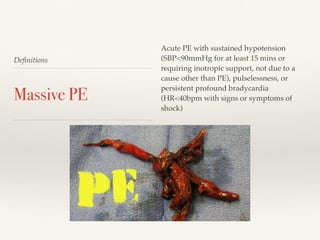
Massive PE
Acute PE with sustained hypotension
(SBP<90mmHg for at least 15 mins or
requiring inotropic support, not due to a
cause other than PE), pulselessness, or
persistent profound bradycardia
(HR<40bpm with signs or symptoms of
shock)
Definitions
Submassive PE
Acute PE without systemic hypotension
(SBP >90mmHg) but with either RV
dysfunction or myocardial necrosis
RV Dysfunction:
• RV dysfunction or dilatation on echo
• RV dilatation on CT
• elevated BNP
• ECG changes
Myocardial Necrosis:
• elevated Troponin T
• elevated Troponin I
PE Relevance
• It is estimated that there are approximately 17 000 new cases of
venous thromboembolism (VTE) in Australia per year.
Pulmonary embolism (PE) accounts for about 40% of these
events
• 151,923 North-East Metropolitan Perth residents from
01/10/2003 - 31/10/2004
• 87 DVT, 53 PE
• 0.31 per 1000 residents per year
• WHO age-adjusted incidence of 0.21 per 1000
PE relevance
• ~20% of all PE are submassive PE
(numbers vary as we get better at
detecting PE)
• a meta-analysis by Cho et al, 2014
found increased short-term mortality
for haemodynamically stable patients
with RV dysfunction (OR 2.29; 13.7%
vs 6.5% without RV dysfunction)
• there may be selection bias, as those
patients that get an echo are more
likely to be sick
• Leads to long term morbidity -
pulmonary hypertension and reduced
functional outcome
Treatments
• Anticoagulation
• NOACs
• Warfarin
• Heparin/LMWH
• Thrombolysis
• Intra-arterial Thrombolysis
• Interventional Clot Disruption
• Surgical Embolectomy
• ECMO?
Anticoagulation
• Parenteral anticoagulants (Heparin/LMWH) overlapping the start of Warfarin Therapy
• RivaroXaban (Factor Xa inhibitor)
• PBS: Initial and continuing treatment of confirmed, acute symptomatic pulmonary embolism
• Rivaroxaban is no worse than enoxaparin plus warfarin for preventing VTE recurrence in initial treatment of
acute DVT or PE
• Contraindicated in severe renal impairment
• Currently no antidote
• Associated with more GI bleeding compared to Warfarin - 3.61/100 patient years vs 2.60, but no significant
difference in Severe or Fatal GI bleeding (ROCKET AF Trial)
• ApiXaban
• Also on the PBS for PE
• Similar in efficacy to Rivaroxaban
• Appears to be associated with a lower bleeding risk - indirect comparisons. More studies required
• DabigaTran - not on PBS for treatment of acute PE. Does have antidote.
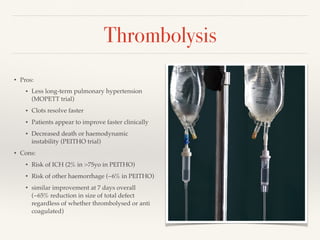
Thrombolysis
• Pros:
• Less long-term pulmonary hypertension
(MOPETT trial)
• Clots resolve faster
• Patients appear to improve faster clinically
• Decreased death or haemodynamic
instability (PEITHO trial)
• Cons:
• Risk of ICH (2% in >75yo in PEITHO)
• Risk of other haemorrhage (~6% in PEITHO)
• similar improvement at 7 days overall
(~65% reduction in size of total defect
regardless of whether thrombolysed or anti
coagulated)
PEITHO Trial (Pulmonary EmbolIsm THrOmbolysis)
• Tenecteplase vs. Placebo for intermediate risk PE
• 1005 patients
• Death or haemodynamic compromise in 2.6% vs 5.6% in
placebo
• Major extra cranial bleeding in 6.3% vs 1.2 % in placebo
• <75yo 4.1% vs 1.5% - not significant
• >75yo 11.1% vs 0.6%
• Intracranial Bleeding in 2% vs 0.2% in placebo
MOPETT Trial (Moderate Pulmonary Embolism treated with
Thrombolysis)
• “In patients with submassive PE does low-dose tPA reduce the incidence of
pulmonary hypertension recurrent PE when compared to anticoagulation
alone?”
• 121 patients. single center. unblinded.
• low-dose tPA vs control
• All patients received anticoagulation with LMWH or UFH and warfarin
• Thrombolysis associated with reduction in Pulm. HTN 16% vs 57% in
control - mean follow-up 2.3 years
• No significant difference in rates of recurrent PE
• tPA did not confer a survival benefit
Thrombolysis: how to give it
• Tenecteplase - weight-based calculation
• Alteplase
• >65kg given 100mg total
• 10mg bolus, 90mg over next 2 hours
• <65kg adjust total dose not to exceed 1.5mg/kg
• Start heparin infusion
• LMWH efficacy is unknown
Thrombolysis: Contraindications
• Absolute contraindications include
• any prior intracranial haemorrhage
• known structural intracranial cerebrovascular disease (eg, arteriovenous malformation)
• known malignant intracranial neoplasm
• ischaemic stroke within 3 months
• suspected aortic dissection
• active bleeding or bleeding diathesis
• recent surgery encroaching on the spinal canal or brain, and
• recent significant closed-head or facial trauma with radiographic evidence of bony fracture or brain injury
• Relative contraindications include
• age >75 years
• current use of anticoagulation
• pregnancy
• non-compressible vascular punctures
• traumatic or prolonged cardiopulmonary resuscitation (>10 minutes)
• recent internal bleeding (within 2 to 4 weeks)
• history of chronic, severe, and poorly controlled hypertension
• severe uncontrolled hypertension on presentation (systolic blood pressure >180 mm Hg or diastolic blood pressure >110 mm Hg)
• dementia
• remote (>3 months) ischaemic stroke; and
• major surgery within 3 weeks
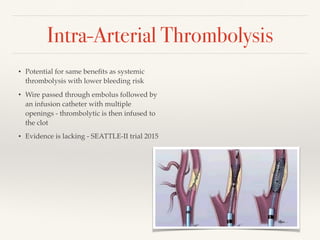
Intra-Arterial Thrombolysis
• Potential for same benefits as systemic
thrombolysis with lower bleeding risk
• Wire passed through embolus followed by
an infusion catheter with multiple
openings - thrombolytic is then infused to
the clot
• Evidence is lacking - SEATTLE-II trial 2015
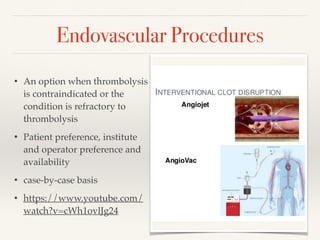
Endovascular Procedures
• An option when thrombolysis
is contraindicated or the
condition is refractory to
thrombolysis
• Patient preference, institute
and operator preference and
availability
• case-by-case basis
• https://www.youtube.com/
watch?v=cWh1ovlJg24
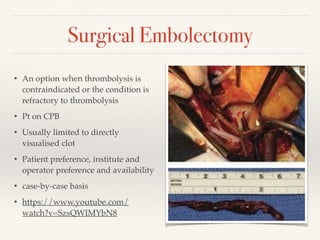
Surgical Embolectomy
• An option when thrombolysis is
contraindicated or the condition is
refractory to thrombolysis
• Pt on CPB
• Usually limited to directly
visualised clot
• Patient preference, institute and
operator preference and availability
• case-by-case basis
• https://www.youtube.com/
watch?v=SzsQWIMYbN8
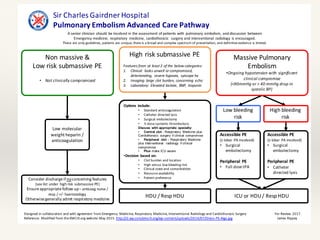
Sir	Charles	Gairdner	Hospital	
Pulmonary	Embolism	Advanced	Care	Pathway
Non	massive	&	
Low	risk	submassive PE
• Not	clinically	compromised
A	senior	clinician	 should	 be	involved	in	the	assessment	of	patients	with	 pulmonary	embolism,	 and	discussion	 between	
Emergency	medicine,	 respiratory	 medicine,	 cardiothoracic	 surgery	and	interventional	 radiology	is	encouraged.
These	are	only	guidelines,	patients	are	unique,	there	is	a	broad	and	complex	spectrum	of	presentation,	and	definitive	evidence	is	limited.	
High	bleeding	
risk
Low	bleeding	
risk
Accessible	PE							
(≥	lobar	 PA	involved)
• Surgical	
embolectomy
Peripheral	PE
• Full	dose	tPA
Options	 include:
• Standard	anticoagulation
• Catheter	directed	lysis	
• Surgical	embolectomy
• ½	dose	systemic	thrombolysis
Discuss with appropriate specialty:
• Central clot - Respiratory Medicine plus
Cardiothoracic surgery if clinical compromise
• Peripheral clot – Respiratory Medicine
plus Interventional radiology if clinical
compromise
• Plus make ICU aware
•Decision	 based	on:
• Clot	burden	and	location
• High	versus	low	bleeding	risk
• Clinical	state	and	comorbidities
• Resource	availability
• Patient	preference
Accessible	PE									
(≥	lobar	 PA	involved)
• Surgical	
embolectomy
Peripheral	PE
• Catheter	
directed	lysis
Low	molecular	
weight	heparin	/	
anticoagulation
ICU	or	HDU	/	Resp HDUHDU	/	Resp HDU
Consider	discharge	if	noconcerning	features	
(see	list	under	 high	risk	submassive PE)
Ensure	appropriate	follow	up	– anticoag nurse	/	
resp /	+/- haematology
Otherwise	generally	admit	respiratory	medicine
Massive	Pulmonary	
Embolism	
•Ongoing	hypotension	with		significant	
clinical	compromise
(<90mmHg	or	>	40	mmHg	drop	in	
systolic	BP)
High	risk	submassive PE	
Features	from	at	least	2	of	the	below	categories:
1. Clinical:	 looks	unwell	or	compromised,	
deteriorating,	 severe	hypoxia,	 syncope	hx
2. Imaging:	large	clot	burden,	concerning	 echo
3. Laboratory:	 Elevated	lactate,	 BNP,	 troponin
Designed	in	collaboration	and	with	agreement	from	Emergency	 Medicine,	Respiratory	Medicine,	Interventional	Radiology	and	Cardiothoracic	Surgery						 For	Review	 2017	
Reference:	 Modified	from	the	EMCrit.org	website	May	2015.	http://i2.wp.com/emcrit.org/wp-content/uploads/2014/07/Orens-PE-Algo.jpg James	Rippey
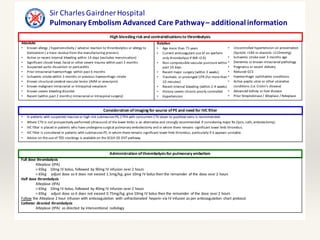
Sir	Charles	Gairdner	Hospital	
Pulmonary	Embolism	Advanced	Care	Pathway	– additional	information
Absolute
• Known	allergy	/	hypersensitivity	/	adverse	reaction	to	thrombolytics or	allergy	to	
Gentamicin	(	a	trace	residue	from	the	manufacturing	process)
• Active	or	recent	internal	bleeding	within	14	days	(excludes	menstruation)
• Significant	closed	head,	facial	or	other	severe	trauma	within	past	3	months
• Suspected	aortic	dissection	or	pericarditis
• Prior	intracranial	haemorrhage within	past	6	months
• Ischaemic stroke	within	3	months	or	previous	haemorrhagic stroke
• Known	structural	cerebral	vascular	lesion	(AVM	or	aneurysm)
• Known	malignant	intracranial	or	intraspinal neoplasm
• Known	severe	bleeding	disorder
• Recent	(within	past	2	months)	intracranial	or	intraspinal surgery)
Relative
• Age	more	than	75	years
• Current	anticoagulant	use	(if	on	warfarin	
only	thrombolyse if	INR	<2.0)
• Non	compressible	vascular	puncture	within	
past	10	days
• Recent	major	surgery	(within	3	weeks)
• Traumatic	or	prolonged	CPR	(for	more	than	
10	minutes)
• Recent	internal	bleeding	(within	2-4	weeks)	
• History	severe	chronic	poorly	controlled	
• Hypertension	
• Uncontrolled	hypertension	on	presentation	
(Systolic	>180	or	diastolic	>110mmHg)
• Ischaemic stroke	over	3	months	ago
• Dementia	or	known	intracranial	pathology
• Pregnancy	or	recent	delivery
• Reduced	GCS
• Haemorrhagic ophthalmic	conditions
• Active	peptic	ulcer	or	other	ulcerative	
conditions	(i.e.	Crohn’s disease)
• Advanced	kidney	or	liver	disease
• Prior	Streptokinase	/	Alteplase /	Reteplase
High	bleeding	risk	and	contraindications	to	thrombolysis
Consideration	of	imaging	for	source	of	PE	and	need	for	IVC	filter
• In	patients	with	suspected	massive	or	high	risk	submassive	PE,	CTPA	with	concurrent	CTV	down	to	popliteal	veins	is	recommended.
• Where	CTV	is	not	prospectively	performed	ultrasound	of	the	lower	limbs	is	an	alternative	and	strongly	recommended	if	considering major	Rx	(lysis,	cath,	embolectomy).
• IVC	filter	is	placed	in	patients	who	have	undergone	surgical	pulmonary	embolectomy	and	in	whom	there	remains	significant	lower	limb	thrombus.
• IVC	filter	is	considered	in	patients	with	submassive	PE,	in	whom	there	remains	significant	lower	limb	thrombus,	particularly	if	it	appears	unstable.
• Advice	on	the	use	of	TED	stockings	is	available	on	the	SCGH	ED	DVT	pathway
Administration	of	thrombolysis	for	pulmonary	embolism
Full	dose	thrombolysis
Alteplase	(tPA)	
>	65kg				10mg	IV	bolus,	followed	 by	90mg	IV	infusion	over	2	hours
<	65kg					adjust	dose	so	it	does	not	exceed	1.5mg/kg;	give	10mg	IV	bolus	then	the	remainder	 of	the	dose	over	2	hours
Half	dose	thrombolysis
Alteplase	(tPA)	
>	65kg				10mg	IV	bolus,	followed	 by	40mg	IV	infusion	over	2	hours
<	65kg					adjust	dose	so	it	does	not	exceed	0.75mg/kg;	give	10mg	IV	bolus	then	the	remainder	 of	the	dose	over	2	hours
Follow the	Alteplase	2	hour	 infusion	with	anticoagulation	 with	unfractionated	 heparin	via	IV	infusion	as	per	anticoagulation	 chart	protocol.
Catheter	directed	 thrombolysis
Alteplase	(tPA)		as	directed	 by	interventional	 radiology
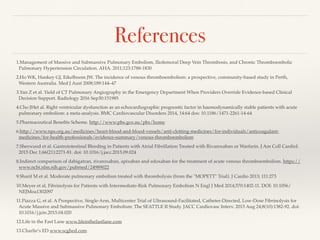
References
1.Management of Massive and Submassive Pulmonary Embolism, Iliofemoral Deep Vein Thrombosis, and Chronic Thromboembolic
Pulmonary Hypertension Circulation. AHA. 2011;123:1788-1830
2.Ho WK, Hankey GJ, Eikelboom JW. The incidence of venous thromboembolism: a prospective, community-based study in Perth,
Western Australia. Med J Aust 2008;189:144–47
3.Yan Z et al. Yield of CT Pulmonary Angiography in the Emergency Department When Providers Override Evidence-based Clinical
Decision Support. Radiology 2016 Sep30:151985
4.Cho JHet al. Right ventricular dysfunction as an echocardiographic prognostic factor in haemodynamically stable patients with acute
pulmonary embolism: a meta-analysis. BMC Cardiovascular Disorders 2014, 14:64 dos: 10.1186/1471-2261-14-64
5.Pharmaceutical Benefits Scheme. http://www.pbs.gov.au/pbs/home
6.http://www.nps.org.au/medicines/heart-blood-and-blood-vessels/anti-clotting-medicines/for-individuals/anticoagulant-
medicines/for-health-professionals/evidence-summary/venous-thromboembolism
7.Sherwood et al. Gastrointestinal Bleeding in Patients with Atrial Fibrillation Treated with Rivaroxaban or Warfarin. J Am Coll Cardiol.
2015 Dec 1;66(21):2271-81. doi: 10.1016/j.jacc.2015.09.024
8.Indirect comparison of dabigatran, rivaroxaban, apixaban and edoxaban for the treatment of acute venous thromboembolism. https://
www.ncbi.nlm.nih.gov/pubmed/24989022
9.Sharif M et al. Moderate pulmonary embolism treated with thrombolysis (from the "MOPETT" Trial). J Cardio 2013; 111:273
10.Meyer et al, Fibrinolysis for Patients with Intermediate-Risk Pulmonary Embolism N Engl J Med 2014;370:1402-11. DOI: 10.1056/
NEJMoa1302097
11.Piazza G, et al. A Prospective, Single-Arm, Multicenter Trial of Ultrasound-Facilitated, Catheter-Directed, Low-Dose Fibrinolysis for
Acute Massive and Submassive Pulmonary Embolism: The SEATTLE II Study. JACC Cardiovasc Interv. 2015 Aug 24;8(10):1382-92. doi:
10.1016/j.jcin.2015.04.020
12.Life in the Fast Lane www.lifeinthefastlane.com
13.Charlie’s ED www.scghed.com

Pulmonary embolism management options

  • 1.
    Kav Senasinghe October2016 Pulmonary Embolism Management Options
  • 2.
    Why follow theguidelines? • Yield of CT Pulmonary Angiography in the Emergency Department When Providers Override Evidence-based Clinical Decision Support. • Compared CTPA yield for PE in clinicians who overrode CDS (Clinical Decision Support) vs. those adherent to CDS • Wells Score </= 4 and normal D-dimer or no D-dimer (override group) vs Adherent group • 2993 CTPAs in 2655 patients. • 563 had Wells </= 4 and did not undergo D-Dimer testing • 26 had Wells </= 4 and a normal D-Dimer • i.e. most overrides due to lack of D-Dimer testing • Positive for PE 4.2% in override group vs. 11.2% • After adjustment, the odds of an acute PE finding were 51.3% lower in the override group
  • 3.
    Definitions Massive PE Acute PEwith sustained hypotension (SBP<90mmHg for at least 15 mins or requiring inotropic support, not due to a cause other than PE), pulselessness, or persistent profound bradycardia (HR<40bpm with signs or symptoms of shock)
  • 4.
    Definitions Submassive PE Acute PEwithout systemic hypotension (SBP >90mmHg) but with either RV dysfunction or myocardial necrosis RV Dysfunction: • RV dysfunction or dilatation on echo • RV dilatation on CT • elevated BNP • ECG changes Myocardial Necrosis: • elevated Troponin T • elevated Troponin I
  • 5.
    PE Relevance • Itis estimated that there are approximately 17 000 new cases of venous thromboembolism (VTE) in Australia per year. Pulmonary embolism (PE) accounts for about 40% of these events • 151,923 North-East Metropolitan Perth residents from 01/10/2003 - 31/10/2004 • 87 DVT, 53 PE • 0.31 per 1000 residents per year • WHO age-adjusted incidence of 0.21 per 1000
  • 6.
    PE relevance • ~20%of all PE are submassive PE (numbers vary as we get better at detecting PE) • a meta-analysis by Cho et al, 2014 found increased short-term mortality for haemodynamically stable patients with RV dysfunction (OR 2.29; 13.7% vs 6.5% without RV dysfunction) • there may be selection bias, as those patients that get an echo are more likely to be sick • Leads to long term morbidity - pulmonary hypertension and reduced functional outcome
  • 7.
    Treatments • Anticoagulation • NOACs •Warfarin • Heparin/LMWH • Thrombolysis • Intra-arterial Thrombolysis • Interventional Clot Disruption • Surgical Embolectomy • ECMO?
  • 8.
    Anticoagulation • Parenteral anticoagulants(Heparin/LMWH) overlapping the start of Warfarin Therapy • RivaroXaban (Factor Xa inhibitor) • PBS: Initial and continuing treatment of confirmed, acute symptomatic pulmonary embolism • Rivaroxaban is no worse than enoxaparin plus warfarin for preventing VTE recurrence in initial treatment of acute DVT or PE • Contraindicated in severe renal impairment • Currently no antidote • Associated with more GI bleeding compared to Warfarin - 3.61/100 patient years vs 2.60, but no significant difference in Severe or Fatal GI bleeding (ROCKET AF Trial) • ApiXaban • Also on the PBS for PE • Similar in efficacy to Rivaroxaban • Appears to be associated with a lower bleeding risk - indirect comparisons. More studies required • DabigaTran - not on PBS for treatment of acute PE. Does have antidote.
  • 9.
    Thrombolysis • Pros: • Lesslong-term pulmonary hypertension (MOPETT trial) • Clots resolve faster • Patients appear to improve faster clinically • Decreased death or haemodynamic instability (PEITHO trial) • Cons: • Risk of ICH (2% in >75yo in PEITHO) • Risk of other haemorrhage (~6% in PEITHO) • similar improvement at 7 days overall (~65% reduction in size of total defect regardless of whether thrombolysed or anti coagulated)
  • 10.
    PEITHO Trial (PulmonaryEmbolIsm THrOmbolysis) • Tenecteplase vs. Placebo for intermediate risk PE • 1005 patients • Death or haemodynamic compromise in 2.6% vs 5.6% in placebo • Major extra cranial bleeding in 6.3% vs 1.2 % in placebo • <75yo 4.1% vs 1.5% - not significant • >75yo 11.1% vs 0.6% • Intracranial Bleeding in 2% vs 0.2% in placebo
  • 11.
    MOPETT Trial (ModeratePulmonary Embolism treated with Thrombolysis) • “In patients with submassive PE does low-dose tPA reduce the incidence of pulmonary hypertension recurrent PE when compared to anticoagulation alone?” • 121 patients. single center. unblinded. • low-dose tPA vs control • All patients received anticoagulation with LMWH or UFH and warfarin • Thrombolysis associated with reduction in Pulm. HTN 16% vs 57% in control - mean follow-up 2.3 years • No significant difference in rates of recurrent PE • tPA did not confer a survival benefit
  • 12.
    Thrombolysis: how togive it • Tenecteplase - weight-based calculation • Alteplase • >65kg given 100mg total • 10mg bolus, 90mg over next 2 hours • <65kg adjust total dose not to exceed 1.5mg/kg • Start heparin infusion • LMWH efficacy is unknown
  • 13.
    Thrombolysis: Contraindications • Absolutecontraindications include • any prior intracranial haemorrhage • known structural intracranial cerebrovascular disease (eg, arteriovenous malformation) • known malignant intracranial neoplasm • ischaemic stroke within 3 months • suspected aortic dissection • active bleeding or bleeding diathesis • recent surgery encroaching on the spinal canal or brain, and • recent significant closed-head or facial trauma with radiographic evidence of bony fracture or brain injury • Relative contraindications include • age >75 years • current use of anticoagulation • pregnancy • non-compressible vascular punctures • traumatic or prolonged cardiopulmonary resuscitation (>10 minutes) • recent internal bleeding (within 2 to 4 weeks) • history of chronic, severe, and poorly controlled hypertension • severe uncontrolled hypertension on presentation (systolic blood pressure >180 mm Hg or diastolic blood pressure >110 mm Hg) • dementia • remote (>3 months) ischaemic stroke; and • major surgery within 3 weeks
  • 14.
    Intra-Arterial Thrombolysis • Potentialfor same benefits as systemic thrombolysis with lower bleeding risk • Wire passed through embolus followed by an infusion catheter with multiple openings - thrombolytic is then infused to the clot • Evidence is lacking - SEATTLE-II trial 2015
  • 15.
    Endovascular Procedures • Anoption when thrombolysis is contraindicated or the condition is refractory to thrombolysis • Patient preference, institute and operator preference and availability • case-by-case basis • https://www.youtube.com/ watch?v=cWh1ovlJg24
  • 16.
    Surgical Embolectomy • Anoption when thrombolysis is contraindicated or the condition is refractory to thrombolysis • Pt on CPB • Usually limited to directly visualised clot • Patient preference, institute and operator preference and availability • case-by-case basis • https://www.youtube.com/ watch?v=SzsQWIMYbN8
  • 17.
    Sir Charles Gairdner Hospital Pulmonary Embolism Advanced Care Pathway Non massive & Low risk submassive PE • Not clinically compromised A senior clinician should be involved in the assessment of patients with pulmonary embolism, and discussion between Emergency medicine, respiratory medicine, cardiothoracic surgery and interventional radiology is encouraged. These are only guidelines, patients are unique, there is a broad and complex spectrum of presentation, and definitive evidence is limited. High bleeding risk Low bleeding risk Accessible PE (≥ lobar PA involved) • Surgical embolectomy Peripheral PE • Full dose tPA Options include: • Standard anticoagulation • Catheter directed lysis • Surgical embolectomy • ½ dose systemic thrombolysis Discuss with appropriate specialty: • Central clot - Respiratory Medicine plus Cardiothoracic surgery if clinical compromise • Peripheral clot – Respiratory Medicine plus Interventional radiology if clinical compromise • Plus make ICU aware •Decision based on: • Clot burden and location • High versus low bleeding risk • Clinical state and comorbidities • Resource availability • Patient preference Accessible PE (≥ lobar PA involved) • Surgical embolectomy Peripheral PE • Catheter directed lysis Low molecular weight heparin / anticoagulation ICU or HDU / Resp HDUHDU / Resp HDU Consider discharge if noconcerning features (see list under high risk submassive PE) Ensure appropriate follow up – anticoag nurse / resp / +/- haematology Otherwise generally admit respiratory medicine Massive Pulmonary Embolism •Ongoing hypotension with significant clinical compromise (<90mmHg or > 40 mmHg drop in systolic BP) High risk submassive PE Features from at least 2 of the below categories: 1. Clinical: looks unwell or compromised, deteriorating, severe hypoxia, syncope hx 2. Imaging: large clot burden, concerning echo 3. Laboratory: Elevated lactate, BNP, troponin Designed in collaboration and with agreement from Emergency Medicine, Respiratory Medicine, Interventional Radiology and Cardiothoracic Surgery For Review 2017 Reference: Modified from the EMCrit.org website May 2015. http://i2.wp.com/emcrit.org/wp-content/uploads/2014/07/Orens-PE-Algo.jpg James Rippey
  • 18.
    Sir Charles Gairdner Hospital Pulmonary Embolism Advanced Care Pathway – additional information Absolute • Known allergy / hypersensitivity / adverse reaction to thrombolyticsor allergy to Gentamicin ( a trace residue from the manufacturing process) • Active or recent internal bleeding within 14 days (excludes menstruation) • Significant closed head, facial or other severe trauma within past 3 months • Suspected aortic dissection or pericarditis • Prior intracranial haemorrhage within past 6 months • Ischaemic stroke within 3 months or previous haemorrhagic stroke • Known structural cerebral vascular lesion (AVM or aneurysm) • Known malignant intracranial or intraspinal neoplasm • Known severe bleeding disorder • Recent (within past 2 months) intracranial or intraspinal surgery) Relative • Age more than 75 years • Current anticoagulant use (if on warfarin only thrombolyse if INR <2.0) • Non compressible vascular puncture within past 10 days • Recent major surgery (within 3 weeks) • Traumatic or prolonged CPR (for more than 10 minutes) • Recent internal bleeding (within 2-4 weeks) • History severe chronic poorly controlled • Hypertension • Uncontrolled hypertension on presentation (Systolic >180 or diastolic >110mmHg) • Ischaemic stroke over 3 months ago • Dementia or known intracranial pathology • Pregnancy or recent delivery • Reduced GCS • Haemorrhagic ophthalmic conditions • Active peptic ulcer or other ulcerative conditions (i.e. Crohn’s disease) • Advanced kidney or liver disease • Prior Streptokinase / Alteplase / Reteplase High bleeding risk and contraindications to thrombolysis Consideration of imaging for source of PE and need for IVC filter • In patients with suspected massive or high risk submassive PE, CTPA with concurrent CTV down to popliteal veins is recommended. • Where CTV is not prospectively performed ultrasound of the lower limbs is an alternative and strongly recommended if considering major Rx (lysis, cath, embolectomy). • IVC filter is placed in patients who have undergone surgical pulmonary embolectomy and in whom there remains significant lower limb thrombus. • IVC filter is considered in patients with submassive PE, in whom there remains significant lower limb thrombus, particularly if it appears unstable. • Advice on the use of TED stockings is available on the SCGH ED DVT pathway Administration of thrombolysis for pulmonary embolism Full dose thrombolysis Alteplase (tPA) > 65kg 10mg IV bolus, followed by 90mg IV infusion over 2 hours < 65kg adjust dose so it does not exceed 1.5mg/kg; give 10mg IV bolus then the remainder of the dose over 2 hours Half dose thrombolysis Alteplase (tPA) > 65kg 10mg IV bolus, followed by 40mg IV infusion over 2 hours < 65kg adjust dose so it does not exceed 0.75mg/kg; give 10mg IV bolus then the remainder of the dose over 2 hours Follow the Alteplase 2 hour infusion with anticoagulation with unfractionated heparin via IV infusion as per anticoagulation chart protocol. Catheter directed thrombolysis Alteplase (tPA) as directed by interventional radiology
  • 19.
    References 1.Management of Massiveand Submassive Pulmonary Embolism, Iliofemoral Deep Vein Thrombosis, and Chronic Thromboembolic Pulmonary Hypertension Circulation. AHA. 2011;123:1788-1830 2.Ho WK, Hankey GJ, Eikelboom JW. The incidence of venous thromboembolism: a prospective, community-based study in Perth, Western Australia. Med J Aust 2008;189:144–47 3.Yan Z et al. Yield of CT Pulmonary Angiography in the Emergency Department When Providers Override Evidence-based Clinical Decision Support. Radiology 2016 Sep30:151985 4.Cho JHet al. Right ventricular dysfunction as an echocardiographic prognostic factor in haemodynamically stable patients with acute pulmonary embolism: a meta-analysis. BMC Cardiovascular Disorders 2014, 14:64 dos: 10.1186/1471-2261-14-64 5.Pharmaceutical Benefits Scheme. http://www.pbs.gov.au/pbs/home 6.http://www.nps.org.au/medicines/heart-blood-and-blood-vessels/anti-clotting-medicines/for-individuals/anticoagulant- medicines/for-health-professionals/evidence-summary/venous-thromboembolism 7.Sherwood et al. Gastrointestinal Bleeding in Patients with Atrial Fibrillation Treated with Rivaroxaban or Warfarin. J Am Coll Cardiol. 2015 Dec 1;66(21):2271-81. doi: 10.1016/j.jacc.2015.09.024 8.Indirect comparison of dabigatran, rivaroxaban, apixaban and edoxaban for the treatment of acute venous thromboembolism. https:// www.ncbi.nlm.nih.gov/pubmed/24989022 9.Sharif M et al. Moderate pulmonary embolism treated with thrombolysis (from the "MOPETT" Trial). J Cardio 2013; 111:273 10.Meyer et al, Fibrinolysis for Patients with Intermediate-Risk Pulmonary Embolism N Engl J Med 2014;370:1402-11. DOI: 10.1056/ NEJMoa1302097 11.Piazza G, et al. A Prospective, Single-Arm, Multicenter Trial of Ultrasound-Facilitated, Catheter-Directed, Low-Dose Fibrinolysis for Acute Massive and Submassive Pulmonary Embolism: The SEATTLE II Study. JACC Cardiovasc Interv. 2015 Aug 24;8(10):1382-92. doi: 10.1016/j.jcin.2015.04.020 12.Life in the Fast Lane www.lifeinthefastlane.com 13.Charlie’s ED www.scghed.com