Connective Tissue Disease
associated Interstitial Lung Disease
Firm 3 Grand Round Presentation
Supervising consultant
Dr AKINTAYO R.O
Consultant Rheumatologist
Department of Medicine, UITH, Ilorin
Presenter: Dr Opeyemi CM
Outline
• Introduction
• Epidemiology
• Risk factors
• Pathogenesis
• Clinical features
• Investigation
• Treatment
• Conclusion
Introduction of CTD-ILDs
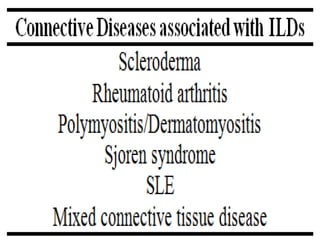
• Connective tissue disease (CTD) are to multisystemic disorders
characterized by autoimmune-mediated tissue damage & presence of
circulating auto-antibodies that target various body organs with
autoimmune-mediated chronic inflammation
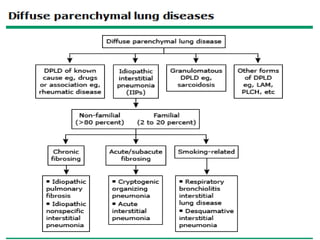
• Interstitial lung disease (ILD) represents a broad group of diseases
characterized by diffuse parenchymal lung injury patterns & varying
degrees of inflammation and fibrosis
• The lung is a frequent target in many CTDs and all components of the
respiratory system are at risk.
• CTDs cause ILDs when they establish an autoimmune mediated
chronic inflammation in the pulmonary interstitium
Introduction of CTD-ILDs
• The occurrence of ILD in CTDs is common and is usually a
serious cause of worsened morbidity and consequent
mortality in patient with CTDs
• CTDs can cause a myriad of pulmonary complications,
including bronchiolitis and bronchiectasis, pleuritis, and
pulmonary hypertension
• CTD associated ILDs (CTD-ILDs) are characterized by
various patterns of inflammation and fibrosis in lung
biopsy specimen & HRCT scan
Introduction of CTD-ILDs
• ILD often occurs concurrently or as a complication in
patients with known CTD. However, it can also be the
first and only manifestation of previously unrecognized
CTD (aka “lung dominant” CTD)1
• There are varying incidences of ILDs in the many
distinctive CTDs.
• Generally, CTDs is reported to be present in about 15% of
patients with ILDs1
• Both lung dominant & ILDs associated with CTDs have
worsened morbidity & mortality1
1. Stephen C Mathai et al: Management of interstitial lung disease associated with
connective tissue disease. BMJ, 2016
Introduction of CTD-ILDs
• Occasionally, CTD associated ILDs (CTD-ILDs) may be
sequel to drugs used in the primary treatment of CTDs
e.g. MTX, Gold salts, Lefluonamide, Anti-TNF drugs etc
• There are similarities in clinical and pathologic
presentation of CTD-ILDs with the other groups of ILDs.
• However, the prognosis and treatment of CTD-ILDs differ
greatly from that of other forms of ILD, such as IPF
Introduction of CTD-ILDs
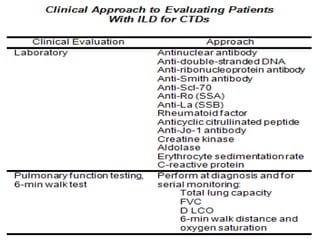
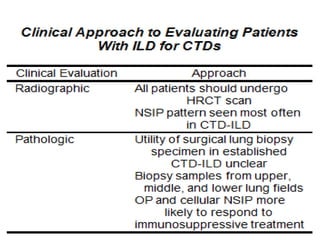
• Usually a careful and systematic approach in the diagnosis of
patients with ILD may reveal an unrecognized CTD or the
evidence of autoimmunity in those previously believed to
have idiopathic ILD.
• The pathologic distincts of ILD in CTDs may include the
spectrum of nonspecific interstitial pneumonitis (NSIP), usual
interstitial pneumonitis (UIP), organizing pneumonia (OP),
lymphoid interstitial pneumonia (LIP), diffuse alveolar
damage (DAD), and diffuse alveolar hemorrhage (DAH).
Introduction of CTD-ILDs
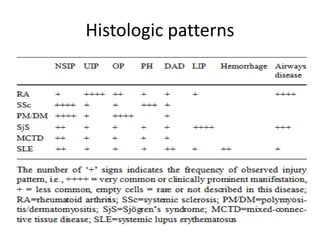
• Non-specific interstitial pneumonia (NSIP) is the
most commonly observed histopathological pattern
in CTD-ILDs, but other patterns including UIP, OP,
DAD and LIP are also seen in lesser frequency
• The presentation, risk of progression & prognosis,
degree of reversibility, and optimal therapy differs
with the occurrence of ILD in each type of CTD
Epidemiology of CTD-ILDs
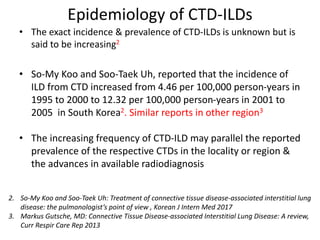
• The exact incidence & prevalence of CTD-ILDs is unknown but is
said to be increasing2
• So-My Koo and Soo-Taek Uh, reported that the incidence of
ILD from CTD increased from 4.46 per 100,000 person-years in
1995 to 2000 to 12.32 per 100,000 person-years in 2001 to
2005 in South Korea2. Similar reports in other region3
• The increasing frequency of CTD-ILD may parallel the reported
prevalence of the respective CTDs in the locality or region &
the advances in available radiodiagnosis
2. So-My Koo and Soo-Taek Uh: Treatment of connective tissue disease-associated interstitial lung
disease: the pulmonologist’s point of view , Korean J Intern Med 2017
3. Markus Gutsche, MD: Connective Tissue Disease-associated Interstitial Lung Disease: A review,
Curr Respir Care Rep 2013
Epidemiology of CTD-ILDs
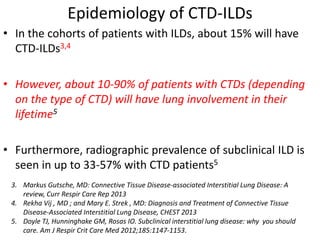
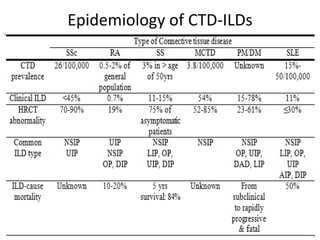
• In the cohorts of patients with ILDs, about 15% will have
CTD-ILDs3,4
• However, about 10-90% of patients with CTDs (depending
on the type of CTD) will have lung involvement in their
lifetime5
• Furthermore, radiographic prevalence of subclinical ILD is
seen in up to 33-57% with CTD patients5
3. Markus Gutsche, MD: Connective Tissue Disease-associated Interstitial Lung Disease: A
review, Curr Respir Care Rep 2013
4. Rekha Vij , MD ; and Mary E. Strek , MD: Diagnosis and Treatment of Connective Tissue
Disease-Associated Interstitial Lung Disease, CHEST 2013
5. Doyle TJ, Hunninghake GM, Rosas IO. Subclinical interstitial lung disease: why you should
care. Am J Respir Crit Care Med 2012;185:1147-1153.
Epidemiology of CTD-ILDs
Pathogenesis of CTD-ILDs
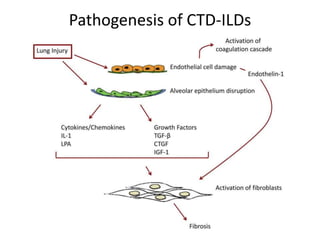
• The pathogenesis of CTD-ILDs is unknown. However,
Many factors can either cause or exacerbate ILD in
patients with CTDs
• Immunologic factors: the formation &/or deposition of
autoantibodies against cellular components are seen in
the lung interstitium which highlights the important role
of autoimmunity in the pathogenesis of CTD-ILDs in SSc,
SLE and RA
• Genetic factors: inheritable HLA-DR4, HLA-DR1
polymorphisms have been found in many RA-ILD
patients. Also, Familiar predisposition have also been
recognized in development of ILD in SLE patients
Pathogenesis of CTD-ILDs
• Environmental factors: Exposure to environmental
factors which worsens the primary CTDs e.g. exposure
to UV light & drugs like hydralazine, procainamide, D-
penicillamine can exacerbate or induce SLE-like
responses
• UV induces keratinocytes to produce IL-1, a factor
known to influence immune response
• Inflammatory mediators: A wide variety of cytokines
identified in BAL fluid have been found to contribute to
the cascade of inflammation in the lungs
Pathogenesis of CTD-ILDs
The most striking of these are:
• IL-8 (a neutrophil chemoattractant & activator
• TNF-α (an early cytokine involved in many pathologic
processes)
• Macrophage inflammatory protein-1a (a cytokine that
is important in neutrophil chemotaxis)
• RANTES (regulated on activation normal T cell
expressed and secreted, a cytokine that is important in
T-cell & eosinophil recruitment & activation)
• TGF-β
• Endothelin-1
Pathogenesis of CTD-ILDs
• Infections: infections with certain viruses & bacteria
which are thought to have potent antigens that cross
react with the lung interstitial collagen e.g. EBV,
Retroviruses, Parvoviruses, Mycoplasma & Borrelia
spp have been implicated in the etiology of CTD-ILDs
Pathogenesis of CTD-ILDs
SSc-ILD
• SSc is a heterogeneous systemic disorder
characterized by excessive collagen deposition
• SSc is the CTD with the largest percentage of
patients afflicted with ILD (40-80%)
• Along with pulmonary hypertension (PH), ILD is a
major cause of death in this disease.
• The development of ILD is considered more likely in
those with diffuse SSc although autoantibody pattern
& ethnicity are also important
SSc-ILD
• However, Scleroderma Lung Study6, reported no significant
differences in the frequency of alveolitis on HRCT scan between lcSSc
and dcSSc, suggesting that all patients with SSc are at risk for ILD
• Most patients with SSc have high titers of antinuclear antibodies
(ANA)—most often in a nucleolar pattern
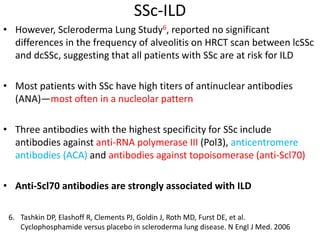
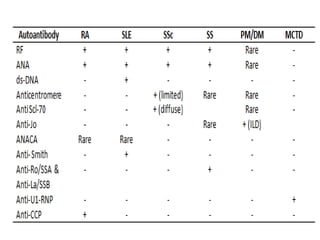
• Three antibodies with the highest specificity for SSc include
antibodies against anti-RNA polymerase III (Pol3), anticentromere
antibodies (ACA) and antibodies against topoisomerase (anti-Scl70)
• Anti-Scl70 antibodies are strongly associated with ILD
6. Tashkin DP, Elashoff R, Clements PJ, Goldin J, Roth MD, Furst DE, et al.
Cyclophosphamide versus placebo in scleroderma lung disease. N Engl J Med. 2006
SSc-ILD
• Although ACA are protective from significant ILD,
patients with ACA carry a high risk for the development
of PH later in the course of the disease.
• The Pol3 antibody is seen with diffuse skin disease and
renal crisis but is rarely associated with significant lung
fibrosis
• The majority of patients with SSc have esophageal
involvement. Gastroesophageal reflux in SSc is a risk
factor for the development and progression of ILD.
• Extent of pulmonary fibrosis on HRCT scan correlated
with episodes of gastroesophageal reflux, supporting
an association between reflux and fibrosis
SSc-ILD
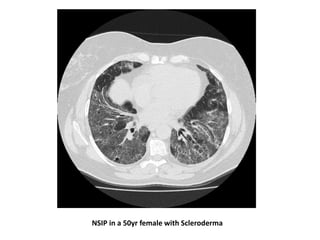
• The majority of patients with SSc-ILD have NSIP-
pattern injury. Less commonly a UIP pattern is
observed, and other histopathological patterns
(e.g., OP or DAD) are very rare
• The median survival for patients with SSc-ILD is 5
to 8 years
• The most common radiographic findings for these
patients are ground glass opacities and fibrosis
• Patients with lung involvement greater than 20%
on HRCT and a FVC <70% of predicted were most
likely to progress without therapy
SSc-ILD
• The development of pulmonary hypertension is a
well-described complication of in SSc-ILD
• Pulmonary hypertension in SSc-ILD portends a poorer
prognosis. The 1-, 2-, and 3-year survival for these
patients is 71%, 39%, and 21%, respectively
NSIP in a 50yr female with Scleroderma
RA-ILDs
• RA is the most common CTD and is characterized by
an erosive inflammatory polyarthropathy with
symmetrical arthritis and a range of pulmonary
manifestations
• While RA occurs more commonly in females (F/M,
3:1), RA-ILD is more frequent in males
• The prevalence of RA-ILD varies from 5–58%,
depending on the case definition for ILD
RA-ILDs
• Although it is common for ILD to be diagnosed
concurrent with or after RA, population-based study
suggests that 3.5% of patients with RA are given a
diagnosis of ILD prior to the diagnosis of RA
• Smoking is a risk factor for RA-ILD, cigarette smoke
exerts its effects by promoting the citrullination of
rheumatoid antibodies in the lung
• There appears to be no reliable correlation between
the extent or severity of the joint disease and the
development or progression of ILD in patients with RA
RA-ILD
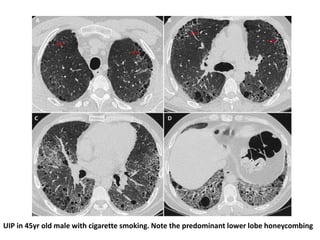
• RA-ILD manifests most commonly in the UIP-
pattern, and less commonly with NSIP pattern injury
• Patients with RA with a usual interstitial pneumonia (UIP)
pattern on HRCT scan have worsened survival compared
with those with nonspecific interstitial pneumonia (NSIP)
• Drug-induced pneumonitis is an important consideration
in the differential diagnosis of patients with suspected RA-
ILD
UIP in 45yr old male with cigarette smoking. Note the predominant lower lobe honeycombing
DM/PM-ILDs
• Both PM and DM share the diagnostic criteria of
symmetrical proximal muscle weakness, raised serum
muscle enzymes, and muscle biopsy and EMG results
consistent with myositis
• DM/PM are common in women and black patients
• In addition, DM requires the presence of certain skin
manifestations (e.g., heliotrope rash , Gottron’s sign & V or
shawl sign) to fulfill diagnostic criteria
• ILD is common in DM/PM (35%-45%) and presents prior to
the onset of myositis in 18% to 20% of patients
DM/PM-ILDs
• Most patients with DM/PM-ILD have a chronic, slowly
progressive course, but subacute worsening may occur.
• This patients usually have a combined pattern of NSIP and
OP observed on HRCT and in histopathological specimens
• However, a rapidly progressing acute hypoxemic
respiratory failure from a DAD atop both OP and NSIP is
the usual presentation in amyopathic DM (classical skin
findings of DM, are present without muscle involvement)
• DM/PM-ILDs usually have myositis-associated
autoantibodies, such as positive ANA titer or anti-Ro
antibody (anti-SSA) & several myositis-specific
autoantibodies, such as the tRNA synthetase antibodies
such as anti-PL-12 (anti-alanyl-tRNA synthetase)
autoantibodies, which in one series was associated with
ILD in 90% of the patients.
DM/PM-ILDs
• Radiographic and pathologic findings in patients with ILD
secondary to DM/PM are the most varied of all the CTD-
ILD
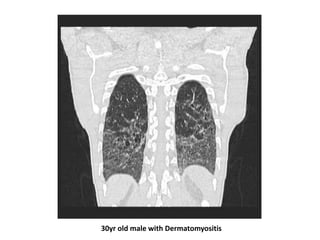
• Radiographic study of patients with DM/PM showed that
all patients with fatal ILD had ground glass opacities on
HRCT scan, with consolidation being the principal finding in
most nonfatal cases
• Poor outcome was associated with a rapidly progressive
respiratory failure and DM-ILDs
30yr old male with Dermatomyositis
SjS-ILDs
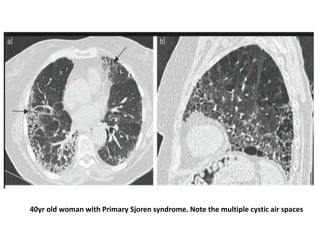
• Sjogren’s syndrome (SjS) is a chronic inflammatory
condition characterized by lymphocytic infiltration of
exocrine glands (including salivary and lacrimal glands) –
and other structures, including the lungs
• It can occur either in isolation, (primary SjS) or as a
secondary phenomenon in the setting of another
established CTD (secondary SjS)
• In the absence of a salivary gland biopsy demonstrating
focal lymphocytic sialoadenitis, the presence of
“keratoconjunctivitis sicca” and anti-nuclear antibodies
against ribonucleoproteins Ro/SSA and La/SSB is required
to fulfill diagnostic criteria in both primary and secondary
SjS
SjS-ILDs
• Several histopathologic patterns have been described,
including NSIP, UIP, OP, and LIP
• LIP was considered one of the most common pulmonary
manifestations, but studies have demonstrated a much lower
prevalence. Its typical radiographic appearance is ground glass
opacities with thin-walled cysts
• Patients with SjS are at increased risk for pulmonary lymphomas
but clinically significant ILD is rare, and in most cases SjS-ILD
follows a mild and self-limited course
• Restrictive PFT and reduced DLCO have been found in 17%–
37.5% of patients with SjS
SjS-ILDs
• In patients with SjS-ILD, HRCT and histopathological
findings correlate well with each other, so SLBx is usually
not recommended
• Five-year survival for patients with Sjögren-ILD is 84%
• Common radiographic findings are ground glass opacities
(45%-92%) and fibrotic honeycomb cysts (13%-43%)
• The presence of multifocal cysts on HRCT scan should
raise clinical suspicion for Sjögren-ILD
40yr old woman with Primary Sjoren syndrome. Note the multiple cystic air spaces
SLE-ILDs
• SLE is a multisystem disorder afflicting joints, skin,
kidneys, CNS, serosa surfaces of internal organs
including heart and lungs. The disease is more
prevalent in women of reproductive age and African
Americans
• Almost all patients are ANA positive. Four or more
criteria are required to establish the diagnosis
• Although respiratory symptoms associated with SLE
are often absent, abnormal PFT- and HRCT-findings
are common, and the prognosis is significantly worse
in patients experiencing pulmonary complications
SLE-ILDs
• Clinically significant ILDs affects only 3% to 8% of
the lupus population. In most cases, acute lupus
pneumonitis (ALP) with a DAD-pattern heralds
the development of ILD
• Similar to most other CTD-ILDs, NSIP is the most
commonly observed histopathological pattern,
but LIP,OP and UIP have all been described
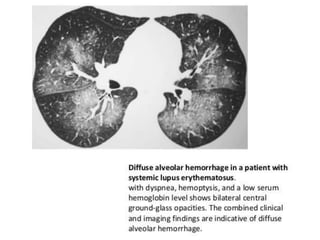
• Diffuse alveolar hemorrhage (DAH) and ALP are
characterized by acute onset of dyspnea with
fever, cough and hemoptysis
SLE-ILDs
• A sudden decrease in hemoglobin is highly
suggestive of DAH. Approximately one-half of
patients with DAH require mechanical ventilation
• Both ALP and DAH present with diffuse, bilateral
ground glass opacities on HRCT
• DAH and ALP carry a mortality rate of 50%
MCTD-ILDs
• MCTD patients are characterized by positive anti-U1
RNP antibodies and have features of more than one
CTD
• While a large number of patients with MCTD have
pulmonary involvement, most have relatively mild
disease, and many are asymptomatic
• Pleural effusions, ILD consistent with NSIP and
sometimes UIP, and PAH, either as a result of CTD-
ILD or in isolation, have all been described in MCTD
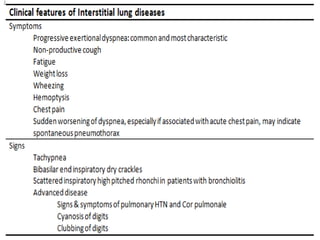
Clinical features of CTD-ILDs
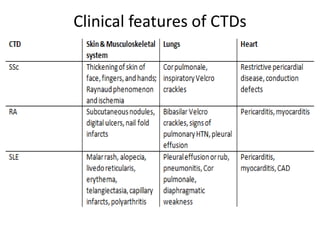
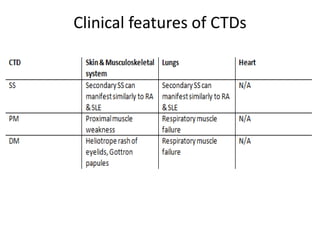
Clinical features of CTDs
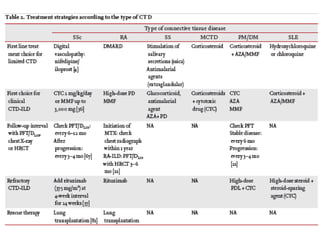
Treatment modalities of CTD-ILDs
• Given the wide variation in manifestations of ILD in
autoimmune disease, patients with CTD-ILD usually
presents one of the below mentioned forms
 Mild stable disease
 Acute presentation of ILD
 Chronic presentation of ILD
Acute presentation of CTD-ILDs
• Typically, acute presentations of ILD in patients with
autoimmune disease manifest in two ways: de novo acute
interstitial pneumonia or acute exacerbations of underlying
ILD
• In both scenarios, exclusion of other causes of respiratory
decompensation should be sought
• e.g. infection, pulmonary embolism, coronary artery
disease, new onset of arrhythmia, pulmonary edema,
pneumothorax, and surgery—particularly lung biopsy.
Acute presentation of CTD-ILDs
• Exposure to ambient air pollution, particularly ozone
and nitrogen dioxide, may also cause acute
exacerbations of ILD
• Patients with CTD-ILD may have acute exacerbation
from processes such as DAH (more common in SLE),
aspiration (scleroderma), and drug induced toxicity
(MTX and biologic agents such as infliximab and
rituximab). These drugs should be systematically
excluded.
Acute presentation of CTD-ILDs
• While no specific guidelines exist for the
management of acute interstitial pneumonia or acute
exacerbations of ILD in CTD, common practice
patterns extrapolated from observational data in
IPF are often followed.
• These interventions include:
– Broad spectrum antimicrobials covering typical and
atypical bacterial pathogens
– Coverage for Pneumocystis jirovecii and fungi based on
additional testing or risk factors such as pre-existing
immunosuppression
Acute presentation of CTD-ILDs
– Removal of the offending agents in cases of
suspected drug toxicity
– High doses of pulse methylprednisolone (1 g
intravenous daily for three days).
• Many RCTs have suggested that treatment of GERD
decreases the risk of acute exacerbations of ILD, so
augmentation of antireflux therapy should be
considered
Acute presentation of CTD-ILDs
• In cases of DAH refractory to conservative measures
and correction of underlying coagulopathy,
plasmapheresis has been used with varying success
• Despite these interventions, mortality for both acute
interstitial pneumonia and acute exacerbations of ILD
in patients with CTD remains high at 33-100%.
Acute presentation of CTD-ILDs
• In the case of ILD associated with autoimmune
myositis, intravenous immunoglobulins and pulse
steroids may be beneficial
• Intravenous or oral CPM may also be considered in
acute presentations of CTD-ILD
Chronic presentation of CTD-ILDs
• Only two adequately powered, RCTs have been
conducted in CTD-ILD;6,7 both examine the utility of
CPM in the treatment of scleroderma associated ILD
• Because of the limitations of the available data,
treatment of chronic CTD-ILD is based on case series
and extrapolation from the literature in SSc-ILD and
other ILDs such as IPF.
6. Tashkin DP et al: Scleroderma Lung Study Research Group. Cyclophosphamide versus placebo in
scleroderma lung disease. N Engl J Med 2006
7. Hoyles RK et al: A multicenter, prospective, randomized, doubleblind, placebo-controlled trial of
corticosteroids and intravenous cyclophosphamide followed by oral azathioprine for the
treatment of pulmonary fibrosis in scleroderma. Arthritis Rheum 2006
Who to treat in chronic CTD-ILDs
• Not every patient with CTD-ILD requires treatment i.e.
patients with low likelihood for progression
• Serial HRCT and PFTs are most helpful in objectively
determining disease severity and likelihood of progression
over time
• There is strong consensus that patients with disease extent <
10% on HRCT and/or FVC >75% and/or DLCO >65%, in the
absence of respiratory symptoms, can be carefully monitored
every 3–6 months for evidence of progression
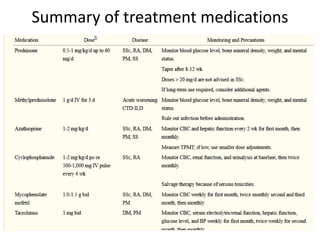
Summary of treatment medications
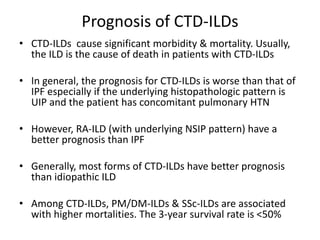
Prognosis of CTD-ILDs
• CTD-ILDs cause significant morbidity & mortality. Usually,
the ILD is the cause of death in patients with CTD-ILDs
• In general, the prognosis for CTD-ILDs is worse than that of
IPF especially if the underlying histopathologic pattern is
UIP and the patient has concomitant pulmonary HTN
• However, RA-ILD (with underlying NSIP pattern) have a
better prognosis than IPF
• Generally, most forms of CTD-ILDs have better prognosis
than idiopathic ILD
• Among CTD-ILDs, PM/DM-ILDs & SSc-ILDs are associated
with higher mortalities. The 3-year survival rate is <50%
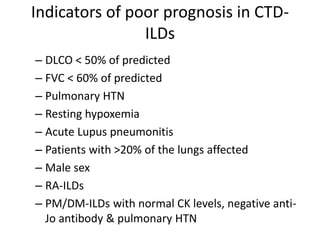
Indicators of poor prognosis in CTD-
ILDs
– DLCO < 50% of predicted
– FVC < 60% of predicted
– Pulmonary HTN
– Resting hypoxemia
– Acute Lupus pneumonitis
– Patients with >20% of the lungs affected
– Male sex
– RA-ILDs
– PM/DM-ILDs with normal CK levels, negative anti-
Jo antibody & pulmonary HTN
Complications of CTD-ILDs
• Pulmonary hypertension
• Pulmonary infections
• Respiratory failure
• Cor pulmonale
• Pneumothorax
• Sleep disordered breathing
• Progressive dyspnea
• Acute Respiratory distress syndrome
• Diffuse alveolar Hemorrhage
Conclusion
• CTD-ILD comprises a heterogeneous group of disorders marked by
varying degrees of fibrosis and/or inflammation within the lung
parenchyma
• CTD-ILDs is a potentially morbid and life-threatening complication
of any CTD
• CTD-ILDs is most commonly seen in patients with RA, SSc or
PM/DM & he commonest histopathologic pattern is NSIP2
• Current treatment of CTD-ILDs is based largely on experience and
observational studies.
• Future research is required to advance understanding of the
pathogenesis of CTD-ILD and to help determine which patients
require therapy, what drugs to use and how long to use them.
2. Markus Gutsche, MD: Connective Tissue Disease-associated Interstitial Lung Disease: A
review, Curr Respir Care Rep 2013
Histologic patterns
References
1. Stephen C Mathai et al: Management of interstitial lung disease
associated with connective tissue disease. BMJ, 2016
2. So-My Koo and Soo-Taek Uh: Treatment of connective tissue disease-
associated interstitial lung disease: the pulmonologist’s point of view ,
Korean J Intern Med 2017
3. Markus Gutsche, MD: Connective Tissue Disease-associated Interstitial
Lung Disease: A review, Curr Respir Care Rep 2013
4. Rekha Vij , MD ; and Mary E. Strek , MD: Diagnosis and Treatment of
Connective Tissue Disease-Associated Interstitial Lung Disease, CHEST
2013
5. Doyle TJ, Hunninghake GM, Rosas IO. Subclinical interstitial lung disease:
why you should care. Am J Respir Crit Care Med 2012;185:1147-1153.
6. Tashkin DP, Elashoff R, Clements PJ, Goldin J, Roth MD, Furst DE, et al.
Cyclophosphamide versus placebo in scleroderma lung disease. N Engl J
Med. 2006
7. Hoyles RK et al: A multicenter, prospective, randomized, doubleblind,
placebo-controlled trial of corticosteroids and intravenous
cyclophosphamide followed by oral azathioprine for the treatment of
pulmonary fibrosis in scleroderma. Arthritis Rheum 2006

Connective tissue Disease associated Interstitial Lung Disease

  • 1.
    Connective Tissue Disease associatedInterstitial Lung Disease Firm 3 Grand Round Presentation Supervising consultant Dr AKINTAYO R.O Consultant Rheumatologist Department of Medicine, UITH, Ilorin Presenter: Dr Opeyemi CM
  • 2.
    Outline • Introduction • Epidemiology •Risk factors • Pathogenesis • Clinical features • Investigation • Treatment • Conclusion
  • 3.
    Introduction of CTD-ILDs •Connective tissue disease (CTD) are to multisystemic disorders characterized by autoimmune-mediated tissue damage & presence of circulating auto-antibodies that target various body organs with autoimmune-mediated chronic inflammation • Interstitial lung disease (ILD) represents a broad group of diseases characterized by diffuse parenchymal lung injury patterns & varying degrees of inflammation and fibrosis • The lung is a frequent target in many CTDs and all components of the respiratory system are at risk. • CTDs cause ILDs when they establish an autoimmune mediated chronic inflammation in the pulmonary interstitium
  • 4.
    Introduction of CTD-ILDs •The occurrence of ILD in CTDs is common and is usually a serious cause of worsened morbidity and consequent mortality in patient with CTDs • CTDs can cause a myriad of pulmonary complications, including bronchiolitis and bronchiectasis, pleuritis, and pulmonary hypertension • CTD associated ILDs (CTD-ILDs) are characterized by various patterns of inflammation and fibrosis in lung biopsy specimen & HRCT scan
  • 5.
    Introduction of CTD-ILDs •ILD often occurs concurrently or as a complication in patients with known CTD. However, it can also be the first and only manifestation of previously unrecognized CTD (aka “lung dominant” CTD)1 • There are varying incidences of ILDs in the many distinctive CTDs. • Generally, CTDs is reported to be present in about 15% of patients with ILDs1 • Both lung dominant & ILDs associated with CTDs have worsened morbidity & mortality1 1. Stephen C Mathai et al: Management of interstitial lung disease associated with connective tissue disease. BMJ, 2016
  • 6.
    Introduction of CTD-ILDs •Occasionally, CTD associated ILDs (CTD-ILDs) may be sequel to drugs used in the primary treatment of CTDs e.g. MTX, Gold salts, Lefluonamide, Anti-TNF drugs etc • There are similarities in clinical and pathologic presentation of CTD-ILDs with the other groups of ILDs. • However, the prognosis and treatment of CTD-ILDs differ greatly from that of other forms of ILD, such as IPF
  • 7.
    Introduction of CTD-ILDs •Usually a careful and systematic approach in the diagnosis of patients with ILD may reveal an unrecognized CTD or the evidence of autoimmunity in those previously believed to have idiopathic ILD. • The pathologic distincts of ILD in CTDs may include the spectrum of nonspecific interstitial pneumonitis (NSIP), usual interstitial pneumonitis (UIP), organizing pneumonia (OP), lymphoid interstitial pneumonia (LIP), diffuse alveolar damage (DAD), and diffuse alveolar hemorrhage (DAH).
  • 8.
    Introduction of CTD-ILDs •Non-specific interstitial pneumonia (NSIP) is the most commonly observed histopathological pattern in CTD-ILDs, but other patterns including UIP, OP, DAD and LIP are also seen in lesser frequency • The presentation, risk of progression & prognosis, degree of reversibility, and optimal therapy differs with the occurrence of ILD in each type of CTD
  • 11.
    Epidemiology of CTD-ILDs •The exact incidence & prevalence of CTD-ILDs is unknown but is said to be increasing2 • So-My Koo and Soo-Taek Uh, reported that the incidence of ILD from CTD increased from 4.46 per 100,000 person-years in 1995 to 2000 to 12.32 per 100,000 person-years in 2001 to 2005 in South Korea2. Similar reports in other region3 • The increasing frequency of CTD-ILD may parallel the reported prevalence of the respective CTDs in the locality or region & the advances in available radiodiagnosis 2. So-My Koo and Soo-Taek Uh: Treatment of connective tissue disease-associated interstitial lung disease: the pulmonologist’s point of view , Korean J Intern Med 2017 3. Markus Gutsche, MD: Connective Tissue Disease-associated Interstitial Lung Disease: A review, Curr Respir Care Rep 2013
  • 12.
    Epidemiology of CTD-ILDs •In the cohorts of patients with ILDs, about 15% will have CTD-ILDs3,4 • However, about 10-90% of patients with CTDs (depending on the type of CTD) will have lung involvement in their lifetime5 • Furthermore, radiographic prevalence of subclinical ILD is seen in up to 33-57% with CTD patients5 3. Markus Gutsche, MD: Connective Tissue Disease-associated Interstitial Lung Disease: A review, Curr Respir Care Rep 2013 4. Rekha Vij , MD ; and Mary E. Strek , MD: Diagnosis and Treatment of Connective Tissue Disease-Associated Interstitial Lung Disease, CHEST 2013 5. Doyle TJ, Hunninghake GM, Rosas IO. Subclinical interstitial lung disease: why you should care. Am J Respir Crit Care Med 2012;185:1147-1153.
  • 13.
  • 15.
    Pathogenesis of CTD-ILDs •The pathogenesis of CTD-ILDs is unknown. However, Many factors can either cause or exacerbate ILD in patients with CTDs • Immunologic factors: the formation &/or deposition of autoantibodies against cellular components are seen in the lung interstitium which highlights the important role of autoimmunity in the pathogenesis of CTD-ILDs in SSc, SLE and RA • Genetic factors: inheritable HLA-DR4, HLA-DR1 polymorphisms have been found in many RA-ILD patients. Also, Familiar predisposition have also been recognized in development of ILD in SLE patients
  • 16.
    Pathogenesis of CTD-ILDs •Environmental factors: Exposure to environmental factors which worsens the primary CTDs e.g. exposure to UV light & drugs like hydralazine, procainamide, D- penicillamine can exacerbate or induce SLE-like responses • UV induces keratinocytes to produce IL-1, a factor known to influence immune response • Inflammatory mediators: A wide variety of cytokines identified in BAL fluid have been found to contribute to the cascade of inflammation in the lungs
  • 17.
    Pathogenesis of CTD-ILDs Themost striking of these are: • IL-8 (a neutrophil chemoattractant & activator • TNF-α (an early cytokine involved in many pathologic processes) • Macrophage inflammatory protein-1a (a cytokine that is important in neutrophil chemotaxis) • RANTES (regulated on activation normal T cell expressed and secreted, a cytokine that is important in T-cell & eosinophil recruitment & activation) • TGF-β • Endothelin-1
  • 18.
    Pathogenesis of CTD-ILDs •Infections: infections with certain viruses & bacteria which are thought to have potent antigens that cross react with the lung interstitial collagen e.g. EBV, Retroviruses, Parvoviruses, Mycoplasma & Borrelia spp have been implicated in the etiology of CTD-ILDs
  • 19.
  • 20.
    SSc-ILD • SSc isa heterogeneous systemic disorder characterized by excessive collagen deposition • SSc is the CTD with the largest percentage of patients afflicted with ILD (40-80%) • Along with pulmonary hypertension (PH), ILD is a major cause of death in this disease. • The development of ILD is considered more likely in those with diffuse SSc although autoantibody pattern & ethnicity are also important
  • 21.
    SSc-ILD • However, SclerodermaLung Study6, reported no significant differences in the frequency of alveolitis on HRCT scan between lcSSc and dcSSc, suggesting that all patients with SSc are at risk for ILD • Most patients with SSc have high titers of antinuclear antibodies (ANA)—most often in a nucleolar pattern • Three antibodies with the highest specificity for SSc include antibodies against anti-RNA polymerase III (Pol3), anticentromere antibodies (ACA) and antibodies against topoisomerase (anti-Scl70) • Anti-Scl70 antibodies are strongly associated with ILD 6. Tashkin DP, Elashoff R, Clements PJ, Goldin J, Roth MD, Furst DE, et al. Cyclophosphamide versus placebo in scleroderma lung disease. N Engl J Med. 2006
  • 22.
    SSc-ILD • Although ACAare protective from significant ILD, patients with ACA carry a high risk for the development of PH later in the course of the disease. • The Pol3 antibody is seen with diffuse skin disease and renal crisis but is rarely associated with significant lung fibrosis • The majority of patients with SSc have esophageal involvement. Gastroesophageal reflux in SSc is a risk factor for the development and progression of ILD. • Extent of pulmonary fibrosis on HRCT scan correlated with episodes of gastroesophageal reflux, supporting an association between reflux and fibrosis
  • 23.
    SSc-ILD • The majorityof patients with SSc-ILD have NSIP- pattern injury. Less commonly a UIP pattern is observed, and other histopathological patterns (e.g., OP or DAD) are very rare • The median survival for patients with SSc-ILD is 5 to 8 years • The most common radiographic findings for these patients are ground glass opacities and fibrosis • Patients with lung involvement greater than 20% on HRCT and a FVC <70% of predicted were most likely to progress without therapy
  • 24.
    SSc-ILD • The developmentof pulmonary hypertension is a well-described complication of in SSc-ILD • Pulmonary hypertension in SSc-ILD portends a poorer prognosis. The 1-, 2-, and 3-year survival for these patients is 71%, 39%, and 21%, respectively
  • 25.
    NSIP in a50yr female with Scleroderma
  • 26.
    RA-ILDs • RA isthe most common CTD and is characterized by an erosive inflammatory polyarthropathy with symmetrical arthritis and a range of pulmonary manifestations • While RA occurs more commonly in females (F/M, 3:1), RA-ILD is more frequent in males • The prevalence of RA-ILD varies from 5–58%, depending on the case definition for ILD
  • 27.
    RA-ILDs • Although itis common for ILD to be diagnosed concurrent with or after RA, population-based study suggests that 3.5% of patients with RA are given a diagnosis of ILD prior to the diagnosis of RA • Smoking is a risk factor for RA-ILD, cigarette smoke exerts its effects by promoting the citrullination of rheumatoid antibodies in the lung • There appears to be no reliable correlation between the extent or severity of the joint disease and the development or progression of ILD in patients with RA
  • 28.
    RA-ILD • RA-ILD manifestsmost commonly in the UIP- pattern, and less commonly with NSIP pattern injury • Patients with RA with a usual interstitial pneumonia (UIP) pattern on HRCT scan have worsened survival compared with those with nonspecific interstitial pneumonia (NSIP) • Drug-induced pneumonitis is an important consideration in the differential diagnosis of patients with suspected RA- ILD
  • 29.
    UIP in 45yrold male with cigarette smoking. Note the predominant lower lobe honeycombing
  • 30.
    DM/PM-ILDs • Both PMand DM share the diagnostic criteria of symmetrical proximal muscle weakness, raised serum muscle enzymes, and muscle biopsy and EMG results consistent with myositis • DM/PM are common in women and black patients • In addition, DM requires the presence of certain skin manifestations (e.g., heliotrope rash , Gottron’s sign & V or shawl sign) to fulfill diagnostic criteria • ILD is common in DM/PM (35%-45%) and presents prior to the onset of myositis in 18% to 20% of patients
  • 31.
    DM/PM-ILDs • Most patientswith DM/PM-ILD have a chronic, slowly progressive course, but subacute worsening may occur. • This patients usually have a combined pattern of NSIP and OP observed on HRCT and in histopathological specimens • However, a rapidly progressing acute hypoxemic respiratory failure from a DAD atop both OP and NSIP is the usual presentation in amyopathic DM (classical skin findings of DM, are present without muscle involvement) • DM/PM-ILDs usually have myositis-associated autoantibodies, such as positive ANA titer or anti-Ro antibody (anti-SSA) & several myositis-specific autoantibodies, such as the tRNA synthetase antibodies such as anti-PL-12 (anti-alanyl-tRNA synthetase) autoantibodies, which in one series was associated with ILD in 90% of the patients.
  • 32.
    DM/PM-ILDs • Radiographic andpathologic findings in patients with ILD secondary to DM/PM are the most varied of all the CTD- ILD • Radiographic study of patients with DM/PM showed that all patients with fatal ILD had ground glass opacities on HRCT scan, with consolidation being the principal finding in most nonfatal cases • Poor outcome was associated with a rapidly progressive respiratory failure and DM-ILDs
  • 33.
    30yr old malewith Dermatomyositis
  • 34.
    SjS-ILDs • Sjogren’s syndrome(SjS) is a chronic inflammatory condition characterized by lymphocytic infiltration of exocrine glands (including salivary and lacrimal glands) – and other structures, including the lungs • It can occur either in isolation, (primary SjS) or as a secondary phenomenon in the setting of another established CTD (secondary SjS) • In the absence of a salivary gland biopsy demonstrating focal lymphocytic sialoadenitis, the presence of “keratoconjunctivitis sicca” and anti-nuclear antibodies against ribonucleoproteins Ro/SSA and La/SSB is required to fulfill diagnostic criteria in both primary and secondary SjS
  • 35.
    SjS-ILDs • Several histopathologicpatterns have been described, including NSIP, UIP, OP, and LIP • LIP was considered one of the most common pulmonary manifestations, but studies have demonstrated a much lower prevalence. Its typical radiographic appearance is ground glass opacities with thin-walled cysts • Patients with SjS are at increased risk for pulmonary lymphomas but clinically significant ILD is rare, and in most cases SjS-ILD follows a mild and self-limited course • Restrictive PFT and reduced DLCO have been found in 17%– 37.5% of patients with SjS
  • 36.
    SjS-ILDs • In patientswith SjS-ILD, HRCT and histopathological findings correlate well with each other, so SLBx is usually not recommended • Five-year survival for patients with Sjögren-ILD is 84% • Common radiographic findings are ground glass opacities (45%-92%) and fibrotic honeycomb cysts (13%-43%) • The presence of multifocal cysts on HRCT scan should raise clinical suspicion for Sjögren-ILD
  • 37.
    40yr old womanwith Primary Sjoren syndrome. Note the multiple cystic air spaces
  • 38.
    SLE-ILDs • SLE isa multisystem disorder afflicting joints, skin, kidneys, CNS, serosa surfaces of internal organs including heart and lungs. The disease is more prevalent in women of reproductive age and African Americans • Almost all patients are ANA positive. Four or more criteria are required to establish the diagnosis • Although respiratory symptoms associated with SLE are often absent, abnormal PFT- and HRCT-findings are common, and the prognosis is significantly worse in patients experiencing pulmonary complications
  • 39.
    SLE-ILDs • Clinically significantILDs affects only 3% to 8% of the lupus population. In most cases, acute lupus pneumonitis (ALP) with a DAD-pattern heralds the development of ILD • Similar to most other CTD-ILDs, NSIP is the most commonly observed histopathological pattern, but LIP,OP and UIP have all been described • Diffuse alveolar hemorrhage (DAH) and ALP are characterized by acute onset of dyspnea with fever, cough and hemoptysis
  • 40.
    SLE-ILDs • A suddendecrease in hemoglobin is highly suggestive of DAH. Approximately one-half of patients with DAH require mechanical ventilation • Both ALP and DAH present with diffuse, bilateral ground glass opacities on HRCT • DAH and ALP carry a mortality rate of 50%
  • 42.
    MCTD-ILDs • MCTD patientsare characterized by positive anti-U1 RNP antibodies and have features of more than one CTD • While a large number of patients with MCTD have pulmonary involvement, most have relatively mild disease, and many are asymptomatic • Pleural effusions, ILD consistent with NSIP and sometimes UIP, and PAH, either as a result of CTD- ILD or in isolation, have all been described in MCTD
  • 43.
  • 44.
  • 45.
  • 50.
    Treatment modalities ofCTD-ILDs • Given the wide variation in manifestations of ILD in autoimmune disease, patients with CTD-ILD usually presents one of the below mentioned forms  Mild stable disease  Acute presentation of ILD  Chronic presentation of ILD
  • 51.
    Acute presentation ofCTD-ILDs • Typically, acute presentations of ILD in patients with autoimmune disease manifest in two ways: de novo acute interstitial pneumonia or acute exacerbations of underlying ILD • In both scenarios, exclusion of other causes of respiratory decompensation should be sought • e.g. infection, pulmonary embolism, coronary artery disease, new onset of arrhythmia, pulmonary edema, pneumothorax, and surgery—particularly lung biopsy.
  • 52.
    Acute presentation ofCTD-ILDs • Exposure to ambient air pollution, particularly ozone and nitrogen dioxide, may also cause acute exacerbations of ILD • Patients with CTD-ILD may have acute exacerbation from processes such as DAH (more common in SLE), aspiration (scleroderma), and drug induced toxicity (MTX and biologic agents such as infliximab and rituximab). These drugs should be systematically excluded.
  • 53.
    Acute presentation ofCTD-ILDs • While no specific guidelines exist for the management of acute interstitial pneumonia or acute exacerbations of ILD in CTD, common practice patterns extrapolated from observational data in IPF are often followed. • These interventions include: – Broad spectrum antimicrobials covering typical and atypical bacterial pathogens – Coverage for Pneumocystis jirovecii and fungi based on additional testing or risk factors such as pre-existing immunosuppression
  • 54.
    Acute presentation ofCTD-ILDs – Removal of the offending agents in cases of suspected drug toxicity – High doses of pulse methylprednisolone (1 g intravenous daily for three days). • Many RCTs have suggested that treatment of GERD decreases the risk of acute exacerbations of ILD, so augmentation of antireflux therapy should be considered
  • 55.
    Acute presentation ofCTD-ILDs • In cases of DAH refractory to conservative measures and correction of underlying coagulopathy, plasmapheresis has been used with varying success • Despite these interventions, mortality for both acute interstitial pneumonia and acute exacerbations of ILD in patients with CTD remains high at 33-100%.
  • 56.
    Acute presentation ofCTD-ILDs • In the case of ILD associated with autoimmune myositis, intravenous immunoglobulins and pulse steroids may be beneficial • Intravenous or oral CPM may also be considered in acute presentations of CTD-ILD
  • 57.
    Chronic presentation ofCTD-ILDs • Only two adequately powered, RCTs have been conducted in CTD-ILD;6,7 both examine the utility of CPM in the treatment of scleroderma associated ILD • Because of the limitations of the available data, treatment of chronic CTD-ILD is based on case series and extrapolation from the literature in SSc-ILD and other ILDs such as IPF. 6. Tashkin DP et al: Scleroderma Lung Study Research Group. Cyclophosphamide versus placebo in scleroderma lung disease. N Engl J Med 2006 7. Hoyles RK et al: A multicenter, prospective, randomized, doubleblind, placebo-controlled trial of corticosteroids and intravenous cyclophosphamide followed by oral azathioprine for the treatment of pulmonary fibrosis in scleroderma. Arthritis Rheum 2006
  • 58.
    Who to treatin chronic CTD-ILDs • Not every patient with CTD-ILD requires treatment i.e. patients with low likelihood for progression • Serial HRCT and PFTs are most helpful in objectively determining disease severity and likelihood of progression over time • There is strong consensus that patients with disease extent < 10% on HRCT and/or FVC >75% and/or DLCO >65%, in the absence of respiratory symptoms, can be carefully monitored every 3–6 months for evidence of progression
  • 60.
  • 61.
    Prognosis of CTD-ILDs •CTD-ILDs cause significant morbidity & mortality. Usually, the ILD is the cause of death in patients with CTD-ILDs • In general, the prognosis for CTD-ILDs is worse than that of IPF especially if the underlying histopathologic pattern is UIP and the patient has concomitant pulmonary HTN • However, RA-ILD (with underlying NSIP pattern) have a better prognosis than IPF • Generally, most forms of CTD-ILDs have better prognosis than idiopathic ILD • Among CTD-ILDs, PM/DM-ILDs & SSc-ILDs are associated with higher mortalities. The 3-year survival rate is <50%
  • 62.
    Indicators of poorprognosis in CTD- ILDs – DLCO < 50% of predicted – FVC < 60% of predicted – Pulmonary HTN – Resting hypoxemia – Acute Lupus pneumonitis – Patients with >20% of the lungs affected – Male sex – RA-ILDs – PM/DM-ILDs with normal CK levels, negative anti- Jo antibody & pulmonary HTN
  • 63.
    Complications of CTD-ILDs •Pulmonary hypertension • Pulmonary infections • Respiratory failure • Cor pulmonale • Pneumothorax • Sleep disordered breathing • Progressive dyspnea • Acute Respiratory distress syndrome • Diffuse alveolar Hemorrhage
  • 64.
    Conclusion • CTD-ILD comprisesa heterogeneous group of disorders marked by varying degrees of fibrosis and/or inflammation within the lung parenchyma • CTD-ILDs is a potentially morbid and life-threatening complication of any CTD • CTD-ILDs is most commonly seen in patients with RA, SSc or PM/DM & he commonest histopathologic pattern is NSIP2 • Current treatment of CTD-ILDs is based largely on experience and observational studies. • Future research is required to advance understanding of the pathogenesis of CTD-ILD and to help determine which patients require therapy, what drugs to use and how long to use them. 2. Markus Gutsche, MD: Connective Tissue Disease-associated Interstitial Lung Disease: A review, Curr Respir Care Rep 2013
  • 65.
  • 66.
    References 1. Stephen CMathai et al: Management of interstitial lung disease associated with connective tissue disease. BMJ, 2016 2. So-My Koo and Soo-Taek Uh: Treatment of connective tissue disease- associated interstitial lung disease: the pulmonologist’s point of view , Korean J Intern Med 2017 3. Markus Gutsche, MD: Connective Tissue Disease-associated Interstitial Lung Disease: A review, Curr Respir Care Rep 2013 4. Rekha Vij , MD ; and Mary E. Strek , MD: Diagnosis and Treatment of Connective Tissue Disease-Associated Interstitial Lung Disease, CHEST 2013 5. Doyle TJ, Hunninghake GM, Rosas IO. Subclinical interstitial lung disease: why you should care. Am J Respir Crit Care Med 2012;185:1147-1153. 6. Tashkin DP, Elashoff R, Clements PJ, Goldin J, Roth MD, Furst DE, et al. Cyclophosphamide versus placebo in scleroderma lung disease. N Engl J Med. 2006 7. Hoyles RK et al: A multicenter, prospective, randomized, doubleblind, placebo-controlled trial of corticosteroids and intravenous cyclophosphamide followed by oral azathioprine for the treatment of pulmonary fibrosis in scleroderma. Arthritis Rheum 2006