By
Waseem Omar
A. Lecturer of cardiology
Agenda:
 Anatomy.
 How to assess???
 Tricuspid stenosis.
 Tricuspid regurgitation.
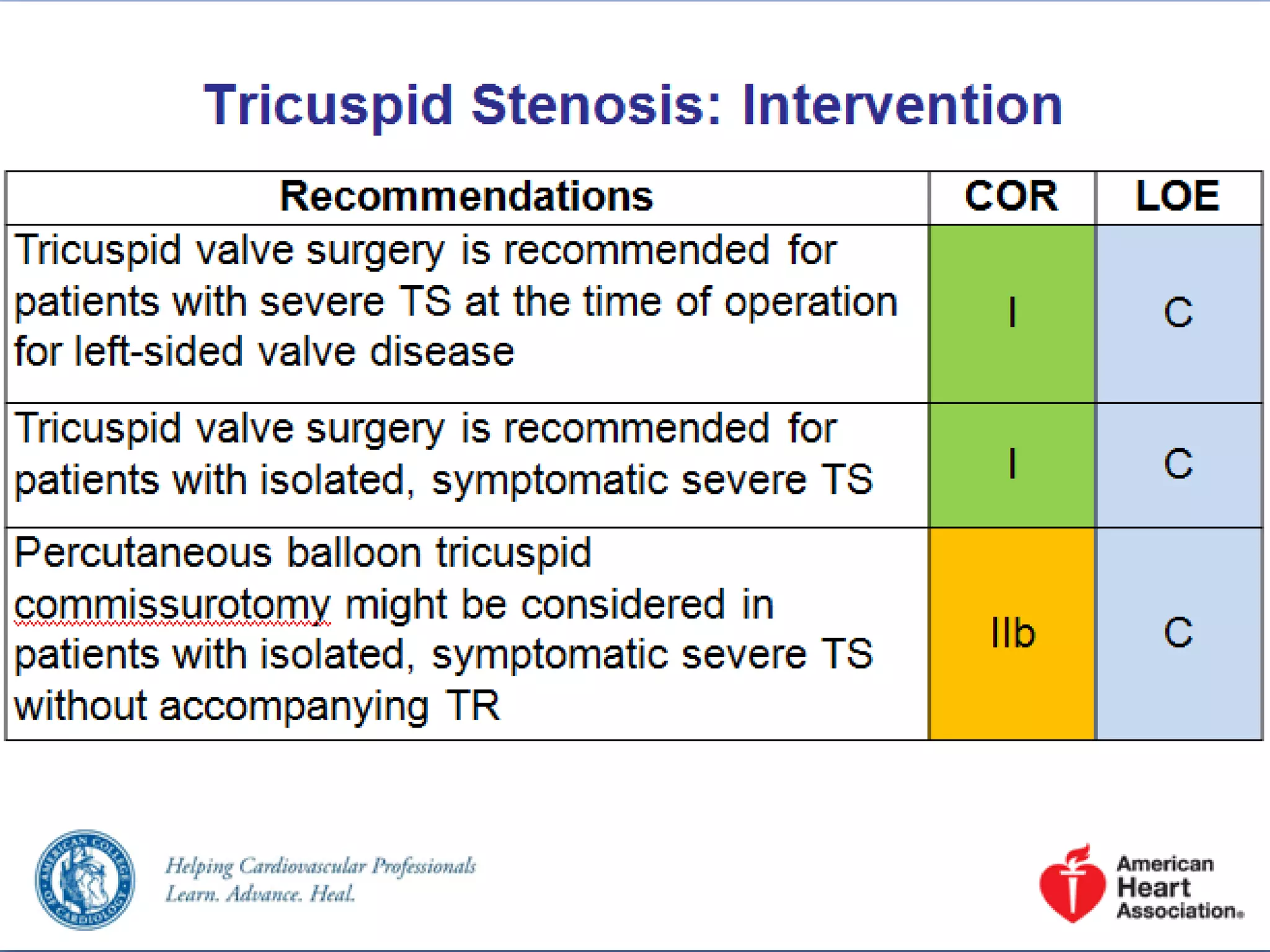
 Recommendation for management.
Anatomy
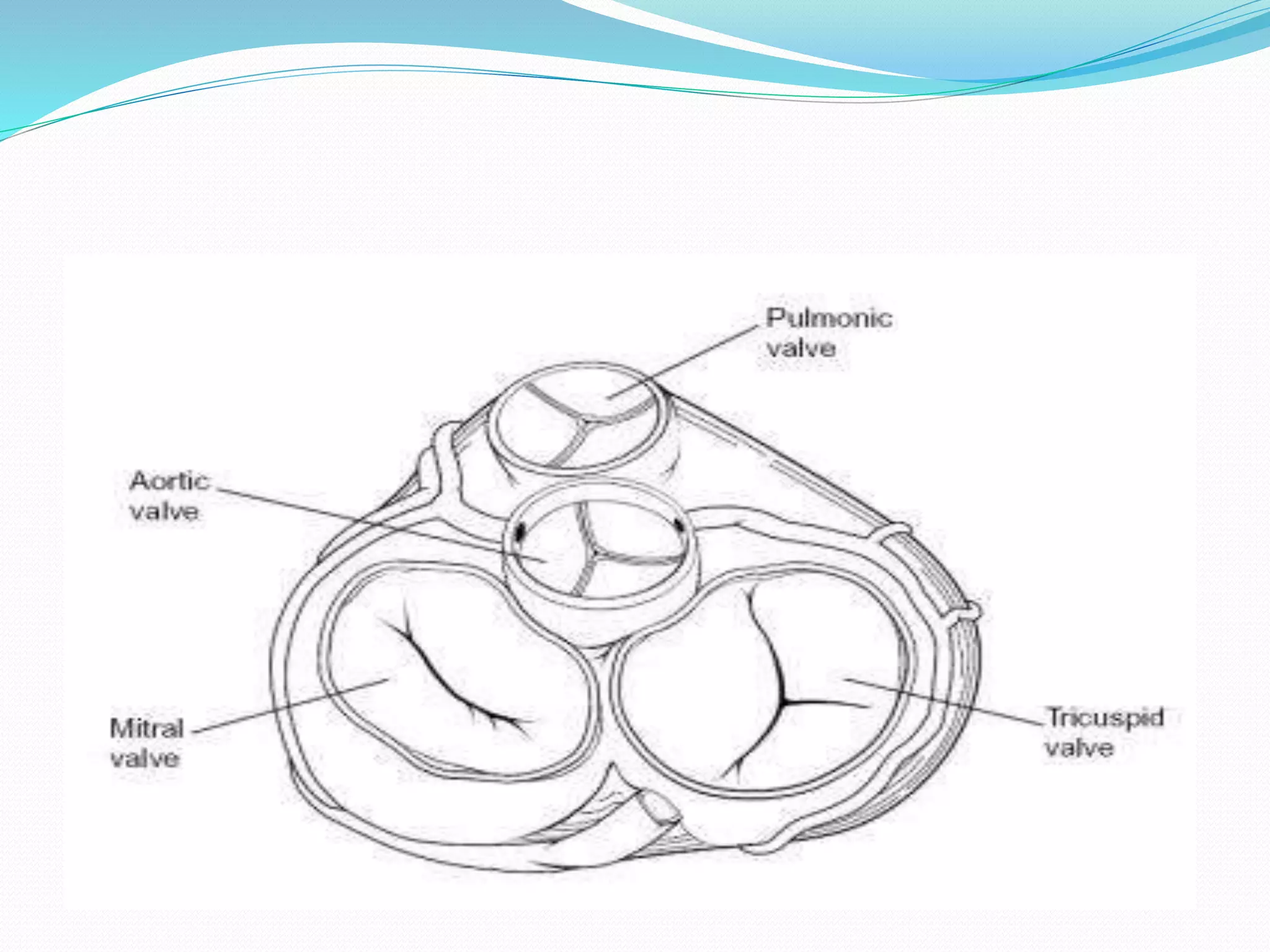
The tricuspid valve has been
described as having as few as
2 and as many as 6 leaflets
How to assess??
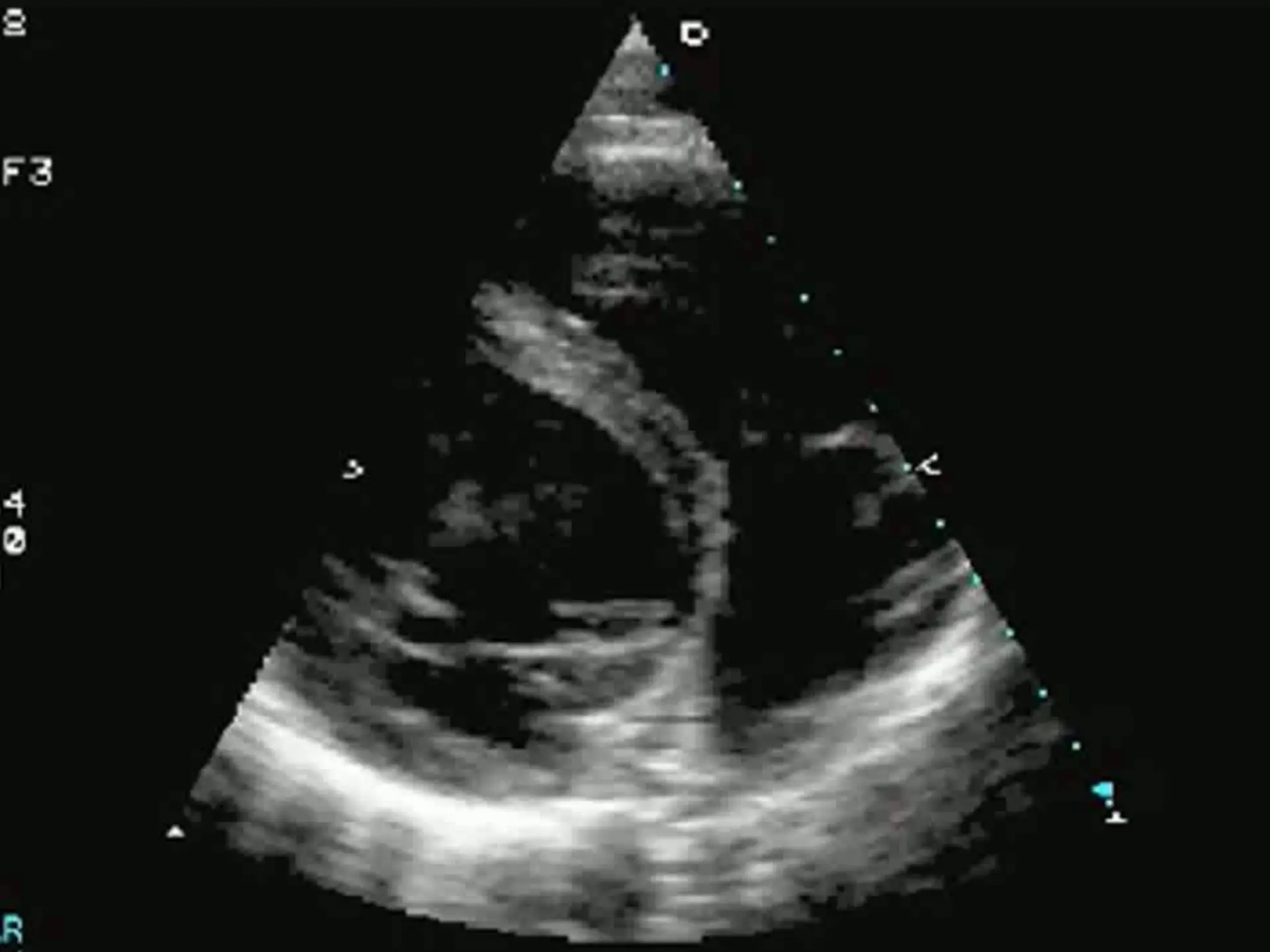
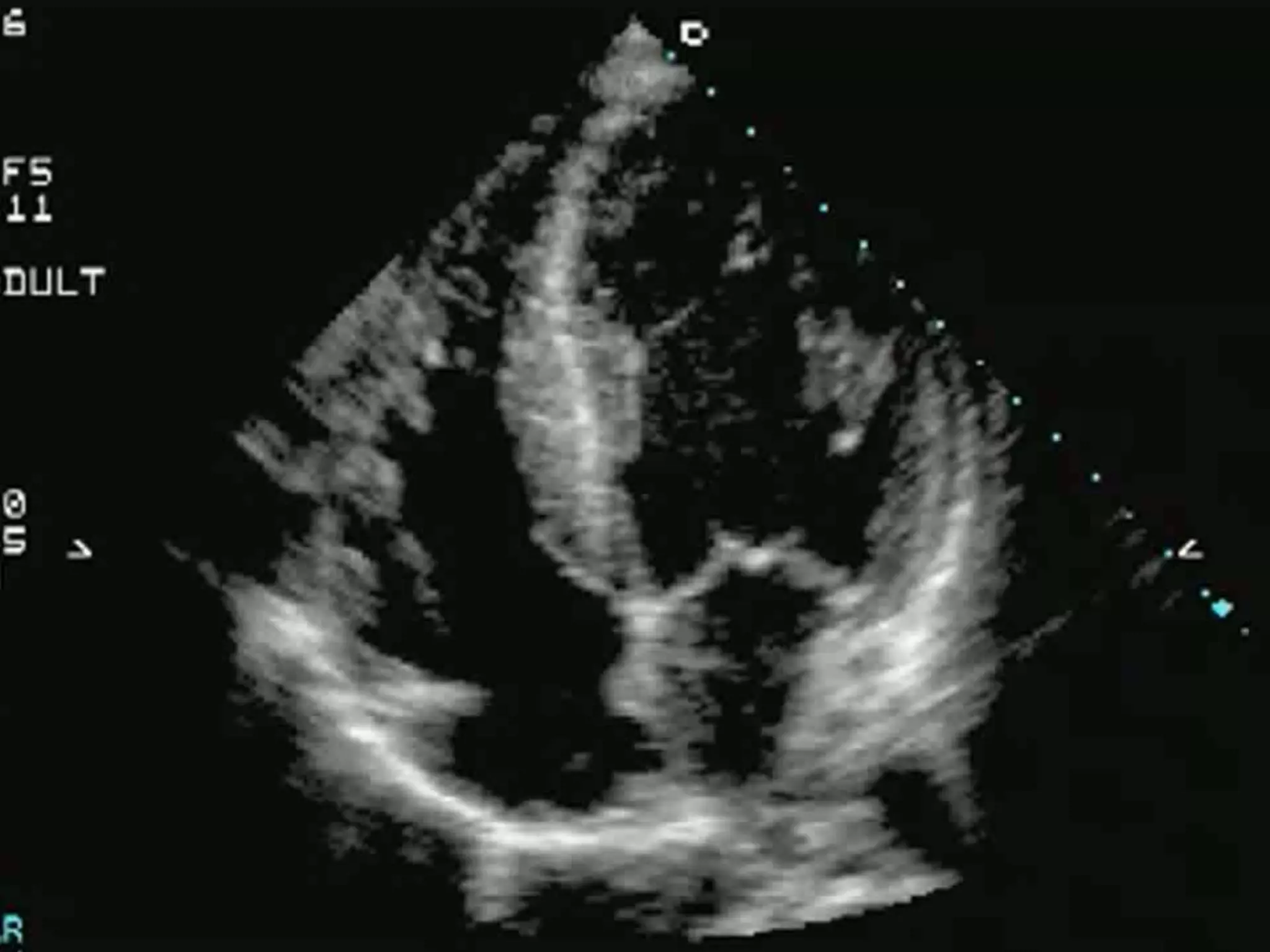
Transthoracic echo is the
modality of choice for
assessment of tricuspid
valve.
Tricuspid stenosis
 Almost rheumatic in origin and is generally accompanied
by mitral and aortic valve involvement.
 Most stenotic tricuspid valves are associated with clinical
evidence of regurgitation.
 Isolated TS less than 1% of general population.
causes
 Rheumatic : diffuse thickening of the leaflets with or
without fusion of the commissures. The chordae tendineae
may be thickened and shortened, left sided valves almost
affected.
 Congenital.
 Infective endocarditis: Large infected vegetations
obstructing the orifice of the tricuspid valve may produce
stenosis, in IV drug abuser.
 Carcinoid heart disease: in patients with GIT carcinoid
tumor secret vasoactive substance, manifest as fibrous
white plaques located on the valvular and mural
endocardium. The valve leaflets are thickened, rigid, and
reduced in area, affect right sided valves and spared left
sided valves.
symptoms
 Fatigue.
 Fluttering discomfort in neck.
 Right upper quadrant pain.
 Abdominal enlargement.
 Lower limb swelling.
signs
 Increases the jugular venous pulse and prominent A wave.
 Peripheral edema and ascites.
 The first heart sound may be split widely. The second
heart sound may be single.
 Diastolic rumbling murmur along the left sternal border
increases with inspiration.
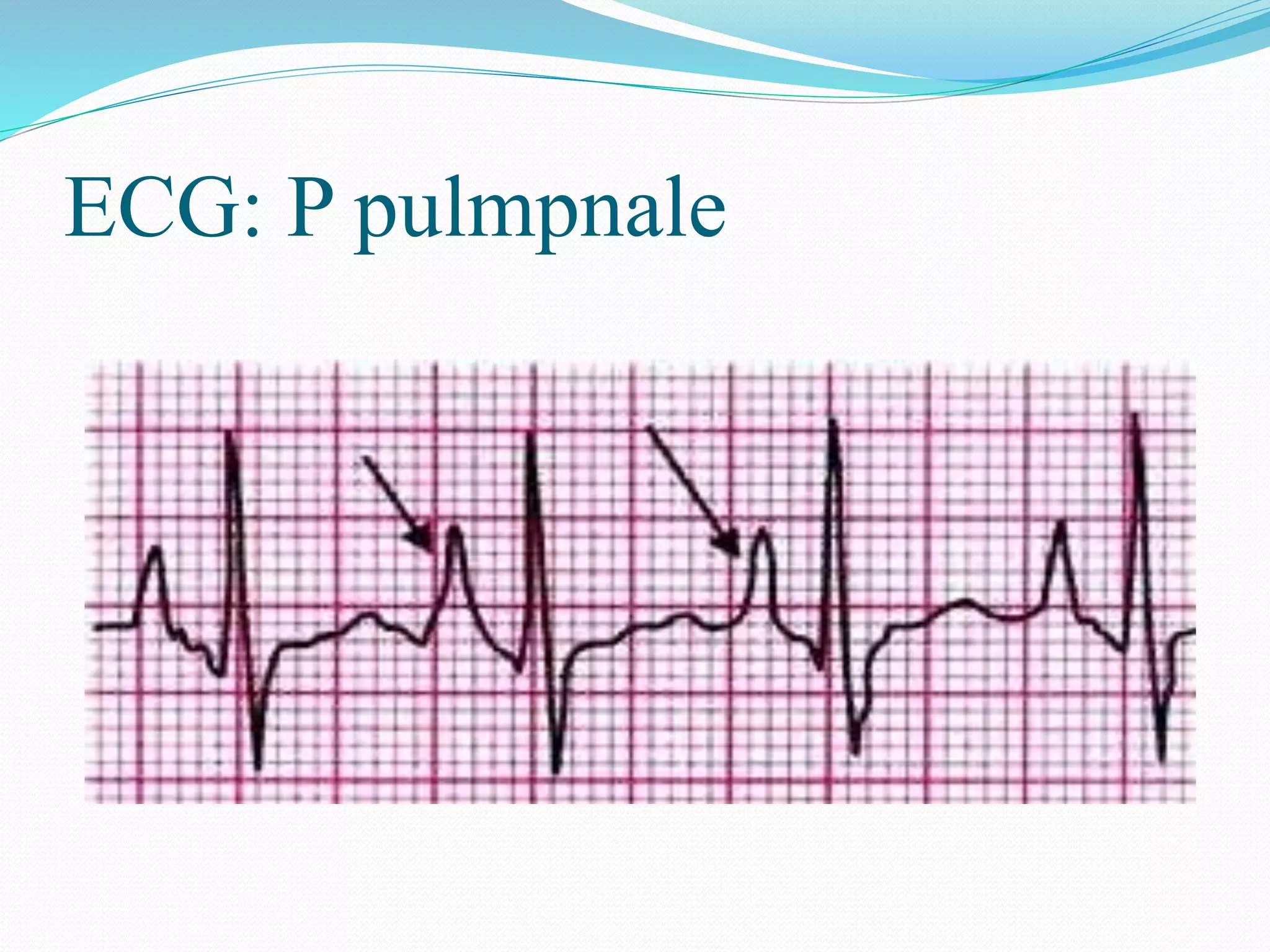
ECG: P pulmpnale
Transthoracic echo
 Confirm diagnosis: mean gradient > 5 mmHg using
continous Doppler.
 Define leaflets morphology.
 Define coexisting valvular disease.
Tricuspid regurgitation
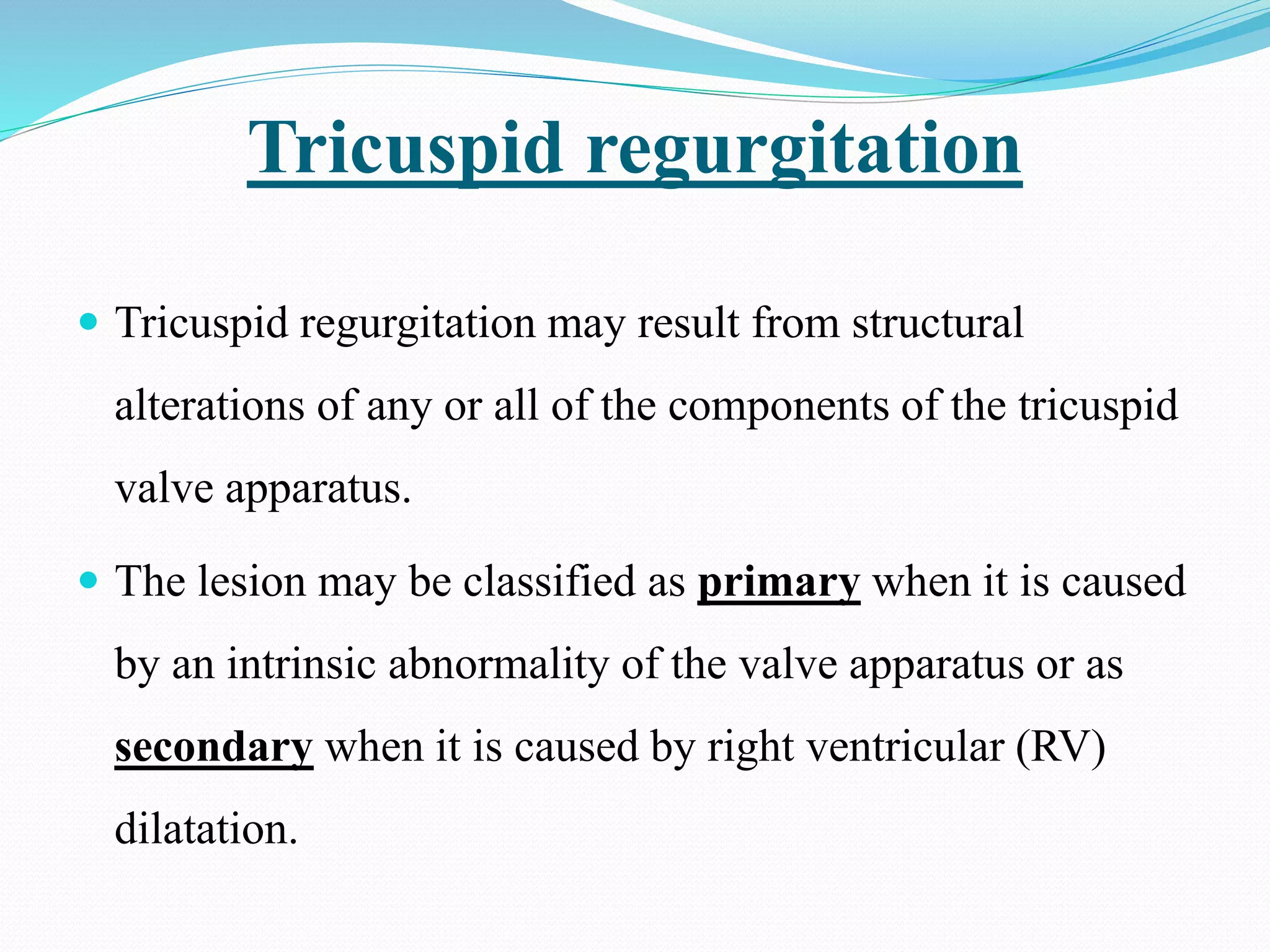
 Tricuspid regurgitation may result from structural
alterations of any or all of the components of the tricuspid
valve apparatus.
 The lesion may be classified as primary when it is caused
by an intrinsic abnormality of the valve apparatus or as
secondary when it is caused by right ventricular (RV)
dilatation.
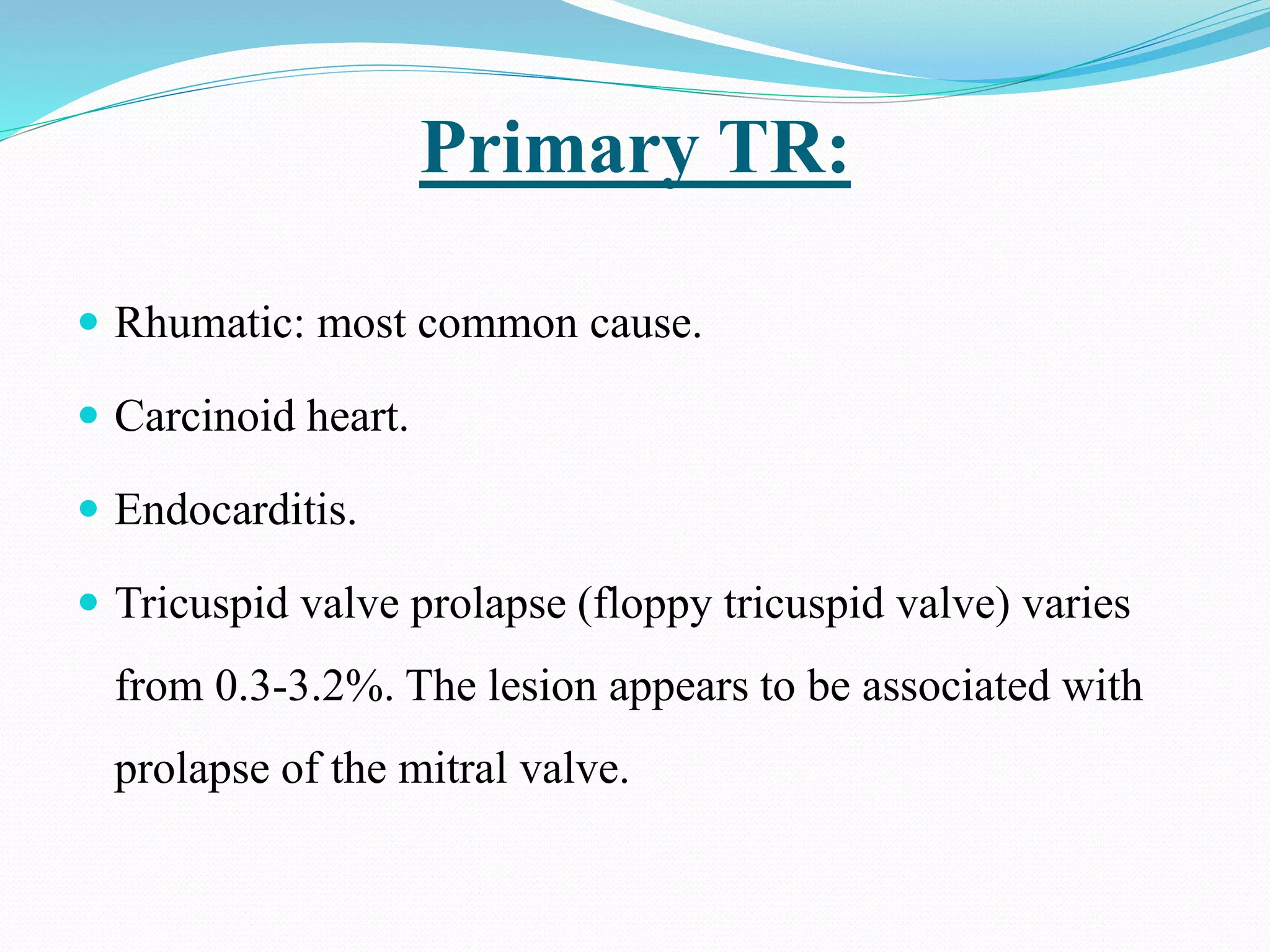
Primary TR:
 Rhumatic: most common cause.
 Carcinoid heart.
 Endocarditis.
 Tricuspid valve prolapse (floppy tricuspid valve) varies
from 0.3-3.2%. The lesion appears to be associated with
prolapse of the mitral valve.
 Congenital: AV canal defect, TV cleft, VSD,
 And Ebstein anomaly: a congenital malformation of the
tricuspid valve characterized by apical displacement of the
annular insertion of the septal and posterior leaflets and
atrialization of a portion of the ventricular myocardium
 Papillary muscle dysfunction.
 Trauma to the RV.
 Connective-tissue diseases: dysfunction of other heart
valves is typically present.
 Medications that act via serotoninergic pathways may
cause valvular lesions, as medications used to treat
migraine, Parkinson disease, and obesity (eg,
fenfluramine)
Clinical Presentation
 In the absence of pulmonary hypertension, TR generally is
well tolerated.
 However, when pulmonary hypertension and TR coexist,
cardiac output declines and the manifestations of right-
sided heart failure become intensified.
Symptoms
 Fatigue.
 Throbbing pulsation in neck.
 Right upper quadrant pain.
 Abdominal enlargement.
 Lower limb swelling.
signs
 Evidence of weight loss, cachexia, cyanosis, and jaundice
often are present on inspection in patients with severe TR.
 AF is common.
 Jugular venous distention: absent x descents , prominent
systolic c-v wave , deep y descent.
 Pulsating enlarged tender liver.
 Ascites, periphral edema are frequent.
Auscultation:
 Systolic murmur over lower left sternal border increased
with inspiration.
 murmur usually is high-pitched, pansystolic, and loudest
with PHT, and usually of low intensity and limited to the
first half of systole in primary TR.
 S3.
 Accentuated P2.
Echocardiography in TR
 Detect TR.
 Estimate its severity.
 Assess pulmonary arterial pressure.
 Assess RV size and function.
 Assess associated left side heart disease.
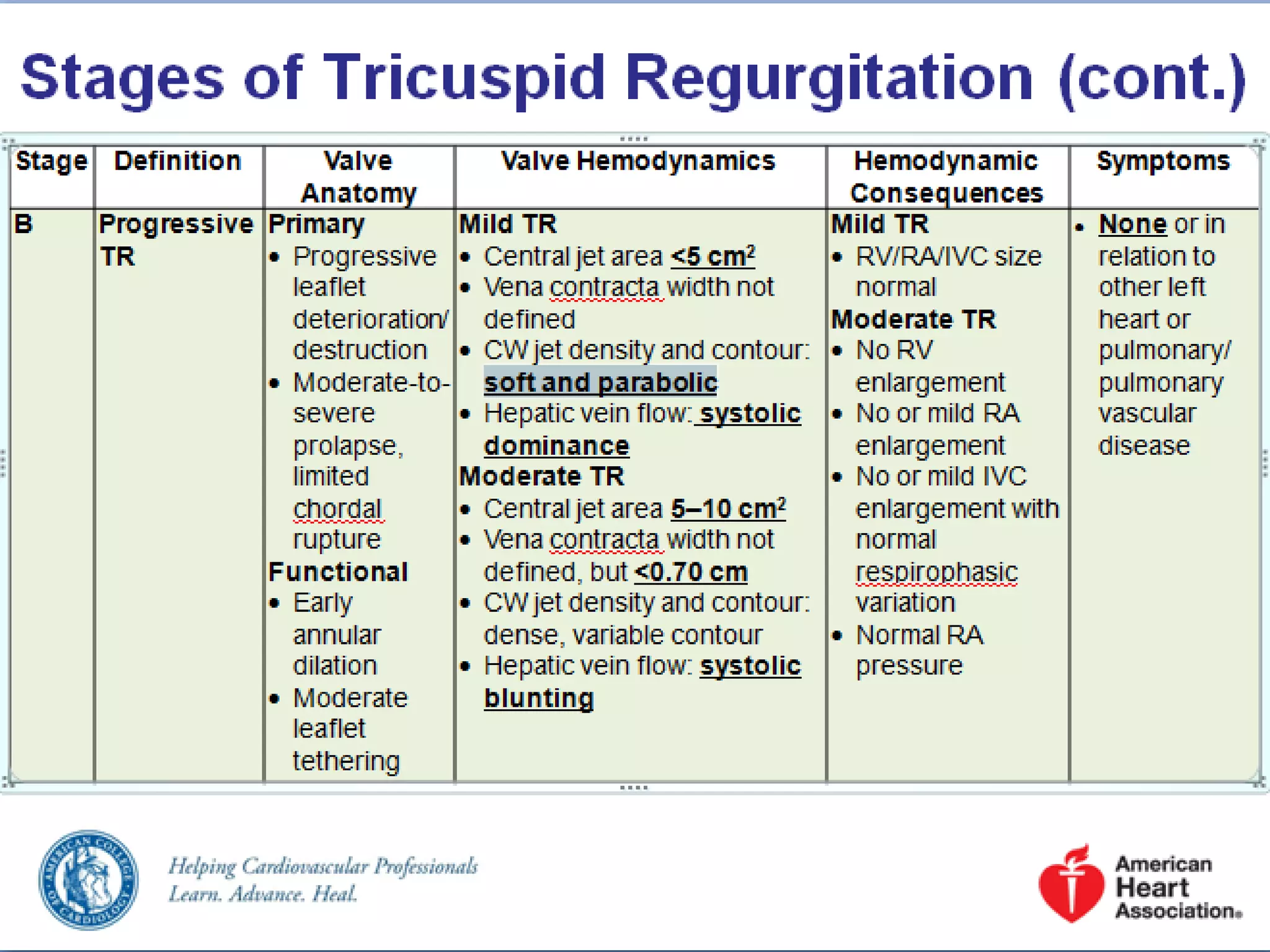
Assessment of severity
1.jet area
2.Vena contracta
3.Hepatic vein Doppler
PA systolic pressure
RA pressure
RA pressure
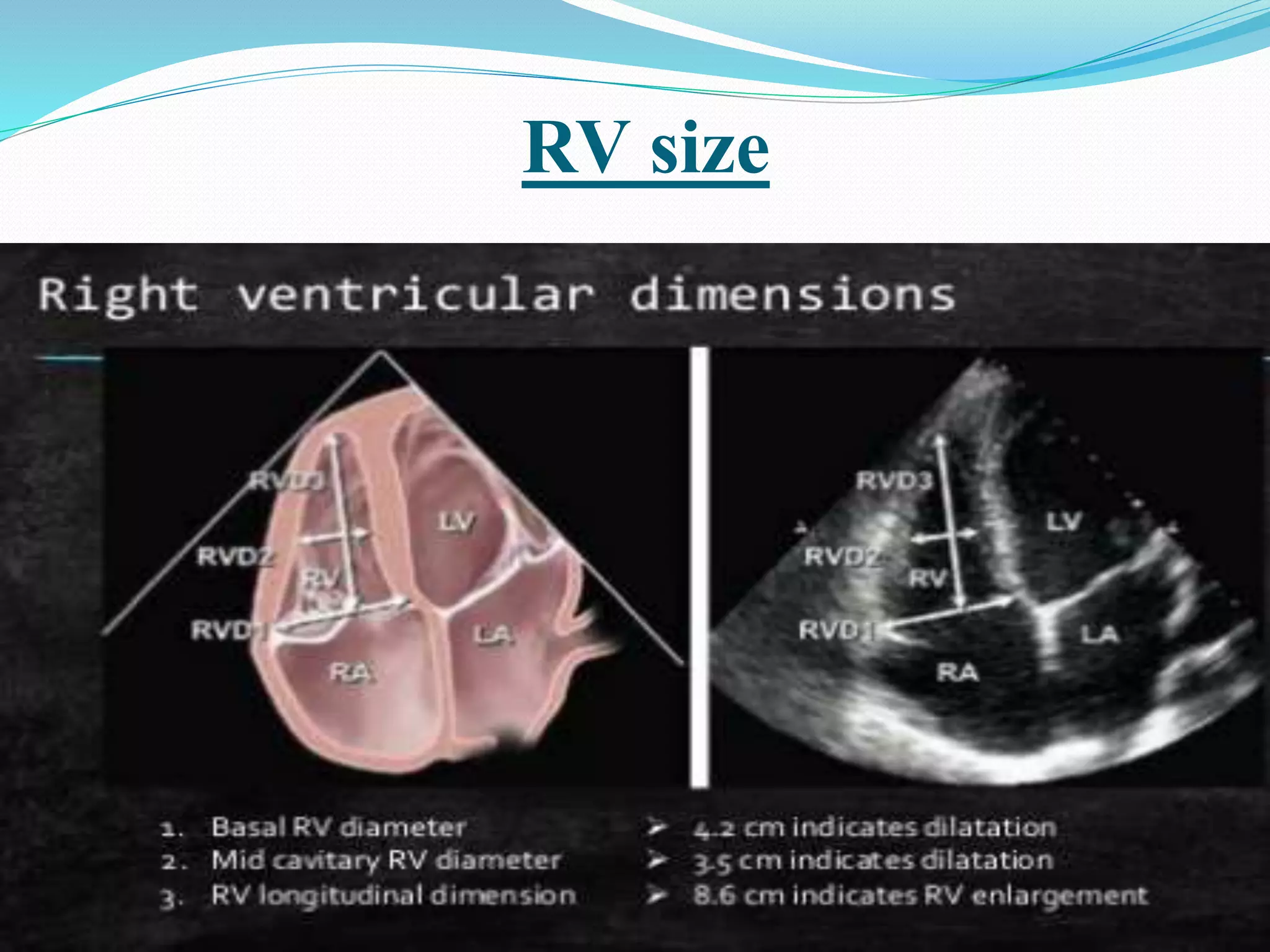
RV size
RV function
Management
Medical management
Thanks

Tricuspid valve disease

  • 1.
  • 2.
    Agenda:  Anatomy.  Howto assess???  Tricuspid stenosis.  Tricuspid regurgitation.  Recommendation for management.
  • 3.
  • 6.
    The tricuspid valvehas been described as having as few as 2 and as many as 6 leaflets
  • 7.
    How to assess?? Transthoracicecho is the modality of choice for assessment of tricuspid valve.
  • 12.
    Tricuspid stenosis  Almostrheumatic in origin and is generally accompanied by mitral and aortic valve involvement.  Most stenotic tricuspid valves are associated with clinical evidence of regurgitation.  Isolated TS less than 1% of general population.
  • 13.
    causes  Rheumatic :diffuse thickening of the leaflets with or without fusion of the commissures. The chordae tendineae may be thickened and shortened, left sided valves almost affected.  Congenital.  Infective endocarditis: Large infected vegetations obstructing the orifice of the tricuspid valve may produce stenosis, in IV drug abuser.
  • 14.
     Carcinoid heartdisease: in patients with GIT carcinoid tumor secret vasoactive substance, manifest as fibrous white plaques located on the valvular and mural endocardium. The valve leaflets are thickened, rigid, and reduced in area, affect right sided valves and spared left sided valves.
  • 15.
    symptoms  Fatigue.  Flutteringdiscomfort in neck.  Right upper quadrant pain.  Abdominal enlargement.  Lower limb swelling.
  • 16.
    signs  Increases thejugular venous pulse and prominent A wave.  Peripheral edema and ascites.  The first heart sound may be split widely. The second heart sound may be single.  Diastolic rumbling murmur along the left sternal border increases with inspiration.
  • 17.
  • 18.
    Transthoracic echo  Confirmdiagnosis: mean gradient > 5 mmHg using continous Doppler.  Define leaflets morphology.  Define coexisting valvular disease.
  • 23.
    Tricuspid regurgitation  Tricuspidregurgitation may result from structural alterations of any or all of the components of the tricuspid valve apparatus.  The lesion may be classified as primary when it is caused by an intrinsic abnormality of the valve apparatus or as secondary when it is caused by right ventricular (RV) dilatation.
  • 24.
    Primary TR:  Rhumatic:most common cause.  Carcinoid heart.  Endocarditis.  Tricuspid valve prolapse (floppy tricuspid valve) varies from 0.3-3.2%. The lesion appears to be associated with prolapse of the mitral valve.
  • 26.
     Congenital: AVcanal defect, TV cleft, VSD,  And Ebstein anomaly: a congenital malformation of the tricuspid valve characterized by apical displacement of the annular insertion of the septal and posterior leaflets and atrialization of a portion of the ventricular myocardium
  • 28.
     Papillary muscledysfunction.  Trauma to the RV.  Connective-tissue diseases: dysfunction of other heart valves is typically present.  Medications that act via serotoninergic pathways may cause valvular lesions, as medications used to treat migraine, Parkinson disease, and obesity (eg, fenfluramine)
  • 29.
    Clinical Presentation  Inthe absence of pulmonary hypertension, TR generally is well tolerated.  However, when pulmonary hypertension and TR coexist, cardiac output declines and the manifestations of right- sided heart failure become intensified.
  • 30.
    Symptoms  Fatigue.  Throbbingpulsation in neck.  Right upper quadrant pain.  Abdominal enlargement.  Lower limb swelling.
  • 31.
    signs  Evidence ofweight loss, cachexia, cyanosis, and jaundice often are present on inspection in patients with severe TR.  AF is common.  Jugular venous distention: absent x descents , prominent systolic c-v wave , deep y descent.  Pulsating enlarged tender liver.  Ascites, periphral edema are frequent.
  • 32.
    Auscultation:  Systolic murmurover lower left sternal border increased with inspiration.  murmur usually is high-pitched, pansystolic, and loudest with PHT, and usually of low intensity and limited to the first half of systole in primary TR.  S3.  Accentuated P2.
  • 33.
    Echocardiography in TR Detect TR.  Estimate its severity.  Assess pulmonary arterial pressure.  Assess RV size and function.  Assess associated left side heart disease.
  • 34.
  • 35.
  • 36.
  • 37.
  • 38.
  • 39.
  • 40.
  • 41.
  • 47.
  • 48.
  • 50.