Downloaded 109 times



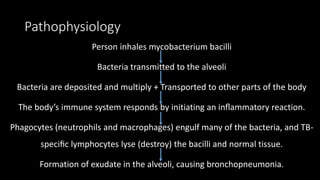
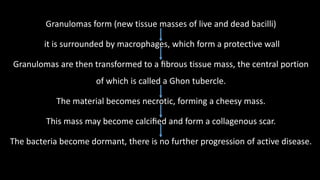
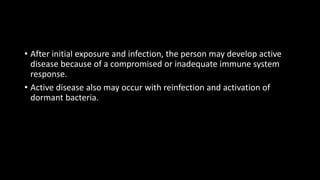
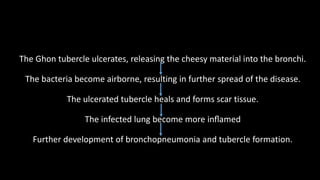
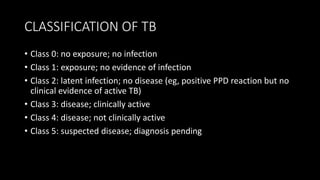
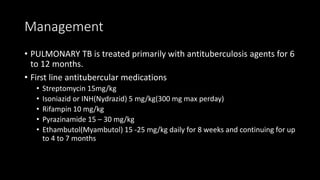
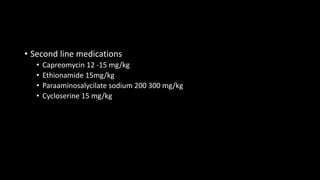
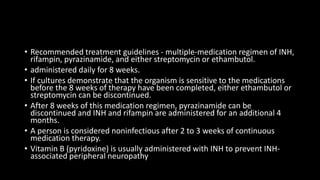

Pulmonary tuberculosis is caused by the bacterium Mycobacterium tuberculosis. It primarily affects the lung parenchyma but can spread to other organs. Risk factors include close contact with an active case, immunocompromised status, substance abuse, poor living conditions, and coming from a country with high TB rates. The bacteria are transmitted via airborne droplets when an infected person coughs or sneezes. Symptoms include cough, fever, night sweats and weight loss. Diagnosis involves tuberculin skin testing, chest x-ray, and sputum culture and analysis. Treatment consists of a multi-drug regimen for 6-12 months to prevent resistance and includes isoniazid, rifampin,


