DONE BY : MUSTAFA KHALIL IBRAHIM
TBILISI STATE MEDICAL UNIVERSITY
5TH YEAR, 2ND SEMESTER, 1ST GROUP
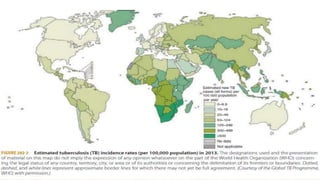
• More than 5.7 million new cases of TB (all forms, both pulmonary and extra-
pulmonary) were reported to the World Health Organization (WHO) in 2013; 95%
of cases were reported from developing countries
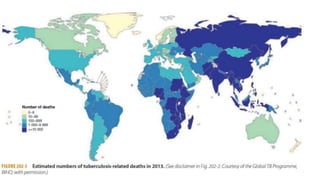
• Latest figures from 20151 indicate an estimated 10.4 million people had TB, and
1.8 million people died (1.4 million HIV negative and 400 000 HIV positive).
• Of further concern is that 480 000 cases of multidrug-resistant (MDR) TBa and a
further 100 000 that were estimated to be rifampicin-resistant (RR) TB have
occurred in the same period.
The most frequent form of presentation of tuberculosis is disease that affects the
lungs (pulmonary tuberculosis), while less frequent forms may affect any part of
the body (extra-pulmonary tuberculosis) or present as acute disseminated
tuberculosis.
• Tuberculosis in children is difficult to diagnose, even in its pulmonary form;
children rarely produce sputum, so sputum smear examination can therefore not be
used to obtain bacteriological proof, which is the cornerstone of diagnosis in adults.
It is therefore diagnosed using a systematic approach whereby a number of clinical
signs are interpreted.
bacterium Mycobacterium tuberculosis (M tuberculosis). TB is contagious. This means
the bacteria is easily spread from an infected person to someone else. You can get TB
by breathing in air droplets from a cough or sneeze of an infected person. The resulting
lung infection is called primary TB.
• Most people recover from primary TB infection without further evidence of the
disease. The infection may stay inactive (dormant) for years. In some people, it
becomes active again (reactivates).
• Most people who develop symptoms of a TB infection first became infected in the
past. In some cases, the disease becomes active within weeks after the primary
infection.
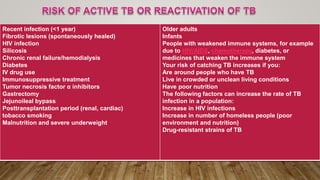
Older adults
Infants
People with weakened immune systems, for example
due to HIV/AIDS, chemotherapy, diabetes, or
medicines that weaken the immune system
Your risk of catching TB increases if you:
Are around people who have TB
Live in crowded or unclean living conditions
Have poor nutrition
The following factors can increase the rate of TB
infection in a population:
Increase in HIV infections
Increase in number of homeless people (poor
environment and nutrition)
Drug-resistant strains of TB
Recent infection (<1 year)
Fibrotic lesions (spontaneously healed)
HIV infection
Silicosis
Chronic renal failure/hemodialysis
Diabetes
IV drug use
Immunosuppressive treatment
Tumor necrosis factor α inhibitors
Gastrectomy
Jejunoileal bypass
Posttransplantation period (renal, cardiac)
tobacco smoking
Malnutrition and severe underweight
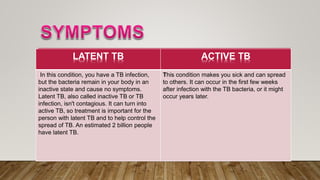
ACTIVE TBLATENT TB
This condition makes you sick and can spread
to others. It can occur in the first few weeks
after infection with the TB bacteria, or it might
occur years later.
In this condition, you have a TB infection,
but the bacteria remain in your body in an
inactive state and cause no symptoms.
Latent TB, also called inactive TB or TB
infection, isn't contagious. It can turn into
active TB, so treatment is important for the
person with latent TB and to help control the
spread of TB. An estimated 2 billion people
have latent TB.
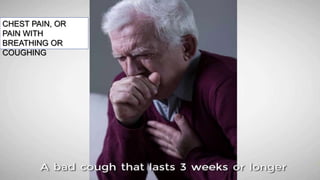
CHEST PAIN, OR
PAIN WITH
BREATHING OR
COUGHING
SHORTNESS OF
BREATHE
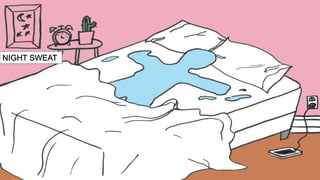
NIGHT SWEAT
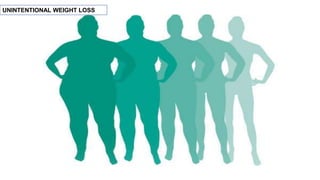
UNINTENTIONAL WEIGHT LOSS
• Infants and children may be infected within the family circle. There are two key
factors In diagnosing tuberculosis in children:
• identification of an infectious adult close to the child;
- loss of weight or failure to thrive
- primary pulmonary tuberculosis;
- acute disseminated tuberculosis: meningitis and miliary
tuberculosis;
- post-primary pulmonary tuberculosis;
- extrapulmonary tuberculosis.
• Primary infection is asymptomatic in the majority of cases, and goes unnoticed.
• This is termed infection and must be distinguished from disease.
• Generalized symptoms are often subtle: slight fever, loss of weight, apathy and
listlessness can attract the attention of the parents. Sometimes the symptoms
are more obvious (e.g. a high fever of 39–40 °C and profound lethargy), and
• alert the parents to the fact that something is wrong
Primary pulmonary tuberculosis occurs most often in children less than 5 years of
age.
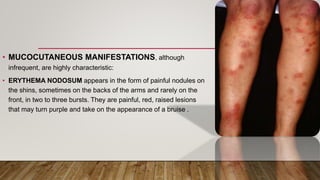
• MUCOCUTANEOUS MANIFESTATIONS, although
infrequent, are highly characteristic:
• ERYTHEMA NODOSUM appears in the form of painful nodules on
the shins, sometimes on the backs of the arms and rarely on the
front, in two to three bursts. They are painful, red, raised lesions
that may turn purple and take on the appearance of a bruise .
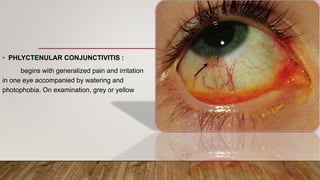
• PHLYCTENULAR CONJUNCTIVITIS :
begins with generalized pain and irritation
in one eye accompanied by watering and
photophobia. On examination, grey or yellow
• LOCAL COMPLICATIONS OF PRIMARY TUBERCULOSIS
• of the lymph node into the bronchi: the lymph node swells and erodes into the
bronchus (usually between the 4th and 7th month of development). This can be a
serious event for small infants, where the caseous material can create acute
bronchial obstruction; in older children it usually causes cough.
9. Laryngitis
10. Cor pulmonale
11. Ca bronchus
12. Enteritus
13. Miliary Tuberculosis
14. HIV related opportunistic infections
15. Fistulation
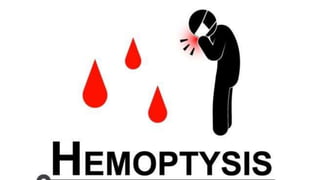
1. Hemoptysis
2. Pleurisy
3. Pleural effusion
4. Empyema
5. Pneumothorax
6. Aspergilloma
7. Endobronchitis
8. Brochiectasis
DELAYED LOCAL COMPLICATIONS
• EXAMS AND TESTS
• The health care provider will perform a physical exam. This may show:
1.Clubbing of the fingers or toes (in people with advanced disease)
2.Swollen or tender lymph nodes in the neck or other areas
3.Fluid around a lung (pleural effusion)
4.Unusual breath sounds (crackles)
5.Tests that may be ordered include:
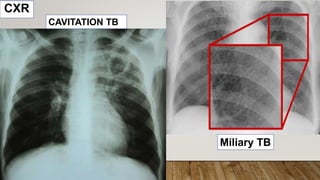
CXR
Miliary TB
CAVITATION TB
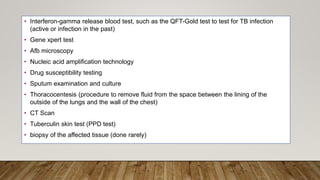
• Interferon-gamma release blood test, such as the QFT-Gold test to test for TB infection
(active or infection in the past)
• Gene xpert test
• Afb microscopy
• Nucleic acid amplification technology
• Drug susceptibility testing
• Sputum examination and culture
• Thoracocentesis (procedure to remove fluid from the space between the lining of the
outside of the lungs and the wall of the chest)
• CT Scan
• Tuberculin skin test (PPD test)
• biopsy of the affected tissue (done rarely)
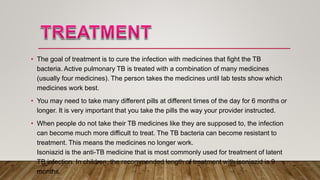
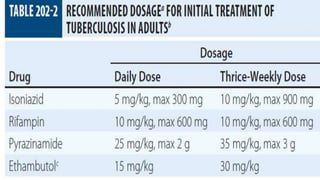
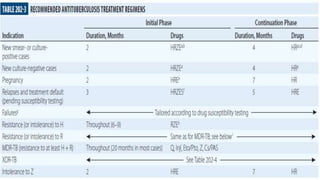
• The goal of treatment is to cure the infection with medicines that fight the TB
bacteria. Active pulmonary TB is treated with a combination of many medicines
(usually four medicines). The person takes the medicines until lab tests show which
medicines work best.
• You may need to take many different pills at different times of the day for 6 months or
longer. It is very important that you take the pills the way your provider instructed.
• When people do not take their TB medicines like they are supposed to, the infection
can become much more difficult to treat. The TB bacteria can become resistant to
treatment. This means the medicines no longer work.
Isoniazid is the anti-TB medicine that is most commonly used for treatment of latent
TB infection. In children, the recommended length of treatment with isoniazid is 9
months.
• Tuberculosis Diagnostics Technology Landscape 5th Edition, May 2017
• https://www.mayoclinic.org/diseases-conditions/tuberculosis/symptoms-
causes/syc-20351250
• Harrison's Principles of Internal Medicine, infectiuos diseases, TB infection
p1102/19th E (2015).
THANK YOU FOR
ATTENTION
BY : MUSTAFA KHALIL IBRAHIM

pulmonary tuberculosis (TB infection )

  • 1.
    DONE BY :MUSTAFA KHALIL IBRAHIM TBILISI STATE MEDICAL UNIVERSITY 5TH YEAR, 2ND SEMESTER, 1ST GROUP
  • 3.
    • More than5.7 million new cases of TB (all forms, both pulmonary and extra- pulmonary) were reported to the World Health Organization (WHO) in 2013; 95% of cases were reported from developing countries
  • 4.
    • Latest figuresfrom 20151 indicate an estimated 10.4 million people had TB, and 1.8 million people died (1.4 million HIV negative and 400 000 HIV positive). • Of further concern is that 480 000 cases of multidrug-resistant (MDR) TBa and a further 100 000 that were estimated to be rifampicin-resistant (RR) TB have occurred in the same period.
  • 7.
    The most frequentform of presentation of tuberculosis is disease that affects the lungs (pulmonary tuberculosis), while less frequent forms may affect any part of the body (extra-pulmonary tuberculosis) or present as acute disseminated tuberculosis.
  • 8.
    • Tuberculosis inchildren is difficult to diagnose, even in its pulmonary form; children rarely produce sputum, so sputum smear examination can therefore not be used to obtain bacteriological proof, which is the cornerstone of diagnosis in adults. It is therefore diagnosed using a systematic approach whereby a number of clinical signs are interpreted.
  • 9.
    bacterium Mycobacterium tuberculosis(M tuberculosis). TB is contagious. This means the bacteria is easily spread from an infected person to someone else. You can get TB by breathing in air droplets from a cough or sneeze of an infected person. The resulting lung infection is called primary TB. • Most people recover from primary TB infection without further evidence of the disease. The infection may stay inactive (dormant) for years. In some people, it becomes active again (reactivates). • Most people who develop symptoms of a TB infection first became infected in the past. In some cases, the disease becomes active within weeks after the primary infection.
  • 10.
    Older adults Infants People withweakened immune systems, for example due to HIV/AIDS, chemotherapy, diabetes, or medicines that weaken the immune system Your risk of catching TB increases if you: Are around people who have TB Live in crowded or unclean living conditions Have poor nutrition The following factors can increase the rate of TB infection in a population: Increase in HIV infections Increase in number of homeless people (poor environment and nutrition) Drug-resistant strains of TB Recent infection (<1 year) Fibrotic lesions (spontaneously healed) HIV infection Silicosis Chronic renal failure/hemodialysis Diabetes IV drug use Immunosuppressive treatment Tumor necrosis factor α inhibitors Gastrectomy Jejunoileal bypass Posttransplantation period (renal, cardiac) tobacco smoking Malnutrition and severe underweight
  • 11.
    ACTIVE TBLATENT TB Thiscondition makes you sick and can spread to others. It can occur in the first few weeks after infection with the TB bacteria, or it might occur years later. In this condition, you have a TB infection, but the bacteria remain in your body in an inactive state and cause no symptoms. Latent TB, also called inactive TB or TB infection, isn't contagious. It can turn into active TB, so treatment is important for the person with latent TB and to help control the spread of TB. An estimated 2 billion people have latent TB.
  • 12.
    CHEST PAIN, OR PAINWITH BREATHING OR COUGHING
  • 13.
  • 15.
  • 16.
  • 20.
    • Infants andchildren may be infected within the family circle. There are two key factors In diagnosing tuberculosis in children: • identification of an infectious adult close to the child; - loss of weight or failure to thrive
  • 21.
    - primary pulmonarytuberculosis; - acute disseminated tuberculosis: meningitis and miliary tuberculosis; - post-primary pulmonary tuberculosis; - extrapulmonary tuberculosis.
  • 22.
    • Primary infectionis asymptomatic in the majority of cases, and goes unnoticed. • This is termed infection and must be distinguished from disease. • Generalized symptoms are often subtle: slight fever, loss of weight, apathy and listlessness can attract the attention of the parents. Sometimes the symptoms are more obvious (e.g. a high fever of 39–40 °C and profound lethargy), and • alert the parents to the fact that something is wrong Primary pulmonary tuberculosis occurs most often in children less than 5 years of age.

  • 23.
    • MUCOCUTANEOUS MANIFESTATIONS,although infrequent, are highly characteristic: • ERYTHEMA NODOSUM appears in the form of painful nodules on the shins, sometimes on the backs of the arms and rarely on the front, in two to three bursts. They are painful, red, raised lesions that may turn purple and take on the appearance of a bruise .

  • 24.
    • PHLYCTENULAR CONJUNCTIVITIS: begins with generalized pain and irritation in one eye accompanied by watering and photophobia. On examination, grey or yellow
  • 25.
    • LOCAL COMPLICATIONSOF PRIMARY TUBERCULOSIS • of the lymph node into the bronchi: the lymph node swells and erodes into the bronchus (usually between the 4th and 7th month of development). This can be a serious event for small infants, where the caseous material can create acute bronchial obstruction; in older children it usually causes cough.
  • 26.
    9. Laryngitis 10. Corpulmonale 11. Ca bronchus 12. Enteritus 13. Miliary Tuberculosis 14. HIV related opportunistic infections 15. Fistulation 1. Hemoptysis 2. Pleurisy 3. Pleural effusion 4. Empyema 5. Pneumothorax 6. Aspergilloma 7. Endobronchitis 8. Brochiectasis DELAYED LOCAL COMPLICATIONS
  • 27.
    • EXAMS ANDTESTS • The health care provider will perform a physical exam. This may show: 1.Clubbing of the fingers or toes (in people with advanced disease) 2.Swollen or tender lymph nodes in the neck or other areas 3.Fluid around a lung (pleural effusion) 4.Unusual breath sounds (crackles) 5.Tests that may be ordered include:
  • 28.
  • 29.
    • Interferon-gamma releaseblood test, such as the QFT-Gold test to test for TB infection (active or infection in the past) • Gene xpert test • Afb microscopy • Nucleic acid amplification technology • Drug susceptibility testing • Sputum examination and culture • Thoracocentesis (procedure to remove fluid from the space between the lining of the outside of the lungs and the wall of the chest) • CT Scan • Tuberculin skin test (PPD test) • biopsy of the affected tissue (done rarely)
  • 30.
    • The goalof treatment is to cure the infection with medicines that fight the TB bacteria. Active pulmonary TB is treated with a combination of many medicines (usually four medicines). The person takes the medicines until lab tests show which medicines work best. • You may need to take many different pills at different times of the day for 6 months or longer. It is very important that you take the pills the way your provider instructed. • When people do not take their TB medicines like they are supposed to, the infection can become much more difficult to treat. The TB bacteria can become resistant to treatment. This means the medicines no longer work. Isoniazid is the anti-TB medicine that is most commonly used for treatment of latent TB infection. In children, the recommended length of treatment with isoniazid is 9 months.
  • 33.
    • Tuberculosis DiagnosticsTechnology Landscape 5th Edition, May 2017 • https://www.mayoclinic.org/diseases-conditions/tuberculosis/symptoms- causes/syc-20351250 • Harrison's Principles of Internal Medicine, infectiuos diseases, TB infection p1102/19th E (2015).
  • 35.
    THANK YOU FOR ATTENTION BY: MUSTAFA KHALIL IBRAHIM