
Tuberculosis is a multi systemic
disease with myriad presentations
and manifestations is the most
common cause of infectious disease
related mortality world wide. In
addition the risk of multi drug
resistant tuberculosis is increasing
world wide.
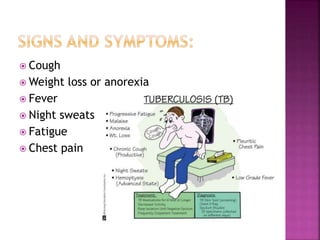
 Cough
 Weight loss or anorexia
 Fever
 Night sweats
 Fatigue
 Chest pain
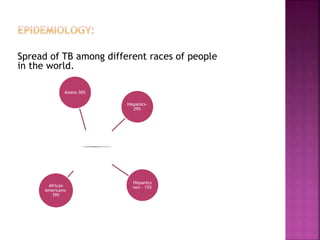
Spread of TB among different races of people
in the world.
Asians-30%
Hispanics-
29%
Hispanics
non – 15%African
Americans-
39%
HIV infected individuals have very high
incidence of tuberculosis all over the world.
Infection with Mycobacterium intra cellulare
( avian or bird strain ) is common in patients
with HIV or AIDS.
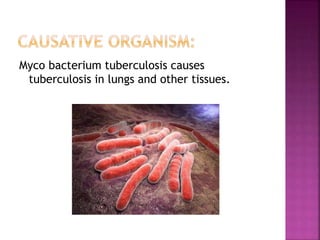
Myco bacterium tuberculosis causes
tuberculosis in lungs and other tissues.
Mycobacterium tuberculosis
hominis is a slender rod shaped
bacteria. It ranges from 0.5
microns to 3 microns in diameter.
It is neutral on gram staining. So
it undergoes acid fast staining.
 Mycobacterium leprae
 Mycobacterium abscessus
 Mycobacterium fortuitum
 Mycobacterium chelonae
 Mycobacterium africanum
 Mycobacterium bovis
 Mycobacterium microti
 Inhalation ( air borne disease)
 Ingestion
 Inoculation
 Trans placental route
sputum or droplets containing microbes
from the infected patients passes through air
and infect the healthy individuals. This is
common mode of transmission.
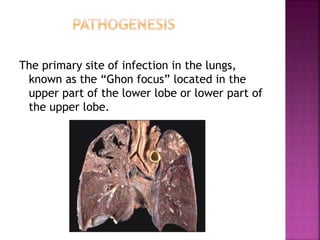
The primary site of infection in the lungs,
known as the “Ghon focus” located in the
upper part of the lower lobe or lower part of
the upper lobe.
It means hidden tuberculosis. That is this type
of tuberculosis does not show any symptoms.
Patients with latent tuberculosis cannot
spread TB. Mostly latent condition will not
occurs. The bacterium is primarily cleared
by the host’s immune system.
Lungs is the most common site. 85% of patients
with TB present pulmonary complaints.
Lesions are epitheliod granuloma with
caseation necrosis.
 SITE :
Alveolar macrophages in sub pleural region.
• Size- 0.5 – 3 mm nodules with 3 or 4 cellular
zones.
 Shape- spherical
These are TB lesions occur in areas other than
lungs.
Extra pulmonary sites:
 Tuberculosis meningitis
 Skeletal TB
 Genito urinary tract TB
 Gastro intestinal TB
 Cervical lymph nodes
 Sterno cleido mastoid muscles
 The infection to an individual who has not
been previously infected or immunized is
called primary or Ghon’s complex or
childhood TB.
 The infection to an individual who has been
previously infected or sensitized is called
secondary or post- primary TB.
Secondary TB is of,
 Endogenous- reactivation of dormant primary
complex
 Exogenous- fresh dose of re infection by
mycobacterium.
 HIV infection
 Alcoholism
 Diabetes mellitus ( 3 fold risk increases)
 Immunosuppressive therapy
 Smoking
 Age below 5 years
0.1
ml
Intra
dermal
route
 Tuberculin skin test (heaf test, mantoux test)
 Chest X- rays
 ELISA
 T spot TB test
 PCR ( polymerized chain reaction)
 Empiric treatment:
4 drugs regimen
 Isoniazid
 Rifamin
 Pyrazinamide
 Ethambutol
 Continue treatment
for 9 months
 MDR (Multi drug
resistant) TB
treatment:
 Aminoglycoside
 Fluoroquinolone
 Thioamide
 Pyrazinamide
 Cycloserine
 Terizidone – Follow
atleast the above
given three groups
 Avoid close contact with the infected patients.
 Enhance your immunity by eating diet rich in
anti oxidants.
 Keep a concentration on your protein intake.
 Avoid contact with the utensils of the infected
patients.
 Exercise regularly.
 Vaccinate your children with BCG.
 Use kerchiefs while coughing or sneezing.
 Avoid spitting or expectorate sputum in public
places.

Tuberculosis

  • 2.
    Tuberculosis is amulti systemic disease with myriad presentations and manifestations is the most common cause of infectious disease related mortality world wide. In addition the risk of multi drug resistant tuberculosis is increasing world wide.
  • 3.
     Cough  Weightloss or anorexia  Fever  Night sweats  Fatigue  Chest pain
  • 4.
    Spread of TBamong different races of people in the world. Asians-30% Hispanics- 29% Hispanics non – 15%African Americans- 39%
  • 5.
    HIV infected individualshave very high incidence of tuberculosis all over the world. Infection with Mycobacterium intra cellulare ( avian or bird strain ) is common in patients with HIV or AIDS.
  • 6.
    Myco bacterium tuberculosiscauses tuberculosis in lungs and other tissues.
  • 7.
    Mycobacterium tuberculosis hominis isa slender rod shaped bacteria. It ranges from 0.5 microns to 3 microns in diameter. It is neutral on gram staining. So it undergoes acid fast staining.
  • 8.
     Mycobacterium leprae Mycobacterium abscessus  Mycobacterium fortuitum  Mycobacterium chelonae  Mycobacterium africanum  Mycobacterium bovis  Mycobacterium microti
  • 9.
     Inhalation (air borne disease)  Ingestion  Inoculation  Trans placental route sputum or droplets containing microbes from the infected patients passes through air and infect the healthy individuals. This is common mode of transmission.
  • 10.
    The primary siteof infection in the lungs, known as the “Ghon focus” located in the upper part of the lower lobe or lower part of the upper lobe.
  • 11.
    It means hiddentuberculosis. That is this type of tuberculosis does not show any symptoms. Patients with latent tuberculosis cannot spread TB. Mostly latent condition will not occurs. The bacterium is primarily cleared by the host’s immune system.
  • 12.
    Lungs is themost common site. 85% of patients with TB present pulmonary complaints. Lesions are epitheliod granuloma with caseation necrosis.  SITE : Alveolar macrophages in sub pleural region. • Size- 0.5 – 3 mm nodules with 3 or 4 cellular zones.  Shape- spherical
  • 13.
    These are TBlesions occur in areas other than lungs. Extra pulmonary sites:  Tuberculosis meningitis  Skeletal TB  Genito urinary tract TB  Gastro intestinal TB  Cervical lymph nodes  Sterno cleido mastoid muscles
  • 14.
     The infectionto an individual who has not been previously infected or immunized is called primary or Ghon’s complex or childhood TB.  The infection to an individual who has been previously infected or sensitized is called secondary or post- primary TB. Secondary TB is of,  Endogenous- reactivation of dormant primary complex  Exogenous- fresh dose of re infection by mycobacterium.
  • 15.
     HIV infection Alcoholism  Diabetes mellitus ( 3 fold risk increases)  Immunosuppressive therapy  Smoking  Age below 5 years
  • 16.
  • 17.
     Tuberculin skintest (heaf test, mantoux test)  Chest X- rays  ELISA  T spot TB test  PCR ( polymerized chain reaction)
  • 18.
     Empiric treatment: 4drugs regimen  Isoniazid  Rifamin  Pyrazinamide  Ethambutol  Continue treatment for 9 months  MDR (Multi drug resistant) TB treatment:  Aminoglycoside  Fluoroquinolone  Thioamide  Pyrazinamide  Cycloserine  Terizidone – Follow atleast the above given three groups
  • 19.
     Avoid closecontact with the infected patients.  Enhance your immunity by eating diet rich in anti oxidants.  Keep a concentration on your protein intake.  Avoid contact with the utensils of the infected patients.  Exercise regularly.  Vaccinate your children with BCG.  Use kerchiefs while coughing or sneezing.  Avoid spitting or expectorate sputum in public places.